



Tonfa Weapons for Martial Arts - Tonfas, Tongfa & Tuifa
-
 🔍︎ QUICK VIEW
$49.95
🔍︎ QUICK VIEW
$49.95 -
 🔍︎ QUICK VIEW
From $52.95
🔍︎ QUICK VIEW
From $52.95 -
 🔍︎ QUICK VIEW
$59.95
🔍︎ QUICK VIEW
$59.95 -
 🔍︎ QUICK VIEW
$64.95
🔍︎ QUICK VIEW
$64.95 -
 🔍︎ QUICK VIEW
$14.95
🔍︎ QUICK VIEW
$14.95 -
 🔍︎ QUICK VIEW
$44.95
🔍︎ QUICK VIEW
$44.95 -
 🔍︎ QUICK VIEW
$44.95
🔍︎ QUICK VIEW
$44.95 -
 🔍︎ QUICK VIEW
$52.95
🔍︎ QUICK VIEW
$52.95 -
 🔍︎ QUICK VIEW
$46.95
🔍︎ QUICK VIEW
$46.95 -
 🔍︎ QUICK VIEW
$54.95
🔍︎ QUICK VIEW
$54.95 -
 🔍︎ QUICK VIEW
-
 🔍︎ QUICK VIEW
$299.95
🔍︎ QUICK VIEW
$299.95 -
 🔍︎ QUICK VIEW
$52.95
🔍︎ QUICK VIEW
$52.95
 (2)
(2)Tonfa Weapons for Martial Arts - Tonfas, Tongfa & Tuifa
The tonfa, also known as tongfa or tuifa, is a traditional martial arts weapon that has its roots in the ancient martial traditions of Okinawa, Japan. Originally developed for practical, everyday use, the tonfa later evolved into a powerful weapon used in both self-defense and combat training. Today, the tonfa continues to play a central role in various martial arts, including karate and kobudo, and has become a popular tool for practitioners around the world. At Kombativ.com, we offer high-quality tonfa weapons designed to help you improve your skills, increase strength, and enhance your overall performance in martial arts.
The origin of the tonfa can be traced back to ancient Okinawa, where it was originally used as a farming tool. The long wooden shafts, which were typically used for grinding grain or turning millstones, were repurposed by the island's farmers for self-defense. Over time, these tools were refined and modified to serve as effective weapons in close-quarters combat. The tonfa is often associated with Okinawan martial arts, particularly the kobudo tradition, where it was incorporated alongside other weapons such as the bo staff and nunchaku.
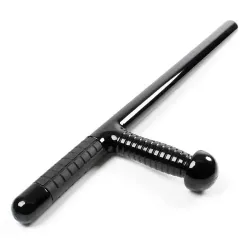
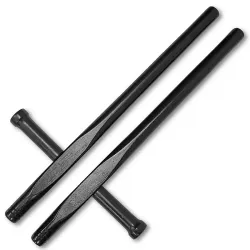
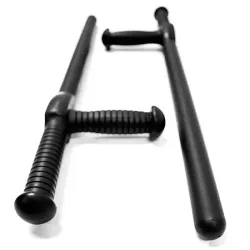
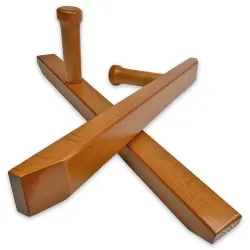
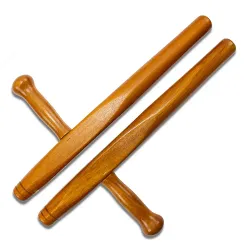
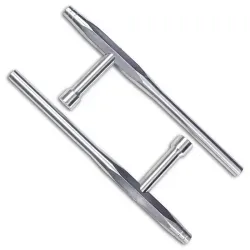
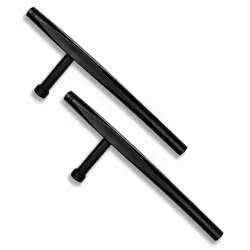
The design of the tonfa is deceptively simple, yet highly effective. It consists of a main shaft, typically 18 to 24 inches long, with a perpendicular handle near one end. This unique structure allows the user to grip the handle while using the shaft in various defensive and offensive techniques. The tonfa can be wielded in a variety of ways, from blocking and parrying incoming strikes to delivering precise jabs and thrusts. When used correctly, the tonfa is a versatile weapon that can be employed both defensively and offensively, making it a valuable asset for martial artists.
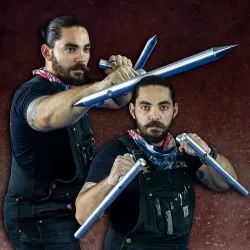
One of the most distinctive features of the tonfa is its ability to be used for both blocking and striking. In combat, the long part of the tonfa can be held against the forearm, serving as a protective shield to deflect incoming attacks. The user can then quickly swing the tonfa out to strike with the long shaft or use the handle to hook and control an opponent's movements. This dual-purpose functionality makes the tonfa a highly effective weapon for counter-attacking and controlling an opponent's range. The ability to switch between defensive and offensive positions quickly allows the practitioner to remain agile and unpredictable in combat.
The tonfa's unique design and functionality also make it an ideal tool for training. Practicing with tonfa weapons helps develop muscle memory, speed, and coordination. By using a heavier, metal tonfa, such as the ones available at Kombativ.com, martial artists can increase their strength and accuracy while honing their combat skills. The added weight of metal tonfa helps build endurance and strengthens the grip, providing a more challenging and rewarding training experience. Additionally, training with a heavier tonfa will improve the practitioner's overall dexterity, allowing them to transition between different techniques with ease.
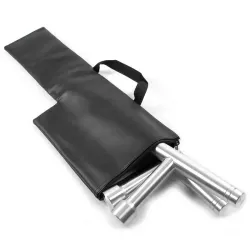
At Kombativ.com, we've taken the traditional tonfa and crafted it from durable, high-quality metal to enhance its performance. Unlike traditional wooden tonfas, which can wear down over time or break with heavy use, our metal tonfa weapons are built to last and are perfect for both beginner and advanced martial artists. Whether you're training for competition, self-defense, or simply looking to improve your overall martial arts skills, our tonfa weapons offer the durability and performance you need to take your training to the next level.
The versatility of the tonfa also extends beyond martial arts. Throughout history, it has been used in various forms of law enforcement and security work. In modern times, the tonfa has become a widely recognized baton, used by police forces around the world. The tonfa's design, with its ability to block and strike efficiently, makes it an ideal weapon for controlling a suspect or defending oneself in close combat situations. In fact, many law enforcement agencies have adopted tonfa-style batons as standard issue due to their effectiveness in non-lethal control techniques.
Historically, tonfas have been used in multiple combat scenarios. In Okinawan kobudo, they were used to defend against swords, spears, and other weapons. The practitioner would use the tonfa's shaft to block strikes and then counterattack with the handle or the opposite end of the weapon. The tonfa's versatility makes it an excellent tool for defending against a wide range of attacks, whether from a single opponent or multiple attackers. This makes the tonfa not only a defensive weapon but also an offensive tool that allows the practitioner to control the flow of a fight.
For martial arts practitioners, learning to wield the tonfa effectively requires dedication and practice. Mastering the tonfa involves perfecting your grip, timing, and control, as well as developing the proper stances and strikes. As with any martial arts weapon, consistent practice is essential to build the necessary skills and techniques to wield the tonfa with precision and confidence. Practicing with a pair of tonfas will help improve your ambidexterity, enhance your overall martial arts abilities, and give you a deeper understanding of the history and tradition behind this powerful weapon.
Kombativ.com offers a range of tonfa weapons suitable for all levels of martial artists, from beginners to advanced practitioners. Our tonfa are made with high-quality materials to ensure long-lasting durability and exceptional performance. Whether you're looking for a lightweight practice tonfa or a heavier metal version for combat training, we have the perfect weapon to suit your needs. Explore our selection of martial arts tonfas and elevate your training today.
The tonfa is a traditional Okinawan martial arts weapon designed for blocking, striking, and controlling an opponent's movements. In its original form, it was believed to have started as a wooden mill handle before evolving into a defensive weapon. Modern tonfas are used in styles like Karate, Kobudo, and certain police training systems because they teach coordination, balance, and precision. Practitioners use the tonfa to deflect attacks, trap limbs, or deliver controlled strikes without relying on brute strength.
When training with tonfas, martial artists focus on defensive flow and technique rather than sheer power. The side handle allows for quick rotation, making the tonfa weapon unique among traditional tools. Whether made from wood or polymer, the tonfa remains one of the most versatile weapons in martial arts practice.
While the tonfa and the modern police baton may look similar, they were developed for very different purposes. The tonfa comes from Okinawan martial arts, where it was used as a defensive tool for blocking and redirecting attacks. A police baton, on the other hand, was designed primarily for control and compliance in law enforcement settings.
The key difference lies in technique and balance. A tonfa is built for rotation and leverage, allowing a practitioner to spin or pivot the handle to create momentum. Police batons usually have a straight shaft or a side-handle variant that borrows from the tonfa's design but prioritizes durability and nonlethal restraint over traditional martial arts technique.
Because of its influence on modern batons, the tonfa weapon still plays an important role in law enforcement training and defensive tactics instruction around the world.
The tonfa weapon traces its roots back to Okinawa, Japan, where it is believed to have originated as a simple wooden handle used to turn millstones or grind grain. Over time, farmers and villagers adapted this everyday tool for self-defense during a period when conventional weapons were heavily restricted. Its compact design, combined with the ability to block, trap, and strike, made the tonfa an effective defensive weapon in Okinawan Kobudo.
As martial arts evolved, the tonfa became a formal training weapon used in Karate and other traditional systems. Its influence even reached modern policing, inspiring the side-handle batons used by law enforcement today. Despite its humble beginnings, the tonfa remains one of the most recognizable and historically significant weapons in martial arts.
A tonfa is designed with a side handle that allows it to be held in several stable positions. The most common grip is with the hand wrapped around the side handle and the longer shaft running along the forearm. This position protects the arm while allowing quick transitions between blocks and controlled strikes. The handle's placement lets the practitioner rotate or spin the tonfa to generate momentum, switch directions, or extend reach without changing grip.
Training with tonfas focuses on maintaining wrist alignment, smooth movement, and awareness of balance. The goal is to control the weapon's motion rather than relying on force. Whether made from wood for traditional forms or polymer for modern practice, the tonfa's unique handle design gives it a level of versatility that few other martial arts weapons can match.
The tonfa is most closely associated with Okinawan Kobudo, a traditional martial art that emphasizes the use of farming and household tools adapted for self-defense. It is also practiced in certain Karate styles, where students learn to use tonfas for blocks, deflections, and controlled counterstrikes. Many modern dojos include tonfa training to help students develop timing, coordination, and understanding of weapon mechanics.
Outside of Okinawan martial arts, the tonfa has influenced defensive tactics programs in police and security training around the world. The side-handle baton used by many law enforcement agencies was directly inspired by the tonfa's design, proving how a centuries-old concept still shapes modern defense techniques.
Both wooden and polymer tonfas have their advantages, and the best choice depends on your training goals. Traditionalists often prefer wood because it offers an authentic feel, proper weight distribution, and the same balance used in classical Okinawan forms. Wooden tonfas also develop wrist and grip strength, making them ideal for students focused on traditional martial arts practice.
Polymer tonfas, on the other hand, are more durable and less likely to crack or warp from impact. They are also lighter, which makes them a good choice for beginners or for drills that involve speed and repetition. Many schools keep both types on hand, using wood for kata and polymer for contact training. In the end, either material can be effective as long as the tonfas are well-made and properly balanced.
Laws about carrying a tonfa weapon vary widely depending on where you live. In some areas, impact tools like batons or tonfas may be restricted or require specific permits to carry in public. Other regions make a clear distinction between training equipment used in martial arts schools and weapons intended for self-defense. Because those laws can change, it is always best to confirm the current regulations in your city or state before transporting or carrying any tonfa.
Most martial artists own tonfas strictly for practice, kata, or display. Keeping them at home, in a dojo, or within a training environment is generally the safest and most responsible way to enjoy them while avoiding potential legal issues.
A tonfa differs from a nightstick or baton mainly in its design and how it is used. The tonfa features a side handle that allows it to rotate and rest along the forearm, giving the user both offensive and defensive options. This design lets a martial artist block strikes, trap limbs, and deliver controlled counterattacks using rotation and leverage. In contrast, a nightstick or baton is typically a straight stick used for reach and linear strikes rather than rotational movement.
Tonfa weapons are built for balance and precision, while batons emphasize distance and control. The tonfa's side handle changes how momentum is generated, making it more of an extension of the arm rather than a separate striking tool. Although modern police batons were inspired by traditional tonfas, they are heavier, less flexible, and designed for a different purpose in modern defensive tactics.
Yes, beginners can safely train with a tonfa as long as they do so under the guidance of a qualified instructor. Like any martial arts weapon, proper technique and control are essential for safety. Beginners usually start with lightweight training tonfas made from wood or polymer so they can focus on coordination and form before adding speed or power. This approach helps build strength and timing while reducing the risk of injury.
Early training emphasizes balance, wrist alignment, and smooth rotation rather than striking force. Once a student becomes comfortable with the mechanics, more advanced drills and paired exercises can be introduced. With patience and consistent practice, the tonfa becomes a rewarding weapon to learn and a valuable tool for developing overall martial arts skill.
The ideal tonfa length depends on the user's arm size and intended training style. In general, the end of the tonfa should reach just past the elbow when the handle is gripped in a natural position. This length allows the forearm to be fully protected while still giving enough reach for blocks and strikes. A tonfa that is too short will not cover the forearm properly, while one that is too long can feel unbalanced and limit rotation.
For most adults, standard training tonfas range from 18 to 24 inches in length. Students often test different sizes at their dojo to find the most comfortable fit before purchasing their own set. Wooden tonfas tend to be slightly heavier, so proper sizing also helps maintain balance and reduce fatigue during long practice sessions.
Historical Origins of the Tonfa
The origin of the tonfa can be traced back to ancient Okinawa, where it was originally used as a farming tool. The long wooden shafts, which were typically used for grinding grain or turning millstones, were repurposed by the island's farmers for self-defense. Over time, these tools were refined and modified to serve as effective weapons in close-quarters combat. The tonfa is often associated with Okinawan martial arts, particularly the kobudo tradition, where it was incorporated alongside other weapons such as the bo staff and nunchaku.
Tonfa Design and Structure
The design of the tonfa is deceptively simple, yet highly effective. It consists of a main shaft, typically 18 to 24 inches long, with a perpendicular handle near one end. This unique structure allows the user to grip the handle while using the shaft in various defensive and offensive techniques. The tonfa can be wielded in a variety of ways, from blocking and parrying incoming strikes to delivering precise jabs and thrusts. When used correctly, the tonfa is a versatile weapon that can be employed both defensively and offensively, making it a valuable asset for martial artists.
Blocking and Striking Techniques
One of the most distinctive features of the tonfa is its ability to be used for both blocking and striking. In combat, the long part of the tonfa can be held against the forearm, serving as a protective shield to deflect incoming attacks. The user can then quickly swing the tonfa out to strike with the long shaft or use the handle to hook and control an opponent's movements. This dual-purpose functionality makes the tonfa a highly effective weapon for counter-attacking and controlling an opponent's range. The ability to switch between defensive and offensive positions quickly allows the practitioner to remain agile and unpredictable in combat.
Tonfa Training and Skill Development
The tonfa's unique design and functionality also make it an ideal tool for training. Practicing with tonfa weapons helps develop muscle memory, speed, and coordination. By using a heavier, metal tonfa, such as the ones available at Kombativ.com, martial artists can increase their strength and accuracy while honing their combat skills. The added weight of metal tonfa helps build endurance and strengthens the grip, providing a more challenging and rewarding training experience. Additionally, training with a heavier tonfa will improve the practitioner's overall dexterity, allowing them to transition between different techniques with ease.
Modern Metal Tonfa Construction
At Kombativ.com, we've taken the traditional tonfa and crafted it from durable, high-quality metal to enhance its performance. Unlike traditional wooden tonfas, which can wear down over time or break with heavy use, our metal tonfa weapons are built to last and are perfect for both beginner and advanced martial artists. Whether you're training for competition, self-defense, or simply looking to improve your overall martial arts skills, our tonfa weapons offer the durability and performance you need to take your training to the next level.
Tonfa Use in Law Enforcement
The versatility of the tonfa also extends beyond martial arts. Throughout history, it has been used in various forms of law enforcement and security work. In modern times, the tonfa has become a widely recognized baton, used by police forces around the world. The tonfa's design, with its ability to block and strike efficiently, makes it an ideal weapon for controlling a suspect or defending oneself in close combat situations. In fact, many law enforcement agencies have adopted tonfa-style batons as standard issue due to their effectiveness in non-lethal control techniques.
Combat Applications in Traditional Martial Arts
Historically, tonfas have been used in multiple combat scenarios. In Okinawan kobudo, they were used to defend against swords, spears, and other weapons. The practitioner would use the tonfa's shaft to block strikes and then counterattack with the handle or the opposite end of the weapon. The tonfa's versatility makes it an excellent tool for defending against a wide range of attacks, whether from a single opponent or multiple attackers. This makes the tonfa not only a defensive weapon but also an offensive tool that allows the practitioner to control the flow of a fight.
Learning and Mastering the Tonfa
For martial arts practitioners, learning to wield the tonfa effectively requires dedication and practice. Mastering the tonfa involves perfecting your grip, timing, and control, as well as developing the proper stances and strikes. As with any martial arts weapon, consistent practice is essential to build the necessary skills and techniques to wield the tonfa with precision and confidence. Practicing with a pair of tonfas will help improve your ambidexterity, enhance your overall martial arts abilities, and give you a deeper understanding of the history and tradition behind this powerful weapon.
Choosing the Right Tonfa
Kombativ.com offers a range of tonfa weapons suitable for all levels of martial artists, from beginners to advanced practitioners. Our tonfa are made with high-quality materials to ensure long-lasting durability and exceptional performance. Whether you're looking for a lightweight practice tonfa or a heavier metal version for combat training, we have the perfect weapon to suit your needs. Explore our selection of martial arts tonfas and elevate your training today.
What Is a Tonfa Used for in Martial Arts?
The tonfa is a traditional Okinawan martial arts weapon designed for blocking, striking, and controlling an opponent's movements. In its original form, it was believed to have started as a wooden mill handle before evolving into a defensive weapon. Modern tonfas are used in styles like Karate, Kobudo, and certain police training systems because they teach coordination, balance, and precision. Practitioners use the tonfa to deflect attacks, trap limbs, or deliver controlled strikes without relying on brute strength.
When training with tonfas, martial artists focus on defensive flow and technique rather than sheer power. The side handle allows for quick rotation, making the tonfa weapon unique among traditional tools. Whether made from wood or polymer, the tonfa remains one of the most versatile weapons in martial arts practice.
Is a Tonfa the Same as a Police Baton?
While the tonfa and the modern police baton may look similar, they were developed for very different purposes. The tonfa comes from Okinawan martial arts, where it was used as a defensive tool for blocking and redirecting attacks. A police baton, on the other hand, was designed primarily for control and compliance in law enforcement settings.
The key difference lies in technique and balance. A tonfa is built for rotation and leverage, allowing a practitioner to spin or pivot the handle to create momentum. Police batons usually have a straight shaft or a side-handle variant that borrows from the tonfa's design but prioritizes durability and nonlethal restraint over traditional martial arts technique.
Because of its influence on modern batons, the tonfa weapon still plays an important role in law enforcement training and defensive tactics instruction around the world.
What Is the Origin of the Tonfa Weapon?
The tonfa weapon traces its roots back to Okinawa, Japan, where it is believed to have originated as a simple wooden handle used to turn millstones or grind grain. Over time, farmers and villagers adapted this everyday tool for self-defense during a period when conventional weapons were heavily restricted. Its compact design, combined with the ability to block, trap, and strike, made the tonfa an effective defensive weapon in Okinawan Kobudo.
As martial arts evolved, the tonfa became a formal training weapon used in Karate and other traditional systems. Its influence even reached modern policing, inspiring the side-handle batons used by law enforcement today. Despite its humble beginnings, the tonfa remains one of the most recognizable and historically significant weapons in martial arts.
How Do You Properly Hold a Tonfa?
A tonfa is designed with a side handle that allows it to be held in several stable positions. The most common grip is with the hand wrapped around the side handle and the longer shaft running along the forearm. This position protects the arm while allowing quick transitions between blocks and controlled strikes. The handle's placement lets the practitioner rotate or spin the tonfa to generate momentum, switch directions, or extend reach without changing grip.
Training with tonfas focuses on maintaining wrist alignment, smooth movement, and awareness of balance. The goal is to control the weapon's motion rather than relying on force. Whether made from wood for traditional forms or polymer for modern practice, the tonfa's unique handle design gives it a level of versatility that few other martial arts weapons can match.
What Martial Arts Use the Tonfa?
The tonfa is most closely associated with Okinawan Kobudo, a traditional martial art that emphasizes the use of farming and household tools adapted for self-defense. It is also practiced in certain Karate styles, where students learn to use tonfas for blocks, deflections, and controlled counterstrikes. Many modern dojos include tonfa training to help students develop timing, coordination, and understanding of weapon mechanics.
Outside of Okinawan martial arts, the tonfa has influenced defensive tactics programs in police and security training around the world. The side-handle baton used by many law enforcement agencies was directly inspired by the tonfa's design, proving how a centuries-old concept still shapes modern defense techniques.
Are Wooden or Polymer Tonfas Better for Training?
Both wooden and polymer tonfas have their advantages, and the best choice depends on your training goals. Traditionalists often prefer wood because it offers an authentic feel, proper weight distribution, and the same balance used in classical Okinawan forms. Wooden tonfas also develop wrist and grip strength, making them ideal for students focused on traditional martial arts practice.
Polymer tonfas, on the other hand, are more durable and less likely to crack or warp from impact. They are also lighter, which makes them a good choice for beginners or for drills that involve speed and repetition. Many schools keep both types on hand, using wood for kata and polymer for contact training. In the end, either material can be effective as long as the tonfas are well-made and properly balanced.
Is a Tonfa Legal to Carry for Self-Defense?
Laws about carrying a tonfa weapon vary widely depending on where you live. In some areas, impact tools like batons or tonfas may be restricted or require specific permits to carry in public. Other regions make a clear distinction between training equipment used in martial arts schools and weapons intended for self-defense. Because those laws can change, it is always best to confirm the current regulations in your city or state before transporting or carrying any tonfa.
Most martial artists own tonfas strictly for practice, kata, or display. Keeping them at home, in a dojo, or within a training environment is generally the safest and most responsible way to enjoy them while avoiding potential legal issues.
How Is a Tonfa Different from a Nightstick or Baton?
A tonfa differs from a nightstick or baton mainly in its design and how it is used. The tonfa features a side handle that allows it to rotate and rest along the forearm, giving the user both offensive and defensive options. This design lets a martial artist block strikes, trap limbs, and deliver controlled counterattacks using rotation and leverage. In contrast, a nightstick or baton is typically a straight stick used for reach and linear strikes rather than rotational movement.
Tonfa weapons are built for balance and precision, while batons emphasize distance and control. The tonfa's side handle changes how momentum is generated, making it more of an extension of the arm rather than a separate striking tool. Although modern police batons were inspired by traditional tonfas, they are heavier, less flexible, and designed for a different purpose in modern defensive tactics.
Can Beginners Safely Train with a Tonfa?
Yes, beginners can safely train with a tonfa as long as they do so under the guidance of a qualified instructor. Like any martial arts weapon, proper technique and control are essential for safety. Beginners usually start with lightweight training tonfas made from wood or polymer so they can focus on coordination and form before adding speed or power. This approach helps build strength and timing while reducing the risk of injury.
Early training emphasizes balance, wrist alignment, and smooth rotation rather than striking force. Once a student becomes comfortable with the mechanics, more advanced drills and paired exercises can be introduced. With patience and consistent practice, the tonfa becomes a rewarding weapon to learn and a valuable tool for developing overall martial arts skill.
What Length Tonfa Should I Choose?
The ideal tonfa length depends on the user's arm size and intended training style. In general, the end of the tonfa should reach just past the elbow when the handle is gripped in a natural position. This length allows the forearm to be fully protected while still giving enough reach for blocks and strikes. A tonfa that is too short will not cover the forearm properly, while one that is too long can feel unbalanced and limit rotation.
For most adults, standard training tonfas range from 18 to 24 inches in length. Students often test different sizes at their dojo to find the most comfortable fit before purchasing their own set. Wooden tonfas tend to be slightly heavier, so proper sizing also helps maintain balance and reduce fatigue during long practice sessions.
RECENTLY VIEWED