





Automatic Knives including OTF Knives & Switchblades
-
 🔍︎ QUICK VIEW
$21.95
🔍︎ QUICK VIEW
$21.95 -
 🔍︎ QUICK VIEW
$54.95
🔍︎ QUICK VIEW
$54.95 -
 🔍︎ QUICK VIEW
-
 🔍︎ QUICK VIEW
$54.95
🔍︎ QUICK VIEW
$54.95 -
 🔍︎ QUICK VIEW
$69.95
🔍︎ QUICK VIEW
$69.95 -
 🔍︎ QUICK VIEW
$64.95
🔍︎ QUICK VIEW
$64.95 -
 🔍︎ QUICK VIEW
$52.95
🔍︎ QUICK VIEW
$52.95 -
 🔍︎ QUICK VIEW
$52.95
🔍︎ QUICK VIEW
$52.95 -
 🔍︎ QUICK VIEW
$19.95
🔍︎ QUICK VIEW
$19.95 -
 🔍︎ QUICK VIEW
$21.95
🔍︎ QUICK VIEW
$21.95 -
 🔍︎ QUICK VIEW
-
 🔍︎ QUICK VIEW
$34.95
🔍︎ QUICK VIEW
$34.95 -
 🔍︎ QUICK VIEW
$54.95
🔍︎ QUICK VIEW
$54.95 -
 🔍︎ QUICK VIEW
$54.95
🔍︎ QUICK VIEW
$54.95 -
 🔍︎ QUICK VIEW
-
 🔍︎ QUICK VIEW
$39.95
🔍︎ QUICK VIEW
$39.95 -
 🔍︎ QUICK VIEW
$49.95
🔍︎ QUICK VIEW
$49.95 -
 🔍︎ QUICK VIEW
$34.95
🔍︎ QUICK VIEW
$34.95 -
 🔍︎ QUICK VIEW
$49.95
🔍︎ QUICK VIEW
$49.95 -
 🔍︎ QUICK VIEW
$52.95
🔍︎ QUICK VIEW
$52.95 -
 🔍︎ QUICK VIEW
$39.95
🔍︎ QUICK VIEW
$39.95 -
 🔍︎ QUICK VIEW
$69.95
🔍︎ QUICK VIEW
$69.95 -
 🔍︎ QUICK VIEW
$59.95
🔍︎ QUICK VIEW
$59.95 -
 🔍︎ QUICK VIEW
$56.95
🔍︎ QUICK VIEW
$56.95 -
 🔍︎ QUICK VIEW
$44.95
🔍︎ QUICK VIEW
$44.95 -
 🔍︎ QUICK VIEW
$44.95
🔍︎ QUICK VIEW
$44.95 -
 🔍︎ QUICK VIEW
$34.95
🔍︎ QUICK VIEW
$34.95 -
 🔍︎ QUICK VIEW
$59.99
🔍︎ QUICK VIEW
$59.99 -
 🔍︎ QUICK VIEW
$49.99
🔍︎ QUICK VIEW
$49.99 -
 🔍︎ QUICK VIEW
$29.95
🔍︎ QUICK VIEW
$29.95 -
 🔍︎ QUICK VIEW
$54.95
🔍︎ QUICK VIEW
$54.95 -
 🔍︎ QUICK VIEW
-
 🔍︎ QUICK VIEW
$54.95
🔍︎ QUICK VIEW
$54.95 -
 🔍︎ QUICK VIEW
-
 🔍︎ QUICK VIEW
$54.95
🔍︎ QUICK VIEW
$54.95 -
 🔍︎ QUICK VIEW
$54.95
🔍︎ QUICK VIEW
$54.95 -
 🔍︎ QUICK VIEW
-
 🔍︎ QUICK VIEW
$24.95
🔍︎ QUICK VIEW
$24.95 -
 🔍︎ QUICK VIEW
-
 🔍︎ QUICK VIEW
$49.95
🔍︎ QUICK VIEW
$49.95 -
 🔍︎ QUICK VIEW
$34.95
🔍︎ QUICK VIEW
$34.95 -
 🔍︎ QUICK VIEW
$24.95
🔍︎ QUICK VIEW
$24.95 -
 🔍︎ QUICK VIEW
$34.95
🔍︎ QUICK VIEW
$34.95 -
 🔍︎ QUICK VIEW
$39.95
🔍︎ QUICK VIEW
$39.95 -
 🔍︎ QUICK VIEW
$42.95
🔍︎ QUICK VIEW
$42.95 -
 🔍︎ QUICK VIEW
$44.95
🔍︎ QUICK VIEW
$44.95 -
 🔍︎ QUICK VIEW
$64.95
🔍︎ QUICK VIEW
$64.95 -
 🔍︎ QUICK VIEW
$54.95
🔍︎ QUICK VIEW
$54.95 -
 🔍︎ QUICK VIEW
$29.95
🔍︎ QUICK VIEW
$29.95 -
 🔍︎ QUICK VIEW
$54.95
🔍︎ QUICK VIEW
$54.95 -
 🔍︎ QUICK VIEW
$36.95
🔍︎ QUICK VIEW
$36.95 -
 🔍︎ QUICK VIEW
$59.95
🔍︎ QUICK VIEW
$59.95 -
 🔍︎ QUICK VIEW
-
 🔍︎ QUICK VIEW
-
 🔍︎ QUICK VIEW
$49.95
🔍︎ QUICK VIEW
$49.95 -
 🔍︎ QUICK VIEW
$64.95
🔍︎ QUICK VIEW
$64.95 -
 🔍︎ QUICK VIEW
$23.95
🔍︎ QUICK VIEW
$23.95 -
 🔍︎ QUICK VIEW
$54.95
🔍︎ QUICK VIEW
$54.95 -
 🔍︎ QUICK VIEW
$24.95
🔍︎ QUICK VIEW
$24.95 -
 🔍︎ QUICK VIEW
-
 🔍︎ QUICK VIEW
$54.95
🔍︎ QUICK VIEW
$54.95 -
 🔍︎ QUICK VIEW
$64.95
🔍︎ QUICK VIEW
$64.95 -
 🔍︎ QUICK VIEW
$59.95
🔍︎ QUICK VIEW
$59.95 -
 🔍︎ QUICK VIEW
$69.95
🔍︎ QUICK VIEW
$69.95 -
 🔍︎ QUICK VIEW
$69.95
🔍︎ QUICK VIEW
$69.95 -
 🔍︎ QUICK VIEW
$24.95
🔍︎ QUICK VIEW
$24.95 -
 🔍︎ QUICK VIEW
$52.95
🔍︎ QUICK VIEW
$52.95 -
 🔍︎ QUICK VIEW
$49.95
🔍︎ QUICK VIEW
$49.95 -
 🔍︎ QUICK VIEW
$44.95
🔍︎ QUICK VIEW
$44.95 -
 🔍︎ QUICK VIEW
$49.95
🔍︎ QUICK VIEW
$49.95 -
 🔍︎ QUICK VIEW
$24.95
🔍︎ QUICK VIEW
$24.95 -
 🔍︎ QUICK VIEW
-
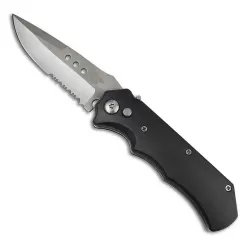 🔍︎ QUICK VIEW
$19.95
🔍︎ QUICK VIEW
$19.95 -
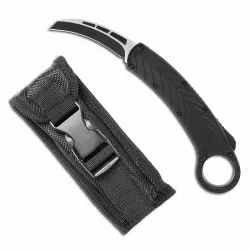 🔍︎ QUICK VIEW
$69.95
🔍︎ QUICK VIEW
$69.95
 (1)
(1)Automatic Knives including OTF Knives & Switchblades
When it comes to knives, few designs are as fascinating and versatile as the OTF (Out-the-Front) knife. These blades have been turning heads since their inception, and they continue to be a top choice for collectors, enthusiasts, and everyday carry (EDC) users alike. If you've ever wondered what makes an OTF knife stand out from the rest, or why these automatic knives have gained such a following over the years, you've come to the right place.
The history of the OTF knife goes back quite a bit further than many people realize. The very first out-the-front knife was created in 1860, and though it was somewhat rudimentary compared to today's models, it laid the foundation for the automatic knives we use today. Early versions were typically large and bulky, often seen as tactical tools rather than everyday carry items. But as time went on, the design improved drastically, becoming lighter, more compact, and easier to use.
By the time the mid-20th century rolled around, OTF knives and switchblades were everywhere. Farmers, hunters, and ranch workers were some of the first to adopt these knives, thanks to their fast and effective deployment mechanisms. These knives became a symbol of convenience and utility; perfect for those who needed a reliable tool that could be accessed with just one hand in a pinch. The ability to quickly deploy the blade with a flick of the wrist made the OTF knife incredibly popular, not only among outdoor professionals but also among the general public.
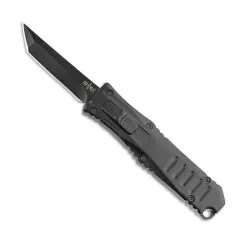
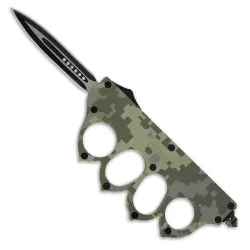
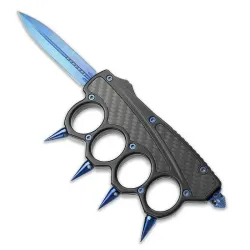
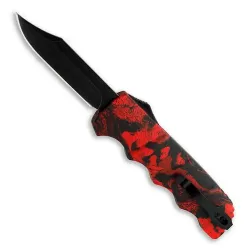
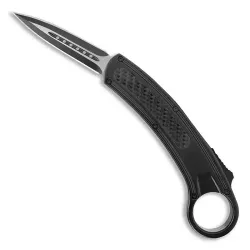
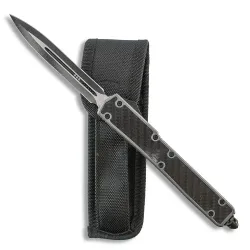
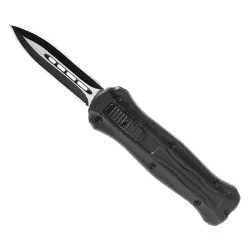
The key feature that sets OTF knives apart from other automatic knives or switchblade knives is their unique mechanism. Instead of folding like a traditional knife, the blade slides out of the front of the handle in a smooth, almost mesmerizing motion. This "out-the-front" action is where the knife gets its name. The ease of deployment and retraction makes these knives an attractive option for anyone who values speed and efficiency.
OTF knives come in two main categories: single-action and double-action. Single-action OTF knives deploy automatically with the press of a button, but you'll need to manually retract the blade after use. These are typically the simpler models and can still pack a punch with their sharp edges and quick deployment. Double-action OTF knives, on the other hand, take things a step further. With just the flick of a switch, you can deploy and retract the blade in one fluid motion. This makes them even more convenient and often gives them a sleeker, more refined feel.
One thing that sets both types of OTF knives apart from other automatic knives is their versatility. Many models feature additional tools like a glass breaker pommel at the end of the handle, making them a great choice for tactical situations or self-defense. If you ever find yourself in an emergency, a well-placed glass breaker can be a lifesaver, allowing you to escape a vehicle or building quickly and safely.
While OTF knives are incredibly functional, it's important to note that they come with a bit of controversy. In certain regions, switchblade knives and automatic knives are heavily regulated or outright banned. These laws vary widely, so it's always a good idea to check the regulations in your area before purchasing an automatic knife. Even though OTF knives are legal in many places, others restrict them due to safety concerns, with some jurisdictions classifying them as dangerous weapons due to their fast deployment mechanisms. Be sure to double-check the laws in your state or country to avoid any potential legal issues.
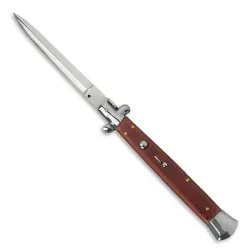
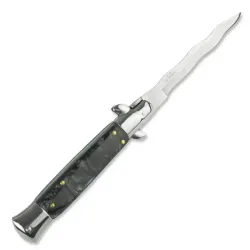
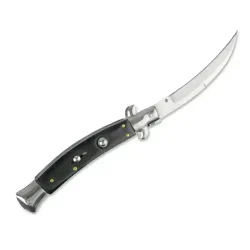
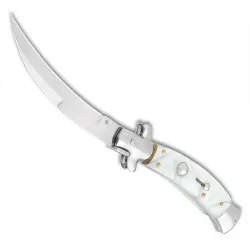
Switchblade knives are often lumped in with OTF knives, though not all automatic knives fall under this umbrella. The switchblade is a broader term that refers to any knife that opens automatically with the press of a button or switch. OTF knives are a subcategory of switchblades, with their unique design and action. Unlike traditional folding knives or fixed blades, switchblade knives rely on internal springs to deploy the blade, which can make them quicker to use in certain situations. While OTF knives push the blade straight out, switchblades often swing the blade out sideways. Regardless of their design, both types share the common benefit of one-handed, automatic deployment, which is a key reason they've been so popular for decades.
The appeal of switchblades goes beyond their functionality; they've also become cultural icons in their own right. From their appearance in classic films like West Side Story to their association with rebellious youth in the 1950s and 1960s, switchblades have an undeniable cool factor. Whether you're into vintage knives, collecting rare models, or just looking for a high-performance tool for everyday carry, switchblade knives are sure to impress.
When shopping for OTF knives or other spring loaded knives, there are a few things you'll want to keep in mind. The quality of the materials used in the construction of the knife is crucial, as it can impact both the durability and functionality of the blade. Look for high-carbon steel or stainless steel blades that will hold their edge well and resist corrosion. The handle material is also important, as a durable grip will help you maintain control over the knife, especially in tough conditions. Popular materials for OTF knife handles include aluminum, titanium, and various synthetic composites, all of which offer different benefits in terms of weight, strength, and grip.
Price is another factor to consider when choosing the right OTF knife or switchblade knife. Higher-end models, which are often made with premium materials and feature advanced mechanisms, can be quite expensive. However, there are also budget-friendly options available that still offer good performance without breaking the bank. Whether you're a first-time buyer or a seasoned collector, there's a spring-loaded knife for every budget.
OTF knives and switchblade knives have earned their place in the world of knives thanks to their unique functionality, versatility, and history. From their early days in the mid-1800s to their rise as cultural icons in the 20th century, these automatic knives have continued to evolve and impress. So go ahead, explore the world of OTF knives and switchblades; just be sure to check the laws in your area and choose the knife that fits your needs.
An automatic knife is a blade that opens fully with the press of a button, switch, or lever. The internal spring does the work for you, so the blade deploys fast without needing to push a thumb stud or manual opener. Many people use the terms automatic knife and switchblade to describe the same thing, although OTF models operate by sliding the blade straight out the front of the handle. These knives are popular for everyday carry because they offer quick, reliable one handed operation. Always check your local laws before buying or carrying one.
Most people use the terms automatic knife and switchblade to describe the same style of knife. Both open with a button or switch that triggers a spring to deploy the blade. The main difference comes down to design. Side opening models swing the blade out from the handle like a traditional folding knife, while OTF versions push the blade straight forward through the front. All of these fall under the larger category of automatic knives, but the specific style you choose depends on how you prefer the knife to open. Always review your local laws before purchasing.
Laws about automatic knives vary widely depending on where you live. Some states allow ownership but restrict carrying them in public, while others limit blade length or require specific conditions for legal carry. A few states still prohibit certain types of automatic knives altogether. Since these rules can change, it is important to check the most current laws in your state or city before buying or carrying an automatic knife. Kombativ does not provide legal advice, so always confirm local regulations to stay compliant.
Many people use automatic knives for everyday carry because they open quickly and require very little effort to deploy. The compact size and one handed operation make them practical for common daily tasks like opening packages or cutting cord. Whether you can carry one legally depends on the laws in your area, since some places allow ownership but restrict public carry. If automatic knives are permitted where you live, choosing a reliable model with a secure locking mechanism helps ensure safe and consistent use throughout the day.
A manual knife requires you to open the blade entirely by hand using a thumb stud, nail nick, or similar feature. An assisted opening knife uses a spring to help complete the opening motion once you begin moving the blade. An automatic knife activates the spring with a button or switch, allowing the blade to deploy fully with almost no effort. All three styles function well for everyday tasks, but automatic knives offer the fastest and most direct one handed operation. Your choice depends on the opening style you prefer and the laws in your area.
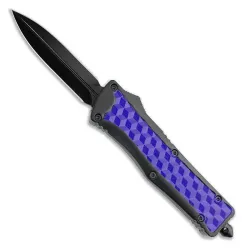
An OTF knife is a type of automatic knife that sends the blade straight out the front of the handle rather than swinging it open from the side. When you push the activation switch, the internal spring drives the blade forward into a locked position. On double action models, pulling the switch in the opposite direction retracts the blade the same way. This setup gives you fast one handed operation and a compact profile that stays easy to carry. OTF knives are popular for users who want rapid deployment with minimal movement.
The term "switchblade" is often used as a broad term for any automatic knife that opens with the push of a button or switch. This includes a variety of mechanisms, but generally, switchblades can be divided into two categories: side-opening and out-the-front (OTF) knives.
So, while all OTF knives are switchblades, not all switchblades are OTF knives. The main difference between the two is the direction in which the blade deploys: OTF knives have a blade that comes out of the front, while side-opening switchblades have a blade that swings out to the side.
Yes, OTF knives can be effective tools for self-defense due to their quick one-handed deployment and versatile design. The fast blade action makes them ideal for situations where speed and efficiency are crucial. Some OTF knives also include additional features like glass breakers or seatbelt cutters, adding to their overall utility in emergency scenarios. However, always check your local laws regarding self-defense knives to ensure compliance with legal restrictions.
The legality of OTF knives, including automatic knives and switchblades, varies depending on your location. Some states, cities, or countries have restrictions on the possession or carrying of automatic knives, while others allow them under certain conditions. Before purchasing an OTF knife, be sure to check your local laws to ensure that it is legal to own or carry one in your area.
An OTF knife offers faster and more direct deployment than a traditional folding knife. Instead of rotating the blade outward with your thumb, you activate a switch that sends the blade straight forward in one motion. This design keeps the knife easy to operate with one hand, even when space is limited. The slim, rectangular handle shape also makes OTF knives comfortable to carry in a pocket without taking up much room. Many users prefer them for the combination of speed, convenience, and compact size.
Double action OTF knives allow you to extend and retract the blade with the same switch, which makes them fast and convenient for everyday use. Single action models only deploy automatically and must be reset manually, but they are often simpler mechanically and can feel more powerful during deployment. Neither style is universally better. It comes down to whether you prefer the convenience of automatic retraction or the straightforward design of a single action knife.
Automatic knives come in a wide range of blade steels, and the best choice depends on what you want from the knife. Stainless steels like 8Cr13MoV and AUS-8 offer solid corrosion resistance and are easy to sharpen, which makes them great for everyday carry. Higher end steels such as D2, S35VN, or 154CM provide better edge retention and improved durability for users who want a longer lasting cutting edge. No matter the steel, regular cleaning and occasional sharpening help any automatic knife stay reliable.
To keep an OTF knife working smoothly, start by blowing out any pocket lint or debris from the blade channel. A small amount of light oil on the internal track can improve action, but avoid heavy lubrication since excess oil can attract dirt. It also helps to wipe the blade clean after each use and give the handle a quick inspection to make sure the switch moves freely. If the knife ever feels sluggish, basic cleaning usually restores proper function. Follow the manufacturer guidelines if you decide to disassemble the knife, since internal parts can be specific to each model.
The History of OTF and Automatic Knives
The history of the OTF knife goes back quite a bit further than many people realize. The very first out-the-front knife was created in 1860, and though it was somewhat rudimentary compared to today's models, it laid the foundation for the automatic knives we use today. Early versions were typically large and bulky, often seen as tactical tools rather than everyday carry items. But as time went on, the design improved drastically, becoming lighter, more compact, and easier to use.
By the time the mid-20th century rolled around, OTF knives and switchblades were everywhere. Farmers, hunters, and ranch workers were some of the first to adopt these knives, thanks to their fast and effective deployment mechanisms. These knives became a symbol of convenience and utility; perfect for those who needed a reliable tool that could be accessed with just one hand in a pinch. The ability to quickly deploy the blade with a flick of the wrist made the OTF knife incredibly popular, not only among outdoor professionals but also among the general public.
How OTF Knives Work
The key feature that sets OTF knives apart from other automatic knives or switchblade knives is their unique mechanism. Instead of folding like a traditional knife, the blade slides out of the front of the handle in a smooth, almost mesmerizing motion. This "out-the-front" action is where the knife gets its name. The ease of deployment and retraction makes these knives an attractive option for anyone who values speed and efficiency.
Single Action vs Double Action OTF Knives
OTF knives come in two main categories: single-action and double-action. Single-action OTF knives deploy automatically with the press of a button, but you'll need to manually retract the blade after use. These are typically the simpler models and can still pack a punch with their sharp edges and quick deployment. Double-action OTF knives, on the other hand, take things a step further. With just the flick of a switch, you can deploy and retract the blade in one fluid motion. This makes them even more convenient and often gives them a sleeker, more refined feel.
Additional Features and Practical Uses
One thing that sets both types of OTF knives apart from other automatic knives is their versatility. Many models feature additional tools like a glass breaker pommel at the end of the handle, making them a great choice for tactical situations or self-defense. If you ever find yourself in an emergency, a well-placed glass breaker can be a lifesaver, allowing you to escape a vehicle or building quickly and safely.
Legal Considerations for OTF and Automatic Knives
While OTF knives are incredibly functional, it's important to note that they come with a bit of controversy. In certain regions, switchblade knives and automatic knives are heavily regulated or outright banned. These laws vary widely, so it's always a good idea to check the regulations in your area before purchasing an automatic knife. Even though OTF knives are legal in many places, others restrict them due to safety concerns, with some jurisdictions classifying them as dangerous weapons due to their fast deployment mechanisms. Be sure to double-check the laws in your state or country to avoid any potential legal issues.
OTF Knives vs Switchblade Knives
Switchblade knives are often lumped in with OTF knives, though not all automatic knives fall under this umbrella. The switchblade is a broader term that refers to any knife that opens automatically with the press of a button or switch. OTF knives are a subcategory of switchblades, with their unique design and action. Unlike traditional folding knives or fixed blades, switchblade knives rely on internal springs to deploy the blade, which can make them quicker to use in certain situations. While OTF knives push the blade straight out, switchblades often swing the blade out sideways. Regardless of their design, both types share the common benefit of one-handed, automatic deployment, which is a key reason they've been so popular for decades.
The appeal of switchblades goes beyond their functionality; they've also become cultural icons in their own right. From their appearance in classic films like West Side Story to their association with rebellious youth in the 1950s and 1960s, switchblades have an undeniable cool factor. Whether you're into vintage knives, collecting rare models, or just looking for a high-performance tool for everyday carry, switchblade knives are sure to impress.
Materials, Build Quality, and Price Range
When shopping for OTF knives or other spring loaded knives, there are a few things you'll want to keep in mind. The quality of the materials used in the construction of the knife is crucial, as it can impact both the durability and functionality of the blade. Look for high-carbon steel or stainless steel blades that will hold their edge well and resist corrosion. The handle material is also important, as a durable grip will help you maintain control over the knife, especially in tough conditions. Popular materials for OTF knife handles include aluminum, titanium, and various synthetic composites, all of which offer different benefits in terms of weight, strength, and grip.
Price is another factor to consider when choosing the right OTF knife or switchblade knife. Higher-end models, which are often made with premium materials and feature advanced mechanisms, can be quite expensive. However, there are also budget-friendly options available that still offer good performance without breaking the bank. Whether you're a first-time buyer or a seasoned collector, there's a spring-loaded knife for every budget.
Why OTF Knives Remain So Popular
OTF knives and switchblade knives have earned their place in the world of knives thanks to their unique functionality, versatility, and history. From their early days in the mid-1800s to their rise as cultural icons in the 20th century, these automatic knives have continued to evolve and impress. So go ahead, explore the world of OTF knives and switchblades; just be sure to check the laws in your area and choose the knife that fits your needs.
What Is an Automatic Knife?
An automatic knife is a blade that opens fully with the press of a button, switch, or lever. The internal spring does the work for you, so the blade deploys fast without needing to push a thumb stud or manual opener. Many people use the terms automatic knife and switchblade to describe the same thing, although OTF models operate by sliding the blade straight out the front of the handle. These knives are popular for everyday carry because they offer quick, reliable one handed operation. Always check your local laws before buying or carrying one.
Are Automatic Knives the Same as Switchblades?
Most people use the terms automatic knife and switchblade to describe the same style of knife. Both open with a button or switch that triggers a spring to deploy the blade. The main difference comes down to design. Side opening models swing the blade out from the handle like a traditional folding knife, while OTF versions push the blade straight forward through the front. All of these fall under the larger category of automatic knives, but the specific style you choose depends on how you prefer the knife to open. Always review your local laws before purchasing.
Are Automatic Knives Legal to Own or Carry?
Laws about automatic knives vary widely depending on where you live. Some states allow ownership but restrict carrying them in public, while others limit blade length or require specific conditions for legal carry. A few states still prohibit certain types of automatic knives altogether. Since these rules can change, it is important to check the most current laws in your state or city before buying or carrying an automatic knife. Kombativ does not provide legal advice, so always confirm local regulations to stay compliant.
Can Automatic Knives Be Used for Everyday Carry?
Many people use automatic knives for everyday carry because they open quickly and require very little effort to deploy. The compact size and one handed operation make them practical for common daily tasks like opening packages or cutting cord. Whether you can carry one legally depends on the laws in your area, since some places allow ownership but restrict public carry. If automatic knives are permitted where you live, choosing a reliable model with a secure locking mechanism helps ensure safe and consistent use throughout the day.
What Is the Difference Between Manual, Assisted Opening, and Automatic Knives?
A manual knife requires you to open the blade entirely by hand using a thumb stud, nail nick, or similar feature. An assisted opening knife uses a spring to help complete the opening motion once you begin moving the blade. An automatic knife activates the spring with a button or switch, allowing the blade to deploy fully with almost no effort. All three styles function well for everyday tasks, but automatic knives offer the fastest and most direct one handed operation. Your choice depends on the opening style you prefer and the laws in your area.
What Is an OTF Knife and How Does It Work?
An OTF knife is a type of automatic knife that sends the blade straight out the front of the handle rather than swinging it open from the side. When you push the activation switch, the internal spring drives the blade forward into a locked position. On double action models, pulling the switch in the opposite direction retracts the blade the same way. This setup gives you fast one handed operation and a compact profile that stays easy to carry. OTF knives are popular for users who want rapid deployment with minimal movement.
What's the difference between a switchblade and an OTF knife?
The term "switchblade" is often used as a broad term for any automatic knife that opens with the push of a button or switch. This includes a variety of mechanisms, but generally, switchblades can be divided into two categories: side-opening and out-the-front (OTF) knives.
- Side-opening switchblades: These knives have a blade that swings or flicks out sideways when activated by a button or lever.
- OTF knives: These are a specific type of switchblade where the blade slides straight out from the front of the handle, rather than swinging out to the side.
So, while all OTF knives are switchblades, not all switchblades are OTF knives. The main difference between the two is the direction in which the blade deploys: OTF knives have a blade that comes out of the front, while side-opening switchblades have a blade that swings out to the side.
Are OTF knives good for self-defense?
Yes, OTF knives can be effective tools for self-defense due to their quick one-handed deployment and versatile design. The fast blade action makes them ideal for situations where speed and efficiency are crucial. Some OTF knives also include additional features like glass breakers or seatbelt cutters, adding to their overall utility in emergency scenarios. However, always check your local laws regarding self-defense knives to ensure compliance with legal restrictions.
Are OTF knives legal?
The legality of OTF knives, including automatic knives and switchblades, varies depending on your location. Some states, cities, or countries have restrictions on the possession or carrying of automatic knives, while others allow them under certain conditions. Before purchasing an OTF knife, be sure to check your local laws to ensure that it is legal to own or carry one in your area.
What Are the Advantages of an OTF Knife Compared to a Folding Knife?
An OTF knife offers faster and more direct deployment than a traditional folding knife. Instead of rotating the blade outward with your thumb, you activate a switch that sends the blade straight forward in one motion. This design keeps the knife easy to operate with one hand, even when space is limited. The slim, rectangular handle shape also makes OTF knives comfortable to carry in a pocket without taking up much room. Many users prefer them for the combination of speed, convenience, and compact size.
Are Double Action OTF Knives Better Than Single Action Models?
Double action OTF knives allow you to extend and retract the blade with the same switch, which makes them fast and convenient for everyday use. Single action models only deploy automatically and must be reset manually, but they are often simpler mechanically and can feel more powerful during deployment. Neither style is universally better. It comes down to whether you prefer the convenience of automatic retraction or the straightforward design of a single action knife.
What Blade Steels Are Best for Automatic Knives?
Automatic knives come in a wide range of blade steels, and the best choice depends on what you want from the knife. Stainless steels like 8Cr13MoV and AUS-8 offer solid corrosion resistance and are easy to sharpen, which makes them great for everyday carry. Higher end steels such as D2, S35VN, or 154CM provide better edge retention and improved durability for users who want a longer lasting cutting edge. No matter the steel, regular cleaning and occasional sharpening help any automatic knife stay reliable.
How Do You Safely Maintain an OTF Knife?
To keep an OTF knife working smoothly, start by blowing out any pocket lint or debris from the blade channel. A small amount of light oil on the internal track can improve action, but avoid heavy lubrication since excess oil can attract dirt. It also helps to wipe the blade clean after each use and give the handle a quick inspection to make sure the switch moves freely. If the knife ever feels sluggish, basic cleaning usually restores proper function. Follow the manufacturer guidelines if you decide to disassemble the knife, since internal parts can be specific to each model.