




Police Batons, Nightsticks & Expandable Batons
-
 🔍︎ QUICK VIEW
-
 🔍︎ QUICK VIEW
$46.95
🔍︎ QUICK VIEW
$46.95 -
 🔍︎ QUICK VIEW
$34.95
🔍︎ QUICK VIEW
$34.95 -
 🔍︎ QUICK VIEW
$33.95
🔍︎ QUICK VIEW
$33.95 -
 🔍︎ QUICK VIEW
$44.95
🔍︎ QUICK VIEW
$44.95 -
 🔍︎ QUICK VIEW
$34.95
🔍︎ QUICK VIEW
$34.95 -
 🔍︎ QUICK VIEW
-
 🔍︎ QUICK VIEW
$49.95
🔍︎ QUICK VIEW
$49.95 -
 🔍︎ QUICK VIEW
$29.95
🔍︎ QUICK VIEW
$29.95 -
 🔍︎ QUICK VIEW
$24.95
🔍︎ QUICK VIEW
$24.95 -
 🔍︎ QUICK VIEW
$24.95
🔍︎ QUICK VIEW
$24.95 -
 🔍︎ QUICK VIEW
$59.95
🔍︎ QUICK VIEW
$59.95 -
 🔍︎ QUICK VIEW
$18.95
🔍︎ QUICK VIEW
$18.95 -
 🔍︎ QUICK VIEW
$32.95
🔍︎ QUICK VIEW
$32.95 -
 🔍︎ QUICK VIEW
$74.95
🔍︎ QUICK VIEW
$74.95 -
 🔍︎ QUICK VIEW
$69.95
🔍︎ QUICK VIEW
$69.95 -
 🔍︎ QUICK VIEW
$76.95
🔍︎ QUICK VIEW
$76.95 -
 🔍︎ QUICK VIEW
$32.95
🔍︎ QUICK VIEW
$32.95 -
 🔍︎ QUICK VIEW
-
 🔍︎ QUICK VIEW
$42.95
🔍︎ QUICK VIEW
$42.95 -
 🔍︎ QUICK VIEW
$84.95
🔍︎ QUICK VIEW
$84.95 -
 🔍︎ QUICK VIEW
$39.95
🔍︎ QUICK VIEW
$39.95 -
 🔍︎ QUICK VIEW
$54.95
🔍︎ QUICK VIEW
$54.95 -
 🔍︎ QUICK VIEW
-
 🔍︎ QUICK VIEW
-
 🔍︎ QUICK VIEW
$44.95
🔍︎ QUICK VIEW
$44.95 -
 🔍︎ QUICK VIEW
-
 🔍︎ QUICK VIEW
-
 🔍︎ QUICK VIEW
$64.95
🔍︎ QUICK VIEW
$64.95 -
 🔍︎ QUICK VIEW
$34.95
🔍︎ QUICK VIEW
$34.95 -
 🔍︎ QUICK VIEW
$54.95
🔍︎ QUICK VIEW
$54.95 -
 🔍︎ QUICK VIEW
-
 🔍︎ QUICK VIEW
$32.95
🔍︎ QUICK VIEW
$32.95 -
 🔍︎ QUICK VIEW
$59.95
🔍︎ QUICK VIEW
$59.95 -
 🔍︎ QUICK VIEW
$34.95
🔍︎ QUICK VIEW
$34.95 -
 🔍︎ QUICK VIEW
$69.95
🔍︎ QUICK VIEW
$69.95 -
 🔍︎ QUICK VIEW
-
 🔍︎ QUICK VIEW
$43.95
🔍︎ QUICK VIEW
$43.95 -
 🔍︎ QUICK VIEW
$43.95
🔍︎ QUICK VIEW
$43.95
 (1)
(1) (1)
(1)Police Batons, Nightsticks & Expandable Batons
Batons, often referred to as impact weapons or striking tools, are essential tools for self-defense, law enforcement, and personal security. Designed to deliver a powerful and precise blow, batons offer a quick and effective way to defend yourself against threats. These weapons are crafted from a variety of materials including metal and polymer, making them durable and reliable in critical situations. Batons are not just tools of defense; they are an investment in your safety and well-being. Whether you're a law enforcement officer, a security professional, or someone interested in self-defense, a baton can provide you with an added layer of protection.
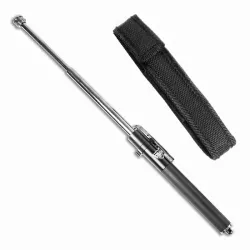
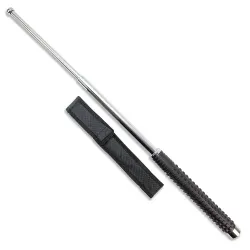
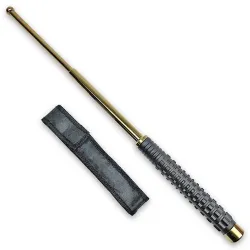
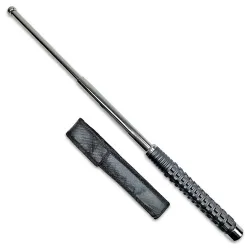
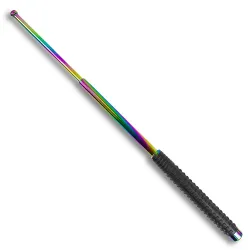
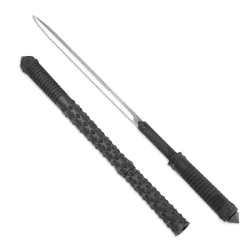
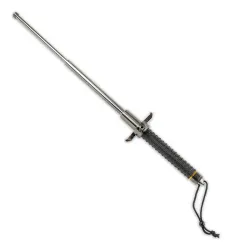
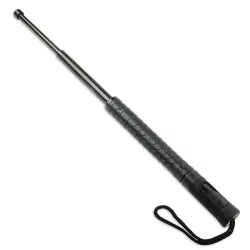
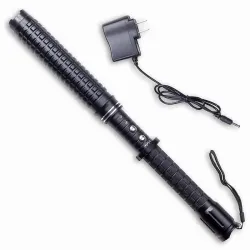
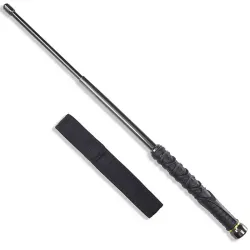
The modern baton has evolved over centuries, with its roots tracing back to ancient civilizations where they were used as a symbol of authority and as a tool for crowd control. Today, batons have been refined into sleek, compact, and efficient self-defense tools. There are different types of batons available, including expandable batons, collapsible batons, telescoping batons, side-handle batons, and nightsticks. Each of these designs serves a unique purpose and is crafted to meet specific needs in various scenarios. Expandable batons, for instance, are compact and easy to carry but can quickly extend into a full-length weapon when needed. Collapsible batons offer the same benefits, allowing for quick storage and easy deployment.
When it comes to self-defense, the sight of a baton can often act as a deterrent in itself. The mere presence of a baton on your person or in your hand sends a clear message: aggressive behavior will not be tolerated. This is especially true with collapsible or telescoping batons, which are easily stored but ready to deploy in a moment's notice. These weapons are built to withstand significant force and are designed for rapid, controlled use.
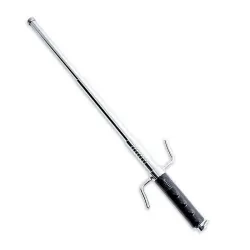
One of the standout features of police batons and nightsticks is their versatility. Not only are they effective in delivering blunt force, but they also allow for different techniques in defense and restraint. Police batons are often used for crowd control, defending against attackers, and even performing strikes in non-lethal situations. For those who prioritize both safety and portability, the side-handle baton is another option worth considering. Its ergonomic design allows for better control and grip, making it especially effective in defensive situations.
As with any self-defense weapon, it's important to remember that batons should be used responsibly. While they are effective for self-defense and law enforcement, their use is governed by laws that vary by region. Before purchasing or carrying a baton, always check your local laws to ensure you are in compliance. The legality of carrying a baton can differ depending on the country, state, or city, and it's your responsibility to be informed about any restrictions or guidelines.
While the terms "police baton" and "nightstick" are often used interchangeably, there are some differences between the two that are worth noting. A police baton is typically a long, cylindrical weapon used by law enforcement officers for defense and crowd control. Police batons come in various materials, lengths, and designs, but they are generally lightweight, portable, and easy to wield.
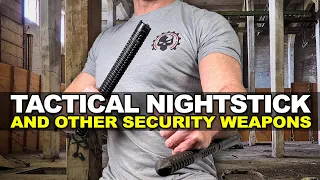
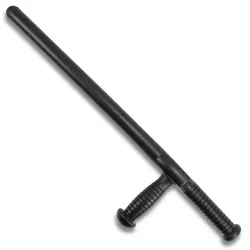
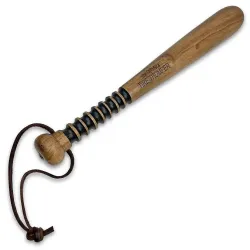
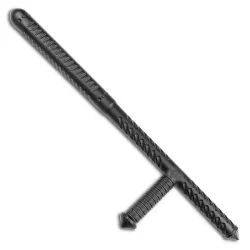
On the other hand, a nightstick is a specific type of baton that is traditionally associated with police officers and law enforcement. It is often made from wood or polymer and is characterized by its straight, rigid design. Historically, nightsticks were favored for their simplicity and durability, making them a popular choice for law enforcement officers in the early 20th century. Nightsticks tend to be more traditional and do not have the telescoping or collapsible capabilities found in more modern batons, which is why they are often considered to be a more classic tool in police use.
In essence, while both a police baton and a nightstick serve similar purposes, a nightstick is a more specific, older design that has largely been replaced by modern batons with more advanced features such as expandability and collapsibility.
A baton is a defensive tool used to create distance, block or deflect incoming grabs, and open a path to escape while you call for help. The goal is to disengage quickly and get to safety, not to confront or escalate. Effective self defense with a baton starts with awareness, a solid stance, and controlled movements that discourage further approach. If local laws allow carry, choose a baton you can handle confidently, whether a fixed baton or an expandable baton, and practice safe handling. Formal training with a qualified instructor is strongly recommended, and you should always follow local regulations on possession and use.
The right baton length depends on your height, arm reach, and how you plan to carry it. A shorter baton, around 16 to 21 inches, is easier to conceal and maneuver in tight spaces, while a longer baton, such as 24 to 32 inches, offers greater reach and leverage. Fixed batons stay the same length, while expandable batons collapse down for easier storage and can extend quickly when needed. If possible, handle different lengths to see which feels balanced and comfortable, and always make sure the baton you choose complies with your local laws.
Baton laws vary widely depending on where you live. In some states, civilians can legally own and carry a baton for self defense, while in others they may be restricted to law enforcement use or prohibited altogether. Certain areas also have rules about carrying batons in vehicles, on public property, or across state lines. Before purchasing or carrying a baton, check your state and local laws to avoid legal issues. If you are unsure, contact your local police department or consult a qualified attorney for clarification.
A proper baton grip starts with wrapping your fingers firmly around the handle, keeping your thumb alongside your fingers rather than over the top. This helps maintain control during quick movements. Your grip should be secure but not overly tight, allowing the baton to pivot slightly in your hand for fluid strikes or defensive blocks. When swinging a baton, focus on controlled, targeted movements rather than wild swings. This improves accuracy and reduces the risk of losing your grip. Training with a fixed baton or an expandable baton under professional supervision is the safest way to develop proper technique.
Both a baton and pepper spray can be effective for self defense, but they work in very different ways. A baton requires close range and physical contact, which means you need to be within arm's reach of a threat. Pepper spray allows you to create distance by targeting an attacker from several feet away, but it can be affected by wind and may not work on individuals with a high pain tolerance. Choosing between the two depends on your comfort level, training, and local laws. Some people carry both so they have a ranged option and a close-contact option available if needed.
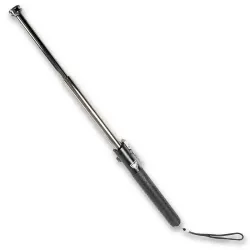
A collapsible baton and a telescopic baton are essentially the same type of baton, designed to extend quickly for use and collapse for easy storage. The terms are often used interchangeably, but "telescopic baton" refers to the way the baton's sections slide into one another like a telescope, while "collapsible baton" is a more general term. Both styles are popular for their portability and the ability to carry them discreetly, and they come in a variety of lengths and materials. When choosing one, focus on build quality and comfort in the hand.
Yes, a baton can be incorporated into martial arts training, especially in styles that include stick-fighting techniques. Many practitioners use training batons made from foam, rubber, or lightweight polymers to practice strikes, blocks, and disarming drills safely. These training tools allow you to develop timing, accuracy, and control without risking injury. When moving to a real baton, it's important to maintain those controlled movements and follow all safety guidelines. Always train under the guidance of a qualified instructor to ensure proper technique and to learn how to use a baton responsibly.
To keep a baton in good working condition, inspect it regularly for signs of wear or damage. For metal batons, wipe down the surface with a soft cloth to remove dirt and fingerprints, and apply a light coat of oil to prevent rust. If you have an expandable or telescopic baton, check that the locking mechanism is free of debris and operates smoothly. Polymer or rubberized handles can be cleaned with mild soap and water, then dried thoroughly to maintain grip. Storing your baton in a cool, dry place will help extend its lifespan and ensure it's ready for use when needed.
Whether you can legally travel with a baton in your car depends on the laws in your state or any states you pass through. In some areas, a baton can be stored in your vehicle if it is kept in the trunk or another compartment that is not easily accessible from the driver's seat. Other jurisdictions may prohibit having a baton in your car entirely, even if it is not within reach. Before transporting a baton, research the regulations for every location on your route and comply with any storage requirements. When in doubt, contact local law enforcement for clarification to avoid potential legal issues.
The Evolution of the Modern Baton
The modern baton has evolved over centuries, with its roots tracing back to ancient civilizations where they were used as a symbol of authority and as a tool for crowd control. Today, batons have been refined into sleek, compact, and efficient self-defense tools. There are different types of batons available, including expandable batons, collapsible batons, telescoping batons, side-handle batons, and nightsticks. Each of these designs serves a unique purpose and is crafted to meet specific needs in various scenarios. Expandable batons, for instance, are compact and easy to carry but can quickly extend into a full-length weapon when needed. Collapsible batons offer the same benefits, allowing for quick storage and easy deployment.
Deterrence and Rapid Deployment
When it comes to self-defense, the sight of a baton can often act as a deterrent in itself. The mere presence of a baton on your person or in your hand sends a clear message: aggressive behavior will not be tolerated. This is especially true with collapsible or telescoping batons, which are easily stored but ready to deploy in a moment's notice. These weapons are built to withstand significant force and are designed for rapid, controlled use.
Versatility in Defensive Use
One of the standout features of police batons and nightsticks is their versatility. Not only are they effective in delivering blunt force, but they also allow for different techniques in defense and restraint. Police batons are often used for crowd control, defending against attackers, and even performing strikes in non-lethal situations. For those who prioritize both safety and portability, the side-handle baton is another option worth considering. Its ergonomic design allows for better control and grip, making it especially effective in defensive situations.
Responsible Ownership and Legal Awareness
As with any self-defense weapon, it's important to remember that batons should be used responsibly. While they are effective for self-defense and law enforcement, their use is governed by laws that vary by region. Before purchasing or carrying a baton, always check your local laws to ensure you are in compliance. The legality of carrying a baton can differ depending on the country, state, or city, and it's your responsibility to be informed about any restrictions or guidelines.
What is the Difference Between a Police Baton and a Nightstick?
While the terms "police baton" and "nightstick" are often used interchangeably, there are some differences between the two that are worth noting. A police baton is typically a long, cylindrical weapon used by law enforcement officers for defense and crowd control. Police batons come in various materials, lengths, and designs, but they are generally lightweight, portable, and easy to wield.
On the other hand, a nightstick is a specific type of baton that is traditionally associated with police officers and law enforcement. It is often made from wood or polymer and is characterized by its straight, rigid design. Historically, nightsticks were favored for their simplicity and durability, making them a popular choice for law enforcement officers in the early 20th century. Nightsticks tend to be more traditional and do not have the telescoping or collapsible capabilities found in more modern batons, which is why they are often considered to be a more classic tool in police use.
In essence, while both a police baton and a nightstick serve similar purposes, a nightstick is a more specific, older design that has largely been replaced by modern batons with more advanced features such as expandability and collapsibility.
How Is a Baton Used in Self Defense?
A baton is a defensive tool used to create distance, block or deflect incoming grabs, and open a path to escape while you call for help. The goal is to disengage quickly and get to safety, not to confront or escalate. Effective self defense with a baton starts with awareness, a solid stance, and controlled movements that discourage further approach. If local laws allow carry, choose a baton you can handle confidently, whether a fixed baton or an expandable baton, and practice safe handling. Formal training with a qualified instructor is strongly recommended, and you should always follow local regulations on possession and use.
How Do You Choose the Right Baton Length?
The right baton length depends on your height, arm reach, and how you plan to carry it. A shorter baton, around 16 to 21 inches, is easier to conceal and maneuver in tight spaces, while a longer baton, such as 24 to 32 inches, offers greater reach and leverage. Fixed batons stay the same length, while expandable batons collapse down for easier storage and can extend quickly when needed. If possible, handle different lengths to see which feels balanced and comfortable, and always make sure the baton you choose complies with your local laws.
Are Batons Legal to Carry in My State?
Baton laws vary widely depending on where you live. In some states, civilians can legally own and carry a baton for self defense, while in others they may be restricted to law enforcement use or prohibited altogether. Certain areas also have rules about carrying batons in vehicles, on public property, or across state lines. Before purchasing or carrying a baton, check your state and local laws to avoid legal issues. If you are unsure, contact your local police department or consult a qualified attorney for clarification.
How Do You Properly Grip and Swing a Baton?
A proper baton grip starts with wrapping your fingers firmly around the handle, keeping your thumb alongside your fingers rather than over the top. This helps maintain control during quick movements. Your grip should be secure but not overly tight, allowing the baton to pivot slightly in your hand for fluid strikes or defensive blocks. When swinging a baton, focus on controlled, targeted movements rather than wild swings. This improves accuracy and reduces the risk of losing your grip. Training with a fixed baton or an expandable baton under professional supervision is the safest way to develop proper technique.
Is a Baton Better Than Pepper Spray for Self Defense?
Both a baton and pepper spray can be effective for self defense, but they work in very different ways. A baton requires close range and physical contact, which means you need to be within arm's reach of a threat. Pepper spray allows you to create distance by targeting an attacker from several feet away, but it can be affected by wind and may not work on individuals with a high pain tolerance. Choosing between the two depends on your comfort level, training, and local laws. Some people carry both so they have a ranged option and a close-contact option available if needed.
What's the Difference Between a Collapsible Baton and a Telescopic Baton?
A collapsible baton and a telescopic baton are essentially the same type of baton, designed to extend quickly for use and collapse for easy storage. The terms are often used interchangeably, but "telescopic baton" refers to the way the baton's sections slide into one another like a telescope, while "collapsible baton" is a more general term. Both styles are popular for their portability and the ability to carry them discreetly, and they come in a variety of lengths and materials. When choosing one, focus on build quality and comfort in the hand.
Can a Baton Be Used for Martial Arts Training?
Yes, a baton can be incorporated into martial arts training, especially in styles that include stick-fighting techniques. Many practitioners use training batons made from foam, rubber, or lightweight polymers to practice strikes, blocks, and disarming drills safely. These training tools allow you to develop timing, accuracy, and control without risking injury. When moving to a real baton, it's important to maintain those controlled movements and follow all safety guidelines. Always train under the guidance of a qualified instructor to ensure proper technique and to learn how to use a baton responsibly.
How Do You Maintain or Clean a Baton?
To keep a baton in good working condition, inspect it regularly for signs of wear or damage. For metal batons, wipe down the surface with a soft cloth to remove dirt and fingerprints, and apply a light coat of oil to prevent rust. If you have an expandable or telescopic baton, check that the locking mechanism is free of debris and operates smoothly. Polymer or rubberized handles can be cleaned with mild soap and water, then dried thoroughly to maintain grip. Storing your baton in a cool, dry place will help extend its lifespan and ensure it's ready for use when needed.
Can I Travel With a Baton in My Car?
Whether you can legally travel with a baton in your car depends on the laws in your state or any states you pass through. In some areas, a baton can be stored in your vehicle if it is kept in the trunk or another compartment that is not easily accessible from the driver's seat. Other jurisdictions may prohibit having a baton in your car entirely, even if it is not within reach. Before transporting a baton, research the regulations for every location on your route and comply with any storage requirements. When in doubt, contact local law enforcement for clarification to avoid potential legal issues.