



Axes & Hatchets
-
 🔍︎ QUICK VIEW
$34.95
🔍︎ QUICK VIEW
$34.95 -
 🔍︎ QUICK VIEW
$29.95
🔍︎ QUICK VIEW
$29.95 -
 🔍︎ QUICK VIEW
$26.95
🔍︎ QUICK VIEW
$26.95 -
 🔍︎ QUICK VIEW
$59.95
🔍︎ QUICK VIEW
$59.95 -
 🔍︎ QUICK VIEW
$42.95
🔍︎ QUICK VIEW
$42.95 -
 🔍︎ QUICK VIEW
$59.95
🔍︎ QUICK VIEW
$59.95 -
 🔍︎ QUICK VIEW
$19.95
🔍︎ QUICK VIEW
$19.95 -
 🔍︎ QUICK VIEW
$20.95
🔍︎ QUICK VIEW
$20.95 -
 🔍︎ QUICK VIEW
$39.95
🔍︎ QUICK VIEW
$39.95 -
 🔍︎ QUICK VIEW
$34.99
🔍︎ QUICK VIEW
$34.99 -
 🔍︎ QUICK VIEW
$59.99
🔍︎ QUICK VIEW
$59.99 -
 🔍︎ QUICK VIEW
$39.95
🔍︎ QUICK VIEW
$39.95 -
 🔍︎ QUICK VIEW
$84.95
🔍︎ QUICK VIEW
$84.95
Axes & Hatchets
At Kombativ.com, we offer a comprehensive range of axes and hatchets designed for a variety of needs, from outdoor adventures to survival situations and even tactical applications. Our collection includes both full-size axes and more compact hatchets, each crafted with precision and durability in mind. Whether you need a reliable tool for camping, a tactical weapon for self-defense, or a throwing axe for sport, our selection has something for everyone.
Our full-size axes come in several specialized styles to suit different tasks. Battle axes are ideal for historical reenactments or those who appreciate the power and versatility of a classic weapon. For outdoor enthusiasts, our camping axes are perfect for chopping wood, clearing brush, or other tasks that require a sturdy, dependable tool. For those venturing into the wilderness, survival axes provide the reliability needed in harsh conditions. Designed with rugged durability and multipurpose functionality, these axes are built to perform in extreme environments, whether you're preparing firewood, building a shelter, or defending yourself.
In addition to our full-size axes, we also offer a variety of hatchets. These compact tools are essential for anyone who values portability and power. Our tactical hatchets are specifically designed for tactical operations and survival situations, offering a perfect balance of strength and maneuverability. Whether you need a tool for chopping, cutting, or even self-defense, a tactical hatchet can get the job done efficiently. For those heading into the wilderness or on extended camping trips, our camping hatchets are lightweight, easy to carry, and built for everyday tasks like prepping firewood or trimming branches. Meanwhile, survival hatchets provide versatility and reliability when every ounce of weight matters, making them a must-have for survivalists and adventurers alike.
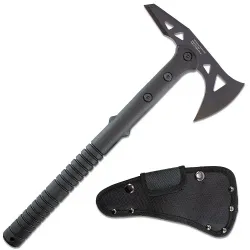
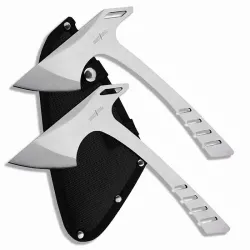
For those interested in a bit of fun or competition, our selection of throwing axes and throwing hatchets is perfect for both seasoned pros and newcomers to the sport. These tools are engineered for precision and balance, ensuring that every throw counts. Whether you're practicing in your backyard or entering a throwing competition, our throwing axes and hatchets deliver the performance you need. Additionally, our tactical tomahawks offer a unique hybrid of throwing and chopping power, designed for versatility in tactical situations and outdoor use.
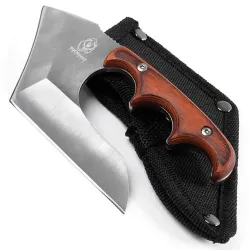
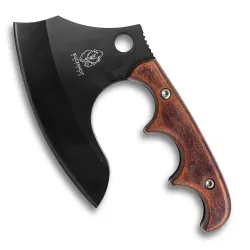
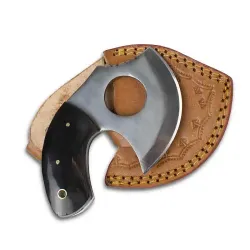
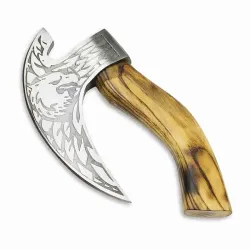
We also offer more unique and unconventional styles of axes and hatchets. The pizza axe, for example, combines the practicality of an axe with the fun of kitchen equipment, perfect for those who want a conversation piece or a new way to slice pizza. Our hand axes, designed for one-handed use, provide excellent control and precision, making them ideal for lighter tasks or when you need to conserve energy without sacrificing performance.
Whether you're in need of a combat axe for self-defense, a survival axe for your next adventure, or a bearded axe for historical authenticity, Kombativ.com has you covered. Our diverse collection of axes and hatchets caters to every need, ensuring that you'll find the perfect tool for your next challenge. Explore our selection today and discover the power, precision, and versatility that our products bring to your outdoor, tactical, and recreational activities.
An axe is designed for two-handed power and heavy chopping, while a hatchet is smaller, lighter, and meant for one-handed use.
An axe typically has a longer handle, giving you more leverage and force for splitting large logs, felling trees, or heavy-duty outdoor work. A hatchet, on the other hand, is compact and portable, perfect for camping, hiking, or quick chopping tasks. Hatchets are often used for cutting kindling, shaping wood, or light survival chores. While both tools share the same basic design, the difference in size and weight makes a big impact on how they're used. In short, axes are built for power, and hatchets are built for precision and convenience.
Yes, throwing axes and hatchets are legal to own in most areas, but local laws may restrict where and how you can use them.
In the United States, owning a throwing axe or hatchet is generally legal, especially when used for recreation, sport, or collection. However, laws can vary by city or state when it comes to carrying them in public or transporting them. Most regions treat them like tools rather than weapons, as long as they're used responsibly. It's important to check local ordinances before throwing in public spaces or carrying one in your vehicle. For safety and legality, it's best to use them only on private property, designated ranges, or organized throwing venues.
A compact, durable hatchet or survival axe is best for camping and outdoor survival because it balances power, control, and portability.
For camping, a lightweight hatchet with a sturdy steel or fiberglass handle works well for cutting kindling, splitting small logs, and clearing brush. A survival axe offers more versatility, often featuring built-in tools like saw edges, hammers, or fire starters. If you're backpacking, prioritize weight and choose a model under two pounds with a comfortable grip. For longer expeditions or harsh conditions, full-tang axes provide superior strength and durability. Regardless of style, always look for quality steel, a solid handle, and a secure sheath for safe transport. The right axe can serve as a vital all-purpose tool in the wilderness.
While axes and hatchets can be used for self-defense in emergencies, they are primarily tools, not ideal defensive weapons.
Axes deliver significant striking power, but their weight and size make them difficult to use effectively in tight spaces. A hatchet offers better control and maneuverability, but still requires training to use safely under pressure. In real-world situations, most people would find it easier to defend themselves with more practical options like batons, tactical flashlights, or pepper spray. However, in a survival or home-defense scenario, a sharp, well-balanced hatchet can serve as both a tool and a last-resort weapon if needed. The key is understanding that while they can defend, they're built to work first and fight second.
Regular cleaning, sharpening, and handle care keep your axe or hatchet in top condition and ready for use.
Start by wiping the blade clean after each use to remove sap, dirt, and moisture that can cause rust. Apply a thin coat of oil, such as mineral or gun oil, to prevent corrosion. When sharpening, use a file or whetstone to restore the edge, maintaining the natural bevel of the blade. Work slowly and evenly on both sides to create a consistent edge. For deeper chips, a sharpening puck or grinder can help reshape the blade. Do not forget to check the handle, as wood handles may need occasional sanding and linseed oil treatment to prevent cracking or drying out. Store your axe or hatchet in a dry place, preferably in a sheath or cover, to protect both the edge and the user.
The key to safe hatchet throwing is proper distance, controlled motion, and a secure target area.
Stand about 12 to 15 feet from your target, depending on the size of your hatchet and how it rotates. Grip the handle firmly with one or both hands, keeping the blade upright and your wrist straight. Bring the hatchet behind your head, then swing forward in a smooth motion, releasing it when your arm is extended and the blade points straight at the target. Always throw at a wooden target, never at hard or uneven surfaces that can cause rebounds. Make sure no one is standing near the throwing lane, and retrieve your hatchet only after confirming the area is clear. Consistent form and safety awareness are the foundation of every good throw.
Tactical tomahawks are multiuse tools for breaching, chopping, prying, and close-quarters utility tasks in outdoor, rescue, and tactical settings.
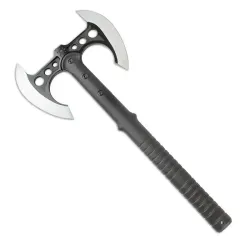
A tactical tomahawk blends chopping power with a compact, maneuverable profile that makes it useful for many roles. First responders and military units use them for breaching doors, breaking windows, and cutting through light obstacles. Outdoorsmen value them for chopping small wood, splitting kindling, and hammering tent stakes. The poll or spike on the back is often shaped for prying or piercing, adding leverage for rescue or demolition tasks. Many models are also balanced for throwing, which appeals to sport and training users, though not all tomahawks are designed for that purpose. When choosing one, look for full-tang construction, a reliable handle material, and a head profile that matches how you plan to use it, whether that is breaching, utility work, or recreational throwing.
Hickory and ash remain top choices for traditional handles, while fiberglass and composite materials offer superior durability and low maintenance.
Wood handles like hickory and ash are the classic favorites for a reason. They absorb shock, feel comfortable in the hand, and can be replaced if broken. Hickory is tough and resilient, making it ideal for heavy chopping and splitting. Ash is slightly lighter and gives a lively, shock-absorbing feel that many users prefer for repeated swings. The downside is wood needs care. Keep it dry, oil it occasionally, and inspect for cracks or loosened wedges.
Fiberglass and reinforced polymer handles are common on modern survival and camping axes. They resist weather, will not rot, and require almost no maintenance. They are very strong and often built with a molded grip that improves control. These materials tend to transmit more vibration to the hand than wood, but many designs add rubber overmolds or shock-absorbing cores to reduce sting.
Composite and laminated handles, including glass-filled nylon and phenolic resins, strike a good balance between durability and comfort. They are lighter than solid steel, more impact resistant than plain wood, and are often designed to be full-tang or securely bonded so the head will not come loose. These are excellent choices for rugged, all-weather gear.
Metal handles such as steel or aluminum are extremely durable and nearly indestructible, but they do transmit shock and can be uncomfortable without a good grip sleeve. Metal-handled tools are more common in specialized tactical or breaching tools than in everyday camping axes.
For throwing axes, many throwers still prefer well-seasoned hardwood like hickory because it offers predictable flex and a satisfying feel on impact. Some modern throwing axes use composite or molded handles to improve consistency and durability for frequent practice.
When choosing a handle material, also consider construction. Full-tang or securely wedged heads are safer and more durable than poorly attached heads. Pick the material that matches how you plan to use the tool: choose wood for feel and repairability, fiberglass or composite for weather resistance and low maintenance, and metal only when extreme durability outweighs the comfort tradeoffs. Regular inspection and basic care will extend the life of any handle.
Yes. Modern tomahawks trace their roots to historical Native American and colonial trade axes, but today's designs add modern materials and multipurpose features.
The original tomahawk was a simple, versatile axe used by many Native American tribes for chopping, carving, and combat. Early examples were often stone heads hafted to wooden handles, later replaced by metal heads introduced through trade with Europeans. Over time the tomahawk became both a practical tool and a hand weapon. Modern tactical tomahawks borrow that compact, one-handed form and the tool-plus-weapon concept, but they use hardened steel heads, full-tang construction, and advanced handle materials like fiberglass or reinforced polymers. Some modern tomahawks are optimized for breaching, rescue, and utility tasks, while sport-oriented models are balanced for throwing. In short, today's tomahawks are true descendants of historical designs, updated for contemporary roles and built with modern manufacturing and materials.
An axe is designed for cutting across wood grain, while a maul is built for splitting wood along the grain with more force and wedge power.
An axe has a thinner, sharper blade that slices cleanly through wood fibers, making it ideal for chopping trees or shaping logs. In contrast, a maul has a much heavier head and a broader, wedge-shaped blade that forces wood apart instead of cutting it. The extra weight and shape give the maul more splitting power but make it slower and less precise. Many mauls also have flat poll ends for striking wedges or pounding stakes. If you are processing firewood, a maul is usually the better tool; if you are cutting or felling trees, an axe is faster and more efficient.
Yes, left-handed axes exist, but most people can comfortably use a standard axe regardless of hand dominance.
A left-handed axe typically refers to tools with handle curves, bevels, or edge grinds optimized for left-hand technique. This matters most for specialized axes such as carving axes or hewing axes, which have a single bevel ground on one side. Using the wrong bevel for your dominant hand can make angled cuts awkward or imprecise. However, most chopping, splitting, and throwing axes are symmetrical and can be used easily by either hand. If you are left-handed and do fine woodworking or carving, a left-handed grind may improve comfort and control. For general use, a standard axe works just as well for left- or right-handed users.
Full-Size Axes for Power and Performance
Our full-size axes come in several specialized styles to suit different tasks. Battle axes are ideal for historical reenactments or those who appreciate the power and versatility of a classic weapon. For outdoor enthusiasts, our camping axes are perfect for chopping wood, clearing brush, or other tasks that require a sturdy, dependable tool. For those venturing into the wilderness, survival axes provide the reliability needed in harsh conditions. Designed with rugged durability and multipurpose functionality, these axes are built to perform in extreme environments, whether you're preparing firewood, building a shelter, or defending yourself.
Hatchets Built for Portability and Control
In addition to our full-size axes, we also offer a variety of hatchets. These compact tools are essential for anyone who values portability and power. Our tactical hatchets are specifically designed for tactical operations and survival situations, offering a perfect balance of strength and maneuverability. Whether you need a tool for chopping, cutting, or even self-defense, a tactical hatchet can get the job done efficiently. For those heading into the wilderness or on extended camping trips, our camping hatchets are lightweight, easy to carry, and built for everyday tasks like prepping firewood or trimming branches. Meanwhile, survival hatchets provide versatility and reliability when every ounce of weight matters, making them a must-have for survivalists and adventurers alike.
Throwing Axes and Tactical Tomahawks
For those interested in a bit of fun or competition, our selection of throwing axes and throwing hatchets is perfect for both seasoned pros and newcomers to the sport. These tools are engineered for precision and balance, ensuring that every throw counts. Whether you're practicing in your backyard or entering a throwing competition, our throwing axes and hatchets deliver the performance you need. Additionally, our tactical tomahawks offer a unique hybrid of throwing and chopping power, designed for versatility in tactical situations and outdoor use.
Unique and Specialty Axe Designs
We also offer more unique and unconventional styles of axes and hatchets. The pizza axe, for example, combines the practicality of an axe with the fun of kitchen equipment, perfect for those who want a conversation piece or a new way to slice pizza. Our hand axes, designed for one-handed use, provide excellent control and precision, making them ideal for lighter tasks or when you need to conserve energy without sacrificing performance.
Find the Right Axe for Your Needs
Whether you're in need of a combat axe for self-defense, a survival axe for your next adventure, or a bearded axe for historical authenticity, Kombativ.com has you covered. Our diverse collection of axes and hatchets caters to every need, ensuring that you'll find the perfect tool for your next challenge. Explore our selection today and discover the power, precision, and versatility that our products bring to your outdoor, tactical, and recreational activities.
What's the Difference Between an Axe and a Hatchet?
An axe is designed for two-handed power and heavy chopping, while a hatchet is smaller, lighter, and meant for one-handed use.
An axe typically has a longer handle, giving you more leverage and force for splitting large logs, felling trees, or heavy-duty outdoor work. A hatchet, on the other hand, is compact and portable, perfect for camping, hiking, or quick chopping tasks. Hatchets are often used for cutting kindling, shaping wood, or light survival chores. While both tools share the same basic design, the difference in size and weight makes a big impact on how they're used. In short, axes are built for power, and hatchets are built for precision and convenience.
Are Throwing Axes and Hatchets Legal to Own?
Yes, throwing axes and hatchets are legal to own in most areas, but local laws may restrict where and how you can use them.
In the United States, owning a throwing axe or hatchet is generally legal, especially when used for recreation, sport, or collection. However, laws can vary by city or state when it comes to carrying them in public or transporting them. Most regions treat them like tools rather than weapons, as long as they're used responsibly. It's important to check local ordinances before throwing in public spaces or carrying one in your vehicle. For safety and legality, it's best to use them only on private property, designated ranges, or organized throwing venues.
What's the Best Type of Axe for Survival or Camping?
A compact, durable hatchet or survival axe is best for camping and outdoor survival because it balances power, control, and portability.
For camping, a lightweight hatchet with a sturdy steel or fiberglass handle works well for cutting kindling, splitting small logs, and clearing brush. A survival axe offers more versatility, often featuring built-in tools like saw edges, hammers, or fire starters. If you're backpacking, prioritize weight and choose a model under two pounds with a comfortable grip. For longer expeditions or harsh conditions, full-tang axes provide superior strength and durability. Regardless of style, always look for quality steel, a solid handle, and a secure sheath for safe transport. The right axe can serve as a vital all-purpose tool in the wilderness.
Can Axes and Hatchets Be Used for Self-Defense?
While axes and hatchets can be used for self-defense in emergencies, they are primarily tools, not ideal defensive weapons.
Axes deliver significant striking power, but their weight and size make them difficult to use effectively in tight spaces. A hatchet offers better control and maneuverability, but still requires training to use safely under pressure. In real-world situations, most people would find it easier to defend themselves with more practical options like batons, tactical flashlights, or pepper spray. However, in a survival or home-defense scenario, a sharp, well-balanced hatchet can serve as both a tool and a last-resort weapon if needed. The key is understanding that while they can defend, they're built to work first and fight second.
How Do I Maintain and Sharpen My Axe or Hatchet?
Regular cleaning, sharpening, and handle care keep your axe or hatchet in top condition and ready for use.
Start by wiping the blade clean after each use to remove sap, dirt, and moisture that can cause rust. Apply a thin coat of oil, such as mineral or gun oil, to prevent corrosion. When sharpening, use a file or whetstone to restore the edge, maintaining the natural bevel of the blade. Work slowly and evenly on both sides to create a consistent edge. For deeper chips, a sharpening puck or grinder can help reshape the blade. Do not forget to check the handle, as wood handles may need occasional sanding and linseed oil treatment to prevent cracking or drying out. Store your axe or hatchet in a dry place, preferably in a sheath or cover, to protect both the edge and the user.
What's the Proper Way to Throw a Hatchet Safely?
The key to safe hatchet throwing is proper distance, controlled motion, and a secure target area.
Stand about 12 to 15 feet from your target, depending on the size of your hatchet and how it rotates. Grip the handle firmly with one or both hands, keeping the blade upright and your wrist straight. Bring the hatchet behind your head, then swing forward in a smooth motion, releasing it when your arm is extended and the blade points straight at the target. Always throw at a wooden target, never at hard or uneven surfaces that can cause rebounds. Make sure no one is standing near the throwing lane, and retrieve your hatchet only after confirming the area is clear. Consistent form and safety awareness are the foundation of every good throw.
What Are Tactical Tomahawks Used For?
Tactical tomahawks are multiuse tools for breaching, chopping, prying, and close-quarters utility tasks in outdoor, rescue, and tactical settings.
A tactical tomahawk blends chopping power with a compact, maneuverable profile that makes it useful for many roles. First responders and military units use them for breaching doors, breaking windows, and cutting through light obstacles. Outdoorsmen value them for chopping small wood, splitting kindling, and hammering tent stakes. The poll or spike on the back is often shaped for prying or piercing, adding leverage for rescue or demolition tasks. Many models are also balanced for throwing, which appeals to sport and training users, though not all tomahawks are designed for that purpose. When choosing one, look for full-tang construction, a reliable handle material, and a head profile that matches how you plan to use it, whether that is breaching, utility work, or recreational throwing.
What Materials Are Best for Axe and Hatchet Handles?
Hickory and ash remain top choices for traditional handles, while fiberglass and composite materials offer superior durability and low maintenance.
Wood handles like hickory and ash are the classic favorites for a reason. They absorb shock, feel comfortable in the hand, and can be replaced if broken. Hickory is tough and resilient, making it ideal for heavy chopping and splitting. Ash is slightly lighter and gives a lively, shock-absorbing feel that many users prefer for repeated swings. The downside is wood needs care. Keep it dry, oil it occasionally, and inspect for cracks or loosened wedges.
Fiberglass and reinforced polymer handles are common on modern survival and camping axes. They resist weather, will not rot, and require almost no maintenance. They are very strong and often built with a molded grip that improves control. These materials tend to transmit more vibration to the hand than wood, but many designs add rubber overmolds or shock-absorbing cores to reduce sting.
Composite and laminated handles, including glass-filled nylon and phenolic resins, strike a good balance between durability and comfort. They are lighter than solid steel, more impact resistant than plain wood, and are often designed to be full-tang or securely bonded so the head will not come loose. These are excellent choices for rugged, all-weather gear.
Metal handles such as steel or aluminum are extremely durable and nearly indestructible, but they do transmit shock and can be uncomfortable without a good grip sleeve. Metal-handled tools are more common in specialized tactical or breaching tools than in everyday camping axes.
For throwing axes, many throwers still prefer well-seasoned hardwood like hickory because it offers predictable flex and a satisfying feel on impact. Some modern throwing axes use composite or molded handles to improve consistency and durability for frequent practice.
When choosing a handle material, also consider construction. Full-tang or securely wedged heads are safer and more durable than poorly attached heads. Pick the material that matches how you plan to use the tool: choose wood for feel and repairability, fiberglass or composite for weather resistance and low maintenance, and metal only when extreme durability outweighs the comfort tradeoffs. Regular inspection and basic care will extend the life of any handle.
Are Modern Tomahawks Based on Real Historical Weapons?
Yes. Modern tomahawks trace their roots to historical Native American and colonial trade axes, but today's designs add modern materials and multipurpose features.
The original tomahawk was a simple, versatile axe used by many Native American tribes for chopping, carving, and combat. Early examples were often stone heads hafted to wooden handles, later replaced by metal heads introduced through trade with Europeans. Over time the tomahawk became both a practical tool and a hand weapon. Modern tactical tomahawks borrow that compact, one-handed form and the tool-plus-weapon concept, but they use hardened steel heads, full-tang construction, and advanced handle materials like fiberglass or reinforced polymers. Some modern tomahawks are optimized for breaching, rescue, and utility tasks, while sport-oriented models are balanced for throwing. In short, today's tomahawks are true descendants of historical designs, updated for contemporary roles and built with modern manufacturing and materials.
What Is the Difference Between an Axe and a Maul?
An axe is designed for cutting across wood grain, while a maul is built for splitting wood along the grain with more force and wedge power.
An axe has a thinner, sharper blade that slices cleanly through wood fibers, making it ideal for chopping trees or shaping logs. In contrast, a maul has a much heavier head and a broader, wedge-shaped blade that forces wood apart instead of cutting it. The extra weight and shape give the maul more splitting power but make it slower and less precise. Many mauls also have flat poll ends for striking wedges or pounding stakes. If you are processing firewood, a maul is usually the better tool; if you are cutting or felling trees, an axe is faster and more efficient.
Are Left-Handed Axes a Real Thing, and Do I Need One?
Yes, left-handed axes exist, but most people can comfortably use a standard axe regardless of hand dominance.
A left-handed axe typically refers to tools with handle curves, bevels, or edge grinds optimized for left-hand technique. This matters most for specialized axes such as carving axes or hewing axes, which have a single bevel ground on one side. Using the wrong bevel for your dominant hand can make angled cuts awkward or imprecise. However, most chopping, splitting, and throwing axes are symmetrical and can be used easily by either hand. If you are left-handed and do fine woodworking or carving, a left-handed grind may improve comfort and control. For general use, a standard axe works just as well for left- or right-handed users.