




10 Real Ninja Weapons and How They Were Actually Used
October 22nd, 2025
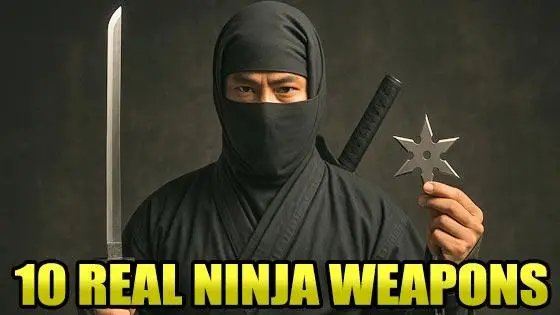
Throughout history, few warriors have inspired as much mystery and fascination as the ninja. Popular movies and anime have turned them into shadowy superhumans, armed with disappearing smoke bombs and deadly throwing stars. The truth, however, is far more interesting. Real ninjas were practical, disciplined operatives who relied on stealth, adaptability, and clever tools to survive. Their weapons were not just for combat; they were instruments of deception, disguise, and survival. In this article, we'll take a closer look at ten real ninja weapons and how they were actually used, separating fact from fiction and uncovering the brilliant simplicity behind the tools of Japan's most elusive warriors.
1. Kunai - The Ninja's Most Versatile Tool
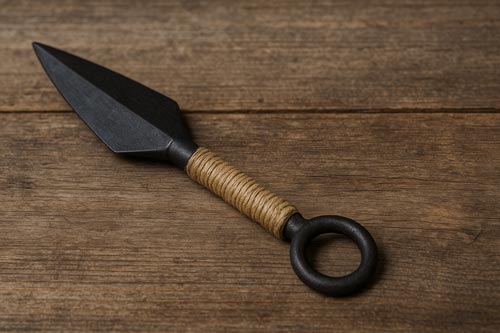
Among all ninja weapons, the kunai was the most practical and widely used. Originally a simple farming and masonry tool, it became one of the most essential items in a ninja's toolkit.
The kunai's design was simple but effective. It had a short, leaf-shaped blade with a handle wrapped in cloth and a ring at the base. Ninjas carried them in multiple sizes, using them as climbing aids, prying tools, and even makeshift shovels. When necessary, the kunai could be thrown or used as a close-combat weapon, making it a true multi-purpose instrument of survival. Because it resembled an everyday tool, a ninja could carry it without attracting suspicion, which was crucial during covert missions.
In combat, the kunai's strength was its adaptability. It could be tied to a rope for grappling, heated for cutting through obstacles, or wielded defensively against swords. While modern movies often portray it as a throwing knife, real ninjas valued it for its utility and concealment. Its simplicity and effectiveness perfectly capture the spirit of ninjutsu, using ordinary tools in extraordinary ways.
2. Shuriken - The Throwing Star of Distraction
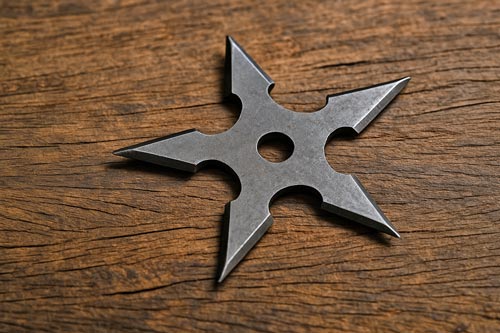
The shuriken is one of the most recognized ninja weapons, but its real purpose was not to kill. Instead, it was a tactical tool designed to distract, wound, and confuse enemies during combat or escape.
Real shuriken came in two main forms: the hira shuriken, which were flat star-shaped blades, and the bo shuriken, which were straight spikes made from metal rods. Ninjas carried several of these small weapons tucked inside their sleeves or belts, ready to throw at a moment's notice. Their size and balance made them easy to conceal and quick to deploy.
When thrown accurately, a shuriken could pierce armor gaps or lightly wound the skin, creating just enough pain and surprise to shift the flow of a battle. Some were even coated with toxins, rust, or dirt to increase the chance of infection. More often than not, the goal was to create a brief moment of hesitation or panic, allowing the ninja to strike or disappear. The effectiveness of the shuriken came from skill and timing, not brute force, making it a perfect example of the ninja's strategic mindset.
3. Ninjato - The Short Sword of Stealth
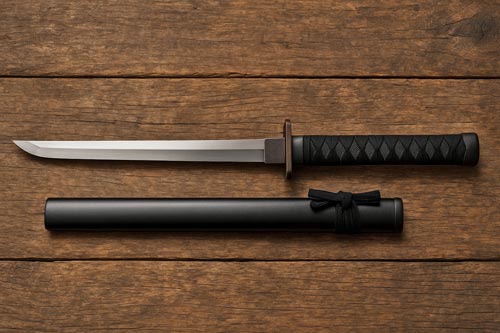
The ninjato was the weapon most closely associated with the ninja, even though it looked very different from the elegant curved katana carried by samurai. It was a shorter, straight-bladed sword designed for speed, concealment, and close-quarters combat.
Most ninjato measured around two feet in length, making them quicker to draw and easier to maneuver in tight spaces like corridors or rooftops. The straight blade allowed for fast stabbing motions and precise cuts, while the square-shaped guard helped protect the hands during sudden encounters. The sword's simplicity and compact size made it ideal for covert missions where every second counted.
Ninjas often customized their ninjato for practical use. Some scabbards were made hollow so they could store small tools, powders, or even serve as a breathing tube when hiding underwater. Others had cords attached for use as a climbing aid or tripwire. Though not as ornate as the samurai's sword, the ninjato perfectly embodied the ninja's philosophy of efficiency and resourcefulness, a weapon built for stealth, not status.
4. Kusari-Fundo - The Weighted Chain Weapon
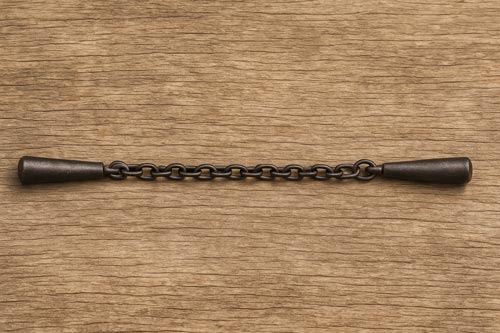
The kusari-fundo was one of the most versatile and deceptive weapons in the ninja's arsenal. At first glance, it looked like nothing more than a length of chain, but in skilled hands, it became a powerful tool for offense, defense, and disarmament.
This weapon consisted of a short chain with a heavy weight attached to each end, often made of iron or steel. Ninjas carried it coiled around the waist, hidden beneath clothing, or tucked into a sleeve. In combat, it could be swung to strike enemies from a distance, wrapped around an opponent's weapon to trap it, or used to deliver quick, crushing blows. Its flexibility allowed for unpredictable attacks that were difficult to block or anticipate.
The kusari-fundo was also favored because it could be disguised as an everyday item, like a belt or a rope. Some versions had spiked ends or were used alongside other tools, making them even more dangerous. Whether in open combat or silent infiltration, this weapon embodied the ninja's strategic advantage, using simplicity and precision to outsmart stronger opponents.
5. Makibishi (Tetsubishi) - The Hidden Spikes That Stopped Pursuers
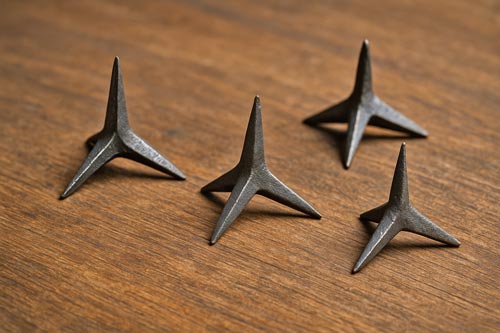
Makibishi, also known as tetsubishi when made of metal, were small spiked objects used to slow down or injure enemies. These deceptively simple tools were one of the ninja's most effective methods for creating a quick escape route.
Each makibishi was shaped so that no matter how it landed, one sharp point always faced upward. Ninjas would scatter them across roads, paths, or doorways to discourage pursuers from following. When stepped on, the spikes could pierce thin sandals or even light armor, inflicting painful wounds that slowed pursuit and created valuable time to flee. Some were crafted from sharpened iron, while others were made from dried plant husks for lightweight concealment.
Because of their simplicity, makibishi could be carried in large quantities without adding much weight. Ninjas sometimes enhanced them by coating the spikes with poison or rust to increase their effectiveness. These small, ingenious tools perfectly reflected the ninja's mindset, useful, discreet, and devastating in the right situation.
6. Blowgun (Fukiya) - The Silent Weapon
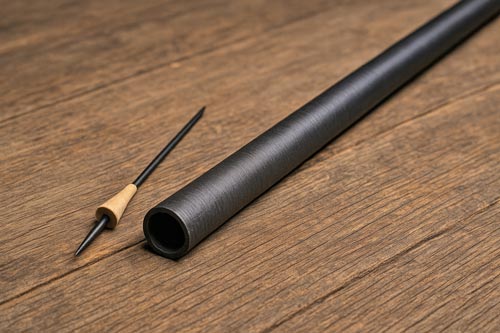
The blowgun, known as fukiya in Japanese, was one of the quietest and most discreet weapons available to the ninja. It allowed them to strike from a distance without revealing their position, making it ideal for stealth missions and ambushes.
A typical fukiya was a narrow bamboo or metal tube, usually around four to six feet long, used to fire small darts called fukibari. These darts were often coated with natural poisons made from plants, insects, or animal venom. A well-aimed shot could silently disable or disorient a target, giving the ninja precious time to escape or infiltrate an area undetected. Some ninjas also used blunt-tipped darts to knock out lights or create distractions rather than to harm.
The fukiya was not only a weapon but also a tool for training patience, lung control, and precision. It required incredible accuracy and breath discipline to use effectively. Though often overlooked compared to flashier weapons like the shuriken or sword, the blowgun represented the ninja's mastery of subtlety and control, turning a simple hollow tube into a deadly instrument of stealth.
7. Kakute - The Hidden Spiked Ring
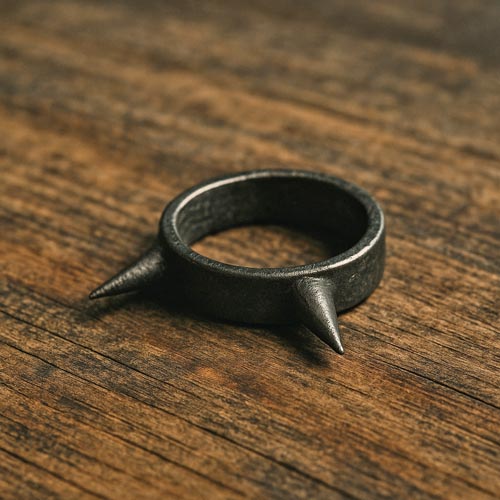
The kakute was a small but deadly weapon often worn on the fingers, allowing ninjas to strike without their enemies realizing they were armed. It looked like a simple ring, but its outer or inner surface was lined with one or more sharp spikes designed for close-quarters combat.
Kakute rings could be used in both offensive and defensive ways. When worn with the spikes facing inward, the ninja could conceal the weapon in the palm and deliver devastating surprise strikes. When worn with the spikes outward, it could rake or tear an opponent's skin during grappling. Some were even coated with poison, turning a single scratch into a potentially fatal wound. Because they were easy to hide, ninjas and kunoichi (female ninjas) often wore them while disguised as ordinary civilians.
Despite their small size, kakute were highly effective because they took advantage of stealth and surprise. They symbolized the ninja's skill in using everyday objects as weapons, proving that danger often came in the most unassuming forms.
8. Chigiriki - The Staff with a Chain and Weight

The chigiriki was a weapon that combined the reach of a short staff with the unpredictability of a flail. It consisted of a wooden or metal handle with a chain attached to one end, often ending in a spiked or weighted ball. This design gave the ninja a wide range of striking, entangling, and defensive options.
In battle, the chigiriki could be used to deliver powerful blows or to wrap the chain around an opponent's weapon, pulling it out of their hands. The weighted end could strike from multiple angles, making it extremely difficult to block or anticipate. Its flexibility also made it useful in tight spaces where longer weapons would be hard to maneuver. Some ninjas even used the handle for thrusting or parrying, turning it into a dual-purpose tool.
Like many ninja weapons, the chigiriki could be disguised as an ordinary walking stick or staff, making it ideal for covert missions. Its balance of reach, power, and stealth made it a favorite among ninjas who specialized in unpredictable, close-quarters combat.
9. Rope and Grappling Hooks - Tools of Escape and Infiltration
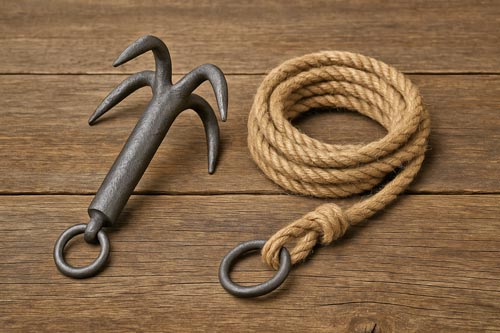
The rope and grappling hook, known as kaginawa, were essential tools for the ninja's survival and success. These simple but ingenious devices allowed ninjas to scale walls, cross gaps, and escape danger with speed and silence.
A typical kaginawa consisted of a sturdy rope tied to a small iron hook with two to four prongs. Ninjas carried them coiled around the waist or inside a pack, ready to deploy when needed. The hooks could catch onto rooftops, tree branches, or ledges, allowing for quick climbing or descent. Because they were lightweight and compact, they were also used to secure equipment, drag objects, or even pull open trapdoors from a distance.
10. Ashiko - The Climbing Claws of the Ninja
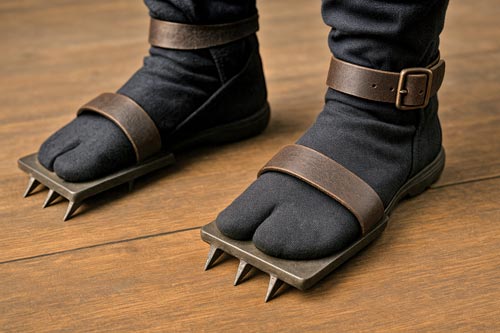
Ashiko were iron or steel climbing claws worn on the feet, giving ninjas the ability to scale walls, trees, or other vertical surfaces with ease. They were the perfect companion to hand claws known as shuko, and together they made climbing both faster and more stable.
Each ashiko was made from a sturdy metal plate with several sharp spikes protruding downward. Leather straps secured them tightly to the ninja's feet, allowing for confident footing on rough terrain, wood, or even ice. When combined with hand claws, they provided unmatched mobility for scaling obstacles, ambushing from above, or escaping unseen. Because of their sharp points, they could also be used as a secondary weapon for kicking during close combat.
The ashiko reflected one of the ninja's greatest strengths, adaptability. Instead of relying on brute force or elaborate gadgets, they used simple, effective tools to move silently and overcome barriers. Whether climbing fortress walls or navigating dense forests, these claws gave ninjas the agility and confidence to move where others could not.
In skilled hands, the kaginawa was more than just a climbing tool. Ninjas could use it in combat to trip or entangle opponents, or as a makeshift weapon in emergencies. It reflected one of the most important ninja principles: adaptability. Whether infiltrating enemy castles or escaping across rivers, the rope and hook gave ninjas both freedom and tactical advantage in almost any environment.
Conclusion
The weapons and tools used by real ninjas were far from the exaggerated gadgets seen in movies. They were simple, effective instruments designed for stealth, versatility, and survival. From the practicality of the kunai and shuriken to the ingenuity of the ashiko and kaginawa, each piece reflected the ninja's mastery of adaptation. Every tool had more than one purpose, allowing the ninja to move, fight, and escape in ways that confused and outsmarted their enemies.
What makes these weapons so fascinating is not just their design but the philosophy behind them. Ninjas relied on creativity and intelligence rather than brute strength. A chain became a weapon, a farming tool became a blade, and a handful of caltrops could stop an entire pursuit. Their legacy continues to influence modern martial arts and popular culture, reminding us that true power often lies in resourcefulness and strategy.
If you want to explore authentic recreations of these weapons and see how they've evolved for modern training and collection, check out our selection of ninja weapons. Each piece pays tribute to the history and craft of the original shadow warriors of Japan.
You May Also Be Interested In:
- What Is a Kunai? From Japanese Tool to Ninja Weapon
- What Is a Shuriken? Types of Ninja Throwing Stars Explained
- How to Tell a Real Katana from a Decorative Sword
- The Real History of Brass Knuckles: From Battlefield to Back Pocket
- The Real History of Nunchaku: From Farm Tool to Hollywood Icon
- The Real History of the Balisong: How Butterfly Knives Evolved Through Time
- The Real History of Escrima Sticks: From Battlefield Weapon to Modern Martial Art
- Unusual Weapons You've Never Seen Before
- Nine Weapons in One with the Army of One
- Crazy Weapons You Need To See!
Leave a Reply