




Are Batons Good for Self Defense? What You Need to Know
August 20th, 2025
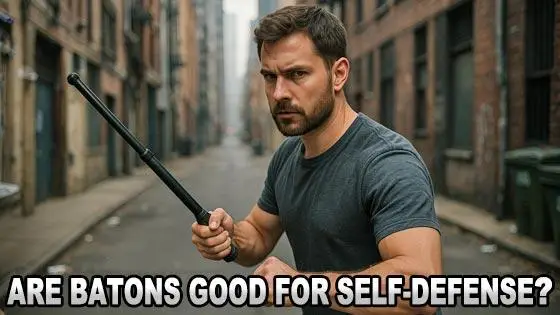
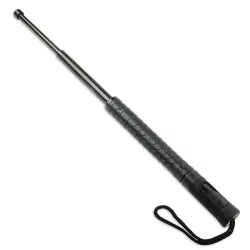
When it comes to personal protection, people often think first of pepper spray, stun guns, knives, or firearms. But there's another option that has been trusted for decades by police officers, security guards, and everyday civilians: the baton. Whether you call it an expandable baton, collapsible baton, telescopic baton, or even a classic police nightstick, this tool continues to serve as a practical, non-lethal way to protect yourself. But how effective is it in real life, and is it really a good choice for self defense?
The Advantages of a Baton
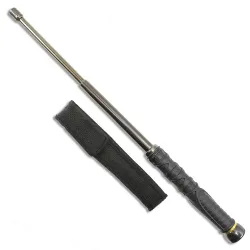
One of the biggest strengths of a baton for self defense is its reach. Unlike pepper spray, which forces you to get close to your attacker, or knives, which require dangerous close contact, a baton lets you keep an opponent at a distance. An expandable baton that flicks out to full length can instantly turn the tables, giving you leverage and control.
Another advantage is deterrence. The very act of snapping open a collapsible baton often sends a clear signal that you are ready to defend yourself. Many confrontations end without a strike being thrown simply because the presence of a baton makes an attacker think twice. And if a strike is necessary, the baton's solid construction delivers enough force to disable an opponent long enough for you to escape.
How Batons Compare to Other Self Defense Tools
Pepper spray is lightweight and widely carried, but it comes with drawbacks. Wind can blow it back toward you, sprays can run out after just a few bursts, and in some cases attackers may fight through the irritation. Tasers and stun guns are effective but require close range contact and often only provide a single shot. Knives are lethal weapons that can escalate situations quickly and carry heavy legal consequences. Firearms are powerful but come with strict regulations, high responsibility, and the risk of permanent injury or death.
A baton falls into a middle ground. It is non-lethal when used responsibly, provides real reach advantage, and is reusable in any situation without worrying about ammunition or charge. That balance between effectiveness and responsibility is why many people prefer a baton for self defense.
Expandable, Collapsible, and Telescopic Designs
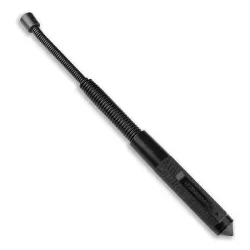
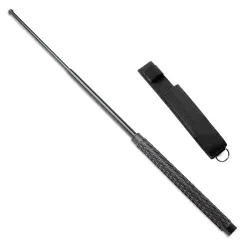
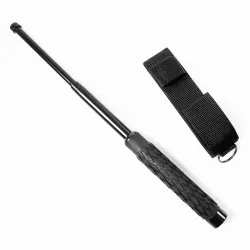
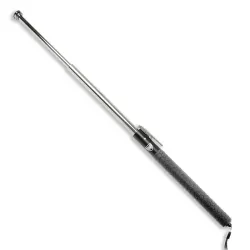
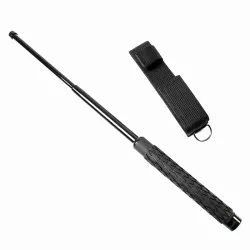
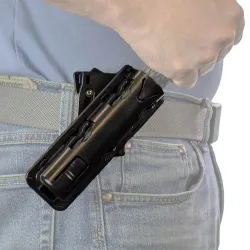
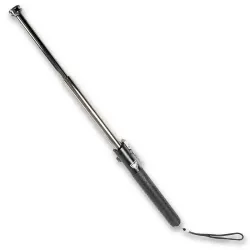
Modern batons come in several styles, but the terms expandable, collapsible, and telescopic all describe the same basic design: a baton that extends to full length with a flick of the wrist and collapses back down for easy carrying. This makes them extremely practical for civilians, since they can be stored in a bag, on a belt, or even in a vehicle without drawing unwanted attention.
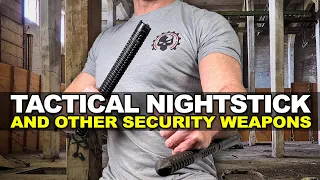
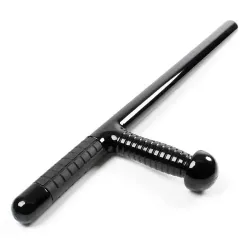
Police nightsticks are typically larger and heavier, designed for officers who carry them openly as part of their duty gear. While nightsticks deliver more striking power, they aren't as discreet or convenient as telescopic batons. For most civilian situations, a compact expandable baton offers the best mix of portability and effectiveness.
How Effective Are Batons in Real Life?
Effectiveness comes down to two main factors: how the baton is used and how prepared the user is. A baton is not designed to cause permanent injury. Its role is to provide impact and leverage that allow you to stop an attack and escape. Striking large muscle groups or limbs can temporarily disable an aggressor without escalating to deadly force.
Real-world encounters often show that the psychological effect of a baton is just as powerful as the physical. Hearing and seeing an expandable baton snap open is often enough to make an attacker hesitate or retreat. If force is required, even a single well-placed strike can create the opening you need to escape.
That said, no tool is foolproof. A collapsible baton works best when paired with basic training. Learning how to grip, extend, and swing properly prevents accidents and makes you more confident under pressure. Even a short practice session can give you the muscle memory needed to deploy a baton quickly and effectively.
Training and Safe Use
While anyone can pick up a baton and swing it, training makes a major difference. Practice helps you avoid mistakes like overextending or losing your grip. Many self defense instructors teach simple baton drills based on blocking, striking, and maintaining distance. Martial arts schools that focus on escrima or kali often include baton-like weapons in their training, giving students an added edge.
A good starting point is learning three basics:
- Grip and stance: keeping the baton secure and your body balanced.
- Striking zones: focusing on large muscle groups or limbs rather than the head or spine.
- Deployment practice: drawing and extending the baton smoothly under stress.
You do not need to be a martial artist to benefit. A few hours of structured practice can be enough to make sure your expandable baton is an asset rather than a liability in a stressful situation.
Legal Considerations
Before deciding to carry a baton, it is essential to understand the laws where you live. In some areas, police batons and telescopic batons are restricted to law enforcement. In others, civilians can own and even carry them without restriction. Laws can differ not just by country, but also by state or even city.
For example, some states allow expandable batons for home defense but prohibit carrying them in public. Others treat them the same as knives or firearms, requiring permits or restricting ownership altogether. Even in regions where they are legal, there may be rules about where and how they can be carried.
Because of these differences, it is critical to check your local regulations before purchasing or carrying a baton. When in doubt, consider keeping it as a home-defense option rather than a daily carry. That way you remain compliant with the law while still having access to a proven self defense tool.
Batons in Security and Culture
Batons remain a standard tool in professional security and law enforcement around the world. Riot police often use heavier batons for crowd control, while security guards favor collapsible versions for portability. The baton's image as a symbol of authority has also kept it prominent in popular culture, appearing in action films, crime dramas, and even video games where they represent strength and control.
These portrayals reinforce what real-world experience shows: the baton is an enduring and reliable tool for defense.
The Bottom Line
So, are batons good for self defense? The answer is yes. When used responsibly, they offer reach, deterrence, and enough stopping power to create an opportunity to escape. Expandable batons are compact and discreet, police nightsticks remain reliable and powerful, and telescopic batons provide a balance of portability and strength.
Like any tool, effectiveness depends on the user. With basic training and awareness of the law, a baton can be one of the most practical non-lethal self defense options available today.
If you are considering adding one to your personal protection plan, check out our batons here.
 🔍︎ QUICK VIEW
 (1)
(1) 🔍︎ QUICK VIEW
$49.95
 🔍︎ QUICK VIEW
$32.95
 🔍︎ QUICK VIEW
$24.95
 🔍︎ QUICK VIEW
 🔍︎ QUICK VIEW
$59.95
 🔍︎ QUICK VIEW
$32.95
 🔍︎ QUICK VIEW
$43.95
 🔍︎ QUICK VIEW
$43.95
 🔍︎ QUICK VIEW
$29.95
 🔍︎ QUICK VIEW
 🔍︎ QUICK VIEW
$18.95
 🔍︎ QUICK VIEW
 🔍︎ QUICK VIEW
$84.95
 🔍︎ QUICK VIEW
$69.95
 🔍︎ QUICK VIEW
$44.95
You May Also Be Interested In:
- What is the Difference Between Tonfa, Police Batons, and Nightsticks?
- What are the Best Canes for Self-Defense?
- How to Choose the Best Self Defense Keychain for EDC
- Should Self-Defense Weapons Be Legal?
- Self-Defense Umbrella and Other New Weapons
- Self-Defense Weapons That Could Save Your Life
- Non Lethal Self Defense Weapons That Actually Work
- Kubaton Weapon: What It Is and How It Works for Self Defense
- Cat Keychain Self Defense: Do They Work and Are They Legal
- Pepper Spray vs Stun Gun: Which Is Better for Self Defense?
Leave a Reply