




Different Types of Knife Steels Explained
May 11th, 2026
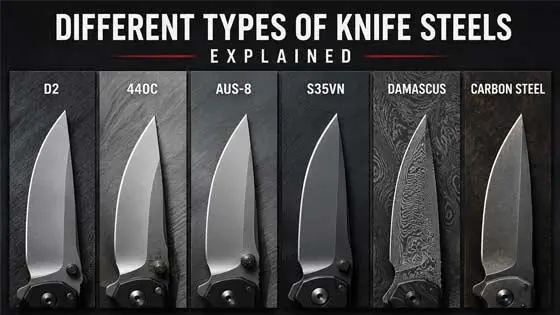
Knife steel plays a huge role in how a knife performs, holds an edge, resists corrosion, and feels during everyday use. Even two knives that look almost identical on the outside can behave very differently depending on the type of steel used in the blade. That is one reason knife enthusiasts often pay close attention to blade steel when comparing different knives and everyday carry designs.
Over the years, manufacturers have developed a wide variety of knife steels, each with its own strengths, weaknesses, and overall personality. Some steels are known for excellent edge retention, while others focus more on corrosion resistance, toughness, ease of sharpening, or overall balance. Certain steels also became heavily associated with premium knives and collector-focused designs because of their performance and reputation within the knife community.
In this guide, we are going to break down some of the most common knife steels, explain how they differ from one another, and look at why different steels appeal to different types of knife enthusiasts. Whether someone is new to collecting or simply curious about modern everyday carry knife designs, understanding blade steel helps explain why some knives feel and perform so differently over time.
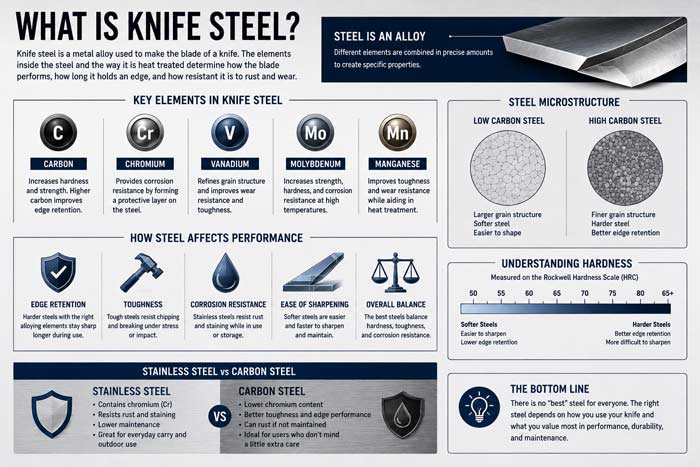
Knife steel is the type of metal alloy used to create the blade of a knife. Different steel formulas contain different combinations of elements like carbon, chromium, vanadium, molybdenum, and other materials that affect how the blade performs during use. Even small changes in the composition of the steel can dramatically change characteristics like hardness, toughness, corrosion resistance, edge retention, and ease of sharpening.
One reason knife steel matters so much is because the blade is the working part of the knife. The steel determines how long the edge stays sharp, how resistant the blade is to rust or staining, and how well it handles repeated cutting tasks over time. Some steels are designed to maximize edge retention, while others prioritize toughness or easier maintenance for everyday users.
Hardness is one of the most commonly discussed aspects of knife steel. Harder steels often hold an edge longer, but they may also become more difficult to sharpen or slightly less resistant to chipping under heavy stress. Softer steels can be easier to maintain and sharpen, but they may lose their edge more quickly during repeated use. Finding the right balance is one of the biggest goals in modern knife steel development.
Corrosion resistance is another major factor. Stainless steels contain enough chromium to help resist rust and staining, which makes them very popular for everyday carry and outdoor use. Carbon steels, on the other hand, often prioritize toughness and edge performance but may require more maintenance to prevent corrosion over time.
Understanding blade steel also helps explain why different everyday carry knife models can feel so different even when they share similar blade shapes or locking systems. The steel itself plays a massive role in the overall personality, maintenance needs, and long-term performance of the knife.
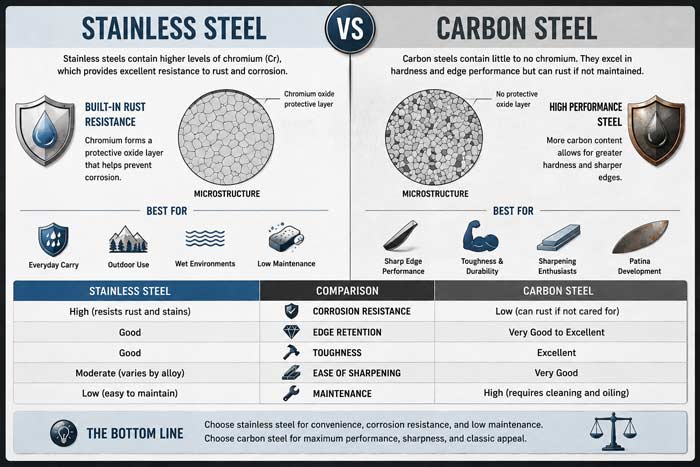
One of the biggest differences in the knife world is the distinction between stainless steel and carbon steel. While both types of steel can make excellent knife blades, they behave very differently depending on their composition, hardness, corrosion resistance, and overall maintenance requirements. That is why knife enthusiasts often have strong opinions about which category they prefer.
Stainless steels contain enough chromium to help resist rust, staining, and corrosion during everyday use. Because of that added corrosion resistance, stainless steels became extremely popular for everyday carry knives, outdoor knives, and general-purpose cutting tools that may be exposed to moisture or changing environments. Many users appreciate stainless steels because they usually require less maintenance and are easier to carry daily without worrying about rust forming on the blade.
Carbon steels, on the other hand, usually contain lower chromium levels and place more emphasis on hardness, toughness, and edge performance. Many enthusiasts enjoy carbon steel because it can develop extremely sharp edges and often feels very responsive during sharpening. Certain carbon steels are also known for excellent toughness and long-term cutting performance, especially in harder-use applications.
The tradeoff is that carbon steel generally requires more maintenance. Without enough chromium to resist corrosion, carbon steel blades can develop rust, discoloration, or patina over time if they are not properly cleaned and maintained. Some collectors actually enjoy this aging process because it gives the blade a more unique and worn appearance as it develops character through use.
Neither category is automatically better than the other because both stainless and carbon steels offer different advantages depending on how the knife will be used. Many modern daily carry folding knives use stainless steels for convenience and corrosion resistance, while some enthusiasts still prefer carbon steels for their sharpening feel, edge behavior, and traditional appeal.
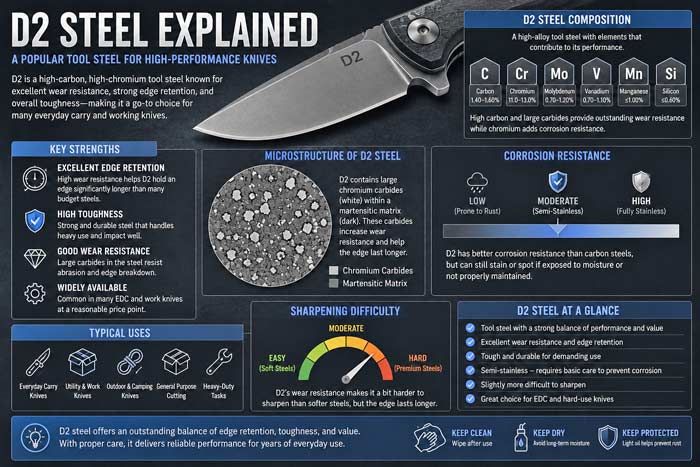
D2 steel is one of the most widely recognized tool steels in the modern knife world. Over the years, it became extremely popular in everyday carry knives because it offers a strong balance between edge retention, toughness, and overall durability. Many enthusiasts view D2 as a solid mid-to-high-performance steel that provides excellent cutting performance without reaching the extremely high prices associated with some premium super steels.
One reason D2 became so popular is its impressive wear resistance. The steel contains a relatively high amount of carbon and chromium along with large carbides that help the edge resist abrasion during repeated cutting tasks. That allows many D2 blades to hold an edge noticeably longer than softer budget-oriented steels during everyday use.
Even though D2 contains chromium, it is often considered a "semi-stainless" steel rather than a fully stainless one. It offers better corrosion resistance than many traditional carbon steels, but it can still develop staining or surface corrosion if exposed to moisture for long periods without proper maintenance. Because of that, many users still wipe down and care for D2 blades regularly to keep them looking clean over time.
Another reason enthusiasts like D2 is that it often feels very solid and durable during use. Many knife manufacturers use D2 on heavier-duty folders and work-oriented carry designs because the steel handles repeated cutting tasks quite well while maintaining strong edge retention. That combination helped D2 become extremely common across the world of modern everyday carry knives.
Some users do note that D2 can be slightly more difficult to sharpen compared to softer steels because of its wear resistance and carbide structure. Still, many enthusiasts feel the tradeoff is worth it because the blade tends to stay sharp longer during regular use. That strong overall balance helped make D2 one of the most recognizable steels in many styles of modern EDC folders and utility-focused carry designs.
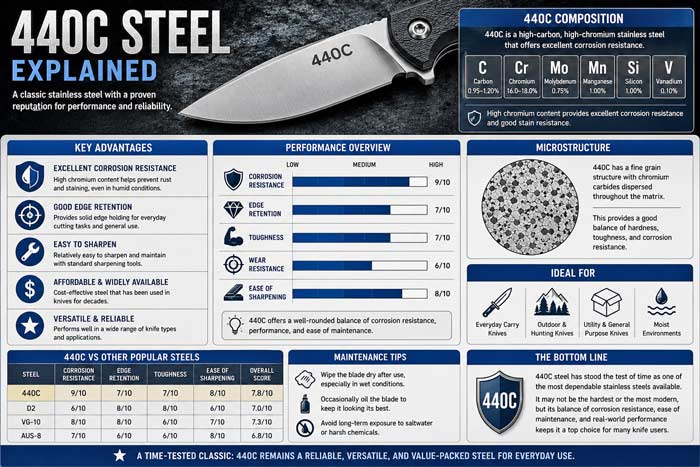
440C steel has been one of the most recognizable stainless knife steels for decades. Long before many modern super steels became popular, 440C earned a strong reputation for offering a good balance of corrosion resistance, hardness, durability, and affordability. Even today, many enthusiasts still respect 440C because of how dependable and versatile it remains across a wide variety of knife designs.
One of the biggest advantages of 440C is its corrosion resistance. The steel contains a relatively high chromium content, which helps protect the blade from rust and staining during normal everyday use. That made 440C especially popular for everyday carry knives, outdoor knives, and utility-focused designs that may encounter moisture or changing environments regularly.
440C also became well known for being relatively easy to maintain compared to many harder premium steels. While it may not hold an edge quite as long as some newer high-end steels, many users appreciate that it is usually easier to sharpen and maintain with standard sharpening tools. That balance between performance and convenience helped make 440C a longtime favorite among casual users and experienced enthusiasts alike.
Another reason 440C remained popular for so many years is its overall versatility. The steel can perform well across many different blade styles and knife categories without becoming overly expensive or difficult to work with during manufacturing. Many manufacturers used 440C because it delivered dependable real-world performance while remaining accessible to a wide range of users.
Even as newer powder metallurgy steels and premium alloys became more common, 440C continued to maintain a strong reputation because of its balanced performance and proven reliability. That long history helped establish 440C as one of the classic stainless steels used in many styles of general-purpose cutting tools and modern carry knives.
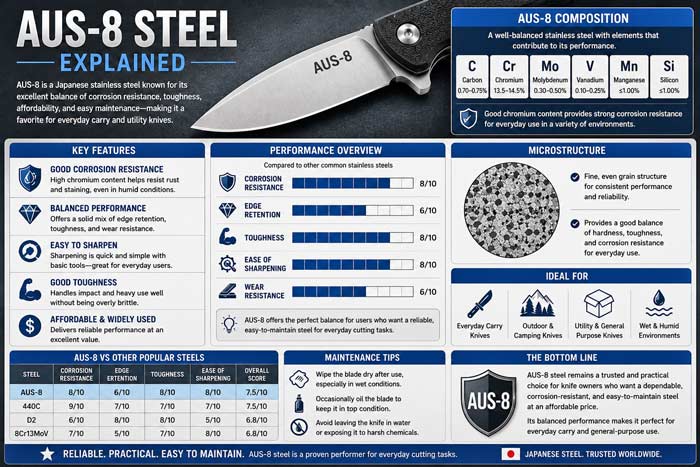
AUS-8 steel became extremely popular in the knife world because it offers a very balanced combination of corrosion resistance, toughness, affordability, and ease of maintenance. Originally developed in Japan, AUS-8 gained a strong reputation as a dependable stainless steel that performs well across a wide variety of everyday carry and utility-focused knife designs.
One reason many enthusiasts still appreciate AUS-8 is that it is relatively easy to sharpen compared to some harder premium steels. While it may not hold an edge as long as high-end powder metallurgy steels, many users enjoy how quickly the blade can be touched up and returned to a very sharp edge using basic sharpening equipment. That balance between edge performance and maintenance convenience helped AUS-8 remain popular for many years.
AUS-8 also provides good corrosion resistance because of its chromium content, which helps protect the blade from rust and staining during normal use. That made the steel especially attractive for everyday carry knives, outdoor knives, and utility tools that may be exposed to moisture or changing environments regularly.
Another reason AUS-8 became so widespread is its overall toughness and balanced performance. The steel generally handles impact and repeated cutting tasks well without becoming overly brittle or difficult to maintain. Many knife manufacturers used AUS-8 because it delivered reliable real-world performance while remaining affordable for a broad range of users.
Even though many newer steels now dominate high-end enthusiast discussions, AUS-8 continues to maintain a loyal following because of its practicality and ease of ownership. Its balanced characteristics helped make it one of the most recognizable stainless steels used in many styles of modern automatic carry knives and everyday utility designs.
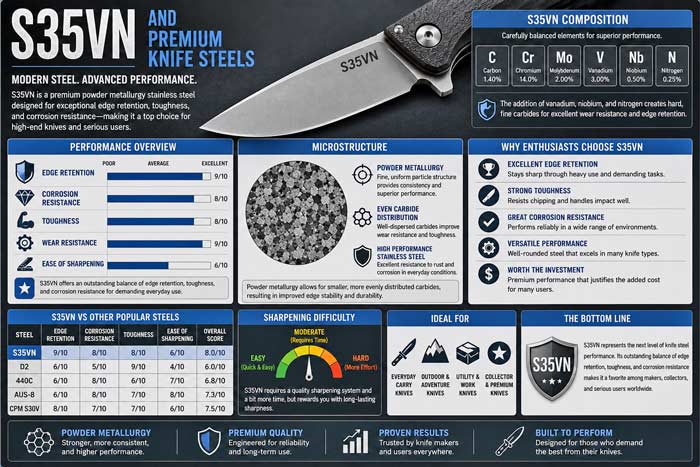
As knife technology continued evolving, manufacturers began developing premium powder metallurgy steels designed to offer higher levels of edge retention, toughness, corrosion resistance, and overall performance than many traditional steels. One of the most well-known examples is CPM S35VN, which quickly became one of the most respected premium steels in the modern knife community.
S35VN was designed to improve upon earlier premium stainless steels by creating a more balanced combination of toughness, wear resistance, and machinability. The powder metallurgy process used to create the steel allows the carbides to distribute more evenly throughout the blade, which helps improve overall consistency and cutting performance compared to many traditional steel manufacturing methods.
One reason enthusiasts appreciate S35VN so much is its strong overall balance. The steel offers excellent edge retention while still maintaining good toughness and corrosion resistance for everyday use. Many users view it as a high-performance steel that performs well across a wide variety of cutting tasks without becoming overly brittle or difficult to maintain.
Premium steels like S35VN also became closely associated with higher-end everyday carry knives and enthusiast-focused designs. As collectors became more interested in steel performance, manufacturers started highlighting blade steel more heavily as part of the overall value and identity of the knife itself. That shift helped premium steels become major selling points in the modern knife industry.
Even though premium steels often cost more than traditional stainless steels, many enthusiasts feel the added performance and long-term edge retention are worth the investment. That reputation helped S35VN and similar steels become extremely common across many styles of high-end pocket carry knives and collector-oriented everyday carry designs.
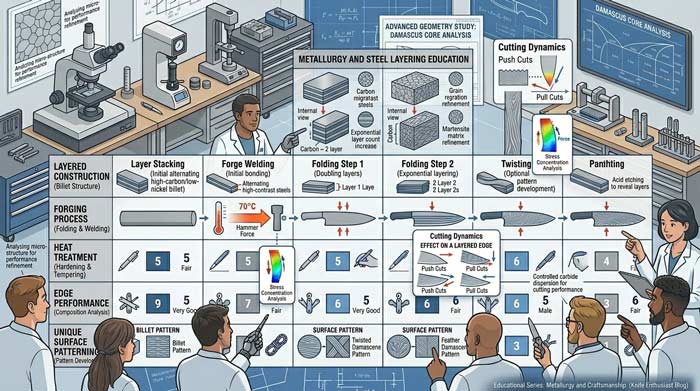
Damascus steel is one of the most visually recognizable materials in the knife world because of its flowing layered patterns and distinctive appearance. Modern Damascus steel is typically created by forge-welding multiple layers of different steels together and repeatedly folding or manipulating them to produce unique surface patterns throughout the blade. The result is a blade that combines striking visual character with functional cutting performance.
One reason Damascus steel became so popular is its appearance. No two patterned blades look exactly the same, which gives each knife a more unique and handcrafted feel. Many collectors and enthusiasts appreciate Damascus blades because the layered patterns create an artistic look that stands out immediately compared to standard satin or stonewashed finishes.
Historically, the term "Damascus steel" originally referred to ancient steelmaking techniques associated with legendary blades known for strength and cutting performance. Modern Damascus steel is different from the original historical process, but the name remained popular because of the layered visual patterns and craftsmanship associated with these blades.
The actual performance of modern Damascus steel depends heavily on the specific steels used in the layering process and the quality of the heat treatment. Some Damascus blades prioritize visual artistry and collector appeal, while others are designed to provide strong real-world cutting performance alongside the decorative patterning.
Another reason enthusiasts enjoy Damascus steel is the craftsmanship involved in creating it. The forging process requires precision, experience, and careful heat control to produce clean patterns and reliable blade performance. That handcrafted reputation helped Damascus steel become extremely popular across many styles of collector-focused folding knives and premium custom knife designs.
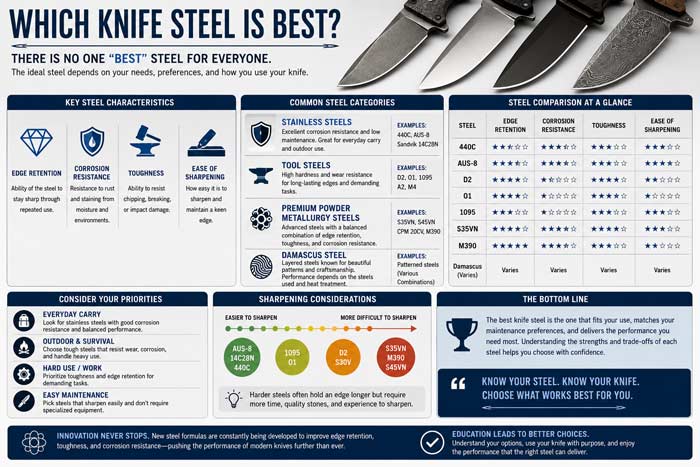
Just like blade shapes and locking mechanisms, there is no single knife steel that works best for every person or every situation. Different steels are designed with different priorities in mind, which means the ideal choice usually depends on how the knife will be used and what characteristics matter most to the user. Some people prioritize edge retention, while others care more about corrosion resistance, toughness, or ease of sharpening.
For example, users who want low maintenance and strong rust resistance often prefer stainless steels for everyday carry and outdoor use. Others may choose harder tool steels because they enjoy longer-lasting edges and stronger wear resistance during repeated cutting tasks. Some enthusiasts also prefer premium powder metallurgy steels because of their highly balanced performance and refined cutting characteristics.
Another important factor is sharpening. Extremely hard steels may hold an edge for a very long time, but they can also require more effort and better equipment to sharpen properly. Softer steels are often easier to maintain, which many everyday users appreciate because they can quickly touch up the edge without specialized tools.
Personal preference also plays a huge role. Some collectors simply enjoy certain steels because of their reputation, feel during sharpening, corrosion behavior, or overall balance of characteristics. Others may care more about aesthetics, historical significance, or the craftsmanship associated with certain materials like Damascus steel.
As knife technology continues advancing, manufacturers keep developing new steel formulas that push the limits of edge retention, toughness, corrosion resistance, and overall cutting performance. That constant innovation is one reason the world of modern precision knife designs remains so interesting to collectors and everyday carry enthusiasts alike.
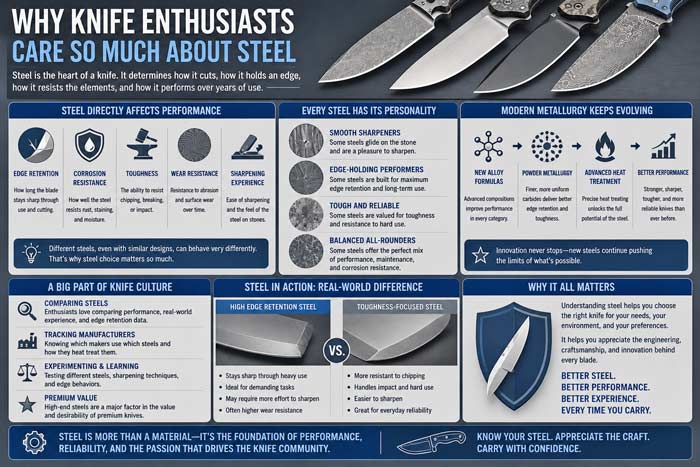
For many knife enthusiasts, blade steel is one of the most important and fascinating parts of knife design because it directly affects how the knife performs over time. The type of steel influences edge retention, sharpening feel, corrosion resistance, toughness, wear resistance, and overall long-term durability. Even two knives with similar blade shapes and locking systems can feel completely different depending on the steel used in the blade.
Many collectors enjoy comparing steels because each one develops its own personality during real-world use. Some steels feel extremely smooth during sharpening, while others are known for aggressive cutting performance or exceptional edge retention. Certain steels are also prized for toughness and durability, while others are valued for their balance between maintenance and performance.
Another reason enthusiasts care so much about steel is because modern metallurgy has evolved rapidly over the years. New powder metallurgy processes, carbide structures, heat treatment techniques, and alloy formulas continue pushing knife performance further than ever before. That constant innovation keeps enthusiasts interested and creates endless discussions about which steels perform best in different situations.
Steel also became closely tied to knife collecting culture itself. Many enthusiasts enjoy tracking which manufacturers use certain steels, comparing heat treatments, or experimenting with how different steels sharpen and wear over time. Premium steels often become major selling points for high-end knives because collectors appreciate the engineering and performance advantages associated with them.
As the knife industry continues evolving, blade steel will likely remain one of the biggest topics in the world of modern knife design and blade geometry. Understanding steel helps enthusiasts better appreciate the craftsmanship, engineering, and long-term performance behind the knives they carry every day.
Knife steel plays a massive role in how a knife performs, ages, sharpens, and handles real-world cutting tasks over time. Small differences in composition, hardness, carbide structure, and heat treatment can completely change the overall personality of a blade. That is one reason blade steel remains one of the most discussed topics among collectors, manufacturers, and everyday carry enthusiasts.
What makes knife steels especially interesting is that every formula involves tradeoffs. Some steels prioritize corrosion resistance and low maintenance, while others focus on edge retention, toughness, or extreme wear resistance. No single steel is perfect for every user, which is why so many different formulas continue to exist across modern knife design.
As metallurgy technology continues advancing, manufacturers keep developing new alloys and powder metallurgy steels that push performance further than ever before. Modern steels now offer combinations of toughness, hardness, corrosion resistance, and edge stability that would have been extremely difficult to achieve decades ago. That constant innovation is one reason knife enthusiasts remain so interested in comparing different steels and experimenting with new designs.
For many collectors, understanding blade steel adds another layer of appreciation beyond the appearance of the knife itself. Learning how different steels sharpen, wear, resist corrosion, and respond to hard use helps explain why certain knives feel so different during everyday carry and long-term ownership.
Whether someone prefers practical stainless steels, high-performance tool steels, or premium powder metallurgy alloys, blade steel will always remain one of the most important parts of modern knife craftsmanship and everyday carry performance.
In this guide, we are going to break down some of the most common knife steels, explain how they differ from one another, and look at why different steels appeal to different types of knife enthusiasts. Whether someone is new to collecting or simply curious about modern everyday carry knife designs, understanding blade steel helps explain why some knives feel and perform so differently over time.
What Is Knife Steel?
Knife steel is the type of metal alloy used to create the blade of a knife. Different steel formulas contain different combinations of elements like carbon, chromium, vanadium, molybdenum, and other materials that affect how the blade performs during use. Even small changes in the composition of the steel can dramatically change characteristics like hardness, toughness, corrosion resistance, edge retention, and ease of sharpening.
One reason knife steel matters so much is because the blade is the working part of the knife. The steel determines how long the edge stays sharp, how resistant the blade is to rust or staining, and how well it handles repeated cutting tasks over time. Some steels are designed to maximize edge retention, while others prioritize toughness or easier maintenance for everyday users.
Hardness is one of the most commonly discussed aspects of knife steel. Harder steels often hold an edge longer, but they may also become more difficult to sharpen or slightly less resistant to chipping under heavy stress. Softer steels can be easier to maintain and sharpen, but they may lose their edge more quickly during repeated use. Finding the right balance is one of the biggest goals in modern knife steel development.
Corrosion resistance is another major factor. Stainless steels contain enough chromium to help resist rust and staining, which makes them very popular for everyday carry and outdoor use. Carbon steels, on the other hand, often prioritize toughness and edge performance but may require more maintenance to prevent corrosion over time.
Understanding blade steel also helps explain why different everyday carry knife models can feel so different even when they share similar blade shapes or locking systems. The steel itself plays a massive role in the overall personality, maintenance needs, and long-term performance of the knife.
Stainless Steel vs Carbon Steel
One of the biggest differences in the knife world is the distinction between stainless steel and carbon steel. While both types of steel can make excellent knife blades, they behave very differently depending on their composition, hardness, corrosion resistance, and overall maintenance requirements. That is why knife enthusiasts often have strong opinions about which category they prefer.
Stainless steels contain enough chromium to help resist rust, staining, and corrosion during everyday use. Because of that added corrosion resistance, stainless steels became extremely popular for everyday carry knives, outdoor knives, and general-purpose cutting tools that may be exposed to moisture or changing environments. Many users appreciate stainless steels because they usually require less maintenance and are easier to carry daily without worrying about rust forming on the blade.
Carbon steels, on the other hand, usually contain lower chromium levels and place more emphasis on hardness, toughness, and edge performance. Many enthusiasts enjoy carbon steel because it can develop extremely sharp edges and often feels very responsive during sharpening. Certain carbon steels are also known for excellent toughness and long-term cutting performance, especially in harder-use applications.
The tradeoff is that carbon steel generally requires more maintenance. Without enough chromium to resist corrosion, carbon steel blades can develop rust, discoloration, or patina over time if they are not properly cleaned and maintained. Some collectors actually enjoy this aging process because it gives the blade a more unique and worn appearance as it develops character through use.
Neither category is automatically better than the other because both stainless and carbon steels offer different advantages depending on how the knife will be used. Many modern daily carry folding knives use stainless steels for convenience and corrosion resistance, while some enthusiasts still prefer carbon steels for their sharpening feel, edge behavior, and traditional appeal.
D2 Steel Explained
D2 steel is one of the most widely recognized tool steels in the modern knife world. Over the years, it became extremely popular in everyday carry knives because it offers a strong balance between edge retention, toughness, and overall durability. Many enthusiasts view D2 as a solid mid-to-high-performance steel that provides excellent cutting performance without reaching the extremely high prices associated with some premium super steels.
One reason D2 became so popular is its impressive wear resistance. The steel contains a relatively high amount of carbon and chromium along with large carbides that help the edge resist abrasion during repeated cutting tasks. That allows many D2 blades to hold an edge noticeably longer than softer budget-oriented steels during everyday use.
Even though D2 contains chromium, it is often considered a "semi-stainless" steel rather than a fully stainless one. It offers better corrosion resistance than many traditional carbon steels, but it can still develop staining or surface corrosion if exposed to moisture for long periods without proper maintenance. Because of that, many users still wipe down and care for D2 blades regularly to keep them looking clean over time.
Another reason enthusiasts like D2 is that it often feels very solid and durable during use. Many knife manufacturers use D2 on heavier-duty folders and work-oriented carry designs because the steel handles repeated cutting tasks quite well while maintaining strong edge retention. That combination helped D2 become extremely common across the world of modern everyday carry knives.
Some users do note that D2 can be slightly more difficult to sharpen compared to softer steels because of its wear resistance and carbide structure. Still, many enthusiasts feel the tradeoff is worth it because the blade tends to stay sharp longer during regular use. That strong overall balance helped make D2 one of the most recognizable steels in many styles of modern EDC folders and utility-focused carry designs.
440C Steel Explained
440C steel has been one of the most recognizable stainless knife steels for decades. Long before many modern super steels became popular, 440C earned a strong reputation for offering a good balance of corrosion resistance, hardness, durability, and affordability. Even today, many enthusiasts still respect 440C because of how dependable and versatile it remains across a wide variety of knife designs.
One of the biggest advantages of 440C is its corrosion resistance. The steel contains a relatively high chromium content, which helps protect the blade from rust and staining during normal everyday use. That made 440C especially popular for everyday carry knives, outdoor knives, and utility-focused designs that may encounter moisture or changing environments regularly.
440C also became well known for being relatively easy to maintain compared to many harder premium steels. While it may not hold an edge quite as long as some newer high-end steels, many users appreciate that it is usually easier to sharpen and maintain with standard sharpening tools. That balance between performance and convenience helped make 440C a longtime favorite among casual users and experienced enthusiasts alike.
Another reason 440C remained popular for so many years is its overall versatility. The steel can perform well across many different blade styles and knife categories without becoming overly expensive or difficult to work with during manufacturing. Many manufacturers used 440C because it delivered dependable real-world performance while remaining accessible to a wide range of users.
Even as newer powder metallurgy steels and premium alloys became more common, 440C continued to maintain a strong reputation because of its balanced performance and proven reliability. That long history helped establish 440C as one of the classic stainless steels used in many styles of general-purpose cutting tools and modern carry knives.
AUS-8 Steel Explained
AUS-8 steel became extremely popular in the knife world because it offers a very balanced combination of corrosion resistance, toughness, affordability, and ease of maintenance. Originally developed in Japan, AUS-8 gained a strong reputation as a dependable stainless steel that performs well across a wide variety of everyday carry and utility-focused knife designs.
One reason many enthusiasts still appreciate AUS-8 is that it is relatively easy to sharpen compared to some harder premium steels. While it may not hold an edge as long as high-end powder metallurgy steels, many users enjoy how quickly the blade can be touched up and returned to a very sharp edge using basic sharpening equipment. That balance between edge performance and maintenance convenience helped AUS-8 remain popular for many years.
AUS-8 also provides good corrosion resistance because of its chromium content, which helps protect the blade from rust and staining during normal use. That made the steel especially attractive for everyday carry knives, outdoor knives, and utility tools that may be exposed to moisture or changing environments regularly.
Another reason AUS-8 became so widespread is its overall toughness and balanced performance. The steel generally handles impact and repeated cutting tasks well without becoming overly brittle or difficult to maintain. Many knife manufacturers used AUS-8 because it delivered reliable real-world performance while remaining affordable for a broad range of users.
Even though many newer steels now dominate high-end enthusiast discussions, AUS-8 continues to maintain a loyal following because of its practicality and ease of ownership. Its balanced characteristics helped make it one of the most recognizable stainless steels used in many styles of modern automatic carry knives and everyday utility designs.
S35VN and Premium Knife Steels
As knife technology continued evolving, manufacturers began developing premium powder metallurgy steels designed to offer higher levels of edge retention, toughness, corrosion resistance, and overall performance than many traditional steels. One of the most well-known examples is CPM S35VN, which quickly became one of the most respected premium steels in the modern knife community.
S35VN was designed to improve upon earlier premium stainless steels by creating a more balanced combination of toughness, wear resistance, and machinability. The powder metallurgy process used to create the steel allows the carbides to distribute more evenly throughout the blade, which helps improve overall consistency and cutting performance compared to many traditional steel manufacturing methods.
One reason enthusiasts appreciate S35VN so much is its strong overall balance. The steel offers excellent edge retention while still maintaining good toughness and corrosion resistance for everyday use. Many users view it as a high-performance steel that performs well across a wide variety of cutting tasks without becoming overly brittle or difficult to maintain.
Premium steels like S35VN also became closely associated with higher-end everyday carry knives and enthusiast-focused designs. As collectors became more interested in steel performance, manufacturers started highlighting blade steel more heavily as part of the overall value and identity of the knife itself. That shift helped premium steels become major selling points in the modern knife industry.
Even though premium steels often cost more than traditional stainless steels, many enthusiasts feel the added performance and long-term edge retention are worth the investment. That reputation helped S35VN and similar steels become extremely common across many styles of high-end pocket carry knives and collector-oriented everyday carry designs.
Damascus Steel Explained
Damascus steel is one of the most visually recognizable materials in the knife world because of its flowing layered patterns and distinctive appearance. Modern Damascus steel is typically created by forge-welding multiple layers of different steels together and repeatedly folding or manipulating them to produce unique surface patterns throughout the blade. The result is a blade that combines striking visual character with functional cutting performance.
One reason Damascus steel became so popular is its appearance. No two patterned blades look exactly the same, which gives each knife a more unique and handcrafted feel. Many collectors and enthusiasts appreciate Damascus blades because the layered patterns create an artistic look that stands out immediately compared to standard satin or stonewashed finishes.
Historically, the term "Damascus steel" originally referred to ancient steelmaking techniques associated with legendary blades known for strength and cutting performance. Modern Damascus steel is different from the original historical process, but the name remained popular because of the layered visual patterns and craftsmanship associated with these blades.
The actual performance of modern Damascus steel depends heavily on the specific steels used in the layering process and the quality of the heat treatment. Some Damascus blades prioritize visual artistry and collector appeal, while others are designed to provide strong real-world cutting performance alongside the decorative patterning.
Another reason enthusiasts enjoy Damascus steel is the craftsmanship involved in creating it. The forging process requires precision, experience, and careful heat control to produce clean patterns and reliable blade performance. That handcrafted reputation helped Damascus steel become extremely popular across many styles of collector-focused folding knives and premium custom knife designs.
Which Knife Steel Is Best?
Just like blade shapes and locking mechanisms, there is no single knife steel that works best for every person or every situation. Different steels are designed with different priorities in mind, which means the ideal choice usually depends on how the knife will be used and what characteristics matter most to the user. Some people prioritize edge retention, while others care more about corrosion resistance, toughness, or ease of sharpening.
For example, users who want low maintenance and strong rust resistance often prefer stainless steels for everyday carry and outdoor use. Others may choose harder tool steels because they enjoy longer-lasting edges and stronger wear resistance during repeated cutting tasks. Some enthusiasts also prefer premium powder metallurgy steels because of their highly balanced performance and refined cutting characteristics.
Another important factor is sharpening. Extremely hard steels may hold an edge for a very long time, but they can also require more effort and better equipment to sharpen properly. Softer steels are often easier to maintain, which many everyday users appreciate because they can quickly touch up the edge without specialized tools.
Personal preference also plays a huge role. Some collectors simply enjoy certain steels because of their reputation, feel during sharpening, corrosion behavior, or overall balance of characteristics. Others may care more about aesthetics, historical significance, or the craftsmanship associated with certain materials like Damascus steel.
As knife technology continues advancing, manufacturers keep developing new steel formulas that push the limits of edge retention, toughness, corrosion resistance, and overall cutting performance. That constant innovation is one reason the world of modern precision knife designs remains so interesting to collectors and everyday carry enthusiasts alike.
Why Knife Enthusiasts Care So Much About Steel
For many knife enthusiasts, blade steel is one of the most important and fascinating parts of knife design because it directly affects how the knife performs over time. The type of steel influences edge retention, sharpening feel, corrosion resistance, toughness, wear resistance, and overall long-term durability. Even two knives with similar blade shapes and locking systems can feel completely different depending on the steel used in the blade.
Many collectors enjoy comparing steels because each one develops its own personality during real-world use. Some steels feel extremely smooth during sharpening, while others are known for aggressive cutting performance or exceptional edge retention. Certain steels are also prized for toughness and durability, while others are valued for their balance between maintenance and performance.
Another reason enthusiasts care so much about steel is because modern metallurgy has evolved rapidly over the years. New powder metallurgy processes, carbide structures, heat treatment techniques, and alloy formulas continue pushing knife performance further than ever before. That constant innovation keeps enthusiasts interested and creates endless discussions about which steels perform best in different situations.
Steel also became closely tied to knife collecting culture itself. Many enthusiasts enjoy tracking which manufacturers use certain steels, comparing heat treatments, or experimenting with how different steels sharpen and wear over time. Premium steels often become major selling points for high-end knives because collectors appreciate the engineering and performance advantages associated with them.
As the knife industry continues evolving, blade steel will likely remain one of the biggest topics in the world of modern knife design and blade geometry. Understanding steel helps enthusiasts better appreciate the craftsmanship, engineering, and long-term performance behind the knives they carry every day.
Final Thoughts on Knife Steels
Knife steel plays a massive role in how a knife performs, ages, sharpens, and handles real-world cutting tasks over time. Small differences in composition, hardness, carbide structure, and heat treatment can completely change the overall personality of a blade. That is one reason blade steel remains one of the most discussed topics among collectors, manufacturers, and everyday carry enthusiasts.
What makes knife steels especially interesting is that every formula involves tradeoffs. Some steels prioritize corrosion resistance and low maintenance, while others focus on edge retention, toughness, or extreme wear resistance. No single steel is perfect for every user, which is why so many different formulas continue to exist across modern knife design.
As metallurgy technology continues advancing, manufacturers keep developing new alloys and powder metallurgy steels that push performance further than ever before. Modern steels now offer combinations of toughness, hardness, corrosion resistance, and edge stability that would have been extremely difficult to achieve decades ago. That constant innovation is one reason knife enthusiasts remain so interested in comparing different steels and experimenting with new designs.
For many collectors, understanding blade steel adds another layer of appreciation beyond the appearance of the knife itself. Learning how different steels sharpen, wear, resist corrosion, and respond to hard use helps explain why certain knives feel so different during everyday carry and long-term ownership.
Whether someone prefers practical stainless steels, high-performance tool steels, or premium powder metallurgy alloys, blade steel will always remain one of the most important parts of modern knife craftsmanship and everyday carry performance.
You May Also Be Interested In:
- Different Types of Pocket Knife Locks Explained
- What Is a Shuriken? Types of Ninja Throwing Stars Explained
- The Most Common Pocket Knife Blade Shapes Explained
- A Complete Guide to Nunchuck Types, Materials, and Styles
- Why Every Day Should Be an EDC Knife Day: How a Simple Knife Can Make Your Life Easier and Safer
- Best EDC Knife: How to Choose the Right Everyday Carry Knife
- The History and Evolution of the Karambit Knife
- 10 Things You Didn't Know About the Karambit Knife
- Switchblade vs Automatic Knife: What's the Difference?
- Knife Throwing for Beginners: How to Stick Every Throw
Leave a Reply