





What Is a Balisong? Beginner Guide to Butterfly Knives
May 15th, 2026
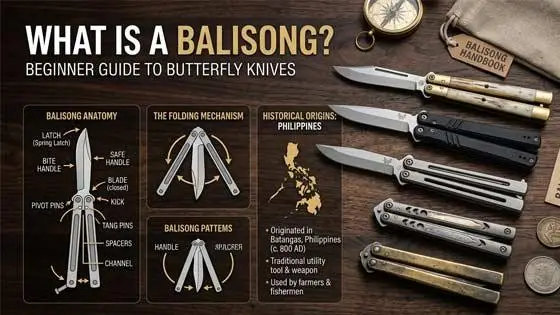
Butterfly knives are one of the most recognizable folding knife designs in the world because of their distinctive split-handle opening mechanism. Also commonly known as balisongs, butterfly knives use two rotating handles that fold around the blade when closed and swing open to expose the blade during use. Their unusual construction and smooth flipping motion helped turn them into one of the most recognizable specialty knife styles among collectors, knife enthusiasts, and pop culture fans worldwide.
The origins of butterfly knives are often linked to the Philippines, where traditional balisong designs became popular for everyday utility and craftsmanship. Over time, the design evolved into many different styles ranging from simple traditional knives to highly modernized collector pieces with upgraded materials, decorative finishes, and advanced locking systems. Whether someone is interested in knife history, unusual mechanical designs, or modern butterfly knives, understanding how the balisong developed helps explain why this unique folding knife continues to remain so popular today.
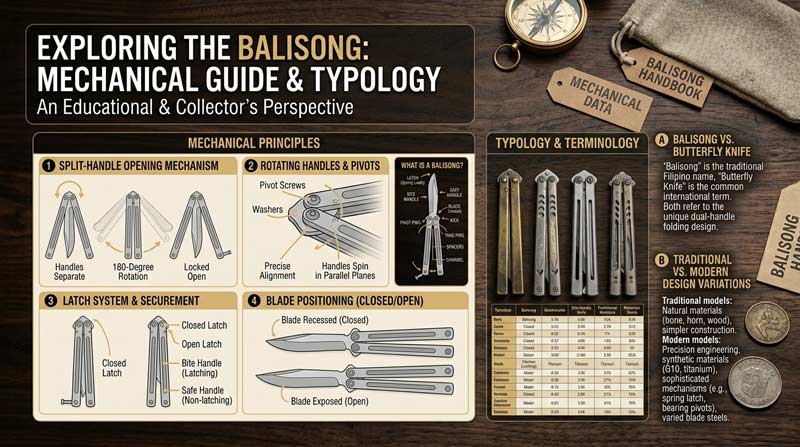
A butterfly knife, also known as a balisong, is a folding knife that uses two rotating handles to conceal the blade when closed. Unlike traditional folding knives that use a single handle and pivot point, butterfly knives split into two sections that swing around the blade before locking together during use. This unusual mechanism gives butterfly knives their distinctive appearance and is one of the main reasons they have remained popular among collectors and knife enthusiasts for decades.
The term "balisong" is commonly associated with the knife's Filipino origins, while "butterfly knife" became the more widely recognized name in many other parts of the world. Although the two terms are often used interchangeably today, many collectors still prefer the traditional name when discussing historical designs and Filipino craftsmanship. Regardless of the name, the core split-handle concept remains one of the most recognizable mechanical knife designs ever created.
Butterfly knives are available in many different styles ranging from traditional utility-focused designs to modern collector models with upgraded materials, decorative finishes, and specialized handle construction. Some are designed for practical everyday use, while others focus more on visual appeal, smooth mechanical action, or recreational flipping practice. Training versions without sharpened edges are also popular among collectors and enthusiasts who enjoy learning handling techniques.
Many knife enthusiasts interested in unique mechanical designs are also drawn to other unusual blade styles such as karambit knife designs because of their distinctive ergonomics, recognizable appearance, and strong connection to collector culture. Butterfly knives continue to stand out because of their unique opening mechanism and long history in knife craftsmanship.
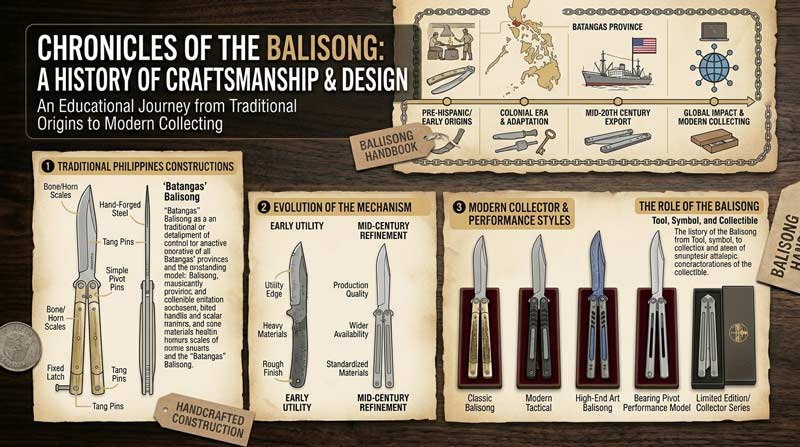
The balisong is most commonly associated with the Philippines, where it developed a strong reputation for craftsmanship, utility, and traditional knife making. While historians still debate the exact origins of the design, many people trace the knife's history to the Batangas region of the Philippines, which became especially well known for producing balisongs. Over time, the knife became closely tied to Filipino culture and traditional blade craftsmanship.
Early balisongs were often practical utility knives used for everyday cutting tasks rather than collectible specialty items. Their folding handle design made them compact and easy to carry while still providing a full-length blade when opened. Traditional models were commonly made using simple forged steel and natural handle materials such as wood, horn, or bone. Many were handcrafted and built to prioritize durability and practical use.
As interest in knives spread internationally through martial arts culture, military exposure, movies, and collector communities, butterfly knives gradually became popular outside the Philippines. Their unusual opening mechanism and distinctive appearance helped them stand out from traditional folding knives, especially among people interested in knife mechanics and specialty blade designs.
Today, balisongs are appreciated both for their cultural history and their mechanical uniqueness. Modern collectors often seek out traditional Filipino-inspired models alongside upgraded contemporary versions that use premium materials, advanced pivots, and highly customized handle designs. Many enthusiasts interested in specialty balisong knives appreciate the connection between historical craftsmanship and modern mechanical innovation.
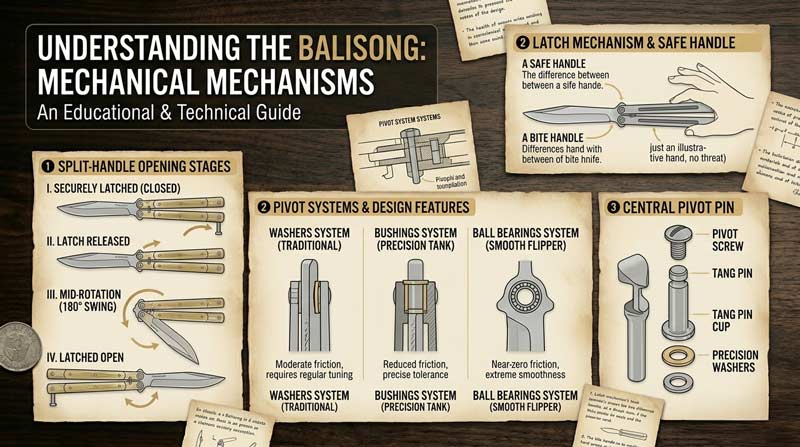
One of the most interesting things about butterfly knives is their unique opening mechanism. Instead of using a single folding handle like most pocket knives, a butterfly knife uses two separate handles that rotate around the blade. When closed, the handles completely surround and protect the blade. To open the knife, the handles swing apart and rotate into position before locking together to form a single grip.
Most butterfly knives rely on pivots near the base of the blade that allow the handles to move smoothly during opening and closing. Depending on the design, some use washers, bushings, or bearing systems to improve movement and reduce friction. Higher-end collector models often focus heavily on balance, smooth mechanical action, and precision construction because enthusiasts appreciate how different designs feel during handling.
Many modern butterfly knives also use latch systems that help secure the handles when the knife is open or closed. Traditional designs often relied on simple latch mechanisms, while newer models may include upgraded hardware, improved locking systems, or lightweight handle materials that change how the knife feels in the hand.
Because of the unusual split-handle construction, butterfly knives feel very different from conventional folding knife designs. Their distinctive mechanical movement is one of the biggest reasons collectors and knife enthusiasts continue to be fascinated by balisongs even after many decades of popularity.
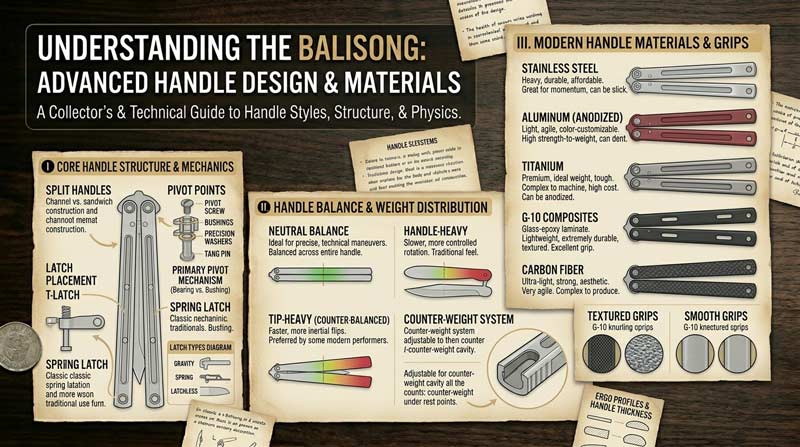
The split-handle construction is one of the biggest reasons butterfly knives stand out from almost every other folding knife design. Instead of folding into a single handle body, butterfly knives use two separate handles that rotate around the blade and close together to completely enclose it. This gives the knife a very different mechanical feel and creates a design that many collectors find visually interesting compared to more conventional folding knives.
Because the handles rotate independently, butterfly knives often feel more balanced and mechanical during handling than many traditional folders. Different handle weights, pivot systems, and construction materials can dramatically change how a balisong feels when opened and closed. Enthusiasts often pay close attention to handle balance, smooth movement, and precision tolerances when comparing different models.
Modern butterfly knife handles are available in many different materials including stainless steel, aluminum, titanium, G10, and polymer-based composites. Some are built for durability and simple utility, while others focus more on lightweight handling or decorative appearance. Certain collector models also include skeletonized handles, textured grip patterns, or colored finishes designed to make the knife feel more distinctive and visually appealing.
Collectors who enjoy unusual knife ergonomics are often drawn to other unique specialty designs such as curved karambit blades because both knife styles stand apart from traditional straight-handle designs in very recognizable ways. The unusual split-handle layout continues to be one of the biggest reasons butterfly knives remain so popular among collectors and mechanical knife enthusiasts.
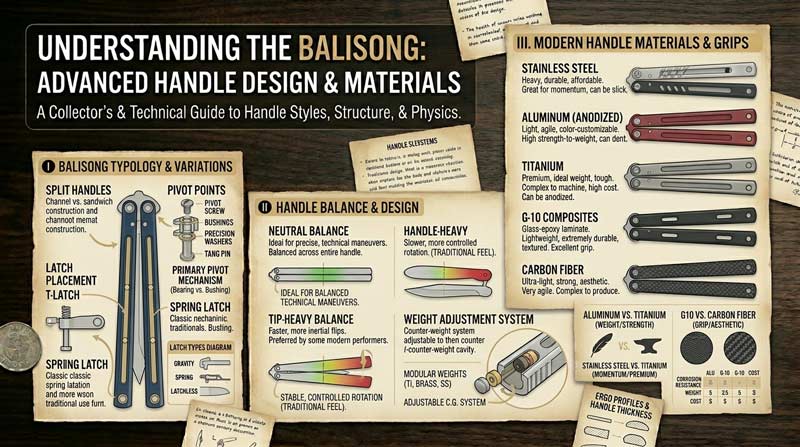
Modern butterfly knives are available in a huge range of styles that vary in size, materials, construction, and overall appearance. While traditional balisongs were originally designed as practical utility knives, many modern versions now focus heavily on collector appeal, mechanical smoothness, upgraded materials, and distinctive styling. Some stay close to traditional Filipino-inspired craftsmanship, while others take on highly modernized designs with lightweight handles, premium pivots, and advanced finishes.
One of the biggest differences between modern butterfly knives is the type of handle and pivot system used. Some models prioritize smooth movement and precise balance for enthusiasts who enjoy mechanical handling, while others focus more on durability and simple everyday function. Materials such as aluminum, stainless steel, titanium, G10, and carbon fiber have become increasingly common in collector-focused balisongs because they can dramatically affect weight, feel, and visual appearance.
Training balisongs have also become extremely popular among collectors and enthusiasts who enjoy learning basic handling without using sharpened blades. These versions often replace the blade with a dull trainer profile while keeping the same handle mechanics and movement characteristics as traditional models. Decorative collector designs are another major category, often featuring colored hardware, engraved handles, skeletonized construction, or highly customized finishes.
Many people who enjoy modern butterfly knife styles are also interested in unusual specialty knives because of the combination of mechanics, craftsmanship, and collectibility they offer. Their balance between traditional design and modern innovation continues to make balisongs one of the most recognizable folding knife styles in the world.
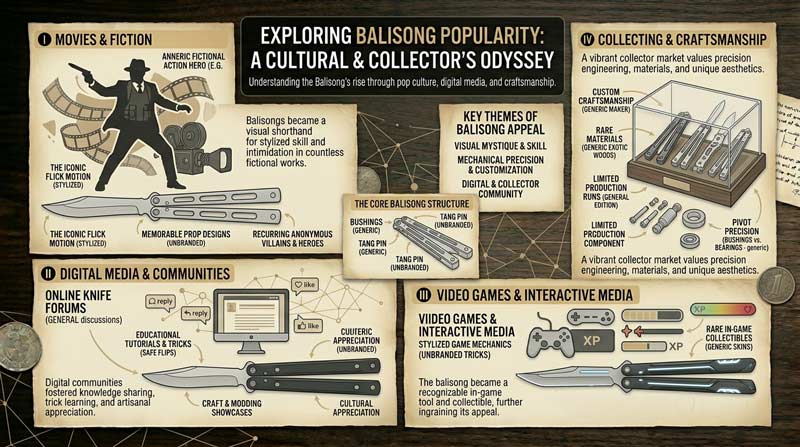
Butterfly knives became especially recognizable through movies, video games, online knife communities, and modern collector culture. Their split-handle opening mechanism gives them a very distinctive visual style that immediately stands out in entertainment and media. Because of their unusual movement and recognizable silhouette, butterfly knives eventually became one of the most widely recognized specialty knife designs in modern pop culture.
Movies and gaming helped introduce butterfly knives to audiences far outside traditional knife collecting circles. Many fictional characters have been shown carrying stylized balisongs with exaggerated designs, unusual finishes, or fantasy-inspired details that differ significantly from traditional Filipino models. These fictional portrayals helped increase mainstream interest in butterfly knives while also inspiring many modern collector designs.
Online collector communities and knife enthusiasts have also played a major role in keeping balisongs popular. Many collectors appreciate butterfly knives because of their mechanical complexity, smooth movement, and wide variety of materials and styles. Training versions, collector pieces, premium materials, and highly customized finishes all helped create a large enthusiast culture around balisongs over time.
Collectors interested in unusual specialty knives are often drawn to other distinctive designs such as modern karambit styles because both knife types combine unique ergonomics, recognizable silhouettes, and strong collector appeal. That combination of craftsmanship, mechanical movement, and cultural visibility continues to make butterfly knives one of the most recognizable specialty knife styles in the world today.
Butterfly knives remain one of the most recognizable folding knife styles in the world because of their unique split-handle construction, smooth opening mechanism, and long connection to Filipino craftsmanship. While modern balisongs now come in countless styles and materials, the core mechanical concept has remained largely unchanged for generations. That combination of history, engineering, and collector appeal is a major reason butterfly knives continue to attract enthusiasts around the world.
One of the biggest reasons butterfly knives remain so popular is that they feel completely different from most conventional folding knives. Their rotating handle design, mechanical movement, and highly recognizable appearance give them a unique personality that stands apart from traditional pocket knives and other folding blade styles. Many collectors are drawn to balisongs because they combine craftsmanship, mechanics, and visual appeal in a very distinctive package.
Modern balisong knife styles now range from traditional-inspired collector pieces to upgraded modern designs with premium materials, training versions, and highly customized finishes. That wide variety of options has helped butterfly knives remain relevant among collectors, knife enthusiasts, and specialty blade fans across multiple generations.
Whether someone is interested in Filipino knife history, mechanical design, collectible blades, or unique folding mechanisms, butterfly knives continue to stand out as one of the most iconic specialty knife styles ever created. Their combination of history, craftsmanship, and recognizable engineering continues to make them popular in both collector communities and modern knife culture.
What Is a Butterfly Knife?
A butterfly knife, also known as a balisong, is a folding knife that uses two rotating handles to conceal the blade when closed. Unlike traditional folding knives that use a single handle and pivot point, butterfly knives split into two sections that swing around the blade before locking together during use. This unusual mechanism gives butterfly knives their distinctive appearance and is one of the main reasons they have remained popular among collectors and knife enthusiasts for decades.
The term "balisong" is commonly associated with the knife's Filipino origins, while "butterfly knife" became the more widely recognized name in many other parts of the world. Although the two terms are often used interchangeably today, many collectors still prefer the traditional name when discussing historical designs and Filipino craftsmanship. Regardless of the name, the core split-handle concept remains one of the most recognizable mechanical knife designs ever created.
Butterfly knives are available in many different styles ranging from traditional utility-focused designs to modern collector models with upgraded materials, decorative finishes, and specialized handle construction. Some are designed for practical everyday use, while others focus more on visual appeal, smooth mechanical action, or recreational flipping practice. Training versions without sharpened edges are also popular among collectors and enthusiasts who enjoy learning handling techniques.
Many knife enthusiasts interested in unique mechanical designs are also drawn to other unusual blade styles such as karambit knife designs because of their distinctive ergonomics, recognizable appearance, and strong connection to collector culture. Butterfly knives continue to stand out because of their unique opening mechanism and long history in knife craftsmanship.
The History of the Balisong
The balisong is most commonly associated with the Philippines, where it developed a strong reputation for craftsmanship, utility, and traditional knife making. While historians still debate the exact origins of the design, many people trace the knife's history to the Batangas region of the Philippines, which became especially well known for producing balisongs. Over time, the knife became closely tied to Filipino culture and traditional blade craftsmanship.
Early balisongs were often practical utility knives used for everyday cutting tasks rather than collectible specialty items. Their folding handle design made them compact and easy to carry while still providing a full-length blade when opened. Traditional models were commonly made using simple forged steel and natural handle materials such as wood, horn, or bone. Many were handcrafted and built to prioritize durability and practical use.
As interest in knives spread internationally through martial arts culture, military exposure, movies, and collector communities, butterfly knives gradually became popular outside the Philippines. Their unusual opening mechanism and distinctive appearance helped them stand out from traditional folding knives, especially among people interested in knife mechanics and specialty blade designs.
Today, balisongs are appreciated both for their cultural history and their mechanical uniqueness. Modern collectors often seek out traditional Filipino-inspired models alongside upgraded contemporary versions that use premium materials, advanced pivots, and highly customized handle designs. Many enthusiasts interested in specialty balisong knives appreciate the connection between historical craftsmanship and modern mechanical innovation.
How Butterfly Knives Work
One of the most interesting things about butterfly knives is their unique opening mechanism. Instead of using a single folding handle like most pocket knives, a butterfly knife uses two separate handles that rotate around the blade. When closed, the handles completely surround and protect the blade. To open the knife, the handles swing apart and rotate into position before locking together to form a single grip.
Most butterfly knives rely on pivots near the base of the blade that allow the handles to move smoothly during opening and closing. Depending on the design, some use washers, bushings, or bearing systems to improve movement and reduce friction. Higher-end collector models often focus heavily on balance, smooth mechanical action, and precision construction because enthusiasts appreciate how different designs feel during handling.
Many modern butterfly knives also use latch systems that help secure the handles when the knife is open or closed. Traditional designs often relied on simple latch mechanisms, while newer models may include upgraded hardware, improved locking systems, or lightweight handle materials that change how the knife feels in the hand.
Because of the unusual split-handle construction, butterfly knives feel very different from conventional folding knife designs. Their distinctive mechanical movement is one of the biggest reasons collectors and knife enthusiasts continue to be fascinated by balisongs even after many decades of popularity.
Why the Handle Design Is Unique
The split-handle construction is one of the biggest reasons butterfly knives stand out from almost every other folding knife design. Instead of folding into a single handle body, butterfly knives use two separate handles that rotate around the blade and close together to completely enclose it. This gives the knife a very different mechanical feel and creates a design that many collectors find visually interesting compared to more conventional folding knives.
Because the handles rotate independently, butterfly knives often feel more balanced and mechanical during handling than many traditional folders. Different handle weights, pivot systems, and construction materials can dramatically change how a balisong feels when opened and closed. Enthusiasts often pay close attention to handle balance, smooth movement, and precision tolerances when comparing different models.
Modern butterfly knife handles are available in many different materials including stainless steel, aluminum, titanium, G10, and polymer-based composites. Some are built for durability and simple utility, while others focus more on lightweight handling or decorative appearance. Certain collector models also include skeletonized handles, textured grip patterns, or colored finishes designed to make the knife feel more distinctive and visually appealing.
Collectors who enjoy unusual knife ergonomics are often drawn to other unique specialty designs such as curved karambit blades because both knife styles stand apart from traditional straight-handle designs in very recognizable ways. The unusual split-handle layout continues to be one of the biggest reasons butterfly knives remain so popular among collectors and mechanical knife enthusiasts.
Modern Butterfly Knife Styles
Modern butterfly knives are available in a huge range of styles that vary in size, materials, construction, and overall appearance. While traditional balisongs were originally designed as practical utility knives, many modern versions now focus heavily on collector appeal, mechanical smoothness, upgraded materials, and distinctive styling. Some stay close to traditional Filipino-inspired craftsmanship, while others take on highly modernized designs with lightweight handles, premium pivots, and advanced finishes.
One of the biggest differences between modern butterfly knives is the type of handle and pivot system used. Some models prioritize smooth movement and precise balance for enthusiasts who enjoy mechanical handling, while others focus more on durability and simple everyday function. Materials such as aluminum, stainless steel, titanium, G10, and carbon fiber have become increasingly common in collector-focused balisongs because they can dramatically affect weight, feel, and visual appearance.
Training balisongs have also become extremely popular among collectors and enthusiasts who enjoy learning basic handling without using sharpened blades. These versions often replace the blade with a dull trainer profile while keeping the same handle mechanics and movement characteristics as traditional models. Decorative collector designs are another major category, often featuring colored hardware, engraved handles, skeletonized construction, or highly customized finishes.
Many people who enjoy modern butterfly knife styles are also interested in unusual specialty knives because of the combination of mechanics, craftsmanship, and collectibility they offer. Their balance between traditional design and modern innovation continues to make balisongs one of the most recognizable folding knife styles in the world.
Butterfly Knives in Pop Culture and Collecting
Butterfly knives became especially recognizable through movies, video games, online knife communities, and modern collector culture. Their split-handle opening mechanism gives them a very distinctive visual style that immediately stands out in entertainment and media. Because of their unusual movement and recognizable silhouette, butterfly knives eventually became one of the most widely recognized specialty knife designs in modern pop culture.
Movies and gaming helped introduce butterfly knives to audiences far outside traditional knife collecting circles. Many fictional characters have been shown carrying stylized balisongs with exaggerated designs, unusual finishes, or fantasy-inspired details that differ significantly from traditional Filipino models. These fictional portrayals helped increase mainstream interest in butterfly knives while also inspiring many modern collector designs.
Online collector communities and knife enthusiasts have also played a major role in keeping balisongs popular. Many collectors appreciate butterfly knives because of their mechanical complexity, smooth movement, and wide variety of materials and styles. Training versions, collector pieces, premium materials, and highly customized finishes all helped create a large enthusiast culture around balisongs over time.
Collectors interested in unusual specialty knives are often drawn to other distinctive designs such as modern karambit styles because both knife types combine unique ergonomics, recognizable silhouettes, and strong collector appeal. That combination of craftsmanship, mechanical movement, and cultural visibility continues to make butterfly knives one of the most recognizable specialty knife styles in the world today.
Final Thoughts on Butterfly Knives
Butterfly knives remain one of the most recognizable folding knife styles in the world because of their unique split-handle construction, smooth opening mechanism, and long connection to Filipino craftsmanship. While modern balisongs now come in countless styles and materials, the core mechanical concept has remained largely unchanged for generations. That combination of history, engineering, and collector appeal is a major reason butterfly knives continue to attract enthusiasts around the world.
One of the biggest reasons butterfly knives remain so popular is that they feel completely different from most conventional folding knives. Their rotating handle design, mechanical movement, and highly recognizable appearance give them a unique personality that stands apart from traditional pocket knives and other folding blade styles. Many collectors are drawn to balisongs because they combine craftsmanship, mechanics, and visual appeal in a very distinctive package.
Modern balisong knife styles now range from traditional-inspired collector pieces to upgraded modern designs with premium materials, training versions, and highly customized finishes. That wide variety of options has helped butterfly knives remain relevant among collectors, knife enthusiasts, and specialty blade fans across multiple generations.
Whether someone is interested in Filipino knife history, mechanical design, collectible blades, or unique folding mechanisms, butterfly knives continue to stand out as one of the most iconic specialty knife styles ever created. Their combination of history, craftsmanship, and recognizable engineering continues to make them popular in both collector communities and modern knife culture.
You May Also Be Interested In:
- The Real History of the Balisong: How Butterfly Knives Evolved Through Time
- Can Butterfly Knives be used for Combat?
- What Size Bo Staff Should You Use? A Beginner's Guide
- What Is a Karambit Knife? Beginner Guide to Karambits
- What Is a Bo Staff? Beginner Guide to History, Sizes, and Training
- What Is a Fighting Cane? A Beginner's Guide to Martial Arts Canes
- The Complete Guide to Martial Arts Staffs: A Beginner-Friendly Breakdown
- Why Are Throwing Knives Shaped Differently From Regular Knives?
- Why Trench Knives Became the Most Feared Knives of World War I
- A Practical Guide to Modern Self-Defense Weapons
Leave a Reply