




Could Nunchucks Actually Break a Sword?
September 3rd, 2026
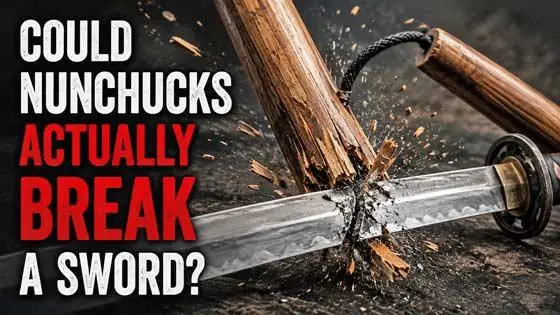
A sword blade looks almost indestructible when compared with two pieces of wood connected by a cord or chain. Yet martial arts stories and demonstrations have helped create a much stranger possibility: could a hard swing from a pair of nunchucks actually damage a sword badly enough to break it? At first, the answer seems obvious. Steel should win. But sword blades are not simply bars of metal, nunchaku do not behave like ordinary clubs, and the word "break" can mean everything from a tiny chip in an edge to a blade snapping completely in two. Once wood, steel, speed, impact angle, and centuries of martial arts mythology collide, this seemingly ridiculous question becomes far more interesting than it sounds.
First, What Does It Actually Mean to Break a Sword?
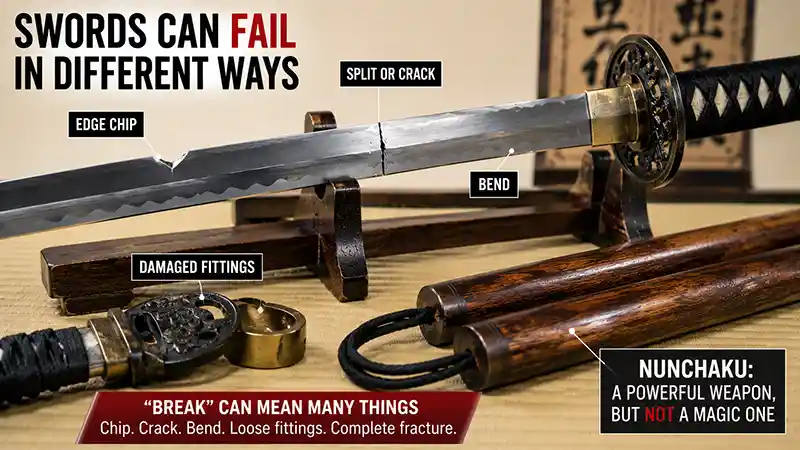
Before deciding whether nunchucks could break a sword, there is a surprisingly important problem with the question itself: swords can fail in several very different ways. A blade does not have to dramatically snap into two pieces to be damaged. Its cutting edge can chip, the blade can bend or develop a crack, and components around the guard or handle can loosen or fail. A sword can therefore become damaged or even unusable without anything resembling the spectacular shattered blade we might imagine from a movie.
That distinction matters because a sword is designed to survive forces very differently from a solid chunk of steel. A well-made blade has carefully chosen geometry and heat treatment intended to balance properties such as hardness, flexibility, and resistance to permanent deformation. Traditional Japanese swords took this even further through differential hardening, producing a very hard cutting edge while retaining different mechanical characteristics elsewhere in the blade. That made the sword an impressive piece of engineering, but certainly not an indestructible one.
The same distinction applies to nunchaku. Asking whether they could completely snap a healthy sword blade is a much more extreme question than asking whether a hard collision could chip an edge, bend a blade, damage its fittings, or otherwise leave the sword worse for the encounter. As we work through those possibilities, the seemingly simple contest between wood and steel becomes considerably less obvious.
A Good Sword Is Surprisingly Difficult to Snap
If we are talking about the most dramatic version of breaking a sword, actually snapping the blade into separate pieces, the nunchaku face a much tougher challenge. A properly made sword is not supposed to behave like a brittle strip of hardened steel. Swordsmiths had to create blades capable of holding a useful cutting edge while surviving the bending, vibration, and sudden shocks that came with striking targets and occasionally colliding with other weapons.
Japanese swords are particularly interesting because traditional differential hardening deliberately created different properties within the same blade. The cutting edge was hardened to retain a sharp edge, while other portions of the blade remained comparatively tougher and better able to tolerate stress. That does not make a katana unbreakable. Hard edges can chip, blades can bend, flaws can become failure points, and sufficiently severe stresses can cause catastrophic damage. But a sound blade has an enormous advantage over the brittle movie sword that conveniently shatters whenever the story requires it.
There is another problem for the nunchaku: breaking a sword requires more than simply striking it very hard. Where the blade is supported, where it is hit, the direction of the force, the blade geometry, its heat treatment, and whether it already contains damage can all influence the result. A sword held freely in someone's hands can also move when struck, allowing some of the energy to become motion rather than forcing the blade to absorb the entire impact at one vulnerable point.
So could an extraordinary impact ever fracture a sword? Certainly. Steel swords are physical objects, not indestructible artifacts. But snapping a healthy, well-made sword with a single strike from traditional nunchaku would require a much more unusual set of circumstances than simply swinging them as hard as possible.
Wood Hitting Steel Doesnt Necessarily End the Way You Think
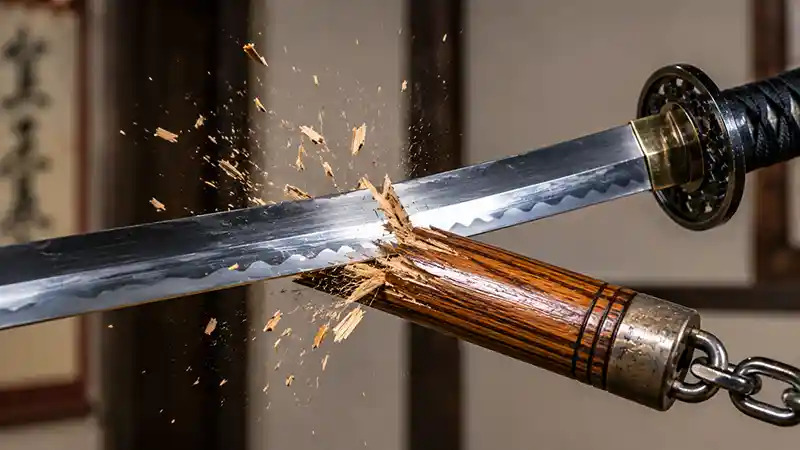
At first glance, the matchup seems hopeless. Traditional wooden nunchaku striking a sharpened steel sword sounds like an obvious victory for the steel. But materials do not simply defeat one another according to a hierarchy in which steel always beats wood. What actually happens during a collision depends on the hardness and shape of both objects, their speed, the angle of contact, and exactly where they meet.
Consider what happens if the broad side of a wooden nunchaku handle strikes the flat of a sword blade. The wood may dent, crack, or rebound, while the blade flexes or moves away from the impact. Change the angle so that the same wooden handle crashes directly into the sword's sharpened edge and the situation becomes very different. Now the force is concentrated along an extremely narrow line of steel, allowing the edge to bite into the wood rather than simply absorbing the blow across a broad surface.
That is one reason traditional hardwood wooden nunchaku make this thought experiment so interesting. A dense wooden handle can deliver a substantial impact without behaving anything like a steel hammer. Against the flat or spine of a blade, the nunchaku might deliver a jarring blow. Against the cutting edge, however, the wood itself suddenly becomes an inviting target for the sword.
The result could therefore look nothing like the spectacular weapon-versus-weapon collisions seen on screen. Instead of the sword exploding into fragments, the more realistic outcome might be a gouged or partially split nunchaku handle, a chipped sword edge under unfavorable circumstances, both weapons being knocked violently apart, or surprisingly little permanent damage at all. The exact point and angle of contact may matter almost as much as how hard the strike was thrown.
The Flexible Connection Changes Everything
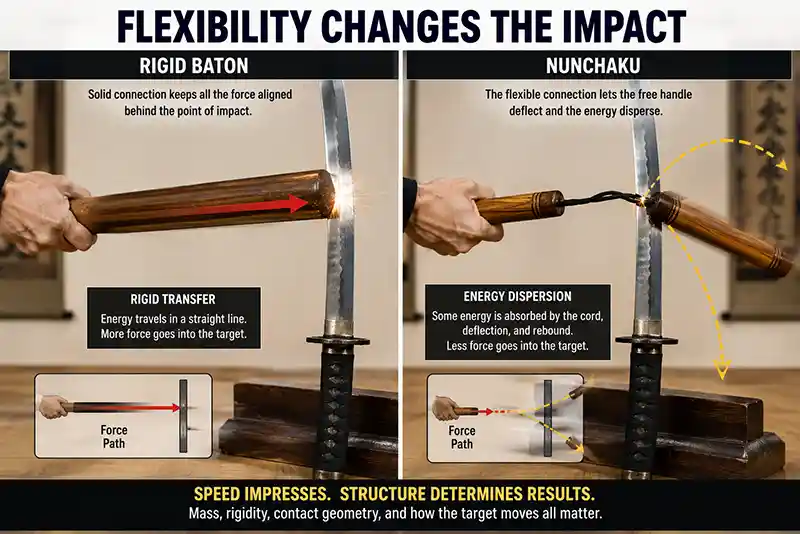
There is another reason nunchaku cannot be treated like a pair of unusually fast clubs. Only one handle is directly controlled by the person swinging them. The striking handle is connected to it by cord or chain, which means it can accelerate, rotate, rebound, and change direction independently. That flexibility is responsible for much of what makes nunchaku so visually impressive, but it also changes what happens the instant they collide with something solid.
Imagine replacing the nunchaku with a solid wooden baton of similar weight. When that baton hits a sword, the user's hand, arm, and the entire length of the weapon remain mechanically connected behind the point of impact. With nunchaku, the free handle does not have that same rigid support. Once it strikes the blade, it can deflect or rebound while the other handle continues moving. Some of the energy that might otherwise contribute to bending or damaging the sword instead becomes motion elsewhere in the weapon.
This is one reason the tremendous apparent speed of a nunchaku strike can be misleading. A fast-moving free handle can certainly deliver a painful and potentially damaging impact, but speed alone does not determine whether it can fracture steel. Mass, rigidity, impact duration, contact geometry, and how the target moves all matter. A lighter flexible weapon moving quickly is not automatically a better sword breaker than a heavier rigid weapon moving more slowly.
The connector also introduces another unpredictable possibility. After striking the blade, the free handle can whip away, wrap around an object, or rebound toward the person holding it. In other words, the very feature that gives nunchaku their unusual movement also makes transferring a perfectly concentrated, catastrophic blow into a sword considerably more difficult than the weapon's speed might suggest.
The Sword Might Actually Damage the Nunchucks First
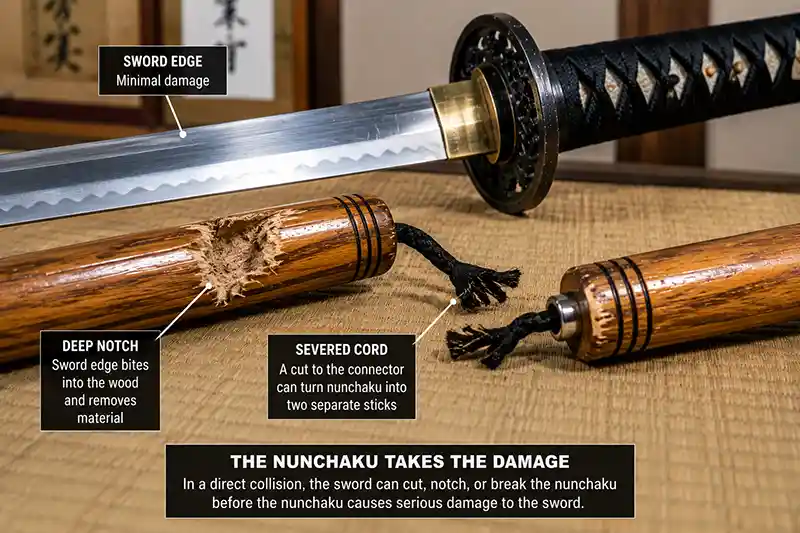
The original question assumes the sword is the vulnerable object, but a direct collision could reverse that relationship completely. A sword's cutting edge is designed to concentrate force into an extremely small area. A wooden nunchaku handle presents a much softer and thicker target. If the two meet edge-first at speed, the sword does not need to overpower the entire nunchaku. It only needs to cut deeply enough into the wood to weaken it.
A glancing collision might leave little more than a shallow groove. A harder impact could carve out a substantial notch, split wood along the grain, or remove a chunk from the handle. Even if the nunchaku remained in one piece, that damage could create a weak point that makes it more likely to crack during another strike. Meanwhile, the sword might escape with nothing more than superficial marks, although an unfavorable collision could still damage its edge.
The connector introduces another vulnerable area. Traditional-style corded nunchaku depend on a relatively small section of cord to keep the two handles together. If a sword happened to contact that connector rather than the wood, cutting or severely damaging it could immediately turn a pair of nunchaku into two separate sticks. A chain changes that particular vulnerability, but it introduces its own links, pins, swivels, and attachment points that can potentially fail under extreme stress.
That creates an amusing reversal of the legend. Instead of asking whether nunchucks could destroy a sword, we may need to ask how many direct encounters with a sharpened sword the nunchucks themselves could survive. In a deliberate weapon-on-weapon collision, the person holding the nunchaku could be risking the integrity of their own weapon long before the sword blade was anywhere close to snapping in half.
Could Nunchucks Chip a Sword Without Breaking It?
This is where the answer becomes less satisfying for anyone hoping for a simple yes or no. Completely snapping a healthy sword blade is extraordinarily demanding, but damaging its cutting edge is a different question. A sword edge must be hard enough to stay sharp, and increased hardness can come with greater susceptibility to chipping under certain kinds of impact. That means an edge can be damaged even when the rest of the blade remains perfectly intact.
The location of the collision would be critical. Smashing wooden nunchaku into the broad flat of a sword is unlikely to produce the same result as striking directly against its thin hardened edge. If enough force were concentrated at an unfavorable angle, particularly against a blade with an existing flaw or unusually brittle edge, a small chip or localized deformation is more plausible than the entire sword breaking. The nunchaku could be damaged at the same time, so neither weapon necessarily has to emerge untouched.
This also helps explain why dramatic demonstrations should be treated cautiously. Showing that one particular sword can be chipped or broken does not prove that nunchaku possess some universal ability to destroy swords. Blade quality varies enormously. So do steel composition, heat treatment, thickness, geometry, previous damage, and construction. A decorative sword, badly heat-treated blade, or already compromised weapon can fail under conditions that a well-made functional sword might survive.
So if we broaden the question from "Could nunchucks snap a sword in half?" to "Could nunchucks damage a sword?" the answer becomes much easier to defend. Under the right circumstances, damage is certainly possible. The mistake is jumping from that possibility to the much more spectacular claim that nunchaku were capable of routinely smashing sword blades apart.
Were Nunchucks Actually Supposed to Catch a Sword?
Breaking a sword is not the only extraordinary ability sometimes attributed to nunchaku. Another idea is that the cord or chain between the handles could wrap around an incoming blade, allowing the person holding the nunchaku to trap, redirect, or even wrench the sword away. Mechanically, it is easy to see why the idea developed. Unlike a rigid stick, nunchaku have a flexible section that can potentially bend around whatever they encounter.
But a technique being mechanically imaginable is not the same thing as it being a well-documented historical purpose of the weapon. There is little reason to conclude that nunchaku were specifically developed as some kind of specialized sword-catching device. As we found when examining whether nunchucks were actually used in real combat, the surviving evidence for their historical combat use is already much thinner than their modern reputation suggests. Claims about routinely trapping swords therefore deserve even more caution.
There is also an obvious practical problem: timing. Deliberately placing a short section of cord or chain in the path of a moving sword would require extraordinary precision, and missing by only a small amount could put the hands or arms dangerously close to the blade. Even a successful wrap would not automatically give the nunchaku user control. The swordsman could move, rotate, pull, or release pressure while the flexible weapon itself shifted around the blade.
That does not mean sword-catching movements cannot exist in modern nunchaku practice or demonstrations. Martial artists can develop ingenious ways of manipulating weapons that go far beyond their most basic use. What we should avoid is taking a technically possible demonstration and projecting it backward into history as proof that Okinawan fighters regularly captured swords with nunchaku. It is a fascinating possibility, but the legend is much stronger than the documentation.
Movies Made Weapon Collisions Look Far More Dramatic Than They Really Are
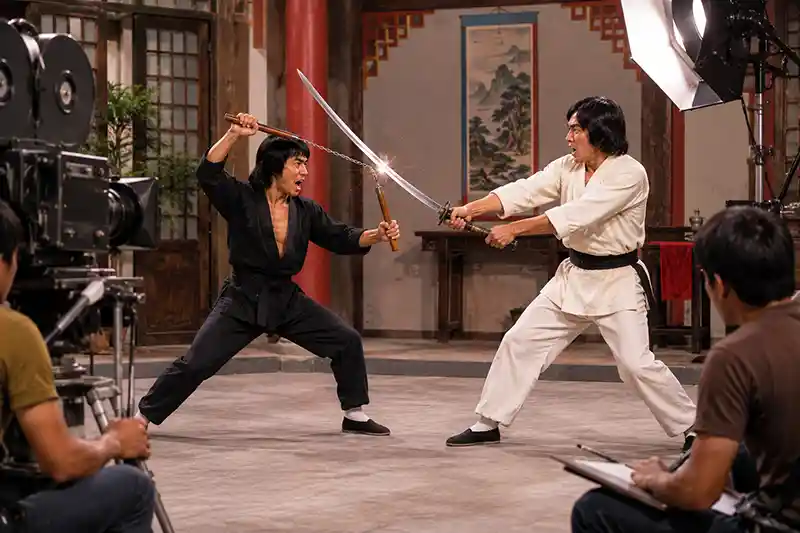
Part of the reason a sword-breaking nunchaku strike sounds believable is that popular entertainment has trained us to expect spectacular results whenever two weapons collide. Blades snap, staffs explode into splinters, chains wrap perfectly around weapons, and a single well-placed strike can send an opponent's weapon flying across the room. Nunchaku are particularly suited to this kind of choreography because their speed and movement make even an ordinary swing look extraordinarily violent.
Real weapon collisions are usually much less cooperative. Objects move when struck. Flexible weapons rebound. Wood dents and splinters. Steel can flex. A strike that looks devastating may glance away rather than transferring all of its energy into the target. Even when permanent damage occurs, it may be nothing more visually impressive than a small chip, shallow gouge, bent component, or damaged section of wood.
This gap between appearance and reality is one reason movies have created so many myths about martial arts weapons. Nunchaku became famous partly because their motion translates exceptionally well to the screen. The free handle can blur through the air, change direction suddenly, and produce a sharp impact that looks much more dramatic than the movement of many rigid weapons. None of that requires filmmakers to explain what happens to the energy once the weapon actually hits something.
Over time, those exaggerated collisions can subtly change what audiences think a weapon should be capable of doing. A pair of nunchaku stops being two connected striking handles and becomes a near-magical weapon capable of smashing, trapping, disarming, and overpowering almost anything placed in front of it. The real physics are less spectacular, but they are also considerably more interesting.
Metal Nunchucks Change the Question Completely
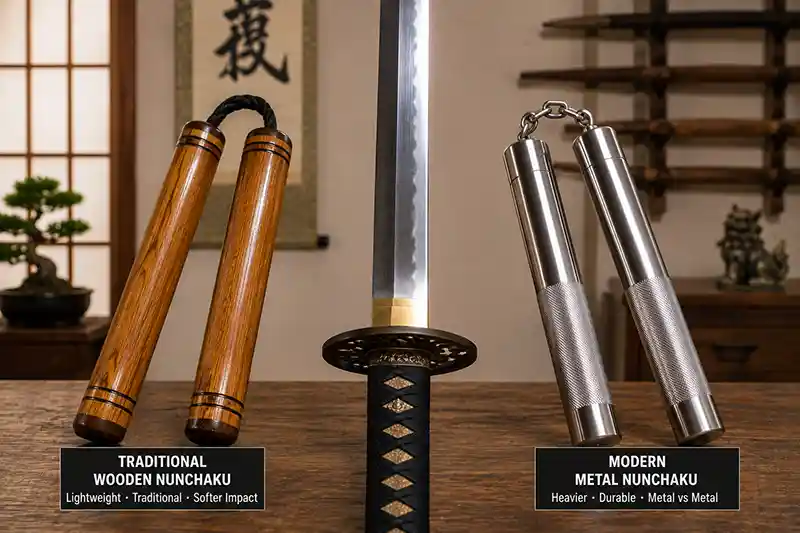
Everything changes once we replace traditional wooden handles with metal. Now the collision is no longer a relatively soft piece of hardwood meeting a hardened steel blade. Modern metal nunchaku can put metal directly against metal, potentially reducing the likelihood that the striking handle will simply be sliced or deeply gouged by the sword's edge. That makes serious blade damage easier to imagine, but it still does not turn nunchaku into reliable sword-breaking machines.
A pair of stainless steel nunchaku, for example, introduces very different material properties from wooden nunchaku. The handles may resist cutting and surface damage much better, while their mass can also change the character of the impact. If a metal handle struck a hardened sword edge at an unfavorable angle, damage to the edge becomes considerably more plausible than it would be in a collision with softer wood.
But "metal versus metal" still tells us surprisingly little by itself. Two steel objects can have dramatically different hardness, toughness, geometry, thickness, and heat treatment. A hard sword edge might chip while the nunchaku remains intact, the nunchaku could dent or deform, both objects could receive superficial damage, or the sword could simply be knocked aside. The outcome would depend on the particular weapons involved rather than the fact that both happen to be made of metal.
There is also a historical catch. Modern metal nunchaku cannot be used as evidence that traditional Okinawan nunchaku possessed the same capabilities. Changing the material changes the weapon. A spectacular test involving heavy modern metal handles might tell us something interesting about that particular pair of nunchaku, but it would not prove that wooden nunchaku carried centuries ago could shatter sword blades. Once metal enters the experiment, we are answering a different question.
A Cheap Sword Could Make the Myth Look Completely Real
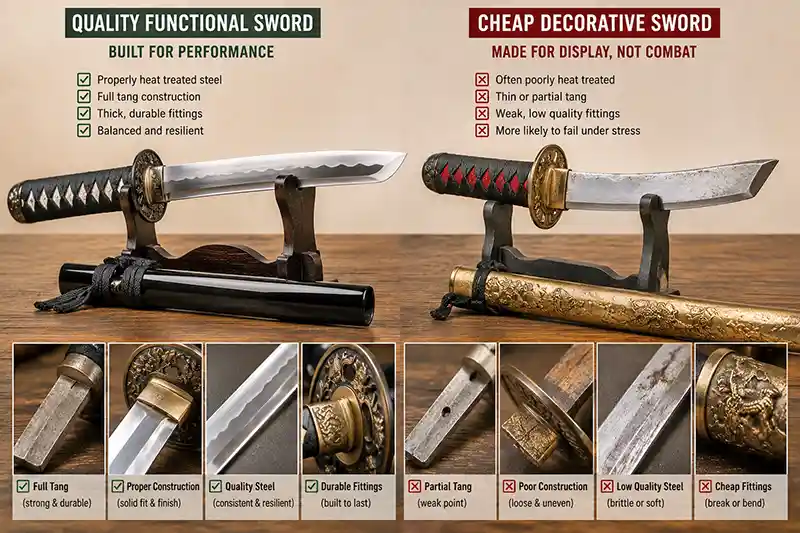
There is one scenario in which a video of nunchucks breaking a sword could look remarkably convincing: use the wrong sword. Two objects that look nearly identical on camera can behave very differently when struck. A properly heat-treated functional blade and a decorative sword made primarily for display may share the same basic silhouette, yet their ability to survive a violent sideways impact can be nowhere close to equal.
Poor heat treatment can leave a blade excessively brittle or too soft. Thin construction can make bending easier. Weak tangs and inexpensive fittings can fail even when the blade itself survives. Manufacturing defects, corrosion, previous impacts, or an existing crack can create a failure point that is almost impossible for a viewer to see before the test begins. Once that weakened sword snaps, however, the result looks spectacular.
The way the sword is positioned matters just as much. A blade held naturally in someone's hands can move when struck, but a sword clamped rigidly between supports may be forced to absorb stress very differently. Strike near the middle of an unsupported span and the setup can begin resembling a crude bending test rather than anything that would occur during an actual weapon collision. Under sufficiently favorable test conditions, even an unlikely feat can be made to look surprisingly easy.
This is why a dramatic demonstration by itself proves very little. To know whether nunchaku genuinely accomplished something extraordinary, we would need to know what the sword was made from, whether it was functional, how it was heat-treated, whether it had previous damage, how it was supported, and exactly where it was struck. Without those details, a broken blade may reveal more about the sword and the experiment than it does about the destructive power of the nunchaku.
So Could Nunchucks Actually Break a Sword?
Technically, yes. Under the right circumstances, nunchaku could contribute to a sword breaking. A brittle blade, an existing crack, poor heat treatment, an unusually vulnerable impact point, or a test setup that prevents the sword from moving could all make catastrophic failure possible. Modern metal nunchaku could make severe damage more plausible still. There is nothing about a sword that makes it physically incapable of breaking.
But that is very different from saying nunchucks can simply smash swords apart. Against a healthy, well-made functional blade, traditional wooden nunchaku would be far more likely to rebound, become gouged or split, damage their connector, or perhaps cause localized edge damage than cleanly snap the sword in two. The flexible connection also makes them less efficient at concentrating force into a blade than their impressive speed might suggest.
Most importantly, there is no good reason to treat sword breaking as some hidden historical capability of nunchaku. Their reputation has grown far beyond what the surviving evidence can support, something that happens frequently with misunderstood martial arts weapons. A mechanically possible outcome can become a legendary ability once demonstrations, stories, and movies repeat it often enough.
So the best answer is more interesting than either extreme. Nunchucks are not magical sword breakers, but swords are not indestructible either. Put the wrong blade in the wrong circumstances and a pair of nunchaku could absolutely be present when it fails. Put traditional wooden nunchaku against a quality sword and expect the wood to have a very bad day long before the steel dramatically explodes into pieces.
The Real Answer Is Better Than the Legend
The idea of nunchucks smashing a sword in half survives because it gives us exactly the kind of weapon-versus-weapon showdown that martial arts legends thrive on. Two wooden handles seem hopelessly outmatched by a steel blade, yet the extraordinary speed of nunchaku makes it tempting to imagine that enough momentum could overcome almost anything. The reality is not nearly that simple.
A sword can chip, bend, crack, loosen at the fittings, or even break completely, but every one of those failures depends on far more than the weapon striking it. Blade quality, heat treatment, existing damage, impact angle, support, and the material of the nunchaku can completely change the outcome. Traditional wooden nunchaku may actually suffer more damage than the sword, while modern metal versions create an entirely different collision.
That uncertainty is what makes the question so interesting. Neither weapon possesses some automatic advantage dictated by legend. A sword is not an indestructible bar of magical steel, and nunchaku are not secret sword-destroying weapons whose true capabilities have been forgotten. They are real objects governed by materials, construction, and physics, which means unusual outcomes are possible without making extraordinary outcomes typical.
Could nunchucks actually break a sword? Under exactly the wrong circumstances for the sword, yes. But if someone claims they can routinely swing a pair of nunchaku through a properly made sword blade, it is probably worth taking a much closer look at the sword before being impressed by the nunchucks.
Can Nunchucks Damage a Katana?
Yes, it is physically possible for nunchucks to damage a katana, but the type and severity of damage would depend heavily on the weapons and the collision. A sufficiently hard impact could potentially cause localized edge damage, particularly if the blade were struck at an unfavorable angle or already contained a weakness.
Traditional wooden nunchaku could also be damaged during the collision. A sharpened katana edge meeting a wooden handle may cut, gouge, or split the wood rather than suffering serious damage itself. Modern metal nunchaku create a different situation because the sword is then colliding with another metal object rather than hardwood.
None of this means nunchaku can reliably destroy a katana. A properly made functional sword is designed to withstand substantial stress, and a single dramatic example of a damaged blade would not establish what normally happens when the two weapons collide.
Can a Katana Actually Break in Half?
Yes. Despite the almost indestructible reputation sometimes given to Japanese swords, a katana is still a steel object and can break under sufficiently severe or unfavorable conditions. A blade that is excessively brittle, improperly heat-treated, previously damaged, badly corroded, or affected by a manufacturing flaw may be particularly vulnerable to fracture.
Traditional katana construction was intended to balance competing properties rather than make the blade impossible to break. The hardened cutting edge needed to retain sharpness, while other portions of the blade helped it tolerate bending and impact stresses. That sophisticated construction made a well-made sword remarkably durable, but it did not eliminate the possibility of failure.
This is also why videos showing a katana snapping should be viewed with some context. Without knowing the quality and condition of the sword or how it was supported during the test, a broken blade tells us very little about how easily a properly made katana would fail under normal circumstances.
Could Metal Nunchucks Break a Sword?
Metal nunchucks make the possibility more plausible because the collision is no longer wood against steel. A sufficiently heavy metal handle striking a sword could potentially chip an edge, bend a blade, or contribute to a fracture under the right circumstances.
That still does not mean metal nunchaku can reliably smash swords apart. The result would depend on the material and construction of both weapons, the location and angle of the strike, the condition of the sword, and how freely the blade could move when hit. Metal nunchaku might also dent, deform, or suffer damage themselves.
Modern metal nunchaku should also be separated from claims about traditional nunchaku. Demonstrating that a modern steel or titanium weapon can damage a sword would not prove that historical wooden nunchaku were capable of doing the same thing.
Could a Sword Cut Through Wooden Nunchucks?
A sharp sword could potentially cut deeply into a wooden nunchaku handle, particularly if the blade struck cleanly across the grain under favorable conditions. Whether it would slice completely through in a single strike would depend on the wood species, handle thickness, blade sharpness, sword geometry, impact angle, and quality of the strike.
A complete cut is not necessary to seriously compromise the weapon. A deep notch or split could weaken a nunchaku handle enough to make continued use risky, while a strike against the connecting cord could potentially sever it and separate the two handles.
This is one reason intentionally striking a sword with wooden nunchaku would be a questionable strategy. The nunchaku may be the weapon placed at greater risk during the collision.
Could Nunchucks Knock a Sword Out of Someones Hand?
It is mechanically possible for a strong impact to disrupt someone's grip or knock a weapon off line, but that is very different from saying nunchaku can reliably disarm a swordsman. The outcome would depend on where the sword was struck, how securely it was being held, the direction of the impact, and how the person reacted.
A strike against the blade or guard could potentially redirect the sword without causing any permanent damage at all. In a real confrontation, however, deliberately attempting such a maneuver would require extremely precise timing around a sharpened weapon.
The spectacular disarms seen in demonstrations and entertainment should therefore not be treated as evidence that knocking swords from people's hands was a routine historical use of nunchaku.
Can a Sword Break When It Hits Another Sword?
Yes. Sword-on-sword contact can potentially damage either blade, especially when hardened cutting edges collide directly. Depending on the swords and the nature of the impact, possible results include edge chips, notches, bending, cracking, or more serious structural failure.
That does not mean swords normally shatter whenever their blades meet. Well-made functional swords were expected to survive the stresses associated with use, although historical fighters would have had good reason to avoid unnecessary damaging contact when possible.
Just as with nunchaku, the important variables include blade construction, heat treatment, existing damage, impact angle, and the exact location of contact.
Are Wooden or Metal Nunchucks More Likely to Damage a Sword?
All else being equal, metal nunchaku present the more credible possibility of seriously damaging a steel sword because their handles are less vulnerable to being cut or gouged than wooden ones. Their greater mass in some designs can also change the character of the impact.
That does not automatically make metal nunchaku superior in every respect. Different metals have different properties, and additional weight changes how the weapon handles. A collision between two metal objects can also damage both of them rather than producing a clear winner.
For the specific question of damaging a sword, however, modern metal nunchaku create a substantially different experiment from the traditional wooden weapon most closely associated with Okinawan martial arts.
Can Nunchucks Catch or Trap a Sword Blade?
The flexible cord or chain between nunchaku handles makes it mechanically possible for the weapon to wrap around another object, including a sword blade. Martial arts demonstrations can therefore include trapping or controlling movements that would be impossible with a completely rigid stick.
What is much harder to establish is whether catching swords was an important historical purpose of nunchaku. There is little strong evidence showing that traditional Okinawan practitioners routinely used them as specialized sword-trapping weapons.
There is also a major difference between demonstrating a controlled trapping technique and successfully performing one against a resisting opponent with a moving blade. The existence of the technique should not automatically be treated as proof of common historical combat use.
Why Dont Swords Shatter as Easily as They Do in Movies?
Functional swords are designed to survive substantial mechanical stress. Swordmakers have historically had to balance hardness, toughness, flexibility, blade geometry, and edge retention so that a weapon can cut effectively without behaving like a brittle piece of metal.
Movies have different priorities. A blade snapping dramatically communicates the power of an impact instantly, while realistic outcomes such as a tiny edge chip, slight bend, or damaged fitting may be almost invisible to an audience. Entertainment therefore tends to exaggerate catastrophic weapon failure because it looks better on screen.
Real swords absolutely can break, but a healthy, properly made blade suddenly exploding into fragments after one ordinary collision is much less typical than popular entertainment makes it appear.
You May Also Be Interested In:
- What are the Best Nunchucks for You?
- Were Nunchucks Ever Actually Used in Real Combat?
- Why Did America Become So Afraid of Nunchucks?
- Why Did Sword Canes Almost Disappear?
- Could an Escrima Stick Actually Stop a Sword?
- How to Tell a Real Katana from a Decorative Sword
- Combat Spear Sword and Other New Weapons
- Why Were Nunchucks Actually Invented? (The Real History Might Surprise You)
- New Lightweight Metal Nunchucks for Competitions and Demonstrations
- Hidden Sword Battle Stick and Other Combat Weapons
Leave a Reply