




Were Escrima Sticks Ever Actually Used in Real Combat?
September 21st, 2026
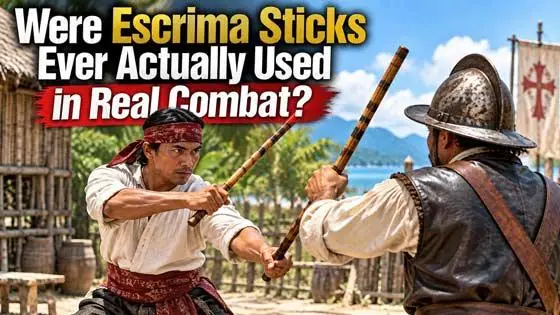
Today, escrima sticks are so closely associated with martial arts training that it is easy to assume they were always practice weapons. But the fighting traditions of the Philippines developed in a world where ordinary objects could become weapons, edged weapons were not always available, and a hardwood or rattan stick could be far more than a harmless substitute for a blade. So were escrima sticks actually carried into real fights, or did stick fighting develop mainly as a safer way to practice techniques meant for swords and knives? The answer is more complicated than either version of the story suggests.
Stick Fighting Was More Than a Training Substitute
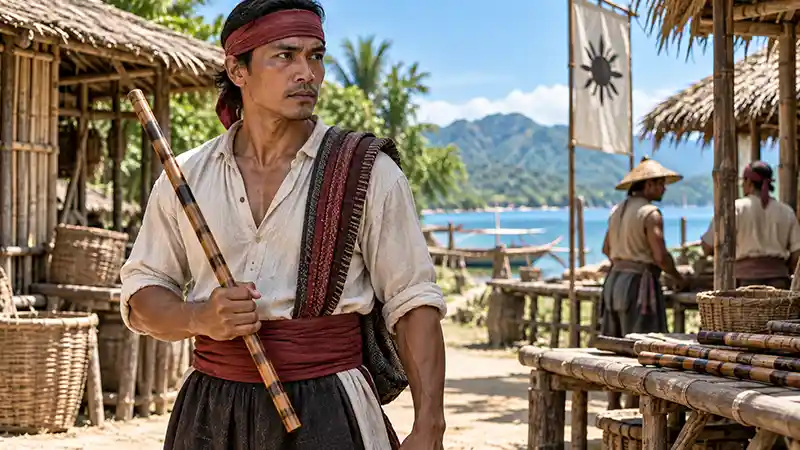
One of the most persistent misconceptions about Filipino martial arts is that sticks existed mainly as safer stand-ins for swords. There is some truth behind that idea. Many systems preserve movements that transfer remarkably well between a stick and an edged weapon, which allowed practitioners to train important angles, footwork, timing, and defensive movements without constantly practicing with sharpened blades. But that does not mean the stick itself was never considered a serious weapon.
Across the Philippines, sticks made from dense hardwoods or tough varieties of cane were readily available, inexpensive, easy to carry, and capable of delivering damaging blows. Unlike a sword or large fighting blade, a simple stick did not require a specialized bladesmith or significant expense. In a confrontation where a dedicated weapon was unavailable, something resembling the modern Filipino fighting sticks used in escrima could become a practical weapon in its own right.
That distinction matters because Filipino martial traditions were never built around a single standardized weapon. Techniques could move between sticks, blades, improvised objects, and sometimes empty hands. The stick was therefore both a useful training tool and a legitimate fighting implement. Trying to classify it exclusively as one or the other oversimplifies how adaptable these fighting systems were.
The harder historical question is not whether someone could fight effectively with a stick. Clearly they could. The more interesting question is how much evidence exists that sticks were deliberately chosen for real combat when edged weapons were also available. That is where the history becomes much more complicated.
The Stick and the Blade Shared the Same Fighting Language
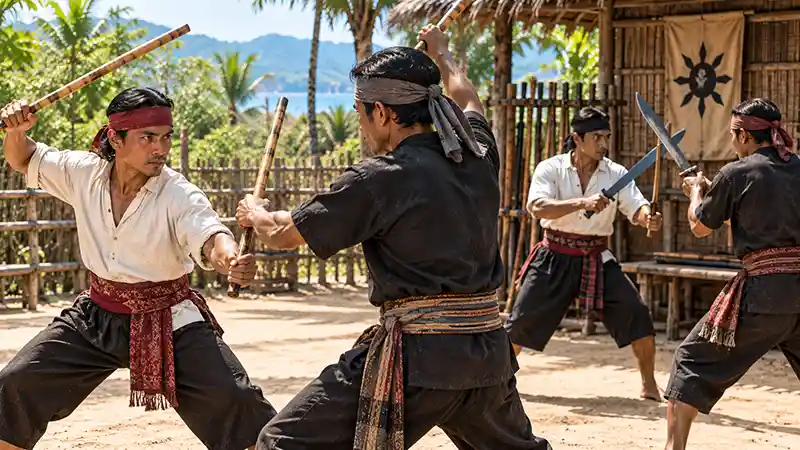
One reason the history of escrima sticks becomes confusing is that Filipino fighting systems did not always draw a sharp line between stick techniques and blade techniques. A diagonal strike practiced with a stick could resemble the same movement performed with a bolo or other edged weapon. Footwork, distance, defensive angles, and the ability to recognize an incoming attack could transfer from one weapon to another even though the consequences of being struck were obviously very different.
This overlap helps explain why modern stick training can preserve movements with much older martial roots. It also explains why the claim that escrima sticks were "really just substitutes for swords" is too simple. A practitioner could train a common set of movements and then adapt them according to what was actually in the hand. The weapon changed, but much of the underlying fighting system remained recognizable.
That adaptability is easier to understand once you look at the relationship between Arnis, Eskrima, and Kali. These names encompass diverse Filipino martial traditions rather than one perfectly standardized historical system. Different regions, teachers, and lineages emphasized different weapons and methods, which makes sweeping claims about what every Filipino fighter supposedly carried especially unreliable.
Most importantly, training with sticks did not make the sticks meaningless once real violence began. A fighting method capable of transferring between weapons gave a practitioner options. If a blade was available, the movements could be adapted to a blade. If only a stick or similar object was available, the same underlying skills could still be applied without pretending the object in the fighter's hand was something else.
Real Stick Fighting Did Exist in the Philippines
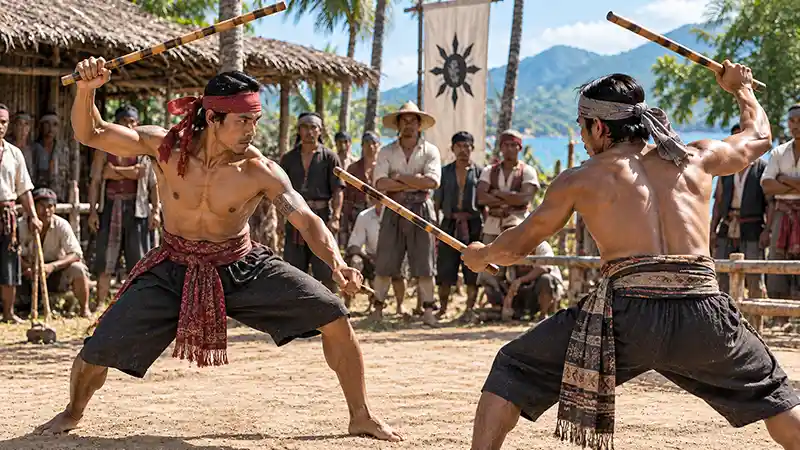
The strongest reason to reject the idea that escrima sticks were merely practice weapons is that traditions of actual stick fighting survived well beyond the battlefield era. In different parts of the Philippines, men fought with sticks in contests, challenge matches, personal disputes, and other encounters where the blows were very real. These were not necessarily the neatly controlled stick exchanges associated with a modern martial arts class.
One of the best-known examples is juego todo, a form of full-contact Filipino stick fighting remembered particularly from the late nineteenth and early twentieth centuries. Accounts of these matches describe fighters using relatively limited protection while exchanging powerful strikes with sticks. Rules and practices varied, and surviving stories sometimes blur documented history with martial arts legend, but the broader tradition of serious competitive stick fighting is well established.
These encounters also help explain why characteristics such as reach, weight, resilience, and handling mattered. The familiar dimensions of many modern sticks did not appear simply because they looked appropriate in a dojo. There are practical reasons escrima sticks often fall around 26 inches long, giving the user meaningful reach while remaining quick enough for rapid changes in angle and close-range movement.
None of this proves that every stick carried in the Philippines was a purpose-built battlefield weapon. It does prove something more useful: fighting with sticks was not merely theoretical. People really did test these weapons against resisting opponents, sometimes under conditions far removed from the relatively safe training environments in which most people encounter escrima today.
On the Battlefield, Blades Usually Had the Advantage
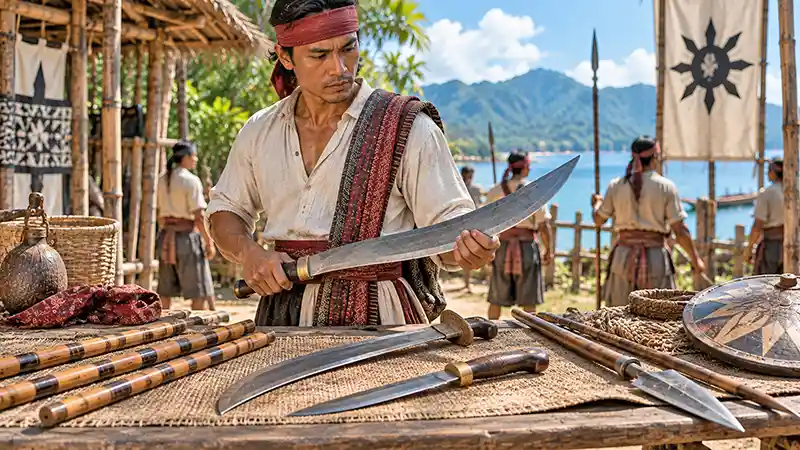
If sticks could be effective weapons, why were swords, bolos, and other blades so prominent in Filipino martial history? The answer is straightforward: when serious armed combat was expected and an edged weapon was available, a blade offered advantages that a wooden stick could not completely reproduce. A stick could break bones and cause severe injury, but a blade could cut deeply with a similar motion and potentially end a confrontation much faster.
This is where stories about escrima sticks sometimes become exaggerated. The existence of sophisticated stick-fighting traditions does not mean Filipino warriors routinely marched into battle carrying rattan sticks instead of swords. Historical fighting in the Philippines involved an enormous variety of edged weapons, including bolos, swords, daggers, and spears. Dedicated weapons were especially important in organized warfare, where fighters knew beforehand that they were entering an armed confrontation.
The stick made more sense in situations where a blade was unavailable, inappropriate, restricted, or simply not being carried. It could also serve as a practical training weapon for techniques that transferred to blades. That dual role is one reason the history of escrima sticks cannot be reduced to a simple progression from battlefield weapon to harmless training tool. Different uses overlapped across different periods and circumstances.
So if we imagine historical Filipino combat as armies charging into battle armed primarily with the same rattan sticks seen in modern escrima classes, we are probably creating a cleaner story than the evidence supports. Sticks were real fighting weapons, but they existed alongside weapons that could be considerably more dangerous when the situation escalated into warfare.
Rattan Made an Unusually Practical Fighting Stick
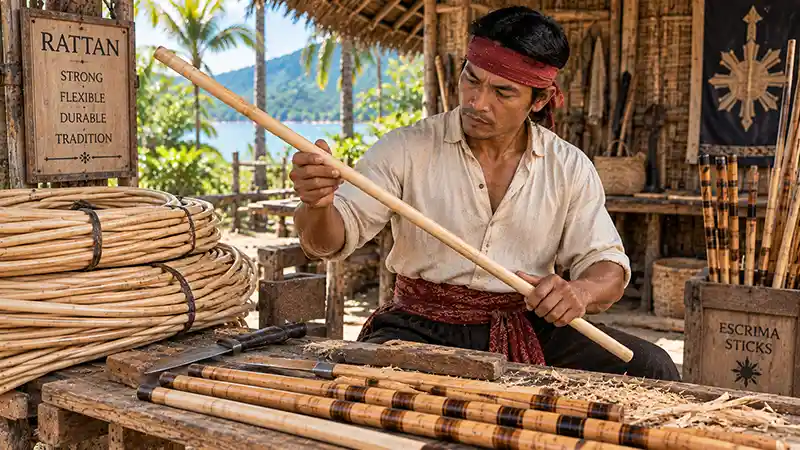
The material itself also helps explain why Filipino stick fighting became so distinctive. Rattan may look less intimidating than a heavy hardwood club, but its physical properties make it remarkably well suited to repeated striking. It is lightweight enough to move quickly, resilient enough to absorb considerable punishment, and less prone to breaking into dangerous sharp fragments than many solid hardwoods.
That resilience mattered in training, but it could matter in an actual confrontation too. A fighting stick needed to survive hard contact without becoming so heavy that rapid combinations and defensive movements became cumbersome. Rattan offered a useful balance between speed, durability, reach, and control. Those qualities help explain why rattan became so closely associated with escrima sticks and remains common in Filipino martial arts today.
There is an important historical distinction, however. The popularity of rattan in modern escrima does not mean every historical Filipino fighting stick was made from rattan. Different woods and canes were available in different places, and fighters could use whatever suitable material was accessible. Modern equipment became more standardized than the improvised and locally made weapons of earlier periods.
What rattan demonstrates particularly well is that a fighting stick did not need enormous weight to be taken seriously. Escrima developed around speed, timing, angles, distance, and repeated strikes rather than simply swinging the heaviest club possible. A relatively light stick could therefore be useful precisely because it could be moved so quickly.
Colonial Rule May Have Changed How the Art Was Practiced
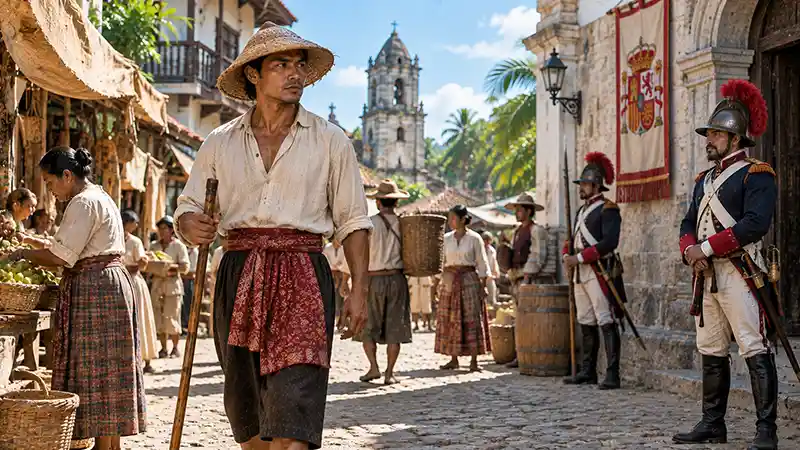
Another popular story about escrima claims that foreign rulers banned Filipinos from carrying or practicing with weapons, forcing martial artists to disguise sword techniques as stick fighting. It is an appealing explanation for why sticks became so prominent, but the historical reality is harder to prove. Restrictions on weapons certainly existed at different times and places, yet there is little evidence for one sweeping prohibition that neatly transformed Filipino sword arts into stick arts across the entire archipelago.
What colonial rule almost certainly did change was the environment in which martial traditions survived. Spanish authority lasted for centuries, local conflicts continued, and access to particular weapons varied according to region, social position, and circumstance. Under those conditions, an ordinary stick had obvious advantages. It was inexpensive, widely available, and far less conspicuous than carrying a sword or large fighting blade.
This could have encouraged fighters to preserve techniques through weapons that attracted less attention, but we should be careful not to turn that possibility into a universal origin story. Filipino martial arts developed across many islands and communities rather than through a single documented sequence of events. Even the remarkable speed associated with some systems, explored in our look at the fastest weapons in martial arts, reflects generations of refinement rather than one moment when blades supposedly disappeared and sticks suddenly replaced them.
The more convincing explanation is that stick fighting remained useful because it was adaptable. Political conditions could change, weapons could be restricted or unavailable, and dedicated blades could come and go, but a sturdy length of wood or cane was difficult to eliminate. That practicality may have helped stick-based methods endure even as the world around them changed dramatically.
Some of the Most Important Stick Fighting Happened Outside War
When people ask whether escrima sticks were used in "real combat," the word combat can accidentally narrow the question too much. Warfare was only one setting in which people fought. Personal disputes, challenge matches, local rivalries, law enforcement, self-defense, and sudden confrontations could all create situations where someone reached for whatever weapon was readily available.
In those circumstances, a stick had advantages that mattered differently than they did on a battlefield. It could be carried without the expense or obvious martial purpose of a sword. It did not require a sheath. It could resemble an ordinary walking stick, tool handle, or piece of cane. Most importantly, suitable sticks were far easier to obtain than purpose-made weapons.
This helps resolve what initially seems like a contradiction in escrima history. Blades could be preferable when a fighter deliberately armed himself for deadly combat, while sticks could still play a significant role in the kinds of violence people were more likely to encounter unexpectedly. The two ideas do not cancel each other out.
It also explains why the historical importance of stick fighting cannot be measured simply by asking how many soldiers carried escrima sticks into battle. A weapon can have a genuine fighting tradition without being a standard military weapon. In the case of Filipino martial arts, some of the strongest evidence for the stick as a serious weapon comes from the fact that people continued fighting with sticks even when they were no longer pretending to train for war.
Why Escrima Sticks Became So Closely Associated With Training
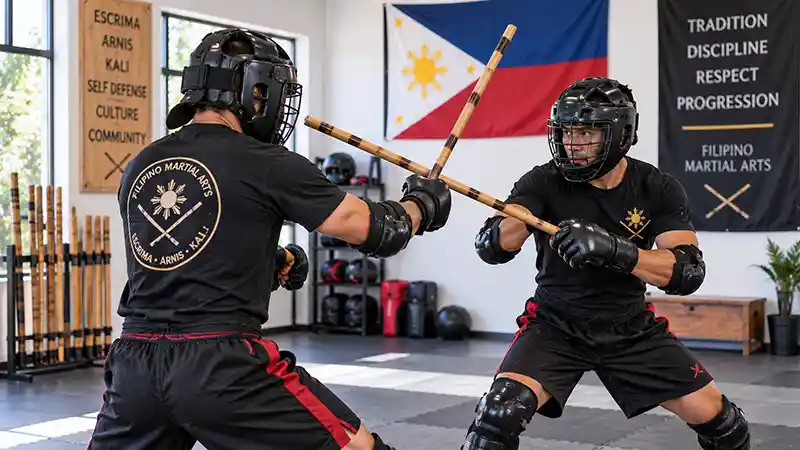
If sticks really were used in fights, why do we encounter them primarily as training weapons today? Part of the answer is survival. A martial tradition can continue long after the circumstances that originally shaped it have disappeared, but the way that tradition is practiced often changes. Organized classes, demonstrations, tournaments, and structured partner drills naturally favor equipment that allows techniques to be practiced repeatedly without using sharpened weapons.
Escrima sticks fit that role exceptionally well. Practitioners can work on distance, timing, defensive reactions, combinations, and rapid changes of angle while maintaining far more control than they could with live blades. Protective equipment and padded weapons can reduce the danger even further, allowing students to practice against resistance rather than limiting themselves entirely to choreographed movements.
Over time, that visibility can distort our perception of the past. Someone encountering Filipino martial arts today might see hundreds of hours of stick training without ever seeing a practitioner handle a traditional blade. It becomes tempting to assume that the stick must therefore have always been primarily a training device.
In reality, the modern training stick represents several historical threads that eventually converged. It can preserve principles associated with edged weapons, function as a weapon in its own right, and provide a practical way to practice Filipino martial arts in a modern environment. The fact that the training role became dominant does not erase the stick's earlier fighting role. It simply explains why that earlier role is so easy to overlook today.
Stick Fighting Survived Because It Could Evolve
One of the most revealing things about escrima is that stick fighting did not disappear when swords stopped being everyday weapons. Instead, it adapted. Techniques that once existed in an environment of local warfare, armed disputes, and personal defense gradually found new homes in martial arts schools, competitive matches, military and police training, demonstrations, and recreational practice.
That survival would have been much harder if the stick had only been a crude substitute for something better. Escrima sticks offered their own advantages for training: they were relatively inexpensive, reusable, portable, and capable of being used at realistic speed. Students could repeatedly practice striking patterns, counters, footwork, and partner drills in ways that would be extraordinarily dangerous with sharpened blades.
Modern escrima therefore preserves an unusual overlap between weapon and training tool. The object in a practitioner's hand is not merely pretending to be a sword, nor does every movement need to be interpreted as a hidden blade technique. Some principles transfer naturally between weapons, while others make sense specifically because the practitioner is holding a stick.
That may be the most important reason escrima sticks remain so recognizable today. The stick was adaptable enough to survive the transition from an older fighting culture into a modern martial art without losing its usefulness. What changed most dramatically was not the object itself, but the circumstances in which people were using it.
So Were Escrima Sticks Really Used in Combat?
Yes, but not quite in the way the simplest versions of the story suggest. Sticks were genuinely used for fighting in the Philippines, including serious contests, personal confrontations, and situations where an ordinary piece of wood or cane became a practical weapon. Filipino stick fighting was not invented solely so practitioners could safely pretend they were holding swords.
At the same time, it would be misleading to portray the familiar rattan escrima stick as the dominant weapon of historical Filipino battlefields. When warriors deliberately armed themselves for warfare, swords, bolos, daggers, spears, and other dedicated weapons could offer obvious advantages. Stick techniques also overlapped with blade techniques, which means some of what survives in modern escrima reflects a fighting tradition that was never limited to one weapon.
The most interesting answer is therefore somewhere between the two extremes. Escrima sticks were both training tools and real weapons, and their role changed depending on the period, location, and circumstances. That flexibility is precisely what allowed stick fighting to survive. A weapon that could be improvised, carried easily, practiced with repeatedly, and incorporated into a much broader fighting system had reasons to remain useful long after the battlefields that helped shape Filipino martial arts had disappeared.
Modern escrima may be practiced under much safer circumstances, but the sticks themselves are not simply symbolic remnants of swords. They preserve a fighting tradition in which the boundary between training weapon, improvised weapon, and purposefully chosen fighting tool was never as clean as it might appear today.
Frequently Asked Questions
Are Escrima Sticks Real Weapons?
Yes. Although escrima sticks are widely used as training tools today, sticks also have a genuine history as fighting weapons. A sturdy piece of rattan, cane, or hardwood can deliver powerful strikes and does not require the expense or craftsmanship of a sword or other purpose-built weapon.
The important distinction is that the stick served more than one purpose. It could be used as a weapon itself while also allowing practitioners to safely train movements and principles that could transfer to edged weapons.
Were Escrima Sticks Used in War?
Sticks were part of Filipino fighting traditions, but it would be misleading to imagine them as the primary weapons carried by Filipino warriors into battle. When fighters had access to swords, bolos, spears, daggers, and other dedicated weapons, those weapons often offered advantages that a stick could not match.
The historical role of stick fighting was broader than organized warfare. Sticks could be used in personal confrontations, challenge matches, self-defense, training, and circumstances where dedicated weapons were unavailable or impractical.
Were Escrima Sticks Originally Swords?
Not exactly. Many Filipino martial arts techniques can transfer between sticks and edged weapons, which has encouraged the idea that every stick technique is really a disguised sword technique. There is some historical basis for connecting stick and blade training, but the relationship is not that simple.
A stick can also be used according to its own characteristics. It does not cut like a blade, and that difference changes how certain strikes and defensive movements work. Filipino martial arts developed considerable adaptability between different weapons rather than treating every object as an imitation sword.
Did the Spanish Ban Escrima in the Philippines?
Stories about a sweeping Spanish ban on Filipino martial arts are common, but the historical evidence is more complicated. Colonial authorities imposed various restrictions on weapons and public behavior at different times and places, but there is little support for a single nationwide event in which escrima was universally outlawed and practitioners were forced to replace all their swords with sticks.
Colonial conditions may nevertheless have encouraged less conspicuous forms of training and weapon use. A simple stick or cane was easier to obtain and less obviously threatening than openly carrying a large blade, giving stick-based practice practical advantages under changing political conditions.
What Is Juego Todo?
Juego todo is a term associated with full-contact Filipino martial arts contests in which fighters could test their skills with relatively few restrictions compared with modern competition. Stick-fighting matches associated with this tradition became particularly famous during the late nineteenth and early twentieth centuries.
Details varied, and some stories surrounding famous matches and fighters have been embellished through oral tradition. Even so, juego todo is important because it demonstrates that Filipino stick fighting was not confined to cooperative practice. Fighters were willing to use sticks against opponents who were actively trying to strike them back.
Why Are Escrima Sticks Usually Made From Rattan?
Rattan combines several characteristics that make it exceptionally useful for martial arts. It is relatively light, flexible, resilient, and capable of absorbing repeated impacts. Instead of breaking into sharp fragments as some hardwoods can, damaged rattan tends to fray progressively.
Those properties make rattan particularly useful for repeated training, although historical fighting sticks were not necessarily made exclusively from rattan. Filipino fighters could use different woods, canes, and locally available materials depending on where they lived and what was available.
What Is the Difference Between Escrima, Arnis, and Kali?
Escrima, Arnis, and Kali are names commonly associated with Filipino martial arts, particularly systems involving sticks, blades, and other weapons. The terms are sometimes used interchangeably, but their usage varies considerably between regions, organizations, instructors, and individual martial traditions.
Because Filipino martial arts developed across many islands and communities, there was never one perfectly standardized historical system represented by all three names. Modern schools may therefore use different terminology even when they teach many closely related principles.
Are Escrima Sticks Still Used for Fighting Today?
Today, escrima sticks are primarily encountered in martial arts training, demonstrations, drills, and organized competition. Modern practitioners can use protective equipment, controlled exercises, and specialized training weapons to practice techniques without accepting the risks associated with historical fighting.
That modern training role should not be confused with the stick's complete history. The reason stick fighting became such an enduring part of Filipino martial arts is precisely because the stick could function both as a practical weapon and as an exceptionally useful training tool.
You May Also Be Interested In:
- The Real History of Escrima Sticks: From Battlefield Weapon to Modern Martial Art
- New Competition Escrima Sticks
- Why Are Escrima Sticks Usually About 26 Inches Long?
- Why Is Rattan Better Than Hardwood for Escrima Sticks?
- Were Nunchucks Ever Actually Used in Real Combat?
- Could an Escrima Stick Actually Stop a Sword?
- Why Choose a Ribbed Grip Aluminum Escrima?
- 10 Real Ninja Weapons and How They Were Actually Used
- How to Tell a Real Katana from a Decorative Sword
- Why Were Nunchucks Actually Invented? (The Real History Might Surprise You)
Leave a Reply