




10 Weapons Hollywood Made Famous That Would Be Terrible in Real Combat
October 15th, 2026
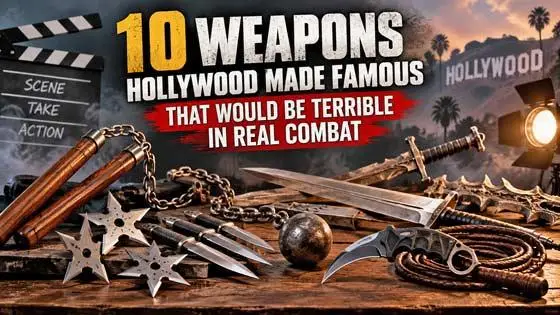
Hollywood has spent decades convincing audiences that the most dangerous weapon is usually the one that looks the coolest. A pair of nunchucks can supposedly defeat an entire room of armed opponents. Throwing knives strike their targets with impossible precision. Enormous swords slice through armor as though it were made of cardboard. But what would happen if these cinematic weapons were subjected to the unforgiving realities of actual combat? Some might surprise you. Others would be far more dangerous to the person holding them than Hollywood would ever admit.
1. Nunchucks: Hollywood's Favorite Weapon for Taking on an Entire Army
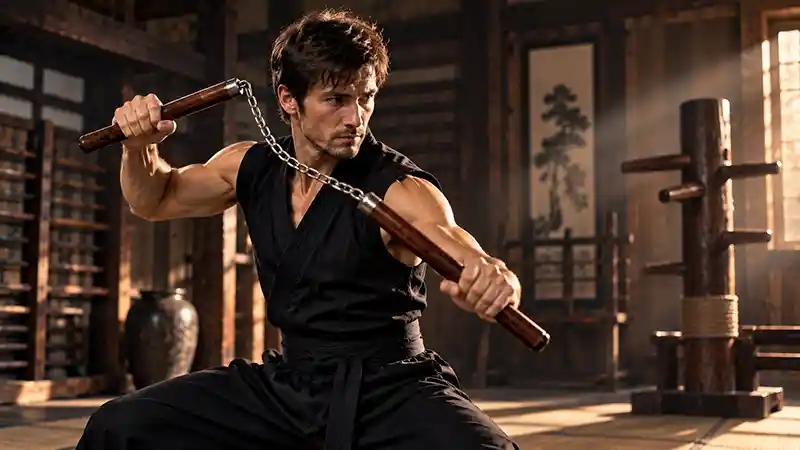
Few weapons have benefited more from Hollywood's imagination than the nunchucks. Before Bruce Lee popularized them in films like Fist of Fury (1972) and Enter the Dragon (1973), most American moviegoers had probably never seen a pair. Then Lee started swinging them with such extraordinary speed and precision that audiences became convinced they were among the deadliest weapons ever invented. Suddenly, two short sticks connected by a chain seemed more intimidating than a sword.
And Hollywood wasn't finished. Throughout the 1980s and 1990s, martial arts movies portrayed nunchucks as nearly unstoppable weapons capable of disarming opponents, blocking sword strikes, and knocking out several attackers in seconds. Michelangelo even made them his signature weapon in Teenage Mutant Ninja Turtles, introducing an entirely new generation to their supposed combat superiority.
The reality is considerably less glamorous.
Nunchaku are legitimate traditional martial arts weapons, and a skilled practitioner can generate impressive striking speed and power. However, their flexible connection creates disadvantages that Hollywood rarely acknowledges. Unlike a solid baton or sword, nunchucks don't provide a rigid structure for blocking incoming attacks. Their movements require careful control, and a poorly timed strike can send one handle rebounding unpredictably toward the person holding it.
Then there's the question of reach. Against someone armed with a spear, staff, or sword, the nunchaku user may struggle to get close enough to land an effective strike without exposing themselves to danger. The dramatic spinning techniques that look incredible on camera can also create openings that a trained opponent could exploit.
Perhaps the most revealing detail is that nunchaku were never a dominant battlefield weapon. Although their precise origins remain debated, they are strongly associated with Okinawan martial arts traditions rather than the large-scale military formations of historical Japan. Soldiers generally favored weapons that offered greater reach, control, and reliability.
Does that mean nunchucks are useless? Absolutely not. They remain challenging and fascinating weapons that reward coordination, timing, and disciplined practice. But the idea that someone could casually defeat a room full of sword-wielding enemies with a pair of swinging sticks belongs firmly in the movies.
Hollywood Verdict: Spectacular to watch, extraordinarily difficult to master, and far less forgiving in real combat than Bruce Lee made them appear.
2. Throwing Knives: The Hollywood Fantasy of Perfect Accuracy
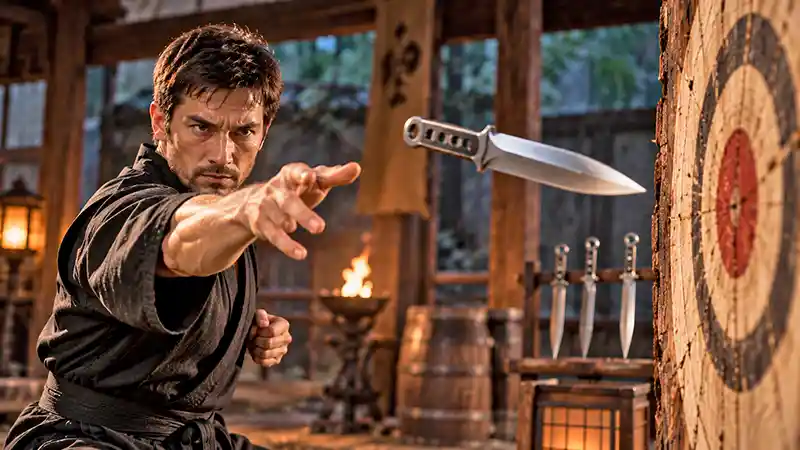
Picture this familiar movie scene. A villain is holding someone hostage, and the hero has only a split second to react. Without hesitation, the hero pulls a knife from their belt, sends it flying across the room, and strikes the villain with pinpoint accuracy. The hostage escapes, the audience cheers, and nobody stops to question how incredibly unlikely that shot would have been.
Hollywood has turned throwing knives into something resembling precision-guided missiles. Whether it's an action hero eliminating guards without making a sound or a ninja effortlessly striking moving targets from impossible distances, movie characters rarely seem to miss. Even more remarkably, their knives almost always strike point-first, regardless of how far they travel.
Unfortunately, physics has a few objections.
Unlike an arrow, which is stabilized in flight by its fletching, a conventionally thrown knife rotates as it travels through the air. For the point to strike the target correctly, the knife must complete the appropriate amount of rotation before impact. The distance to the target, the knife's balance, and the throwing technique all influence the result. Even a small miscalculation can cause the handle or flat of the blade to strike instead.
Professional knife throwers spend countless hours developing the consistency needed to hit stationary targets at known distances. Some practitioners use specialized no-spin techniques that reduce the amount of rotation, but these methods still require considerable practice. Now imagine attempting the same feat against a moving opponent, under extreme stress, with obstacles in the way and no opportunity to measure the distance.
There's also a practical disadvantage that Hollywood conveniently ignores. Every time someone throws a knife, they're giving up a weapon. If the throw misses, fails to stick, or doesn't immediately stop the threat, the opponent now has one less blade to worry about. In a genuine fight, voluntarily surrendering a perfectly usable weapon is a questionable decision.
That doesn't mean throwing knives were never used as weapons. Various cultures developed throwing blades, and specialized projectiles have appeared in military and martial traditions throughout history. However, the historical existence of a weapon doesn't mean it performed with the astonishing reliability portrayed in movies. Knife throwing is a legitimate skill, but its modern popularity is closely associated with sport, demonstrations, and entertainment rather than dependable battlefield tactics.
Perhaps the funniest Hollywood exaggeration is the idea that a knife striking someone anywhere in the body will instantly knock them unconscious. In reality, injuries are unpredictable, and even serious wounds don't necessarily produce immediate incapacitation. The dramatic movie scene where a guard silently collapses after being struck by a tiny blade is largely a cinematic invention.
Hollywood Verdict: Impressive in the hands of a skilled performer, but nowhere near the reliable, long-distance, instant-victory weapon that action movies would have us believe.
3. Shuriken: The Ninja Stars That Hollywood Turned Into Silent Killing Machines
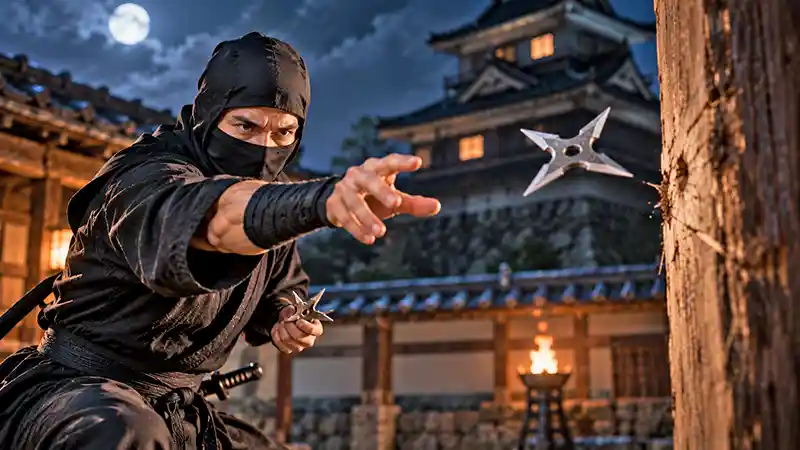
Imagine a ninja perched on a rooftop, surrounded by armed guards. Rather than drawing a sword or attempting to escape, he reaches into his clothing and produces a handful of razor-sharp throwing stars. With a few flicks of his wrist, the guards collapse one after another, each struck by a perfectly placed shuriken. Within seconds, the ninja disappears into the darkness, leaving behind a scene that looks more like a supernatural assassination than a fight.
Hollywood has spent decades convincing audiences that throwing stars were the ultimate secret weapons of Japan's legendary ninja. Movies, television shows, and video games regularly portray them as miniature spinning blades capable of cutting through armor, embedding themselves deep into solid objects, and instantly eliminating unsuspecting enemies. Their distinctive shape makes them visually memorable, and the fact that they can be concealed in a pocket only adds to their mysterious reputation.
But here's something Hollywood rarely mentions: not all shuriken were shaped like stars, and they weren't necessarily intended to kill anyone.
The Japanese word shuriken refers to a category of small, hand-thrown weapons rather than one specific design. Some were flat, pointed metal plates known as hira-shuriken, while others were straight, spike-like implements called bo-shuriken. The familiar multi-pointed ninja star represents only part of a much larger historical tradition. Shuriken techniques were also practiced within various Japanese martial arts schools, not exclusively by ninja.
Their actual battlefield role was considerably more limited than their cinematic reputation suggests. A small piece of thrown metal might cause an injury, distract an opponent, or create an opportunity to escape, but it lacked the mass and penetrating capability of larger dedicated weapons. Historical martial traditions included methods for throwing shuriken, yet there is little reason to believe they functioned as the dependable, instantly lethal projectiles depicted in action movies.
And then there's the question of armor. A sharpened steel star might stick into exposed wood or penetrate soft material under favorable conditions, but defeating historical armor was an entirely different challenge. Japanese warriors wore protective equipment specifically designed to resist dangerous battlefield weapons. Expecting a lightweight throwing star to slice through substantial armor is about as realistic as expecting a pocketknife to punch through a medieval breastplate.
Interestingly, the popular image of ninja throwing stars owes much to modern entertainment. Japanese ninja fiction, martial arts films, comic books, and Western action movies helped transform shuriken into one of the most recognizable symbols of the ninja. By the time video games began giving characters seemingly unlimited supplies of spinning stars, the distinction between historical weapon and Hollywood invention had become thoroughly blurred.
None of this makes shuriken uninteresting. Their varied designs, specialized throwing traditions, and connection to Japanese martial arts history are fascinating enough without pretending they could eliminate an entire squad of armored soldiers. In fact, the real history of these weapons may be more surprising than their fictional reputation.
Hollywood Verdict: Historically real and potentially dangerous, but far better suited to specialized techniques and distraction than the silent, instant knockouts Hollywood made famous.
4. Dual-Wielded Swords: Because Apparently One Sword Isn't Dangerous Enough
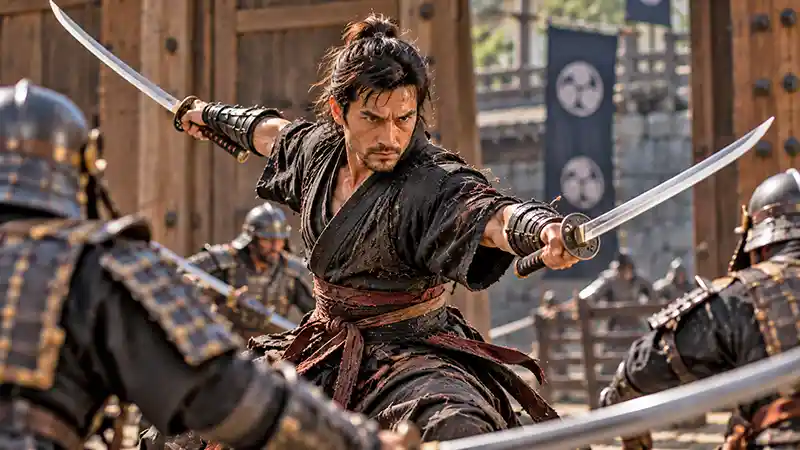
There's something undeniably impressive about a movie hero drawing two swords at once. One blade flashes through the air to block an incoming attack while the other strikes an enemy standing behind them. Within seconds, the hero is spinning through a crowd of opponents, effortlessly deflecting attacks from every direction. The message is obvious: if one sword makes you dangerous, two swords must make you practically unstoppable.
Hollywood loves this idea. From swashbuckling adventure films to modern fantasy epics, dual-wielding warriors are frequently portrayed as faster, deadlier, and more skilled than their single-sword counterparts. The choreography looks incredible, particularly when both blades move independently in a carefully synchronized display of steel. But real sword fighting involves considerably more than looking impressive while swinging sharp objects.
The first problem is that carrying two full-sized swords doesn't automatically make someone twice as effective. In fact, coordinating two weapons simultaneously requires extraordinary training. Each hand must maintain proper distance, timing, and blade control without interfering with the other. When both weapons are moving, there's also the possibility of crossing the blades, restricting your own movements, or leaving openings that a skilled opponent can exploit.
There's another issue Hollywood rarely addresses: what happens when your opponent has a shield?
Throughout much of history, warriors paired swords with shields for good reasons. A shield provided a large protective surface that could intercept attacks without requiring the precise blade positioning needed for a successful parry. It could also protect against projectiles and help control the distance between combatants. Replacing that shield with a second sword meant sacrificing much of that protection in exchange for additional offensive possibilities.
Of course, dual-wielding wasn't entirely invented by filmmakers. Historical European fencing traditions included fighting with a sword and dagger, and some systems taught the use of two swords. The Italian fencing master Achille Marozzo described techniques involving two swords in the sixteenth century, while Japanese swordsman Miyamoto Musashi became famous for his two-sword approach, known as Niten Ichi-ryu. These traditions demonstrate that using two blades could be practical under certain circumstances.
However, there's an important difference between a highly trained swordsman using a specialized fighting system and a Hollywood hero swinging two enormous blades through a crowd of enemies. Historical techniques emphasized control, positioning, and carefully timed movements. They weren't simply an excuse to attack twice as often. And although dual-wielding existed, it never replaced the more common combinations of swords with shields, bucklers, or other defensive equipment.
Then there's the problem of fighting multiple opponents. Movies frequently show dual-wielding heroes standing in the middle of a circle while enemies politely attack one at a time. In reality, being surrounded is an extremely dangerous situation regardless of how many weapons you're holding. Two swords don't provide eyes in the back of your head, and they certainly don't guarantee that you can defend against simultaneous attacks from different directions.
Perhaps the biggest misconception is that more weapons automatically mean more fighting ability. A skilled swordsman with one blade can be far more dangerous than an inexperienced fighter holding two. Historical combat wasn't a video game where equipping an additional weapon increased your damage statistics. It was a complicated contest of distance, timing, judgment, and survival.
Hollywood Verdict: Historically legitimate in certain fighting traditions, but nowhere near the effortless advantage Hollywood suggests. Two swords might look twice as impressive on screen, but they don't automatically make someone twice as dangerous.
5. Giant Fantasy Swords: When Bigger Definitely Doesn't Mean Better
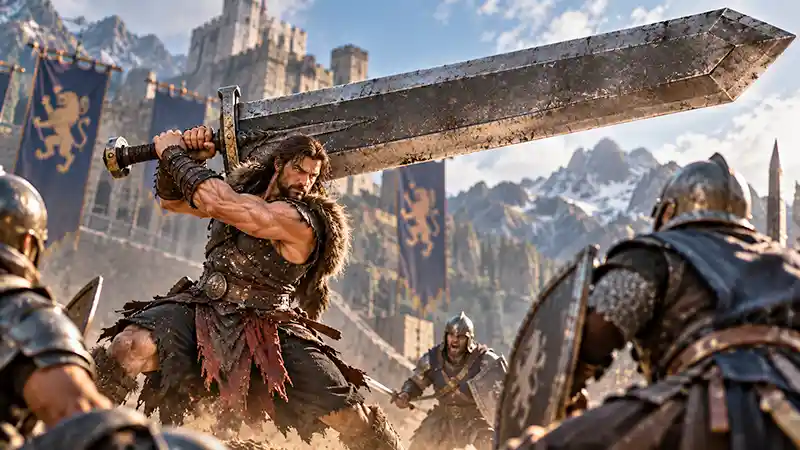
Somewhere along the way, Hollywood decided that an ordinary sword just wasn't intimidating enough. Why carry a practical three-foot blade when you could swing around a six-foot slab of sharpened steel that looks like it was stolen from a construction site? Fantasy movies and video games have embraced this philosophy enthusiastically, giving their most powerful warriors swords so enormous that an ordinary human would struggle just to lift them off the ground.
The appeal is obvious. A massive sword makes its wielder look almost superhuman. Every swing sends enemies flying, every strike shatters armor, and the blade somehow moves through the air as though it weighs no more than a kitchen knife. Audiences are supposed to believe that the bigger the weapon, the more devastating its impact. But there's a reason historical soldiers didn't march into battle carrying swords the size of surfboards.
Real swords were carefully designed to balance reach, weight, strength, and maneuverability. Contrary to popular belief, many historical European longswords weighed only around two to four pounds. Even substantial two-handed swords were often surprisingly manageable, with their weight distributed to allow controlled movements. Swordsmiths understood something Hollywood frequently ignores: a weapon that exhausts its user after a handful of swings isn't particularly useful in a prolonged fight.
Consider what happens when someone swings an enormous blade. Increasing a sword's length and mass doesn't simply make it hit harder. It also increases the effort required to accelerate the weapon, change its direction, and bring it to a stop. A giant sword might deliver tremendous momentum once it's moving, but that advantage quickly disappears if the wielder can't recover in time to defend against the next attack. In actual combat, being able to redirect a weapon can be just as important as delivering a powerful strike.
And then there's the problem of fighting indoors. Imagine trying to swing a six-foot sword inside a narrow hallway, crowded tavern, or medieval castle staircase. The same oversized blade that looks terrifying in an open battlefield suddenly becomes an awkward piece of metal that keeps colliding with walls, ceilings, and everything else nearby. Hollywood characters rarely encounter this inconvenience, presumably because movie architecture was designed with dramatic sword fights in mind.
Interestingly, history does provide examples of genuinely enormous swords. Renaissance-era European soldiers sometimes used large two-handed weapons such as the Zweihander, while ceremonial and bearing swords could reach extraordinary dimensions. Some of these weapons were intended for specialized battlefield roles, and others served primarily as symbols of status or displays of craftsmanship. Their existence proves that very large swords weren't purely fictional, but it doesn't mean they were practical replacements for ordinary battlefield weapons.
There's also an important distinction between a historically large sword and the absurdly oversized blades found in fantasy entertainment. A well-made Zweihander could be wielded using established techniques, while a fictional sword with a blade wider than a person's torso would present enormous problems involving weight, balance, and structural strength. Unless the character possesses superhuman abilities, the laws of physics don't suddenly stop applying just because the weapon looks impressive.
Perhaps the greatest irony is that historical swords were already incredibly effective without being ridiculously oversized. Skilled swordsmiths spent centuries refining blade geometry, balance, and handling characteristics to create weapons suited to specific combat situations. Making those weapons dramatically larger wouldn't necessarily improve them. In many cases, it would undermine the very qualities that made them useful in the first place.
Hollywood Verdict: Visually spectacular and perfect for intimidating imaginary monsters, but an enormous fantasy sword would often be more of a burden than an advantage. When it comes to real sword fighting, good balance and control usually matter far more than having the biggest blade in the room.
6. Whips: The Weapon That Somehow Beats Swords, Guns, and Common Sense
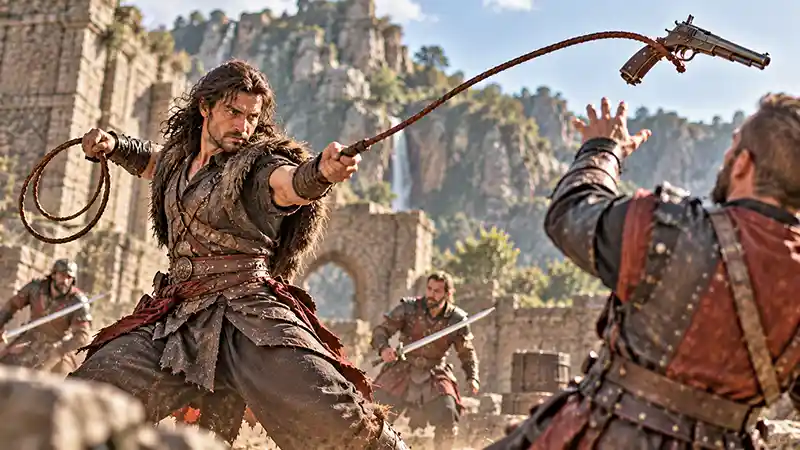
Few weapons look as effortlessly cool on screen as a whip. With a quick flick of the wrist, a Hollywood hero can knock a gun out of someone's hand, wrap the whip around an enemy's ankle, or swing across a bottomless chasm without breaking a sweat. In the movies, a whip seems capable of doing just about anything, provided the person holding it has a leather jacket, a confident smile, and absolutely no respect for the laws of physics.
Much of the whip's cinematic reputation comes from Indiana Jones, whose signature bullwhip became nearly as recognizable as his fedora. Throughout the franchise, he uses it to disarm opponents, grab distant objects, and escape seemingly impossible situations. Other adventure films and superhero stories have taken the concept even further, transforming the humble whip into a precision instrument capable of defeating armed opponents with almost supernatural accuracy.
The strange thing is that whips really are extraordinary pieces of engineering. When a skilled user cracks a bullwhip, the tip can travel faster than the speed of sound, producing the distinctive miniature sonic boom that gives the weapon its intimidating reputation. This phenomenon has been studied scientifically, and it's one of the rare occasions when the real physics of a Hollywood weapon are almost as impressive as the fiction.
Unfortunately, producing a sonic boom doesn't mean a whip can perform all the incredible tricks seen in movies.
The biggest problem is control. A whip is a flexible tool that transfers energy through a traveling wave, making its tip extremely fast but difficult to position with the precision of a rigid weapon. Striking a stationary target takes considerable practice. Trying to wrap the end around a moving gun barrel, wrist, or sword while someone is actively attacking you is an entirely different challenge. Hollywood makes these feats look as simple as pointing a finger, but even professional whip performers spend years developing their accuracy.
Then there's the issue of fighting someone armed with a sword. A whip can cause painful injuries, particularly against exposed skin, but it generally lacks the concentrated mass and rigid structure needed to reliably stop an advancing opponent. It also offers little protection against an incoming blade. Once an attacker gets inside the whip's effective working distance, the person holding it may have very limited options. A weapon that requires room to extend and recover becomes considerably less useful when an opponent is standing directly in front of you.
Hollywood's favorite whip trick might be the most questionable of all: swinging across a canyon by wrapping the whip around an overhead branch. While a sufficiently strong whip might support a person's weight under certain conditions, getting it to wrap securely around an object and remain anchored under a sudden load is far from guaranteed. The whip could slip, the attachment could fail, or the object itself could break. That's a lot of uncertainty to accept when the alternative is falling hundreds of feet.
Historically, whips were primarily associated with livestock handling, transportation, punishment, and specialized activities rather than conventional battlefield combat. Certain flexible weapons, including Chinese chain whips and other martial arts implements, were developed for fighting, but these are mechanically different from the leather bullwhips commonly seen in adventure movies. Their existence shouldn't be mistaken for evidence that a cowboy-style whip was a practical substitute for a sword or spear.
Of course, none of this diminishes the remarkable skill involved in professional whip handling. Expert performers can extinguish candles, cut small targets, and execute incredibly precise routines that look almost impossible to an untrained observer. The difference is that these demonstrations take place under controlled conditions, without an armed opponent trying to interrupt the performance.
Perhaps that's the real secret behind Hollywood's fascination with whips. They combine dramatic movement, a distinctive sound, and an unmistakable silhouette into something audiences instantly recognize. As a cinematic prop, they're nearly perfect. As a dependable weapon against someone carrying a sword or firearm, they're considerably less convincing.
Hollywood Verdict: An extraordinary tool capable of genuinely impressive feats, but far too unpredictable to function as the all-purpose combat weapon Hollywood portrays. If your survival depends on wrapping a bullwhip around a moving pistol from twenty feet away, you might want to reconsider your plan.
7. Reverse-Grip Knives: Hollywood's Favorite Way to Make a Fighter Look Dangerous
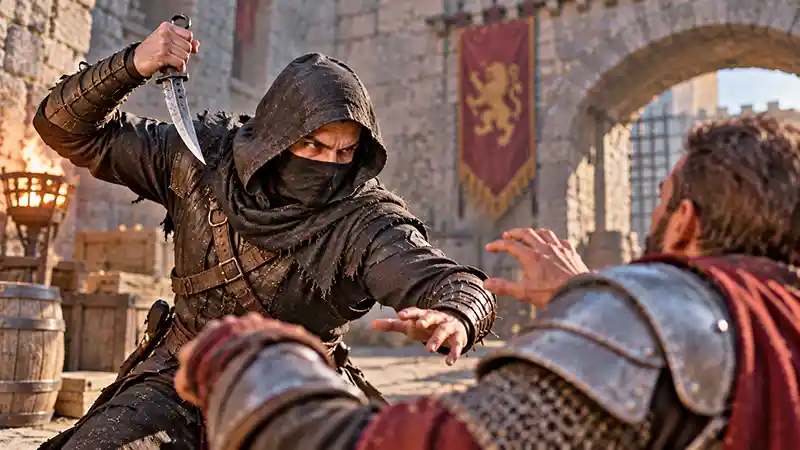
You know a movie character means business when they suddenly flip their knife around and hold it with the blade pointing downward. It's practically a universal signal that the fight is about to get serious. Assassins, special forces operatives, and mysterious martial arts masters all seem to favor this intimidating grip, particularly when they're preparing to fight someone who has absolutely no idea how dangerous they supposedly are.
Hollywood has made the reverse knife grip one of the most recognizable fighting techniques in action cinema. Whether it's a masked assassin sneaking through enemy territory or a highly trained operative facing multiple opponents, holding a knife backward apparently transforms an ordinary fighter into an unstoppable close-combat expert. The technique looks aggressive, unconventional, and just mysterious enough to suggest that the character possesses some secret knowledge the audience doesn't understand.
But does holding a knife backward actually make it more effective?
Not necessarily. The reverse grip, sometimes called an ice-pick grip, is a legitimate way of holding a knife, and it appears in various historical and modern martial arts systems. It can be useful for certain close-range movements, particularly when the blade is held close to the body. However, it also comes with significant limitations that Hollywood rarely acknowledges.
The most obvious disadvantage is reach. When someone holds a knife in a conventional forward grip, the blade extends naturally beyond the hand, allowing the user to maintain greater distance from an opponent. Reverse the grip, and that advantage changes considerably. Depending on the knife and the movement being attempted, the wielder may need to get much closer to use the blade effectively. In a real confrontation, surrendering reach can be an extremely dangerous tradeoff.
There's also the question of versatility. A forward grip generally allows a wider variety of controlled cutting and thrusting movements, while a reverse grip changes the angles and mechanics available to the user. This doesn't make reverse-grip techniques inherently useless, but it does mean they're not automatically superior. Like most fighting methods, their effectiveness depends heavily on the circumstances, the weapon, and the practitioner's training.
Interestingly, Hollywood's obsession with the reverse grip extends beyond ordinary knives. Curved blades such as karambit knives frequently appear in elaborate fight scenes, where characters spin them around their fingers and execute complicated movements at incredible speed. Karambits have legitimate historical roots in Southeast Asia, particularly Indonesia, and their distinctive curved design supports specialized handling methods. However, the flashy spinning techniques seen in movies aren't necessarily representative of practical combat applications.
One of the biggest problems with cinematic knife fighting is that it makes complicated movements look effortless. Movie characters switch grips in the middle of exchanges, toss knives between their hands, and perform elaborate flourishes without ever losing control. In reality, every unnecessary movement introduces another opportunity for something to go wrong. A knife can slip, the grip can become unstable, or an opponent can exploit the momentary distraction. Real confrontations are rarely as cooperative as carefully rehearsed movie choreography.
And then there's the psychological factor. A reverse-grip knife certainly looks threatening on camera, especially when paired with dramatic lighting and an intimidating costume. But an experienced opponent isn't necessarily going to be impressed by the way someone holds their weapon. A flashy grip doesn't compensate for poor judgment, lack of training, or an inability to control distance.
Perhaps the funniest part is how consistently Hollywood uses the reverse grip to identify its most dangerous characters. The ordinary security guard holds a knife normally. The mysterious assassin holds it backward. The legendary master somehow manages to hold two knives backward while performing acrobatics. It's a convenient visual shortcut that tells audiences who they're supposed to fear, even when the underlying technique offers no clear advantage.
Hollywood Verdict: A legitimate grip with specific applications, but hardly the secret technique Hollywood makes it out to be. Holding a knife backward might make a character look more intimidating, but it doesn't automatically make them a better fighter.
8. Chain Weapons: When Your Own Weapon Might Be Your Worst Enemy
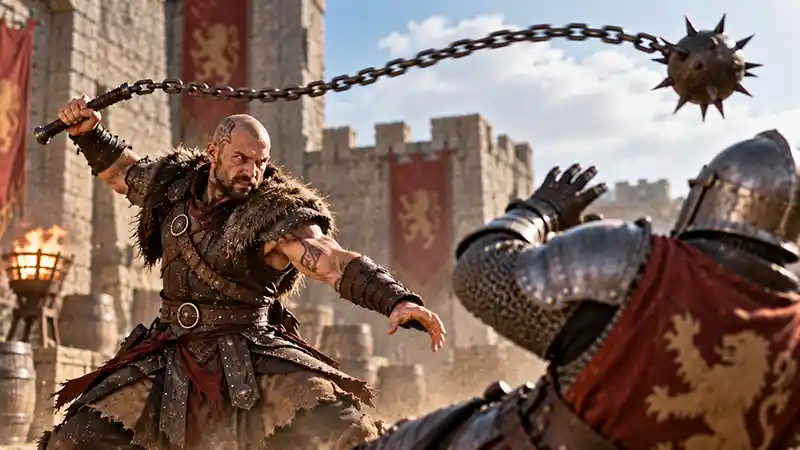
Hollywood has a strange fascination with weapons that refuse to stay in one place. A sword is apparently too predictable, and a spear just doesn't offer enough opportunities for dramatic spinning. But attach a blade, weight, or spiked ball to a chain, and suddenly you've created the ultimate cinematic weapon. Movie warriors swing these terrifying contraptions around their bodies, wrap them around enemy weapons, and somehow manage to strike opponents from every possible angle without ever hitting themselves.
The appeal is easy to understand. Few weapons look more intimidating than a heavy metal ball swinging through the air on a chain. Add some spikes, dramatic sound effects, and a villain wearing black armor, and you've got a weapon that practically guarantees an unforgettable fight scene. Fantasy films and video games have taken this idea even further, featuring enormous chained blades that can supposedly be thrown across entire battlefields and instantly retrieved with a flick of the wrist.
But here's the problem: a weapon that moves freely through the air doesn't necessarily stop moving when you want it to.
Unlike a rigid sword or staff, chain weapons rely on flexible connections that allow their striking ends to move independently of the user's hands. This creates some interesting possibilities, but it also introduces serious complications. Once a weighted end is moving, its momentum must be managed carefully. A poorly controlled swing can send the weapon traveling in an unintended direction, potentially striking the ground, becoming tangled, or rebounding toward its wielder.
And that's assuming the opponent politely stands still.
Imagine trying to control a heavy chain weapon while someone armed with a sword is rapidly closing the distance. The impressive circular movements seen in movies require space, timing, and precise coordination. An opponent who changes direction or moves unexpectedly can disrupt those movements, leaving the wielder struggling to recover. In a crowded environment, the chain might also become entangled with nearby objects, other weapons, or even the user's own equipment.
Interestingly, flexible weapons weren't simply invented by Hollywood. Historical martial arts traditions include several fascinating examples, such as the Japanese kusarigama, which combines a sickle with a weighted chain, and the Chinese meteor hammer, which uses one or more weights attached to a flexible cord or chain. These weapons demonstrate that experienced practitioners developed sophisticated methods for controlling flexible striking implements.
The kusarigama is particularly interesting because it illustrates how specialized these weapons could become. Japanese martial traditions developed techniques involving the weapon's sickle and chain, but mastering their coordination required extensive training. Hollywood often portrays similar weapons as intuitive tools that anyone with enough aggression can swing effectively. The reality is that controlling multiple moving components makes these weapons exceptionally demanding.
There's also a persistent misconception surrounding medieval flails. Movies frequently depict armored knights charging into battle with enormous spiked balls attached to chains. Although some historical flails were adapted from agricultural tools and used as weapons, the familiar one-handed ball-and-chain flail has a much less certain historical record than its popularity in fantasy entertainment would suggest. Some surviving examples have questionable origins, and historians have debated how commonly such weapons were actually used in medieval warfare.
Perhaps the most unrealistic feature of Hollywood chain weapons is their apparent ability to ignore momentum entirely. A character can swing a massive spiked ball at full speed, stop it instantly, reverse its direction, and launch another attack without any visible effort. In reality, changing the direction of a heavy moving object requires force, coordination, and time. The larger and heavier the striking end becomes, the more difficult those movements can be.
None of this means flexible weapons were inherently ineffective. In the hands of trained practitioners, they could offer unusual striking angles and specialized techniques that rigid weapons couldn't easily reproduce. But those advantages came with significant tradeoffs, and they certainly didn't make the weapons universally superior to more conventional battlefield equipment.
The irony is that Hollywood exaggerates the very characteristic that makes these weapons difficult to use. Their unpredictable-looking movements are visually exciting, but controlling those movements is precisely what requires so much skill. A weapon that looks like a spinning whirlwind of destruction on screen could become a serious liability in inexperienced hands.
Hollywood Verdict: Historically fascinating and potentially effective in specialized circumstances, but nowhere near the effortless instruments of destruction portrayed in movies. When your weapon has a mind of its own, looking impressive is the least of your concerns.
9. Scythes: The Grim Reaper's Favorite Weapon Has a Serious Design Problem
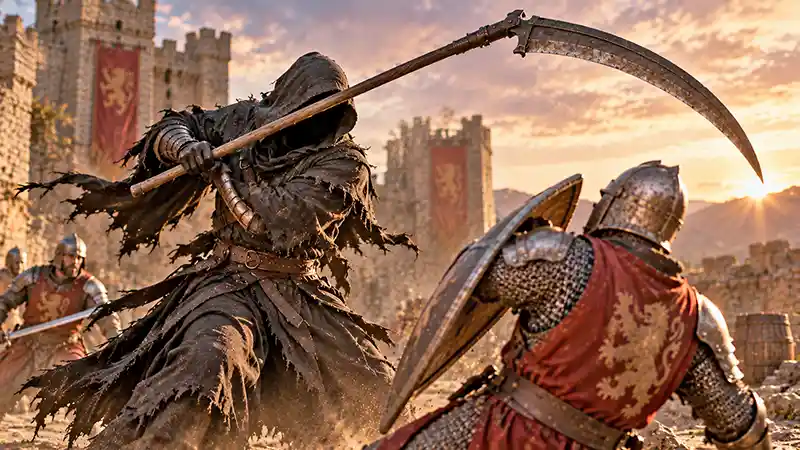
Few weapons have a more terrifying reputation than the scythe. Thanks to centuries of artwork, horror movies, and fantasy entertainment, the sight of a hooded figure carrying a long wooden handle topped with a curved blade has become almost universally associated with death itself. Whether it's the Grim Reaper collecting souls or a supernatural warrior cutting through an army of enemies, Hollywood has transformed an ordinary farming tool into one of the most intimidating weapons imaginable.
There's just one problem. A traditional agricultural scythe was designed to cut grass, not people.
The familiar farming scythe features a long, curved blade mounted roughly perpendicular to its handle. This arrangement allows a farmer to sweep the blade horizontally through standing grass or grain while maintaining a comfortable working posture. It's an ingenious design for harvesting crops, but the same geometry becomes a serious disadvantage when someone attempts to use it like a battlefield weapon.
Imagine trying to fight an armored opponent with a blade that projects sideways from the end of a long wooden pole. Unlike a spear, which concentrates its point directly in front of the wielder, a traditional scythe requires broad sweeping movements to bring its cutting edge into contact with a target. These movements can be awkward in confined spaces and difficult to control when an opponent is actively defending themselves. The blade's orientation also makes conventional thrusting techniques impractical.
And then there's the question of durability. Agricultural scythes were built for cutting vegetation, not repeatedly colliding with steel weapons, shields, and armor. Their relatively thin blades and specialized mounting arrangements weren't necessarily suited to the stresses of battlefield combat. A scythe might look terrifying when swung through the air, but appearances don't guarantee that it can withstand the punishment of a prolonged fight.
Here's where history gets interesting, though. Scythes actually were used as weapons, particularly by farmers and irregular troops who lacked access to conventional military equipment. During various European uprisings, agricultural scythes were modified into weapons known as war scythes. Rather than leaving the blade mounted sideways, the cutting edge was often repositioned to extend more directly from the shaft, creating something closer to a curved polearm.
These modifications made an enormous difference. By changing the blade's orientation, fighters could use the weapon in ways that more closely resembled established battlefield techniques. War scythes became particularly associated with peasant uprisings and Polish military history, including the Kosynierzy, or scythe-bearing soldiers, who fought during the Ko??ciuszko Uprising of 1794. Their weapons weren't simply ordinary farming scythes swung around like something from a horror movie. They were practical adaptations created for a very specific purpose.
This distinction is important because Hollywood frequently blurs the line between agricultural scythes and purpose-built polearms. Historical weapons such as glaives, bills, and other bladed polearms sometimes featured curved cutting edges, but their designs reflected generations of battlefield experience. Their blade geometry, mounting methods, and overall construction were developed with combat in mind. A farming scythe, by comparison, was optimized for an entirely different job.
Of course, none of these practical concerns seem to bother the Grim Reaper. In movies and video games, his enormous scythe can slice through armor, hook opponents from impossible angles, and occasionally cut through reality itself. The blade never bends, the handle never breaks, and the wielder somehow performs elaborate spinning attacks without becoming tangled in his own flowing robes.
Perhaps that's why the scythe remains such a powerful symbol. Its association with harvesting makes it an especially fitting metaphor for death, while its unusual silhouette gives filmmakers an instantly recognizable visual. A hooded figure holding a spear might look like an ordinary soldier. Give that same figure a scythe, and audiences immediately understand they're dealing with something far more sinister.
The irony is that the real history of scythes in warfare is fascinating enough without supernatural exaggeration. Farmers really did transform agricultural tools into weapons when circumstances demanded it. But the successful adaptations generally involved changing the very design features that make Hollywood's favorite version so visually distinctive.
Hollywood Verdict: A terrifying symbol of death, but a traditional farming scythe would be an awkward and poorly optimized battlefield weapon. Historical war scythes were a different story, proving that the weapon became considerably more practical once people stopped using it the way Hollywood likes to portray it.
10. Three-Section Staff: The Weapon That Looks Like It Was Designed to Defeat Its Owner
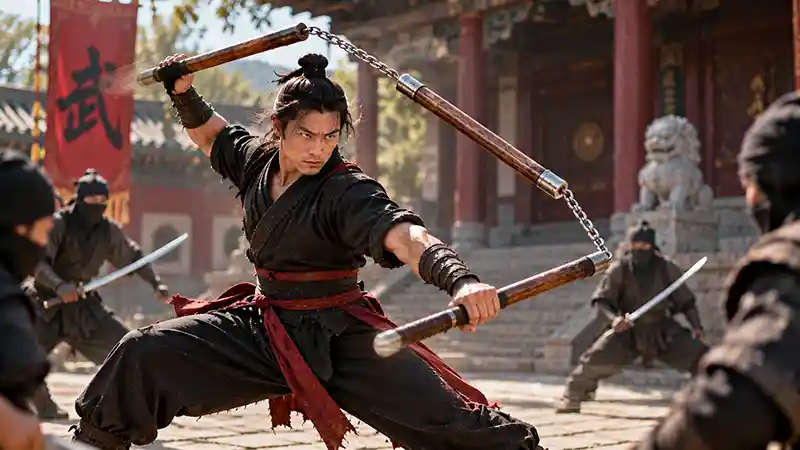
If Hollywood ever held a competition to determine which martial arts weapon looks the most impressive while being unnecessarily complicated, the three-section staff would be a serious contender. Imagine taking a perfectly functional wooden staff, cutting it into three pieces, and connecting those pieces with short chains. Now imagine trying to fight someone while all three sections are swinging in different directions. It sounds like a terrible idea, but in the hands of a movie martial arts master, it somehow becomes one of the most spectacular weapons ever invented.
The three-section staff, known in Chinese as the san jie gun, has appeared in numerous kung fu films and martial arts demonstrations. Its unusual construction allows performers to execute rapid spinning techniques, dramatic overhead swings, and complicated movements that seem to defy the laws of physics. On screen, an expert can transform the weapon from a long-range striking tool into a compact defensive instrument almost instantly, all while effortlessly blocking attacks from multiple opponents.
But there's a very good reason you don't see armies throughout history marching into battle carrying three-section staffs.
Unlike a conventional staff, which provides a rigid wooden shaft that can be controlled with both hands, a three-section staff consists of three separate sections connected by flexible joints. This design creates a remarkable range of possible movements, but it also makes the weapon extraordinarily difficult to control. Every time one section changes direction, the others can continue moving under their own momentum. Without extensive training, the wielder can quickly find themselves dealing with three moving objects instead of one manageable weapon.
And unlike Hollywood's martial arts heroes, the human body isn't immune to being struck by its own weapon.
One of the greatest challenges of mastering the three-section staff is avoiding accidental impacts. A poorly timed movement can send a wooden section crashing into the user's arms, shoulders, head, or legs. Even experienced practitioners must maintain careful awareness of the weapon's position throughout complicated techniques. The faster the movements become, the less room there is for error. This is particularly important because a solid wooden section can deliver a painful impact regardless of whether it strikes an opponent or the person holding it.
Then there's the question of what happens when an opponent closes the distance. Hollywood frequently portrays three-section staff users spinning their weapons in elaborate patterns while enemies stand conveniently outside their reach. In a real confrontation, an opponent might move unexpectedly, interrupt the weapon's motion, or force the wielder into a confined space. The very flexibility that makes the staff visually impressive can become a disadvantage when precise control is needed immediately.
Of course, the three-section staff isn't merely a Hollywood invention. It is a genuine traditional Chinese martial arts weapon with established techniques and a long association with kung fu practice. Skilled practitioners can use its sections in different configurations, combining extended strikes with shorter, more compact movements. Its versatility is part of what makes it such an interesting weapon to study. However, its precise historical origins are difficult to establish, and popular stories about its invention should be treated cautiously rather than accepted as documented fact.
What's particularly fascinating is how the weapon illustrates the difference between technical possibility and practical efficiency. A highly trained martial artist can perform movements with a three-section staff that would be impossible with a rigid pole. But that doesn't automatically mean those movements provide a meaningful advantage in combat. A conventional staff offers excellent reach, straightforward handling, and the ability to redirect force without managing multiple swinging sections. Sometimes simplicity is an advantage rather than a limitation.
Hollywood also tends to overlook how much practice goes into making these weapons look effortless. The smooth transitions, spinning patterns, and spectacular flourishes seen in martial arts films are often the result of years of disciplined training and carefully rehearsed choreography. What appears to be a spontaneous display of combat superiority may actually be a highly controlled performance designed specifically to entertain an audience.
Perhaps that's the greatest irony of the three-section staff. Its complexity is exactly what makes it so entertaining to watch, but that same complexity can make it less forgiving than simpler weapons. When a martial arts master sends three wooden sections whipping through the air in perfect synchronization, audiences see an unstoppable fighter. What they're actually witnessing is an extraordinary demonstration of coordination and practice, not necessarily evidence of battlefield superiority.
Hollywood Verdict: A legitimate and fascinating martial arts weapon that demands exceptional coordination, but its spectacular movements come with serious practical disadvantages. In the hands of a master, it's mesmerizing. In the hands of a beginner, the most immediate threat might be to the person holding it.
Hollywood's Greatest Weapon Is Your Imagination
After examining these ten weapons, you might be wondering how Hollywood manages to get away with so many ridiculous combat scenes. The answer is surprisingly simple: realism isn't nearly as entertaining as watching someone defeat an entire army with a pair of nunchucks, an oversized sword, or a handful of throwing stars.
And perhaps that's exactly how it should be.
Movies aren't historical documentaries, and audiences generally aren't buying tickets to watch perfectly realistic demonstrations of medieval warfare. They want excitement, memorable characters, and spectacular action sequences. A sword fight that ends in three seconds might be historically plausible, but it doesn't make for a particularly satisfying ten-minute battle scene.
What's fascinating, however, is how deeply these fictional portrayals have influenced our understanding of real weapons. Generations of moviegoers have grown up believing that ninja stars were instant-kill projectiles, that enormous swords were inherently more powerful, and that spinning a complicated weapon around your body somehow made you impossible to defeat. Some of these misconceptions have become so widespread that separating historical fact from cinematic invention can be surprisingly difficult.
The reality is that many of these weapons were genuinely effective within specific circumstances. Nunchaku, shuriken, chain weapons, and three-section staffs all have legitimate places in martial arts history. Even unusual weapons that seem impractical today sometimes served specialized purposes that made sense in their original environments. Their limitations don't make them worthless. They simply remind us that real combat is considerably more complicated than a carefully choreographed movie scene.
Perhaps the greatest lesson is that the most impressive-looking weapon isn't necessarily the most effective one. Throughout history, soldiers and martial artists frequently relied on relatively simple equipment because it was dependable, manageable, and suited to the situations they actually encountered. Hollywood, meanwhile, has the luxury of ignoring practicality whenever a more spectacular weapon makes for a better scene.
And we're perfectly fine with that. After all, a world without ridiculous fantasy swords, spinning ninja weapons, and impossible knife throws would make action movies considerably less entertaining.
Now it's your turn: Which Hollywood weapon do you think is the most overrated? Did we miss a weapon that deserves to be on this list? Or do you think one of these ten weapons is far more effective than we've given it credit for? Let us know, because when it comes to separating Hollywood fantasy from historical reality, there's always room for a good debate.
You May Also Be Interested In:
- The Real History of Nunchaku: From Farm Tool to Hollywood Icon
- Were Nunchucks Ever Actually Used in Real Combat?
- Were Escrima Sticks Ever Actually Used in Real Combat?
- 10 Weapon Myths Hollywood Got Completely Wrong
- 10 Real Ninja Weapons and How They Were Actually Used
- The World's Most Famous Knives and the Stories Behind Them
- How Different Cultures Shaped the World's Most Famous Knives
- The Most Famous Knife Fight in American History
- Combat War Hammer and Other New Weapons
- Combat Arm Blades and Other New Weapons
Leave a Reply