





How Different Cultures Shaped the World's Most Famous Knives
June 11th, 2026
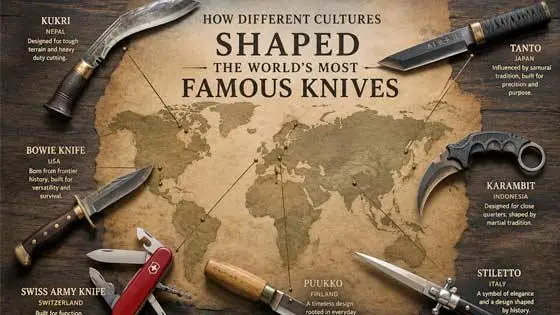
At first glance, knives might seem universal. A blade is a blade, right? But look a little closer and something interesting starts to happen. A curved kukri from Nepal looks nothing like a sleek Italian stiletto. A karambit from Southeast Asia feels completely different from an American Bowie knife, while Japanese blades evolved with a level of precision and philosophy all their own. These differences are not random, and they are definitely not just about appearance.
Throughout history, cultures shaped knives around the challenges people faced, the environments they lived in, the wars they fought, and even the foods they prepared. Some blades were designed for dense jungle terrain. Others evolved for open battlefields, close-quarters combat, farming, hunting, or daily survival. Over time, those practical tools became symbols of entire regions, carrying stories and traditions far beyond the steel itself.
In this guide, we are exploring how geography, culture, warfare, and everyday life helped shape some of the world's most famous knives, and why a blade from one part of the world can look completely different from one made somewhere else.
If you laid knives from different parts of the world side by side without knowing where they came from, the differences would seem almost random. Some are curved. Some are straight. Some prioritize chopping power, while others focus on precision. But once geography enters the conversation, many of those differences suddenly start making sense.
People historically designed knives around the environments they lived in. A blade built for clearing thick vegetation in mountainous or jungle terrain naturally evolved differently than one meant for open landscapes, cold climates, or densely populated cities. Materials mattered too. Communities often worked with the steel, wood, bone, or natural resources available nearby, which influenced both appearance and function.
Take the kukri, for example. Nepal's mountainous terrain and rugged daily life helped shape a blade that emphasized chopping power and versatility. In contrast, Scandinavian regions developed compact utility knives designed for woodworking, hunting, and survival in colder climates. Mediterranean knife traditions often leaned toward slimmer blades suited for personal carry and urban life.
Climate even influenced how knives were carried and maintained. In wet environments, durable construction mattered. In harsher climates, practical utility often outweighed decorative details. Some cultures needed knives for food preparation and farming first, while others emphasized close-quarters combat or battlefield efficiency.
This is part of what makes knives so fascinating historically. They are not just tools. In many ways, they are snapshots of how people lived. A blade often reveals what challenges mattered most to a culture long before written records explain it.
Before we look at specific knife styles from around the world, it helps to understand one thing: famous knives rarely evolved by accident. Most were shaped by geography, survival, and everyday necessity long before they became collectible or iconic.
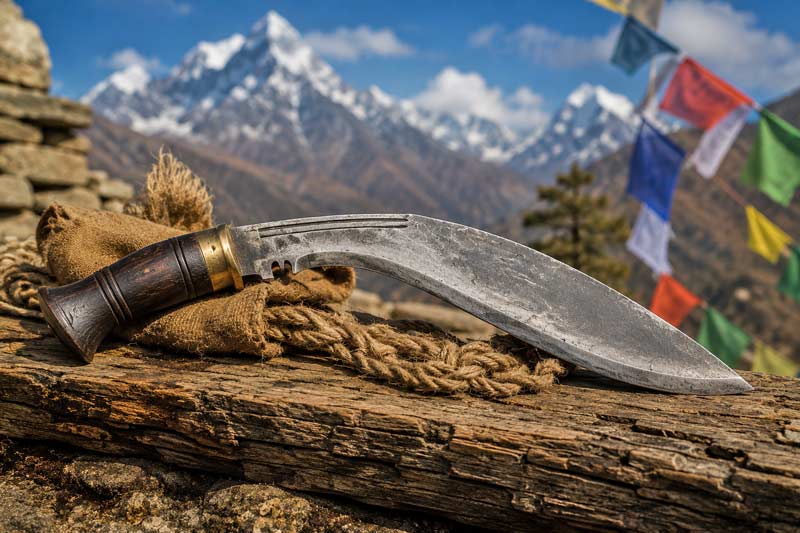
Few knives show the influence of geography and daily life more clearly than the kukri. At first glance, the blade looks unusual, even slightly exaggerated. The dramatic forward curve almost makes it seem decorative or ceremonial. In reality, every part of the design evolved for practical reasons.
Nepal's mountainous terrain played a major role in shaping the kukri. For centuries, people living in rugged environments needed a blade that could handle demanding outdoor work without requiring multiple tools. A kukri could clear brush, chop wood, prepare food, process materials, and still function as a defensive weapon if necessary. That kind of versatility mattered in regions where carrying a full set of specialized tools was not always practical.
The shape itself solves a problem. Because the blade carries more weight toward the front, it generates powerful chopping force while remaining compact enough for controlled work. In many ways, the kukri sits somewhere between a knife and a hatchet, combining cutting precision with surprising power.
Over time, the blade became deeply associated with Gurkha soldiers, whose battlefield reputation helped turn the kukri into an international icon. Stories of courage and military effectiveness spread far beyond Nepal, giving the knife a reputation that eventually reached movies, military history books, and collectors around the world. Yet despite all the mythology surrounding it, the kukri remained rooted in practicality first.
That balance between utility and cultural identity is part of what makes the knife so fascinating. The kukri was not designed to look intimidating or unusual. It evolved because people living in a demanding environment genuinely needed something that worked.
If you want a deeper look at how the blade functions and why the shape matters, we break down what a kukri knife is and what it is used for, including why its unusual curve makes more sense than many people first assume.
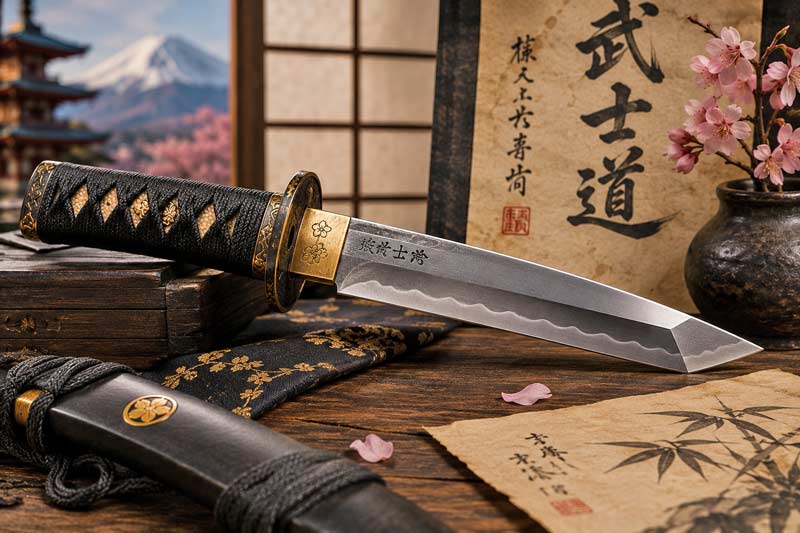
If Nepal's kukri evolved around rugged utility and chopping power, Japanese knives followed a very different path. In Japan, blade design became closely tied to precision, craftsmanship, and an almost philosophical approach to making tools.
Much of that influence traces back to the country's long history of swordsmithing. Techniques originally developed for crafting samurai blades eventually influenced smaller knives and utility tools as well. Rather than emphasizing brute force, many Japanese blade styles focused on control, edge retention, balance, and incredibly sharp cutting performance.
The tanto is one of the clearest examples. Originally carried by samurai as a compact side blade, the tanto emphasized strength and piercing ability through its reinforced point and angular design. Unlike heavily curved blades meant for chopping, traditional tantos reflected Japan's preference for precision and intentional craftsmanship. Even modern tactical knives still borrow heavily from the tanto profile because of its distinctive tip geometry and durable design.
Japanese knife culture also developed around everyday life, especially food preparation. Over centuries, specialized kitchen knives evolved for highly specific purposes, some designed for fish, others for vegetables, and some for delicate slicing work where precision mattered more than force. Few cultures embraced specialization in blade design to the same degree.
What makes Japanese knives especially fascinating is how much cultural philosophy shaped them. Simplicity, balance, discipline, and craftsmanship often mattered just as much as function itself. Many blades were designed not only to work well, but to reflect skill and intention in how they were made and used.
The result is a knife tradition that feels dramatically different from many Western designs. Where some cultures built blades for survival and rugged versatility, Japanese knife design often focused on refinement. Neither approach is better, just different responses to different environments and priorities.
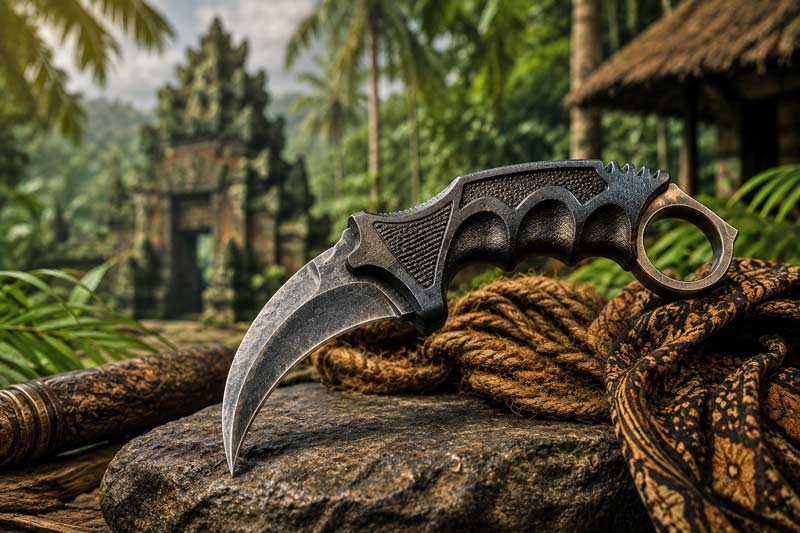
If Japanese knives emphasized precision and Nepalese blades prioritized rugged versatility, Southeast Asia developed something completely different. The karambit almost looks like it belongs in another category entirely. With its curved blade and finger ring, it stands apart from nearly every traditional knife shape in the world.
The karambit is widely associated with Indonesia, Malaysia, and the Philippines, where early versions likely evolved from agricultural tools used for harvesting roots, cutting vegetation, and handling smaller precision tasks. In regions filled with dense plant life and demanding outdoor environments, a compact curved blade made practical sense. The hooked shape gave users control during repetitive cutting motions while keeping the knife compact and maneuverable.
Over time, martial arts traditions helped transform the karambit into something much more recognizable. Systems like Silat incorporated curved blades into close-quarters movement and defensive techniques, which helped shape the knife's reputation throughout Southeast Asia. Rather than relying on brute force, many techniques emphasized fluid movement, leverage, and control.
What makes the karambit especially interesting is how dramatically its environment influenced the design. In jungle-heavy regions, compact tools often worked better than large blades. A knife built for agility and controlled cutting simply made more sense than something oversized or heavy.
Today, the karambit has become one of the most visually recognizable knives in the world, helped along by martial arts demonstrations, gaming culture, and modern tactical designs. Yet underneath the dramatic appearance, the blade still reflects something very old: a tool shaped by geography, daily life, and the realities of the environment where it evolved.
If you want to understand why the shape feels so different from most knives, we take a deeper look into what a karambit knife is and how the design evolved over time.
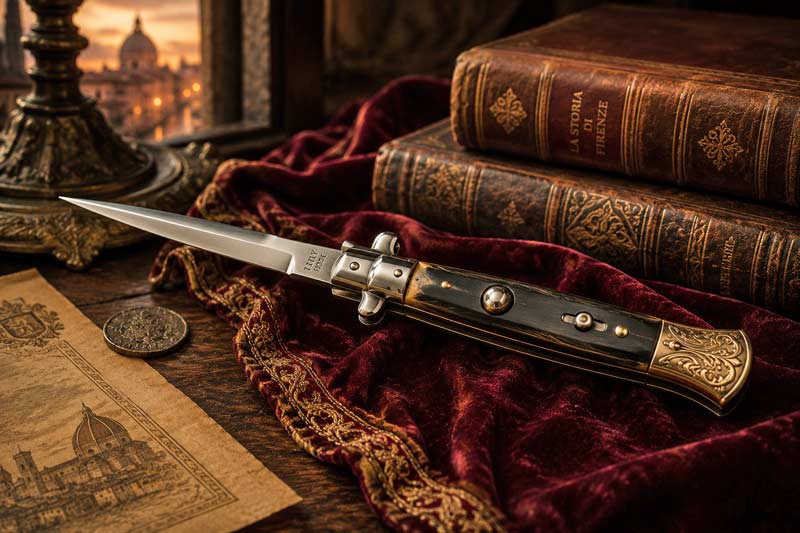
If the kukri was shaped by mountains and the karambit by dense tropical environments, Italy produced a knife that reflected something entirely different: crowded cities, personal carry, and style.
The stiletto, which traces its roots back to Renaissance Italy, developed around a very different set of priorities than many rugged outdoor blades. Rather than chopping wood or handling heavy camp work, early stilettos emphasized concealability, precision, and personal defense. Their long, narrow shape made them compact enough to carry while still effective in close-range situations common in urban environments of the time.
Italian culture also played a role in the knife's appearance. Unlike more utilitarian designs built purely around hard labor, stilettos often reflected craftsmanship and visual refinement. Decorative handles, polished finishes, and sleek silhouettes became part of the appeal. In many ways, the stiletto felt less like a rugged survival tool and more like a carefully crafted object meant to balance form and function.
Geography mattered here too. Italy's dense trade routes, bustling cities, and political tensions created demand for compact personal carry tools rather than oversized blades built for wilderness survival. A smaller, easily carried knife simply made more sense for daily life in crowded urban settings.
Centuries later, the stiletto experienced a second wave of fame when Italian switchblades exploded in popularity during the 20th century. Suddenly, a blade rooted in Renaissance history became tied to movies, rebellion, and pop culture, helping turn the stiletto into one of the world's most recognizable knife shapes.
What makes the stiletto fascinating is how clearly it reflects its origins. Where some cultures designed knives around harsh terrain or military utility, Italy helped shape a blade influenced by craftsmanship, portability, and aesthetics. The result feels unmistakably Italian even centuries later.
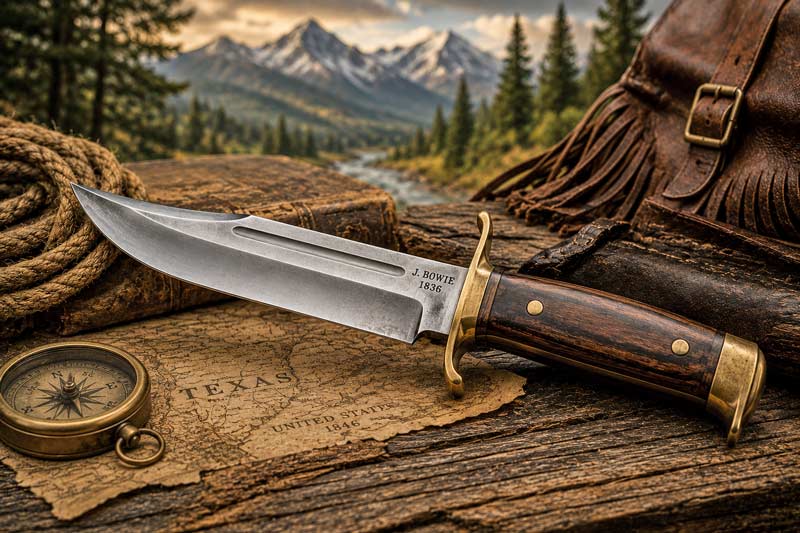
While Japan refined blades for precision and Italy leaned toward elegant concealability, the American frontier demanded something far more rugged. Life on the frontier was unpredictable, harsh, and often dangerous, which helped shape one of the world's most recognizable knife styles: the Bowie knife.
The Bowie knife emerged during the early 1800s and became closely tied to frontiersman Jim Bowie, whose reputation and larger-than-life stories helped cement the blade into American folklore. Whether every legend surrounding Bowie is true hardly matters at this point. What mattered was the image: a strong, dependable knife built for survival in rough environments.
Unlike smaller personal carry blades common in European cities, the Bowie knife evolved around versatility. On the frontier, one tool often needed to do everything. Hunting, food preparation, clearing brush, camp work, protection, and general survival all demanded a blade capable of handling hard use. That reality naturally pushed designs toward thicker spines, broader blades, and more cutting power.
Geography played a role too. Wide-open wilderness and long travel distances meant reliability mattered more than refinement. People moving through forests, mountains, rivers, and unsettled land needed something durable rather than specialized. In many ways, the Bowie knife reflects the independent, practical mindset often associated with early American life.
The knife also became larger because of the culture surrounding it. During the frontier era, bigger blades carried status and confidence. Knife fighting was unfortunately more common than many people realize, and the Bowie knife developed a reputation as something formidable enough to handle difficult situations if needed.
Today, the Bowie knife still feels unmistakably American. Bold, practical, oversized, and deeply tied to frontier mythology, it reflects a culture shaped by exploration, survival, and self-reliance. If you want to understand how it compares to other outdoor blades, we break down the differences in our guide to Bowie knife vs hunting knife and why the designs evolved differently.
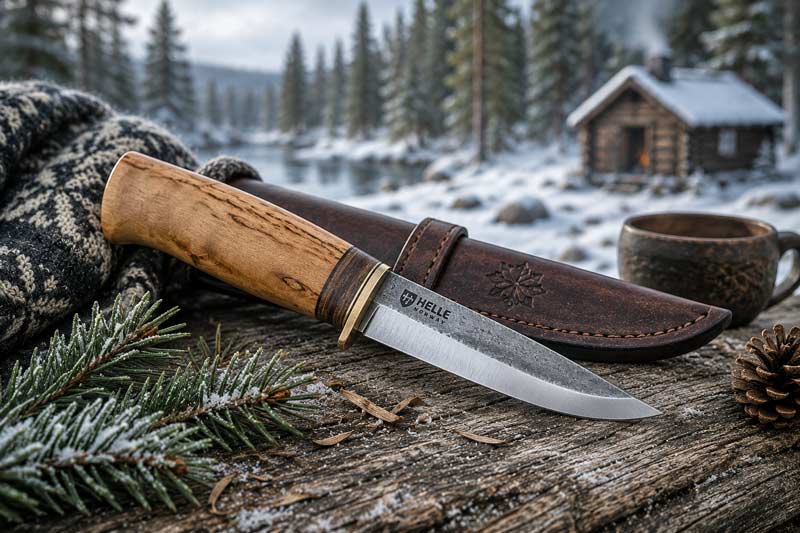
Some knife designs became famous because they looked dramatic. Others gained reputations through warfare or cultural symbolism. The Scandinavian puukko took a quieter path. It became respected because it simply worked.
Common throughout countries like Finland and Sweden, the puukko evolved around survival in harsh northern climates. In regions where long winters, dense forests, hunting, fishing, and woodworking shaped daily life, people needed a knife that could handle constant use without unnecessary complexity. The result was a compact, highly practical blade built for precision and reliability.
At first glance, the puukko can seem surprisingly simple. Most designs feature a straight or slightly curved blade, a comfortable handle, and minimal decorative features. But that simplicity is intentional. Scandinavian cultures often emphasized practicality over ornamentation, and the puukko reflects that mindset perfectly. Rather than trying to do everything, it focused on doing everyday tasks extremely well.
The environment mattered here as much as culture. In cold climates, gloves and freezing temperatures influenced usability. A comfortable grip mattered. Reliable steel mattered. A knife needed to work for carving wood, preparing food, processing game, repairing gear, and daily camp tasks without failing in difficult conditions.
Unlike oversized frontier blades or ornate European knives, the puukko evolved into something compact and dependable. In many ways, it reflects Scandinavian ideas about self-reliance and efficiency. Good tools did not need to be flashy. They simply needed to work every single day.
Even now, the influence of the puukko can be seen in countless modern outdoor and bushcraft knives. Clean lines, practical ergonomics, and durable performance all trace back to a design philosophy shaped by survival in one of the world's toughest climates.
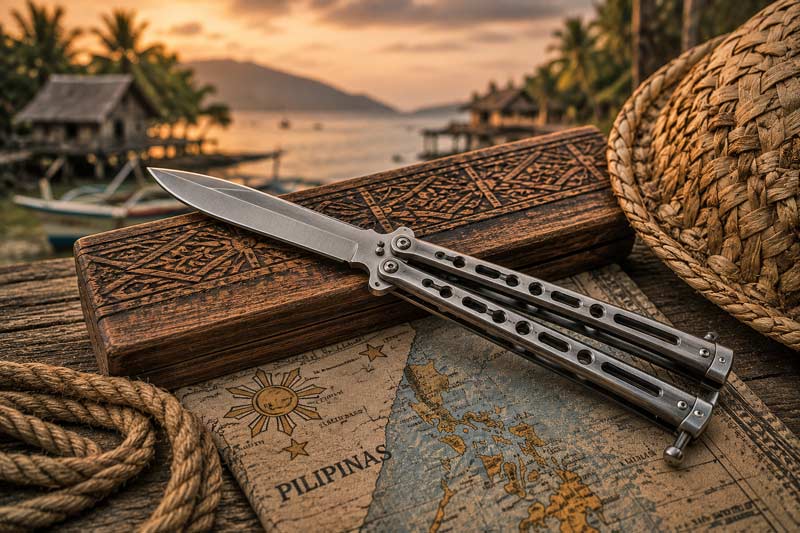
Few knives are as instantly recognizable as the butterfly knife. Also known as a balisong, its split-handle design and flipping motion make it stand out immediately. But despite the flashy reputation it has today, the knife's origins were far more practical than most people realize.
The butterfly knife is closely associated with the Philippines, particularly the Batangas region, where many believe the design evolved as a compact everyday utility knife. Fishermen, tradesmen, and workers valued tools that could be carried easily and opened quickly using one hand. In environments where practicality mattered, a folding knife that stayed compact while remaining durable made a lot of sense.
Over time, the balisong became deeply tied to Filipino identity and craftsmanship. Traditional makers developed local techniques and distinctive handle materials, helping transform the knife into more than just a practical tool. In some communities, carrying a balisong reflected cultural pride as much as everyday usefulness.
Then pop culture changed everything.
Martial arts films, action movies, and internet flipping culture helped turn the butterfly knife into something far more dramatic than its working origins. Suddenly, people around the world associated it with speed, skill, and flashy tricks. In reality, much of that reputation came from entertainment rather than everyday use, which is part of why the knife remains so misunderstood today.
Interestingly, the butterfly knife perfectly reflects the theme of this article. Geography and daily life may have shaped the original design, but culture transformed how the rest of the world saw it. What started as a practical regional knife eventually became one of the most recognizable blades on Earth.
If you want to explore the history and myths surrounding the design, we go deeper into what a balisong actually is and how it evolved beyond its origins. You can also browse modern butterfly knives to see how the design continues to evolve today.
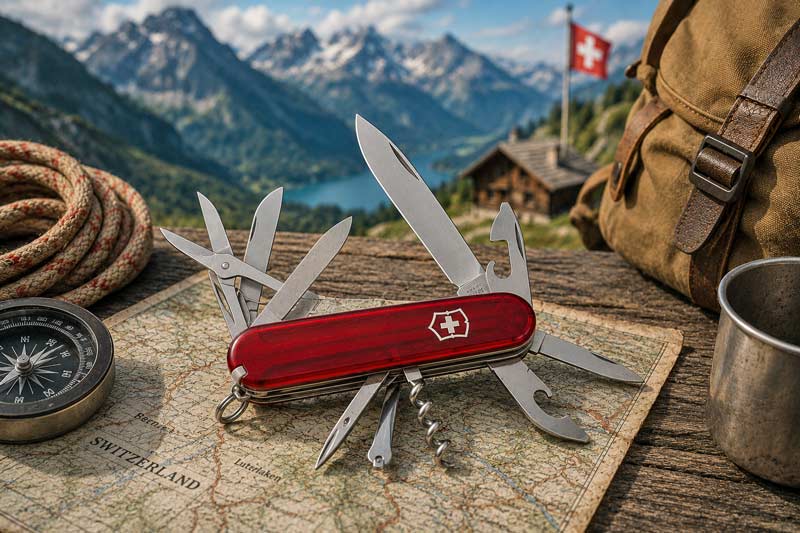
Not every famous knife evolved around war, survival, or harsh terrain. Switzerland took a very different approach. Instead of creating a blade specialized for one task, Swiss designers leaned into versatility and portability, eventually giving the world one of the most recognizable tools ever made: the Swiss Army knife.
The idea made perfect sense for Switzerland's culture and geography. In a country known for precision manufacturing, rugged alpine terrain, and mandatory military service, people often valued tools that could handle many jobs without taking up much space. Rather than carrying several separate items, why not combine them into one compact tool?
The result was a knife built around convenience. Blades shared space with screwdrivers, can openers, scissors, corkscrews, and dozens of other tools depending on the model. Instead of focusing on combat or intimidation, the Swiss Army knife reflected something much more practical: preparedness for everyday problems.
That practical mindset helped the knife spread far beyond Switzerland. Hikers packed them. Travelers carried them. Campers trusted them. Families tossed them into kitchen drawers, glove compartments, and backpacks. Few knife designs crossed so naturally into everyday life across completely different cultures.
Interestingly, the Swiss Army knife became famous precisely because it was not dramatic. While other blades earned reputations through military history or mythology, this one quietly built trust by being useful. Over time, the phrase "Swiss Army knife" even became shorthand for anything versatile enough to do many jobs at once.
In many ways, the knife perfectly reflects Swiss culture itself: precise, reliable, efficient, and thoughtfully engineered. It may not look as intimidating as a Bowie knife or as visually unique as a karambit, but few knives have influenced modern everyday carry more.
While geography shaped many of the knives we have covered so far, warfare often accelerated knife evolution in ways everyday life never could. When survival depends on tools working under extreme conditions, designs change quickly.
Military environments force brutal practicality. A knife carried in combat cannot afford unnecessary complexity. It needs to be durable, reliable, easy to maintain, and useful for more than one purpose. That pressure helped shape famous designs across completely different cultures and time periods.
The kukri gained worldwide recognition partly through Gurkha military service. Japan's blade-making traditions evolved through centuries of warfare among samurai clans. America's Ka-Bar became legendary because soldiers needed a tool that could handle field tasks as easily as combat. Even compact trench knives and daggers emerged because soldiers fighting in close quarters faced entirely different problems than civilians back home.
Interestingly, war rarely creates knife designs from scratch. More often, it refines existing ideas. Practical tools become tougher. Blade shapes change to match new environments. Handles improve for grip under stress. Weak points disappear quickly because failure in the field has real consequences.
This is one reason famous military knives often outlast trends. Many earned their reputations through performance rather than marketing. When a design proves itself under difficult conditions, people tend to keep trusting it long after the war ends.
In some ways, military knives tell the story of adaptation. Different cultures may start with different priorities, but when survival enters the equation, knife design almost always moves toward durability, simplicity, and reliability.
Not every knife design stays tied to the place where it began. Some remain deeply regional for centuries, while others somehow spread across the globe and become universally recognized. The difference usually comes down to one thing: adaptability.
Knives that solve broad everyday problems tend to travel well. The Swiss Army knife is a perfect example. Almost anyone, regardless of country or culture, can appreciate a compact multi-tool that handles practical tasks. The Bowie knife also spread beyond the American frontier because a large, durable outdoor knife appeals to hunters, campers, and survival enthusiasts almost anywhere.
Other designs stayed more closely connected to their origins because they evolved around very specific needs. The puukko makes perfect sense in Scandinavia's cold, outdoors-focused culture, but historically had less reason to spread into warmer regions where daily tasks looked different. The same can be said for agricultural tools that evolved into regional blades throughout Southeast Asia and Africa.
Military service changed this pattern dramatically. Wars, trade routes, and global travel helped move knife designs far beyond their original borders. Soldiers brought preferred tools home. Travelers carried ideas between cultures. Manufacturers adapted traditional designs for modern audiences. Over time, regional knives slowly became international ones.
Pop culture accelerated things even more. Movies helped popularize switchblades and butterfly knives. Martial arts exposure boosted interest in karambits. Survival television revived interest in larger outdoor blades. Suddenly, knives designed for one culture or environment became objects of curiosity around the world.
Today, it is easier than ever to own knives inspired by places you have never visited. But underneath the modern materials and updated designs, most famous knives still carry traces of the culture, geography, and problems that originally shaped them.
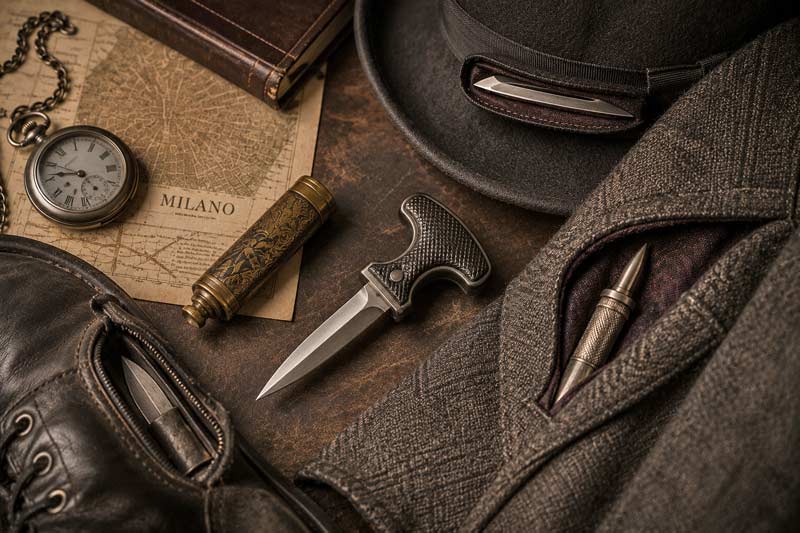
Not every culture shaped knives around wilderness survival or open battlefields. In many parts of the world, especially densely populated cities or politically unstable regions, smaller concealed blades evolved for entirely different reasons.
When people lived in crowded urban environments, carrying a large outdoor knife often made little sense. Compact blades that could be hidden inside clothing, boots, belts, or everyday objects became more practical. In places where travel routes were dangerous, laws changed unpredictably, or personal disputes were common, discreet carry often mattered more than raw cutting power.
Italy's stiletto is one example, but concealed knives appeared throughout history in many different forms. Push daggers, sleeve knives, boot knives, and hidden blades evolved because people wanted something compact, accessible, and easy to carry without drawing attention. Some prioritized personal defense, while others reflected espionage, military use, or simple practicality.
Culture shaped these designs just as much as geography did. In some societies, carrying a hidden blade reflected social status or personal preparedness. In others, concealment happened because laws restricted openly carrying larger weapons. Sometimes fashion even influenced design, with smaller knives made to fit naturally into clothing styles of the era.
Modern fascination with concealed blades probably comes from the same thing that made them interesting historically: mystery. A hidden knife feels different from a camp blade or hunting tool because it suggests strategy, portability, and ingenuity. That curiosity is one reason concealed designs remain popular today, whether someone is interested in history or simply appreciates compact engineering. If you are curious how modern versions compare, you can browse different styles of hidden knives and see how the concept continues to evolve.
This section also highlights something bigger about knife history. The same question kept getting asked across cultures: what problem are people trying to solve? The answer changed depending on where they lived and what daily life demanded.
For most of history, knife designs evolved slowly and stayed closely tied to the cultures that created them. A blade in Nepal looked different from one in Italy because people rarely exchanged ideas quickly. Geography, trade routes, and local needs kept designs relatively isolated for centuries.
That changed dramatically in the modern era.
As global trade expanded and travel became easier, knife makers began borrowing ideas from completely different parts of the world. Suddenly, an American outdoor knife might feature a Japanese tanto tip. A tactical folding knife could borrow the curved profile of a Southeast Asian karambit. European craftsmanship blended with modern materials like G10, titanium, and advanced steels that earlier generations could never have imagined.
Military service accelerated this exchange even further. Soldiers exposed to foreign equipment often brought preferences home, while manufacturers adapted designs for broader audiences. What began as region-specific tools slowly turned into international inspirations. The line between "American knife" or "Asian knife" started becoming less clear as styles mixed together.
You can see this influence almost everywhere today. Modern tactical knives often borrow from Japanese blade geometry. Curved karambit-inspired shapes appear in everyday carry designs. Compact hidden knives continue evolving from older concealment concepts. Even automatic knives now combine traditional profiles with completely modern mechanisms. If you are curious how newer opening systems evolved, we break down how automatic knives actually work and why modern mechanisms feel very different from older designs.
Ironically, globalization made knife design more diverse, not less. Instead of replacing traditional blades, modern makers started blending ideas from many cultures at once. The result is a world where a single knife can quietly carry influences from places separated by thousands of miles and hundreds of years.
That may be the most fascinating part of knife history. Even modern designs still tell stories about geography, culture, survival, and craftsmanship. You just have to know where to look.
After looking at knife designs from around the world, one thing becomes clear: famous blades are rarely random. They reflect the environments, challenges, priorities, and values of the people who created them.
The kukri tells the story of rugged mountain life and hard daily work in Nepal. The puukko reflects Scandinavian practicality and survival in harsh winters. Japanese blades reveal a culture deeply connected to craftsmanship and precision, while the Bowie knife captures something unmistakably tied to the independence and unpredictability of the American frontier.
Even knives that seem wildly different often share the same origin story underneath. People needed tools that solved real problems. Dense jungle environments encouraged compact curved blades. Open wilderness favored larger, more versatile knives. Crowded cities influenced smaller concealed designs. Over time, practicality shaped appearance, and appearance eventually became cultural identity.
That is probably why famous knives remain fascinating centuries later. They are not just pieces of sharpened steel. They are snapshots of history. Every curve, blade length, handle shape, and design choice usually started with a problem someone needed to solve.
Modern knife enthusiasts often focus on materials, edge retention, or opening mechanisms, but the history behind a blade can be just as interesting as the knife itself. Once you understand why different cultures designed knives the way they did, it becomes hard to look at them the same way again.
Whether it is a kukri shaped by mountain life, a karambit influenced by jungle environments, or a Swiss Army knife built around practicality, the world's most famous knives all carry pieces of the cultures that created them. In many ways, that is what makes them memorable long after the original need for them has changed.
If you want to explore more modern versions inspired by these historical designs, you can browse different styles of knives here and see how centuries of cultural influence still shape blades today.
In this guide, we are exploring how geography, culture, warfare, and everyday life helped shape some of the world's most famous knives, and why a blade from one part of the world can look completely different from one made somewhere else.
Why Geography Shapes Knife Design More Than Most People Realize
If you laid knives from different parts of the world side by side without knowing where they came from, the differences would seem almost random. Some are curved. Some are straight. Some prioritize chopping power, while others focus on precision. But once geography enters the conversation, many of those differences suddenly start making sense.
People historically designed knives around the environments they lived in. A blade built for clearing thick vegetation in mountainous or jungle terrain naturally evolved differently than one meant for open landscapes, cold climates, or densely populated cities. Materials mattered too. Communities often worked with the steel, wood, bone, or natural resources available nearby, which influenced both appearance and function.
Take the kukri, for example. Nepal's mountainous terrain and rugged daily life helped shape a blade that emphasized chopping power and versatility. In contrast, Scandinavian regions developed compact utility knives designed for woodworking, hunting, and survival in colder climates. Mediterranean knife traditions often leaned toward slimmer blades suited for personal carry and urban life.
Climate even influenced how knives were carried and maintained. In wet environments, durable construction mattered. In harsher climates, practical utility often outweighed decorative details. Some cultures needed knives for food preparation and farming first, while others emphasized close-quarters combat or battlefield efficiency.
This is part of what makes knives so fascinating historically. They are not just tools. In many ways, they are snapshots of how people lived. A blade often reveals what challenges mattered most to a culture long before written records explain it.
Before we look at specific knife styles from around the world, it helps to understand one thing: famous knives rarely evolved by accident. Most were shaped by geography, survival, and everyday necessity long before they became collectible or iconic.
Nepal: Why the Kukri Evolved Into One of the World's Most Recognizable Blades
Few knives show the influence of geography and daily life more clearly than the kukri. At first glance, the blade looks unusual, even slightly exaggerated. The dramatic forward curve almost makes it seem decorative or ceremonial. In reality, every part of the design evolved for practical reasons.
Nepal's mountainous terrain played a major role in shaping the kukri. For centuries, people living in rugged environments needed a blade that could handle demanding outdoor work without requiring multiple tools. A kukri could clear brush, chop wood, prepare food, process materials, and still function as a defensive weapon if necessary. That kind of versatility mattered in regions where carrying a full set of specialized tools was not always practical.
The shape itself solves a problem. Because the blade carries more weight toward the front, it generates powerful chopping force while remaining compact enough for controlled work. In many ways, the kukri sits somewhere between a knife and a hatchet, combining cutting precision with surprising power.
Over time, the blade became deeply associated with Gurkha soldiers, whose battlefield reputation helped turn the kukri into an international icon. Stories of courage and military effectiveness spread far beyond Nepal, giving the knife a reputation that eventually reached movies, military history books, and collectors around the world. Yet despite all the mythology surrounding it, the kukri remained rooted in practicality first.
That balance between utility and cultural identity is part of what makes the knife so fascinating. The kukri was not designed to look intimidating or unusual. It evolved because people living in a demanding environment genuinely needed something that worked.
If you want a deeper look at how the blade functions and why the shape matters, we break down what a kukri knife is and what it is used for, including why its unusual curve makes more sense than many people first assume.
Japan: Why Precision and Philosophy Shaped Japanese Knife Design
If Nepal's kukri evolved around rugged utility and chopping power, Japanese knives followed a very different path. In Japan, blade design became closely tied to precision, craftsmanship, and an almost philosophical approach to making tools.
Much of that influence traces back to the country's long history of swordsmithing. Techniques originally developed for crafting samurai blades eventually influenced smaller knives and utility tools as well. Rather than emphasizing brute force, many Japanese blade styles focused on control, edge retention, balance, and incredibly sharp cutting performance.
The tanto is one of the clearest examples. Originally carried by samurai as a compact side blade, the tanto emphasized strength and piercing ability through its reinforced point and angular design. Unlike heavily curved blades meant for chopping, traditional tantos reflected Japan's preference for precision and intentional craftsmanship. Even modern tactical knives still borrow heavily from the tanto profile because of its distinctive tip geometry and durable design.
Japanese knife culture also developed around everyday life, especially food preparation. Over centuries, specialized kitchen knives evolved for highly specific purposes, some designed for fish, others for vegetables, and some for delicate slicing work where precision mattered more than force. Few cultures embraced specialization in blade design to the same degree.
What makes Japanese knives especially fascinating is how much cultural philosophy shaped them. Simplicity, balance, discipline, and craftsmanship often mattered just as much as function itself. Many blades were designed not only to work well, but to reflect skill and intention in how they were made and used.
The result is a knife tradition that feels dramatically different from many Western designs. Where some cultures built blades for survival and rugged versatility, Japanese knife design often focused on refinement. Neither approach is better, just different responses to different environments and priorities.
Southeast Asia: Why the Karambit Evolved Into a Curved Blade Unlike Anything Else
If Japanese knives emphasized precision and Nepalese blades prioritized rugged versatility, Southeast Asia developed something completely different. The karambit almost looks like it belongs in another category entirely. With its curved blade and finger ring, it stands apart from nearly every traditional knife shape in the world.
The karambit is widely associated with Indonesia, Malaysia, and the Philippines, where early versions likely evolved from agricultural tools used for harvesting roots, cutting vegetation, and handling smaller precision tasks. In regions filled with dense plant life and demanding outdoor environments, a compact curved blade made practical sense. The hooked shape gave users control during repetitive cutting motions while keeping the knife compact and maneuverable.
Over time, martial arts traditions helped transform the karambit into something much more recognizable. Systems like Silat incorporated curved blades into close-quarters movement and defensive techniques, which helped shape the knife's reputation throughout Southeast Asia. Rather than relying on brute force, many techniques emphasized fluid movement, leverage, and control.
What makes the karambit especially interesting is how dramatically its environment influenced the design. In jungle-heavy regions, compact tools often worked better than large blades. A knife built for agility and controlled cutting simply made more sense than something oversized or heavy.
Today, the karambit has become one of the most visually recognizable knives in the world, helped along by martial arts demonstrations, gaming culture, and modern tactical designs. Yet underneath the dramatic appearance, the blade still reflects something very old: a tool shaped by geography, daily life, and the realities of the environment where it evolved.
If you want to understand why the shape feels so different from most knives, we take a deeper look into what a karambit knife is and how the design evolved over time.
Italy: Why Elegance and Urban Life Shaped the Stiletto
If the kukri was shaped by mountains and the karambit by dense tropical environments, Italy produced a knife that reflected something entirely different: crowded cities, personal carry, and style.
The stiletto, which traces its roots back to Renaissance Italy, developed around a very different set of priorities than many rugged outdoor blades. Rather than chopping wood or handling heavy camp work, early stilettos emphasized concealability, precision, and personal defense. Their long, narrow shape made them compact enough to carry while still effective in close-range situations common in urban environments of the time.
Italian culture also played a role in the knife's appearance. Unlike more utilitarian designs built purely around hard labor, stilettos often reflected craftsmanship and visual refinement. Decorative handles, polished finishes, and sleek silhouettes became part of the appeal. In many ways, the stiletto felt less like a rugged survival tool and more like a carefully crafted object meant to balance form and function.
Geography mattered here too. Italy's dense trade routes, bustling cities, and political tensions created demand for compact personal carry tools rather than oversized blades built for wilderness survival. A smaller, easily carried knife simply made more sense for daily life in crowded urban settings.
Centuries later, the stiletto experienced a second wave of fame when Italian switchblades exploded in popularity during the 20th century. Suddenly, a blade rooted in Renaissance history became tied to movies, rebellion, and pop culture, helping turn the stiletto into one of the world's most recognizable knife shapes.
What makes the stiletto fascinating is how clearly it reflects its origins. Where some cultures designed knives around harsh terrain or military utility, Italy helped shape a blade influenced by craftsmanship, portability, and aesthetics. The result feels unmistakably Italian even centuries later.
The American Frontier: Why the Bowie Knife Became Bigger, Tougher, and More Versatile
While Japan refined blades for precision and Italy leaned toward elegant concealability, the American frontier demanded something far more rugged. Life on the frontier was unpredictable, harsh, and often dangerous, which helped shape one of the world's most recognizable knife styles: the Bowie knife.
The Bowie knife emerged during the early 1800s and became closely tied to frontiersman Jim Bowie, whose reputation and larger-than-life stories helped cement the blade into American folklore. Whether every legend surrounding Bowie is true hardly matters at this point. What mattered was the image: a strong, dependable knife built for survival in rough environments.
Unlike smaller personal carry blades common in European cities, the Bowie knife evolved around versatility. On the frontier, one tool often needed to do everything. Hunting, food preparation, clearing brush, camp work, protection, and general survival all demanded a blade capable of handling hard use. That reality naturally pushed designs toward thicker spines, broader blades, and more cutting power.
Geography played a role too. Wide-open wilderness and long travel distances meant reliability mattered more than refinement. People moving through forests, mountains, rivers, and unsettled land needed something durable rather than specialized. In many ways, the Bowie knife reflects the independent, practical mindset often associated with early American life.
The knife also became larger because of the culture surrounding it. During the frontier era, bigger blades carried status and confidence. Knife fighting was unfortunately more common than many people realize, and the Bowie knife developed a reputation as something formidable enough to handle difficult situations if needed.
Today, the Bowie knife still feels unmistakably American. Bold, practical, oversized, and deeply tied to frontier mythology, it reflects a culture shaped by exploration, survival, and self-reliance. If you want to understand how it compares to other outdoor blades, we break down the differences in our guide to Bowie knife vs hunting knife and why the designs evolved differently.
Scandinavia: Why Simplicity and Survival Shaped the Puukko
Some knife designs became famous because they looked dramatic. Others gained reputations through warfare or cultural symbolism. The Scandinavian puukko took a quieter path. It became respected because it simply worked.
Common throughout countries like Finland and Sweden, the puukko evolved around survival in harsh northern climates. In regions where long winters, dense forests, hunting, fishing, and woodworking shaped daily life, people needed a knife that could handle constant use without unnecessary complexity. The result was a compact, highly practical blade built for precision and reliability.
At first glance, the puukko can seem surprisingly simple. Most designs feature a straight or slightly curved blade, a comfortable handle, and minimal decorative features. But that simplicity is intentional. Scandinavian cultures often emphasized practicality over ornamentation, and the puukko reflects that mindset perfectly. Rather than trying to do everything, it focused on doing everyday tasks extremely well.
The environment mattered here as much as culture. In cold climates, gloves and freezing temperatures influenced usability. A comfortable grip mattered. Reliable steel mattered. A knife needed to work for carving wood, preparing food, processing game, repairing gear, and daily camp tasks without failing in difficult conditions.
Unlike oversized frontier blades or ornate European knives, the puukko evolved into something compact and dependable. In many ways, it reflects Scandinavian ideas about self-reliance and efficiency. Good tools did not need to be flashy. They simply needed to work every single day.
Even now, the influence of the puukko can be seen in countless modern outdoor and bushcraft knives. Clean lines, practical ergonomics, and durable performance all trace back to a design philosophy shaped by survival in one of the world's toughest climates.
The Philippines: How the Butterfly Knife Grew From Practical Tool to Cultural Symbol
Few knives are as instantly recognizable as the butterfly knife. Also known as a balisong, its split-handle design and flipping motion make it stand out immediately. But despite the flashy reputation it has today, the knife's origins were far more practical than most people realize.
The butterfly knife is closely associated with the Philippines, particularly the Batangas region, where many believe the design evolved as a compact everyday utility knife. Fishermen, tradesmen, and workers valued tools that could be carried easily and opened quickly using one hand. In environments where practicality mattered, a folding knife that stayed compact while remaining durable made a lot of sense.
Over time, the balisong became deeply tied to Filipino identity and craftsmanship. Traditional makers developed local techniques and distinctive handle materials, helping transform the knife into more than just a practical tool. In some communities, carrying a balisong reflected cultural pride as much as everyday usefulness.
Then pop culture changed everything.
Martial arts films, action movies, and internet flipping culture helped turn the butterfly knife into something far more dramatic than its working origins. Suddenly, people around the world associated it with speed, skill, and flashy tricks. In reality, much of that reputation came from entertainment rather than everyday use, which is part of why the knife remains so misunderstood today.
Interestingly, the butterfly knife perfectly reflects the theme of this article. Geography and daily life may have shaped the original design, but culture transformed how the rest of the world saw it. What started as a practical regional knife eventually became one of the most recognizable blades on Earth.
If you want to explore the history and myths surrounding the design, we go deeper into what a balisong actually is and how it evolved beyond its origins. You can also browse modern butterfly knives to see how the design continues to evolve today.
Switzerland: Why Practicality Turned the Swiss Army Knife Into a Global Icon
Not every famous knife evolved around war, survival, or harsh terrain. Switzerland took a very different approach. Instead of creating a blade specialized for one task, Swiss designers leaned into versatility and portability, eventually giving the world one of the most recognizable tools ever made: the Swiss Army knife.
The idea made perfect sense for Switzerland's culture and geography. In a country known for precision manufacturing, rugged alpine terrain, and mandatory military service, people often valued tools that could handle many jobs without taking up much space. Rather than carrying several separate items, why not combine them into one compact tool?
The result was a knife built around convenience. Blades shared space with screwdrivers, can openers, scissors, corkscrews, and dozens of other tools depending on the model. Instead of focusing on combat or intimidation, the Swiss Army knife reflected something much more practical: preparedness for everyday problems.
That practical mindset helped the knife spread far beyond Switzerland. Hikers packed them. Travelers carried them. Campers trusted them. Families tossed them into kitchen drawers, glove compartments, and backpacks. Few knife designs crossed so naturally into everyday life across completely different cultures.
Interestingly, the Swiss Army knife became famous precisely because it was not dramatic. While other blades earned reputations through military history or mythology, this one quietly built trust by being useful. Over time, the phrase "Swiss Army knife" even became shorthand for anything versatile enough to do many jobs at once.
In many ways, the knife perfectly reflects Swiss culture itself: precise, reliable, efficient, and thoughtfully engineered. It may not look as intimidating as a Bowie knife or as visually unique as a karambit, but few knives have influenced modern everyday carry more.
How War Changes Knife Design Faster Than Almost Anything Else
While geography shaped many of the knives we have covered so far, warfare often accelerated knife evolution in ways everyday life never could. When survival depends on tools working under extreme conditions, designs change quickly.
Military environments force brutal practicality. A knife carried in combat cannot afford unnecessary complexity. It needs to be durable, reliable, easy to maintain, and useful for more than one purpose. That pressure helped shape famous designs across completely different cultures and time periods.
The kukri gained worldwide recognition partly through Gurkha military service. Japan's blade-making traditions evolved through centuries of warfare among samurai clans. America's Ka-Bar became legendary because soldiers needed a tool that could handle field tasks as easily as combat. Even compact trench knives and daggers emerged because soldiers fighting in close quarters faced entirely different problems than civilians back home.
Interestingly, war rarely creates knife designs from scratch. More often, it refines existing ideas. Practical tools become tougher. Blade shapes change to match new environments. Handles improve for grip under stress. Weak points disappear quickly because failure in the field has real consequences.
This is one reason famous military knives often outlast trends. Many earned their reputations through performance rather than marketing. When a design proves itself under difficult conditions, people tend to keep trusting it long after the war ends.
In some ways, military knives tell the story of adaptation. Different cultures may start with different priorities, but when survival enters the equation, knife design almost always moves toward durability, simplicity, and reliability.
Why Some Knife Designs Spread Across the World While Others Stayed Regional
Not every knife design stays tied to the place where it began. Some remain deeply regional for centuries, while others somehow spread across the globe and become universally recognized. The difference usually comes down to one thing: adaptability.
Knives that solve broad everyday problems tend to travel well. The Swiss Army knife is a perfect example. Almost anyone, regardless of country or culture, can appreciate a compact multi-tool that handles practical tasks. The Bowie knife also spread beyond the American frontier because a large, durable outdoor knife appeals to hunters, campers, and survival enthusiasts almost anywhere.
Other designs stayed more closely connected to their origins because they evolved around very specific needs. The puukko makes perfect sense in Scandinavia's cold, outdoors-focused culture, but historically had less reason to spread into warmer regions where daily tasks looked different. The same can be said for agricultural tools that evolved into regional blades throughout Southeast Asia and Africa.
Military service changed this pattern dramatically. Wars, trade routes, and global travel helped move knife designs far beyond their original borders. Soldiers brought preferred tools home. Travelers carried ideas between cultures. Manufacturers adapted traditional designs for modern audiences. Over time, regional knives slowly became international ones.
Pop culture accelerated things even more. Movies helped popularize switchblades and butterfly knives. Martial arts exposure boosted interest in karambits. Survival television revived interest in larger outdoor blades. Suddenly, knives designed for one culture or environment became objects of curiosity around the world.
Today, it is easier than ever to own knives inspired by places you have never visited. But underneath the modern materials and updated designs, most famous knives still carry traces of the culture, geography, and problems that originally shaped them.
Why Hidden and Concealed Knives Evolved in Crowded Cities and Unpredictable Times
Not every culture shaped knives around wilderness survival or open battlefields. In many parts of the world, especially densely populated cities or politically unstable regions, smaller concealed blades evolved for entirely different reasons.
When people lived in crowded urban environments, carrying a large outdoor knife often made little sense. Compact blades that could be hidden inside clothing, boots, belts, or everyday objects became more practical. In places where travel routes were dangerous, laws changed unpredictably, or personal disputes were common, discreet carry often mattered more than raw cutting power.
Italy's stiletto is one example, but concealed knives appeared throughout history in many different forms. Push daggers, sleeve knives, boot knives, and hidden blades evolved because people wanted something compact, accessible, and easy to carry without drawing attention. Some prioritized personal defense, while others reflected espionage, military use, or simple practicality.
Culture shaped these designs just as much as geography did. In some societies, carrying a hidden blade reflected social status or personal preparedness. In others, concealment happened because laws restricted openly carrying larger weapons. Sometimes fashion even influenced design, with smaller knives made to fit naturally into clothing styles of the era.
Modern fascination with concealed blades probably comes from the same thing that made them interesting historically: mystery. A hidden knife feels different from a camp blade or hunting tool because it suggests strategy, portability, and ingenuity. That curiosity is one reason concealed designs remain popular today, whether someone is interested in history or simply appreciates compact engineering. If you are curious how modern versions compare, you can browse different styles of hidden knives and see how the concept continues to evolve.
This section also highlights something bigger about knife history. The same question kept getting asked across cultures: what problem are people trying to solve? The answer changed depending on where they lived and what daily life demanded.
Modern Knife Design: Why So Many Cultures Eventually Started Borrowing From Each Other
For most of history, knife designs evolved slowly and stayed closely tied to the cultures that created them. A blade in Nepal looked different from one in Italy because people rarely exchanged ideas quickly. Geography, trade routes, and local needs kept designs relatively isolated for centuries.
That changed dramatically in the modern era.
As global trade expanded and travel became easier, knife makers began borrowing ideas from completely different parts of the world. Suddenly, an American outdoor knife might feature a Japanese tanto tip. A tactical folding knife could borrow the curved profile of a Southeast Asian karambit. European craftsmanship blended with modern materials like G10, titanium, and advanced steels that earlier generations could never have imagined.
Military service accelerated this exchange even further. Soldiers exposed to foreign equipment often brought preferences home, while manufacturers adapted designs for broader audiences. What began as region-specific tools slowly turned into international inspirations. The line between "American knife" or "Asian knife" started becoming less clear as styles mixed together.
You can see this influence almost everywhere today. Modern tactical knives often borrow from Japanese blade geometry. Curved karambit-inspired shapes appear in everyday carry designs. Compact hidden knives continue evolving from older concealment concepts. Even automatic knives now combine traditional profiles with completely modern mechanisms. If you are curious how newer opening systems evolved, we break down how automatic knives actually work and why modern mechanisms feel very different from older designs.
Ironically, globalization made knife design more diverse, not less. Instead of replacing traditional blades, modern makers started blending ideas from many cultures at once. The result is a world where a single knife can quietly carry influences from places separated by thousands of miles and hundreds of years.
That may be the most fascinating part of knife history. Even modern designs still tell stories about geography, culture, survival, and craftsmanship. You just have to know where to look.
What Famous Knives Reveal About the People Who Created Them
After looking at knife designs from around the world, one thing becomes clear: famous blades are rarely random. They reflect the environments, challenges, priorities, and values of the people who created them.
The kukri tells the story of rugged mountain life and hard daily work in Nepal. The puukko reflects Scandinavian practicality and survival in harsh winters. Japanese blades reveal a culture deeply connected to craftsmanship and precision, while the Bowie knife captures something unmistakably tied to the independence and unpredictability of the American frontier.
Even knives that seem wildly different often share the same origin story underneath. People needed tools that solved real problems. Dense jungle environments encouraged compact curved blades. Open wilderness favored larger, more versatile knives. Crowded cities influenced smaller concealed designs. Over time, practicality shaped appearance, and appearance eventually became cultural identity.
That is probably why famous knives remain fascinating centuries later. They are not just pieces of sharpened steel. They are snapshots of history. Every curve, blade length, handle shape, and design choice usually started with a problem someone needed to solve.
Modern knife enthusiasts often focus on materials, edge retention, or opening mechanisms, but the history behind a blade can be just as interesting as the knife itself. Once you understand why different cultures designed knives the way they did, it becomes hard to look at them the same way again.
Whether it is a kukri shaped by mountain life, a karambit influenced by jungle environments, or a Swiss Army knife built around practicality, the world's most famous knives all carry pieces of the cultures that created them. In many ways, that is what makes them memorable long after the original need for them has changed.
If you want to explore more modern versions inspired by these historical designs, you can browse different styles of knives here and see how centuries of cultural influence still shape blades today.
You May Also Be Interested In:
- The World's Most Famous Knives and the Stories Behind Them
- Why Are Throwing Knives Shaped Differently From Regular Knives?
- Why Trench Knives Became the Most Feared Knives of World War I
- Why Was the Khopesh Shaped Like That?
- The Most Famous Knife Fight in American History
- 10 Weapons Hollywood Made Famous That Would Be Terrible in Real Combat
- 12 Fixed Blade Knives You Should Know About
- Why Karambit Knives Are So Effective
- Why Automatic Knives Belong in Your EDC
- How Automatic Knives Actually Work
Leave a Reply