




The Deadliest Weapons That Started as Everyday Tools
July 24th, 2026
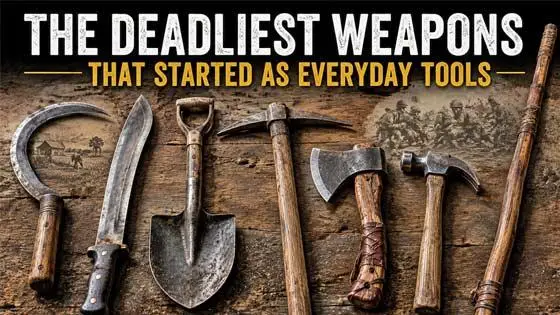
When people think of history's deadliest weapons, they usually picture swords, spears, or battle axes forged by skilled blacksmiths for one purpose: war. But many of the world's most effective weapons weren't designed for combat at all. They began as ordinary tools used to harvest crops, clear forests, dig trenches, or complete everyday chores. Over time, necessity, innovation, and survival transformed these humble implements into weapons that earned fearsome reputations on battlefields across the world.
Some became legendary through martial arts traditions, while others found new life in the hands of soldiers who discovered that the tool they already carried could be just as deadly as the weapon they were issued. Their stories reveal an important truth about human history: when survival is on the line, people often turn the tools they know best into the weapons they need most. Let's take a look at some of the deadliest weapons that started life doing something completely different.
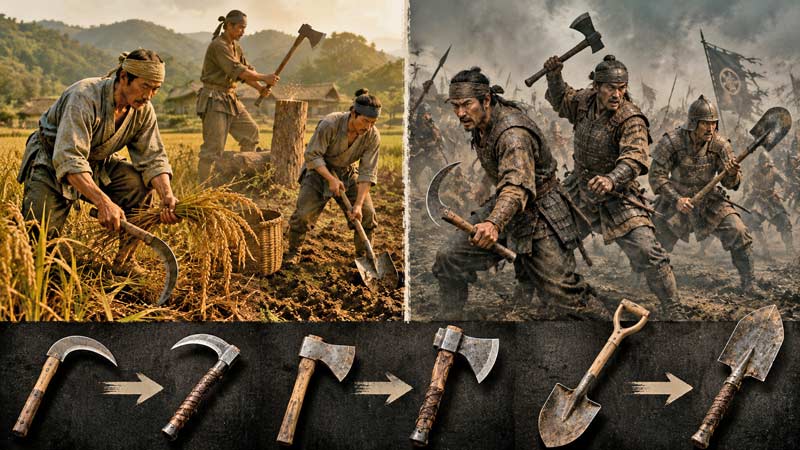
It's easy to assume that the deadliest weapons in history came from expert blacksmiths who spent their lives forging swords, spears, and battle axes. In reality, many of the most effective weapons were created by people who had no intention of making weapons at all. Farmers, laborers, woodsmen, and craftsmen depended on sturdy tools every day, and when conflict found them, those same tools often became their first line of defense.
This transformation happened in cultures all over the world. A harvesting tool could become a martial arts weapon. A woodcutting axe could be carried into battle. A shovel designed for digging trenches might prove devastating in close combat. These weren't accidental discoveries. People learned that a well-balanced tool was often durable, easy to use, and already perfectly suited for striking, chopping, or piercing when survival demanded it. It's a theme that appears repeatedly throughout history and is explored further in our article on whether martial arts weapons were really farm tools.
Perhaps the biggest reason these tools became such formidable weapons is that they were already in someone's hands. A farmer didn't need to search for a sword when danger appeared. A soldier carrying a shovel didn't have to reach for a bayonet if there wasn't time. Familiarity often mattered more than specialization, and history is full of examples where ordinary tools proved every bit as dangerous as weapons built specifically for war.
The remarkable part is that many of these tools never stopped serving their original purpose. They continued harvesting crops, cutting wood, or digging earth long after earning fearsome reputations on battlefields. That unusual dual identity is what makes their stories so fascinating, and it explains why so many have become legendary centuries later.
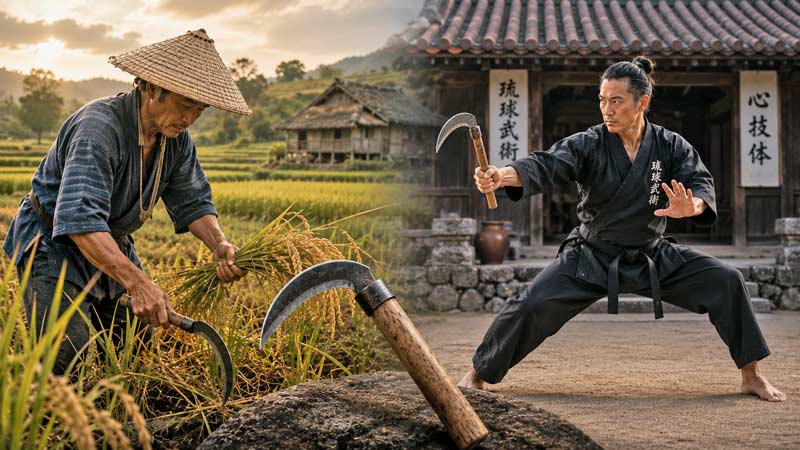
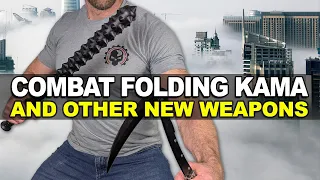
Few weapons illustrate the transformation from everyday tool to battlefield weapon better than the kama. Originally, it was nothing more than a simple hand sickle used by farmers throughout Okinawa and other parts of Asia to harvest rice, trim vegetation, and cut through stubborn weeds. Its curved blade was designed for efficiency in the field, not for fighting, and for generations it served as an indispensable farming implement.
As Okinawan martial arts evolved, however, practitioners began adapting familiar tools for self-defense. Whether driven by necessity, local traditions, or periods when carrying conventional weapons became more difficult, the kama's compact size and razor-sharp curved blade made it surprisingly effective in trained hands. Martial artists developed techniques for slashing, hooking, trapping, and disarming opponents, transforming an ordinary farming implement into one of the most recognizable traditional weapons still practiced today.
The kama wasn't the only tool to make that journey. Many Okinawan weapons trace their origins to objects people already owned and used every day. The tonfa, for example, is widely believed to have evolved from the handle of a grinding stone, while the nunchaku has long been associated with agricultural tools, though its true history is more complicated than many people realize. We take a closer look at those stories in our articles on how the tonfa was originally used and why nunchucks were actually invented.
Today, the kama remains a symbol of how ingenuity can reshape ordinary objects into extraordinary tools for survival. It stands as one of history's clearest examples that some of the world's most iconic weapons began life with no connection to warfare at all.
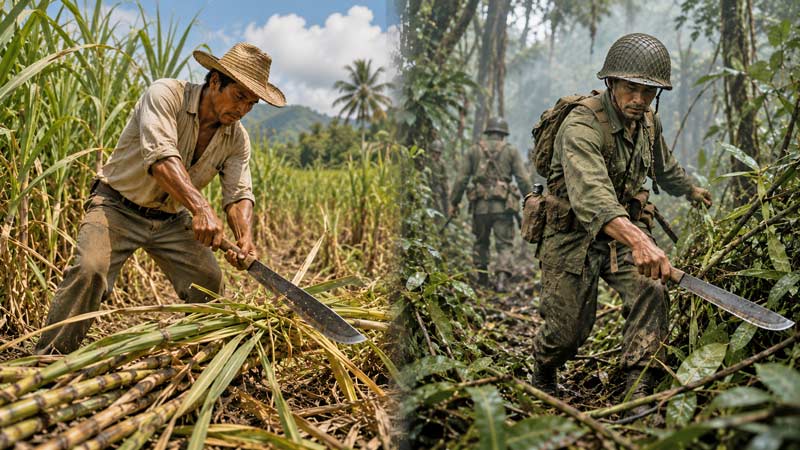
The machete was created for vegetation, not violence. Its long, forward-weighted blade made it ideal for clearing brush, cutting sugarcane, harvesting crops, and opening paths through dense tropical growth. In many parts of the world, it became one of the most important tools a farmer or laborer could own because it could handle jobs that would otherwise require several different implements.
That same design also made the machete dangerous in a fight. It was inexpensive, durable, easy to maintain, and already familiar to the people who carried it every day. When conflict reached rural communities, fighters did not need formal weapons training to understand how to swing a blade they had used since childhood. Its broad cutting edge could deliver devastating force, while its length gave it more reach than most household tools.
Over time, military forces and irregular fighters adopted machetes for both practical and combat roles. Soldiers used them to cut trails, clear camps, prepare defensive positions, and move through jungle terrain. If close-range fighting erupted, the same tool could immediately become a weapon. That combination of utility and lethality made the machete especially valuable in environments where every ounce of equipment mattered.
The machete also belongs to a larger family of working blades that developed regional identities. The kukri, for example, became famous for its distinctive forward-curving profile and its association with Nepalese Gurkhas, yet it remained just as useful for chopping wood and completing everyday camp tasks. You can explore that connection in our article explaining what a kukri knife is and how it is used.
What made the machete so effective was not sophistication. It was the opposite. It was simple enough to manufacture in large numbers, rugged enough to survive hard use, and versatile enough to remain useful before, during, and after a fight. Few purpose-built weapons could match that level of practicality.
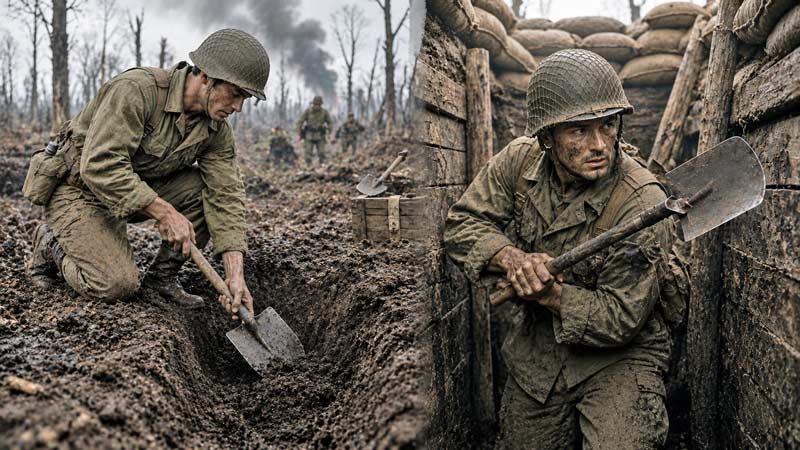
Few tools have earned a more surprising reputation in combat than the humble entrenching tool, often called the E-tool. Designed for digging foxholes, building defensive positions, and clearing obstacles, it became standard equipment for soldiers around the world because it was lightweight, compact, and incredibly useful. No one issued it as a primary weapon, yet countless veterans discovered it could become one when circumstances demanded.
Unlike a full-sized shovel, an entrenching tool was small enough to carry on a soldier's belt or pack. Many military versions featured sharpened edges that made cutting roots and compact soil easier, but those same edges proved devastating in close-quarters combat. During both World Wars and later conflicts, soldiers occasionally relied on their E-tools when ammunition ran out, rifles became unusable, or fighting moved into trenches and confined spaces where long firearms were difficult to maneuver.
The effectiveness of the entrenching tool came from its simplicity. It required no special training beyond what soldiers already had from using it every day. Swinging, chopping, and thrusting with a familiar tool felt natural under stress. In many ways, it demonstrated the same principle seen throughout this article: a dependable tool that is always within reach can become more valuable than a specialized weapon that isn't.
Hollywood has occasionally portrayed soldiers fighting with shovels, but these scenes are often exaggerated for dramatic effect. The reality is that the entrenching tool remained first and foremost a piece of essential field equipment. Its reputation as a weapon grew because of extraordinary circumstances, not because armies intended it to replace rifles or bayonets. Separating those facts from popular myths is something we also explore in our article on weapon myths Hollywood got completely wrong.
Perhaps no other example better captures the article's central theme. A tool created to shape the battlefield eventually became part of it, proving once again that necessity has a way of turning ordinary equipment into extraordinary weapons.
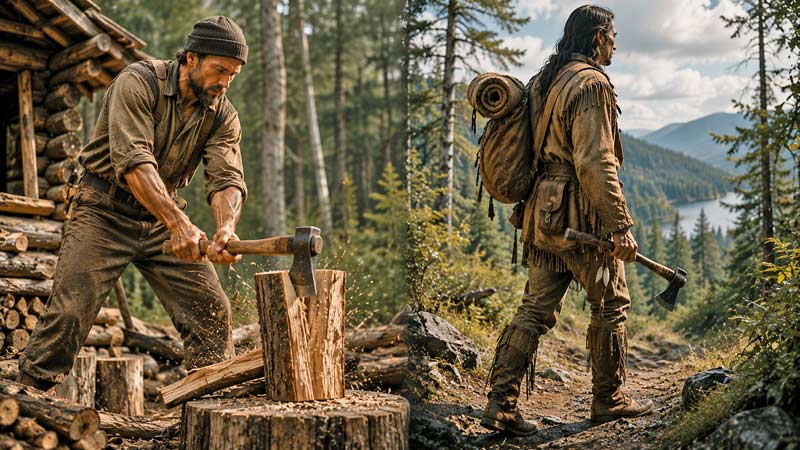
Axes did not need much modification to become weapons. Long before they appeared on battlefields, they were essential tools for felling trees, splitting firewood, shaping timber, and building shelters. Their design already concentrated tremendous force into a narrow cutting edge, which meant the same qualities that made them effective in the forest could make them devastating in combat.
That transition happened in many cultures because axes were widely available and required less specialized training than swords. A woodsman already understood how to generate power through the hips and shoulders, control the arc of a heavy head, and recover after a swing. In a crisis, those familiar movements could be redirected toward defense without having to learn an entirely new weapon system.
Smaller hatchets offered a different advantage. They were easier to carry, quicker to maneuver, and useful for countless camp tasks. Frontier travelers, soldiers, and laborers could use them to prepare firewood, build shelters, cut rope, or clear obstacles, then rely on the same tool if danger appeared. That combination of portability and force helped compact axes remain relevant for centuries.
The tomahawk followed a similar path, although its history became far more complex through trade, diplomacy, warfare, and cultural exchange. What began as a practical chopping and cutting tool eventually became one of the most recognizable weapons associated with North America. We explore that full evolution in the strange history of the tomahawk.
Modern axes and hatchets still reveal why the design adapted so easily to combat. They are rugged, mechanically simple, and capable of delivering significant force without delicate moving parts. Yet their greatest strength has always been the fact that they remain useful tools first, even after history gave them a much darker reputation.
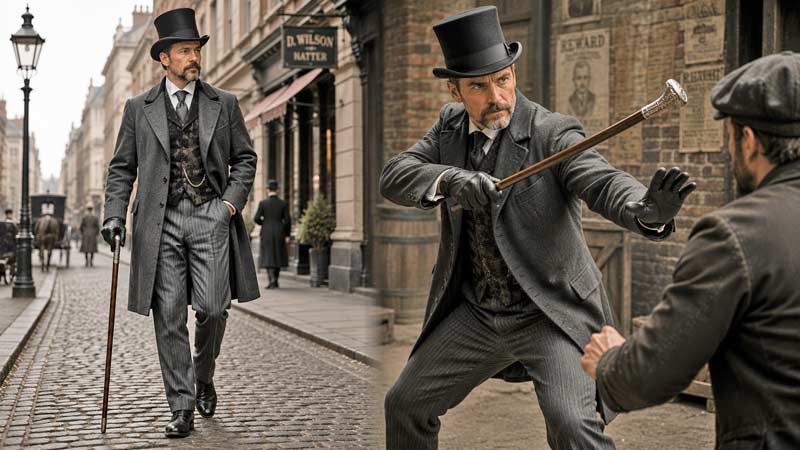
Not every everyday tool that earned a place in history had a blade. For centuries, sturdy walking canes were carried by travelers, merchants, gentlemen, and older adults for balance and support. Because they were so common, few people gave them a second thought. Yet in dangerous situations, a well-made cane could become a remarkably effective defensive tool without requiring any modification.
Unlike many improvised weapons, a walking cane was already designed to withstand significant force. A solid hardwood shaft could strike, block, hook, or create distance from an attacker, all while remaining an ordinary mobility aid. Martial arts systems around the world eventually developed techniques specifically for cane defense, recognizing that almost anyone could carry one without attracting unwanted attention.
This practicality is one reason canes remain popular for personal protection today. While modern self-defense tools have become increasingly specialized, the walking cane continues to offer the same advantage it always has: it performs its intended everyday purpose while retaining defensive potential if an emergency arises. Modern self-defense canes build on that centuries-old concept by combining durable construction with designs that remain useful for everyday carry.
The walking cane highlights an important difference between improvised weapons and ordinary tools that evolved into defensive implements. Most improvised weapons are picked up only after danger appears. A cane, however, is already in your hand. That immediate availability has made it one of history's most practical examples of an everyday object that could protect its owner when no traditional weapon was available.
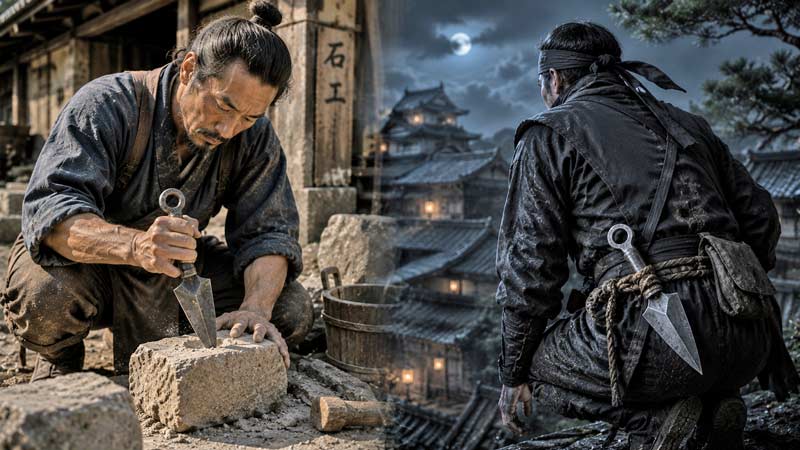
Popular culture usually portrays the kunai as a specialized throwing knife carried by ninja. Historically, however, its shape was far more closely connected to practical work than secret assassination. The traditional kunai was a sturdy, pointed iron tool used for digging, prying, scraping, breaking through soft materials, and assisting with masonry or gardening tasks. Its broad construction made it durable enough to survive abuse that would damage a thinner knife.
That rugged design also made the kunai useful in situations far beyond its original purpose. It could help climb rough surfaces, loosen boards, punch through barriers, or serve as an emergency hand weapon. The ring at the end of the handle allowed a cord to be attached for carrying, retrieval, or additional leverage. None of these features required the kunai to begin life as a dedicated combat blade.
Over time, stories about covert warriors transformed the humble tool into something far more dramatic. Movies, games, and comics emphasized throwing techniques and sleek knife-like designs, often replacing the heavier utility profile with something resembling a modern dagger. That image became so familiar that many people no longer realize the historical kunai was closer to a compact pry bar than a finely balanced throwing knife.
The kunai's journey from worksite tool to ninja symbol is a perfect example of how reputation can completely overshadow original purpose. You can explore that transformation in more detail in our article on the evolution of the kunai.
Its story also reinforces a pattern seen throughout history. Tools became weapons not because someone carefully redesigned them for battle, but because they were strong, familiar, and already available when people needed them most.
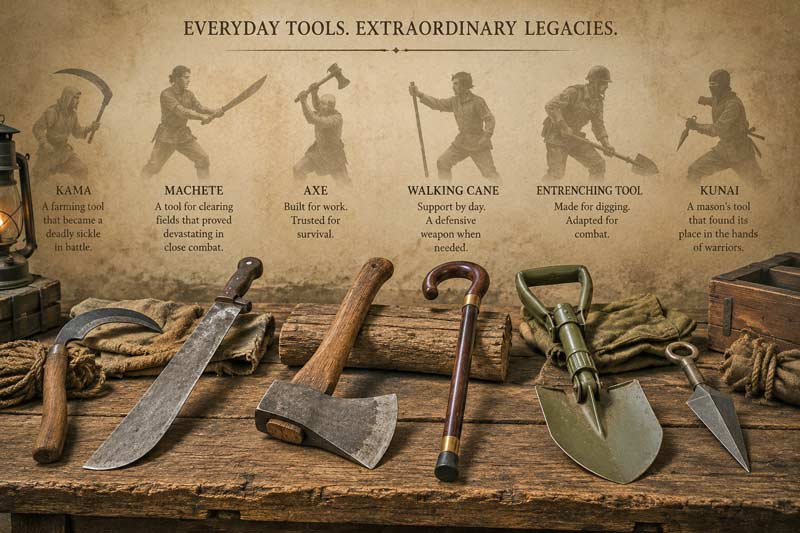
History is full of beautifully crafted weapons, but when survival was on the line, practicality often mattered more than perfection. An ordinary tool didn't have to be elegant to be effective. It only needed to be durable, familiar, and close at hand. That's why so many farmers, laborers, pioneers, and soldiers reached for the implements they already carried instead of searching for purpose-built weapons they might not have.
Another advantage was reliability. Tools were designed to withstand hard daily use. A chopping axe could split logs for years without failing. A machete could clear miles of dense vegetation. A sturdy cane supported its owner day after day. Unlike finely crafted swords that required regular maintenance and careful handling, everyday tools were expected to survive dirt, moisture, impacts, and abuse. That durability translated surprisingly well to moments of self-defense.
Many of these tools also benefited from familiarity. People instinctively knew how to swing an axe, drive a shovel into the ground, or control a machete because they had performed those movements thousands of times. Under extreme stress, that experience could prove more valuable than carrying an unfamiliar weapon that required specialized training to use effectively.
Perhaps the biggest lesson is that a weapon's effectiveness often depends less on what it was designed to do and more on the person holding it. Throughout history, ingenuity has repeatedly transformed ordinary objects into formidable tools for survival. Even many of the world's most recognizable blades share roots in practical work rather than warfare, as we explore in our article on the world's most famous knives and the stories behind them.
These stories remind us that necessity has always been one of history's greatest inventors. Long before factories mass-produced specialized weapons, people adapted the tools they trusted every day. In many cases, those humble beginnings became the foundation for weapons whose reputations would outlive the jobs they were originally created to perform.
Looking back across centuries of human history, a clear pattern begins to emerge. Some of the world's most enduring weapons didn't start as military inventions. They began in fields, forests, workshops, and construction sites, where ordinary people relied on them to earn a living. Their effectiveness in combat wasn't the result of careful weapon design. It was the result of durability, familiarity, and the simple fact that they were already within reach when they were needed most.
That doesn't mean every farming tool or work implement eventually became a famous weapon. Most never did. But the examples that survived into history all shared something in common: they solved real problems long before they were ever used in a fight. Whether it was the kama harvesting crops, the machete clearing dense vegetation, the axe splitting timber, the entrenching tool digging defensive positions, or the humble walking cane supporting its owner, each proved its value as a tool before earning a reputation as something much more formidable.
Over time, many of these everyday implements evolved into symbols of entire cultures. The tomahawk became closely associated with North American history. The kama became a staple of Okinawan martial arts. The kukri became synonymous with the Gurkhas. Their stories remind us that history's most recognizable weapons often owe just as much to the people who worked with them as the warriors who later carried them into battle.
Today, purpose-built weapons dominate modern military equipment and self-defense technology, but the lesson remains the same. A well-designed tool can often accomplish far more than its inventor originally imagined. In many cases, the line between tool and weapon has always been thinner than most people realize, and that's one of the reasons these objects continue to fascinate historians, collectors, and martial arts enthusiasts alike.
If there's one takeaway from these remarkable stories, it's that necessity has always been the greatest weapons designer. History's deadliest weapons weren't always born in an armory. Sometimes, they started in the hands of ordinary people simply trying to get through another day's work.
It's a popular belief, but the answer is more complicated than a simple yes or no. Some martial arts weapons, such as the kama, clearly evolved from agricultural tools that were already widely used by farmers. Others, however, have histories that are less certain. The tonfa may have developed from the handle of a grinding stone, while the true origins of weapons like the nunchaku continue to be debated by historians.
What is clear is that many traditional weapons were based on everyday objects people already knew how to use. Whether they were adapted because of necessity, local customs, or simple practicality, these familiar tools often proved surprisingly effective when used for self-defense. Rather than assuming every martial arts weapon began as farm equipment, it's more accurate to say that many of history's most famous weapons borrowed ideas from the ordinary tools people relied on every day.
The biggest reason was availability. Throughout most of history, ordinary people didn't own expensive swords or spears, but they did own the tools they depended on for work. If danger appeared unexpectedly, it made far more sense to defend yourself with the axe, sickle, machete, or shovel already in your hands than to search for a purpose-built weapon you might not have.
These tools also had practical advantages. They were built to withstand heavy daily use, making them durable enough for combat. People already understood how to swing them effectively because they had spent years using them for chopping wood, harvesting crops, digging, or construction. In many situations, that familiarity was more valuable than carrying a weapon that required specialized training to master.
Over time, some of these improvised solutions became refined into recognized weapons, while others remained tools that simply proved capable of defending their owners when circumstances demanded it. Their evolution is a reminder that necessity has often shaped military history just as much as innovation.
Although the terms sound similar, they aren't the same. An improvised weapon is an ordinary object that's picked up and used for self-defense in the moment, often with no intention of using it as a weapon beforehand. A chair, frying pan, or flashlight are all examples of improvised weapons when used in an emergency.
A tool that became a weapon followed a much different path. These objects earned reputations over years or even centuries because people repeatedly discovered they were effective in combat. Weapons like the kama, machete, tomahawk, and entrenching tool weren't simply used once in a desperate situation. Their defensive value became widely recognized, influencing martial arts, military tactics, and even the way later versions were designed.
In other words, every tool that became a weapon could be considered an improvised weapon at one point in history, but not every improvised weapon goes on to become a recognized part of military or martial arts history. The difference lies in repeated use, proven effectiveness, and the lasting role those tools eventually played in combat and self-defense.
Yes. While today's militaries issue purpose-built firearms and combat knives, many field tools are still designed with combat in mind. Entrenching tools, commonly called e-tools, are made for digging defensive positions, but their rugged construction and sharpened edges allow them to serve as emergency defensive weapons if necessary. Soldiers also carry multi-tools, axes, and breaching equipment that are intended for practical tasks but can be used effectively in dangerous situations.
This reflects a lesson armies have learned for centuries: equipment that serves more than one purpose reduces the amount of gear a soldier has to carry while increasing versatility in unpredictable situations. Although modern technology has changed the battlefield dramatically, the idea of a dependable tool that can also save a life in combat remains just as relevant today as it was hundreds of years ago.
In an emergency, almost any sturdy object can be used to create distance or protect yourself, which is why many everyday tools have been used for self-defense throughout history. Items like hammers, flashlights, walking sticks, and even gardening tools can become improvised defensive implements when there are no better options available.
That said, household tools are designed for work, not personal protection. They are often heavier, less balanced, and harder to control than equipment specifically made for self-defense. If someone chooses to carry something for personal protection, it's generally better to select a legal product designed for that purpose and become familiar with how to use it responsibly.
History shows that ordinary tools have saved countless lives when people had no other choice. Their stories aren't just fascinating because they became famous weapons. They're reminders that human ingenuity has always found ways to adapt everyday objects when survival depended on it.
For most of human history, making specialized weapons required time, money, and skilled craftsmanship. Everyday tools, on the other hand, were already being produced in large numbers because people depended on them for farming, construction, hunting, and countless other trades. When conflict arose, it was only natural that these familiar tools were adapted for combat rather than replaced with something entirely new.
Many of these tools also offered practical advantages that purpose-built weapons didn't always have. They were durable, easy to maintain, and designed to deliver force efficiently. Because people used them every day, they already possessed the strength, coordination, and confidence needed to wield them effectively. In many cases, that experience proved just as valuable as formal weapons training.
This is one reason the history of weapons is so fascinating. It isn't just a story of military innovation. It's also a story of ordinary workers, farmers, craftsmen, and explorers whose everyday tools unexpectedly shaped the course of history.
No. While many cultures adapted common tools for self-defense or warfare, it wasn't a universal practice. The tools people relied on varied depending on geography, climate, local industries, and available materials, so the objects that eventually became weapons differed from region to region. A farming implement that was common in one part of the world might have been completely unknown somewhere else.
Even so, the underlying idea appeared again and again throughout history. When people were forced to defend themselves, they often relied on the tools they already owned and understood. Some of those adaptations remained temporary, while others proved so effective that they evolved into iconic weapons with lasting places in military history and martial arts traditions.
The specific tools changed from one culture to another, but the pattern remained remarkably consistent: necessity encouraged innovation, and ordinary objects sometimes became extraordinary weapons.
There isn't a single definitive answer, but several weapons are strong contenders. The machete is one of the most recognizable examples because it remains both a common agricultural tool and, historically, a weapon used in military conflicts around the world. The kama is another famous example, having evolved from a harvesting sickle into a traditional Okinawan martial arts weapon. The tomahawk also began as a practical hand tool before becoming one of history's most iconic fighting axes.
Each of these objects followed a different path, but they all share the same story of adaptation. Their original purpose wasn't combat. Instead, people discovered that the same qualities that made them effective tools, such as durability, balance, and cutting power, also made them useful in dangerous situations. Over time, those practical designs earned places in military history, martial arts, and popular culture.
Their lasting popularity serves as a reminder that some of history's most famous weapons weren't invented for war at all. They simply proved themselves when people needed them most.
When the Best Weapons Weren't Made by Weaponsmiths
It's easy to assume that the deadliest weapons in history came from expert blacksmiths who spent their lives forging swords, spears, and battle axes. In reality, many of the most effective weapons were created by people who had no intention of making weapons at all. Farmers, laborers, woodsmen, and craftsmen depended on sturdy tools every day, and when conflict found them, those same tools often became their first line of defense.
This transformation happened in cultures all over the world. A harvesting tool could become a martial arts weapon. A woodcutting axe could be carried into battle. A shovel designed for digging trenches might prove devastating in close combat. These weren't accidental discoveries. People learned that a well-balanced tool was often durable, easy to use, and already perfectly suited for striking, chopping, or piercing when survival demanded it. It's a theme that appears repeatedly throughout history and is explored further in our article on whether martial arts weapons were really farm tools.
Perhaps the biggest reason these tools became such formidable weapons is that they were already in someone's hands. A farmer didn't need to search for a sword when danger appeared. A soldier carrying a shovel didn't have to reach for a bayonet if there wasn't time. Familiarity often mattered more than specialization, and history is full of examples where ordinary tools proved every bit as dangerous as weapons built specifically for war.
The remarkable part is that many of these tools never stopped serving their original purpose. They continued harvesting crops, cutting wood, or digging earth long after earning fearsome reputations on battlefields. That unusual dual identity is what makes their stories so fascinating, and it explains why so many have become legendary centuries later.
The Kama: A Harvesting Tool That Became a Feared Martial Arts Weapon
Few weapons illustrate the transformation from everyday tool to battlefield weapon better than the kama. Originally, it was nothing more than a simple hand sickle used by farmers throughout Okinawa and other parts of Asia to harvest rice, trim vegetation, and cut through stubborn weeds. Its curved blade was designed for efficiency in the field, not for fighting, and for generations it served as an indispensable farming implement.
As Okinawan martial arts evolved, however, practitioners began adapting familiar tools for self-defense. Whether driven by necessity, local traditions, or periods when carrying conventional weapons became more difficult, the kama's compact size and razor-sharp curved blade made it surprisingly effective in trained hands. Martial artists developed techniques for slashing, hooking, trapping, and disarming opponents, transforming an ordinary farming implement into one of the most recognizable traditional weapons still practiced today.
The kama wasn't the only tool to make that journey. Many Okinawan weapons trace their origins to objects people already owned and used every day. The tonfa, for example, is widely believed to have evolved from the handle of a grinding stone, while the nunchaku has long been associated with agricultural tools, though its true history is more complicated than many people realize. We take a closer look at those stories in our articles on how the tonfa was originally used and why nunchucks were actually invented.
Today, the kama remains a symbol of how ingenuity can reshape ordinary objects into extraordinary tools for survival. It stands as one of history's clearest examples that some of the world's most iconic weapons began life with no connection to warfare at all.
The Machete: From Clearing Fields to Fighting Wars
The machete was created for vegetation, not violence. Its long, forward-weighted blade made it ideal for clearing brush, cutting sugarcane, harvesting crops, and opening paths through dense tropical growth. In many parts of the world, it became one of the most important tools a farmer or laborer could own because it could handle jobs that would otherwise require several different implements.
That same design also made the machete dangerous in a fight. It was inexpensive, durable, easy to maintain, and already familiar to the people who carried it every day. When conflict reached rural communities, fighters did not need formal weapons training to understand how to swing a blade they had used since childhood. Its broad cutting edge could deliver devastating force, while its length gave it more reach than most household tools.
Over time, military forces and irregular fighters adopted machetes for both practical and combat roles. Soldiers used them to cut trails, clear camps, prepare defensive positions, and move through jungle terrain. If close-range fighting erupted, the same tool could immediately become a weapon. That combination of utility and lethality made the machete especially valuable in environments where every ounce of equipment mattered.
The machete also belongs to a larger family of working blades that developed regional identities. The kukri, for example, became famous for its distinctive forward-curving profile and its association with Nepalese Gurkhas, yet it remained just as useful for chopping wood and completing everyday camp tasks. You can explore that connection in our article explaining what a kukri knife is and how it is used.
What made the machete so effective was not sophistication. It was the opposite. It was simple enough to manufacture in large numbers, rugged enough to survive hard use, and versatile enough to remain useful before, during, and after a fight. Few purpose-built weapons could match that level of practicality.
When Soldiers Turned Shovels into Battlefield Weapons
Few tools have earned a more surprising reputation in combat than the humble entrenching tool, often called the E-tool. Designed for digging foxholes, building defensive positions, and clearing obstacles, it became standard equipment for soldiers around the world because it was lightweight, compact, and incredibly useful. No one issued it as a primary weapon, yet countless veterans discovered it could become one when circumstances demanded.
Unlike a full-sized shovel, an entrenching tool was small enough to carry on a soldier's belt or pack. Many military versions featured sharpened edges that made cutting roots and compact soil easier, but those same edges proved devastating in close-quarters combat. During both World Wars and later conflicts, soldiers occasionally relied on their E-tools when ammunition ran out, rifles became unusable, or fighting moved into trenches and confined spaces where long firearms were difficult to maneuver.
The effectiveness of the entrenching tool came from its simplicity. It required no special training beyond what soldiers already had from using it every day. Swinging, chopping, and thrusting with a familiar tool felt natural under stress. In many ways, it demonstrated the same principle seen throughout this article: a dependable tool that is always within reach can become more valuable than a specialized weapon that isn't.
Hollywood has occasionally portrayed soldiers fighting with shovels, but these scenes are often exaggerated for dramatic effect. The reality is that the entrenching tool remained first and foremost a piece of essential field equipment. Its reputation as a weapon grew because of extraordinary circumstances, not because armies intended it to replace rifles or bayonets. Separating those facts from popular myths is something we also explore in our article on weapon myths Hollywood got completely wrong.
Perhaps no other example better captures the article's central theme. A tool created to shape the battlefield eventually became part of it, proving once again that necessity has a way of turning ordinary equipment into extraordinary weapons.
Axes and Hatchets: Tools That Were Already Built to Strike
Axes did not need much modification to become weapons. Long before they appeared on battlefields, they were essential tools for felling trees, splitting firewood, shaping timber, and building shelters. Their design already concentrated tremendous force into a narrow cutting edge, which meant the same qualities that made them effective in the forest could make them devastating in combat.
That transition happened in many cultures because axes were widely available and required less specialized training than swords. A woodsman already understood how to generate power through the hips and shoulders, control the arc of a heavy head, and recover after a swing. In a crisis, those familiar movements could be redirected toward defense without having to learn an entirely new weapon system.
Smaller hatchets offered a different advantage. They were easier to carry, quicker to maneuver, and useful for countless camp tasks. Frontier travelers, soldiers, and laborers could use them to prepare firewood, build shelters, cut rope, or clear obstacles, then rely on the same tool if danger appeared. That combination of portability and force helped compact axes remain relevant for centuries.
The tomahawk followed a similar path, although its history became far more complex through trade, diplomacy, warfare, and cultural exchange. What began as a practical chopping and cutting tool eventually became one of the most recognizable weapons associated with North America. We explore that full evolution in the strange history of the tomahawk.
Modern axes and hatchets still reveal why the design adapted so easily to combat. They are rugged, mechanically simple, and capable of delivering significant force without delicate moving parts. Yet their greatest strength has always been the fact that they remain useful tools first, even after history gave them a much darker reputation.
Even a Walking Cane Could Become a Weapon
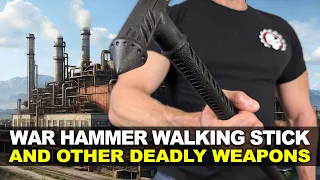
Not every everyday tool that earned a place in history had a blade. For centuries, sturdy walking canes were carried by travelers, merchants, gentlemen, and older adults for balance and support. Because they were so common, few people gave them a second thought. Yet in dangerous situations, a well-made cane could become a remarkably effective defensive tool without requiring any modification.
Unlike many improvised weapons, a walking cane was already designed to withstand significant force. A solid hardwood shaft could strike, block, hook, or create distance from an attacker, all while remaining an ordinary mobility aid. Martial arts systems around the world eventually developed techniques specifically for cane defense, recognizing that almost anyone could carry one without attracting unwanted attention.
This practicality is one reason canes remain popular for personal protection today. While modern self-defense tools have become increasingly specialized, the walking cane continues to offer the same advantage it always has: it performs its intended everyday purpose while retaining defensive potential if an emergency arises. Modern self-defense canes build on that centuries-old concept by combining durable construction with designs that remain useful for everyday carry.
The walking cane highlights an important difference between improvised weapons and ordinary tools that evolved into defensive implements. Most improvised weapons are picked up only after danger appears. A cane, however, is already in your hand. That immediate availability has made it one of history's most practical examples of an everyday object that could protect its owner when no traditional weapon was available.
The Kunai Was a Mason's Tool Before It Became a Ninja Icon
Popular culture usually portrays the kunai as a specialized throwing knife carried by ninja. Historically, however, its shape was far more closely connected to practical work than secret assassination. The traditional kunai was a sturdy, pointed iron tool used for digging, prying, scraping, breaking through soft materials, and assisting with masonry or gardening tasks. Its broad construction made it durable enough to survive abuse that would damage a thinner knife.
That rugged design also made the kunai useful in situations far beyond its original purpose. It could help climb rough surfaces, loosen boards, punch through barriers, or serve as an emergency hand weapon. The ring at the end of the handle allowed a cord to be attached for carrying, retrieval, or additional leverage. None of these features required the kunai to begin life as a dedicated combat blade.
Over time, stories about covert warriors transformed the humble tool into something far more dramatic. Movies, games, and comics emphasized throwing techniques and sleek knife-like designs, often replacing the heavier utility profile with something resembling a modern dagger. That image became so familiar that many people no longer realize the historical kunai was closer to a compact pry bar than a finely balanced throwing knife.
The kunai's journey from worksite tool to ninja symbol is a perfect example of how reputation can completely overshadow original purpose. You can explore that transformation in more detail in our article on the evolution of the kunai.
Its story also reinforces a pattern seen throughout history. Tools became weapons not because someone carefully redesigned them for battle, but because they were strong, familiar, and already available when people needed them most.
Why Ordinary Tools Sometimes Worked Better Than Real Weapons
History is full of beautifully crafted weapons, but when survival was on the line, practicality often mattered more than perfection. An ordinary tool didn't have to be elegant to be effective. It only needed to be durable, familiar, and close at hand. That's why so many farmers, laborers, pioneers, and soldiers reached for the implements they already carried instead of searching for purpose-built weapons they might not have.
Another advantage was reliability. Tools were designed to withstand hard daily use. A chopping axe could split logs for years without failing. A machete could clear miles of dense vegetation. A sturdy cane supported its owner day after day. Unlike finely crafted swords that required regular maintenance and careful handling, everyday tools were expected to survive dirt, moisture, impacts, and abuse. That durability translated surprisingly well to moments of self-defense.
Many of these tools also benefited from familiarity. People instinctively knew how to swing an axe, drive a shovel into the ground, or control a machete because they had performed those movements thousands of times. Under extreme stress, that experience could prove more valuable than carrying an unfamiliar weapon that required specialized training to use effectively.
Perhaps the biggest lesson is that a weapon's effectiveness often depends less on what it was designed to do and more on the person holding it. Throughout history, ingenuity has repeatedly transformed ordinary objects into formidable tools for survival. Even many of the world's most recognizable blades share roots in practical work rather than warfare, as we explore in our article on the world's most famous knives and the stories behind them.
These stories remind us that necessity has always been one of history's greatest inventors. Long before factories mass-produced specialized weapons, people adapted the tools they trusted every day. In many cases, those humble beginnings became the foundation for weapons whose reputations would outlive the jobs they were originally created to perform.
History's Greatest Weapons Were Born From Necessity
Looking back across centuries of human history, a clear pattern begins to emerge. Some of the world's most enduring weapons didn't start as military inventions. They began in fields, forests, workshops, and construction sites, where ordinary people relied on them to earn a living. Their effectiveness in combat wasn't the result of careful weapon design. It was the result of durability, familiarity, and the simple fact that they were already within reach when they were needed most.
That doesn't mean every farming tool or work implement eventually became a famous weapon. Most never did. But the examples that survived into history all shared something in common: they solved real problems long before they were ever used in a fight. Whether it was the kama harvesting crops, the machete clearing dense vegetation, the axe splitting timber, the entrenching tool digging defensive positions, or the humble walking cane supporting its owner, each proved its value as a tool before earning a reputation as something much more formidable.
Over time, many of these everyday implements evolved into symbols of entire cultures. The tomahawk became closely associated with North American history. The kama became a staple of Okinawan martial arts. The kukri became synonymous with the Gurkhas. Their stories remind us that history's most recognizable weapons often owe just as much to the people who worked with them as the warriors who later carried them into battle.
Today, purpose-built weapons dominate modern military equipment and self-defense technology, but the lesson remains the same. A well-designed tool can often accomplish far more than its inventor originally imagined. In many cases, the line between tool and weapon has always been thinner than most people realize, and that's one of the reasons these objects continue to fascinate historians, collectors, and martial arts enthusiasts alike.
If there's one takeaway from these remarkable stories, it's that necessity has always been the greatest weapons designer. History's deadliest weapons weren't always born in an armory. Sometimes, they started in the hands of ordinary people simply trying to get through another day's work.
Were Martial Arts Weapons Really Just Farm Tools?
It's a popular belief, but the answer is more complicated than a simple yes or no. Some martial arts weapons, such as the kama, clearly evolved from agricultural tools that were already widely used by farmers. Others, however, have histories that are less certain. The tonfa may have developed from the handle of a grinding stone, while the true origins of weapons like the nunchaku continue to be debated by historians.
What is clear is that many traditional weapons were based on everyday objects people already knew how to use. Whether they were adapted because of necessity, local customs, or simple practicality, these familiar tools often proved surprisingly effective when used for self-defense. Rather than assuming every martial arts weapon began as farm equipment, it's more accurate to say that many of history's most famous weapons borrowed ideas from the ordinary tools people relied on every day.
Why Did So Many Everyday Tools Become Weapons?
The biggest reason was availability. Throughout most of history, ordinary people didn't own expensive swords or spears, but they did own the tools they depended on for work. If danger appeared unexpectedly, it made far more sense to defend yourself with the axe, sickle, machete, or shovel already in your hands than to search for a purpose-built weapon you might not have.
These tools also had practical advantages. They were built to withstand heavy daily use, making them durable enough for combat. People already understood how to swing them effectively because they had spent years using them for chopping wood, harvesting crops, digging, or construction. In many situations, that familiarity was more valuable than carrying a weapon that required specialized training to master.
Over time, some of these improvised solutions became refined into recognized weapons, while others remained tools that simply proved capable of defending their owners when circumstances demanded it. Their evolution is a reminder that necessity has often shaped military history just as much as innovation.
What's the Difference Between an Improvised Weapon and a Tool That Became a Weapon?
Although the terms sound similar, they aren't the same. An improvised weapon is an ordinary object that's picked up and used for self-defense in the moment, often with no intention of using it as a weapon beforehand. A chair, frying pan, or flashlight are all examples of improvised weapons when used in an emergency.
A tool that became a weapon followed a much different path. These objects earned reputations over years or even centuries because people repeatedly discovered they were effective in combat. Weapons like the kama, machete, tomahawk, and entrenching tool weren't simply used once in a desperate situation. Their defensive value became widely recognized, influencing martial arts, military tactics, and even the way later versions were designed.
In other words, every tool that became a weapon could be considered an improvised weapon at one point in history, but not every improvised weapon goes on to become a recognized part of military or martial arts history. The difference lies in repeated use, proven effectiveness, and the lasting role those tools eventually played in combat and self-defense.
Are Any Modern Military Tools Still Designed to Double as Weapons?
Yes. While today's militaries issue purpose-built firearms and combat knives, many field tools are still designed with combat in mind. Entrenching tools, commonly called e-tools, are made for digging defensive positions, but their rugged construction and sharpened edges allow them to serve as emergency defensive weapons if necessary. Soldiers also carry multi-tools, axes, and breaching equipment that are intended for practical tasks but can be used effectively in dangerous situations.
This reflects a lesson armies have learned for centuries: equipment that serves more than one purpose reduces the amount of gear a soldier has to carry while increasing versatility in unpredictable situations. Although modern technology has changed the battlefield dramatically, the idea of a dependable tool that can also save a life in combat remains just as relevant today as it was hundreds of years ago.
Can Ordinary Household Tools Still Be Effective for Self-Defense?
In an emergency, almost any sturdy object can be used to create distance or protect yourself, which is why many everyday tools have been used for self-defense throughout history. Items like hammers, flashlights, walking sticks, and even gardening tools can become improvised defensive implements when there are no better options available.
That said, household tools are designed for work, not personal protection. They are often heavier, less balanced, and harder to control than equipment specifically made for self-defense. If someone chooses to carry something for personal protection, it's generally better to select a legal product designed for that purpose and become familiar with how to use it responsibly.
History shows that ordinary tools have saved countless lives when people had no other choice. Their stories aren't just fascinating because they became famous weapons. They're reminders that human ingenuity has always found ways to adapt everyday objects when survival depended on it.
Why Do So Many Historic Weapons Have Origins Outside the Battlefield?
For most of human history, making specialized weapons required time, money, and skilled craftsmanship. Everyday tools, on the other hand, were already being produced in large numbers because people depended on them for farming, construction, hunting, and countless other trades. When conflict arose, it was only natural that these familiar tools were adapted for combat rather than replaced with something entirely new.
Many of these tools also offered practical advantages that purpose-built weapons didn't always have. They were durable, easy to maintain, and designed to deliver force efficiently. Because people used them every day, they already possessed the strength, coordination, and confidence needed to wield them effectively. In many cases, that experience proved just as valuable as formal weapons training.
This is one reason the history of weapons is so fascinating. It isn't just a story of military innovation. It's also a story of ordinary workers, farmers, craftsmen, and explorers whose everyday tools unexpectedly shaped the course of history.
Did Every Culture Turn Everyday Tools Into Weapons?
No. While many cultures adapted common tools for self-defense or warfare, it wasn't a universal practice. The tools people relied on varied depending on geography, climate, local industries, and available materials, so the objects that eventually became weapons differed from region to region. A farming implement that was common in one part of the world might have been completely unknown somewhere else.
Even so, the underlying idea appeared again and again throughout history. When people were forced to defend themselves, they often relied on the tools they already owned and understood. Some of those adaptations remained temporary, while others proved so effective that they evolved into iconic weapons with lasting places in military history and martial arts traditions.
The specific tools changed from one culture to another, but the pattern remained remarkably consistent: necessity encouraged innovation, and ordinary objects sometimes became extraordinary weapons.
What Is the Best-Known Weapon That Started as a Tool?
There isn't a single definitive answer, but several weapons are strong contenders. The machete is one of the most recognizable examples because it remains both a common agricultural tool and, historically, a weapon used in military conflicts around the world. The kama is another famous example, having evolved from a harvesting sickle into a traditional Okinawan martial arts weapon. The tomahawk also began as a practical hand tool before becoming one of history's most iconic fighting axes.
Each of these objects followed a different path, but they all share the same story of adaptation. Their original purpose wasn't combat. Instead, people discovered that the same qualities that made them effective tools, such as durability, balance, and cutting power, also made them useful in dangerous situations. Over time, those practical designs earned places in military history, martial arts, and popular culture.
Their lasting popularity serves as a reminder that some of history's most famous weapons weren't invented for war at all. They simply proved themselves when people needed them most.
You May Also Be Interested In:
- The Evolution of Automatic Knives: From Battlefield Tools to Everyday Carry
- Were Martial Arts Weapons Really Farm Tools?
- The Deadliest Throwing Knives for Modern Combat! Knife Testing and Review
- Best Self Defense Weapons for Everyday Carry (EDC Guide)
- Improvised Self-Defense Weapons: Everyday Objects That Could Save Your Life
- Hidden Blades and Discreet Tools for Subtle Self Defense
- Choosing the Best Stun Gun for Everyday Carry
- What Is the Best Self Defense Weapon for Everyday Carry?
- Choosing the Best Pepper Spray for Everyday Carry
- What Is EDC? A Complete Guide to Everyday Carry Gear
Leave a Reply