





What Is a Kukri Knife and What Is It Used For?
May 20th, 2026
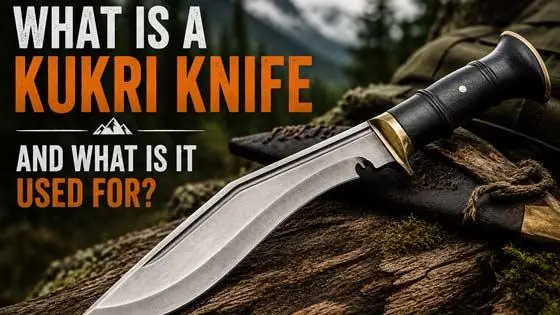
At first glance, a kukri knife looks different from almost every other knife out there. Its forward-curving blade, thick spine, and distinctive shape make it stand out immediately, leaving a lot of people wondering whether it is meant for chopping, combat, survival, or something else entirely. The truth is, the kukri has a long history and a very practical design that makes it surprisingly versatile for outdoor work, utility, and heavy cutting tasks.
Originally associated with Nepalese Gurkha soldiers, kukri knives have earned a reputation for toughness, power, and unique cutting ability. But what exactly is a kukri knife, why is the blade curved, and what is it actually used for? In this guide, we will break down the history, design, practical uses, and advantages of one of the most recognizable fixed blade knives in the world.
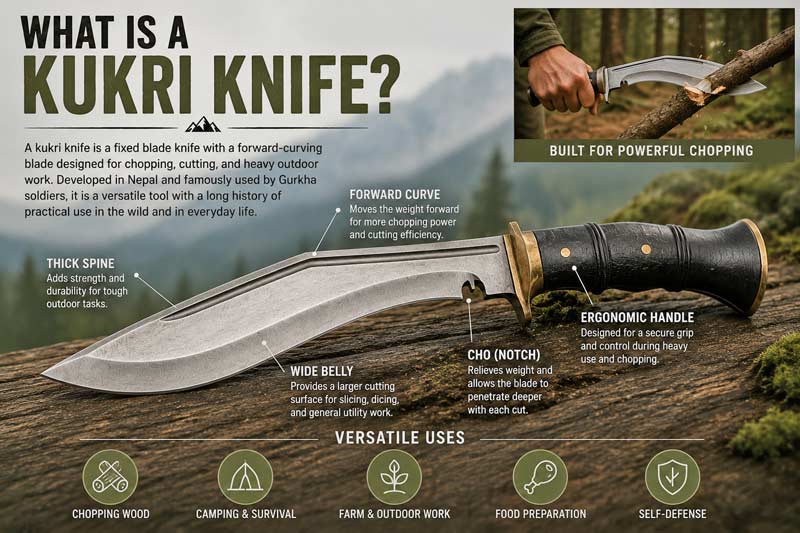
A kukri knife is a distinctive fixed blade knife known for its forward-curving blade and powerful chopping ability. Originally developed in Nepal, the kukri has been used for centuries as an all-purpose utility tool for clearing brush, chopping wood, preparing food, farm work, and outdoor survival. It is also famously associated with the Gurkhas, elite Nepalese soldiers who helped make the kukri recognized around the world.
At first glance, the curved shape can look unusual compared to a straight blade knife, but that design is actually what makes a kukri so effective. Because the blade curves forward, more weight sits toward the front of the knife. That forward balance gives kukri knives extra chopping power and momentum, allowing them to cut surprisingly well for their size. Many people compare the feeling to a mix between a knife and a small hatchet.
Unlike folding knives, kukris are part of the broader category of fixed blade knives, meaning the blade runs securely through the handle for added strength and durability. That solid construction makes them well-suited for tougher outdoor work where reliability matters.
Today, kukri knives are popular with campers, survival enthusiasts, collectors, and people who simply appreciate a rugged outdoor blade with a unique design. While the shape may look unusual at first, the curve is far from random. In fact, it is one of the main reasons kukris work so well for heavy cutting and chopping tasks.
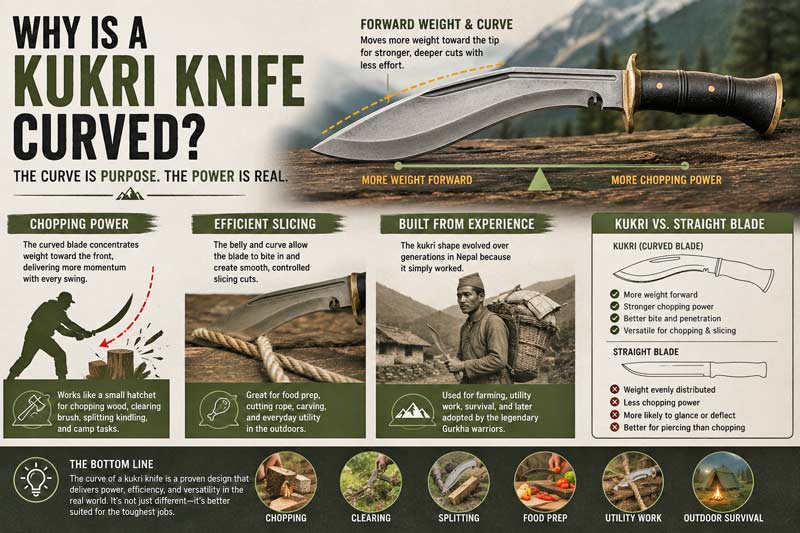
The curved shape of a kukri knife is not just for looks. In fact, the curve is one of the main reasons the knife works so well. Unlike a straight blade, a kukri shifts more weight toward the front of the blade, giving each swing extra momentum and chopping power. That forward-heavy balance helps the knife cut deeper and hit harder without needing as much effort from the person using it.
Many people compare the cutting action of a kukri to a small hatchet. Even though it is technically a knife, the blade shape allows it to handle heavier tasks like chopping branches, clearing brush, splitting kindling, and outdoor camp work much more effectively than a typical straight blade. The curved edge also helps the blade bite into material instead of glancing off during harder cuts.
The design has practical advantages for slicing too. Because of the blade's belly and curve, kukri knives can create smooth, powerful slicing cuts that work well for food prep, cutting rope, and general outdoor utility. That combination of chopping strength and slicing ability is part of what makes kukris so versatile compared to many other knives.
Historically, the design evolved through generations of real-world use in Nepal, where kukris served as everyday tools as well as military blades. Instead of being designed to look unusual, the shape developed because it worked. Over time, the kukri became trusted for farming, survival, utility work, and combat due to its efficiency and durability.
Compared to many other knives in a typical selection of knives, a kukri may look unconventional at first, but once you understand the purpose behind the curve, the design starts to make a lot more sense.
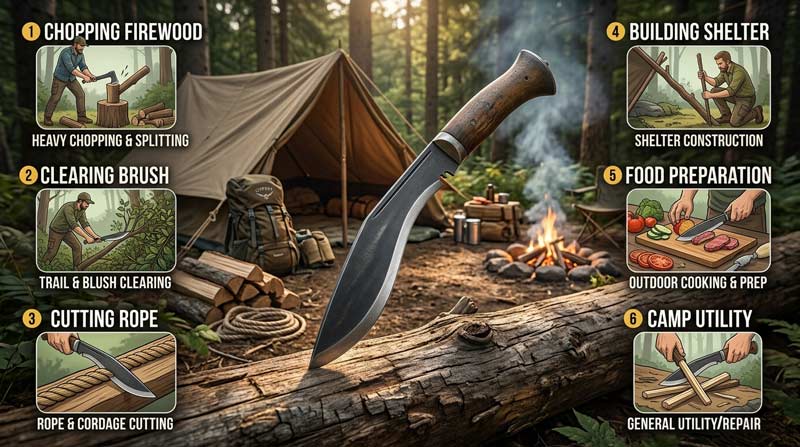
One of the biggest reasons kukri knives have stayed popular for so long is their versatility. Even though the shape looks unusual, kukris are designed to handle a surprisingly wide range of tasks. Thanks to the forward curve and weight distribution, they excel at heavier cutting jobs that would be more difficult with a standard straight blade knife.
Outdoor work is one of the most common uses for a kukri. Many people use them for chopping branches, clearing brush, splitting kindling, trimming vegetation, and general camp tasks. Because the blade carries extra weight near the front, a kukri can often handle light chopping work that might otherwise require carrying a small hatchet. That makes them appealing for campers, survival enthusiasts, and people who prefer multipurpose gear.
Kukris are also useful for practical cutting tasks around camp. The curved belly of the blade works well for slicing rope, preparing food, carving wood, and general utility work. While they are larger than many outdoor knives, experienced users often appreciate how much cutting power they can get from one tool.
Historically, kukri knives were everyday utility tools in Nepal long before they became internationally recognized. Farmers, workers, and villagers used them for daily chores ranging from cutting vegetation to preparing food and handling outdoor labor. Over time, their effectiveness also made them well-known military tools among Gurkha soldiers.
Compared to many other knives, kukris are often chosen by people who want something rugged and capable of handling tougher outdoor work. Their combination of chopping power, slicing ability, and durability makes them stand out from many traditional straight blade designs.
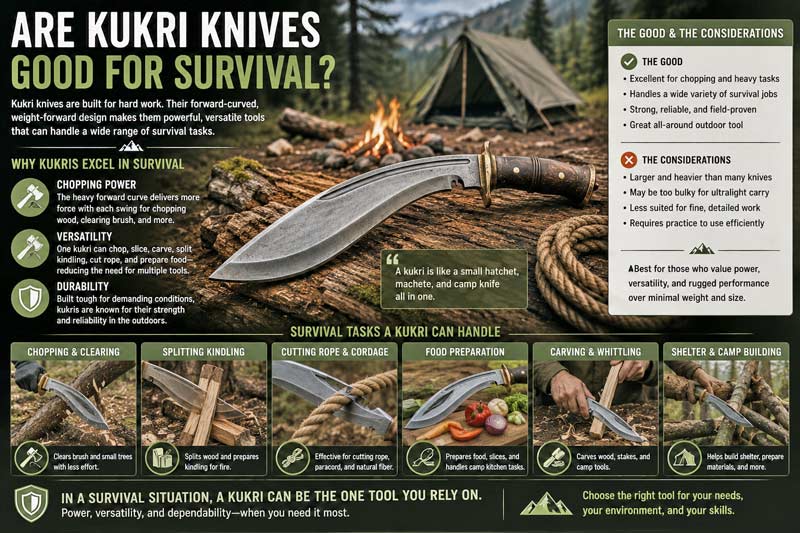
Kukri knives are often considered excellent survival knives because they can handle a wide range of outdoor tasks without needing multiple tools. Thanks to their forward-heavy blade design, kukris are especially effective for chopping wood, clearing brush, building shelter, and processing materials around camp. For many people, they offer a practical middle ground between a large knife and a small hatchet.
One of the biggest advantages of a kukri in a survival situation is versatility. A well-made kukri can split kindling, cut rope, prepare food, carve wood, and handle heavier cutting tasks that might overwhelm a smaller knife. Since the blade carries more force toward the front, many users find they can accomplish tough work with less effort compared to a traditional straight blade knife.
That said, a kukri is not always the perfect choice for every survival setup. Because they tend to be larger and heavier than many outdoor knives, they may feel bulky for ultralight hiking or situations where compact gear matters most. Some people prefer carrying a smaller blade for detailed tasks while others appreciate having one larger knife capable of doing almost everything reasonably well.
For people who enjoy rugged outdoor tools, kukris often stand out because of their chopping ability and durability. Since they are built as sturdy outdoor blades, many fall into the same category as other heavy-duty fixed blade knives designed for demanding conditions.
At the end of the day, whether a kukri is a good survival knife depends on your priorities. If you value chopping power, versatility, and rugged outdoor performance, a kukri can be an excellent choice. If lightweight carry and precision work matter more, another blade style may fit better.
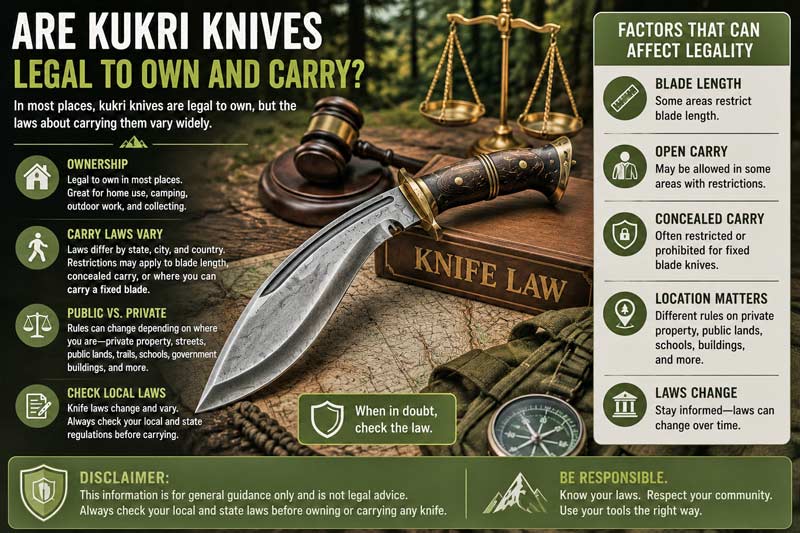
In most places, kukri knives are legal to own, but whether you can legally carry one depends heavily on your local laws. Since kukris are fixed blade knives and are often larger than standard outdoor knives, some cities and states have restrictions related to blade length, concealed carry, or where certain knives can legally be carried.
For example, owning a kukri at home, using one for camping, outdoor work, or collecting is usually far less restricted than carrying one in public. In some areas, carrying a large fixed blade openly may be allowed, while concealed carry or carrying certain blade lengths could be restricted. Laws can also differ depending on whether you are on private property, public land, hiking trails, schools, government buildings, or other regulated areas.
Because knife laws can change over time and vary significantly by location, it is always a good idea to check your local and state regulations before carrying any large fixed blade knife. This is especially true for oversized outdoor blades like kukris, machetes, or large survival knives.
For many people, kukri knives are primarily outdoor tools used for camping, survival, yard work, and utility rather than everyday carry. Since they are larger than many common knives, most owners tend to treat them more like rugged outdoor gear than a pocket knife.
At the end of the day, legality depends on where you live and how you plan to use or carry the knife. A little research ahead of time can help avoid surprises and make sure you stay on the right side of local regulations.
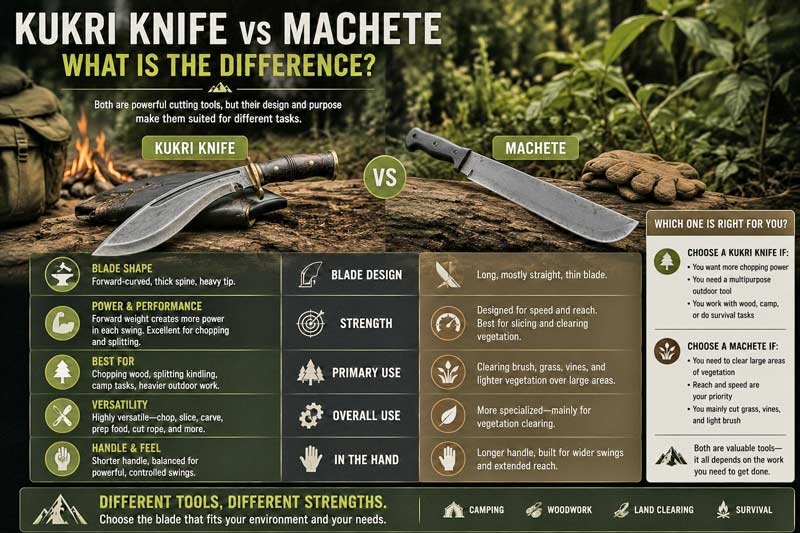
At first glance, kukri knives and machetes can seem pretty similar. Both are larger blades designed for outdoor work, clearing vegetation, chopping, and handling tougher cutting tasks. Because of that, many people wonder whether a kukri is basically just a shorter machete or if there is actually a meaningful difference between the two.
The biggest difference comes down to blade shape and intended use. A machete usually has a long, thin blade designed primarily for clearing brush, slicing vegetation, and covering larger areas quickly. Kukri knives, on the other hand, have a shorter but much heavier forward-curving blade that puts more force into each swing. Instead of focusing mostly on reach and speed, kukris are built around power and chopping efficiency.
That extra forward weight gives kukris a different feel in the hand. Many people find a kukri works better for splitting kindling, chopping thicker branches, camp tasks, and heavier outdoor work, while machetes often excel at clearing tall grass, vines, and lighter vegetation over larger areas.
Another difference is versatility. While machetes are usually specialized for vegetation clearing, kukri knives are often viewed as more multipurpose tools. Their curved blade can handle chopping, slicing, food prep, rope cutting, carving, and general outdoor utility surprisingly well.
Neither tool is automatically better. If your goal is clearing a lot of brush quickly, a machete may make more sense. If you want something that feels more like a heavy-duty outdoor knife capable of handling multiple tasks, a kukri often has the advantage. The best option usually depends on how you realistically plan to use it.
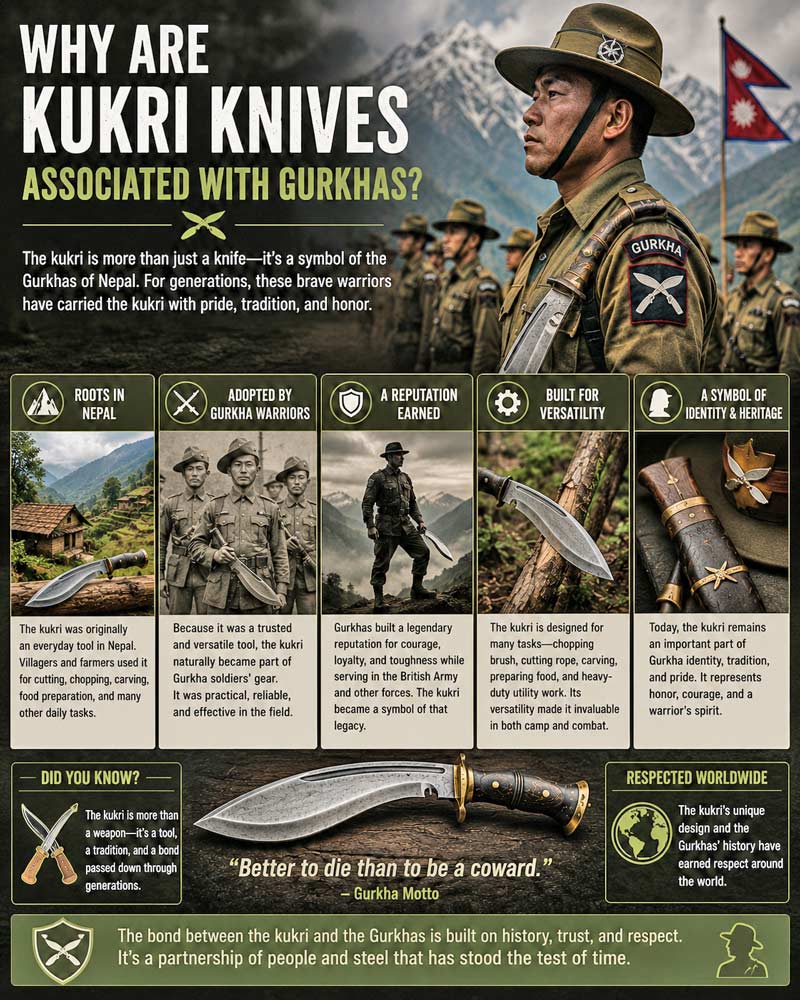
One reason kukri knives are so recognizable is their strong connection to the Gurkhas, elite soldiers from Nepal who have carried kukris for generations. Even people who know very little about knives have often heard stories about Gurkha soldiers and the curved blade they famously carried. Over time, that military connection helped turn the kukri into one of the most recognizable knife designs in the world.
The kukri was originally an everyday utility tool in Nepal long before it gained military fame. Farmers and villagers used it for cutting vegetation, preparing food, chopping wood, and handling daily outdoor tasks. Because it was already a trusted all-purpose tool, it naturally became useful for soldiers as well.
Gurkhas became widely respected for their toughness, discipline, and battlefield reputation while serving in the British Army and other military forces. As their reputation grew, the kukri became closely associated with them and developed a legendary reputation of its own. While modern military equipment has changed over time, the kukri still remains an important symbol of Gurkha identity and heritage.
Part of what made the kukri effective for military use was the same thing that makes it useful outdoors today: versatility. The blade could be used for camp tasks, clearing brush, cutting materials, food preparation, and heavy-duty utility work when needed. That practical usefulness helped solidify the kukri's reputation as more than just a weapon.
Today, many people are drawn to kukri knives because of both their practical design and historical significance. For some, it is the rugged outdoor utility that stands out. For others, it is the long history and military connection that make kukris especially interesting.
By now, it is probably easier to see why kukri knives have developed such a loyal following. Their unusual shape is not just for looks. The forward curve, chopping power, and rugged construction all serve a real purpose. For people who spend time outdoors, enjoy survival gear, or simply appreciate larger blades with practical utility, a kukri can be an incredibly capable tool.
That said, kukris are not for everyone. If you mainly want a compact knife for lightweight carry or detailed cutting tasks, a smaller blade may make more sense. Kukris tend to shine when tougher outdoor work is involved, especially jobs like chopping, clearing brush, splitting kindling, camp tasks, and general utility around the outdoors.
For many people, the biggest appeal of a kukri is versatility. It offers some of the chopping power of a small hatchet while still functioning like a knife for slicing, food prep, rope cutting, and everyday outdoor tasks. That combination makes it stand out from many traditional blade designs.
If you enjoy rugged outdoor blades and want to compare styles, browsing different knives can help you get a better feel for what fits your needs. Some people prefer a machete, some prefer a traditional fixed blade, and others end up loving the unique balance and cutting ability of a kukri.
At the end of the day, the best knife is the one that realistically matches how you plan to use it. If you value chopping power, durability, and outdoor versatility, a kukri knife might be exactly what you have been looking for.
What Is a Kukri Knife?
A kukri knife is a distinctive fixed blade knife known for its forward-curving blade and powerful chopping ability. Originally developed in Nepal, the kukri has been used for centuries as an all-purpose utility tool for clearing brush, chopping wood, preparing food, farm work, and outdoor survival. It is also famously associated with the Gurkhas, elite Nepalese soldiers who helped make the kukri recognized around the world.
At first glance, the curved shape can look unusual compared to a straight blade knife, but that design is actually what makes a kukri so effective. Because the blade curves forward, more weight sits toward the front of the knife. That forward balance gives kukri knives extra chopping power and momentum, allowing them to cut surprisingly well for their size. Many people compare the feeling to a mix between a knife and a small hatchet.
Unlike folding knives, kukris are part of the broader category of fixed blade knives, meaning the blade runs securely through the handle for added strength and durability. That solid construction makes them well-suited for tougher outdoor work where reliability matters.
Today, kukri knives are popular with campers, survival enthusiasts, collectors, and people who simply appreciate a rugged outdoor blade with a unique design. While the shape may look unusual at first, the curve is far from random. In fact, it is one of the main reasons kukris work so well for heavy cutting and chopping tasks.
Why Is a Kukri Knife Curved?
The curved shape of a kukri knife is not just for looks. In fact, the curve is one of the main reasons the knife works so well. Unlike a straight blade, a kukri shifts more weight toward the front of the blade, giving each swing extra momentum and chopping power. That forward-heavy balance helps the knife cut deeper and hit harder without needing as much effort from the person using it.
Many people compare the cutting action of a kukri to a small hatchet. Even though it is technically a knife, the blade shape allows it to handle heavier tasks like chopping branches, clearing brush, splitting kindling, and outdoor camp work much more effectively than a typical straight blade. The curved edge also helps the blade bite into material instead of glancing off during harder cuts.
The design has practical advantages for slicing too. Because of the blade's belly and curve, kukri knives can create smooth, powerful slicing cuts that work well for food prep, cutting rope, and general outdoor utility. That combination of chopping strength and slicing ability is part of what makes kukris so versatile compared to many other knives.
Historically, the design evolved through generations of real-world use in Nepal, where kukris served as everyday tools as well as military blades. Instead of being designed to look unusual, the shape developed because it worked. Over time, the kukri became trusted for farming, survival, utility work, and combat due to its efficiency and durability.
Compared to many other knives in a typical selection of knives, a kukri may look unconventional at first, but once you understand the purpose behind the curve, the design starts to make a lot more sense.
What Is a Kukri Knife Used For?
One of the biggest reasons kukri knives have stayed popular for so long is their versatility. Even though the shape looks unusual, kukris are designed to handle a surprisingly wide range of tasks. Thanks to the forward curve and weight distribution, they excel at heavier cutting jobs that would be more difficult with a standard straight blade knife.
Outdoor work is one of the most common uses for a kukri. Many people use them for chopping branches, clearing brush, splitting kindling, trimming vegetation, and general camp tasks. Because the blade carries extra weight near the front, a kukri can often handle light chopping work that might otherwise require carrying a small hatchet. That makes them appealing for campers, survival enthusiasts, and people who prefer multipurpose gear.
Kukris are also useful for practical cutting tasks around camp. The curved belly of the blade works well for slicing rope, preparing food, carving wood, and general utility work. While they are larger than many outdoor knives, experienced users often appreciate how much cutting power they can get from one tool.
Historically, kukri knives were everyday utility tools in Nepal long before they became internationally recognized. Farmers, workers, and villagers used them for daily chores ranging from cutting vegetation to preparing food and handling outdoor labor. Over time, their effectiveness also made them well-known military tools among Gurkha soldiers.
Compared to many other knives, kukris are often chosen by people who want something rugged and capable of handling tougher outdoor work. Their combination of chopping power, slicing ability, and durability makes them stand out from many traditional straight blade designs.
Are Kukri Knives Good for Survival?
Kukri knives are often considered excellent survival knives because they can handle a wide range of outdoor tasks without needing multiple tools. Thanks to their forward-heavy blade design, kukris are especially effective for chopping wood, clearing brush, building shelter, and processing materials around camp. For many people, they offer a practical middle ground between a large knife and a small hatchet.
One of the biggest advantages of a kukri in a survival situation is versatility. A well-made kukri can split kindling, cut rope, prepare food, carve wood, and handle heavier cutting tasks that might overwhelm a smaller knife. Since the blade carries more force toward the front, many users find they can accomplish tough work with less effort compared to a traditional straight blade knife.
That said, a kukri is not always the perfect choice for every survival setup. Because they tend to be larger and heavier than many outdoor knives, they may feel bulky for ultralight hiking or situations where compact gear matters most. Some people prefer carrying a smaller blade for detailed tasks while others appreciate having one larger knife capable of doing almost everything reasonably well.
For people who enjoy rugged outdoor tools, kukris often stand out because of their chopping ability and durability. Since they are built as sturdy outdoor blades, many fall into the same category as other heavy-duty fixed blade knives designed for demanding conditions.
At the end of the day, whether a kukri is a good survival knife depends on your priorities. If you value chopping power, versatility, and rugged outdoor performance, a kukri can be an excellent choice. If lightweight carry and precision work matter more, another blade style may fit better.
Are Kukri Knives Legal to Own and Carry?
In most places, kukri knives are legal to own, but whether you can legally carry one depends heavily on your local laws. Since kukris are fixed blade knives and are often larger than standard outdoor knives, some cities and states have restrictions related to blade length, concealed carry, or where certain knives can legally be carried.
For example, owning a kukri at home, using one for camping, outdoor work, or collecting is usually far less restricted than carrying one in public. In some areas, carrying a large fixed blade openly may be allowed, while concealed carry or carrying certain blade lengths could be restricted. Laws can also differ depending on whether you are on private property, public land, hiking trails, schools, government buildings, or other regulated areas.
Because knife laws can change over time and vary significantly by location, it is always a good idea to check your local and state regulations before carrying any large fixed blade knife. This is especially true for oversized outdoor blades like kukris, machetes, or large survival knives.
For many people, kukri knives are primarily outdoor tools used for camping, survival, yard work, and utility rather than everyday carry. Since they are larger than many common knives, most owners tend to treat them more like rugged outdoor gear than a pocket knife.
At the end of the day, legality depends on where you live and how you plan to use or carry the knife. A little research ahead of time can help avoid surprises and make sure you stay on the right side of local regulations.
Kukri Knife vs Machete: What Is the Difference?
At first glance, kukri knives and machetes can seem pretty similar. Both are larger blades designed for outdoor work, clearing vegetation, chopping, and handling tougher cutting tasks. Because of that, many people wonder whether a kukri is basically just a shorter machete or if there is actually a meaningful difference between the two.
The biggest difference comes down to blade shape and intended use. A machete usually has a long, thin blade designed primarily for clearing brush, slicing vegetation, and covering larger areas quickly. Kukri knives, on the other hand, have a shorter but much heavier forward-curving blade that puts more force into each swing. Instead of focusing mostly on reach and speed, kukris are built around power and chopping efficiency.
That extra forward weight gives kukris a different feel in the hand. Many people find a kukri works better for splitting kindling, chopping thicker branches, camp tasks, and heavier outdoor work, while machetes often excel at clearing tall grass, vines, and lighter vegetation over larger areas.
Another difference is versatility. While machetes are usually specialized for vegetation clearing, kukri knives are often viewed as more multipurpose tools. Their curved blade can handle chopping, slicing, food prep, rope cutting, carving, and general outdoor utility surprisingly well.
Neither tool is automatically better. If your goal is clearing a lot of brush quickly, a machete may make more sense. If you want something that feels more like a heavy-duty outdoor knife capable of handling multiple tasks, a kukri often has the advantage. The best option usually depends on how you realistically plan to use it.
Why Are Kukri Knives Associated With Gurkhas?
One reason kukri knives are so recognizable is their strong connection to the Gurkhas, elite soldiers from Nepal who have carried kukris for generations. Even people who know very little about knives have often heard stories about Gurkha soldiers and the curved blade they famously carried. Over time, that military connection helped turn the kukri into one of the most recognizable knife designs in the world.
The kukri was originally an everyday utility tool in Nepal long before it gained military fame. Farmers and villagers used it for cutting vegetation, preparing food, chopping wood, and handling daily outdoor tasks. Because it was already a trusted all-purpose tool, it naturally became useful for soldiers as well.
Gurkhas became widely respected for their toughness, discipline, and battlefield reputation while serving in the British Army and other military forces. As their reputation grew, the kukri became closely associated with them and developed a legendary reputation of its own. While modern military equipment has changed over time, the kukri still remains an important symbol of Gurkha identity and heritage.
Part of what made the kukri effective for military use was the same thing that makes it useful outdoors today: versatility. The blade could be used for camp tasks, clearing brush, cutting materials, food preparation, and heavy-duty utility work when needed. That practical usefulness helped solidify the kukri's reputation as more than just a weapon.
Today, many people are drawn to kukri knives because of both their practical design and historical significance. For some, it is the rugged outdoor utility that stands out. For others, it is the long history and military connection that make kukris especially interesting.
So, Is a Kukri Knife Right for You?
By now, it is probably easier to see why kukri knives have developed such a loyal following. Their unusual shape is not just for looks. The forward curve, chopping power, and rugged construction all serve a real purpose. For people who spend time outdoors, enjoy survival gear, or simply appreciate larger blades with practical utility, a kukri can be an incredibly capable tool.
That said, kukris are not for everyone. If you mainly want a compact knife for lightweight carry or detailed cutting tasks, a smaller blade may make more sense. Kukris tend to shine when tougher outdoor work is involved, especially jobs like chopping, clearing brush, splitting kindling, camp tasks, and general utility around the outdoors.
For many people, the biggest appeal of a kukri is versatility. It offers some of the chopping power of a small hatchet while still functioning like a knife for slicing, food prep, rope cutting, and everyday outdoor tasks. That combination makes it stand out from many traditional blade designs.
If you enjoy rugged outdoor blades and want to compare styles, browsing different knives can help you get a better feel for what fits your needs. Some people prefer a machete, some prefer a traditional fixed blade, and others end up loving the unique balance and cutting ability of a kukri.
At the end of the day, the best knife is the one that realistically matches how you plan to use it. If you value chopping power, durability, and outdoor versatility, a kukri knife might be exactly what you have been looking for.
You May Also Be Interested In:
- Why Every Day Should Be an EDC Knife Day: How a Simple Knife Can Make Your Life Easier and Safer
- Best EDC Knife: How to Choose the Right Everyday Carry Knife
- Bowie Knife vs Hunting Knife: What's the Difference?
- What Is a Stiletto Knife and Why Is It So Popular?
- What Is the Ring on a Karambit Knife For?
- Why Is the Karambit Knife Curved?
- What Is an OTF Knife? How Out-the-Front Knives Work
- What Is a Boot Knife and Why Do People Carry Them?
- 10 Things You Didn't Know About the Karambit Knife
- What Is a Neck Knife and Why Do People Carry Them?
Leave a Reply