




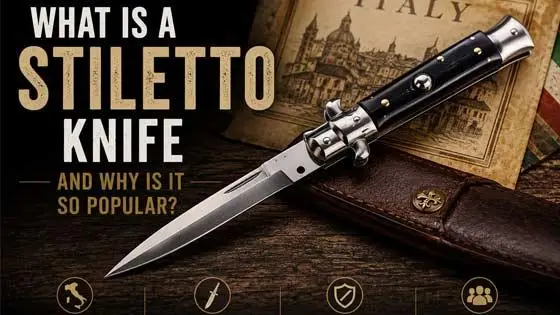
What Is a Stiletto Knife and Why Is It So Popular?
May 20th, 2026
Stiletto knives are some of the most recognizable knives in the world, known for their slim profile, pointed blade, and unmistakable style. Thanks to movies, pop culture, and their classic Italian-inspired design, many people instantly recognize a stiletto even if they know very little about knives. But despite how iconic they look, a lot of people still wonder what exactly makes a knife a stiletto and why these knives have remained popular for so many years.
Are stiletto knives practical tools, collector pieces, or simply famous because of their appearance? In this guide, we will break down what a stiletto knife is, where the design came from, how stiletto knives work, and why they continue to attract collectors, knife enthusiasts, and everyday users alike.
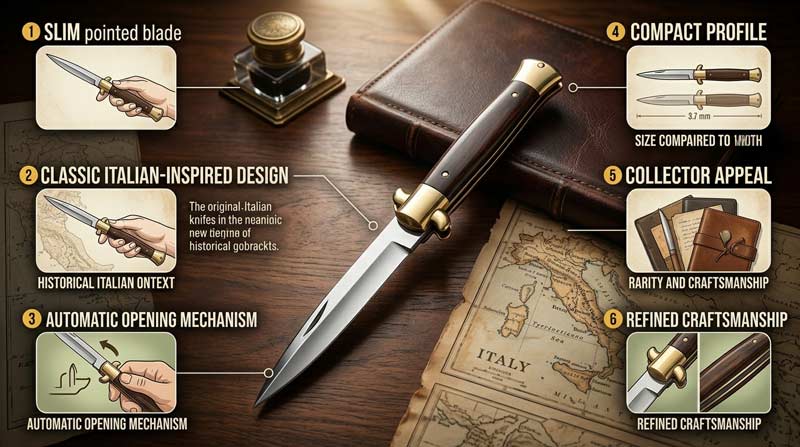
A stiletto knife is a slim, narrow-bladed knife best known for its pointed shape and classic design. Traditionally associated with Italian craftsmanship, stiletto knives became popular because of their sleek appearance, compact profile, and distinctive opening mechanisms. While many people recognize them instantly from movies and pop culture, stilettos actually have a much longer history than most realize.
One of the defining features of a stiletto knife is its blade shape. Unlike broader utility knives designed mainly for chopping or heavy cutting, stilettos typically feature a narrow, pointed blade built around precision and piercing. Their handles are often slim and symmetrical, giving them a very recognizable look that has stayed popular for generations.
Many modern stilettos fall into the category of automatic knives, meaning the blade deploys quickly using a spring-assisted button or release mechanism. However, not every stiletto is automatic. Some are manual-opening designs, while others are built more for collecting and display than everyday use.
Compared to bulkier outdoor or work knives, stilettos are often appreciated for their style, collectibility, and iconic design. Over the years, they have developed a reputation that blends practicality, history, craftsmanship, and pop culture appeal all into one recognizable knife style.
While the slim blade may look simple at first glance, there is actually a lot of history and design behind what makes a stiletto knife different from other knife styles.
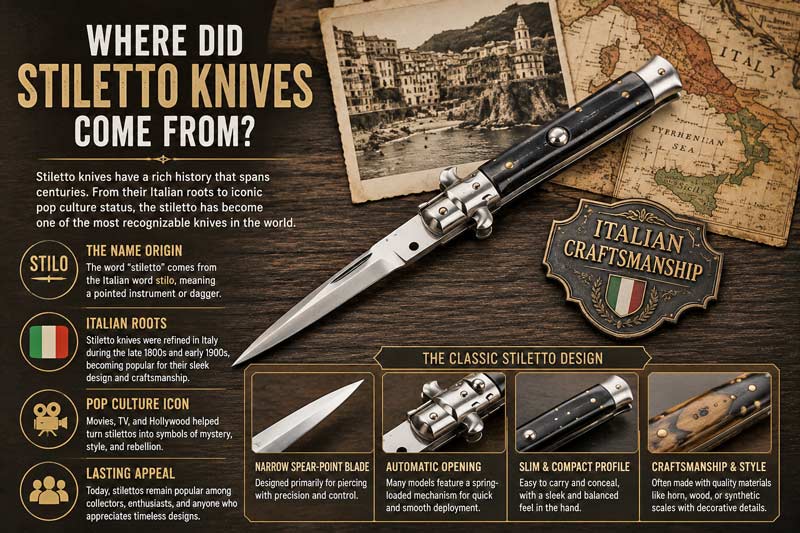
Stiletto knives have a surprisingly long history that goes back hundreds of years. The word stiletto comes from the Italian word stilo, meaning a pointed instrument or dagger. Early stilettos were designed primarily as slim thrusting knives with narrow blades meant for piercing rather than heavy cutting. Unlike broad utility knives, their shape focused on precision and compact carry.
The version most people recognize today became especially popular in Italy during the late 1800s and early 1900s. Italian knife makers refined the design into the sleek folding stilettos that later became famous around the world. These knives often featured narrow spear-point blades, polished handles made from horn, wood, or synthetic materials, and decorative craftsmanship that gave them a very recognizable look.
Much of the stiletto's popularity outside of Italy came from movies, television, and pop culture. Classic crime films, gangster movies, and vintage Hollywood helped turn stiletto knives into iconic objects that many people instantly recognize even if they are not knife enthusiasts. That cultural exposure played a major role in making stilettos feel mysterious, stylish, and collectible.
Many modern stilettos also overlap with other styles of folding knives, although their slim profile and distinctive appearance make them stand out immediately. Some people are drawn to them because of their history, while others simply appreciate the craftsmanship and classic look.
Today, stiletto knives remain popular among collectors, knife enthusiasts, and people who appreciate traditional designs that have stood the test of time. Even after decades of changing trends, the stiletto still manages to feel instantly recognizable.
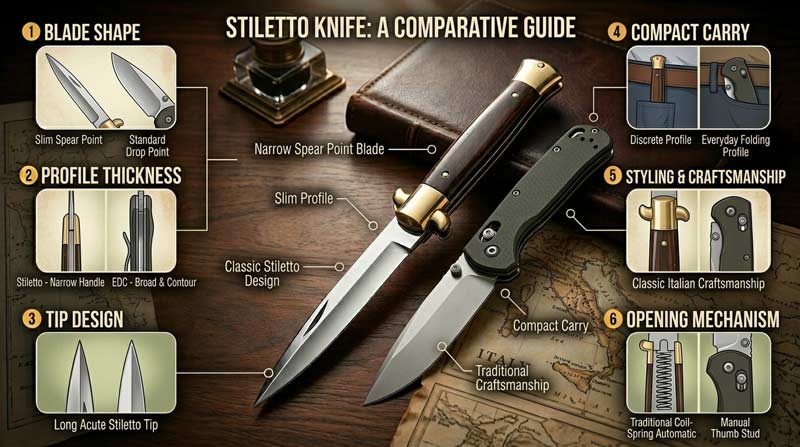
At first glance, a stiletto knife can seem similar to other folding knives, but there are a few design features that make it stand out immediately. The slim handle, narrow spear-point blade, and sleek profile all give stilettos a very recognizable appearance. Compared to broader utility knives built for heavier cutting, stilettos are usually designed with a stronger focus on compact carry, style, and precision.
One of the biggest differences is blade shape. Stiletto knives are known for their long, narrow blades that taper to a sharp point. While many knives prioritize slicing, chopping, or utility tasks, traditional stilettos were originally designed around piercing and precision. That gives them a much different look and feel compared to bulkier everyday knives or rugged outdoor blades.
The opening mechanism is another thing that sets many stilettos apart. While not all models deploy the same way, many people associate stilettos with fast-opening designs that use an internal spring and button-style release. Manual-opening versions also exist, especially among collectors and traditional knife enthusiasts.
Compared to many modern utility-focused pocket and folding knives, stilettos often lean more heavily into classic styling and visual appeal. Decorative handle materials, polished hardware, and traditional craftsmanship are often part of what attracts collectors and enthusiasts to the design.
That does not mean stilettos are only about looks. Many owners appreciate them because they combine recognizable style with compact carry and a design that has remained popular for generations. Even among countless knife styles, a stiletto usually stands out the moment you see it.
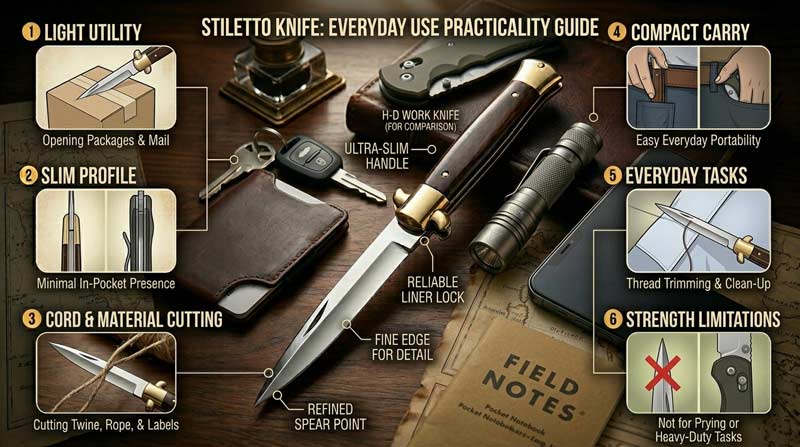
Whether a stiletto knife is practical for everyday use really depends on what you expect from your knife. For some people, a stiletto works perfectly well for simple daily tasks like opening packages, cutting tape, slicing cord, or handling light utility work. Their slim profile and compact shape also make many models easy to carry in a pocket.
That said, stilettos are usually not designed with heavy-duty utility in mind. Compared to thicker outdoor knives or broad work blades, the narrow spear-point shape is often better suited for lighter cutting and precision rather than tougher jobs. People who regularly cut cardboard, heavy materials, or do rough work may prefer a more rugged everyday knife design.
Another factor is personal preference. Some people simply enjoy carrying a stiletto because of its classic look, history, and distinctive opening mechanism. Others prefer knives built around maximum practicality or versatility. There is no universal right answer, it mostly comes down to what feels comfortable and useful for your daily needs.
If you enjoy comparing different knife styles, browsing a broader selection of knives can help give you a better sense of what fits your preferences. Some people gravitate toward rugged work knives, others prefer slim pocket carry, and many simply appreciate the classic appeal of a stiletto.
For everyday carry, a stiletto often works best for people who value compact size, recognizable style, and lighter cutting tasks more than heavy-duty utility. Like most knives, the best option depends on how you realistically plan to use it.
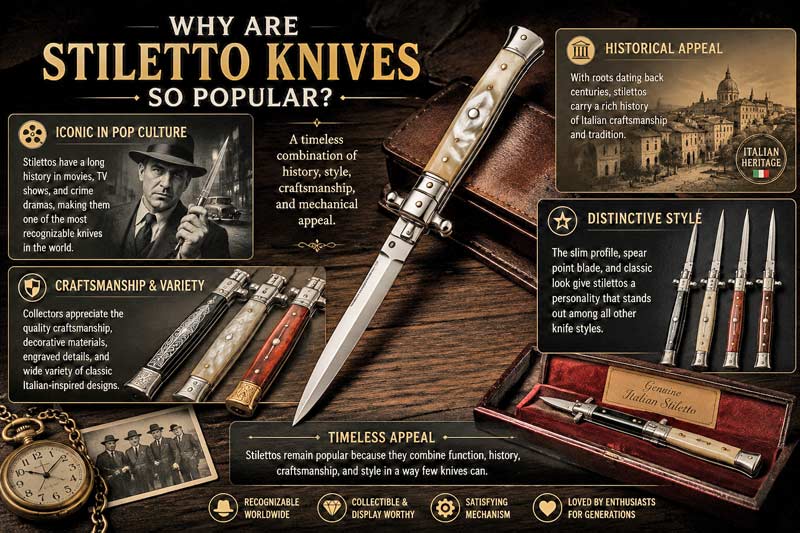
Stiletto knives have stayed popular for decades because they offer something many other knives do not: a mix of history, recognizable style, and mechanical appeal. Even people who are not knife enthusiasts often recognize a stiletto immediately thanks to its slim profile, pointed blade, and iconic look. There is something timeless about the design that continues to attract attention generation after generation.
Pop culture has played a major role in keeping stilettos in the spotlight. Movies, television, crime dramas, and vintage gangster films helped turn the stiletto into one of the most recognizable knife styles in the world. Even people who have never owned one often recognize the shape instantly because they have seen it referenced in entertainment for years.
Collectors are also drawn to stilettos because of their craftsmanship and variety. Many models feature polished hardware, decorative handle materials, engraved bolsters, or classic Italian-inspired styling. Some people collect them for historical reasons, while others simply enjoy the sleek appearance and satisfying opening action.
For many knife enthusiasts, part of the appeal comes down to personality. Compared to more rugged work knives or tactical-looking blades, stilettos have a very distinct aesthetic that feels classic, refined, and instantly recognizable. That helps them stand out even among countless other knife styles.
At the end of the day, stilettos remain popular because they combine function, history, craftsmanship, and style in a way that very few knives can. Whether someone carries one, collects them, or simply appreciates the design, there is no denying that the stiletto has earned its place as one of the most iconic knife styles ever made.
By now, it is probably easy to see why stiletto knives have remained popular for so long. Their slim profile, recognizable design, and long history give them a personality that feels very different from many modern knives. For some people, the appeal comes from craftsmanship and collectibility. For others, it is the compact size, classic styling, or satisfying opening mechanism that makes a stiletto stand out.
That said, a stiletto is not always the perfect fit for everyone. If your main priority is heavy-duty utility work, outdoor tasks, or rough everyday use, a broader work knife may make more sense. Stilettos are often better suited for lighter cutting tasks, compact carry, and people who appreciate traditional styling more than maximum utility.
For many knife enthusiasts, the biggest draw is simply the combination of history and design. Few knives are as instantly recognizable, and very few have stayed popular across generations the way stilettos have. Whether someone is interested in collecting, carrying, or learning about classic knife designs, stilettos tend to leave a lasting impression.
Some people love the refined, classic look of a stiletto, while others prefer broader utility-focused designs. It really comes down to personal preference and how you realistically plan to use your knife day to day.
At the end of the day, the best knife is the one that fits how you realistically plan to use it. If you appreciate classic styling, compact carry, and timeless design, a stiletto knife may be exactly the kind of knife that catches your attention.
What Is a Stiletto Knife?
A stiletto knife is a slim, narrow-bladed knife best known for its pointed shape and classic design. Traditionally associated with Italian craftsmanship, stiletto knives became popular because of their sleek appearance, compact profile, and distinctive opening mechanisms. While many people recognize them instantly from movies and pop culture, stilettos actually have a much longer history than most realize.
One of the defining features of a stiletto knife is its blade shape. Unlike broader utility knives designed mainly for chopping or heavy cutting, stilettos typically feature a narrow, pointed blade built around precision and piercing. Their handles are often slim and symmetrical, giving them a very recognizable look that has stayed popular for generations.
Many modern stilettos fall into the category of automatic knives, meaning the blade deploys quickly using a spring-assisted button or release mechanism. However, not every stiletto is automatic. Some are manual-opening designs, while others are built more for collecting and display than everyday use.
Compared to bulkier outdoor or work knives, stilettos are often appreciated for their style, collectibility, and iconic design. Over the years, they have developed a reputation that blends practicality, history, craftsmanship, and pop culture appeal all into one recognizable knife style.
While the slim blade may look simple at first glance, there is actually a lot of history and design behind what makes a stiletto knife different from other knife styles.
Where Did Stiletto Knives Come From?
Stiletto knives have a surprisingly long history that goes back hundreds of years. The word stiletto comes from the Italian word stilo, meaning a pointed instrument or dagger. Early stilettos were designed primarily as slim thrusting knives with narrow blades meant for piercing rather than heavy cutting. Unlike broad utility knives, their shape focused on precision and compact carry.
The version most people recognize today became especially popular in Italy during the late 1800s and early 1900s. Italian knife makers refined the design into the sleek folding stilettos that later became famous around the world. These knives often featured narrow spear-point blades, polished handles made from horn, wood, or synthetic materials, and decorative craftsmanship that gave them a very recognizable look.
Much of the stiletto's popularity outside of Italy came from movies, television, and pop culture. Classic crime films, gangster movies, and vintage Hollywood helped turn stiletto knives into iconic objects that many people instantly recognize even if they are not knife enthusiasts. That cultural exposure played a major role in making stilettos feel mysterious, stylish, and collectible.
Many modern stilettos also overlap with other styles of folding knives, although their slim profile and distinctive appearance make them stand out immediately. Some people are drawn to them because of their history, while others simply appreciate the craftsmanship and classic look.
Today, stiletto knives remain popular among collectors, knife enthusiasts, and people who appreciate traditional designs that have stood the test of time. Even after decades of changing trends, the stiletto still manages to feel instantly recognizable.
What Makes a Stiletto Knife Different From Other Knives?
At first glance, a stiletto knife can seem similar to other folding knives, but there are a few design features that make it stand out immediately. The slim handle, narrow spear-point blade, and sleek profile all give stilettos a very recognizable appearance. Compared to broader utility knives built for heavier cutting, stilettos are usually designed with a stronger focus on compact carry, style, and precision.
One of the biggest differences is blade shape. Stiletto knives are known for their long, narrow blades that taper to a sharp point. While many knives prioritize slicing, chopping, or utility tasks, traditional stilettos were originally designed around piercing and precision. That gives them a much different look and feel compared to bulkier everyday knives or rugged outdoor blades.
The opening mechanism is another thing that sets many stilettos apart. While not all models deploy the same way, many people associate stilettos with fast-opening designs that use an internal spring and button-style release. Manual-opening versions also exist, especially among collectors and traditional knife enthusiasts.
Compared to many modern utility-focused pocket and folding knives, stilettos often lean more heavily into classic styling and visual appeal. Decorative handle materials, polished hardware, and traditional craftsmanship are often part of what attracts collectors and enthusiasts to the design.
That does not mean stilettos are only about looks. Many owners appreciate them because they combine recognizable style with compact carry and a design that has remained popular for generations. Even among countless knife styles, a stiletto usually stands out the moment you see it.
Are Stiletto Knives Practical for Everyday Use?
Whether a stiletto knife is practical for everyday use really depends on what you expect from your knife. For some people, a stiletto works perfectly well for simple daily tasks like opening packages, cutting tape, slicing cord, or handling light utility work. Their slim profile and compact shape also make many models easy to carry in a pocket.
That said, stilettos are usually not designed with heavy-duty utility in mind. Compared to thicker outdoor knives or broad work blades, the narrow spear-point shape is often better suited for lighter cutting and precision rather than tougher jobs. People who regularly cut cardboard, heavy materials, or do rough work may prefer a more rugged everyday knife design.
Another factor is personal preference. Some people simply enjoy carrying a stiletto because of its classic look, history, and distinctive opening mechanism. Others prefer knives built around maximum practicality or versatility. There is no universal right answer, it mostly comes down to what feels comfortable and useful for your daily needs.
If you enjoy comparing different knife styles, browsing a broader selection of knives can help give you a better sense of what fits your preferences. Some people gravitate toward rugged work knives, others prefer slim pocket carry, and many simply appreciate the classic appeal of a stiletto.
For everyday carry, a stiletto often works best for people who value compact size, recognizable style, and lighter cutting tasks more than heavy-duty utility. Like most knives, the best option depends on how you realistically plan to use it.
Why Are Stiletto Knives So Popular?
Stiletto knives have stayed popular for decades because they offer something many other knives do not: a mix of history, recognizable style, and mechanical appeal. Even people who are not knife enthusiasts often recognize a stiletto immediately thanks to its slim profile, pointed blade, and iconic look. There is something timeless about the design that continues to attract attention generation after generation.
Pop culture has played a major role in keeping stilettos in the spotlight. Movies, television, crime dramas, and vintage gangster films helped turn the stiletto into one of the most recognizable knife styles in the world. Even people who have never owned one often recognize the shape instantly because they have seen it referenced in entertainment for years.
Collectors are also drawn to stilettos because of their craftsmanship and variety. Many models feature polished hardware, decorative handle materials, engraved bolsters, or classic Italian-inspired styling. Some people collect them for historical reasons, while others simply enjoy the sleek appearance and satisfying opening action.
For many knife enthusiasts, part of the appeal comes down to personality. Compared to more rugged work knives or tactical-looking blades, stilettos have a very distinct aesthetic that feels classic, refined, and instantly recognizable. That helps them stand out even among countless other knife styles.
At the end of the day, stilettos remain popular because they combine function, history, craftsmanship, and style in a way that very few knives can. Whether someone carries one, collects them, or simply appreciates the design, there is no denying that the stiletto has earned its place as one of the most iconic knife styles ever made.
So, Are Stiletto Knives Right for You?
By now, it is probably easy to see why stiletto knives have remained popular for so long. Their slim profile, recognizable design, and long history give them a personality that feels very different from many modern knives. For some people, the appeal comes from craftsmanship and collectibility. For others, it is the compact size, classic styling, or satisfying opening mechanism that makes a stiletto stand out.
That said, a stiletto is not always the perfect fit for everyone. If your main priority is heavy-duty utility work, outdoor tasks, or rough everyday use, a broader work knife may make more sense. Stilettos are often better suited for lighter cutting tasks, compact carry, and people who appreciate traditional styling more than maximum utility.
For many knife enthusiasts, the biggest draw is simply the combination of history and design. Few knives are as instantly recognizable, and very few have stayed popular across generations the way stilettos have. Whether someone is interested in collecting, carrying, or learning about classic knife designs, stilettos tend to leave a lasting impression.
Some people love the refined, classic look of a stiletto, while others prefer broader utility-focused designs. It really comes down to personal preference and how you realistically plan to use your knife day to day.
At the end of the day, the best knife is the one that fits how you realistically plan to use it. If you appreciate classic styling, compact carry, and timeless design, a stiletto knife may be exactly the kind of knife that catches your attention.
You May Also Be Interested In:
- Stiletto vs. Switchblade: Why Most People Get Them Confused
- The Most Popular Military Knives of All Time
- Why Karambit Knives Became So Popular in Video Games
- Italian Switchblade Stiletto and Other Outlawed Weapons
- Why Every Day Should Be an EDC Knife Day: How a Simple Knife Can Make Your Life Easier and Safer
- Best EDC Knife: How to Choose the Right Everyday Carry Knife
- Bowie Knife vs Hunting Knife: What's the Difference?
- What Is a Kukri Knife and What Is It Used For?
- What Is the Ring on a Karambit Knife For?
- Why Is the Karambit Knife Curved?
Leave a Reply