




Bowie Knife vs Hunting Knife: What's the Difference?
May 19th, 2026
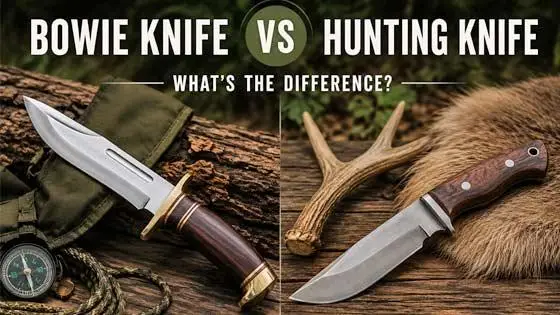
Bowie knives and hunting knives are often grouped together, but they are not exactly the same thing. At first glance, both are fixed blade knives designed for outdoor use, cutting tasks, and durability, which makes it easy to assume they are interchangeable. The reality is that each knife style was designed with different priorities in mind. A Bowie knife is known for its large blade, distinctive clip point, and rugged versatility, while a hunting knife is usually built with more specific field tasks in mind, such as skinning, dressing game, and precision cutting.
If you have ever wondered whether a Bowie knife can be used for hunting, what makes it different from a traditional hunting knife, or which style makes more sense for your needs, you are not alone. In this guide, we will break down the key differences between Bowie knives and hunting knives, compare their strengths and weaknesses, and explain when each one makes the most sense to carry.
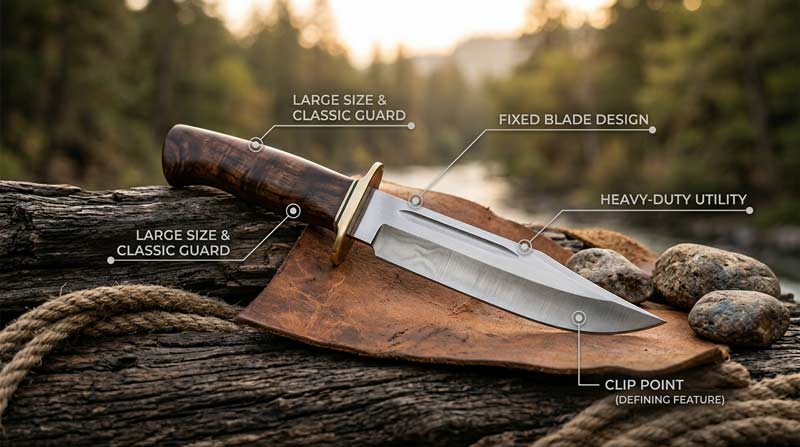
The easiest way to recognize a Bowie knife is by its size and blade shape. Traditional Bowie knives are usually larger than standard hunting knives and feature a distinctive clip point blade, where the top portion of the blade appears cut away near the tip. That shape creates a sharp, narrow point while still keeping plenty of cutting surface along the edge. It is one of the reasons Bowie knives have become instantly recognizable over the years.
Bowie knives were originally designed to be rugged, versatile tools capable of handling a wide range of outdoor and survival tasks. A large Bowie knife can be used for chopping, slicing, batoning wood, clearing brush, preparing food, and general camp utility. Because of their size and durability, many people think of Bowie knives as an all-purpose outdoor blade rather than a knife designed for one specific task.
Most Bowie knives also fall into the broader category of fixed blade knives, meaning the blade extends through the handle rather than folding closed. This usually makes them stronger and more durable than folding knives, especially for heavier outdoor use.
Another thing that sets Bowie knives apart is their history. Originally popularized in the 1800s and associated with frontiersmen and military use, Bowie knives developed a reputation for toughness and versatility. Many classic fighting and field knives still take inspiration from the Bowie design. If you enjoy learning about iconic blade styles, this guide to military knives covers several legendary designs that shaped knife history.
Today, bowie knives are still popular among collectors, outdoor enthusiasts, and people who appreciate a larger fixed blade with a classic look and strong utility.
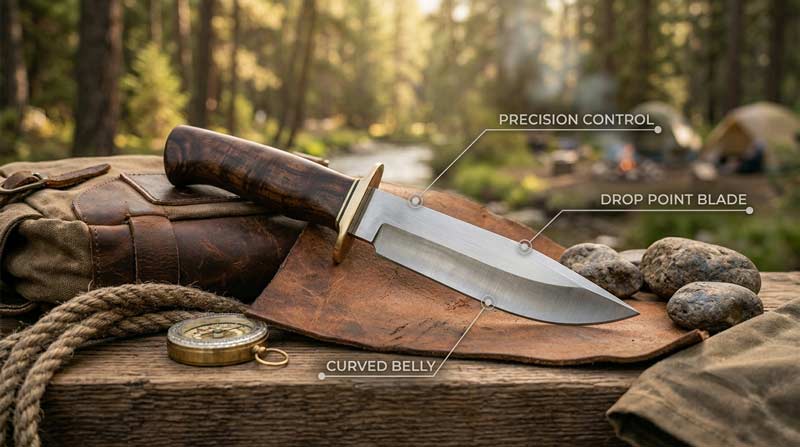
While Bowie knives are built for versatility, hunting knives are usually designed with more specific outdoor tasks in mind. A hunting knife is generally made for skinning, field dressing, processing game, and making controlled cuts where precision matters more than brute force. Because of that, hunting knives often have shorter blades and a more compact overall design than a traditional Bowie knife.
Blade shape is one of the biggest differences. Many hunting knives feature a curved belly that helps with slicing and skinning, along with a drop point or trailing point blade shape designed to give better control. Unlike the larger clip point commonly found on Bowie knives, hunting knives are often designed to reduce the chance of accidentally puncturing hide or internal organs while processing an animal.
Another difference is portability. Since hunting knives are often carried for long periods in the field, many people prefer a lighter, more compact design that feels easier to control during detailed cutting work. While a large Bowie knife can certainly handle outdoor tasks, some hunters prefer a knife designed specifically around precision and efficiency.
If you want to explore more blade styles beyond Bowie and hunting knives, this guide to popular fixed blade knives covers several designs and what makes each one unique.
That said, there is still plenty of overlap between the two categories. Some larger hunting knives borrow design elements from Bowie knives, and many outdoor enthusiasts use Bowie knives successfully for camping, survival, and even hunting-related tasks. The biggest difference usually comes down to intended use and personal preference.
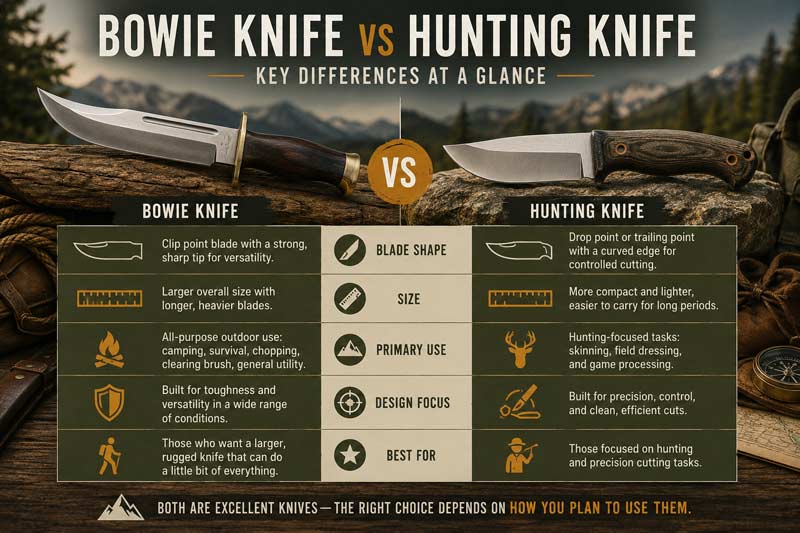
Although Bowie knives and hunting knives share some similarities, they are usually built with different priorities in mind. A Bowie knife is often larger, heavier, and designed to handle a wider range of outdoor tasks, while a hunting knife is typically more compact and focused on precision cutting. Neither style is automatically better, they simply excel at different things.
One of the biggest differences is blade shape. Bowie knives are known for their large clip point blades, which provide a sharp tip and strong cutting ability for chopping, slicing, and general outdoor use. Hunting knives more commonly feature drop point or trailing point blades with curved edges designed for better control during skinning and detailed cutting tasks.
Size is another major factor. Bowie knives often have longer, heavier blades that feel more substantial in hand and can handle tougher jobs around camp. Hunting knives are usually smaller and lighter, making them easier to carry for long periods and better suited for detailed work where precision matters.
Use case also plays a role. A Bowie knife is often viewed as a rugged all-purpose outdoor tool that works well for camping, survival, clearing brush, and general utility. A hunting knife tends to be designed around field dressing, skinning, and game processing, even though many people use them for general outdoor tasks as well.
For someone who wants a larger knife that can do a little bit of everything, a Bowie knife often makes sense. For someone focused mainly on hunting or precision cutting, a traditional hunting knife may feel more practical. In the end, the right choice depends on how you realistically plan to use it.
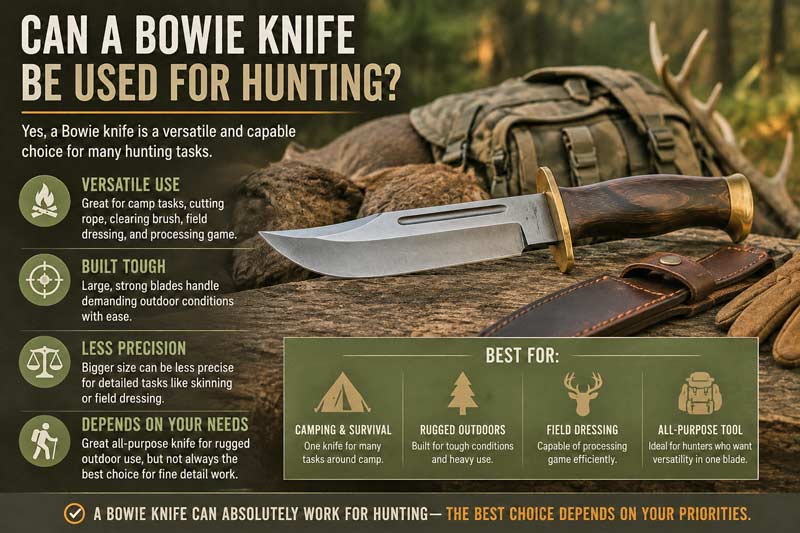
Yes, a Bowie knife can absolutely be used for hunting, and many people have used them that way for generations. Because Bowie knives are large, durable, and versatile, they are capable of handling many outdoor tasks associated with hunting, including cutting rope, preparing camp, clearing brush, field dressing, and processing game. A sturdy Bowie knife can often serve as an all-purpose outdoor tool when someone wants one blade to handle a variety of situations.
That said, there are reasons some hunters still prefer a traditional hunting knife. Since Bowie knives are usually larger and heavier, they can feel less precise during detailed cutting work like skinning or field dressing. A hunting knife with a shorter blade and more controlled shape may feel easier to maneuver, especially for tasks where accuracy matters more than power.
The type of hunting also matters. Someone spending time at a campsite or in rugged outdoor conditions may appreciate the extra utility a Bowie knife offers beyond just processing game. On the other hand, a person focused mostly on skinning and field work may prefer a smaller hunting knife designed specifically for that purpose.
For people who like rugged outdoor tools, Bowie knives are often appreciated for their versatility. Many models overlap heavily with survival-style blades and larger outdoor knives. Whether you prefer a Bowie knife or something more specialized usually comes down to what kinds of tasks you realistically expect to handle in the field.
There is no universal right answer here. A Bowie knife can absolutely work for hunting, but whether it is the best hunting knife depends on your priorities, preferred blade size, and how much versatility you want from a single knife.
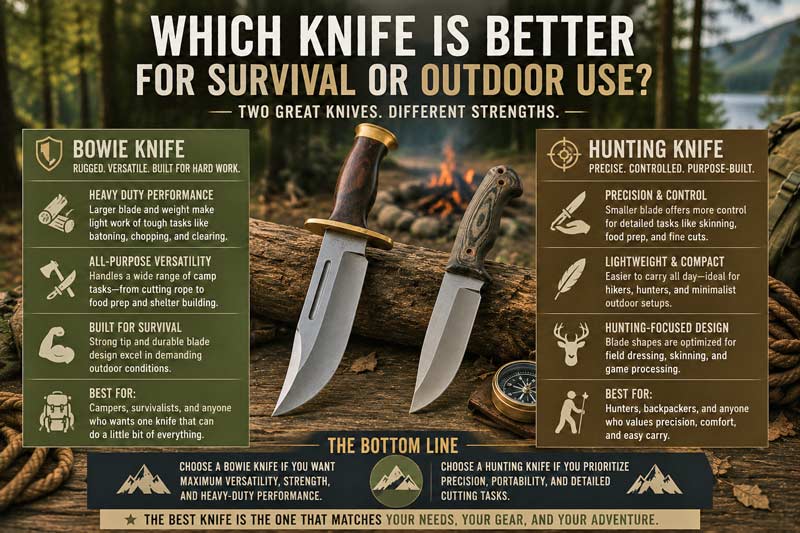
When it comes to survival and general outdoor use, many people naturally lean toward a Bowie knife because of its larger size and versatility. A sturdy Bowie knife can handle a wide variety of camp tasks, from cutting rope and preparing kindling to clearing small branches, food prep, and heavier utility work. For people who want one knife that can do a little bit of everything outdoors, a Bowie knife often feels like the more rugged option.
That does not automatically mean a hunting knife is the wrong choice for outdoor use. Many hunting knives are incredibly durable and excel at precise cutting tasks where control matters more than brute force. If someone spends more time skinning game, preparing food, or handling detailed cutting jobs, a hunting knife may actually feel more practical in day-to-day outdoor situations.
Blade size plays a major role here. Larger Bowie knives can feel more capable for tougher work, but they also take up more space and may feel less comfortable for fine detail tasks. Hunting knives are usually lighter and easier to carry over long distances, which matters to hikers, hunters, and people trying to keep gear compact.
There is also plenty of overlap between these categories. Some modern outdoor knives blend features from both styles, combining the rugged durability of a Bowie knife with the practicality and control of a hunting knife. Exploring different blade designs can help you get a better idea of what works best for your needs and preferred outdoor activities.
In the end, the better survival or outdoor knife depends on how you plan to use it. If you want maximum versatility and heavier utility, a Bowie knife often has the edge. If precision, portability, and detailed cutting matter more, a hunting knife may be the smarter fit.
When it comes down to it, neither a Bowie knife nor a hunting knife is automatically the better choice. The right option depends on what you realistically want your knife to do. If you need a larger blade that can handle a wide range of outdoor jobs, camping tasks, and rugged utility work, a Bowie knife often makes a lot of sense. Its larger size and versatile design make it appealing for people who want one knife that can do a little bit of everything.
On the other hand, if your priority is precision, lighter carry, and detailed cutting tasks, a hunting knife may be the better fit. Many hunters appreciate the smaller size, better control, and blade shapes designed specifically for skinning and field work. While they may not feel as rugged or oversized as a traditional Bowie knife, hunting knives are often extremely efficient at the tasks they were designed for.
The good news is there is no wrong answer. Both styles have proven themselves for generations and continue to be popular for good reason. Some people even keep both on hand, using a larger Bowie knife for tougher outdoor jobs and a smaller hunting knife for more controlled cutting tasks.
At the end of the day, the best knife is the one that matches how you actually plan to use it. Thinking about blade size, intended tasks, comfort, and portability will usually point you toward the right choice much faster than simply picking whichever knife looks more impressive.
What Makes a Bowie Knife Different?
The easiest way to recognize a Bowie knife is by its size and blade shape. Traditional Bowie knives are usually larger than standard hunting knives and feature a distinctive clip point blade, where the top portion of the blade appears cut away near the tip. That shape creates a sharp, narrow point while still keeping plenty of cutting surface along the edge. It is one of the reasons Bowie knives have become instantly recognizable over the years.
Bowie knives were originally designed to be rugged, versatile tools capable of handling a wide range of outdoor and survival tasks. A large Bowie knife can be used for chopping, slicing, batoning wood, clearing brush, preparing food, and general camp utility. Because of their size and durability, many people think of Bowie knives as an all-purpose outdoor blade rather than a knife designed for one specific task.
Most Bowie knives also fall into the broader category of fixed blade knives, meaning the blade extends through the handle rather than folding closed. This usually makes them stronger and more durable than folding knives, especially for heavier outdoor use.
Another thing that sets Bowie knives apart is their history. Originally popularized in the 1800s and associated with frontiersmen and military use, Bowie knives developed a reputation for toughness and versatility. Many classic fighting and field knives still take inspiration from the Bowie design. If you enjoy learning about iconic blade styles, this guide to military knives covers several legendary designs that shaped knife history.
Today, bowie knives are still popular among collectors, outdoor enthusiasts, and people who appreciate a larger fixed blade with a classic look and strong utility.
What Makes a Hunting Knife Different?
While Bowie knives are built for versatility, hunting knives are usually designed with more specific outdoor tasks in mind. A hunting knife is generally made for skinning, field dressing, processing game, and making controlled cuts where precision matters more than brute force. Because of that, hunting knives often have shorter blades and a more compact overall design than a traditional Bowie knife.
Blade shape is one of the biggest differences. Many hunting knives feature a curved belly that helps with slicing and skinning, along with a drop point or trailing point blade shape designed to give better control. Unlike the larger clip point commonly found on Bowie knives, hunting knives are often designed to reduce the chance of accidentally puncturing hide or internal organs while processing an animal.
Another difference is portability. Since hunting knives are often carried for long periods in the field, many people prefer a lighter, more compact design that feels easier to control during detailed cutting work. While a large Bowie knife can certainly handle outdoor tasks, some hunters prefer a knife designed specifically around precision and efficiency.
If you want to explore more blade styles beyond Bowie and hunting knives, this guide to popular fixed blade knives covers several designs and what makes each one unique.
That said, there is still plenty of overlap between the two categories. Some larger hunting knives borrow design elements from Bowie knives, and many outdoor enthusiasts use Bowie knives successfully for camping, survival, and even hunting-related tasks. The biggest difference usually comes down to intended use and personal preference.
Bowie Knife vs Hunting Knife: Key Differences at a Glance
Although Bowie knives and hunting knives share some similarities, they are usually built with different priorities in mind. A Bowie knife is often larger, heavier, and designed to handle a wider range of outdoor tasks, while a hunting knife is typically more compact and focused on precision cutting. Neither style is automatically better, they simply excel at different things.
One of the biggest differences is blade shape. Bowie knives are known for their large clip point blades, which provide a sharp tip and strong cutting ability for chopping, slicing, and general outdoor use. Hunting knives more commonly feature drop point or trailing point blades with curved edges designed for better control during skinning and detailed cutting tasks.
Size is another major factor. Bowie knives often have longer, heavier blades that feel more substantial in hand and can handle tougher jobs around camp. Hunting knives are usually smaller and lighter, making them easier to carry for long periods and better suited for detailed work where precision matters.
Use case also plays a role. A Bowie knife is often viewed as a rugged all-purpose outdoor tool that works well for camping, survival, clearing brush, and general utility. A hunting knife tends to be designed around field dressing, skinning, and game processing, even though many people use them for general outdoor tasks as well.
For someone who wants a larger knife that can do a little bit of everything, a Bowie knife often makes sense. For someone focused mainly on hunting or precision cutting, a traditional hunting knife may feel more practical. In the end, the right choice depends on how you realistically plan to use it.
Can a Bowie Knife Be Used for Hunting?
Yes, a Bowie knife can absolutely be used for hunting, and many people have used them that way for generations. Because Bowie knives are large, durable, and versatile, they are capable of handling many outdoor tasks associated with hunting, including cutting rope, preparing camp, clearing brush, field dressing, and processing game. A sturdy Bowie knife can often serve as an all-purpose outdoor tool when someone wants one blade to handle a variety of situations.
That said, there are reasons some hunters still prefer a traditional hunting knife. Since Bowie knives are usually larger and heavier, they can feel less precise during detailed cutting work like skinning or field dressing. A hunting knife with a shorter blade and more controlled shape may feel easier to maneuver, especially for tasks where accuracy matters more than power.
The type of hunting also matters. Someone spending time at a campsite or in rugged outdoor conditions may appreciate the extra utility a Bowie knife offers beyond just processing game. On the other hand, a person focused mostly on skinning and field work may prefer a smaller hunting knife designed specifically for that purpose.
For people who like rugged outdoor tools, Bowie knives are often appreciated for their versatility. Many models overlap heavily with survival-style blades and larger outdoor knives. Whether you prefer a Bowie knife or something more specialized usually comes down to what kinds of tasks you realistically expect to handle in the field.
There is no universal right answer here. A Bowie knife can absolutely work for hunting, but whether it is the best hunting knife depends on your priorities, preferred blade size, and how much versatility you want from a single knife.
Which Knife Is Better for Survival or Outdoor Use?
When it comes to survival and general outdoor use, many people naturally lean toward a Bowie knife because of its larger size and versatility. A sturdy Bowie knife can handle a wide variety of camp tasks, from cutting rope and preparing kindling to clearing small branches, food prep, and heavier utility work. For people who want one knife that can do a little bit of everything outdoors, a Bowie knife often feels like the more rugged option.
That does not automatically mean a hunting knife is the wrong choice for outdoor use. Many hunting knives are incredibly durable and excel at precise cutting tasks where control matters more than brute force. If someone spends more time skinning game, preparing food, or handling detailed cutting jobs, a hunting knife may actually feel more practical in day-to-day outdoor situations.
Blade size plays a major role here. Larger Bowie knives can feel more capable for tougher work, but they also take up more space and may feel less comfortable for fine detail tasks. Hunting knives are usually lighter and easier to carry over long distances, which matters to hikers, hunters, and people trying to keep gear compact.
There is also plenty of overlap between these categories. Some modern outdoor knives blend features from both styles, combining the rugged durability of a Bowie knife with the practicality and control of a hunting knife. Exploring different blade designs can help you get a better idea of what works best for your needs and preferred outdoor activities.
In the end, the better survival or outdoor knife depends on how you plan to use it. If you want maximum versatility and heavier utility, a Bowie knife often has the edge. If precision, portability, and detailed cutting matter more, a hunting knife may be the smarter fit.
So, Which Knife Should You Choose?
When it comes down to it, neither a Bowie knife nor a hunting knife is automatically the better choice. The right option depends on what you realistically want your knife to do. If you need a larger blade that can handle a wide range of outdoor jobs, camping tasks, and rugged utility work, a Bowie knife often makes a lot of sense. Its larger size and versatile design make it appealing for people who want one knife that can do a little bit of everything.
On the other hand, if your priority is precision, lighter carry, and detailed cutting tasks, a hunting knife may be the better fit. Many hunters appreciate the smaller size, better control, and blade shapes designed specifically for skinning and field work. While they may not feel as rugged or oversized as a traditional Bowie knife, hunting knives are often extremely efficient at the tasks they were designed for.
The good news is there is no wrong answer. Both styles have proven themselves for generations and continue to be popular for good reason. Some people even keep both on hand, using a larger Bowie knife for tougher outdoor jobs and a smaller hunting knife for more controlled cutting tasks.
At the end of the day, the best knife is the one that matches how you actually plan to use it. Thinking about blade size, intended tasks, comfort, and portability will usually point you toward the right choice much faster than simply picking whichever knife looks more impressive.
You May Also Be Interested In:
- Switchblade vs Automatic Knife: What's the Difference?
- Why Every Day Should Be an EDC Knife Day: How a Simple Knife Can Make Your Life Easier and Safer
- Best EDC Knife: How to Choose the Right Everyday Carry Knife
- What Is a Kukri Knife and What Is It Used For?
- What Is the Ring on a Karambit Knife For?
- What Is a Stiletto Knife and Why Is It So Popular?
- Why Is the Karambit Knife Curved?
- 10 Things You Didn't Know About the Karambit Knife
- What Is a Neck Knife and Why Do People Carry Them?
- Different Types of Knife Steels Explained
Leave a Reply