




What Is a Boot Knife and Why Do People Carry Them?
May 20th, 2026
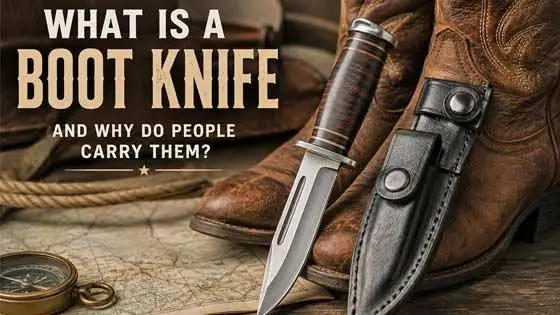
At first glance, a boot knife might seem like something straight out of an old Western movie, but these compact fixed blade knives have stayed popular for much more practical reasons. Designed to be carried discreetly inside a boot, on an ankle, or in other low-profile locations, boot knives are valued for their compact size, lightweight carry, and accessibility. While they are often associated with cowboys, military use, and classic Americana, many people today still appreciate boot knives for everyday utility, outdoor carry, and compact convenience.
But what exactly is a boot knife, why do people carry one, and are they actually practical today? In this guide, we will break down what boot knives are, how they are carried, why some people prefer them over larger knives, and whether a boot knife makes sense for your lifestyle and everyday carry preferences.
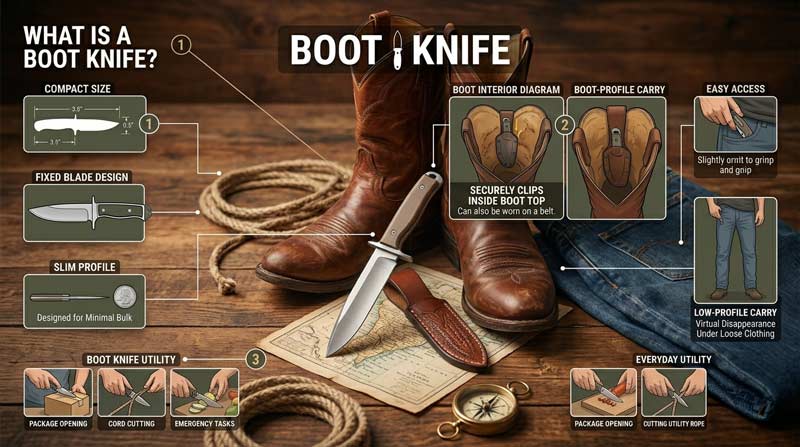
A boot knife is a compact fixed blade knife designed to be carried discreetly inside a boot, attached to an ankle, or stored in another low-profile location for easy access. Most boot knives are lightweight, narrow, and easy to conceal, making them different from larger outdoor or work knives designed for heavy cutting tasks. While the name comes from the traditional method of carrying one inside a boot, modern boot knives are often carried in several different ways depending on comfort and personal preference.
One reason boot knives stand out is their slim profile. Since they are meant to stay out of the way while remaining accessible, most designs are compact enough to fit comfortably against the leg or inside a sheath without feeling overly bulky. Many also feature double-edged or narrow spear-point blades, although blade styles can vary depending on whether the knife is intended more for utility, compact carry, or collecting.
Unlike folding knives, boot knives are part of the broader category of fixed blade knives, meaning the blade stays locked in place rather than folding into the handle. Many people appreciate this because it allows for quicker access and a simple, reliable design without moving parts.
Some boot knives also overlap with the world of concealed knives, especially for people who prefer compact gear that stays low profile and easy to carry. While they are often associated with old Westerns, military history, or classic Americana, many people today still appreciate boot knives for compact convenience and practical everyday utility.
At first glance, boot knives may seem old-fashioned or overly specialized, but once people understand the lightweight carry, discreet profile, and convenience they offer, it becomes easier to see why they have stayed popular for generations.
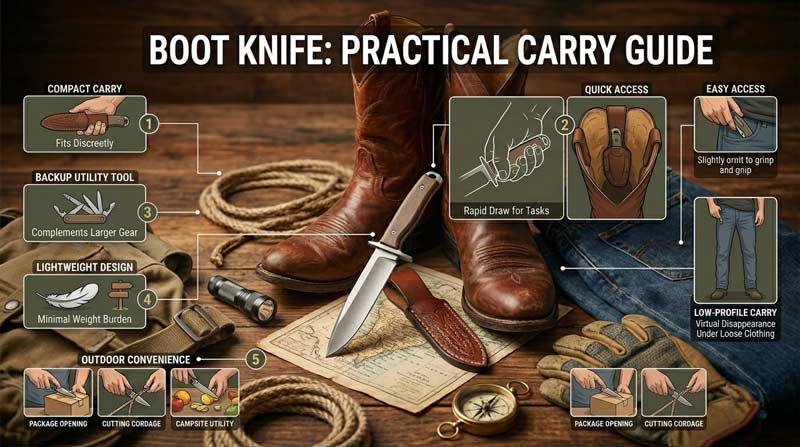
People carry boot knives for a variety of reasons, but convenience and compact carry are usually near the top of the list. Because boot knives are small and lightweight, many people appreciate having a fixed blade close by without carrying something bulky or taking up extra pocket space. Their compact size makes them easy to carry discreetly while still staying accessible when needed.
For some people, a boot knife works well as a practical backup tool. Whether used for opening packaging, cutting cord, handling small utility tasks, or keeping a lightweight blade available during outdoor activities, the appeal often comes down to simplicity and accessibility. Since most boot knives are fixed blades, there are no moving parts or opening mechanisms to worry about, which some people find reassuring.
Others appreciate boot knives because of their low-profile carry style. Depending on personal preference, some people carry a boot knife inside footwear, while others prefer ankle carry, belt carry, or attaching a compact sheath to outdoor gear. Since boot knives are lightweight and compact, many people like having a small fixed blade that stays out of the way but remains easy to access when needed.
Compared to larger outdoor knives, boot knives are generally designed around portability rather than heavy-duty outdoor work. Their smaller size makes them easier to carry day to day, even if they are not intended for the same kinds of rugged cutting tasks as larger fixed blades.
Of course, not everyone finds boot knives practical. Some people prefer traditional pocket knives or larger fixed blades, while others simply like the compact, classic feel of a boot knife. Like most gear choices, whether one makes sense usually depends on comfort, intended use, and personal preference.
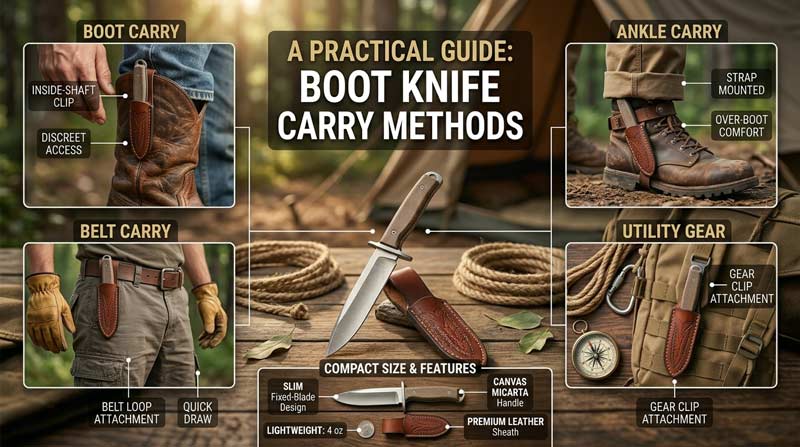
Despite the name, boot knives are not always carried inside a boot. While slipping a compact knife into the side of a boot is the traditional method, many people today carry boot knives in several different ways depending on comfort, accessibility, and personal preference. The goal is usually the same: keeping a compact fixed blade close by without taking up too much space or becoming uncomfortable during everyday movement.
Traditional boot carry typically involves a sheath clipped or strapped inside the boot, often along the ankle or calf area where the knife stays secure but accessible. Many people appreciate this carry style because it keeps the knife out of the way and frees up pocket space. That said, comfort can depend heavily on the size of the knife, the style of footwear, and how much walking or movement is involved throughout the day.
Some people prefer ankle carry instead, using straps or sheaths designed to sit comfortably around the lower leg. Others choose belt carry, backpack attachment, or keeping a compact knife secured to outdoor gear for convenience during hiking, camping, or general utility work. Since boot knives are lightweight and compact, they tend to offer more flexibility than larger fixed blades when it comes to carry options.
For people who prefer compact carry styles, some similarities exist between boot knives and neck knives, since both prioritize portability and accessibility over larger outdoor utility. The biggest difference often comes down to where someone feels most comfortable carrying a compact fixed blade.
At the end of the day, the best carry method is usually the one that feels secure, comfortable, and practical for how you actually plan to use the knife. What works well for one person may feel awkward to someone else, which is why personal preference matters so much with compact carry options.
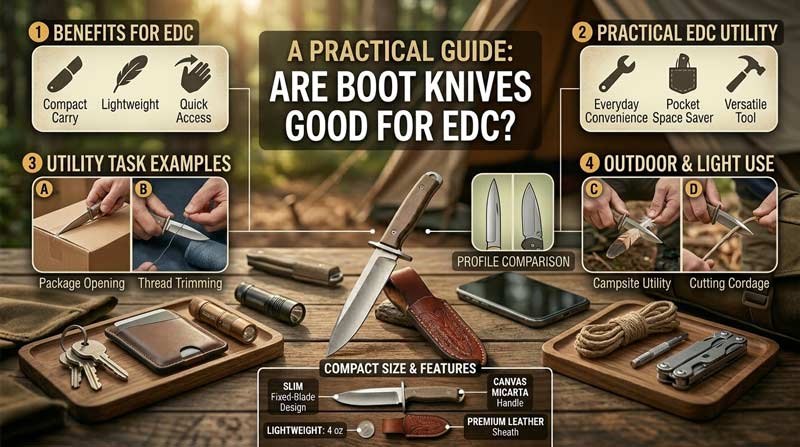
Whether a boot knife is practical for everyday carry really depends on what someone expects from their knife. For people who like compact gear and prefer carrying a small fixed blade without filling up their pockets, a boot knife can be surprisingly convenient. Because they are lightweight and low profile, many boot knives are easy to carry for long periods without becoming uncomfortable or bulky.
One of the biggest advantages is accessibility. Since boot knives can be carried in a variety of ways, many people appreciate being able to keep a compact cutting tool nearby without clipping something to a pocket or belt. Simple tasks like cutting rope, opening packaging, trimming material, or handling light utility work are often where smaller knives shine.
That said, boot knives are not usually designed for heavy-duty tasks. Their smaller size often makes them better suited for lighter cutting jobs rather than tougher outdoor work or prolonged use. Someone who regularly uses a knife for demanding utility tasks may prefer a larger fixed blade or more versatile carry option.
Compared to larger outdoor blades or even some heavy-duty chopping blades, boot knives prioritize portability and convenience more than raw cutting power. That smaller footprint is exactly what appeals to many people who prefer lightweight everyday gear.
At the end of the day, a boot knife can be a practical everyday carry option for the right person. If compact size, lightweight carry, and easy access matter more to you than maximum utility, a boot knife may fit naturally into your routine.
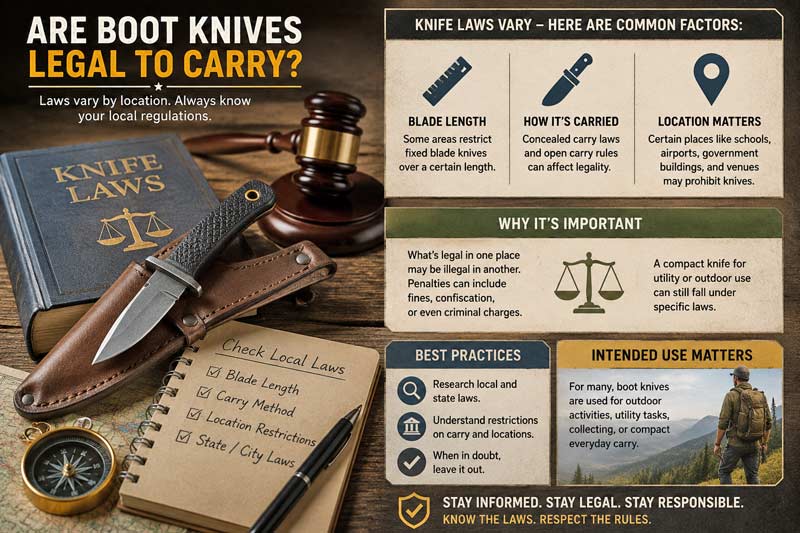
In many places, boot knives are legal to own, but whether they are legal to carry depends heavily on local laws. Since boot knives are fixed blade knives and are often associated with discreet carry, laws can vary depending on blade length, concealed carry rules, and where the knife is being carried. What is perfectly legal in one city or state may be restricted somewhere else.
For example, some areas place restrictions on fixed blade knives over a certain size, while others focus more on how the knife is carried. Open carry rules, concealed carry laws, and location-specific restrictions can all come into play. Schools, airports, government buildings, sporting venues, and private businesses may also have rules that prohibit knives regardless of general state laws.
Because boot knives are commonly carried in low-profile ways, many people pay close attention to local regulations before carrying one regularly. A compact knife intended for outdoor or utility purposes may still fall under specific laws depending on how it is worn and where it is taken.
Since knife laws can change and vary significantly by location, it is always a good idea to check local and state regulations before carrying any knife regularly. Spending a few minutes researching the rules ahead of time can help avoid confusion and make sure you stay on the right side of local laws.
For many people, boot knives are primarily used for outdoor activities, utility tasks, collecting, or compact carry rather than heavy daily use. Whether carrying one makes sense often comes down to both personal preference and local regulations.
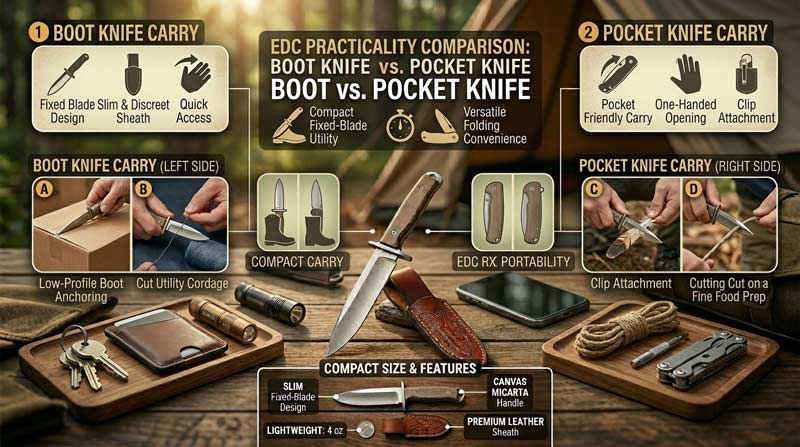
Boot knives and pocket knives both have their advantages, but they are designed around different priorities. A boot knife is usually focused on compact carry, quick access, and simplicity. Since most boot knives are fixed blades, there are no moving parts or opening mechanisms involved. For people who like having a compact knife readily available without taking up pocket space, that simplicity is part of the appeal.
Pocket knives, on the other hand, are often preferred for versatility and convenience in everyday situations. Because they fold into the handle, many people find them easy to carry comfortably in a pocket throughout the day. There is also a huge variety of blade shapes, locking systems, and sizes available depending on what someone needs from an everyday knife.
One of the biggest differences comes down to portability versus versatility. A boot knife may feel easier to carry discreetly or keep out of the way, while a pocket knife often provides more flexibility for general daily tasks. Some people prefer the quick accessibility of a fixed blade, while others appreciate the convenience and familiarity of a folding knife.
For people who enjoy compact carry options, some similarities also exist between boot knives and neck knives, especially when portability matters more than heavy-duty utility. Both styles appeal to people who like lightweight gear that stays accessible without adding much bulk.
At the end of the day, neither option is automatically better. A boot knife may work best if you prioritize compact carry and simplicity, while a pocket knife may make more sense if you want maximum versatility for everyday use. The right choice usually comes down to comfort, intended use, and personal preference.
By now, it is probably easier to understand why boot knives have remained popular for so long. Their compact size, lightweight design, and discreet carry style make them appealing to people who want a fixed blade that stays accessible without taking up much space. For some people, the appeal comes from practicality. For others, it is the classic style, history, or convenience of having a compact tool close by.
That said, boot knives are not always the perfect fit for everyone. If your priority is heavy-duty cutting, outdoor camp work, or maximum versatility, a larger knife may make more sense. Compared to many other blade styles, boot knives are usually designed around portability and convenience rather than tougher utility tasks.
For people who appreciate compact gear, boot knives often fit nicely alongside other lightweight carry options. Some prefer the simplicity of a fixed blade, while others lean toward folders or low-profile carry styles depending on comfort and how they plan to use the knife day to day.
If you enjoy exploring different knife styles, comparing sizes, carry methods, and intended use can help narrow down what works best for your lifestyle. Some people prefer compact knives that stay out of the way, while others want something larger and more versatile.
At the end of the day, the best knife is the one that realistically fits how you plan to use it. If lightweight carry, compact size, and easy access sound appealing, a boot knife may be worth considering.
What Is a Boot Knife?
A boot knife is a compact fixed blade knife designed to be carried discreetly inside a boot, attached to an ankle, or stored in another low-profile location for easy access. Most boot knives are lightweight, narrow, and easy to conceal, making them different from larger outdoor or work knives designed for heavy cutting tasks. While the name comes from the traditional method of carrying one inside a boot, modern boot knives are often carried in several different ways depending on comfort and personal preference.
One reason boot knives stand out is their slim profile. Since they are meant to stay out of the way while remaining accessible, most designs are compact enough to fit comfortably against the leg or inside a sheath without feeling overly bulky. Many also feature double-edged or narrow spear-point blades, although blade styles can vary depending on whether the knife is intended more for utility, compact carry, or collecting.
Unlike folding knives, boot knives are part of the broader category of fixed blade knives, meaning the blade stays locked in place rather than folding into the handle. Many people appreciate this because it allows for quicker access and a simple, reliable design without moving parts.
Some boot knives also overlap with the world of concealed knives, especially for people who prefer compact gear that stays low profile and easy to carry. While they are often associated with old Westerns, military history, or classic Americana, many people today still appreciate boot knives for compact convenience and practical everyday utility.
At first glance, boot knives may seem old-fashioned or overly specialized, but once people understand the lightweight carry, discreet profile, and convenience they offer, it becomes easier to see why they have stayed popular for generations.
Why Do People Carry Boot Knives?
People carry boot knives for a variety of reasons, but convenience and compact carry are usually near the top of the list. Because boot knives are small and lightweight, many people appreciate having a fixed blade close by without carrying something bulky or taking up extra pocket space. Their compact size makes them easy to carry discreetly while still staying accessible when needed.
For some people, a boot knife works well as a practical backup tool. Whether used for opening packaging, cutting cord, handling small utility tasks, or keeping a lightweight blade available during outdoor activities, the appeal often comes down to simplicity and accessibility. Since most boot knives are fixed blades, there are no moving parts or opening mechanisms to worry about, which some people find reassuring.
Others appreciate boot knives because of their low-profile carry style. Depending on personal preference, some people carry a boot knife inside footwear, while others prefer ankle carry, belt carry, or attaching a compact sheath to outdoor gear. Since boot knives are lightweight and compact, many people like having a small fixed blade that stays out of the way but remains easy to access when needed.
Compared to larger outdoor knives, boot knives are generally designed around portability rather than heavy-duty outdoor work. Their smaller size makes them easier to carry day to day, even if they are not intended for the same kinds of rugged cutting tasks as larger fixed blades.
Of course, not everyone finds boot knives practical. Some people prefer traditional pocket knives or larger fixed blades, while others simply like the compact, classic feel of a boot knife. Like most gear choices, whether one makes sense usually depends on comfort, intended use, and personal preference.
How Are Boot Knives Carried?
Despite the name, boot knives are not always carried inside a boot. While slipping a compact knife into the side of a boot is the traditional method, many people today carry boot knives in several different ways depending on comfort, accessibility, and personal preference. The goal is usually the same: keeping a compact fixed blade close by without taking up too much space or becoming uncomfortable during everyday movement.
Traditional boot carry typically involves a sheath clipped or strapped inside the boot, often along the ankle or calf area where the knife stays secure but accessible. Many people appreciate this carry style because it keeps the knife out of the way and frees up pocket space. That said, comfort can depend heavily on the size of the knife, the style of footwear, and how much walking or movement is involved throughout the day.
Some people prefer ankle carry instead, using straps or sheaths designed to sit comfortably around the lower leg. Others choose belt carry, backpack attachment, or keeping a compact knife secured to outdoor gear for convenience during hiking, camping, or general utility work. Since boot knives are lightweight and compact, they tend to offer more flexibility than larger fixed blades when it comes to carry options.
For people who prefer compact carry styles, some similarities exist between boot knives and neck knives, since both prioritize portability and accessibility over larger outdoor utility. The biggest difference often comes down to where someone feels most comfortable carrying a compact fixed blade.
At the end of the day, the best carry method is usually the one that feels secure, comfortable, and practical for how you actually plan to use the knife. What works well for one person may feel awkward to someone else, which is why personal preference matters so much with compact carry options.
Are Boot Knives Practical for Everyday Carry?
Whether a boot knife is practical for everyday carry really depends on what someone expects from their knife. For people who like compact gear and prefer carrying a small fixed blade without filling up their pockets, a boot knife can be surprisingly convenient. Because they are lightweight and low profile, many boot knives are easy to carry for long periods without becoming uncomfortable or bulky.
One of the biggest advantages is accessibility. Since boot knives can be carried in a variety of ways, many people appreciate being able to keep a compact cutting tool nearby without clipping something to a pocket or belt. Simple tasks like cutting rope, opening packaging, trimming material, or handling light utility work are often where smaller knives shine.
That said, boot knives are not usually designed for heavy-duty tasks. Their smaller size often makes them better suited for lighter cutting jobs rather than tougher outdoor work or prolonged use. Someone who regularly uses a knife for demanding utility tasks may prefer a larger fixed blade or more versatile carry option.
Compared to larger outdoor blades or even some heavy-duty chopping blades, boot knives prioritize portability and convenience more than raw cutting power. That smaller footprint is exactly what appeals to many people who prefer lightweight everyday gear.
At the end of the day, a boot knife can be a practical everyday carry option for the right person. If compact size, lightweight carry, and easy access matter more to you than maximum utility, a boot knife may fit naturally into your routine.
Are Boot Knives Legal to Carry?
In many places, boot knives are legal to own, but whether they are legal to carry depends heavily on local laws. Since boot knives are fixed blade knives and are often associated with discreet carry, laws can vary depending on blade length, concealed carry rules, and where the knife is being carried. What is perfectly legal in one city or state may be restricted somewhere else.
For example, some areas place restrictions on fixed blade knives over a certain size, while others focus more on how the knife is carried. Open carry rules, concealed carry laws, and location-specific restrictions can all come into play. Schools, airports, government buildings, sporting venues, and private businesses may also have rules that prohibit knives regardless of general state laws.
Because boot knives are commonly carried in low-profile ways, many people pay close attention to local regulations before carrying one regularly. A compact knife intended for outdoor or utility purposes may still fall under specific laws depending on how it is worn and where it is taken.
Since knife laws can change and vary significantly by location, it is always a good idea to check local and state regulations before carrying any knife regularly. Spending a few minutes researching the rules ahead of time can help avoid confusion and make sure you stay on the right side of local laws.
For many people, boot knives are primarily used for outdoor activities, utility tasks, collecting, or compact carry rather than heavy daily use. Whether carrying one makes sense often comes down to both personal preference and local regulations.
Boot Knife vs Pocket Knife: Which Is Better?
Boot knives and pocket knives both have their advantages, but they are designed around different priorities. A boot knife is usually focused on compact carry, quick access, and simplicity. Since most boot knives are fixed blades, there are no moving parts or opening mechanisms involved. For people who like having a compact knife readily available without taking up pocket space, that simplicity is part of the appeal.
Pocket knives, on the other hand, are often preferred for versatility and convenience in everyday situations. Because they fold into the handle, many people find them easy to carry comfortably in a pocket throughout the day. There is also a huge variety of blade shapes, locking systems, and sizes available depending on what someone needs from an everyday knife.
One of the biggest differences comes down to portability versus versatility. A boot knife may feel easier to carry discreetly or keep out of the way, while a pocket knife often provides more flexibility for general daily tasks. Some people prefer the quick accessibility of a fixed blade, while others appreciate the convenience and familiarity of a folding knife.
For people who enjoy compact carry options, some similarities also exist between boot knives and neck knives, especially when portability matters more than heavy-duty utility. Both styles appeal to people who like lightweight gear that stays accessible without adding much bulk.
At the end of the day, neither option is automatically better. A boot knife may work best if you prioritize compact carry and simplicity, while a pocket knife may make more sense if you want maximum versatility for everyday use. The right choice usually comes down to comfort, intended use, and personal preference.
So, Is a Boot Knife Right for You?
By now, it is probably easier to understand why boot knives have remained popular for so long. Their compact size, lightweight design, and discreet carry style make them appealing to people who want a fixed blade that stays accessible without taking up much space. For some people, the appeal comes from practicality. For others, it is the classic style, history, or convenience of having a compact tool close by.
That said, boot knives are not always the perfect fit for everyone. If your priority is heavy-duty cutting, outdoor camp work, or maximum versatility, a larger knife may make more sense. Compared to many other blade styles, boot knives are usually designed around portability and convenience rather than tougher utility tasks.
For people who appreciate compact gear, boot knives often fit nicely alongside other lightweight carry options. Some prefer the simplicity of a fixed blade, while others lean toward folders or low-profile carry styles depending on comfort and how they plan to use the knife day to day.
If you enjoy exploring different knife styles, comparing sizes, carry methods, and intended use can help narrow down what works best for your lifestyle. Some people prefer compact knives that stay out of the way, while others want something larger and more versatile.
At the end of the day, the best knife is the one that realistically fits how you plan to use it. If lightweight carry, compact size, and easy access sound appealing, a boot knife may be worth considering.
You May Also Be Interested In:
- What Is a Neck Knife and Why Do People Carry Them?
- Best EDC Knife: How to Choose the Right Everyday Carry Knife
- 7 Mistakes People Make When Buying Their First Folding Knife
- Stiletto vs. Switchblade: Why Most People Get Them Confused
- Why Pepper Spray Fails More Often Than People Realize
- The Police Weapon Most People Forgot Ever Existed
- The Bizarre Weapons People Once Carried for Self Defense
- Choosing the Best Stun Gun for Everyday Carry
- What Is the Best Self Defense Weapon for Everyday Carry?
- Choosing the Best Pepper Spray for Everyday Carry
Leave a Reply