




The Evolution of Automatic Knives: From Battlefield Tools to Everyday Carry
October 23rd, 2025
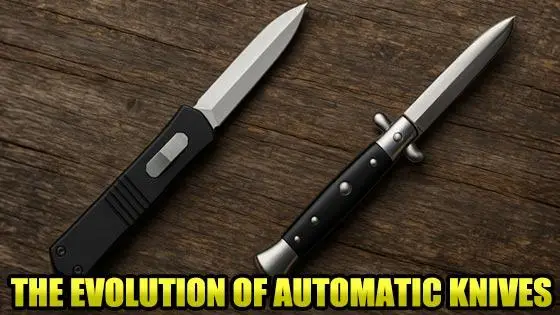
Automatic knives have always had an edge, both literally and figuratively. Once carried by soldiers who needed a blade that could open in an instant, these spring-loaded knives have evolved into something much more than battlefield tools. Today, they're sleek, dependable, and built for real-world use. Whether you're a collector, an outdoor enthusiast, or someone who just appreciates a knife that opens with a satisfying snap, automatic knives have earned their place in everyday carry culture.
Early Origins of Automatic Knives
The idea behind automatic knives didn't appear overnight. Humans have been trying to create fast-opening blades for centuries. Early pocket knives in the 18th and 19th centuries used simple springs and folding mechanisms, but inventors and soldiers alike kept pushing for something faster. By the late 1800s, European craftsmen began experimenting with spring-loaded blades that could be released by pressing a button or lever, an innovation that laid the groundwork for what we now recognize as automatic knives.
These early versions weren't as refined as today's designs, but they captured the imagination of anyone who handled them. Hunters, explorers, and soldiers valued them for the same reason people still do today: speed and convenience. Having a knife that could open instantly with one hand made all the difference in the field, especially in situations where every second counted.
World War Influence and Military Adoption
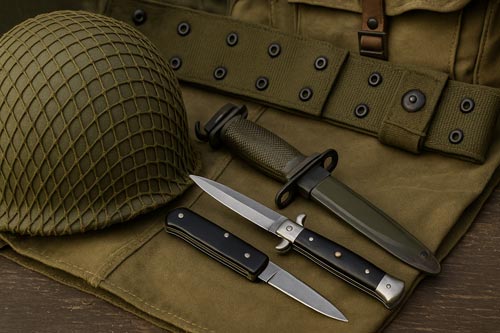
Automatic knives truly proved their worth on the battlefield. During the early 20th century, military forces began issuing them to soldiers who needed a blade that could be deployed with one hand while the other was occupied. For paratroopers and medics in particular, this quick access could mean the difference between life and death. Cutting tangled cords, freeing gear, or slicing through fabric in emergencies required a knife that worked instantly and reliably.
In World War II, automatic knives became standard issue for many units. Designs were refined to make them sturdier and easier to produce. The one-handed operation was not just convenient, it was essential in combat scenarios where time and dexterity were limited. These knives earned a reputation for being both practical and durable, qualities that would later inspire generations of modern automatic knife makers.
As soldiers returned home after the war, they brought their trusty automatic knives with them. Veterans appreciated their reliability and introduced them to civilian life, sparking curiosity and admiration among outdoorsmen and collectors. The result was a surge of popularity that took automatic knives from military gear to mainstream culture.
Post-War Popularity and the Rise of Switchblades
When soldiers brought automatic knives home after the war, the civilian world took notice. The combination of speed, style, and mechanical precision gave these knives an almost futuristic appeal. Manufacturers began producing versions aimed at the general public, often under the catchy nickname "switchblade." For the first time, automatic knives weren't just military tools; they were fashionable accessories for collectors, tradesmen, and everyday users who valued quick, reliable access to a blade.
Throughout the 1940s and 1950s, automatic knives gained massive popularity in movies, magazines, and popular culture. Hollywood often portrayed them as the blade of choice for tough guys, rebels, and street gangs. While that made them instantly recognizable, it also created a wave of misunderstanding about who actually used them and why. The same mechanism that made them practical for soldiers and outdoorsmen was now being misrepresented as a symbol of danger.
This perception soon caught the attention of lawmakers. Concerns about youth violence and public safety led to a political backlash, resulting in new legislation that would temporarily stall the knife's mainstream popularity. Despite this, the appeal of automatic knives never truly disappeared. Their design and purpose had already proven too effective to fade away completely.
Legal Backlash and the 1958 Federal Switchblade Act
By the late 1950s, automatic knives had become victims of their own fame. Movies and sensationalized news stories painted them as the weapon of choice for delinquents, and public fear began to rise. The truth was far less dramatic, but the damage had been done. Congress responded by passing the Federal Switchblade Act of 1958, which banned the interstate sale and shipment of automatic knives.
This legislation didn't make ownership entirely illegal, but it did severely limit production and distribution. Many knife makers stopped producing automatic models altogether, shifting their focus to manual or assisted-opening designs instead. The market for automatic knives went underground for a time, surviving mostly among collectors, military personnel, and knife enthusiasts who recognized their practical value.
Despite the restrictions, the spirit of innovation never faded. Knife makers continued experimenting with new mechanisms and designs that complied with changing laws while keeping the quick-deploy function users loved. These innovations would eventually set the stage for a major comeback decades later.
Modern Engineering and EDC Revival
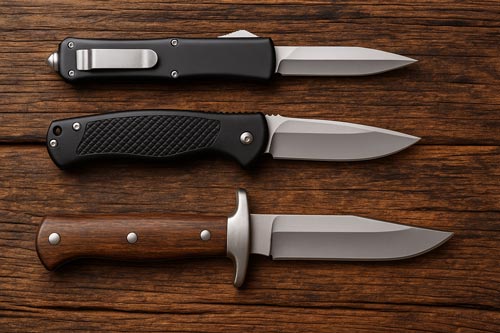
After decades of limited production, automatic knives made a strong comeback. Advancements in machining, metallurgy, and safety mechanisms turned what was once seen as a novelty into a serious tool again. CNC milling, improved heat treatment processes, and stronger spring systems allowed knife makers to build blades that were faster, smoother, and far more reliable than their early counterparts.
Modern automatic knives are engineered for performance. Precision locks prevent accidental openings, and improved handle ergonomics make them safer and more comfortable for everyday use. The quality of materials has also skyrocketed, with durable stainless steels, aircraft-grade aluminum handles, and advanced coatings that resist corrosion. These innovations transformed automatic knives into highly functional tools trusted by military personnel, first responders, and everyday carry enthusiasts alike.
The rise of the EDC (Everyday Carry) movement also played a huge role in the knife's resurgence. People began recognizing that a good automatic knife was not just for self-defense or survival, it was a reliable and efficient tool for daily tasks. That shift in mindset brought automatic knives back into the spotlight and helped redefine them as practical, legal, and responsible gear for modern users.
Automatic Knives in Today's Market
Automatic knives have come a long way since their early days. Modern designs are more refined, safer, and more accessible than ever before. Laws in many states have eased in recent years, allowing responsible owners to carry and use automatic knives legally. This shift has helped them reenter the spotlight, not as forbidden weapons, but as dependable tools for everyday life.
Today's automatic knives come in several styles, each suited to different needs. Side-opening models use a pivot-based spring that swings the blade open from the side, while OTF (out-the-front) knives extend the blade straight forward with the push of a button. Both styles offer incredible speed and reliability, and each has its loyal following among collectors, outdoorsmen, and EDC enthusiasts.
What truly defines the modern automatic knife is precision. These knives are no longer mass-produced novelties; they are precision tools designed for balance, strength, and performance. Whether used for cutting rope, opening boxes, or preparing for a camping trip, automatic knives are built to perform under pressure.
If you are looking to add one to your gear, check out our full selection of automatic knives at Kombativ.com. You will find a range of durable, high-performance models designed for practical use and everyday carry.
Collectibility and Craftsmanship
Automatic knives are not just tools; they are pieces of mechanical art. Every button press and every clean snap of the blade reminds you that there is real craftsmanship at work. Knife enthusiasts love that mix of engineering and personality. A good automatic knife does not just look sharp, it feels alive in your hand.
Collectors often get hooked on the details. The way the spring fires, the precision of the pivot, and the texture of the handle all make each knife unique. Owning one is not only about having a reliable blade, but about appreciating how form and function come together in perfect sync.
Automatic knives have become a favorite for people who enjoy fine craftsmanship and that satisfying click that never gets old. It is a small piece of history you can hold, and it just happens to be one of the coolest tools ever made.
Why Automatic Knives Are Here to Stay
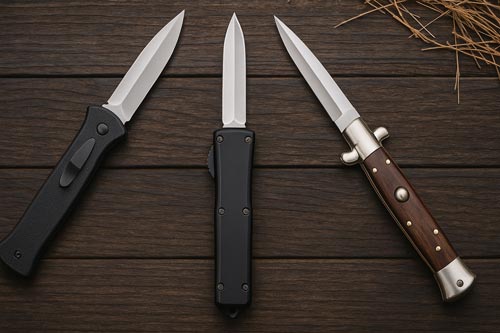
Automatic knives have survived wars, laws, and decades of changing public opinion, and they are more popular today than ever before. What started as a soldier's survival tool has become a modern essential for anyone who values quality and precision. People appreciate how practical they are, how well they are built, and how satisfying they are to use.
The truth is, automatic knives fill a role that few other tools can. They are fast, reliable, and built to last. Whether carried for work, outdoor adventures, or just because you like having something well made in your pocket, an automatic knife always delivers.
You May Also Be Interested In:
- The Deadliest Weapons That Started as Everyday Tools
- Choosing the Best Stun Gun for Everyday Carry
- What Is the Best Self Defense Weapon for Everyday Carry?
- What Is EDC? A Complete Guide to Everyday Carry Gear
- Choosing the Best Pepper Spray for Everyday Carry
- Best Self Defense Weapons for Everyday Carry (EDC Guide)
- How Automatic Knives Actually Work
- Why Automatic Knives Belong in Your EDC
- How Do Automatic Knives Work? Inside the Mechanism
- Best EDC Knife: How to Choose the Right Everyday Carry Knife
Leave a Reply