




What's the Difference Between Arnis, Eskrima, and Kali?
May 21st, 2026
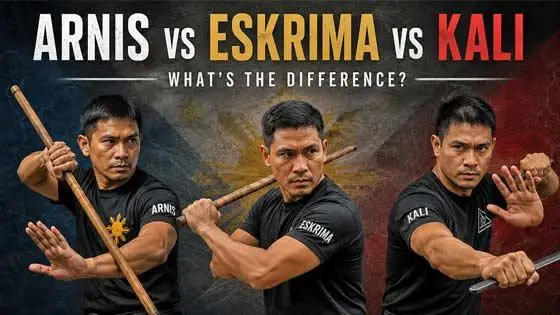
Filipino martial arts have become increasingly popular over the years, especially among people interested in stick fighting, self defense, and weapons-based training. But if you've spent any time researching them, you've probably noticed something confusing right away: some people call it Arnis, others say Eskrima or Escrima, and many use the term Kali. So are these completely different fighting styles, or are they just different names for the same thing?
The short answer is that they are extremely similar and share many of the same techniques, weapons, and training methods. However, there are some historical, regional, and stylistic differences that make each term unique. In this guide, we'll break down where these names came from, what makes them different, and why practitioners still debate the topic today.
One quick note before we dive in: you'll often see both Eskrima and Escrima used interchangeably. Both spellings refer to the same martial art, and which version you see usually comes down to regional preference or school tradition.
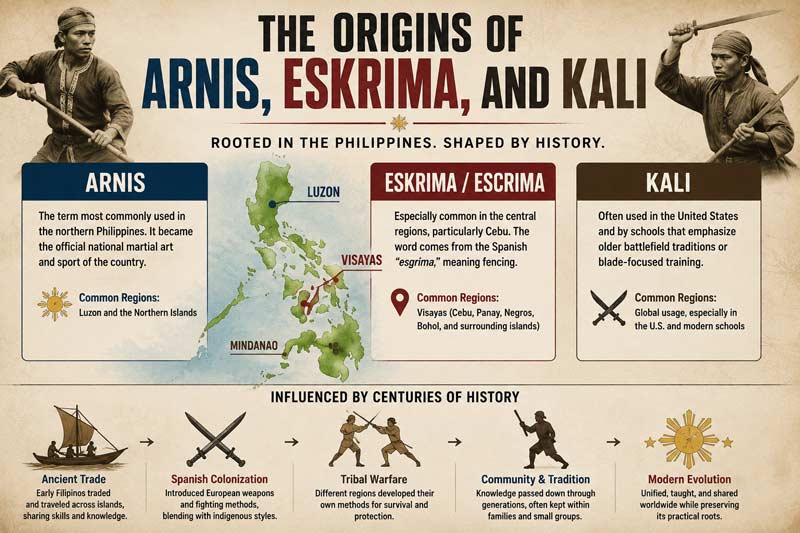
To understand the difference between Arnis, Eskrima, and Kali, it helps to start with their origins. All three names refer to Filipino martial arts that developed in the Philippines over hundreds of years. These fighting systems were designed for practical self defense and combat, often focusing on weapons first and empty-hand techniques second. Unlike many traditional martial arts that begin with punches and kicks, Filipino systems commonly start students with sticks, blades, and weapon-based movement.
Historically, these martial arts evolved as different regions and tribes developed their own methods of combat. Over time, outside influences from Spanish colonization, trade, and warfare also shaped the way these systems were practiced. That is part of the reason there is so much overlap today. Many schools teach nearly identical techniques but simply use different names depending on their lineage or geographic roots.
In general, Arnis is the term most commonly used in the northern Philippines and eventually became the official national martial art and sport of the country. Eskrima or Escrima is especially common in the central regions, particularly Cebu, and is believed to come from the Spanish word esgrima, meaning fencing. Kali is often used more frequently in the United States and by schools that emphasize older battlefield traditions or blade-focused training.
If you want a deeper look at how Filipino stick fighting evolved over time, check out this history of escrima sticks, which covers how these weapons went from battlefield tools to modern training equipment.
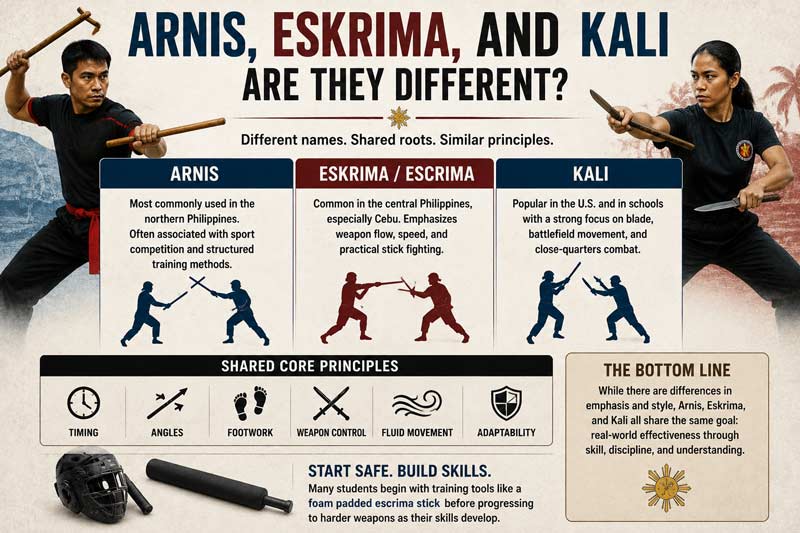
This is where things start to get a little confusing, because the answer depends on who you ask. Many practitioners will tell you that Arnis, Eskrima, and Kali are basically the same martial art with different regional names. Others strongly believe there are important distinctions in philosophy, weapons emphasis, and training methods. The truth is somewhere in the middle.
At their core, all three systems teach practical combat skills built around timing, angles, footwork, weapon control, and fluid movement. Students often train with sticks first because the same movements can later be applied to knives, empty-hand striking, trapping, and self defense. That is one reason Filipino martial arts are known for adapting so well to real-world situations.
Where things start to differ is in emphasis. Schools that identify as Arnis may place more focus on sport competition, stick drills, and structured partner training. Eskrima schools often emphasize weapon flow, speed, and practical stick fighting, especially in systems rooted in Cebu. Kali schools are sometimes more blade-focused and may spend additional time on edged weapon concepts and battlefield-style movement.
That said, there is a huge amount of overlap. A student training in one school may learn techniques that look almost identical to what another school calls by a different name. In many cases, the instructor's lineage and personal background matter more than whether the school calls itself Arnis, Eskrima, or Kali.
Many students begin practicing with simple foam padded escrima stick options before eventually transitioning to harder training weapons as they improve their control and confidence.
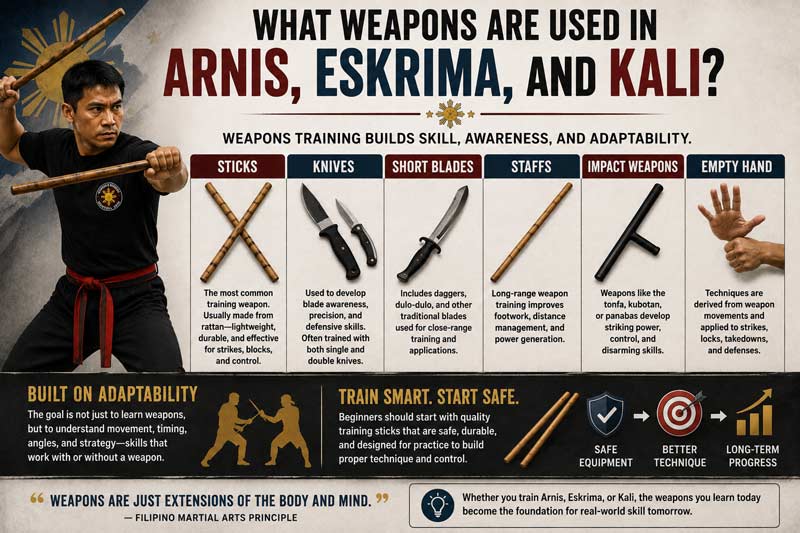
One of the things that makes Filipino martial arts stand out is their strong focus on weapons training. While many martial arts start with punches, kicks, or forms, Arnis, Eskrima, and Kali often begin by teaching students how to move, strike, block, and control distance using weapons first. The idea is that many of the same movements can later transfer to empty-hand techniques, making the training practical and adaptable.
The most common training weapon is the stick, usually made from rattan because it is lightweight, durable, and less likely to splinter during contact. In fact, many people associate Filipino martial arts with pairs of sticks because double-stick drills are such an important part of training. If you are curious about traditional practice equipment, many students train with rattan escrima sticks because they closely resemble what has been used for generations.
Beyond sticks, students may also train with knives, short blades, staffs, impact weapons, and empty-hand techniques. In many schools, weapon movements are practiced first and then adapted into hand strikes, joint manipulation, and self defense applications. This is one reason Filipino martial arts are often praised for their practicality and efficiency.
For beginners, training usually starts with safer equipment before moving into harder materials. Many schools recommend basic escrima sticks designed specifically for practice so students can focus on technique, timing, and control without worrying about advanced equipment too early.
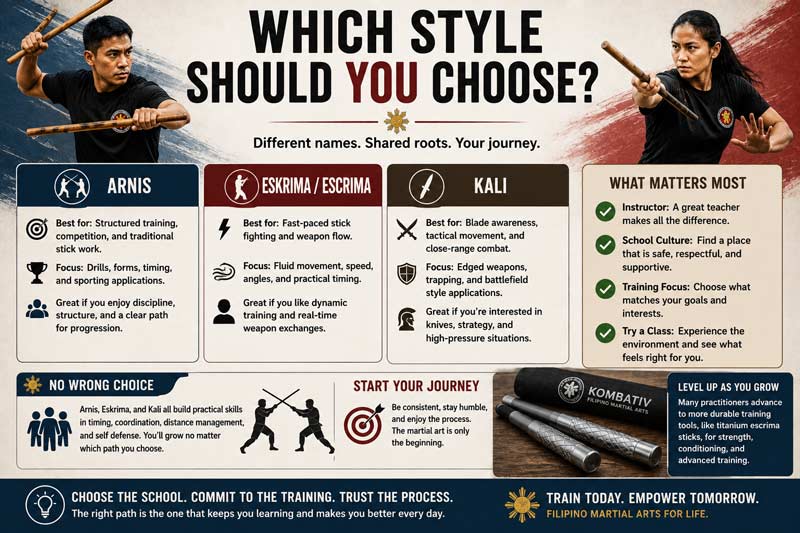
If you are trying to decide between Arnis, Eskrima, and Kali, the good news is that there is really no wrong choice. Since all three styles share so many of the same core principles, your experience will usually depend more on the instructor, school culture, and training focus than the name on the sign outside the building.
If you enjoy structured drills, competition, and traditional stick work, an Arnis school may feel like the best fit. If fast-paced stick fighting and weapon flow appeal to you, you may enjoy an Eskrima or Escrima program. If you are especially interested in edged weapon concepts and tactical movement, some Kali schools may spend more time emphasizing blade awareness and close-range applications.
For many beginners, the smartest approach is simply to try a class and see what feels right. Watching how instructors teach, how students train, and whether the environment feels welcoming can tell you a lot. Since these systems are so closely related, you will likely develop practical timing, coordination, and defensive skills regardless of which path you choose.
Many experienced practitioners eventually train with different types of practice gear as they improve, including more durable options like titanium escrima sticks for advanced stick training and conditioning.
At the end of the day, the debate over Arnis, Eskrima, and Kali is often bigger online than it is inside an actual training school. While practitioners may have strong opinions about terminology, regional influences, or specific training philosophies, the reality is that all three systems share the same roots and many of the same core principles. They all teach timing, coordination, weapon control, footwork, and practical self defense through highly adaptable training methods.
For most people, choosing the "best" style comes down to finding a good instructor and a school that matches your goals. Some students enjoy the structure and sport aspects of Arnis, while others prefer the fast-paced weapon flow found in many Eskrima systems or the blade-focused mindset often associated with Kali. The important thing is finding a training environment that keeps you engaged and excited to learn.
Whether you call it Arnis, Eskrima, Escrima, or Kali, there is a good chance you will be learning many of the same movements, drills, and concepts. These Filipino martial arts have survived for generations because they work, adapt, and continue evolving. That is part of what makes them so fascinating to train.
If you are interested in getting started, quality training gear can make a big difference. Beginners often start with padded trainers before moving into traditional rattan sticks or more advanced practice tools as their skill level improves.
One quick note before we dive in: you'll often see both Eskrima and Escrima used interchangeably. Both spellings refer to the same martial art, and which version you see usually comes down to regional preference or school tradition.
Where Did Arnis, Eskrima, and Kali Come From?
To understand the difference between Arnis, Eskrima, and Kali, it helps to start with their origins. All three names refer to Filipino martial arts that developed in the Philippines over hundreds of years. These fighting systems were designed for practical self defense and combat, often focusing on weapons first and empty-hand techniques second. Unlike many traditional martial arts that begin with punches and kicks, Filipino systems commonly start students with sticks, blades, and weapon-based movement.
Historically, these martial arts evolved as different regions and tribes developed their own methods of combat. Over time, outside influences from Spanish colonization, trade, and warfare also shaped the way these systems were practiced. That is part of the reason there is so much overlap today. Many schools teach nearly identical techniques but simply use different names depending on their lineage or geographic roots.
In general, Arnis is the term most commonly used in the northern Philippines and eventually became the official national martial art and sport of the country. Eskrima or Escrima is especially common in the central regions, particularly Cebu, and is believed to come from the Spanish word esgrima, meaning fencing. Kali is often used more frequently in the United States and by schools that emphasize older battlefield traditions or blade-focused training.
If you want a deeper look at how Filipino stick fighting evolved over time, check out this history of escrima sticks, which covers how these weapons went from battlefield tools to modern training equipment.
Are Arnis, Eskrima, and Kali Actually Different?
This is where things start to get a little confusing, because the answer depends on who you ask. Many practitioners will tell you that Arnis, Eskrima, and Kali are basically the same martial art with different regional names. Others strongly believe there are important distinctions in philosophy, weapons emphasis, and training methods. The truth is somewhere in the middle.
At their core, all three systems teach practical combat skills built around timing, angles, footwork, weapon control, and fluid movement. Students often train with sticks first because the same movements can later be applied to knives, empty-hand striking, trapping, and self defense. That is one reason Filipino martial arts are known for adapting so well to real-world situations.
Where things start to differ is in emphasis. Schools that identify as Arnis may place more focus on sport competition, stick drills, and structured partner training. Eskrima schools often emphasize weapon flow, speed, and practical stick fighting, especially in systems rooted in Cebu. Kali schools are sometimes more blade-focused and may spend additional time on edged weapon concepts and battlefield-style movement.
That said, there is a huge amount of overlap. A student training in one school may learn techniques that look almost identical to what another school calls by a different name. In many cases, the instructor's lineage and personal background matter more than whether the school calls itself Arnis, Eskrima, or Kali.
Many students begin practicing with simple foam padded escrima stick options before eventually transitioning to harder training weapons as they improve their control and confidence.
What Weapons Are Used in Arnis, Eskrima, and Kali?
One of the things that makes Filipino martial arts stand out is their strong focus on weapons training. While many martial arts start with punches, kicks, or forms, Arnis, Eskrima, and Kali often begin by teaching students how to move, strike, block, and control distance using weapons first. The idea is that many of the same movements can later transfer to empty-hand techniques, making the training practical and adaptable.
The most common training weapon is the stick, usually made from rattan because it is lightweight, durable, and less likely to splinter during contact. In fact, many people associate Filipino martial arts with pairs of sticks because double-stick drills are such an important part of training. If you are curious about traditional practice equipment, many students train with rattan escrima sticks because they closely resemble what has been used for generations.
Beyond sticks, students may also train with knives, short blades, staffs, impact weapons, and empty-hand techniques. In many schools, weapon movements are practiced first and then adapted into hand strikes, joint manipulation, and self defense applications. This is one reason Filipino martial arts are often praised for their practicality and efficiency.
For beginners, training usually starts with safer equipment before moving into harder materials. Many schools recommend basic escrima sticks designed specifically for practice so students can focus on technique, timing, and control without worrying about advanced equipment too early.
Which Style Should You Choose?
If you are trying to decide between Arnis, Eskrima, and Kali, the good news is that there is really no wrong choice. Since all three styles share so many of the same core principles, your experience will usually depend more on the instructor, school culture, and training focus than the name on the sign outside the building.
If you enjoy structured drills, competition, and traditional stick work, an Arnis school may feel like the best fit. If fast-paced stick fighting and weapon flow appeal to you, you may enjoy an Eskrima or Escrima program. If you are especially interested in edged weapon concepts and tactical movement, some Kali schools may spend more time emphasizing blade awareness and close-range applications.
For many beginners, the smartest approach is simply to try a class and see what feels right. Watching how instructors teach, how students train, and whether the environment feels welcoming can tell you a lot. Since these systems are so closely related, you will likely develop practical timing, coordination, and defensive skills regardless of which path you choose.
Many experienced practitioners eventually train with different types of practice gear as they improve, including more durable options like titanium escrima sticks for advanced stick training and conditioning.
Which One Is Right for You?
At the end of the day, the debate over Arnis, Eskrima, and Kali is often bigger online than it is inside an actual training school. While practitioners may have strong opinions about terminology, regional influences, or specific training philosophies, the reality is that all three systems share the same roots and many of the same core principles. They all teach timing, coordination, weapon control, footwork, and practical self defense through highly adaptable training methods.
For most people, choosing the "best" style comes down to finding a good instructor and a school that matches your goals. Some students enjoy the structure and sport aspects of Arnis, while others prefer the fast-paced weapon flow found in many Eskrima systems or the blade-focused mindset often associated with Kali. The important thing is finding a training environment that keeps you engaged and excited to learn.
Whether you call it Arnis, Eskrima, Escrima, or Kali, there is a good chance you will be learning many of the same movements, drills, and concepts. These Filipino martial arts have survived for generations because they work, adapt, and continue evolving. That is part of what makes them so fascinating to train.
If you are interested in getting started, quality training gear can make a big difference. Beginners often start with padded trainers before moving into traditional rattan sticks or more advanced practice tools as their skill level improves.
You May Also Be Interested In:
- The Fastest Weapon in Martial Arts? Why Kali Practitioners Move So Differently
- OTF vs Folding Knives: What's the Difference and Which Is Better?
- Switchblade vs Automatic Knife: What's the Difference?
- What is the Difference Between Tonfa, Police Batons, and Nightsticks?
- Slapjack vs Blackjack: What's the Difference Between These Classic Impact Weapons?
- Bowie Knife vs Hunting Knife: What's the Difference?
Leave a Reply