




The 7 Most Misunderstood Martial Arts Weapons
May 22nd, 2026
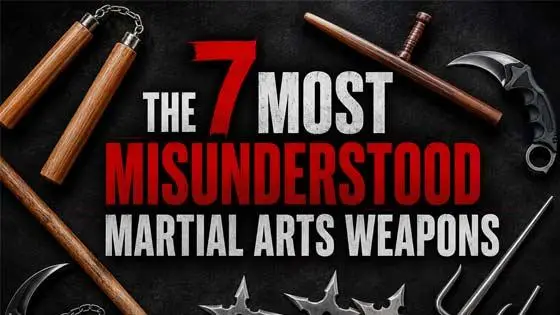
Martial arts weapons have a reputation for being mysterious, dangerous, or straight out of action movies. Ask the average person about nunchucks, throwing stars, or karambits, and chances are they picture something flashy, exaggerated, or completely unrealistic. The problem is, many of the most popular martial arts weapons are also some of the most misunderstood. Hollywood, video games, internet myths, and decades of misinformation have created a lot of confusion about what these weapons were actually used for and how martial artists train with them today.
In reality, many traditional weapons had surprisingly practical origins. Some were adapted from tools, others evolved for specialized training or self defense, and many are used very differently in real martial arts than people expect. In this guide, we will look at seven martial arts weapons that are commonly misunderstood and separate myth from reality when it comes to their history, purpose, and modern use.
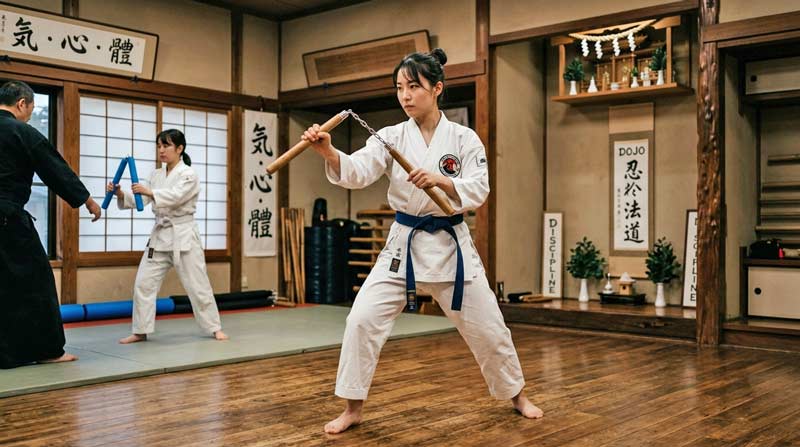
Thanks to movies, cartoons, and martial arts legends, many people assume nunchaku exist mainly for flashy spinning tricks and dramatic fight scenes. For decades, they have been portrayed as fast-moving weapons used by expert fighters to bounce around opponents with impossible speed and precision. While that image helped make nunchucks famous, it also created one of the biggest misunderstandings surrounding martial arts weapons.
In reality, nunchaku have a much deeper history and practical training purpose than most people realize. Historically, they were connected to Okinawan martial arts and became valuable training tools for coordination, control, timing, and weapon handling. Today, many martial artists still practice with nunchaku weapons to improve rhythm, body awareness, and precision, not just to learn flashy spins.
Another common misconception is that all nunchucks are dangerous or only meant for experts. In reality, many beginners start with foam or padded versions before progressing to wood or metal designs. Different materials, lengths, and chain or cord styles all affect how the weapon feels during training. If you are curious about where they actually came from, this breakdown of why nunchucks were actually invented explains the history in much more detail.
And despite what movies might suggest, learning nunchaku is usually much more about patience and coordination than flashy combat. Most students spend a lot of time building control and avoiding accidentally hitting themselves before they ever attempt advanced movements. If you want a better understanding of styles, materials, and training options, this complete guide to nunchucks covers the basics in more detail.
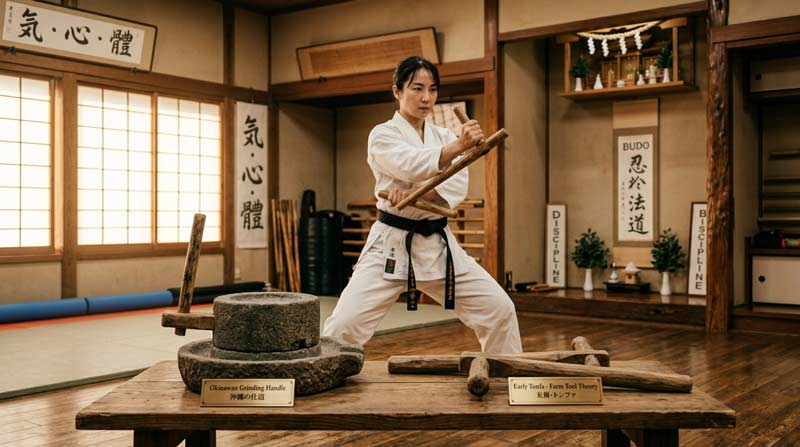
Ask most people what a tonfa is, and many will picture a police baton with a side handle. That assumption makes sense because modern side-handle batons were heavily influenced by the traditional tonfa design. But one of the biggest misunderstandings is thinking the tonfa started as law enforcement equipment. In reality, the weapon has much older roots tied to Okinawan martial arts and traditional kobudo training.
There is still some debate about the exact origins of the tonfa, but one of the most widely repeated theories is that it evolved from the wooden handle of a grinding stone used for processing grain. Over time, martial artists adapted the shape into a defensive weapon capable of blocking, striking, trapping, and controlling movement. Whether or not the farm tool theory is completely accurate, the tonfa eventually became an important part of Okinawan martial arts systems. If you enjoy historical weapon debates, this article about whether martial arts weapons really started as farm tools dives deeper into the topic.
Another misconception is that tonfa are mainly offensive weapons. While they can absolutely be used for strikes, one of their biggest strengths is defense. The side handle allows the shaft to rest against the forearm, helping absorb impact and making transitions between blocking and movement feel surprisingly fluid. Today, many practitioners still train with traditional tonfa weapons to practice forms, coordination, and traditional weapons techniques.
The connection to police batons came much later when law enforcement adapted the design into side-handle batons for control and leverage. If you have ever wondered about the differences, this breakdown of the difference between tonfa and police batons explains how the two designs overlap and where they became very different.
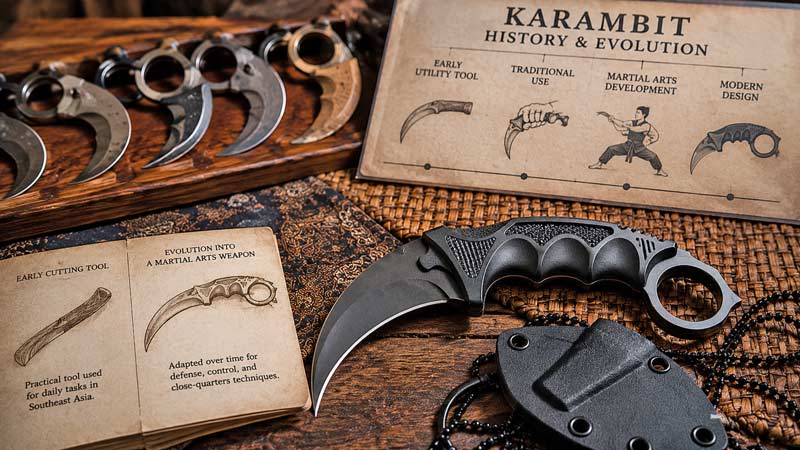
Because of video games, action movies, and flashy internet videos, many people assume the karambit exists purely as an aggressive tactical weapon. The curved blade, finger ring, and claw-like appearance definitely make it stand out, which has helped build a reputation that feels more dramatic than reality. But one of the biggest misunderstandings about the karambit is assuming it was originally designed only for combat or modern self defense.
In reality, the karambit has much older roots in Southeast Asia and evolved over time from practical cutting tools into martial arts weapons used in systems like Silat and Filipino martial arts. Early versions were often smaller and designed for utility tasks before becoming more specialized through martial arts development. If you are curious about the unusual blade shape, this article on why the karambit knife is curved explains how the claw-inspired design changed the way the knife handled and cut.
Another misconception is that all karambits are meant for flashy spinning tricks. While some users enjoy learning ring transitions and movement, the finger ring was originally valued for control and retention. The ring helps keep the knife secure in the hand and contributes to the unique feel that makes karambits different from more traditional blade shapes. Today, people are interested in karambit knives for many reasons, including collecting, utility, martial arts training, and simply appreciating unusual knife design.
Pop culture definitely helped fuel the knife's popularity, especially in gaming where karambits became iconic for their animations and distinctive appearance. But beneath all the hype is a weapon with a surprisingly long history and a design built around function, not just appearance. If you enjoy unusual weapon history, this guide to the history and evolution of the karambit knife takes a deeper look at how it changed over time.
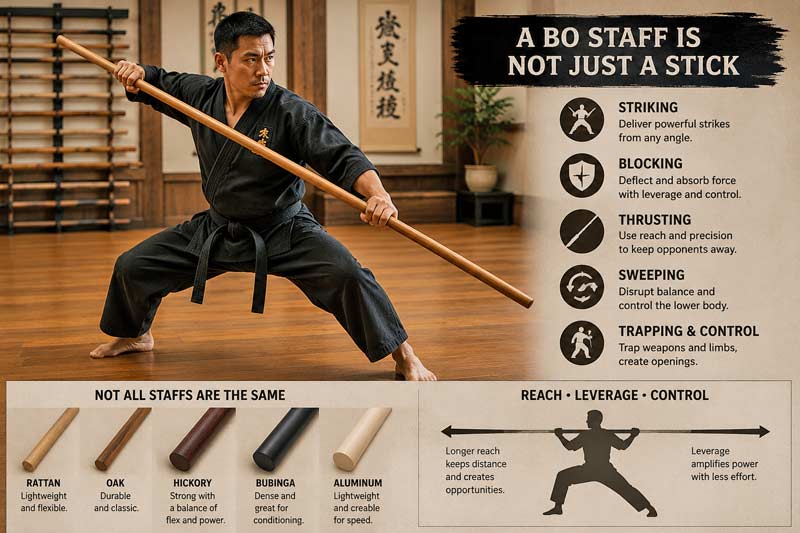
To someone unfamiliar with martial arts, a bo staff can seem incredibly simple. At first glance, it looks like nothing more than a long wooden stick with very little complexity compared to flashier weapons like nunchaku or swords. Because of that, many people assume it is one of the least sophisticated martial arts weapons. In reality, the bo staff is one of the most versatile and technically demanding traditional weapons to learn.
A properly used bo staff can be used for striking, blocking, thrusting, sweeping, trapping, and maintaining distance. The length of the staff creates leverage and reach that dramatically changes how movement and timing work compared to shorter weapons. Small changes in hand placement, footwork, and balance can completely affect how the weapon performs, which is one reason so many martial artists spend years refining their staff techniques.
Another misconception is that all staffs are basically the same. In reality, there are major differences in size, weight, taper, material, and purpose depending on the training style. Some students prefer lighter staffs for speed and fluid movement, while others train with heavier versions for conditioning and power. If you are curious about the different styles available, these martial arts staffs come in a wide range of sizes and materials for different training goals.
The bo staff also has a surprisingly rich history across many martial arts systems, from Okinawan kobudo to Chinese martial arts traditions. Despite its simple appearance, it remains one of the most respected training weapons because mastering it requires timing, coordination, distance control, and patience. If you are curious about the basics, this guide on what a bo staff is explains why such a simple-looking weapon is far more complex than most people expect.
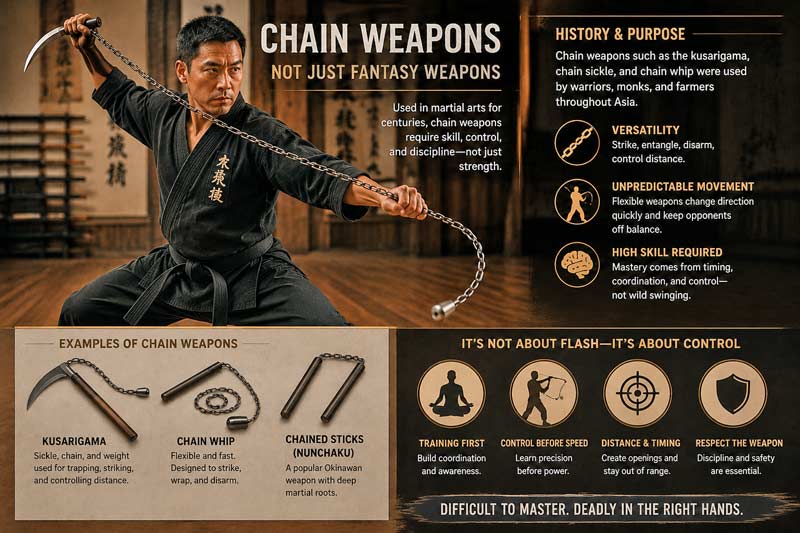
Chain weapons are probably some of the most misunderstood martial arts weapons in existence. Because they appear so often in movies, anime, fantasy games, and over-the-top fight scenes, many people assume weapons like chain whips and kusarigama were either exaggerated for entertainment or never seriously used at all. In reality, chain weapons have a long history in martial arts and require an incredible amount of timing, coordination, and control to use effectively.
One reason these weapons feel "fake" to modern audiences is because they look dramatically different from traditional swords, staffs, or knives. Flexible weapons move unpredictably, can change direction quickly, and demand much more body awareness than rigid weapons. That difficulty is exactly why many martial artists respect them so much. Training with chained martial arts weapons often focuses heavily on coordination, spacing, rhythm, and control before speed ever becomes part of the equation.
The kusarigama is one of the best examples of how misunderstood chain weapons can be. At first glance, it almost looks too unusual to be practical, combining a curved blade with a weighted chain attached to the handle. But historically, the traditional kusarigama was studied for trapping, controlling distance, and creating openings through unpredictable movement. Like many martial arts weapons, it was far more technical than people usually expect.
The biggest misconception is that chain weapons are all about flashy spinning. While demonstrations can certainly look dramatic, experienced practitioners spend far more time learning control, safety, and proper positioning than anything flashy. In reality, these weapons are often respected precisely because they are so difficult to master.
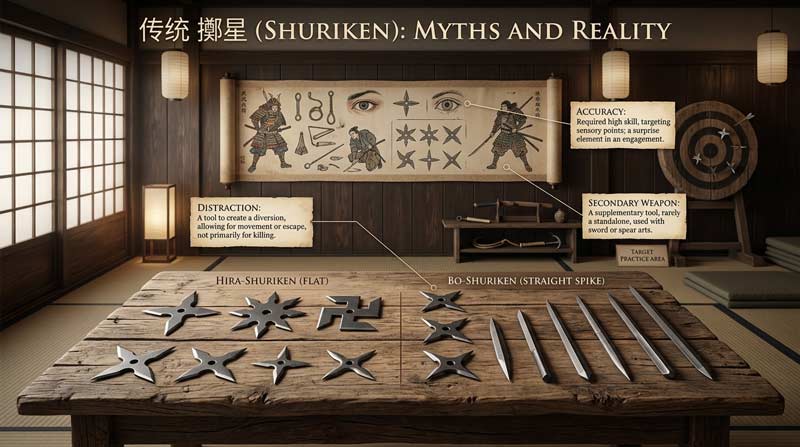
Few martial arts weapons have been exaggerated more than throwing stars. Movies, cartoons, and video games often portray shuriken as deadly, perfectly accurate weapons that instantly stop opponents with a single throw. Because of that, many people assume throwing stars were the primary weapon of ninjas or that they functioned like tiny flying knives capable of ending fights instantly. In reality, the history is far more interesting and much less dramatic.
Historically, shuriken were usually secondary tools rather than primary battlefield weapons. Depending on the design, they could be used for distraction, creating openings, slowing movement, or forcing an opponent to react. Some styles focused on accuracy and repeated throwing rather than power. If you are unfamiliar with the basics, this article on what a shuriken is explains the different styles and historical uses in more detail.
Another misconception is that all throwing stars look the same. In reality, there are many designs, sizes, and shapes ranging from classic multi-pointed stars to straight spike-style shuriken. Some were designed for concealment, while others focused more on consistency and control. Today, many collectors and martial arts enthusiasts still enjoy practicing with throwing stars because of the coordination and skill involved in accurate throwing.
Perhaps the biggest misunderstanding is how effective they actually were. While throwing stars could absolutely be useful in the right context, they were not magic weapons and were rarely intended to instantly incapacitate someone the way movies suggest. If you are curious about the historical reality, this article on whether throwing stars were actually effective breaks down what they realistically could and could not do. If you enjoy ninja history, the evolution of the shuriken also shows how these weapons changed over time.
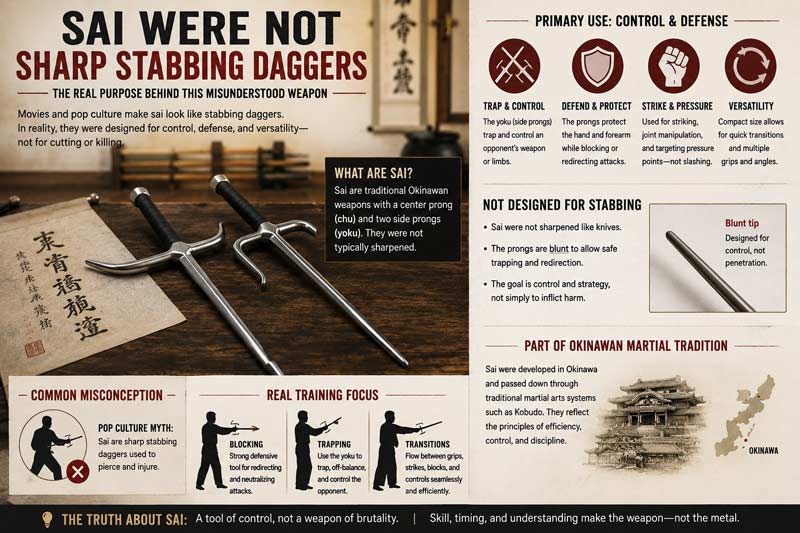
Thanks to movies, cartoons, and pop culture, many people assume sai are basically oversized daggers designed for stabbing. The metal construction and pointed center prong definitely make them look intimidating, which makes the misunderstanding easy to see. But despite their appearance, traditional sai were generally not designed as sharp cutting weapons, and most were never sharpened like knives or swords.
In reality, sai were primarily control and defensive weapons. The side prongs, called yoku, helped trap, redirect, or pin an opponent's weapon while also protecting the user's hand. Instead of focusing on slicing or cutting, practitioners trained with strikes, blocks, trapping movements, and fast transitions between grips. Many Okinawan martial artists valued the sai because of how versatile it could be despite its relatively compact size.
Another misconception is that sai were only meant for offensive fighting. In many martial arts systems, they were appreciated for defense and control just as much as striking ability. The weight of the metal design allowed for strong blocking and quick rotational techniques, while the center shaft could be used for striking pressure points or controlling movement rather than simply stabbing.
Part of the confusion likely comes from how sai are portrayed in movies and animation, where they are often treated like knives or swords. In reality, they functioned very differently and required their own unique training methods. Like many traditional martial arts weapons, the real history and purpose of the sai is much more technical and nuanced than most people expect.
One of the biggest patterns with martial arts weapons is that most people only know the movie version. Nunchaku become flashy spinning props, tonfa get mistaken for police batons, throwing stars become magical ninja weapons, and sai are often treated like oversized daggers. The reality is usually much more interesting. Most traditional weapons evolved for very specific purposes, required years of disciplined training, and were often far more technical than popular culture makes them seem.
Another surprise for many people is how much history overlaps between weapons. Some may have evolved from practical tools, while others were refined through martial arts systems focused on timing, control, coordination, and discipline. If you enjoy learning about the historical side of these tools, this article exploring whether martial arts weapons really started as farm tools dives into one of the biggest debates surrounding traditional martial arts history.
The biggest misconception of all may be assuming martial arts weapons are simple. In reality, even something that looks basic, like a bo staff or sai, can take years to truly understand. That complexity is part of what continues to fascinate martial artists, collectors, and history enthusiasts today. Whether you are interested in traditional training, weapon history, or simply understanding what movies got wrong, learning the real story behind these weapons often turns out to be far more interesting than the myths.
If this article surprised you, there is a good chance you have only scratched the surface. Many traditional martial arts weapons have fascinating histories, training methods, and design details that completely change how you see them once you understand what they were actually meant to do.
1. Nunchaku Are Not Just Movie Weapons
Thanks to movies, cartoons, and martial arts legends, many people assume nunchaku exist mainly for flashy spinning tricks and dramatic fight scenes. For decades, they have been portrayed as fast-moving weapons used by expert fighters to bounce around opponents with impossible speed and precision. While that image helped make nunchucks famous, it also created one of the biggest misunderstandings surrounding martial arts weapons.
In reality, nunchaku have a much deeper history and practical training purpose than most people realize. Historically, they were connected to Okinawan martial arts and became valuable training tools for coordination, control, timing, and weapon handling. Today, many martial artists still practice with nunchaku weapons to improve rhythm, body awareness, and precision, not just to learn flashy spins.
Another common misconception is that all nunchucks are dangerous or only meant for experts. In reality, many beginners start with foam or padded versions before progressing to wood or metal designs. Different materials, lengths, and chain or cord styles all affect how the weapon feels during training. If you are curious about where they actually came from, this breakdown of why nunchucks were actually invented explains the history in much more detail.
And despite what movies might suggest, learning nunchaku is usually much more about patience and coordination than flashy combat. Most students spend a lot of time building control and avoiding accidentally hitting themselves before they ever attempt advanced movements. If you want a better understanding of styles, materials, and training options, this complete guide to nunchucks covers the basics in more detail.
2. Tonfa Were Not Originally Police Batons
Ask most people what a tonfa is, and many will picture a police baton with a side handle. That assumption makes sense because modern side-handle batons were heavily influenced by the traditional tonfa design. But one of the biggest misunderstandings is thinking the tonfa started as law enforcement equipment. In reality, the weapon has much older roots tied to Okinawan martial arts and traditional kobudo training.
There is still some debate about the exact origins of the tonfa, but one of the most widely repeated theories is that it evolved from the wooden handle of a grinding stone used for processing grain. Over time, martial artists adapted the shape into a defensive weapon capable of blocking, striking, trapping, and controlling movement. Whether or not the farm tool theory is completely accurate, the tonfa eventually became an important part of Okinawan martial arts systems. If you enjoy historical weapon debates, this article about whether martial arts weapons really started as farm tools dives deeper into the topic.
Another misconception is that tonfa are mainly offensive weapons. While they can absolutely be used for strikes, one of their biggest strengths is defense. The side handle allows the shaft to rest against the forearm, helping absorb impact and making transitions between blocking and movement feel surprisingly fluid. Today, many practitioners still train with traditional tonfa weapons to practice forms, coordination, and traditional weapons techniques.
The connection to police batons came much later when law enforcement adapted the design into side-handle batons for control and leverage. If you have ever wondered about the differences, this breakdown of the difference between tonfa and police batons explains how the two designs overlap and where they became very different.
3. Karambits Are Not Just Tactical Knives
Because of video games, action movies, and flashy internet videos, many people assume the karambit exists purely as an aggressive tactical weapon. The curved blade, finger ring, and claw-like appearance definitely make it stand out, which has helped build a reputation that feels more dramatic than reality. But one of the biggest misunderstandings about the karambit is assuming it was originally designed only for combat or modern self defense.
In reality, the karambit has much older roots in Southeast Asia and evolved over time from practical cutting tools into martial arts weapons used in systems like Silat and Filipino martial arts. Early versions were often smaller and designed for utility tasks before becoming more specialized through martial arts development. If you are curious about the unusual blade shape, this article on why the karambit knife is curved explains how the claw-inspired design changed the way the knife handled and cut.
Another misconception is that all karambits are meant for flashy spinning tricks. While some users enjoy learning ring transitions and movement, the finger ring was originally valued for control and retention. The ring helps keep the knife secure in the hand and contributes to the unique feel that makes karambits different from more traditional blade shapes. Today, people are interested in karambit knives for many reasons, including collecting, utility, martial arts training, and simply appreciating unusual knife design.
Pop culture definitely helped fuel the knife's popularity, especially in gaming where karambits became iconic for their animations and distinctive appearance. But beneath all the hype is a weapon with a surprisingly long history and a design built around function, not just appearance. If you enjoy unusual weapon history, this guide to the history and evolution of the karambit knife takes a deeper look at how it changed over time.
4. A Bo Staff Is Not Just a Stick
To someone unfamiliar with martial arts, a bo staff can seem incredibly simple. At first glance, it looks like nothing more than a long wooden stick with very little complexity compared to flashier weapons like nunchaku or swords. Because of that, many people assume it is one of the least sophisticated martial arts weapons. In reality, the bo staff is one of the most versatile and technically demanding traditional weapons to learn.
A properly used bo staff can be used for striking, blocking, thrusting, sweeping, trapping, and maintaining distance. The length of the staff creates leverage and reach that dramatically changes how movement and timing work compared to shorter weapons. Small changes in hand placement, footwork, and balance can completely affect how the weapon performs, which is one reason so many martial artists spend years refining their staff techniques.
Another misconception is that all staffs are basically the same. In reality, there are major differences in size, weight, taper, material, and purpose depending on the training style. Some students prefer lighter staffs for speed and fluid movement, while others train with heavier versions for conditioning and power. If you are curious about the different styles available, these martial arts staffs come in a wide range of sizes and materials for different training goals.
The bo staff also has a surprisingly rich history across many martial arts systems, from Okinawan kobudo to Chinese martial arts traditions. Despite its simple appearance, it remains one of the most respected training weapons because mastering it requires timing, coordination, distance control, and patience. If you are curious about the basics, this guide on what a bo staff is explains why such a simple-looking weapon is far more complex than most people expect.
5. Chain Weapons Are Not Just Fantasy Weapons
Chain weapons are probably some of the most misunderstood martial arts weapons in existence. Because they appear so often in movies, anime, fantasy games, and over-the-top fight scenes, many people assume weapons like chain whips and kusarigama were either exaggerated for entertainment or never seriously used at all. In reality, chain weapons have a long history in martial arts and require an incredible amount of timing, coordination, and control to use effectively.
One reason these weapons feel "fake" to modern audiences is because they look dramatically different from traditional swords, staffs, or knives. Flexible weapons move unpredictably, can change direction quickly, and demand much more body awareness than rigid weapons. That difficulty is exactly why many martial artists respect them so much. Training with chained martial arts weapons often focuses heavily on coordination, spacing, rhythm, and control before speed ever becomes part of the equation.
The kusarigama is one of the best examples of how misunderstood chain weapons can be. At first glance, it almost looks too unusual to be practical, combining a curved blade with a weighted chain attached to the handle. But historically, the traditional kusarigama was studied for trapping, controlling distance, and creating openings through unpredictable movement. Like many martial arts weapons, it was far more technical than people usually expect.
The biggest misconception is that chain weapons are all about flashy spinning. While demonstrations can certainly look dramatic, experienced practitioners spend far more time learning control, safety, and proper positioning than anything flashy. In reality, these weapons are often respected precisely because they are so difficult to master.
6. Throwing Stars Were Not Meant to Magically Knock People Out
Few martial arts weapons have been exaggerated more than throwing stars. Movies, cartoons, and video games often portray shuriken as deadly, perfectly accurate weapons that instantly stop opponents with a single throw. Because of that, many people assume throwing stars were the primary weapon of ninjas or that they functioned like tiny flying knives capable of ending fights instantly. In reality, the history is far more interesting and much less dramatic.
Historically, shuriken were usually secondary tools rather than primary battlefield weapons. Depending on the design, they could be used for distraction, creating openings, slowing movement, or forcing an opponent to react. Some styles focused on accuracy and repeated throwing rather than power. If you are unfamiliar with the basics, this article on what a shuriken is explains the different styles and historical uses in more detail.
Another misconception is that all throwing stars look the same. In reality, there are many designs, sizes, and shapes ranging from classic multi-pointed stars to straight spike-style shuriken. Some were designed for concealment, while others focused more on consistency and control. Today, many collectors and martial arts enthusiasts still enjoy practicing with throwing stars because of the coordination and skill involved in accurate throwing.
Perhaps the biggest misunderstanding is how effective they actually were. While throwing stars could absolutely be useful in the right context, they were not magic weapons and were rarely intended to instantly incapacitate someone the way movies suggest. If you are curious about the historical reality, this article on whether throwing stars were actually effective breaks down what they realistically could and could not do. If you enjoy ninja history, the evolution of the shuriken also shows how these weapons changed over time.
7. Sai Were Not Sharp Stabbing Daggers
Thanks to movies, cartoons, and pop culture, many people assume sai are basically oversized daggers designed for stabbing. The metal construction and pointed center prong definitely make them look intimidating, which makes the misunderstanding easy to see. But despite their appearance, traditional sai were generally not designed as sharp cutting weapons, and most were never sharpened like knives or swords.
In reality, sai were primarily control and defensive weapons. The side prongs, called yoku, helped trap, redirect, or pin an opponent's weapon while also protecting the user's hand. Instead of focusing on slicing or cutting, practitioners trained with strikes, blocks, trapping movements, and fast transitions between grips. Many Okinawan martial artists valued the sai because of how versatile it could be despite its relatively compact size.
Another misconception is that sai were only meant for offensive fighting. In many martial arts systems, they were appreciated for defense and control just as much as striking ability. The weight of the metal design allowed for strong blocking and quick rotational techniques, while the center shaft could be used for striking pressure points or controlling movement rather than simply stabbing.
Part of the confusion likely comes from how sai are portrayed in movies and animation, where they are often treated like knives or swords. In reality, they functioned very differently and required their own unique training methods. Like many traditional martial arts weapons, the real history and purpose of the sai is much more technical and nuanced than most people expect.
Martial Arts Weapons Are Usually More Complicated Than They Look
One of the biggest patterns with martial arts weapons is that most people only know the movie version. Nunchaku become flashy spinning props, tonfa get mistaken for police batons, throwing stars become magical ninja weapons, and sai are often treated like oversized daggers. The reality is usually much more interesting. Most traditional weapons evolved for very specific purposes, required years of disciplined training, and were often far more technical than popular culture makes them seem.
Another surprise for many people is how much history overlaps between weapons. Some may have evolved from practical tools, while others were refined through martial arts systems focused on timing, control, coordination, and discipline. If you enjoy learning about the historical side of these tools, this article exploring whether martial arts weapons really started as farm tools dives into one of the biggest debates surrounding traditional martial arts history.
The biggest misconception of all may be assuming martial arts weapons are simple. In reality, even something that looks basic, like a bo staff or sai, can take years to truly understand. That complexity is part of what continues to fascinate martial artists, collectors, and history enthusiasts today. Whether you are interested in traditional training, weapon history, or simply understanding what movies got wrong, learning the real story behind these weapons often turns out to be far more interesting than the myths.
If this article surprised you, there is a good chance you have only scratched the surface. Many traditional martial arts weapons have fascinating histories, training methods, and design details that completely change how you see them once you understand what they were actually meant to do.
You May Also Be Interested In:
- Why Some Martial Arts Weapons Are Illegal in Certain Places
- 7 Weird Martial Arts Weapons That Actually Existed
- Were Martial Arts Weapons Really Farm Tools?
- The Biggest Lies Movies Told You About Martial Arts Weapons
- The Evolution of the Shuriken: From Samurai to Modern Martial Arts
- What Is the Hardest Martial Arts Weapon to Master? We Ranked Them
- What Is a Fighting Cane? A Beginner's Guide to Martial Arts Canes
- The Complete Guide to Martial Arts Staffs: A Beginner-Friendly Breakdown
- The Fastest Weapon in Martial Arts? Why Kali Practitioners Move So Differently
- The Real History of Escrima Sticks: From Battlefield Weapon to Modern Martial Art
Leave a Reply