




7 Weird Martial Arts Weapons That Actually Existed
May 22nd, 2026
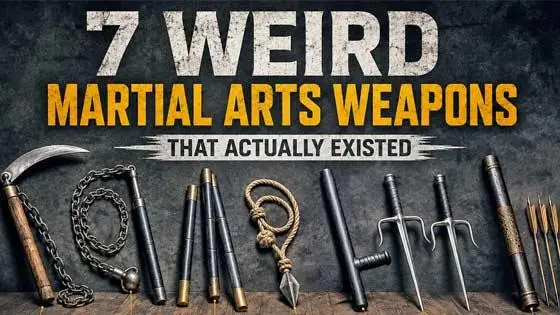
When most people think of martial arts weapons, they picture swords, staffs, nunchucks, or maybe throwing stars. But once you dig into martial arts history, things start getting much stranger. Some traditional weapons look so unusual that they almost seem made up for movies, anime, or fantasy games. Weapons with chains, hidden blades, flexible cords, and bizarre shapes often leave people wondering whether they were ever actually used at all.
Surprisingly, many of the weirdest martial arts weapons were very real and required years of training to use effectively. Some were designed for trapping and control, others for unpredictability or flexibility, and many developed through highly specialized martial arts systems. In this guide, we are looking at seven weird martial arts weapons that sound fictional, look completely impractical, and somehow actually existed.
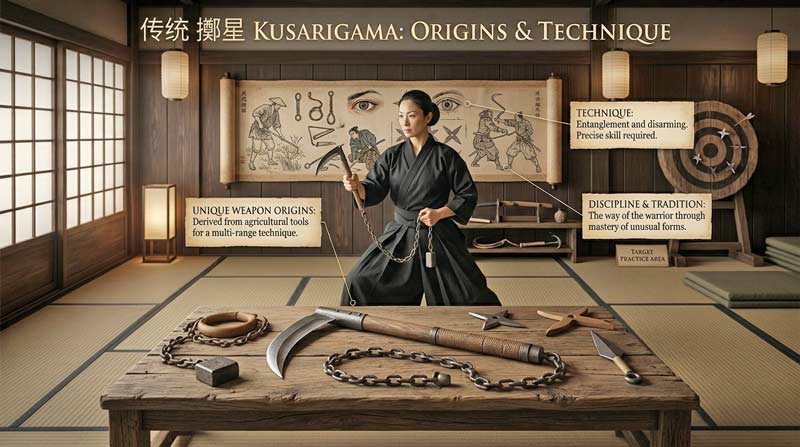
If someone described a weapon that combined a farming sickle with a long chain and weighted metal ball, it would sound more like something from a fantasy game than a real martial arts weapon. Yet the kusarigama was absolutely real and remains one of the strangest traditional weapons ever studied in martial arts. To modern eyes, it almost looks too bizarre to work, which is exactly why it deserves a spot at the top of this list.
The kusarigama combines two very different tools into one system. The curved blade could be used for close-range control and cutting movements, while the weighted chain added distance, unpredictability, and trapping potential. Instead of relying on straightforward strikes, the weapon often focused on controlling movement, disrupting timing, and creating openings. That unusual combination made it one of the more technical and difficult weapons to master.
Another reason the kusarigama feels so strange is because flexible weapons behave very differently than rigid ones. Unlike a sword or staff, the chain changes direction, momentum, and speed constantly, which means timing and body control become extremely important. Practitioners training with chained martial arts weapons often spend huge amounts of time learning control before attempting anything fast or dramatic.
The weapon is also surrounded by myths because of its association with ninja culture and historical martial arts. While movies tend to exaggerate how it was used, the traditional kusarigama was respected precisely because it required so much skill to handle effectively. Strange as it looks, it was far more than just a theatrical prop or fantasy invention.
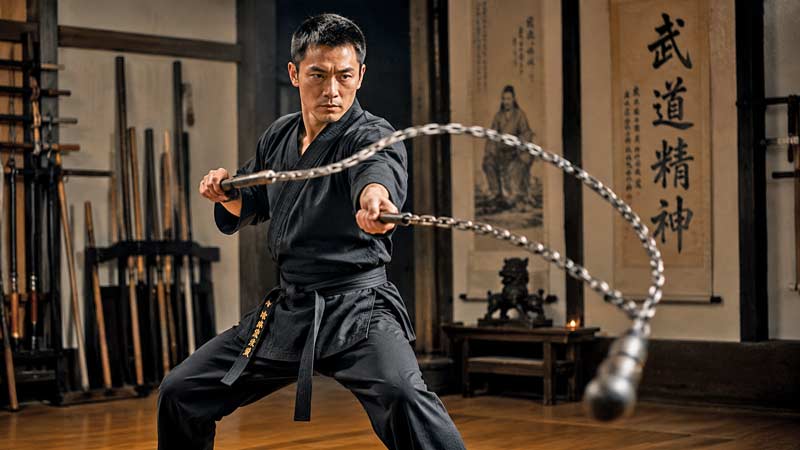
If there is one martial arts weapon that makes people say, "There is no way that is real," it is probably the chain whip. Long, flexible, fast-moving, and seemingly unpredictable, chain whips often look more like circus props or fantasy weapons than something anyone could actually learn to use. But despite how strange they appear, chain whips have been part of martial arts training for centuries and require an incredible amount of precision and body control.
Unlike rigid weapons such as staffs or swords, chain whips move dynamically with momentum. Every movement affects speed, direction, and timing, which means the user has to constantly manage control or risk tangling the weapon or striking themselves. That challenge is part of what makes flexible weapons so respected in martial arts training. Students practicing with chained martial arts weapons often spend countless hours learning spacing, rhythm, and body positioning before attempting anything fast or visually dramatic.
To an outside observer, chain whip techniques can almost look impossible. The weapon wraps, spins, snaps, and changes direction in ways that seem unpredictable, especially during demonstrations. But behind the flashy movement is a surprising amount of discipline and repetition. Practitioners train to understand momentum rather than fight against it, which is one reason flexible weapons tend to have a much steeper learning curve than more rigid martial arts tools.
Part of what makes chain whips feel so unusual is that they blur the line between weapon and movement art. When used skillfully, the weapon flows with the body in ways that almost resemble dance or performance. That visual complexity is exactly why many people assume chain whips are fictional, when in reality they have long been respected as highly technical training weapons.
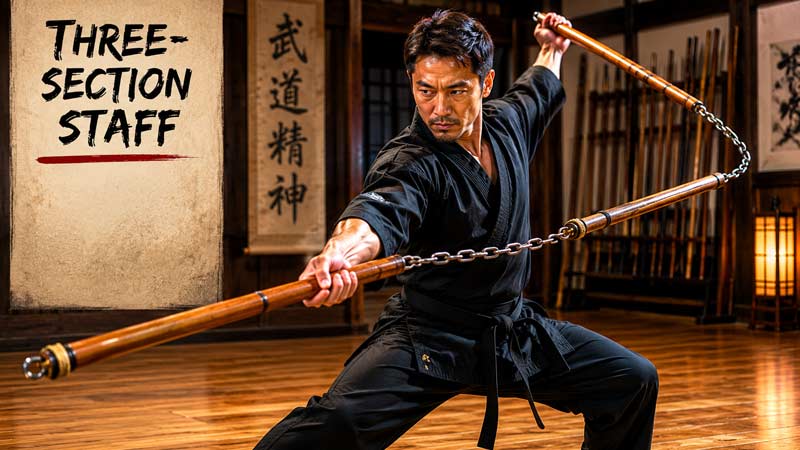
If there is one martial arts weapon that consistently makes people wonder, "How is anyone supposed to control that thing?" it is the three-section staff. At first glance, it looks chaotic, awkward, and borderline dangerous, combining three wooden staffs connected by chains or rope into something that seems impossible to predict. To outsiders, it often looks more like a weapon invented for movies than something a real martial artist would voluntarily train with.
But despite its intimidating appearance, the three-section staff is very real and has been practiced in traditional martial arts for centuries. The weapon was designed to combine some of the striking power and reach of a long staff with the flexibility and unpredictability of chain weapons. In skilled hands, it can strike from unusual angles, wrap around defenses, and transition between long-range and close-range movement in ways that rigid weapons simply cannot.
What makes the weapon so unusual is also what makes it so difficult to learn. Because each section moves independently, timing and control become incredibly important. Beginners quickly discover that the biggest threat is often accidentally hitting themselves. Like many flexible martial arts tools, mastery comes from repetition, patience, and understanding momentum rather than trying to overpower the weapon.
The three-section staff also blurs the line between traditional staff weapons and flexible chain systems, which is one reason it feels so strange to modern audiences. To people unfamiliar with martial arts, it can almost look impossible to use effectively, but experienced practitioners often appreciate it precisely because of the coordination and discipline required to control it.
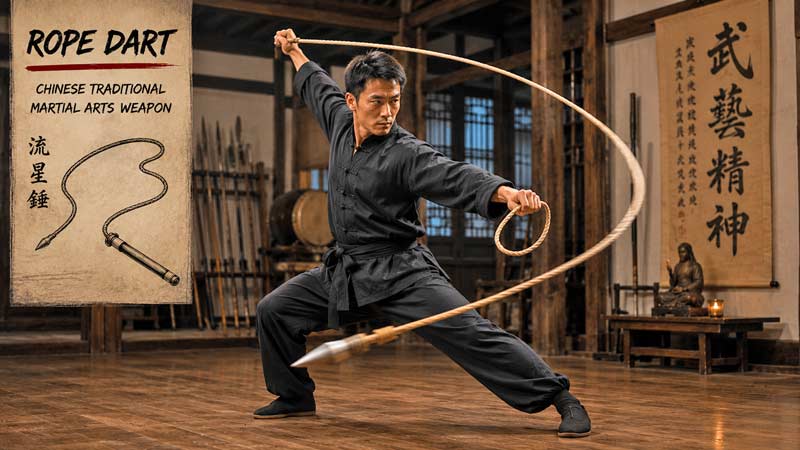
If there is one martial arts weapon that seems completely impossible to outsiders, it is probably the rope dart. With a pointed metal dart attached to a long rope, the weapon moves in huge sweeping circles, wraps around the body, and changes direction so quickly that it almost looks unreal. To someone seeing it for the first time, it can feel more like a performance act or movie special effect than a legitimate martial arts weapon.
But despite how unbelievable it looks, the rope dart has a long history in Chinese martial arts and remains one of the most visually impressive traditional weapons ever practiced. Unlike rigid weapons that rely on direct strikes and blocks, the rope dart uses momentum, body positioning, and timing to create movement. Practitioners often guide the weapon around the neck, waist, arms, or legs to redirect energy and maintain control, which is one reason the weapon looks almost superhuman when used skillfully.
The biggest reason rope darts seem fake is because they require such unusual movement. Instead of standing still or trading straightforward strikes, practitioners use spinning, footwork, and full-body coordination to generate speed and precision. Beginners quickly learn that controlling momentum matters far more than strength, and many accidentally hit themselves more than anything else during early training.
Like many unusual martial arts weapons, the rope dart blurs the line between combat skill, athletic movement, and performance art. Its strange appearance and flowing movement make it one of the easiest martial arts weapons to mistake for fantasy, even though it has been studied and practiced for generations.
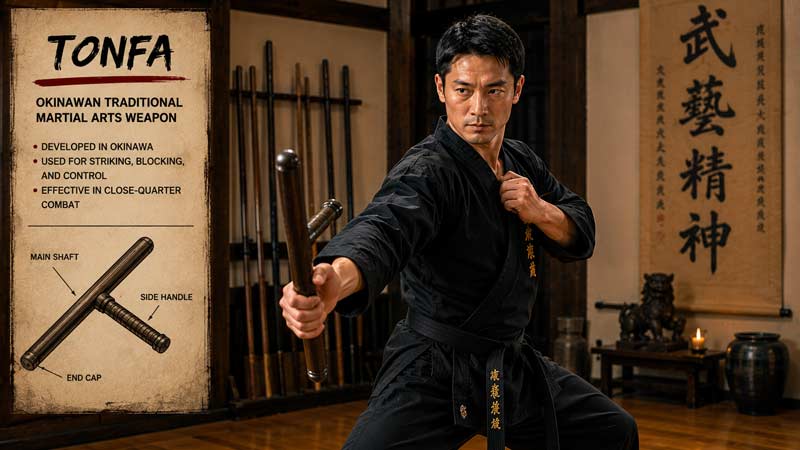
At first glance, tonfa often confuse people who are unfamiliar with traditional martial arts. Many assume they are simply old versions of police batons or nightsticks because of the side handle and defensive appearance. That assumption is understandable since modern side-handle police batons were heavily inspired by the tonfa design. But despite the resemblance, tonfa have a much older and stranger history than most people realize.
One reason tonfa feel unusual is because they do not immediately look like weapons at all. Unlike swords, staffs, or knives, the shape seems oddly practical and almost improvised. Historians still debate their exact origins, but one of the most common theories is that they evolved from the wooden handle of a grinding stone used in Okinawa. Whether or not that theory is completely accurate, the weapon eventually became an important part of traditional martial arts systems. If you are curious about the history, this article on how the tonfa was originally used explores the debate in more detail.
Another misconception is that tonfa are mainly offensive weapons. In reality, one of their biggest strengths comes from defense and control. The side handle allows the main shaft to rest against the forearm, creating opportunities for blocking, redirection, and quick transitions between movement and striking. Practitioners training with traditional tonfa weapons often spend significant time learning coordination and proper positioning because the weapon behaves very differently than more familiar martial arts tools.
Part of what makes tonfa feel so strange to modern audiences is that they blur the line between defensive tool and weapon. To many people, they still look like police gear, but in reality, they have deep roots in Okinawan martial arts and remain one of the more unique traditional weapons still practiced today.
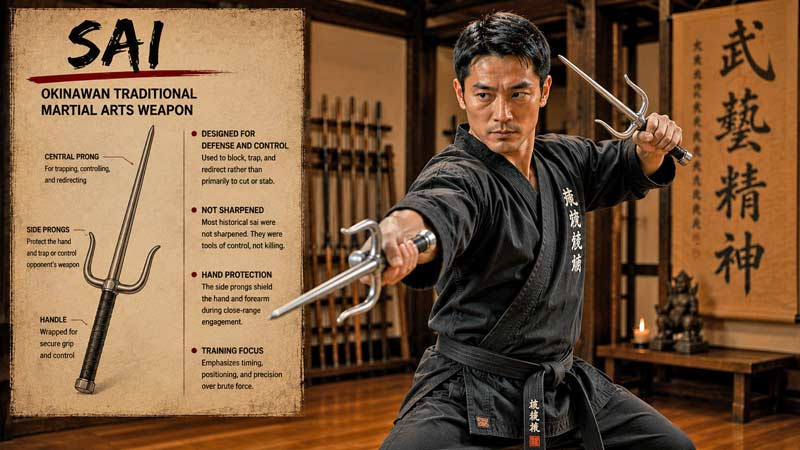
At first glance, sai look intimidating. With their pointed center prong and curved side guards, many people assume they were designed as sharp stabbing daggers meant for aggressive combat. Movies, cartoons, and video games only reinforced that image, often portraying sai as oversized knives used for dramatic attacks. But despite how dangerous they look, the real purpose of the sai was far more technical and defensive than most people realize.
One reason sai feel so unusual is because they do not behave like traditional blades at all. Most historical sai were not sharpened like knives or swords, and cutting was never their primary purpose. Instead, the design focused heavily on trapping, blocking, redirecting, and controlling movement. The side prongs helped protect the hand while also creating opportunities to pin or manipulate an opponent's weapon during training.
To outsiders, the weapon can seem strange because it sits somewhere between a baton, a dagger, and a defensive tool without fully behaving like any of them. Practitioners often train with fast grip transitions, spinning techniques, and defensive positioning rather than straightforward stabbing motions. If you are curious about how misunderstood traditional weapons can be, this breakdown of the most misunderstood martial arts weapons explores how pop culture changed people's perception of tools like the sai.
Part of what makes sai so fascinating is how deceptive they are. They look simple, sharp, and aggressive, but in practice they often emphasize control, timing, and precision over brute force. That contrast is exactly why they still feel so strange to people seeing them for the first time.
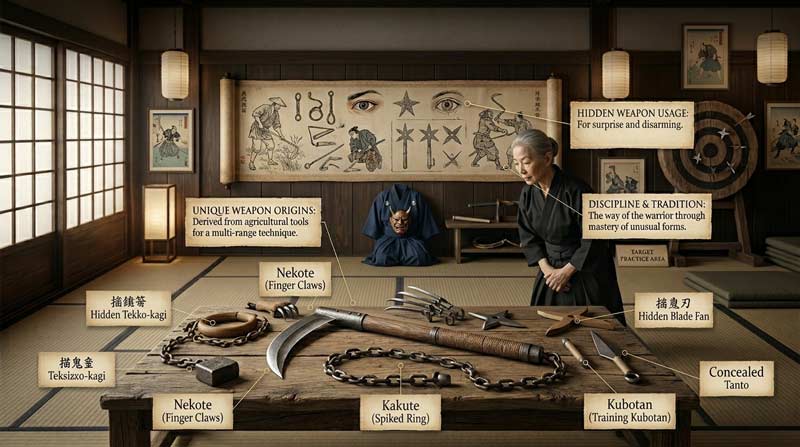
Some of the weirdest martial arts weapons were not designed to look intimidating at all. In fact, many hidden weapons were created specifically to avoid attention. To modern audiences, these tools often seem more like something from a spy movie than traditional martial arts history. Small blades hidden in everyday objects, concealed striking tools, and compact defensive weapons can feel so unusual that many people assume they were invented for fiction. Surprisingly, many of them were very real.
One reason hidden weapons feel so strange is because they challenge what most people picture when they think about martial arts. Instead of long staffs or dramatic swords, these tools often focused on concealment, portability, and practicality. Some were designed to be carried discreetly, while others blended into everyday objects or clothing. That unusual design philosophy is exactly what makes them feel so different from more recognizable martial arts weapons.
Historically, hidden tools were sometimes associated with espionage, personal protection, or situations where carrying a larger weapon was unrealistic. Their compact size often required completely different training methods centered around timing, positioning, and close-range control rather than power or reach. Many people exploring hidden martial arts weapons are surprised by how creative and unusual some of these historical designs became over time.
Part of what makes hidden weapons so fascinating is how much mystery surrounds them. Because they are smaller and less recognizable than swords or staffs, many people never realize how much variety actually existed. If unusual martial arts history interests you, these traditional ninja weapons highlight even more strange tools that continue to capture people's imagination centuries later.
Martial arts history is full of weapons that seem too strange to be real. A sickle attached to a chain, a dart flying around on a rope, a three-section staff that looks impossible to control, or hidden weapons disguised to avoid attention all sound more like fantasy concepts than historical tools. But one of the most fascinating things about martial arts is how creative and specialized many of these weapons actually became over time.
Part of what makes unusual weapons so interesting is that they often required completely different skills than more familiar tools like swords or staffs. Flexible weapons demanded timing and momentum, hidden tools emphasized positioning and precision, and strange-looking designs often evolved to solve very specific problems. That complexity is one reason unusual martial arts weapons continue to fascinate practitioners, collectors, and history enthusiasts today.
Of course, the weirdest-looking weapons are often the most misunderstood. To outsiders, many seem exaggerated, impractical, or made up entirely. But as we explored in this guide, even the strangest tools often had real historical roots and highly technical training systems behind them. If you enjoy learning about unusual designs, there are many more unusual martial arts weapons with fascinating stories and training styles worth exploring.
And if this list proved anything, it is that martial arts history is often much stranger than fiction. The next time you see a chain whip, rope dart, or kusarigama in a movie or game, there is a good chance it was inspired by something that martial artists really spent years learning to master.
1. Kusarigama: The Chain-and-Sickle Weapon That Looks Completely Unreal
If someone described a weapon that combined a farming sickle with a long chain and weighted metal ball, it would sound more like something from a fantasy game than a real martial arts weapon. Yet the kusarigama was absolutely real and remains one of the strangest traditional weapons ever studied in martial arts. To modern eyes, it almost looks too bizarre to work, which is exactly why it deserves a spot at the top of this list.
The kusarigama combines two very different tools into one system. The curved blade could be used for close-range control and cutting movements, while the weighted chain added distance, unpredictability, and trapping potential. Instead of relying on straightforward strikes, the weapon often focused on controlling movement, disrupting timing, and creating openings. That unusual combination made it one of the more technical and difficult weapons to master.
Another reason the kusarigama feels so strange is because flexible weapons behave very differently than rigid ones. Unlike a sword or staff, the chain changes direction, momentum, and speed constantly, which means timing and body control become extremely important. Practitioners training with chained martial arts weapons often spend huge amounts of time learning control before attempting anything fast or dramatic.
The weapon is also surrounded by myths because of its association with ninja culture and historical martial arts. While movies tend to exaggerate how it was used, the traditional kusarigama was respected precisely because it required so much skill to handle effectively. Strange as it looks, it was far more than just a theatrical prop or fantasy invention.
2. Chain Whips: The Flexible Weapon That Looks Impossible to Control
If there is one martial arts weapon that makes people say, "There is no way that is real," it is probably the chain whip. Long, flexible, fast-moving, and seemingly unpredictable, chain whips often look more like circus props or fantasy weapons than something anyone could actually learn to use. But despite how strange they appear, chain whips have been part of martial arts training for centuries and require an incredible amount of precision and body control.
Unlike rigid weapons such as staffs or swords, chain whips move dynamically with momentum. Every movement affects speed, direction, and timing, which means the user has to constantly manage control or risk tangling the weapon or striking themselves. That challenge is part of what makes flexible weapons so respected in martial arts training. Students practicing with chained martial arts weapons often spend countless hours learning spacing, rhythm, and body positioning before attempting anything fast or visually dramatic.
To an outside observer, chain whip techniques can almost look impossible. The weapon wraps, spins, snaps, and changes direction in ways that seem unpredictable, especially during demonstrations. But behind the flashy movement is a surprising amount of discipline and repetition. Practitioners train to understand momentum rather than fight against it, which is one reason flexible weapons tend to have a much steeper learning curve than more rigid martial arts tools.
Part of what makes chain whips feel so unusual is that they blur the line between weapon and movement art. When used skillfully, the weapon flows with the body in ways that almost resemble dance or performance. That visual complexity is exactly why many people assume chain whips are fictional, when in reality they have long been respected as highly technical training weapons.
3. Three-Section Staff: The Weapon That Looks Almost Impossible to Use
If there is one martial arts weapon that consistently makes people wonder, "How is anyone supposed to control that thing?" it is the three-section staff. At first glance, it looks chaotic, awkward, and borderline dangerous, combining three wooden staffs connected by chains or rope into something that seems impossible to predict. To outsiders, it often looks more like a weapon invented for movies than something a real martial artist would voluntarily train with.
But despite its intimidating appearance, the three-section staff is very real and has been practiced in traditional martial arts for centuries. The weapon was designed to combine some of the striking power and reach of a long staff with the flexibility and unpredictability of chain weapons. In skilled hands, it can strike from unusual angles, wrap around defenses, and transition between long-range and close-range movement in ways that rigid weapons simply cannot.
What makes the weapon so unusual is also what makes it so difficult to learn. Because each section moves independently, timing and control become incredibly important. Beginners quickly discover that the biggest threat is often accidentally hitting themselves. Like many flexible martial arts tools, mastery comes from repetition, patience, and understanding momentum rather than trying to overpower the weapon.
The three-section staff also blurs the line between traditional staff weapons and flexible chain systems, which is one reason it feels so strange to modern audiences. To people unfamiliar with martial arts, it can almost look impossible to use effectively, but experienced practitioners often appreciate it precisely because of the coordination and discipline required to control it.
4. Rope Dart: The Weapon That Looks More Like a Magic Trick Than Martial Arts
If there is one martial arts weapon that seems completely impossible to outsiders, it is probably the rope dart. With a pointed metal dart attached to a long rope, the weapon moves in huge sweeping circles, wraps around the body, and changes direction so quickly that it almost looks unreal. To someone seeing it for the first time, it can feel more like a performance act or movie special effect than a legitimate martial arts weapon.
But despite how unbelievable it looks, the rope dart has a long history in Chinese martial arts and remains one of the most visually impressive traditional weapons ever practiced. Unlike rigid weapons that rely on direct strikes and blocks, the rope dart uses momentum, body positioning, and timing to create movement. Practitioners often guide the weapon around the neck, waist, arms, or legs to redirect energy and maintain control, which is one reason the weapon looks almost superhuman when used skillfully.
The biggest reason rope darts seem fake is because they require such unusual movement. Instead of standing still or trading straightforward strikes, practitioners use spinning, footwork, and full-body coordination to generate speed and precision. Beginners quickly learn that controlling momentum matters far more than strength, and many accidentally hit themselves more than anything else during early training.
Like many unusual martial arts weapons, the rope dart blurs the line between combat skill, athletic movement, and performance art. Its strange appearance and flowing movement make it one of the easiest martial arts weapons to mistake for fantasy, even though it has been studied and practiced for generations.
5. Tonfa: The Weapon Most People Mistake for a Police Baton
At first glance, tonfa often confuse people who are unfamiliar with traditional martial arts. Many assume they are simply old versions of police batons or nightsticks because of the side handle and defensive appearance. That assumption is understandable since modern side-handle police batons were heavily inspired by the tonfa design. But despite the resemblance, tonfa have a much older and stranger history than most people realize.
One reason tonfa feel unusual is because they do not immediately look like weapons at all. Unlike swords, staffs, or knives, the shape seems oddly practical and almost improvised. Historians still debate their exact origins, but one of the most common theories is that they evolved from the wooden handle of a grinding stone used in Okinawa. Whether or not that theory is completely accurate, the weapon eventually became an important part of traditional martial arts systems. If you are curious about the history, this article on how the tonfa was originally used explores the debate in more detail.
Another misconception is that tonfa are mainly offensive weapons. In reality, one of their biggest strengths comes from defense and control. The side handle allows the main shaft to rest against the forearm, creating opportunities for blocking, redirection, and quick transitions between movement and striking. Practitioners training with traditional tonfa weapons often spend significant time learning coordination and proper positioning because the weapon behaves very differently than more familiar martial arts tools.
Part of what makes tonfa feel so strange to modern audiences is that they blur the line between defensive tool and weapon. To many people, they still look like police gear, but in reality, they have deep roots in Okinawan martial arts and remain one of the more unique traditional weapons still practiced today.
6. Sai: The Three-Pronged Weapon That Looks Deadlier Than It Really Was
At first glance, sai look intimidating. With their pointed center prong and curved side guards, many people assume they were designed as sharp stabbing daggers meant for aggressive combat. Movies, cartoons, and video games only reinforced that image, often portraying sai as oversized knives used for dramatic attacks. But despite how dangerous they look, the real purpose of the sai was far more technical and defensive than most people realize.
One reason sai feel so unusual is because they do not behave like traditional blades at all. Most historical sai were not sharpened like knives or swords, and cutting was never their primary purpose. Instead, the design focused heavily on trapping, blocking, redirecting, and controlling movement. The side prongs helped protect the hand while also creating opportunities to pin or manipulate an opponent's weapon during training.
To outsiders, the weapon can seem strange because it sits somewhere between a baton, a dagger, and a defensive tool without fully behaving like any of them. Practitioners often train with fast grip transitions, spinning techniques, and defensive positioning rather than straightforward stabbing motions. If you are curious about how misunderstood traditional weapons can be, this breakdown of the most misunderstood martial arts weapons explores how pop culture changed people's perception of tools like the sai.
Part of what makes sai so fascinating is how deceptive they are. They look simple, sharp, and aggressive, but in practice they often emphasize control, timing, and precision over brute force. That contrast is exactly why they still feel so strange to people seeing them for the first time.
7. Hidden Weapons: The Strange Tools Designed to Stay Out of Sight
Some of the weirdest martial arts weapons were not designed to look intimidating at all. In fact, many hidden weapons were created specifically to avoid attention. To modern audiences, these tools often seem more like something from a spy movie than traditional martial arts history. Small blades hidden in everyday objects, concealed striking tools, and compact defensive weapons can feel so unusual that many people assume they were invented for fiction. Surprisingly, many of them were very real.
One reason hidden weapons feel so strange is because they challenge what most people picture when they think about martial arts. Instead of long staffs or dramatic swords, these tools often focused on concealment, portability, and practicality. Some were designed to be carried discreetly, while others blended into everyday objects or clothing. That unusual design philosophy is exactly what makes them feel so different from more recognizable martial arts weapons.
Historically, hidden tools were sometimes associated with espionage, personal protection, or situations where carrying a larger weapon was unrealistic. Their compact size often required completely different training methods centered around timing, positioning, and close-range control rather than power or reach. Many people exploring hidden martial arts weapons are surprised by how creative and unusual some of these historical designs became over time.
Part of what makes hidden weapons so fascinating is how much mystery surrounds them. Because they are smaller and less recognizable than swords or staffs, many people never realize how much variety actually existed. If unusual martial arts history interests you, these traditional ninja weapons highlight even more strange tools that continue to capture people's imagination centuries later.
Sometimes the Weirdest Weapons Were the Most Interesting
Martial arts history is full of weapons that seem too strange to be real. A sickle attached to a chain, a dart flying around on a rope, a three-section staff that looks impossible to control, or hidden weapons disguised to avoid attention all sound more like fantasy concepts than historical tools. But one of the most fascinating things about martial arts is how creative and specialized many of these weapons actually became over time.
Part of what makes unusual weapons so interesting is that they often required completely different skills than more familiar tools like swords or staffs. Flexible weapons demanded timing and momentum, hidden tools emphasized positioning and precision, and strange-looking designs often evolved to solve very specific problems. That complexity is one reason unusual martial arts weapons continue to fascinate practitioners, collectors, and history enthusiasts today.
Of course, the weirdest-looking weapons are often the most misunderstood. To outsiders, many seem exaggerated, impractical, or made up entirely. But as we explored in this guide, even the strangest tools often had real historical roots and highly technical training systems behind them. If you enjoy learning about unusual designs, there are many more unusual martial arts weapons with fascinating stories and training styles worth exploring.
And if this list proved anything, it is that martial arts history is often much stranger than fiction. The next time you see a chain whip, rope dart, or kusarigama in a movie or game, there is a good chance it was inspired by something that martial artists really spent years learning to master.
You May Also Be Interested In:
- The 7 Most Misunderstood Martial Arts Weapons
- Were Martial Arts Weapons Really Farm Tools?
- Why Some Martial Arts Weapons Are Illegal in Certain Places
- The Biggest Lies Movies Told You About Martial Arts Weapons
- The Evolution of the Shuriken: From Samurai to Modern Martial Arts
- What Is the Hardest Martial Arts Weapon to Master? We Ranked Them
- What Is a Fighting Cane? A Beginner's Guide to Martial Arts Canes
- The Complete Guide to Martial Arts Staffs: A Beginner-Friendly Breakdown
- The Fastest Weapon in Martial Arts? Why Kali Practitioners Move So Differently
- Deadly Weapons You Didn't Know Existed
Leave a Reply