





Why Is the Karambit Knife Curved?
May 21st, 2026
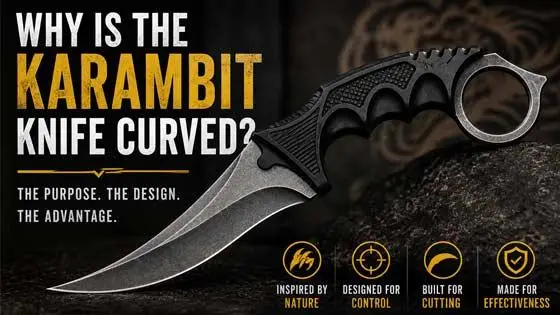
If you have ever looked at a karambit knife, one thing immediately stands out: the blade looks nothing like a traditional knife. Instead of a straight edge or pointed drop point, the karambit has a sharply curved shape that almost resembles a claw. To someone unfamiliar with the design, it can seem strange, aggressive, or even purely decorative. But the truth is, the curve is not just for looks. It serves a very specific purpose that traces back centuries to the knife's original use in Southeast Asia. Historically, the karambit evolved because its curved shape offered unique advantages for gripping, cutting, control, and fluid movement. The curved blade was inspired by animal claws and later refined to maximize cutting efficiency and close-range handling.
In this guide, we will break down exactly why the karambit knife is curved, how the shape affects cutting and control, and why this unusual design helped make the knife so popular among martial artists, collectors, utility users, and even video game fans. Whether you are new to karambits or already own one, understanding the purpose behind the blade shape makes it much easier to appreciate why this knife looks and feels so different from almost anything else. Curved karambit blades are often valued because they support slicing and hooking motions while maintaining a secure grip through the retention ring, which contributes to both utility and handling.
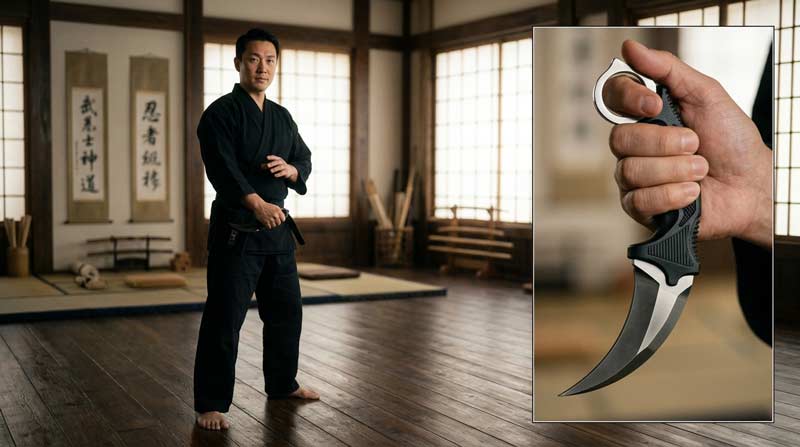
Before understanding why a karambit knife is curved, it helps to understand what makes a karambit different from other knives in the first place. A karambit is a compact curved knife that usually features a finger ring at the end of the handle for added retention and control. Unlike most traditional knives that are designed around straight thrusting or slicing motions, the karambit was built to excel at controlled curved cutting movements.
The karambit originated in Southeast Asia, particularly Indonesia, Malaysia, and the Philippines, where early versions were inspired by the shape and movement of animal claws. Over time, the design evolved from a practical utility tool into a martial arts weapon used in systems like Silat and Filipino martial arts. Today, karambits are used for everything from martial arts training and collecting to everyday carry and utility purposes.
One of the biggest reasons the karambit feels so different in the hand is the retention ring. The ring helps keep the knife secure during movement and allows users to maintain control even during quick transitions or grip changes. This is one reason many people become interested in karambits after learning what a karambit knife is and how its design differs from more conventional blades.
Today, there are many different styles available, ranging from folding designs to fixed blades with aggressive curves and specialized handle shapes. If you want to browse different styles and blade options, there are many types of karambit knives designed for collecting, training, utility, and everyday carry.
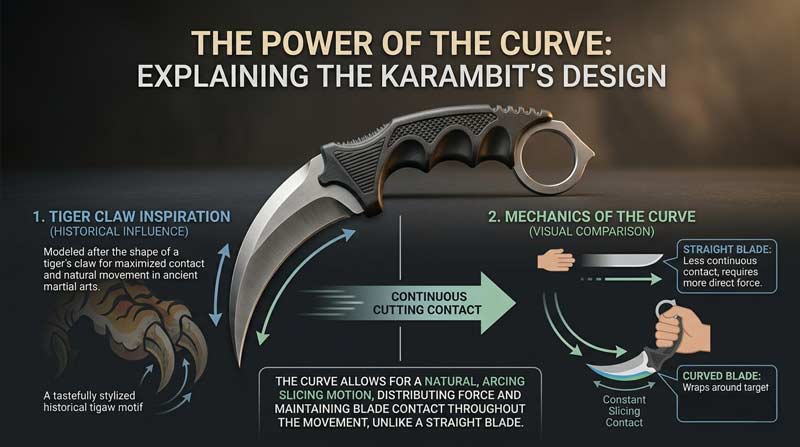
The curved shape of the karambit knife is not just for appearance. It was designed that way for a reason. Unlike straight blades that are often optimized for stabbing or straight slicing motions, the karambit's claw-like curve naturally follows the motion of the hand and wrist. This makes certain cutting movements feel smoother, more controlled, and more efficient.
One of the biggest advantages of a curved blade is how it maintains contact during slicing motions. As the blade moves through material, the curve helps keep more of the edge engaged rather than relying on a single straight point of contact. This creates a strong drawing cut and is one reason curved blades have remained popular in many cultures throughout history.
The shape was also inspired by animal claws, particularly tiger claws, which influenced many Southeast Asian weapon designs and martial arts traditions. Early karambits were meant to function almost like a natural extension of the hand, allowing the user to hook, pull, slice, and control movement more fluidly than many straight knives. That inspiration is still obvious today when you look at the aggressive inward curve of most karambit blades.
Another reason the curve matters is retention and control. Combined with the finger ring, the blade orientation makes the knife feel secure during movement and less likely to slip during grip changes. This is one reason many enthusiasts become interested in why karambit knives are so effective and how the unusual shape changes the way the knife performs compared to more conventional blade styles.
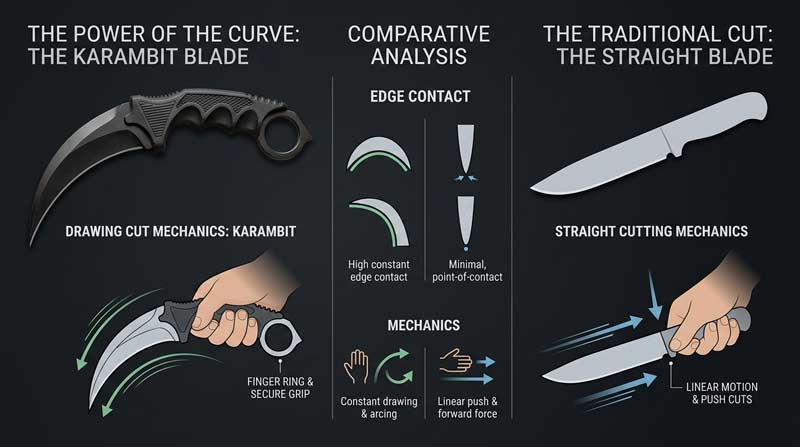
The karambit's curved blade changes the way cutting works compared to a traditional straight knife. Instead of relying mostly on pushing or straight slicing motions, the karambit is designed to excel at pulling and drawing cuts. As the blade moves, the inward curve naturally helps keep more of the edge engaged with the material, which can make slicing motions feel smoother and more controlled.
One way to think about it is to imagine the difference between dragging a hook versus pushing a straight edge across something. The curved blade tends to "grab" and follow through more naturally, which is part of the reason curved knives have been used throughout history for farming tools, utility cutting, and martial arts applications. The shape allows the knife to maintain contact through motion instead of briefly touching at one point like some straighter blade profiles.
The design also helps with precision and control. Because the blade follows a more natural arc that works with wrist movement, many people find the karambit feels surprisingly intuitive once they get used to it. Combined with the retention ring, the overall shape helps the knife stay stable during movement and allows for confident handling.
Of course, the curved shape is not ideal for every task. Straight blades are often better for certain utility jobs that require clean push cuts or precision carving. That is part of why some people compare blade styles when deciding what works best for their needs. If you are curious how different compact blade designs compare, this breakdown of karambit vs push dagger explains how their shapes affect handling and use.
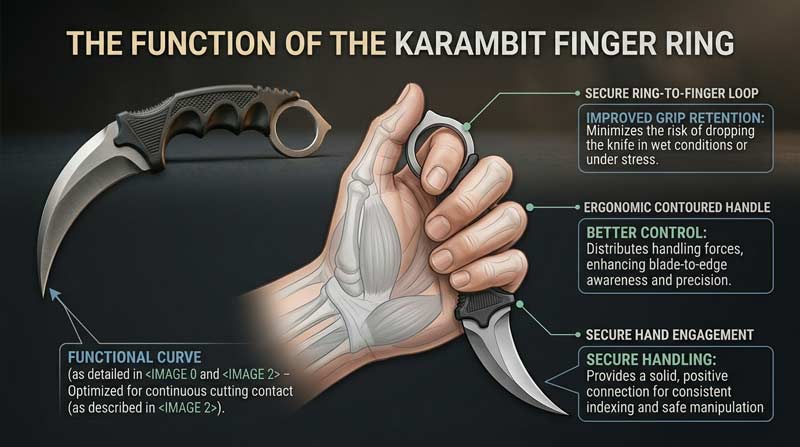
One of the most recognizable features of a karambit knife is the ring at the end of the handle. At first glance, it may look like a simple design choice, but the finger ring actually serves an important purpose. The ring helps improve grip retention, control, and handling, which is one of the reasons the karambit feels so different from a traditional knife.
The most common way the ring is used is by placing the index finger through it when holding the knife in a reverse grip. This creates a more secure connection between the hand and the knife, helping reduce the chance of slipping during movement or grip transitions. Even when changing hand position, the ring allows the knife to stay connected to the hand more naturally than many standard handle designs.
Another benefit is control. Because the ring acts almost like an anchor point, many users find that the karambit feels stable and easy to maneuver once they become familiar with the grip. This is especially important considering the knife's curved shape and compact size, which were designed to work together rather than separately.
The finger ring also helped contribute to the knife's popularity in martial arts, knife collecting, and even pop culture. Over time, the unique look of the karambit became instantly recognizable, which is one reason people became curious about why karambit knives became so popular in video games and how media exposure helped introduce the design to a much larger audience.
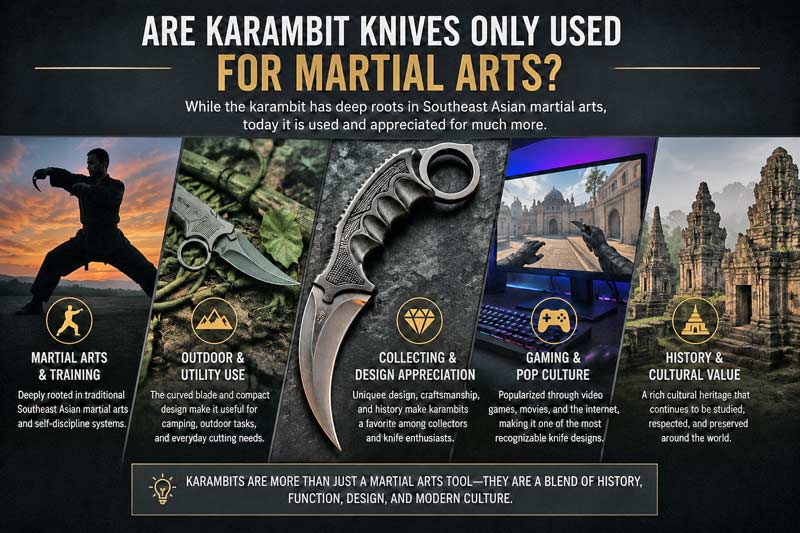
Even though the karambit has deep roots in Southeast Asian martial arts, it is no longer limited to training or traditional fighting systems. Over the years, the knife has evolved into something much broader, with people using or collecting karambits for a variety of reasons ranging from utility and outdoor tasks to collecting and personal interest in knife design.
For some users, the curved blade shape simply feels comfortable for certain cutting tasks. The compact size and secure finger ring can make the knife feel easy to control, especially during repetitive slicing motions. Others are drawn to the karambit because of its unique appearance and mechanical design, which stands out from more conventional folding or fixed-blade knives.
The karambit has also gained massive popularity through movies, gaming, and internet culture. Many people first became familiar with the design after seeing it appear in popular games, where the distinctive curved blade and spinning animations helped turn it into one of the most recognizable knife styles in pop culture. That exposure introduced an entirely new audience to the knife and sparked interest far beyond traditional martial arts communities.
At the same time, martial artists and enthusiasts still appreciate the knife for its historical roots and specialized handling characteristics. If you enjoy learning unusual facts about the design and how it evolved over time, these things you didnt know about karambits highlight some surprising details about one of the world's most recognizable curved knives.
The karambit's curved shape may seem unusual at first, but once you understand the reasoning behind it, the design starts to make a lot more sense. The blade was shaped to follow natural hand movement, improve control, and maintain better edge contact during slicing motions. Combined with the finger ring, the overall design creates a knife that feels very different from more traditional straight-blade options.
Part of what makes the karambit so interesting is how many different influences helped shape it over time. From its roots in Southeast Asian martial arts and utility use to its rise in modern collecting and pop culture, the karambit has evolved far beyond its original purpose. If you want to learn more about where the design came from, this guide on the history and evolution of the karambit knife takes a deeper look at how it developed over the centuries.
Today, some people appreciate the karambit for its cutting mechanics, others enjoy the unique look and feel, and many simply find the design fascinating. Whether you are interested in martial arts history, unusual knife shapes, or just understanding why this blade looks so different, there is no denying that the karambit has earned its place as one of the most recognizable knife designs in the world.
If you are curious about exploring different blade styles, there are many karambit knives available with different blade shapes, sizes, and handle designs depending on what interests you most.
What Is a Karambit Knife?
Before understanding why a karambit knife is curved, it helps to understand what makes a karambit different from other knives in the first place. A karambit is a compact curved knife that usually features a finger ring at the end of the handle for added retention and control. Unlike most traditional knives that are designed around straight thrusting or slicing motions, the karambit was built to excel at controlled curved cutting movements.
The karambit originated in Southeast Asia, particularly Indonesia, Malaysia, and the Philippines, where early versions were inspired by the shape and movement of animal claws. Over time, the design evolved from a practical utility tool into a martial arts weapon used in systems like Silat and Filipino martial arts. Today, karambits are used for everything from martial arts training and collecting to everyday carry and utility purposes.
One of the biggest reasons the karambit feels so different in the hand is the retention ring. The ring helps keep the knife secure during movement and allows users to maintain control even during quick transitions or grip changes. This is one reason many people become interested in karambits after learning what a karambit knife is and how its design differs from more conventional blades.
Today, there are many different styles available, ranging from folding designs to fixed blades with aggressive curves and specialized handle shapes. If you want to browse different styles and blade options, there are many types of karambit knives designed for collecting, training, utility, and everyday carry.
Why Is the Karambit Knife Curved?
The curved shape of the karambit knife is not just for appearance. It was designed that way for a reason. Unlike straight blades that are often optimized for stabbing or straight slicing motions, the karambit's claw-like curve naturally follows the motion of the hand and wrist. This makes certain cutting movements feel smoother, more controlled, and more efficient.
One of the biggest advantages of a curved blade is how it maintains contact during slicing motions. As the blade moves through material, the curve helps keep more of the edge engaged rather than relying on a single straight point of contact. This creates a strong drawing cut and is one reason curved blades have remained popular in many cultures throughout history.
The shape was also inspired by animal claws, particularly tiger claws, which influenced many Southeast Asian weapon designs and martial arts traditions. Early karambits were meant to function almost like a natural extension of the hand, allowing the user to hook, pull, slice, and control movement more fluidly than many straight knives. That inspiration is still obvious today when you look at the aggressive inward curve of most karambit blades.
Another reason the curve matters is retention and control. Combined with the finger ring, the blade orientation makes the knife feel secure during movement and less likely to slip during grip changes. This is one reason many enthusiasts become interested in why karambit knives are so effective and how the unusual shape changes the way the knife performs compared to more conventional blade styles.
How Does the Curved Blade Help With Cutting?
The karambit's curved blade changes the way cutting works compared to a traditional straight knife. Instead of relying mostly on pushing or straight slicing motions, the karambit is designed to excel at pulling and drawing cuts. As the blade moves, the inward curve naturally helps keep more of the edge engaged with the material, which can make slicing motions feel smoother and more controlled.
One way to think about it is to imagine the difference between dragging a hook versus pushing a straight edge across something. The curved blade tends to "grab" and follow through more naturally, which is part of the reason curved knives have been used throughout history for farming tools, utility cutting, and martial arts applications. The shape allows the knife to maintain contact through motion instead of briefly touching at one point like some straighter blade profiles.
The design also helps with precision and control. Because the blade follows a more natural arc that works with wrist movement, many people find the karambit feels surprisingly intuitive once they get used to it. Combined with the retention ring, the overall shape helps the knife stay stable during movement and allows for confident handling.
Of course, the curved shape is not ideal for every task. Straight blades are often better for certain utility jobs that require clean push cuts or precision carving. That is part of why some people compare blade styles when deciding what works best for their needs. If you are curious how different compact blade designs compare, this breakdown of karambit vs push dagger explains how their shapes affect handling and use.
What Does the Finger Ring on a Karambit Do?
One of the most recognizable features of a karambit knife is the ring at the end of the handle. At first glance, it may look like a simple design choice, but the finger ring actually serves an important purpose. The ring helps improve grip retention, control, and handling, which is one of the reasons the karambit feels so different from a traditional knife.
The most common way the ring is used is by placing the index finger through it when holding the knife in a reverse grip. This creates a more secure connection between the hand and the knife, helping reduce the chance of slipping during movement or grip transitions. Even when changing hand position, the ring allows the knife to stay connected to the hand more naturally than many standard handle designs.
Another benefit is control. Because the ring acts almost like an anchor point, many users find that the karambit feels stable and easy to maneuver once they become familiar with the grip. This is especially important considering the knife's curved shape and compact size, which were designed to work together rather than separately.
The finger ring also helped contribute to the knife's popularity in martial arts, knife collecting, and even pop culture. Over time, the unique look of the karambit became instantly recognizable, which is one reason people became curious about why karambit knives became so popular in video games and how media exposure helped introduce the design to a much larger audience.
Are Karambit Knives Only Used for Martial Arts?
Even though the karambit has deep roots in Southeast Asian martial arts, it is no longer limited to training or traditional fighting systems. Over the years, the knife has evolved into something much broader, with people using or collecting karambits for a variety of reasons ranging from utility and outdoor tasks to collecting and personal interest in knife design.
For some users, the curved blade shape simply feels comfortable for certain cutting tasks. The compact size and secure finger ring can make the knife feel easy to control, especially during repetitive slicing motions. Others are drawn to the karambit because of its unique appearance and mechanical design, which stands out from more conventional folding or fixed-blade knives.
The karambit has also gained massive popularity through movies, gaming, and internet culture. Many people first became familiar with the design after seeing it appear in popular games, where the distinctive curved blade and spinning animations helped turn it into one of the most recognizable knife styles in pop culture. That exposure introduced an entirely new audience to the knife and sparked interest far beyond traditional martial arts communities.
At the same time, martial artists and enthusiasts still appreciate the knife for its historical roots and specialized handling characteristics. If you enjoy learning unusual facts about the design and how it evolved over time, these things you didnt know about karambits highlight some surprising details about one of the world's most recognizable curved knives.
Final Thoughts: Why the Karambit Knife Is Curved
The karambit's curved shape may seem unusual at first, but once you understand the reasoning behind it, the design starts to make a lot more sense. The blade was shaped to follow natural hand movement, improve control, and maintain better edge contact during slicing motions. Combined with the finger ring, the overall design creates a knife that feels very different from more traditional straight-blade options.
Part of what makes the karambit so interesting is how many different influences helped shape it over time. From its roots in Southeast Asian martial arts and utility use to its rise in modern collecting and pop culture, the karambit has evolved far beyond its original purpose. If you want to learn more about where the design came from, this guide on the history and evolution of the karambit knife takes a deeper look at how it developed over the centuries.
Today, some people appreciate the karambit for its cutting mechanics, others enjoy the unique look and feel, and many simply find the design fascinating. Whether you are interested in martial arts history, unusual knife shapes, or just understanding why this blade looks so different, there is no denying that the karambit has earned its place as one of the most recognizable knife designs in the world.
If you are curious about exploring different blade styles, there are many karambit knives available with different blade shapes, sizes, and handle designs depending on what interests you most.
You May Also Be Interested In:
- What Is the Ring on a Karambit Knife For?
- The History and Evolution of the Karambit Knife
- 10 Things You Didn't Know About the Karambit Knife
- What Is a Karambit Knife? Beginner Guide to Karambits
- Why Karambit Knives Are So Effective
- Karambit vs Push Dagger: Which Blade Would You Bet Your Life On?
- Why Karambit Knives Became So Popular in Video Games
- Why Every Day Should Be an EDC Knife Day: How a Simple Knife Can Make Your Life Easier and Safer
- Best EDC Knife: How to Choose the Right Everyday Carry Knife
- Bowie Knife vs Hunting Knife: What's the Difference?
Leave a Reply