




How Stun Guns Work and How to Choose One
November 4th, 2025
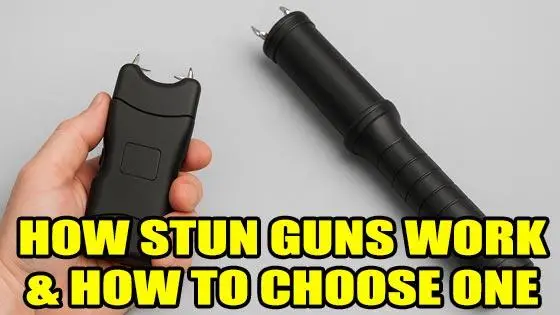
If you're thinking about a stun gun for personal protection, this guide will walk you through the basics without the hype. You'll get a plain-language look at how these devices disrupt muscle control, which specs actually matter, and which styles suit different needs, from pocket models for commuters to batons for security work. Read on for a short, practical checklist that helps you pick a model that fits your day-to-day carry and the laws where you live.
How Stun Guns Work
A stun gun works by delivering a short burst of electrical energy that interferes with muscle control and nerve signals. When both contact points touch an attacker, the current flows through their clothing or skin, causing involuntary muscle contractions and disorientation. The voltage creates the arc needed to penetrate the outer layer, while the amperage determines how much current actually passes through the body. Higher amperage, not higher voltage, is what produces a stronger stopping effect. The goal is to temporarily disable, giving you a few critical seconds to escape rather than to cause lasting harm.
Common Styles of Stun Weapons
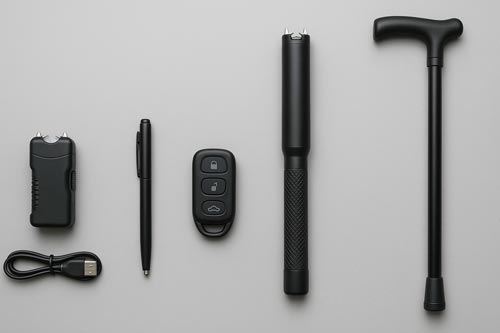
Stun weapons come in several styles, each built for different carry habits and situations. Choose the one that matches how you move and where you need protection.
Pocket and Palm Models - Small rectangular or curved units fit in a pocket or hand and are great for everyday carry. They are easy to deploy at close range and offer a balance of power and portability. Ideal for commuters and people who want a straightforward, compact option.
Pen and Keyfob Models - These disguised devices look like everyday items and are useful when discretion matters. They are convenient to carry and can be less likely to attract attention, but they usually provide less stopping power than full-size models. Best for people who prioritize concealment in urban settings.
Stun Batons - Batons give you reach and a larger contact area, which can be useful for security personnel or anyone who prefers to keep distance from a threat. They are larger to carry and may be restricted in some jurisdictions, so check local laws before buying.
Stun Canes and Umbrellas - These combine a practical tool with a hidden defensive function. They are useful for those who need a mobility aid or who want protection without obvious devices. They tend to be bulkier and may require practice to deploy quickly.
Vehicle and Home Models - Heavier units designed for home or vehicle use focus on maximum stopping power and durability. They are less portable but offer a strong option for defending fixed locations.
Who Each Style Suits - If you walk or take transit daily, pocket or pen models usually make the most sense. Security professionals or those who work late and want distance may prefer a baton. People with mobility needs can benefit from cane-style devices. For everyone, consider concealment, legal restrictions, and how quickly you can access and use the device under stress.
What Specs Actually Matter
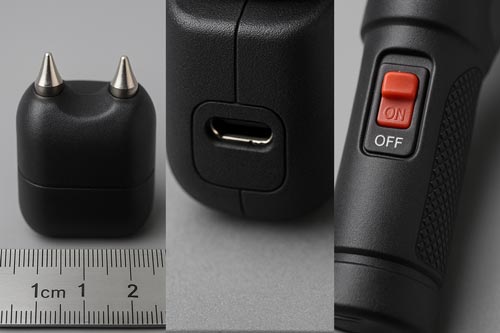
When choosing a stun weapon, focus on a few practical specs that predict real-world performance rather than marketing numbers. Amperage and pulse design matter far more than headline voltage because the current and how it is delivered determine how effectively the device disrupts muscle control. Look for clear information on current output or wording that describes the device producing a sustained pulse rather than a brief spark.
Electrode spacing and contact design affect how well the device delivers current through clothing or at awkward angles. Wider electrode spacing and larger contact surfaces help ensure reliable connections through thin clothing. For concealed models, expect closer electrodes and lower stopping power.
Battery type and duty cycle are important for reliability. Rechargeable lithium batteries with USB charging are convenient, but check how long the battery holds a charge in standby and how many short discharges you can get per full charge. Duty cycle describes how long you can safely discharge the unit before it needs to cool or recharge. Higher-quality units will list safe operating intervals.
Construction quality, grip, and ergonomics matter under stress. A textured, non-slip grip reduces the chance of dropping the device during a struggle. Solid casing and sealed ports improve durability and resistance to moisture and dirt. If you expect rough use, choose a model with reinforced housing and a good warranty.
Safety features and ease of deployment are practical must-haves. Look for a reliable safety switch or cover that prevents accidental discharge while allowing quick activation when you need it. Consider how the device will be carried and how fast you can access and fire it under stress.
Finally, ignore fanciful voltage claims and read user reviews for real-world reports on stopping power, battery life, and reliability. Manufacturer specs are useful, but customer experiences often reveal how a model performs when it matters.
Features to Consider
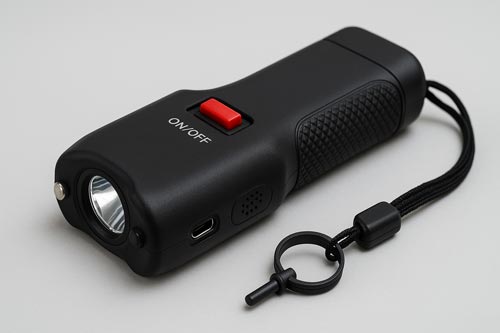
Modern stun guns come with several built-in features that can make them safer, easier to use, and more versatile. One of the most common additions is an integrated flashlight. A bright LED or strobe function can help you navigate in the dark, signal for help, or temporarily disorient an attacker before contact. Some models even include adjustable brightness settings for everyday use.
Another valuable feature is a built-in personal alarm. A loud siren can draw attention in a public area and may be enough to scare off an attacker before you ever need to use the electrical function. The best models let you trigger the alarm separately, giving you multiple layers of defense.
Rechargeable batteries are another convenience feature worth prioritizing. USB charging ports make it easy to keep your stun weapon ready without buying disposable batteries. Check that the battery holds a charge for at least a few weeks and that there's a simple indicator to show remaining power.
Safety mechanisms are just as important. Look for switches or buttons that prevent accidental activation while allowing quick deployment when needed. Some devices also include removable disable pins connected to a wrist strap. If someone grabs your stun gun, the pin pulls out and instantly cuts power, preventing it from being used against you.
Finally, consider overall ergonomics and grip texture. The right handle shape and balance can make a big difference in stressful situations, helping you aim and activate the device quickly. Features like rubberized grips, wrist lanyards, and textured surfaces improve control and reduce slippage during use.
Practical Carry and Dress Considerations
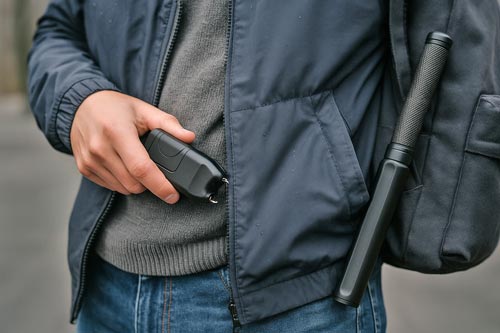
Think about how you normally dress and whether your clothing will allow the device to make good contact when needed.
If you wear heavy coats, thick layers, or insulated outerwear, small concealed models may not reach the target through clothing reliably; pocket or palm models with larger electrodes perform better in those conditions.
Placement matters: carry the device where you can access it with your dominant hand and deploy it without fumbling. A pocket, belt clip, or a soft holster inside a bag all work if you practice the draw from that position regularly.
Concealment is a trade-off with speed. Disguised options like pen or keyfob models are discreet but usually require closer contact and may be slower to access than a palm unit in a pocket.
Train for real situations. Practice removing the device from its carry location, switching off safety features, and bringing it into position quickly while under time pressure so motions become automatic.
Consider environmental factors. Wet clothing or heavy rain can change conduction and handling, while crowded places may limit your ability to use a baton-type device safely. Adjust your carry choice to match likely scenarios.
Finally, keep a small routine for readiness: check battery level weekly, store the device where you can reach it in an emergency, and confirm local laws about carrying in public and restricted places.
Safety, Legal, and Ethical Checklist
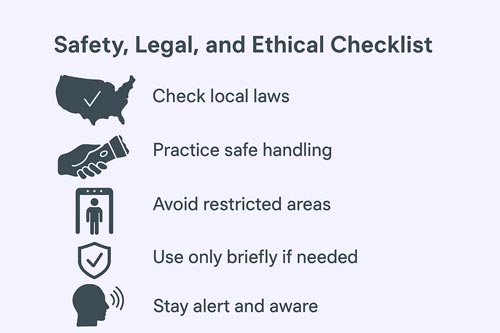
Owning a stun weapon comes with the same responsibilities as any self-defense tool. Before carrying, confirm that stun guns and batons are legal where you live. Laws can vary by state, county, and even city, so check your local statutes carefully and stay up to date as regulations change.
Practice safe handling at home before carrying in public. Keep the safety switch engaged until you are ready to use the device, never test it on another person, and store it where children cannot reach it. Many users practice quick activation with the device turned off to build muscle memory without risk.
Avoid carrying a stun weapon into restricted areas such as airports, schools, or government buildings. Even if it is legal in your state, those locations often have independent rules that prohibit all self-defense weapons.
If you ever need to use your device, keep contact brief and only long enough to create a chance to escape. The purpose of a stun weapon is temporary incapacitation, not punishment. Misusing it can result in legal consequences, even in self-defense situations.
Remember that self-defense tools work best as part of a safety plan, not as a substitute for awareness. Stay alert, avoid risky areas when possible, and carry your device in a way that lets you deploy it quickly if needed.
For more details on choosing a reliable model and learning about local legality, visit our full selection of stun guns to find the option that fits your needs and environment.
You May Also Be Interested In:
- Stun Gun Brass Knuckles: How They Work and Are They Effective?
- Choosing the Best Stun Gun for Everyday Carry
- Pepper Spray vs Stun Gun: Which Is Better for Self Defense?
- Power and Protection: A Guide to High Voltage Stun Devices
- How to Choose the Best Self Defense Keychain for EDC
- Best EDC Flashlight: How to Choose the Right One for Daily Use
- How to Choose the Right Nunchaku for Your Skill Level
- Why Choose a Ribbed Grip Aluminum Escrima?
- Throwing Axes for Beginners: How to Choose, Throw & Improve
- How Automatic Knives Actually Work
Leave a Reply