




Knife Throwing for Beginners: How to Stick Every Throw
November 7th, 2025
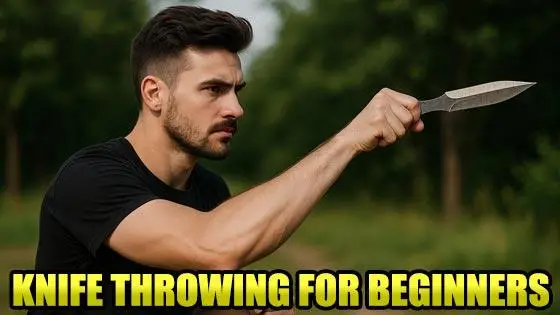
Learning to throw knives is one of those skills that looks simple until you actually try it. The first few throws might clang off the target, spin too fast, or hit handle-first-but that's all part of the process. With the right technique and a few easy adjustments, anyone can learn how to stick their throws consistently. Whether you're setting up a backyard target or joining a local throwing club, mastering the basics of stance, grip, and rotation is the key to accuracy and control. In this guide, we'll walk through practical tips that make knife throwing fun, safe, and incredibly satisfying once that first perfect throw lands with a solid "thunk."
Choosing the Right Throwing Knife
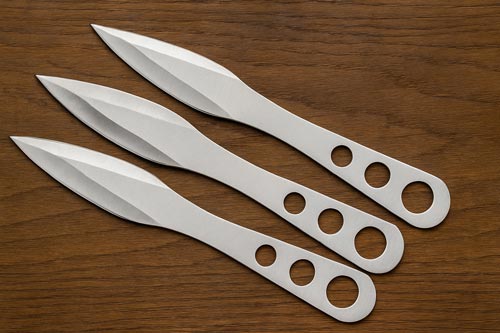
Before you start practicing, it's important to pick a knife that's made for throwing. A proper throwing knife should have a balanced weight distribution, meaning the center of gravity sits near the middle of the blade and handle. That balance allows for smooth, predictable rotation through the air. Regular kitchen or combat knives usually have too much weight in the handle or the blade, which makes them unreliable for throwing.
For beginners, a medium-length knife between 8 and 12 inches works best. Smaller knives are faster but require more precision, while larger knives rotate slower and are easier to control. Look for stainless steel or carbon steel blades that can take repeated impacts without bending. A dull tip is fine for practice, but the edge and point should still be sharp enough to stick into a wooden target without bouncing off.
Lastly, avoid flashy designs or knives with grips that catch your fingers during release. A simple, well-balanced knife is easier to learn with and helps you build consistent technique. Once you can stick those cleanly, you can experiment with heavier or stylized options for advanced throwing.
Grip and Stance
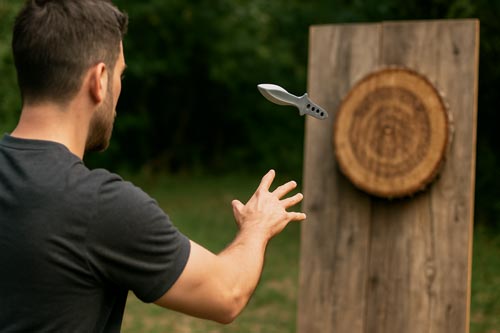
A repeatable grip and a steady stance make the biggest difference when you are learning to throw. For most beginners the hammer grip works best. Hold the knife with your thumb wrapped over the fingers so the blade sits aligned with your forearm. That grip is simple, stable, and easy to repeat when you are practicing.
Stand with your lead foot forward toward the target and your weight slightly on that foot. Point your front toe at the target and keep your hips and shoulders square or slightly open. Keep your elbow slightly bent and your wrist firm. Your eyes should track the exact spot on the target where you want the knife to hit.
When you release, aim to let the arm extend naturally and snap the wrist only if you need extra rotation. Practice the same release point every time and avoid changing your grip between throws. Small, consistent mechanics beat occasional hard throws every time.
Mastering the Release
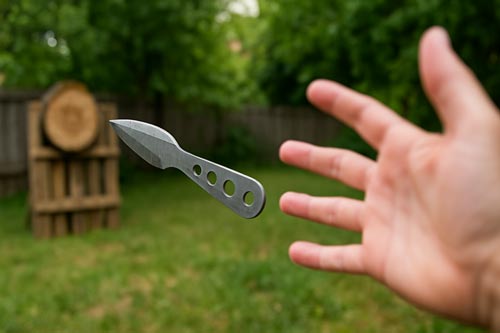
The moment you let go of the knife determines whether it sticks or bounces off the target. A good release feels smooth and natural, without any flicking motion or forced spin. Keep your wrist firm and focus on following through in a straight line toward the center of the target. The knife should slip from your fingers rather than being pushed or thrown with power.
For beginners, the easiest way to improve consistency is to practice the same motion over and over again. Record where each throw hits and make small adjustments in distance or release timing instead of changing your form completely. The knife's rotation tells you a lot: if it under-rotates and hits handle-first, you are releasing too early. If it over-rotates and hits with the tip pointing down, release a bit later or move closer to the target.
A smooth, repeatable release paired with the right distance will make sticking your throws feel effortless. Once you can land solid hits regularly, you can start experimenting with half spin, no spin, and other advanced techniques to keep things fun and challenging.
Building Accuracy Over Time

Consistency is what separates casual throwers from skilled ones. Instead of focusing on distance or power, focus on landing clean, repeatable throws at one range before moving back. The best way to do this is by tracking your progress. Mark your throwing line, count how many knives stick in each round, and take notes on what works. Over time, you'll start to recognize subtle patterns in your grip, stance, and release that make your throws more predictable.
If you start to lose accuracy, return to your closest comfortable distance and rebuild your rhythm from there. Even professional throwers practice short-range throws to stay sharp. The more consistent your fundamentals are, the easier it becomes to add distance, speed, and advanced techniques later on.
Safety Tips for Knife Throwing
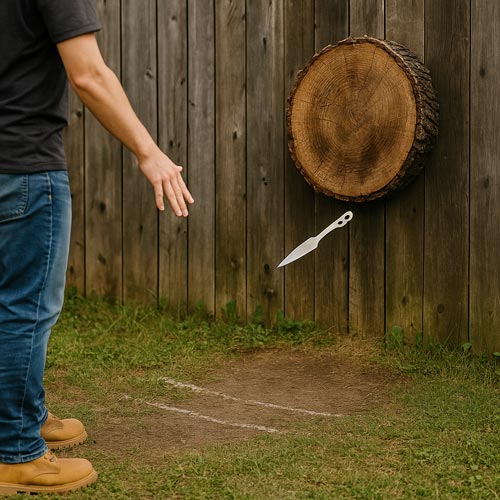
Safety should always come first, no matter how confident you get with your throws. Always throw toward a solid wooden target or a purpose-built knife throwing board, never at trees, walls, or hard surfaces that could cause a bounce back. Make sure no one is standing near or behind the target, and keep a clear radius of at least ten feet around your throwing zone.
Before each session, inspect your knives for loose handles, bent tips, or cracks in the blade. A damaged knife can fly unpredictably and become dangerous. If you're throwing outdoors, check that your surface is level and free of rocks or debris that could affect your footing.
Wear closed-toe shoes, stay aware of your surroundings, and only retrieve your knives once every thrower has finished their round. A controlled, focused mindset is what makes throwing knives both safe and enjoyable.
Choosing the Right Target
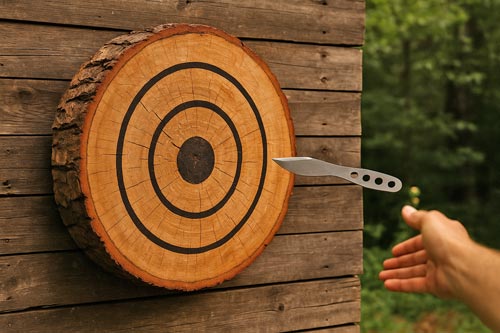
A good target can make all the difference in how enjoyable and consistent your practice sessions feel. The best targets are made of soft wood that allows the knife tip to stick without much effort. Pine, cottonwood, and poplar are all great choices because they grip the blade well while reducing bounce backs. Avoid hardwoods like oak or maple, which are too dense and can damage your knives over time.
If you are building your own target, use a large wooden round or create a stacked plank design so you can replace damaged sections easily. Mount the target securely at about chest height, and make sure it is backed by a sturdy stand or fence that will stop any missed throws safely. Always check that there are no hard objects behind or around the target that could cause a ricochet.
For indoor or portable setups, you can also find foam or end-grain targets designed specifically for knife throwing. These are quieter, lighter, and easier to maintain, making them a good choice for hobbyists who want something simple to set up and store.
Common Mistakes Beginners Make
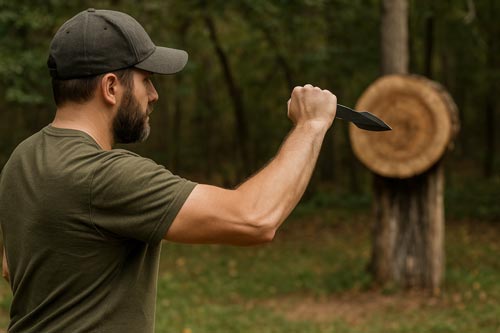
Every knife thrower misses at first, but most bad throws come from the same few habits. One of the most common mistakes is throwing too hard. Knife throwing relies more on rhythm than strength, so focus on a smooth, controlled motion rather than power. Another mistake is changing distance too soon. Stay at one range until you can hit your target consistently before stepping back.
A lot of new throwers also grip the knife too tightly, which causes it to wobble during release. Try loosening your grip just enough so the knife slips naturally from your hand. And finally, many beginners forget to check their stance. If your front foot shifts with each throw, your aim will too. Mark your throwing spot and keep your feet planted in the same position for every throw.
The key to improving quickly is consistency. Keep your form steady, make small adjustments, and treat every miss as feedback rather than failure. With time and repetition, even the most inconsistent throwers start to land clean, satisfying hits every time.
Final Thoughts
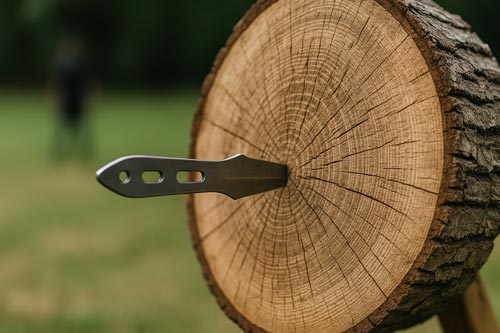
Knife throwing is one of those skills that rewards patience more than power. With every practice session, you'll notice your throws becoming smoother and more accurate. The secret is to stay consistent with your distance, stance, and release instead of trying to force results. Even a few minutes of focused practice each week can make a noticeable difference over time.
Once you feel confident, experiment with new techniques, throwing styles, and knife types to keep things interesting. The goal is to make every throw feel effortless, and that only comes from repetition and control. Remember to stay safe, focus on form, and most importantly, enjoy the process of learning one of the oldest and most satisfying precision skills in the world. If you're ready to practice with the right tools, check out our full selection of throwing knives to find the style that suits your technique.
You May Also Be Interested In:
- Throwing Axes for Beginners: How to Choose, Throw & Improve
- The Deadliest Throwing Knives for Modern Combat! Knife Testing and Review
- Why Every Day Should Be an EDC Knife Day: How a Simple Knife Can Make Your Life Easier and Safer
- Survival Walking Stick and Other Rugged Weapons
- War Hammer Walking Stick and Other Deadly Weapons
- Hidden Sword Battle Stick and Other Combat Weapons
- Best EDC Knife: How to Choose the Right Everyday Carry Knife
- Are Throwing Stars Actually Effective Weapons?
- What Is a Shuriken? Types of Ninja Throwing Stars Explained
- The History and Evolution of the Karambit Knife
Leave a Reply