




Throwing Axes for Beginners: How to Choose, Throw & Improve
October 24th, 2025
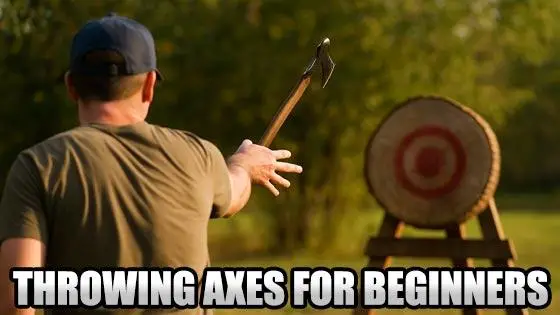
There's something undeniably cool about throwing axes. Maybe it's the raw power of sending a blade flying through the air, or maybe it's the focus it takes to land it just right. Whatever it is, axe throwing has exploded in popularity both as a backyard hobby and as a skill that connects you to something primal and old school. And the best part? You don't have to be a lumberjack or a pro athlete to get good at it. With a little practice, the right gear, and a few tips from people who know their stuff, you'll be sticking axes like a champ in no time.
Why Throwing Axes Is So Addictive
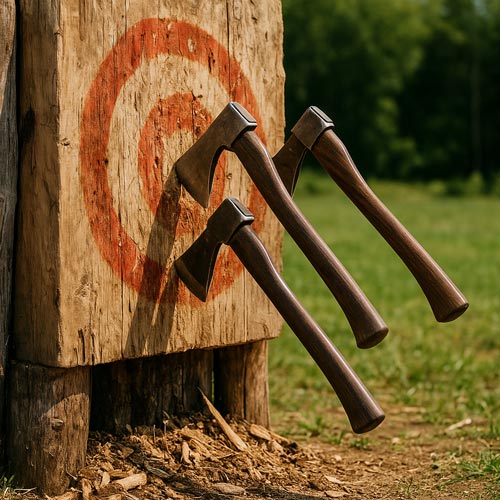
Once you've thrown your first axe and watched it stick, you'll get why people can't stop doing it. It's that instant mix of power, precision, and a little bit of chaos that makes it so satisfying. Every throw feels like a small test of control. Too much force and it bounces, too little and it clatters to the ground. But when you hit that sweet spot and the blade buries itself right in the wood, it's pure adrenaline.
Part of the appeal comes from how simple it is. You don't need fancy gear or a ton of space to start practicing. A solid throwing axe, a safe target, and some open ground are all you need to tap into one of the oldest skills humans ever learned. Whether you're doing it for stress relief, a bit of friendly competition, or just because it looks awesome, axe throwing never gets old.
What Exactly Is a Throwing Axe?
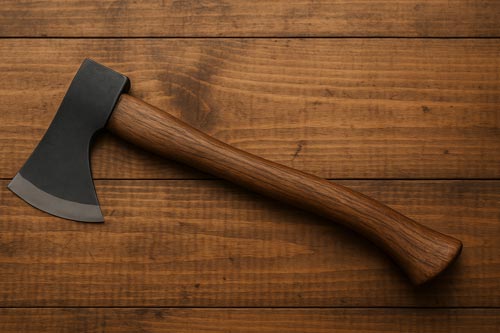
A throwing axe isn't just a regular hatchet you pulled out of the garage. It's a purpose-built tool designed to fly straight, spin evenly, and stick solidly into a wooden target. The difference comes down to balance and construction. A good throwing axe has a centered weight distribution so it rotates smoothly in the air without wobbling. The handle length, head shape, and overall weight are all tuned to make every throw feel natural once you get the hang of it.
Most throwing axes fall somewhere between a small hatchet and a tomahawk in size. They're light enough to control easily but heavy enough to deliver a clean strike. The blades are sharp enough to bite into the target without being dangerously thin, and the handles are often made from durable materials like hickory or reinforced steel. That balance of power and precision is what makes them such a blast to throw.
If you've never tried one before, start with a mid-weight throwing axe that feels comfortable in your hand. Once you find your rhythm, you'll see how addictive it is to fine-tune your throw until it lands exactly where you want it to.
How to Choose the Right Throwing Axe
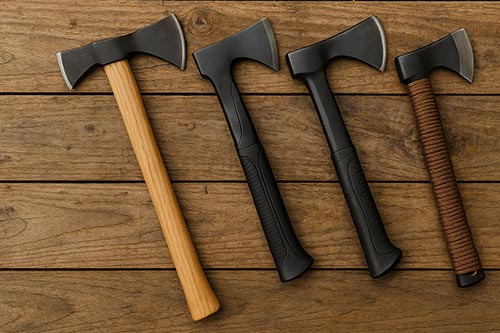
Picking the right throwing axe can make or break your experience. The best one for you depends on your size, strength, and how you plan to use it. The good news is that finding a solid beginner axe is simple once you know what to look for.
Start with the basics: weight and balance. A good throwing axe should feel comfortable in your hand, not too heavy and not too light. Most beginners do well with an axe that weighs between one and two pounds. Anything heavier can wear you out fast, and anything too light tends to bounce off the target instead of sticking cleanly.
Next, think about the handle. Wooden handles feel classic and offer a nice grip, but they can break more easily if you miss the target. Steel or polymer handles are tougher and last longer, though they can be a bit harsher on your hands. It really comes down to personal preference and how often you plan to throw.
You'll also want to pay attention to blade shape and edge. A wide, slightly curved blade helps your axe stick better and gives you more forgiveness on off-center hits. Look for one with a solid, single-piece head and a clean edge that doesn't need constant sharpening.
When you find the right balance, weight, and feel, you'll know it. The right throwing axe becomes an extension of your arm, something that moves naturally every time you let it fly.
How to Throw a Throwing Axe (Step-by-Step Guide)
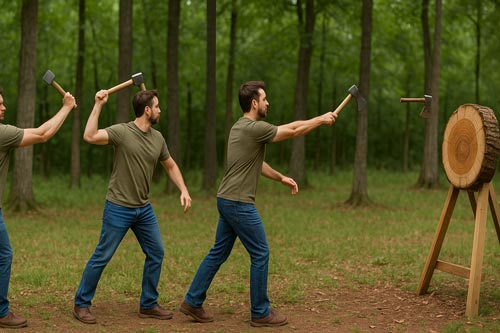
Once you've got your throwing axe picked out, it's time for the fun part. The secret to sticking an axe in the target isn't brute strength. It's about timing, rhythm, and control. Here's how to get started the right way.
Step 1: Find the right distance.
Stand about 12 to 15 feet away from the target to start. That's usually the perfect range for one full rotation. If your axe hits the target handle first, take a small step back. If it hits with the top of the blade, move a little closer. A few inches can make all the difference.
Step 2: Get your grip and stance right.
Hold the axe with one or both hands depending on what feels natural. If you're using one hand, grip it near the base of the handle like you're shaking hands with it. For two hands, place your dominant hand on top, just like swinging a baseball bat. Keep your feet shoulder width apart and face the target directly.
Step 3: The throw.
Bring the axe straight back over your head, keeping your wrists firm. Then bring it forward in one smooth motion, releasing it when your arms are extended straight toward the target. Think of it as a flick, not a swing. You're letting the axe do the work.
Step 4: Watch the rotation.
If your axe over rotates or under rotates, adjust your distance until it sticks consistently. You'll quickly develop a feel for how your particular axe spins. Once you hit that perfect rotation, you'll know it instantly. It feels like the axe just wants to stick every time.
Step 5: Practice with purpose.
The more you throw, the more you'll refine your timing and consistency. Keep your throws smooth and controlled, and try to hit the same spot over and over. Before long, you'll be sticking bullseyes like a pro.
Safety Tips Every Beginner Should Know
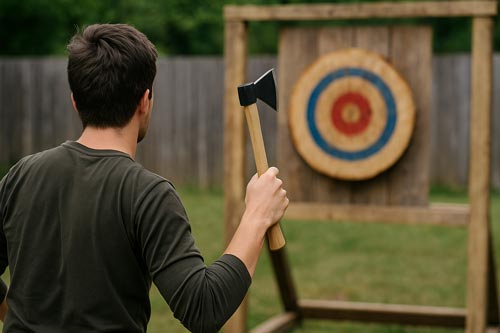
Throwing axes is an awesome hobby, but it's also a sharp piece of metal flying through the air, so safety has to come first. Luckily, staying safe is simple if you follow a few basic rules every time you throw.
Check your surroundings.
Before you even lift the axe, make sure the area is clear. No one should be standing anywhere near your throwing path or in the space where your axe might bounce. Keep a solid ten-foot buffer around you at all times, especially when you're retrieving your axe from the target.
Inspect your gear.
Before each session, take a quick look at your axe and target. Make sure the handle isn't cracked, the head isn't loose, and the wood of the target isn't rotted or falling apart. A damaged axe can behave unpredictably, and a weak target can cause dangerous ricochets.
Throw from a stable surface.
Always stand on even ground so you can keep your balance through the throw. If you're throwing outdoors, watch for uneven dirt, loose gravel, or wet grass. Stability helps with both safety and accuracy.
Never rush your throws.
Take your time between each throw. Wait until everyone has finished throwing before walking toward the target to retrieve your axes. Communication and patience make the difference between a fun session and an accident.
Start slow and build up.
When you're learning, use lighter axes and shorter distances until you're comfortable. Accuracy and control always matter more than power. As your skill grows, you can work your way up to heavier throwing axes and longer distances safely.
How to Improve Accuracy and Technique
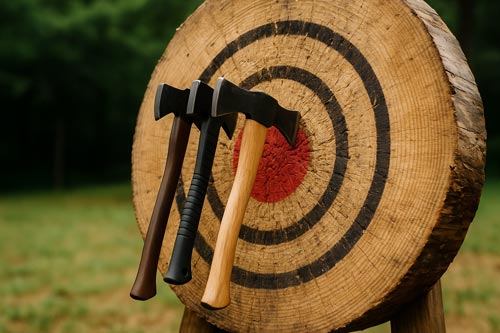
Once you're comfortable landing consistent throws, it's time to level up. Improving your accuracy isn't just about throwing harder. It's about refining the small details that make each throw feel effortless and repeatable.
Focus on consistency, not power.
Most beginners try to muscle the axe into the target, but accuracy comes from control. Keep your throws smooth and steady instead of fast and forceful. The more consistent your motion is, the more predictable your results will be.
Dial in your distance.
If your axe is rotating too much or too little, your distance is off. Move forward or backward by just a few inches at a time until the blade consistently hits the target cleanly. Every axe spins differently, so small adjustments make a big difference.
Watch your release point.
If your axe tends to drop low, you're probably releasing too late. If it flies high, you're letting go too early. Practice releasing right as your arms are extended straight toward the target. That moment of balance and follow through is what creates the perfect rotation.
Use visual reference points.
Pick a single spot on the target to aim at each time. Even if you miss, you'll build the muscle memory to correct your aim over time. The key is to throw with intent, not guesswork.
Keep your stance relaxed.
A tense body throws erratically. Keep your shoulders loose, your grip firm but not tight, and your steps controlled. You'll notice your throws feel smoother and your accuracy improves without extra effort.
Recommended Throwing Axes to Try
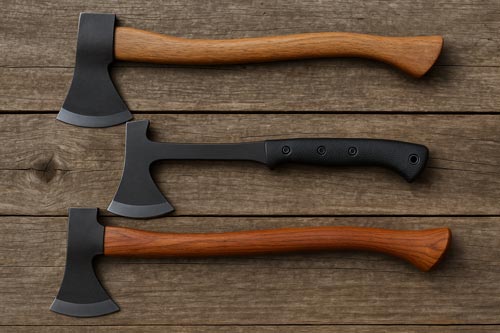
Now that you know how to throw and improve your accuracy, it's time to pick out a throwing axe that feels right for you. The good news is, you don't need to spend a fortune to get a great one. At Kombativ, we carry several types of throwing axes that are built for real performance, not just looks.
For beginners, start with a mid-weight throwing axe that's easy to control and consistent in the air. These axes are perfect for learning proper form while still hitting with enough force to stick reliably in the target.
For intermediate throwers, try something with a slightly longer handle or a double-bit design. The extra reach and weight balance can help improve spin control and give your throws more momentum once you've got your timing down.
For experienced throwers, we offer heavier axes designed for competition-style throwing and advanced techniques. These are ideal for people who want to fine-tune their precision or just enjoy the satisfying impact of a solid, full-power throw.
No matter what your experience level is, the key is to find an axe that feels natural in your hand. Every thrower develops a preference for size, weight, and handle style, so it's worth trying a few different designs until you find your favorite. Once you do, practice with it often. The more familiar you become with one specific axe, the more accurate and confident your throws will be.
Final Thoughts: Why Everyone Should Try Axe Throwing

Throwing axes isn't just about hitting a target. It's about mastering focus, control, and confidence in a way that feels primal and incredibly rewarding. Every perfect throw is a reminder that precision beats power, and patience always pays off.
If you've never tried axe throwing, it's worth it just for the feeling alone. The mix of adrenaline and calm focus is unlike anything else. Whether you're training for sport, looking for a new hobby, or just want to blow off some steam after a long day, this is one activity that delivers every time.
Once you feel that axe hit the bullseye and stick, you'll understand why so many people get hooked. It's simple, exciting, and something anyone can learn with a little practice and the right mindset.
You May Also Be Interested In:
- Knife Throwing for Beginners: How to Stick Every Throw
- Are Throwing Stars Actually Effective Weapons?
- What Is a Shuriken? Types of Ninja Throwing Stars Explained
- How to Choose the Best Self Defense Keychain for EDC
- Best EDC Flashlight: How to Choose the Right One for Daily Use
- The Deadliest Throwing Knives for Modern Combat! Knife Testing and Review
- How to Choose the Right Nunchaku for Your Skill Level
- How Stun Guns Work and How to Choose One
- Why Choose a Ribbed Grip Aluminum Escrima?
- Why Are Throwing Knives Shaped Differently From Regular Knives?
Leave a Reply