





The Most Common Pocket Knife Blade Shapes Explained
May 11th, 2026
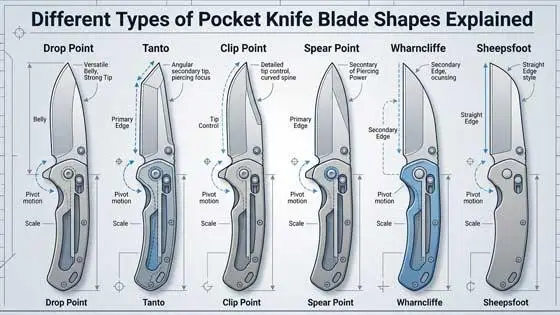
At first glance, many pocket knife blades may look fairly similar, but small changes in blade shape can dramatically affect how a knife performs, feels, and handles during everyday use. Different blade designs influence everything from slicing and piercing ability to control, edge strength, and overall versatility. That is one reason knife enthusiasts often pay close attention to blade geometry when comparing different styles of knives.
Over the years, manufacturers have developed a huge variety of blade shapes, each with its own strengths, appearance, and intended purpose. Some designs are built for general utility and everyday carry, while others prioritize piercing strength, slicing efficiency, or precise control. Certain blade styles have also become closely associated with tactical knives, outdoor knives, or collector-focused designs.
In this guide, we are going to break down some of the most common pocket knife blade shapes, explain how they differ from one another, and look at why certain designs became so popular among knife enthusiasts and everyday carry users. Whether someone is new to collecting or simply curious about modern pocket knife designs, understanding blade shapes makes it much easier to appreciate the engineering and purpose behind different knives.
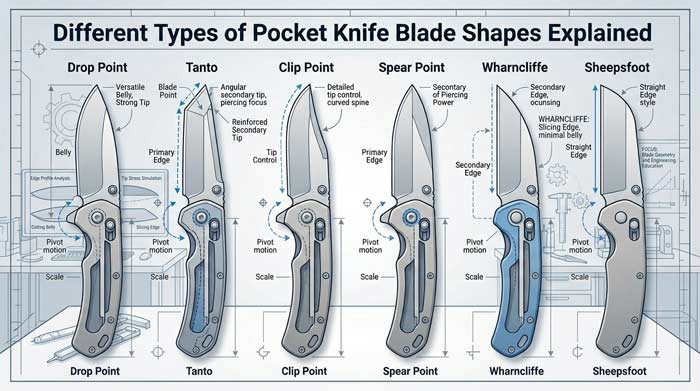
A pocket knife blade shape refers to the overall profile and geometry of the blade itself, including the curve of the edge, the shape of the tip, the spine design, and the way the blade tapers toward the point. Even small changes in blade geometry can dramatically affect how a knife performs during different cutting tasks. That is why blade shape plays such a major role in the design and purpose of modern pocket knives.
Some blade shapes are designed to maximize slicing performance, while others prioritize piercing strength, edge durability, or precision control. Certain designs also place more material near the tip for strength, while others use thinner profiles that allow for finer cutting and more detailed work. The intended purpose of the knife usually determines which blade geometry works best for a specific design.
Blade shape also affects how a knife feels during everyday use. Some designs feel more balanced and versatile for general cutting tasks, while others feel more specialized for outdoor work, utility use, or detailed precision cutting. That is one reason knife enthusiasts often have strong personal preferences when comparing different blade profiles and edge styles.
Over time, many blade shapes became heavily associated with certain categories of knives. Some profiles are commonly seen on outdoor and hunting knives, while others are more popular in tactical-style designs or modern everyday carry folders. As manufacturers experimented with different cutting geometries, blade shapes continued evolving into the wide variety of styles available today.
Understanding blade geometry also helps people better appreciate how other parts of a knife work together, including handle ergonomics and folding knife lock systems. Even though two knives may appear similar at first glance, small differences in blade shape can completely change how the knife performs and feels during use.
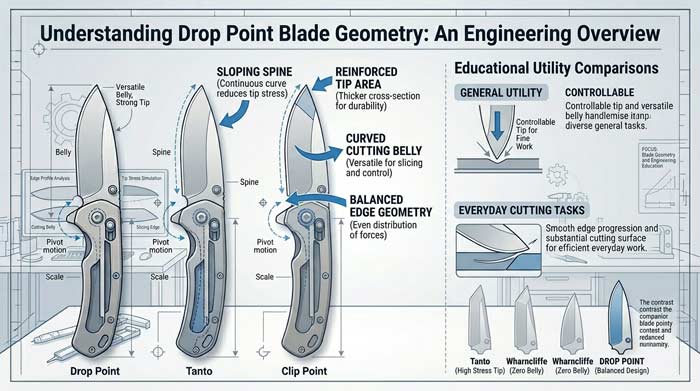
Drop point blades are one of the most common and versatile blade shapes used in modern pocket knives. The design features a spine that gradually slopes downward toward the tip, creating a strong and controllable point without becoming overly thin or fragile. That balanced geometry helped make drop point blades extremely popular for general everyday carry use.
One reason so many people like drop point designs is their versatility. The curved belly provides good slicing performance, while the lowered tip still offers excellent control for detailed cutting tasks. Because the tip sits closer to the centerline of the knife, many users feel that drop point blades offer a very natural and predictable cutting experience during everyday use.
Drop point blades also tend to have relatively strong tips compared to narrower or more aggressively tapered designs. The gradual spine curve leaves additional material near the point, which can improve durability and reduce the likelihood of tip damage during heavier cutting tasks. That durability helped make drop point blades especially common on outdoor knives, work knives, and utility-focused carry designs.
Another reason drop point profiles became so widespread is that they work well across many different knife sizes and opening systems. Manufacturers use drop point geometry on everything from compact everyday carry folders to larger outdoor knives because the design remains practical and easy to use in a wide variety of situations.
Many enthusiasts also appreciate how balanced drop point blades feel visually. The smooth spine curve and gradual edge shape create a clean profile that pairs well with many styles of everyday carry cutting tools and modern folding knife designs.
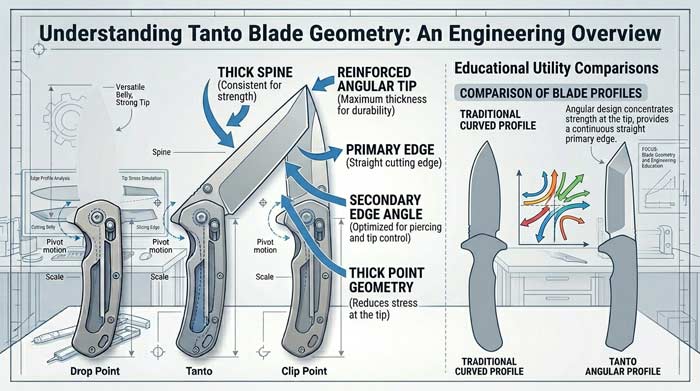
Tanto blades are known for their strong angular tip design and distinctive geometric appearance. Unlike curved blade profiles that flow smoothly toward the point, tanto blades usually feature a secondary edge angle near the tip that creates a reinforced point section. That unique geometry gives tanto blades a very different look and feel compared to more traditional pocket knife designs.
One reason tanto blades became so popular is their tip strength. The added material near the point creates a thicker and more reinforced tip area, which many users appreciate for harder-use cutting tasks. That durability helped tanto designs become heavily associated with tactical-style folders, modern utility knives, and rugged everyday carry tools.
Another feature that makes tanto blades stand out is the straight primary cutting edge. Many enthusiasts like the clean edge geometry because it can provide very controlled slicing and utility cuts. At the same time, the angular transition between the main edge and tip section creates a highly recognizable visual profile that became extremely popular in modern knife design.
Tanto blade shapes also gained popularity because of their aggressive appearance. The sharp angles and reinforced point create a futuristic and highly mechanical look that appeals to many collectors and enthusiasts. Over time, manufacturers experimented with countless variations of the tanto profile, including American tantos, modified tantos, and hybrid blade designs that combine tanto features with more traditional cutting geometry.
Even though some users prefer more curved blade styles for general slicing tasks, tanto profiles remain extremely popular because of their durability, distinctive appearance, and strong tip geometry. That combination helped make them common across many styles of modern carry folders and enthusiast-focused knife designs.
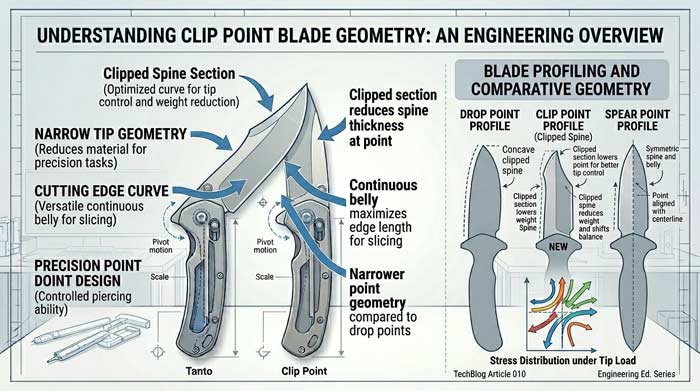
Clip point blades are easily recognized by the "clipped" section near the tip of the spine. Instead of curving smoothly downward like a drop point blade, the spine appears partially cut away near the front of the blade, creating a narrower and more pronounced point. That geometry gives clip point blades a sharper-looking profile and a finer tip compared to many other blade shapes.
One reason clip point designs became so popular is their precision. The narrower tip allows for detailed cutting and controlled piercing tasks while still maintaining a relatively versatile cutting edge. Many users appreciate how agile and responsive clip point blades feel during fine cutting work or detailed utility tasks.
Clip point blades also developed a strong connection to classic knife history and traditional outdoor designs. Many iconic hunting knives and historical bowie knives used clip point geometry, which helped establish the shape as one of the most recognizable blade profiles in knife culture. Even today, many people associate clip point blades with classic American knife design.
The clipped spine section can vary quite a bit between designs. Some blades use a very subtle clip, while others feature dramatic swedges or sharpened false edges near the tip. Those variations allow manufacturers to create everything from traditional outdoor knives to highly stylized modern carry designs using the same general blade concept.
Many enthusiasts continue to enjoy clip point profiles because they combine strong visual character with excellent precision and versatility. The shape remains extremely common across many styles of classic outdoor blade styles and modern pocket carry designs today.
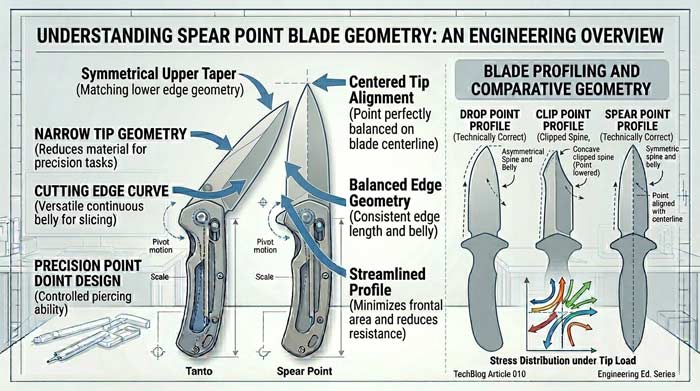
Spear point blades are designed with a symmetrical appearance where the tip sits near the centerline of the blade. Both the spine and cutting edge taper toward the point in a more balanced way compared to many other blade styles. That centered geometry gives spear point blades a very controlled and precise feel while also creating a sleek and highly recognizable appearance.
One reason spear point designs became so popular is their balance. Because the blade tapers evenly toward the tip, the point often feels very aligned and controllable during detailed cutting tasks. Many enthusiasts appreciate the clean symmetry and balanced profile, especially on modern folding knives and collector-focused designs.
Spear point blades are also heavily associated with double-edged knife designs, although many modern folding knives use single-edged spear point profiles for everyday carry purposes. The centered point geometry gives the blade a highly streamlined appearance that many collectors find visually appealing.
Another reason spear point blades remain common is that they pair well with modern knife aesthetics. The symmetrical shape often looks clean, refined, and mechanical compared to more aggressively curved or angular blade styles. Many manufacturers use spear point geometry on knives that emphasize precision, smooth lines, and modern design language.
Even though some users may prefer blade shapes with larger cutting bellies for heavy slicing tasks, spear point profiles continue to remain popular because of their balance, control, and visual symmetry. That sleek geometry helped make them especially common across many styles of spring-loaded knives and modern collector-focused folders.
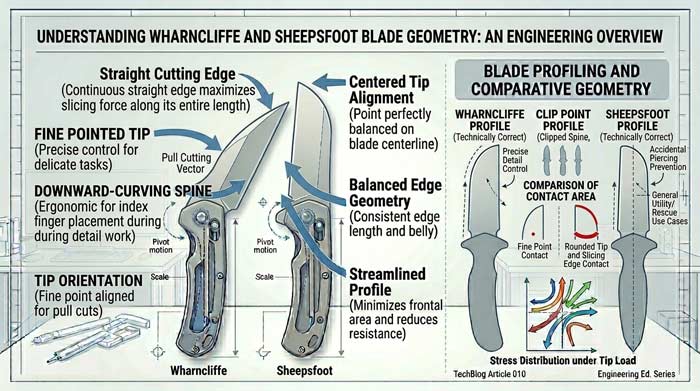
Wharncliffe and sheepsfoot blades are often grouped together because they share some similar characteristics, but there are important differences between the two designs. Both styles usually feature straighter cutting edges and downward-curving spines, which gives them a very different appearance compared to more pointed blade shapes like clip point or spear point designs.
Wharncliffe blades typically use a straight cutting edge combined with a spine that gradually curves downward toward the tip. This creates a very fine and controllable point while still maintaining excellent precision for detailed cutting tasks. Many enthusiasts appreciate Wharncliffe blades for utility work because the straight edge makes controlled cuts feel very predictable and easy to manage.
Sheepsfoot blades are similar, but the spine usually curves downward more dramatically while the tip remains less pointed and more rounded. This design reduces the risk of accidental piercing while still providing a highly functional cutting edge. Because of that safer tip geometry, sheepsfoot blades became especially popular for utility knives, work knives, and rescue-oriented cutting tools.
Another reason both blade styles remain popular is how well they perform during controlled slicing tasks. The straighter edge geometry allows a large portion of the blade to stay in contact with the cutting surface at the same time, which many users find useful for precise utility work and everyday cutting tasks.
Many collectors and everyday carry enthusiasts continue to enjoy these blade shapes because they offer a unique balance of control, precision, and practical cutting performance. Their distinctive geometry also helped them stand out within the growing world of modern utility knife profiles and contemporary folding knife designs.
Just like knife lock mechanisms, there is no single blade shape that works best for every person or every situation. Different blade profiles are designed with different priorities in mind, which means the "best" option usually depends on how someone plans to use the knife and what kind of cutting experience they personally prefer.
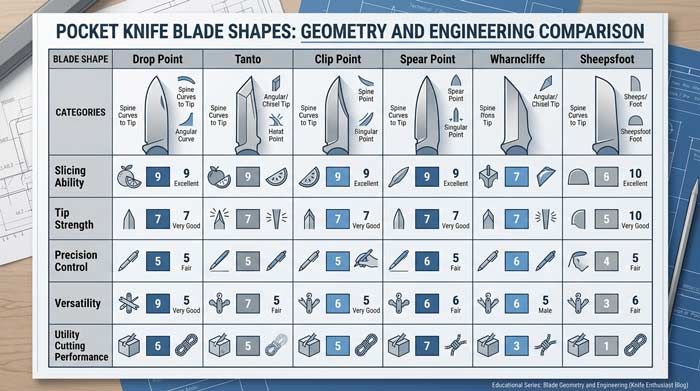
Some people prefer drop point blades because they offer a balanced combination of slicing ability, tip strength, and overall versatility. Others enjoy tanto designs because of their reinforced tip geometry and angular appearance. Clip point blades are often appreciated for precision and control, while Wharncliffe and sheepsfoot profiles tend to attract users who prioritize utility cutting and straight-edge performance.
Blade geometry also affects how a knife feels during everyday carry and general use. Some shapes feel more aggressive and visually striking, while others feel simpler and more practical. Even small differences in edge curvature, blade thickness, spine shape, and tip design can dramatically change how the knife handles different cutting tasks.
Another important factor is personal preference. Many enthusiasts simply enjoy certain blade styles because of their appearance, balance, or overall mechanical feel. That is one reason collectors often own several different knives with completely different blade geometries rather than sticking to a single design style.
As modern knife design continues evolving, manufacturers keep experimenting with new hybrid geometries and modified blade profiles that blend features from multiple styles together. That ongoing innovation helps keep the world of modern EDC blade designs interesting for collectors, enthusiasts, and everyday carry users alike.
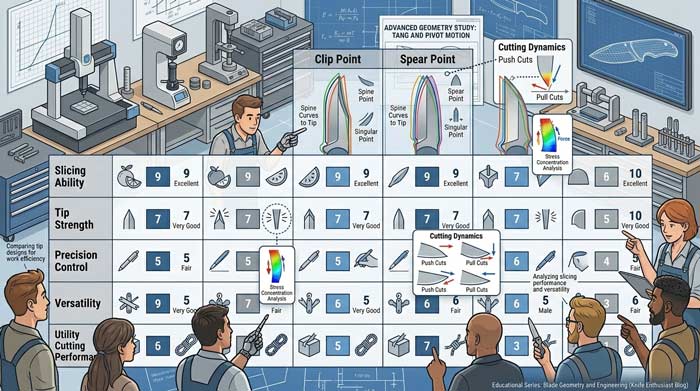
For many knife enthusiasts, blade geometry is one of the most interesting parts of knife design because it directly affects how the knife performs during real-world use. Small differences in edge curvature, tip angle, blade thickness, and overall profile can completely change how a knife cuts, slices, pierces, or handles everyday tasks. That level of variation is one reason collectors often become deeply interested in comparing different blade styles over time.
Blade shape also plays a huge role in how a knife feels in the hand. Some designs feel balanced and versatile for general utility work, while others feel more specialized for precision cutting or controlled slicing. Even subtle changes in the spine shape or edge geometry can affect control, cutting efficiency, and overall comfort during use.
Another reason enthusiasts care so much about blade geometry is because different shapes often develop strong identities within knife culture. Certain profiles become closely associated with outdoor knives, tactical-style folders, collector pieces, or modern everyday carry designs. Over time, those visual associations helped many blade styles become instantly recognizable among collectors and enthusiasts.
Mechanical curiosity also plays a major role. Many people enjoy understanding how blade shape interacts with other parts of the knife, including handle ergonomics, lock systems, opening mechanisms, and overall balance. That deeper understanding often gives enthusiasts a greater appreciation for the amount of engineering involved in creating a well-designed cutting tool.
As manufacturers continue experimenting with modern materials and hybrid blade profiles, knife geometry keeps evolving alongside the broader world of advanced pocket carry tools and everyday carry equipment. That constant innovation is part of what keeps knife collecting and mechanical design discussions so interesting for enthusiasts today.
Pocket knife blade shapes may seem like simple design choices at first, but they dramatically affect how a knife performs, feels, and functions during everyday use. Small differences in geometry can influence slicing ability, tip strength, precision control, durability, and overall cutting efficiency. That is one reason blade shape remains one of the most discussed topics among knife enthusiasts and everyday carry communities.
What makes blade geometry especially interesting is that every design involves tradeoffs. Some profiles prioritize versatility and balanced cutting performance, while others focus on reinforced tip strength, straight-edge utility work, or precise control. No single blade style works perfectly for every situation, which is why so many different geometries continue to exist across modern knife design.
As manufacturers continue experimenting with new materials, edge profiles, and hybrid geometries, blade shapes keep evolving alongside modern everyday carry culture. Many contemporary knives now combine features from multiple blade styles together, creating new designs that blend slicing performance, durability, and mechanical aesthetics in unique ways.
For many enthusiasts, learning about blade geometry adds another layer of appreciation beyond simply carrying the knife itself. Understanding how spine shape, edge curvature, tip placement, and cutting angles interact helps explain why different blade profiles feel so different during real-world use.
Whether someone prefers classic drop point designs, angular tantos, precision clip points, or utility-focused Wharncliffe profiles, blade geometry will always remain one of the most important parts of modern collector-oriented knife design and everyday carry craftsmanship.
In this guide, we are going to break down some of the most common pocket knife blade shapes, explain how they differ from one another, and look at why certain designs became so popular among knife enthusiasts and everyday carry users. Whether someone is new to collecting or simply curious about modern pocket knife designs, understanding blade shapes makes it much easier to appreciate the engineering and purpose behind different knives.
What Is a Pocket Knife Blade Shape?
A pocket knife blade shape refers to the overall profile and geometry of the blade itself, including the curve of the edge, the shape of the tip, the spine design, and the way the blade tapers toward the point. Even small changes in blade geometry can dramatically affect how a knife performs during different cutting tasks. That is why blade shape plays such a major role in the design and purpose of modern pocket knives.
Some blade shapes are designed to maximize slicing performance, while others prioritize piercing strength, edge durability, or precision control. Certain designs also place more material near the tip for strength, while others use thinner profiles that allow for finer cutting and more detailed work. The intended purpose of the knife usually determines which blade geometry works best for a specific design.
Blade shape also affects how a knife feels during everyday use. Some designs feel more balanced and versatile for general cutting tasks, while others feel more specialized for outdoor work, utility use, or detailed precision cutting. That is one reason knife enthusiasts often have strong personal preferences when comparing different blade profiles and edge styles.
Over time, many blade shapes became heavily associated with certain categories of knives. Some profiles are commonly seen on outdoor and hunting knives, while others are more popular in tactical-style designs or modern everyday carry folders. As manufacturers experimented with different cutting geometries, blade shapes continued evolving into the wide variety of styles available today.
Understanding blade geometry also helps people better appreciate how other parts of a knife work together, including handle ergonomics and folding knife lock systems. Even though two knives may appear similar at first glance, small differences in blade shape can completely change how the knife performs and feels during use.
Drop Point Blade Shapes
Drop point blades are one of the most common and versatile blade shapes used in modern pocket knives. The design features a spine that gradually slopes downward toward the tip, creating a strong and controllable point without becoming overly thin or fragile. That balanced geometry helped make drop point blades extremely popular for general everyday carry use.
One reason so many people like drop point designs is their versatility. The curved belly provides good slicing performance, while the lowered tip still offers excellent control for detailed cutting tasks. Because the tip sits closer to the centerline of the knife, many users feel that drop point blades offer a very natural and predictable cutting experience during everyday use.
Drop point blades also tend to have relatively strong tips compared to narrower or more aggressively tapered designs. The gradual spine curve leaves additional material near the point, which can improve durability and reduce the likelihood of tip damage during heavier cutting tasks. That durability helped make drop point blades especially common on outdoor knives, work knives, and utility-focused carry designs.
Another reason drop point profiles became so widespread is that they work well across many different knife sizes and opening systems. Manufacturers use drop point geometry on everything from compact everyday carry folders to larger outdoor knives because the design remains practical and easy to use in a wide variety of situations.
Many enthusiasts also appreciate how balanced drop point blades feel visually. The smooth spine curve and gradual edge shape create a clean profile that pairs well with many styles of everyday carry cutting tools and modern folding knife designs.
Tanto Blade Shapes
Tanto blades are known for their strong angular tip design and distinctive geometric appearance. Unlike curved blade profiles that flow smoothly toward the point, tanto blades usually feature a secondary edge angle near the tip that creates a reinforced point section. That unique geometry gives tanto blades a very different look and feel compared to more traditional pocket knife designs.
One reason tanto blades became so popular is their tip strength. The added material near the point creates a thicker and more reinforced tip area, which many users appreciate for harder-use cutting tasks. That durability helped tanto designs become heavily associated with tactical-style folders, modern utility knives, and rugged everyday carry tools.
Another feature that makes tanto blades stand out is the straight primary cutting edge. Many enthusiasts like the clean edge geometry because it can provide very controlled slicing and utility cuts. At the same time, the angular transition between the main edge and tip section creates a highly recognizable visual profile that became extremely popular in modern knife design.
Tanto blade shapes also gained popularity because of their aggressive appearance. The sharp angles and reinforced point create a futuristic and highly mechanical look that appeals to many collectors and enthusiasts. Over time, manufacturers experimented with countless variations of the tanto profile, including American tantos, modified tantos, and hybrid blade designs that combine tanto features with more traditional cutting geometry.
Even though some users prefer more curved blade styles for general slicing tasks, tanto profiles remain extremely popular because of their durability, distinctive appearance, and strong tip geometry. That combination helped make them common across many styles of modern carry folders and enthusiast-focused knife designs.
Clip Point Blade Shapes
Clip point blades are easily recognized by the "clipped" section near the tip of the spine. Instead of curving smoothly downward like a drop point blade, the spine appears partially cut away near the front of the blade, creating a narrower and more pronounced point. That geometry gives clip point blades a sharper-looking profile and a finer tip compared to many other blade shapes.
One reason clip point designs became so popular is their precision. The narrower tip allows for detailed cutting and controlled piercing tasks while still maintaining a relatively versatile cutting edge. Many users appreciate how agile and responsive clip point blades feel during fine cutting work or detailed utility tasks.
Clip point blades also developed a strong connection to classic knife history and traditional outdoor designs. Many iconic hunting knives and historical bowie knives used clip point geometry, which helped establish the shape as one of the most recognizable blade profiles in knife culture. Even today, many people associate clip point blades with classic American knife design.
The clipped spine section can vary quite a bit between designs. Some blades use a very subtle clip, while others feature dramatic swedges or sharpened false edges near the tip. Those variations allow manufacturers to create everything from traditional outdoor knives to highly stylized modern carry designs using the same general blade concept.
Many enthusiasts continue to enjoy clip point profiles because they combine strong visual character with excellent precision and versatility. The shape remains extremely common across many styles of classic outdoor blade styles and modern pocket carry designs today.
Spear Point Blade Shapes
Spear point blades are designed with a symmetrical appearance where the tip sits near the centerline of the blade. Both the spine and cutting edge taper toward the point in a more balanced way compared to many other blade styles. That centered geometry gives spear point blades a very controlled and precise feel while also creating a sleek and highly recognizable appearance.
One reason spear point designs became so popular is their balance. Because the blade tapers evenly toward the tip, the point often feels very aligned and controllable during detailed cutting tasks. Many enthusiasts appreciate the clean symmetry and balanced profile, especially on modern folding knives and collector-focused designs.
Spear point blades are also heavily associated with double-edged knife designs, although many modern folding knives use single-edged spear point profiles for everyday carry purposes. The centered point geometry gives the blade a highly streamlined appearance that many collectors find visually appealing.
Another reason spear point blades remain common is that they pair well with modern knife aesthetics. The symmetrical shape often looks clean, refined, and mechanical compared to more aggressively curved or angular blade styles. Many manufacturers use spear point geometry on knives that emphasize precision, smooth lines, and modern design language.
Even though some users may prefer blade shapes with larger cutting bellies for heavy slicing tasks, spear point profiles continue to remain popular because of their balance, control, and visual symmetry. That sleek geometry helped make them especially common across many styles of spring-loaded knives and modern collector-focused folders.
Wharncliffe and Sheepsfoot Blade Shapes
Wharncliffe and sheepsfoot blades are often grouped together because they share some similar characteristics, but there are important differences between the two designs. Both styles usually feature straighter cutting edges and downward-curving spines, which gives them a very different appearance compared to more pointed blade shapes like clip point or spear point designs.
Wharncliffe blades typically use a straight cutting edge combined with a spine that gradually curves downward toward the tip. This creates a very fine and controllable point while still maintaining excellent precision for detailed cutting tasks. Many enthusiasts appreciate Wharncliffe blades for utility work because the straight edge makes controlled cuts feel very predictable and easy to manage.
Sheepsfoot blades are similar, but the spine usually curves downward more dramatically while the tip remains less pointed and more rounded. This design reduces the risk of accidental piercing while still providing a highly functional cutting edge. Because of that safer tip geometry, sheepsfoot blades became especially popular for utility knives, work knives, and rescue-oriented cutting tools.
Another reason both blade styles remain popular is how well they perform during controlled slicing tasks. The straighter edge geometry allows a large portion of the blade to stay in contact with the cutting surface at the same time, which many users find useful for precise utility work and everyday cutting tasks.
Many collectors and everyday carry enthusiasts continue to enjoy these blade shapes because they offer a unique balance of control, precision, and practical cutting performance. Their distinctive geometry also helped them stand out within the growing world of modern utility knife profiles and contemporary folding knife designs.
Which Blade Shape Is Best?
Just like knife lock mechanisms, there is no single blade shape that works best for every person or every situation. Different blade profiles are designed with different priorities in mind, which means the "best" option usually depends on how someone plans to use the knife and what kind of cutting experience they personally prefer.
Some people prefer drop point blades because they offer a balanced combination of slicing ability, tip strength, and overall versatility. Others enjoy tanto designs because of their reinforced tip geometry and angular appearance. Clip point blades are often appreciated for precision and control, while Wharncliffe and sheepsfoot profiles tend to attract users who prioritize utility cutting and straight-edge performance.
Blade geometry also affects how a knife feels during everyday carry and general use. Some shapes feel more aggressive and visually striking, while others feel simpler and more practical. Even small differences in edge curvature, blade thickness, spine shape, and tip design can dramatically change how the knife handles different cutting tasks.
Another important factor is personal preference. Many enthusiasts simply enjoy certain blade styles because of their appearance, balance, or overall mechanical feel. That is one reason collectors often own several different knives with completely different blade geometries rather than sticking to a single design style.
As modern knife design continues evolving, manufacturers keep experimenting with new hybrid geometries and modified blade profiles that blend features from multiple styles together. That ongoing innovation helps keep the world of modern EDC blade designs interesting for collectors, enthusiasts, and everyday carry users alike.
Why Blade Geometry Matters to Knife Enthusiasts
For many knife enthusiasts, blade geometry is one of the most interesting parts of knife design because it directly affects how the knife performs during real-world use. Small differences in edge curvature, tip angle, blade thickness, and overall profile can completely change how a knife cuts, slices, pierces, or handles everyday tasks. That level of variation is one reason collectors often become deeply interested in comparing different blade styles over time.
Blade shape also plays a huge role in how a knife feels in the hand. Some designs feel balanced and versatile for general utility work, while others feel more specialized for precision cutting or controlled slicing. Even subtle changes in the spine shape or edge geometry can affect control, cutting efficiency, and overall comfort during use.
Another reason enthusiasts care so much about blade geometry is because different shapes often develop strong identities within knife culture. Certain profiles become closely associated with outdoor knives, tactical-style folders, collector pieces, or modern everyday carry designs. Over time, those visual associations helped many blade styles become instantly recognizable among collectors and enthusiasts.
Mechanical curiosity also plays a major role. Many people enjoy understanding how blade shape interacts with other parts of the knife, including handle ergonomics, lock systems, opening mechanisms, and overall balance. That deeper understanding often gives enthusiasts a greater appreciation for the amount of engineering involved in creating a well-designed cutting tool.
As manufacturers continue experimenting with modern materials and hybrid blade profiles, knife geometry keeps evolving alongside the broader world of advanced pocket carry tools and everyday carry equipment. That constant innovation is part of what keeps knife collecting and mechanical design discussions so interesting for enthusiasts today.
Final Thoughts on Pocket Knife Blade Shapes
Pocket knife blade shapes may seem like simple design choices at first, but they dramatically affect how a knife performs, feels, and functions during everyday use. Small differences in geometry can influence slicing ability, tip strength, precision control, durability, and overall cutting efficiency. That is one reason blade shape remains one of the most discussed topics among knife enthusiasts and everyday carry communities.
What makes blade geometry especially interesting is that every design involves tradeoffs. Some profiles prioritize versatility and balanced cutting performance, while others focus on reinforced tip strength, straight-edge utility work, or precise control. No single blade style works perfectly for every situation, which is why so many different geometries continue to exist across modern knife design.
As manufacturers continue experimenting with new materials, edge profiles, and hybrid geometries, blade shapes keep evolving alongside modern everyday carry culture. Many contemporary knives now combine features from multiple blade styles together, creating new designs that blend slicing performance, durability, and mechanical aesthetics in unique ways.
For many enthusiasts, learning about blade geometry adds another layer of appreciation beyond simply carrying the knife itself. Understanding how spine shape, edge curvature, tip placement, and cutting angles interact helps explain why different blade profiles feel so different during real-world use.
Whether someone prefers classic drop point designs, angular tantos, precision clip points, or utility-focused Wharncliffe profiles, blade geometry will always remain one of the most important parts of modern collector-oriented knife design and everyday carry craftsmanship.
You May Also Be Interested In:
- Different Types of Pocket Knife Locks Explained
- Different Types of Knife Steels Explained
- The Real History of Brass Knuckles: From Battlefield to Back Pocket
- What Is a Shuriken? Types of Ninja Throwing Stars Explained
- Why Every Day Should Be an EDC Knife Day: How a Simple Knife Can Make Your Life Easier and Safer
- Assassin Arm Blade and Other New Weapons
- 12 Fixed Blade Knives You Should Know About
- Best EDC Knife: How to Choose the Right Everyday Carry Knife
- Karambit vs Push Dagger: Which Blade Would You Bet Your Life On?
- From Garden Tool to Combat Blade: The Evolution of the Kunai
Leave a Reply