





Why Karambit Knives Are So Effective
March 24th, 2026

Karambit knives stand out from almost every other blade design, and once you understand how they're built, it's easy to see why. With their curved shape and signature finger ring, karambits are designed for control, retention, and fluid movement in a way that straight blades simply aren't. They may look unusual at first, but there's a reason they've been used for centuries and are still popular today. Whether you're curious about how they work or why so many people prefer them, the design itself tells the story.
The Unique Design of Karambit Knives
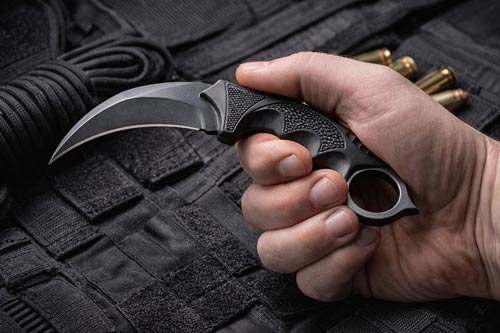
One of the biggest reasons karambit knives are so effective comes down to their design. Unlike straight blades, a karambit features a pronounced curve that follows the natural motion of your hand and wrist. This allows for smoother, more controlled cutting motions, especially when pulling the blade toward you rather than pushing it forward.
The finger ring at the base of the handle is another key feature that sets karambits apart. This ring allows you to maintain a secure grip on the knife, even during fast movements or if your hand becomes wet or sweaty. It also gives you a level of control that is difficult to achieve with traditional knife handles.
Because of this design, karambit knives are often easier to retain during use. The ring acts as a built-in safety feature that helps prevent the knife from slipping out of your hand. This is especially important in situations where grip strength or control could be compromised.
If you want to see how different designs vary, you can explore this selection of karambit knives to compare handle shapes, blade curves, and ring sizes. Small differences in design can have a big impact on how the knife feels and performs.
Overall, the curved blade and finger ring work together to create a knife that feels natural in motion. That combination of control, retention, and fluid movement is a big part of what makes karambit knives so effective.
Why the Curved Blade Design Matters
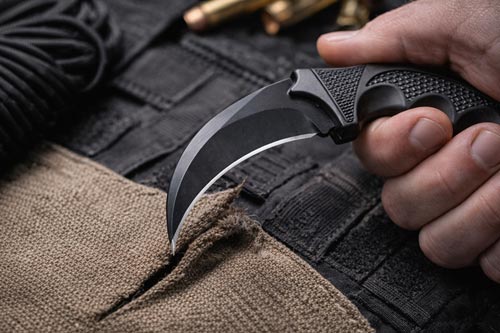
The curved blade of a karambit is not just for looks. It plays a major role in how the knife performs. Unlike a straight blade that relies on direct forward pressure, a curved blade is designed to catch and pull as it moves through material. This creates a slicing motion that can feel more natural and efficient.
Because of that curve, even small movements can produce effective cuts. Instead of needing wide, powerful swings, the blade works with shorter, controlled motions. This gives the user more precision and makes the knife easier to manage in tight or fast-moving situations.
Another advantage of the curved shape is how it stays engaged during use. The blade tends to maintain contact as it moves, rather than slipping or glancing off. This is part of what makes karambits feel so responsive compared to traditional straight-edge knives.
The design also complements the natural movement of the wrist. When you move your hand in a pulling motion, the curve follows that path, allowing for smoother and more consistent cutting action. This alignment between the blade and your natural motion is a big reason why karambit knives stand out.
The Advantage of the Finger Ring Grip
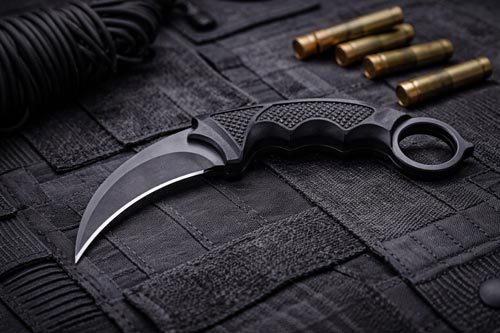
One of the most distinctive features of a karambit knife is the finger ring at the base of the handle. At first glance, it might seem like a small detail, but it plays a huge role in how the knife feels and performs in your hand.
The finger ring allows you to lock the knife into your grip, giving you a level of control that is hard to match with traditional knife designs. Even if your grip loosens slightly, the knife stays secured to your hand. This added retention can make a big difference during quick movements or extended use.
Another benefit is how the ring improves handling during transitions. You can adjust your grip or reposition the knife without fully letting go, which helps maintain control at all times. This is one of the reasons karambits are often described as feeling more "connected" to your hand compared to standard handles.
The ring also helps reduce hand fatigue. Because you are not relying entirely on grip strength to hold the knife in place, your hand can stay more relaxed while still maintaining control. Over time, this can make the knife more comfortable to use, especially during longer sessions.
When you start comparing different karambit designs, you will notice variations in ring size and placement. Some are larger for easier access, while others are tighter for a more secure fit. Finding the right balance can make a noticeable difference in how natural the knife feels in your hand.
Why Karambit Knives Feel So Natural to Use
One of the most noticeable things about using a karambit knife is how natural it feels in your hand. This comes from the way the design works with your body's natural movements instead of against them. From the curve of the blade to the positioning of the handle and ring, everything is built around fluid motion.
Unlike straight knives that often rely on direct forward pressure, karambits are designed for pulling and hooking motions. These movements align more closely with how your wrist and arm naturally move, which makes the knife feel intuitive even if you have not spent years training with it.
Another reason they feel so natural is the balance. Most karambit knives are compact and evenly weighted, so they do not feel bulky or awkward in your hand. This makes them easier to control, especially during quick or repetitive movements where precision matters.
The ergonomic handle also plays a big role. The contours are shaped to fit comfortably in your palm, reducing strain and improving grip stability. When combined with the finger ring, this creates a secure and controlled feel that many users prefer over traditional knife designs.
Over time, this natural feel can build confidence in how the knife handles. Whether you are using it for utility tasks or just getting familiar with the design, the way it moves with your hand is a big part of what makes karambit knives so appealing.
Common Uses for Karambit Knives
Karambit knives are often associated with self defense, but they are also used for a variety of practical, everyday tasks. The curved blade makes them especially effective for cutting materials that benefit from a pulling motion, such as rope, straps, or tough packaging.
Because of their compact size, karambits are easy to carry and quick to deploy when needed. This makes them a popular option for people who want a knife that is both functional and easy to manage. The design allows for controlled, precise cuts without requiring large movements.
They are also commonly used in training environments, particularly in martial arts systems that focus on edged weapons. In those settings, the karambit is valued for its unique handling and the way it encourages fluid, controlled movement. Many practitioners appreciate how it builds coordination and awareness.
Beyond that, some people simply prefer the feel and style of a karambit for general utility use. Opening boxes, cutting zip ties, or handling light-duty tasks can all be done comfortably with the curved blade and ergonomic grip.
If you are curious about how different styles perform, you can check out this selection of karambit knives to see the variety of blade shapes and handle designs available. Small differences can change how the knife feels and what it is best suited for.
What to Look for in a Quality Karambit Knife
Not all karambit knives are built the same, and small differences in design and materials can have a big impact on how they perform. If you are comparing options, there are a few key things to pay attention to that will help you choose a solid, reliable knife.
Blade material is one of the first factors to consider. Higher-quality steel will generally hold an edge longer and resist wear over time. While there are many types of steel available, the most important thing is finding a blade that balances durability with ease of maintenance.
Handle design also plays a major role. A good karambit should feel secure and comfortable in your hand, with enough texture or contouring to prevent slipping. Since the knife relies heavily on control and grip, this is not something you want to overlook.
The finger ring is another important detail. It should be sized and positioned in a way that feels natural when you hold the knife. If the ring is too small or too large, it can affect both comfort and control during use.
You will also want to look at the overall construction. A well-built karambit should feel solid, with no looseness or weak points. Whether it is a fixed blade or a folding design, everything should lock into place securely and operate smoothly.
Taking the time to compare these features can make a big difference in how the knife performs over time. A quality karambit will not only feel better in your hand, but it will also hold up better with regular use.
Why Karambit Knives Remain Popular Today
Even with so many different knife designs available, karambit knives have continued to grow in popularity. A big part of that comes from their unique combination of control, efficiency, and distinctive design. Once people try one, they often notice how different it feels compared to more traditional blades.
Another reason for their popularity is how versatile they are. While they are known for their effectiveness in certain situations, they are also practical for everyday tasks. The curved blade, secure grip, and compact size make them useful in a wide range of scenarios without feeling bulky or difficult to handle.
There is also a strong visual appeal. Karambits have a distinctive look that stands out immediately, which draws attention from both collectors and everyday users. That combination of form and function has helped keep them relevant even as new knife designs continue to emerge.
You can see how these features come together by exploring different karambit knife styles and comparing how they are built. Seeing the variety in blade shapes, handle materials, and overall design makes it clear why they continue to be a popular choice.
At the end of the day, karambit knives have stayed relevant because they offer something different. They combine a unique design with practical performance, which keeps them appealing to both new users and experienced enthusiasts alike.
Final Thoughts on Karambit Knives
Karambit knives stand out because of how well their design works with natural movement. From the curved blade to the finger ring, every part of the knife is built for control and efficiency. Once you understand how those features come together, it becomes clear why they feel so different from traditional straight-blade knives.
Whether you are interested in them for practical use or just want something that offers a different experience, karambits bring a unique combination of function and design. The more you handle one, the more those advantages become noticeable.
At the end of the day, their effectiveness comes down to how naturally they move with your hand. That is what makes them stand out and why they continue to be a popular choice.
You May Also Be Interested In:
- Why Karambit Knives Became So Popular in Video Games
- Pepper Spray 101: What It Is, How It Works, and Why It's So Effective
- Are Throwing Stars Actually Effective Weapons?
- Stun Gun Brass Knuckles: How They Work and Are They Effective?
- The History and Evolution of the Karambit Knife
- 10 Things You Didn't Know About the Karambit Knife
- Karambit vs Push Dagger: Which Blade Would You Bet Your Life On?
- What Is a Karambit Knife? Beginner Guide to Karambits
- Why Automatic Knives Belong in Your EDC
- How Automatic Knives Actually Work
Leave a Reply