



Three Section Staff including Sanjiegun & Sansetsukon
-
 🔍︎ QUICK VIEW
-
 🔍︎ QUICK VIEW
$194.95
🔍︎ QUICK VIEW
$194.95 -
 🔍︎ QUICK VIEW
-
 🔍︎ QUICK VIEW
-
 🔍︎ QUICK VIEW
$54.95
🔍︎ QUICK VIEW
$54.95 -
 🔍︎ QUICK VIEW
-
 🔍︎ QUICK VIEW
-
 🔍︎ QUICK VIEW
-
 🔍︎ QUICK VIEW
-
 🔍︎ QUICK VIEW
-
 🔍︎ QUICK VIEW
$23.95
🔍︎ QUICK VIEW
$23.95 -
 🔍︎ QUICK VIEW
-
 🔍︎ QUICK VIEW
$34.95
🔍︎ QUICK VIEW
$34.95
 (3)
(3) (1)
(1) (5)
(5)Three Section Staff including Sanjiegun & Sansetsukon
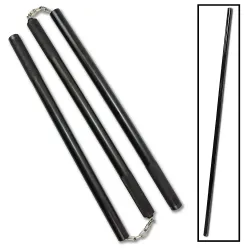
The three-section staff, also known as the sanjiegun in Chinese, sansetsukon in Okinawan kobudo, or simply the 3-section staff, is a distinctive and versatile weapon that has captivated martial artists for centuries. Its unique design, which consists of three connected rods typically ranging from 24 to 30 inches in length and joined by chains or cords, allows for a wide array of techniques. This makes it both a formidable weapon and a challenging tool for practitioners to master.
Originating in China, the three-section staff's exact historical roots are surrounded by legend. One popular tale attributes its invention to a Buddhist monk named San Zhan during the Ming Dynasty, who was inspired by the flexibility and unpredictability of a snake. Another story credits Zhao Kuangyin, the first emperor of the Song Dynasty, with helping to popularize the weapon. While there's no definitive historical record to confirm either version, these stories reflect the cultural importance and long-standing legacy of the three-section staff in Chinese martial arts.
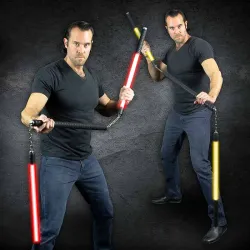
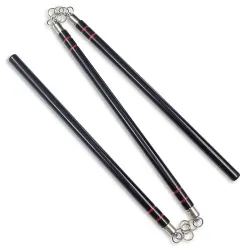
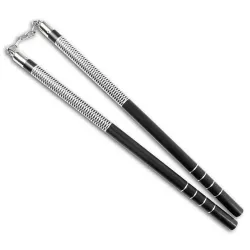
The weapon's construction is both simple and clever. The three rods, often made of hardwood or metal, are connected by either rope or chain, giving the user tremendous flexibility in how the weapon is handled. It can be used like a long-range whip, a medium-range flail, or broken down into short-range escrima-style strikes. This versatility means it can shift between offense and defense quickly, keeping opponents off balance. The connecting chains or cords can also be used to entangle an opponent's limbs or weapons, making it especially effective for trapping, disarming, or controlling movements during combat.
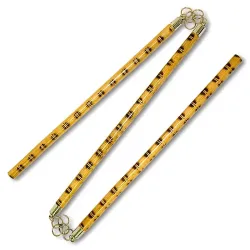
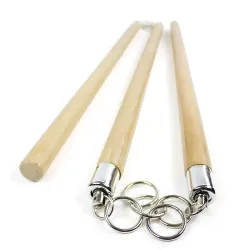
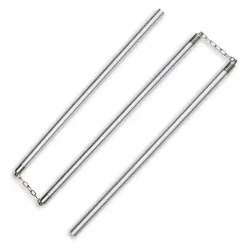
Traditionally, three-section staffs were made from woods like waxwood, oak, or rattan, all chosen for their balance of durability and flexibility. At Kombativ.com, we're pushing the boundaries by testing advanced materials like aircraft-grade aluminum and high-impact polymers. These modern variations are designed to be both lighter and stronger than traditional versions, giving martial artists more speed without sacrificing control. Whether you prefer the classic wooden feel or want to experiment with something more modern, our selection has something to match your style and level of training.
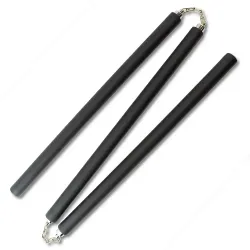
The learning curve for a three-section staff is steep, but that's part of what makes it so rewarding. This weapon is notoriously difficult to master because of its unpredictable momentum and tendency to rebound. Many martial artists start by working with foam-padded versions to avoid injury while developing control. Once the fundamentals are in place, more advanced techniques like spinning, joint-locking, and complex transitions between configurations become accessible. The weapon offers instant feedback, making it easy to tell when a technique is off. That honesty keeps practitioners sharp and focused.
The three-section staff is found across a variety of martial arts disciplines. In Chinese Kung Fu, especially in Shaolin and Wushu styles, it's used for both training and demonstration. In these systems, it often features rapid spinning sequences, acrobatic movements, and impressive combinations of offensive and defensive techniques. In Wushu competition, the three-sectional staff is typically lighter and designed for speed, fluidity, and performance aesthetics. These demonstrations are not only crowd-pleasers but also test an athlete's precision and coordination at the highest levels.
In more traditional Chinese systems like Hung Gar, Mantis Kung Fu, and Choy Li Fut, the sanjiegun is used in combat-focused ways that emphasize joint manipulation, striking accuracy, and realistic applications. These schools treat the weapon not just as a performance piece but as a practical tool for real-world defense. Some Tai Chi practitioners also incorporate the three-sectional staff into training routines to develop awareness, coordination, and internal energy control. Although Tai Chi is better known for its gentle forms, weapons training adds another dimension to the practice, enhancing strength and focus.
The weapon also made its way to Okinawa, where it was adopted into Matayoshi Kobudo. The Okinawan version, called the sansetsukon, differs slightly in design. It generally features thicker and shorter staves, typically about 20 to 24 inches in length and around 2 inches in diameter. This variant emphasizes blocking, trapping, and quick strikes, fitting the close-quarters nature of Okinawan martial arts. Shinko Matayoshi is credited with bringing this weapon from Fujian Province to Okinawa around 1935, helping to preserve and adapt the traditional form.
Training with a 3-section staff builds much more than fighting skill. It improves coordination, strengthens the wrists and forearms, sharpens reflexes, and enhances spatial awareness. The weapon's fluid, complex motions require full-body engagement, making it an excellent workout for practitioners looking to build strength and agility. Perhaps most importantly, it teaches patience. Unlike simpler weapons, there are no shortcuts here; real proficiency comes only through careful repetition and sustained focus.
At Kombativ.com, we're passionate about offering tools that support serious martial artists, which is why our gear is tested for performance and reliability. Every 3-sectional staff in our inventory is selected with the same philosophy in mind; to blend tradition with innovation, honoring the weapon's heritage while enhancing its practicality for today's practitioners. Whether you're a student of traditional Chinese martial arts, a Wushu competitor, a kobudo enthusiast, or just someone fascinated by dynamic weapons training, you'll find something that fits your training needs.
Yes, the three-section staff is widely considered one of the most difficult traditional weapons to master, but that's also what makes it so rewarding. Unlike simpler weapons like a bo staff or nunchaku, the 3-section staff has multiple pivot points connected by chains or cords, which means it moves in unpredictable ways. This forces you to develop exceptional timing, awareness, and body control.
Beginners often start with a padded or foam version to reduce the risk of injury. The goal at first isn't power, it's learning to control the rebound and momentum of the weapon so it doesn't whip back and strike you. Once you can confidently guide each section through its arc, you can progress to hardwood or metal versions for more speed and impact.
A skilled practitioner can use the weapon in several modes: as a long staff, a flail, or even as dual short sticks for close-range strikes. Each configuration requires you to adjust your grip, distance, and rhythm, which is why it takes years to fully master. That said, few weapons build as much precision, coordination, and reflex control as the three-section staff. Every mistake teaches you something, and that honest feedback is exactly what makes it such a powerful training tool.
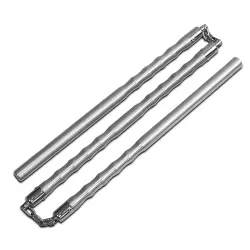
Traditional versions are made from waxwood, oak, or rattan, while modern models use aluminum, steel, or high-impact polymers. Metal versions are heavier and more durable, while wooden or polymer designs are lighter and better suited for speed and control during training.
The sanjiegun and the sansetsukon are two versions of the same three-section staff, but their differences reflect the cultures and fighting systems that developed around them. The sanjiegun is the Chinese form, used primarily in Kung Fu styles like Shaolin, Hung Gar, and Choy Li Fut. The sansetsukon is the Okinawan adaptation, found in traditional kobudo systems that focus on close-range combat and defensive applications.
The Chinese sanjiegun typically features longer and thinner staves, usually between 24 and 30 inches each, connected by short chains or cords. This design allows for fluid spinning movements, extended reach, and a wide range of transitions between long-range attacks and mid-range trapping techniques. It is often showcased in modern Wushu, where practitioners use lighter versions made from rattan or aluminum to perform fast, acrobatic routines.
The Okinawan sansetsukon, on the other hand, has shorter, thicker staves-often around 20 to 24 inches in length and about 2 inches in diameter. These proportions make it better suited for quick blocking, trapping, and striking in close-quarters situations. The chains or cords are usually slightly longer, giving it a heavier, more grounded feel. In practice, the sansetsukon behaves more like a hybrid between a staff and a flail, designed for control rather than continuous spinning.
While both versions share the same three-section design, the sanjiegun emphasizes speed and flow, whereas the sansetsukon emphasizes control and impact. Understanding both styles offers valuable insight into how different martial arts traditions adapted the same weapon for their own unique combat philosophies.
Yes, beginners can absolutely train safely with a three-section staff, as long as they start with the right equipment and progress gradually. Because the weapon moves dynamically and rebounds quickly, learning control before power is the key to staying safe. The best place to start is with a foam-padded or rubberized training version, which allows students to build coordination and muscle memory without the risk of serious injury.
At first, training should focus on basic handling and grip transitions. Practitioners learn how to control the sections, catch rebounds, and maintain distance without letting the weapon wrap around their own body. Many instructors recommend practicing slow, controlled swings in front of a mirror or under supervision to develop awareness of the weapon's motion path.
Once a student can consistently manage the staff's momentum, they can move on to wooden or polymer models for a more realistic feel. These versions provide better weight feedback and balance, helping the practitioner refine timing and precision. Metal versions are best reserved for advanced users who already have strong control, as the additional weight increases both striking power and risk.
Safety gear also plays an important role. Wearing padded gloves, wrist guards, and long sleeves can prevent bruises during early training sessions. Practicing in an open area free of obstacles and maintaining a safe distance from others ensures that accidental swings don't cause harm. With patience and the right mindset, even beginners can enjoy the challenge of the three-section staff safely while developing skills that translate to other martial arts weapons as well.
You'll find the weapon in Chinese Kung Fu systems like Shaolin, Hung Gar, and Choy Li Fut, as well as in Wushu for demonstration purposes. It's also part of Okinawan kobudo, where it's known as the sansetsukon. Some Tai Chi schools even include it for internal energy and coordination training.
Training with a three-section staff offers far more than just learning how to handle a weapon. It develops coordination, reflexes, balance, and focus in ways that few other martial arts tools can match. Because each of the three rods moves independently yet remains connected by chains or cords, the weapon constantly challenges your timing and body control. Every strike, block, or spin demands awareness of how your movements affect the next section in motion.
Physically, practicing with a 3-section staff builds forearm, wrist, and shoulder strength while also engaging the core and legs for stability. The weapon's constant shifting of momentum forces you to generate power through proper technique rather than raw strength. Over time, practitioners develop smoother transitions, quicker reactions, and improved endurance.
The benefits extend well beyond physical skill. The weapon requires intense concentration and patience, since one careless movement can cause it to rebound in unexpected ways. Many martial artists find that regular practice improves their mental focus and calm under pressure, similar to moving meditation. Because the weapon gives instant feedback, it teaches discipline and self-awareness with every swing.
For those who train seriously, the three-section staff becomes more than a performance piece; it becomes a tool for developing control, awareness, and respect for energy and movement. Whether you train for martial arts demonstrations, traditional forms, or personal fitness, the three-section staff challenges your body and mind in ways few weapons can match.
In most modern self-defense scenarios, the three-section staff is not the most practical choice, but it can still offer useful training benefits. In a real-world confrontation you usually need something quick to deploy, easy to control, and legally carryable. The 3-section staff is long, requires space to swing safely, and needs significant skill to use without injuring yourself or bystanders. Those limitations make it less convenient than simpler tools like a short stick, baton, or empty-hand techniques.
That said, the three-section staff builds valuable skills that translate directly to self-defense. Training improves distance management, timing, hand speed, and the ability to read and control momentum. Many techniques focus on trapping, disarming, and redirecting an opponent, which are practical principles in defensive encounters. If your goal is practical self-defense, consider pairing staff training with close-quarters drills, empty-hand defenses, and legal knowledge about carrying weapons in your area.
If you choose to carry a three-section staff, know your local laws because some jurisdictions restrict or prohibit carrying certain weapons. Also train deliberately: use padded practice models for drills, work with a qualified instructor, and focus on techniques that emphasize control and escape rather than prolonged confrontation. In short, the weapon itself is rarely ideal for street defense, but the skills you gain from training are highly practical and transferable.
Yes. Longer rods (28-30 inches) and longer chains increase reach but reduce control. Shorter rods or shorter chain links make the weapon more responsive but limit range. Choosing the right size depends on your height, experience level, and whether you train in Chinese or Okinawan systems.
Origins and Historical Legends
Originating in China, the three-section staff's exact historical roots are surrounded by legend. One popular tale attributes its invention to a Buddhist monk named San Zhan during the Ming Dynasty, who was inspired by the flexibility and unpredictability of a snake. Another story credits Zhao Kuangyin, the first emperor of the Song Dynasty, with helping to popularize the weapon. While there's no definitive historical record to confirm either version, these stories reflect the cultural importance and long-standing legacy of the three-section staff in Chinese martial arts.
Weapon Construction and Combat Versatility
The weapon's construction is both simple and clever. The three rods, often made of hardwood or metal, are connected by either rope or chain, giving the user tremendous flexibility in how the weapon is handled. It can be used like a long-range whip, a medium-range flail, or broken down into short-range escrima-style strikes. This versatility means it can shift between offense and defense quickly, keeping opponents off balance. The connecting chains or cords can also be used to entangle an opponent's limbs or weapons, making it especially effective for trapping, disarming, or controlling movements during combat.
Traditional and Modern Materials
Traditionally, three-section staffs were made from woods like waxwood, oak, or rattan, all chosen for their balance of durability and flexibility. At Kombativ.com, we're pushing the boundaries by testing advanced materials like aircraft-grade aluminum and high-impact polymers. These modern variations are designed to be both lighter and stronger than traditional versions, giving martial artists more speed without sacrificing control. Whether you prefer the classic wooden feel or want to experiment with something more modern, our selection has something to match your style and level of training.
Learning Curve and Skill Development
The learning curve for a three-section staff is steep, but that's part of what makes it so rewarding. This weapon is notoriously difficult to master because of its unpredictable momentum and tendency to rebound. Many martial artists start by working with foam-padded versions to avoid injury while developing control. Once the fundamentals are in place, more advanced techniques like spinning, joint-locking, and complex transitions between configurations become accessible. The weapon offers instant feedback, making it easy to tell when a technique is off. That honesty keeps practitioners sharp and focused.
Use in Chinese Martial Arts and Wushu
The three-section staff is found across a variety of martial arts disciplines. In Chinese Kung Fu, especially in Shaolin and Wushu styles, it's used for both training and demonstration. In these systems, it often features rapid spinning sequences, acrobatic movements, and impressive combinations of offensive and defensive techniques. In Wushu competition, the three-sectional staff is typically lighter and designed for speed, fluidity, and performance aesthetics. These demonstrations are not only crowd-pleasers but also test an athlete's precision and coordination at the highest levels.
Traditional Combat Applications
In more traditional Chinese systems like Hung Gar, Mantis Kung Fu, and Choy Li Fut, the sanjiegun is used in combat-focused ways that emphasize joint manipulation, striking accuracy, and realistic applications. These schools treat the weapon not just as a performance piece but as a practical tool for real-world defense. Some Tai Chi practitioners also incorporate the three-sectional staff into training routines to develop awareness, coordination, and internal energy control. Although Tai Chi is better known for its gentle forms, weapons training adds another dimension to the practice, enhancing strength and focus.
Okinawan Adaptation: Sansetsukon
The weapon also made its way to Okinawa, where it was adopted into Matayoshi Kobudo. The Okinawan version, called the sansetsukon, differs slightly in design. It generally features thicker and shorter staves, typically about 20 to 24 inches in length and around 2 inches in diameter. This variant emphasizes blocking, trapping, and quick strikes, fitting the close-quarters nature of Okinawan martial arts. Shinko Matayoshi is credited with bringing this weapon from Fujian Province to Okinawa around 1935, helping to preserve and adapt the traditional form.
Physical and Mental Training Benefits
Training with a 3-section staff builds much more than fighting skill. It improves coordination, strengthens the wrists and forearms, sharpens reflexes, and enhances spatial awareness. The weapon's fluid, complex motions require full-body engagement, making it an excellent workout for practitioners looking to build strength and agility. Perhaps most importantly, it teaches patience. Unlike simpler weapons, there are no shortcuts here; real proficiency comes only through careful repetition and sustained focus.
Our Approach at Kombativ.com
At Kombativ.com, we're passionate about offering tools that support serious martial artists, which is why our gear is tested for performance and reliability. Every 3-sectional staff in our inventory is selected with the same philosophy in mind; to blend tradition with innovation, honoring the weapon's heritage while enhancing its practicality for today's practitioners. Whether you're a student of traditional Chinese martial arts, a Wushu competitor, a kobudo enthusiast, or just someone fascinated by dynamic weapons training, you'll find something that fits your training needs.
Is the three-section staff hard to learn?
Yes, the three-section staff is widely considered one of the most difficult traditional weapons to master, but that's also what makes it so rewarding. Unlike simpler weapons like a bo staff or nunchaku, the 3-section staff has multiple pivot points connected by chains or cords, which means it moves in unpredictable ways. This forces you to develop exceptional timing, awareness, and body control.
Beginners often start with a padded or foam version to reduce the risk of injury. The goal at first isn't power, it's learning to control the rebound and momentum of the weapon so it doesn't whip back and strike you. Once you can confidently guide each section through its arc, you can progress to hardwood or metal versions for more speed and impact.
A skilled practitioner can use the weapon in several modes: as a long staff, a flail, or even as dual short sticks for close-range strikes. Each configuration requires you to adjust your grip, distance, and rhythm, which is why it takes years to fully master. That said, few weapons build as much precision, coordination, and reflex control as the three-section staff. Every mistake teaches you something, and that honest feedback is exactly what makes it such a powerful training tool.
What materials are three-section staffs made from?
Traditional versions are made from waxwood, oak, or rattan, while modern models use aluminum, steel, or high-impact polymers. Metal versions are heavier and more durable, while wooden or polymer designs are lighter and better suited for speed and control during training.
What's the difference between a sanjiegun and a sansetsukon?
The sanjiegun and the sansetsukon are two versions of the same three-section staff, but their differences reflect the cultures and fighting systems that developed around them. The sanjiegun is the Chinese form, used primarily in Kung Fu styles like Shaolin, Hung Gar, and Choy Li Fut. The sansetsukon is the Okinawan adaptation, found in traditional kobudo systems that focus on close-range combat and defensive applications.
The Chinese sanjiegun typically features longer and thinner staves, usually between 24 and 30 inches each, connected by short chains or cords. This design allows for fluid spinning movements, extended reach, and a wide range of transitions between long-range attacks and mid-range trapping techniques. It is often showcased in modern Wushu, where practitioners use lighter versions made from rattan or aluminum to perform fast, acrobatic routines.
The Okinawan sansetsukon, on the other hand, has shorter, thicker staves-often around 20 to 24 inches in length and about 2 inches in diameter. These proportions make it better suited for quick blocking, trapping, and striking in close-quarters situations. The chains or cords are usually slightly longer, giving it a heavier, more grounded feel. In practice, the sansetsukon behaves more like a hybrid between a staff and a flail, designed for control rather than continuous spinning.
While both versions share the same three-section design, the sanjiegun emphasizes speed and flow, whereas the sansetsukon emphasizes control and impact. Understanding both styles offers valuable insight into how different martial arts traditions adapted the same weapon for their own unique combat philosophies.
Can beginners train safely with a three-section staff?
Yes, beginners can absolutely train safely with a three-section staff, as long as they start with the right equipment and progress gradually. Because the weapon moves dynamically and rebounds quickly, learning control before power is the key to staying safe. The best place to start is with a foam-padded or rubberized training version, which allows students to build coordination and muscle memory without the risk of serious injury.
At first, training should focus on basic handling and grip transitions. Practitioners learn how to control the sections, catch rebounds, and maintain distance without letting the weapon wrap around their own body. Many instructors recommend practicing slow, controlled swings in front of a mirror or under supervision to develop awareness of the weapon's motion path.
Once a student can consistently manage the staff's momentum, they can move on to wooden or polymer models for a more realistic feel. These versions provide better weight feedback and balance, helping the practitioner refine timing and precision. Metal versions are best reserved for advanced users who already have strong control, as the additional weight increases both striking power and risk.
Safety gear also plays an important role. Wearing padded gloves, wrist guards, and long sleeves can prevent bruises during early training sessions. Practicing in an open area free of obstacles and maintaining a safe distance from others ensures that accidental swings don't cause harm. With patience and the right mindset, even beginners can enjoy the challenge of the three-section staff safely while developing skills that translate to other martial arts weapons as well.
What martial arts styles use the three-section staff?
You'll find the weapon in Chinese Kung Fu systems like Shaolin, Hung Gar, and Choy Li Fut, as well as in Wushu for demonstration purposes. It's also part of Okinawan kobudo, where it's known as the sansetsukon. Some Tai Chi schools even include it for internal energy and coordination training.
What are the benefits of training with a three-section staff?
Training with a three-section staff offers far more than just learning how to handle a weapon. It develops coordination, reflexes, balance, and focus in ways that few other martial arts tools can match. Because each of the three rods moves independently yet remains connected by chains or cords, the weapon constantly challenges your timing and body control. Every strike, block, or spin demands awareness of how your movements affect the next section in motion.
Physically, practicing with a 3-section staff builds forearm, wrist, and shoulder strength while also engaging the core and legs for stability. The weapon's constant shifting of momentum forces you to generate power through proper technique rather than raw strength. Over time, practitioners develop smoother transitions, quicker reactions, and improved endurance.
The benefits extend well beyond physical skill. The weapon requires intense concentration and patience, since one careless movement can cause it to rebound in unexpected ways. Many martial artists find that regular practice improves their mental focus and calm under pressure, similar to moving meditation. Because the weapon gives instant feedback, it teaches discipline and self-awareness with every swing.
For those who train seriously, the three-section staff becomes more than a performance piece; it becomes a tool for developing control, awareness, and respect for energy and movement. Whether you train for martial arts demonstrations, traditional forms, or personal fitness, the three-section staff challenges your body and mind in ways few weapons can match.
Is the three-section staff practical for self-defense?
In most modern self-defense scenarios, the three-section staff is not the most practical choice, but it can still offer useful training benefits. In a real-world confrontation you usually need something quick to deploy, easy to control, and legally carryable. The 3-section staff is long, requires space to swing safely, and needs significant skill to use without injuring yourself or bystanders. Those limitations make it less convenient than simpler tools like a short stick, baton, or empty-hand techniques.
That said, the three-section staff builds valuable skills that translate directly to self-defense. Training improves distance management, timing, hand speed, and the ability to read and control momentum. Many techniques focus on trapping, disarming, and redirecting an opponent, which are practical principles in defensive encounters. If your goal is practical self-defense, consider pairing staff training with close-quarters drills, empty-hand defenses, and legal knowledge about carrying weapons in your area.
If you choose to carry a three-section staff, know your local laws because some jurisdictions restrict or prohibit carrying certain weapons. Also train deliberately: use padded practice models for drills, work with a qualified instructor, and focus on techniques that emphasize control and escape rather than prolonged confrontation. In short, the weapon itself is rarely ideal for street defense, but the skills you gain from training are highly practical and transferable.
Do different lengths or chain types affect performance?
Yes. Longer rods (28-30 inches) and longer chains increase reach but reduce control. Shorter rods or shorter chain links make the weapon more responsive but limit range. Choosing the right size depends on your height, experience level, and whether you train in Chinese or Okinawan systems.