




Slapjack vs Blackjack: What's the Difference Between These Classic Impact Weapons?
October 17th, 2025
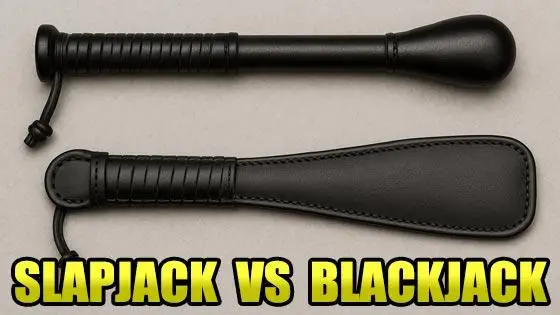
If you've ever browsed old police gear, collector forums, or vintage self-defense tools, you've probably seen the words slapjack, sap, and blackjack used almost interchangeably. At first glance they all look similar, short leather-covered impact tools with a weighted head, but there are key differences in how they're built and what they were originally made for. Understanding those differences helps collectors and martial artists appreciate the craftsmanship and history behind each one.
Blackjacks were known for their solid or semi-rigid design, often featuring a dense, rounded head and a short handle for controlled strikes. Slapjacks, on the other hand, were flatter, more flexible, and designed to deliver a fast, broad impact. Both have deep roots in law enforcement and military history, and while they've mostly disappeared from modern duty gear, they remain popular among collectors and martial arts enthusiasts for their historical significance and handmade craftsmanship.
Although the names are often mixed up, each of these impact tools has its own design and purpose. The confusion comes from decades of overlapping use in law enforcement, the military, and personal defense, where regional slang and manufacturing differences blurred the lines between them.
A blackjack is a short, leather-wrapped weapon with a solid or semi-rigid core and a weighted head. It's designed for compactness and control, typically featuring a small handle or grip section. The weight is concentrated at the end, which gives it a distinct "snap" when swung.
A slapjack is generally flatter and more flexible, often shaped like a short beavertail paddle. Instead of a solid core, it usually contains lead shot or powder inside a stitched leather body. This makes it softer in construction but capable of spreading impact across a wider surface.
The term sap overlaps with slapjack in many circles. In most cases, a sap is a short, flat impact weapon made from heavy leather and filled with lead shot, making it nearly identical in function and shape to a slapjack. Some collectors use "sap" as a catch-all term for both designs.
Knowing the difference between these terms helps when identifying or collecting vintage pieces, since many older makers labeled their tools differently even when the construction was nearly the same.
Construction is where slapjacks and blackjacks really diverge, and those construction choices determine weight, feel, and how the tool transfers energy on impact. Both types usually start with leather on the outside, but after that the methods and materials vary a lot.
Blackjack construction. A traditional blackjack will have a relatively rigid core and a concentrated head. Cores can be metal, hardwood, or a dense molded insert. Some blackjacks use a solid piece for the head, while others use a sealed shot bag set inside a leather jacket to add weight without making the whole piece rigid. Handles are short and wrapped in leather or cord to give a secure grip. The leather covering is often hand stitched and sometimes glued into place. Because the mass is focused near the head, the blackjack feels heavy on contact and delivers a compact, controlled strike.
Slapjack and sap construction. Slapjacks and saps tend to be flatter and more flexible. The most common build is a layered leather body stitched around a filling of lead shot, small pellets, or tightly packed material. Some versions use a grain leather outer layer with softer inner linings to absorb stitching stress. Handles can be an integrated extension of the body or a short, wrapped grip attached to one end. The flexible head lets the tool conform on contact, spreading force across a broader surface and reducing the chance of tearing the leather on hard hits.
Stitching, seams, and durability. Stitch quality matters. Heavy duty saddler stitching and double seams keep the filling from shifting and prolong the life of the tool. Many higher end pieces have reinforced seams around the handle and head to prevent splitting during heavy use. Edge finishing and burnishing on the leather not only improve looks but also stop the edges from fraying over time.
Fill materials and weight options. Lead shot is traditional for flexible saps and slapjacks because it molds to the shape of the bag and packs heavy mass into a small volume. Solid cores for blackjacks might be metal or hardwood, or they can be molded composite inserts. Some makers use a combination approach, for example a rigid insert in the handle with a shot bag head, which gives a mix of firmness and mass distribution.
Leather types and synthetic alternatives. Full grain leather and bridle leather are common on premium pieces for their toughness and patina. Vegetable tanned leather takes dye and burnish well, which collectors like. More affordable versions use split leather or synthetic covers that mimic the look of leather while resisting moisture and abrasion better.
Size, balance, and finish choices. Small blackjacks prioritize concealability and quick control, so they are shorter and more compact. Large blackjacks favor mass and balance for a slower but heavier impact. Slapjacks often have a wider, flatter striking face which changes how energy is dispersed on contact. Finish touches such as rivets, lanyard holes, or decorative stitching do not change performance much but they do affect collector value and perceived authenticity.
In short, the design decisions makers make about core type, filling, stitching, and leather determine whether a piece behaves like a compact, rigid blackjack or a flexible, shot-filled slapjack. That is why two tools that look similar in a photo can perform very differently in the hand.
At a basic level, impact tools operate on one simple idea: mass meets speed and energy is transferred. How that energy is delivered to the target depends on the tool's shape, weight distribution, and flexibility. Those factors explain why a compact blackjack feels different from a flatter slapjack, even when both are leather covered.
Mass and momentum. A heavier head increases momentum when swung at the same speed. That is why larger blackjacks, with dense heads or solid cores, feel more forceful on contact. Momentum is a product of mass multiplied by velocity, so designs that add mass near the striking end change how impact energy behaves. That extra mass tends to create a blunt, concentrated strike when it connects.
Speed, leverage, and reach. A longer tool lets the tip travel faster at the same arm speed, which can equalize or exceed the impact of a heavier but shorter tool. Batons typically benefit from longer leverage while compact blackjacks trade reach for concealability and wrist control. Slapjacks, being flexible and often lighter, rely on quick motion and a snapping effect rather than raw mass to move energy into contact.
Contact area and energy distribution. The shape of the striking face matters. A narrow, rounded head focuses energy into a smaller area, which concentrates force. A wide, flat slapjack spreads that same energy across a larger surface, changing the perceived effect. That difference affects how a strike feels and what kind of damage it produces, which is why makers tune shapes depending on the intended use or historical design.
Flexibility and energy transfer. Flexible heads, like those in many slapjacks or shot-bag saps, conform on contact. That changes how energy transmits through the leather and filling, often softening peak impact while delivering force over a broader area. Rigid blackjacks, by contrast, transfer force more directly. The distinction is one of impulse versus distributed load, and it is fundamental to how these tools behave.
Balance and handling. Balance points determine feel. A piece with mass concentrated at the head will feel top heavy and carry momentum; that can make controlled strikes easier at short range. A more evenly balanced tool feels neutral in the hand and allows different handling. Designers set balance based on the intended profile, whether that is a quick snapping tool or a heavier, compact club.
Real world considerations. In practice, environmental factors and user control matter more than raw specs. Grip security, angle of contact, and the part of the body struck change outcomes dramatically. That is partly why collectors prize well made examples: consistent materials, tight stitching, and good balance make the tool predictable in how it behaves, which is valuable for display, study, and historical interest.
Safety and nonviolent emphasis. Discussion of mechanics helps collectors and historians understand these items without endorsing use. Focus on materials, craftsmanship, and museum or display treatment rather than operational guidance. If someone is interested in historical handling for study, the responsible path is supervised instruction and safe, noncontact demonstration settings rather than hands-on experimentation without oversight.
Slapjacks and blackjacks were both developed for the same reason: to give law enforcement and military personnel a compact, easily controlled impact tool. Over the years, their designs evolved to fit different roles, and those distinctions still influence how collectors and historians talk about them today.
Blackjacks in law enforcement and military service. Traditional blackjacks were issued to police officers in the early to mid-1900s because they could subdue a suspect without requiring a long baton. The short handle and weighted head allowed precise, one-handed control in tight spaces such as vehicles or narrow hallways. Military police units also carried similar designs, favoring durability and reliability over concealability. Many surviving examples from that period feature maker stamps or unit markings, which adds interest for collectors.
Slapjacks and saps in civilian and private security roles. The slapjack's flatter, flexible profile made it easier to carry discreetly in a pocket or pouch. That design made it popular with plainclothes officers, security personnel, and occasionally civilians who wanted a compact personal-defense tool during an era when concealed carry laws were very different from today. The wide striking face distributed impact more evenly, which was sometimes viewed as less likely to cause severe injury than a rigid blackjack. For collectors, the variation in shapes such as beavertail, paddle, or teardrop makes these pieces interesting to compare.
Modern use and collector appeal. Today, both slapjacks and blackjacks are mostly appreciated as vintage artifacts rather than active-duty gear. Modern policing moved toward collapsible batons and nonlethal options, but the craftsmanship behind older designs remains admired. Handmade pieces with thick, burnished leather and solid stitching command attention on display shelves. Some custom makers still produce reproductions for martial arts training and historical demonstration, using safer materials like rubber or dense foam cores.
Practical differences for collectors. Blackjacks tend to be heavier and more rigid, which gives them a solid feel when handled. Slapjacks are lighter, more flexible, and easier to fold or store. That difference affects what collectors look for. Those drawn to old police gear often prefer blackjacks for their durability and balance, while leather-craft enthusiasts appreciate the complex stitching and shaping that goes into a well-made slapjack. Both types tell a story about an era when craftsmanship and practicality were equally valued in duty gear.
The roots of the blackjack stretch back centuries, long before it became a staple of early police and military equipment. Early forms of short impact tools can be traced to Europe, where sailors, constables, and soldiers used small weighted clubs made from wood or leather to control prisoners or protect themselves in close quarters. As time went on, these crude designs evolved into compact, purpose-built weapons that were easy to carry and quick to deploy.
By the late 1800s and early 1900s, the blackjack had become a recognizable part of law enforcement across the United States. Officers favored it for its simplicity and effectiveness in tight spaces where a full baton was impractical. The design was refined through the early 20th century with better stitching, stronger leather, and more consistent weighting. Around the same time, the flatter slapjack emerged as an alternative that could be carried discreetly and delivered a softer, wider impact.
Both tools saw extensive use through the mid-20th century, often hanging from duty belts or tucked into jackets. They became part of the image of the old-fashioned beat cop, right alongside the nightstick and the badge. As public attitudes toward policing changed and new nonlethal technologies were introduced, blackjacks and slapjacks gradually disappeared from standard issue gear. Today, they live on mostly as collectible artifacts and handcrafted recreations that highlight a different era of law enforcement and craftsmanship.
For collectors and historians, studying these pieces offers a glimpse into how design, utility, and social perception have evolved over time. Each blackjack or slapjack tells its own story through its wear marks, stitching, and balance, reminding us that even the simplest tools can hold a complex place in history.
Blackjacks and slapjacks may have started as simple leather tools, but they've earned a lasting place in weapon history. Their compact design, craftsmanship, and distinctive balance continue to fascinate collectors and martial arts enthusiasts alike. Whether you're drawn to their historical value or their handmade appeal, exploring authentic examples offers a deeper appreciation for how form and function once came together in the most practical way possible.
If you want to see modern versions inspired by these classic designs, check out our current selection of Small Blackjacks, Large Blackjacks, Small Slapjacks, and Large Slapjacks available on Kombativ.com.
Quick Definitions of Slapjacks, Saps, and Blackjacks
Although the names are often mixed up, each of these impact tools has its own design and purpose. The confusion comes from decades of overlapping use in law enforcement, the military, and personal defense, where regional slang and manufacturing differences blurred the lines between them.
A blackjack is a short, leather-wrapped weapon with a solid or semi-rigid core and a weighted head. It's designed for compactness and control, typically featuring a small handle or grip section. The weight is concentrated at the end, which gives it a distinct "snap" when swung.
A slapjack is generally flatter and more flexible, often shaped like a short beavertail paddle. Instead of a solid core, it usually contains lead shot or powder inside a stitched leather body. This makes it softer in construction but capable of spreading impact across a wider surface.
The term sap overlaps with slapjack in many circles. In most cases, a sap is a short, flat impact weapon made from heavy leather and filled with lead shot, making it nearly identical in function and shape to a slapjack. Some collectors use "sap" as a catch-all term for both designs.
Knowing the difference between these terms helps when identifying or collecting vintage pieces, since many older makers labeled their tools differently even when the construction was nearly the same.
How They're Built and What Makes Each One Unique
Construction is where slapjacks and blackjacks really diverge, and those construction choices determine weight, feel, and how the tool transfers energy on impact. Both types usually start with leather on the outside, but after that the methods and materials vary a lot.
Blackjack construction. A traditional blackjack will have a relatively rigid core and a concentrated head. Cores can be metal, hardwood, or a dense molded insert. Some blackjacks use a solid piece for the head, while others use a sealed shot bag set inside a leather jacket to add weight without making the whole piece rigid. Handles are short and wrapped in leather or cord to give a secure grip. The leather covering is often hand stitched and sometimes glued into place. Because the mass is focused near the head, the blackjack feels heavy on contact and delivers a compact, controlled strike.
Slapjack and sap construction. Slapjacks and saps tend to be flatter and more flexible. The most common build is a layered leather body stitched around a filling of lead shot, small pellets, or tightly packed material. Some versions use a grain leather outer layer with softer inner linings to absorb stitching stress. Handles can be an integrated extension of the body or a short, wrapped grip attached to one end. The flexible head lets the tool conform on contact, spreading force across a broader surface and reducing the chance of tearing the leather on hard hits.
Stitching, seams, and durability. Stitch quality matters. Heavy duty saddler stitching and double seams keep the filling from shifting and prolong the life of the tool. Many higher end pieces have reinforced seams around the handle and head to prevent splitting during heavy use. Edge finishing and burnishing on the leather not only improve looks but also stop the edges from fraying over time.
Fill materials and weight options. Lead shot is traditional for flexible saps and slapjacks because it molds to the shape of the bag and packs heavy mass into a small volume. Solid cores for blackjacks might be metal or hardwood, or they can be molded composite inserts. Some makers use a combination approach, for example a rigid insert in the handle with a shot bag head, which gives a mix of firmness and mass distribution.
Leather types and synthetic alternatives. Full grain leather and bridle leather are common on premium pieces for their toughness and patina. Vegetable tanned leather takes dye and burnish well, which collectors like. More affordable versions use split leather or synthetic covers that mimic the look of leather while resisting moisture and abrasion better.
Size, balance, and finish choices. Small blackjacks prioritize concealability and quick control, so they are shorter and more compact. Large blackjacks favor mass and balance for a slower but heavier impact. Slapjacks often have a wider, flatter striking face which changes how energy is dispersed on contact. Finish touches such as rivets, lanyard holes, or decorative stitching do not change performance much but they do affect collector value and perceived authenticity.
In short, the design decisions makers make about core type, filling, stitching, and leather determine whether a piece behaves like a compact, rigid blackjack or a flexible, shot-filled slapjack. That is why two tools that look similar in a photo can perform very differently in the hand.
How They Work: Mechanics and Striking Characteristics
At a basic level, impact tools operate on one simple idea: mass meets speed and energy is transferred. How that energy is delivered to the target depends on the tool's shape, weight distribution, and flexibility. Those factors explain why a compact blackjack feels different from a flatter slapjack, even when both are leather covered.
Mass and momentum. A heavier head increases momentum when swung at the same speed. That is why larger blackjacks, with dense heads or solid cores, feel more forceful on contact. Momentum is a product of mass multiplied by velocity, so designs that add mass near the striking end change how impact energy behaves. That extra mass tends to create a blunt, concentrated strike when it connects.
Speed, leverage, and reach. A longer tool lets the tip travel faster at the same arm speed, which can equalize or exceed the impact of a heavier but shorter tool. Batons typically benefit from longer leverage while compact blackjacks trade reach for concealability and wrist control. Slapjacks, being flexible and often lighter, rely on quick motion and a snapping effect rather than raw mass to move energy into contact.
Contact area and energy distribution. The shape of the striking face matters. A narrow, rounded head focuses energy into a smaller area, which concentrates force. A wide, flat slapjack spreads that same energy across a larger surface, changing the perceived effect. That difference affects how a strike feels and what kind of damage it produces, which is why makers tune shapes depending on the intended use or historical design.
Flexibility and energy transfer. Flexible heads, like those in many slapjacks or shot-bag saps, conform on contact. That changes how energy transmits through the leather and filling, often softening peak impact while delivering force over a broader area. Rigid blackjacks, by contrast, transfer force more directly. The distinction is one of impulse versus distributed load, and it is fundamental to how these tools behave.
Balance and handling. Balance points determine feel. A piece with mass concentrated at the head will feel top heavy and carry momentum; that can make controlled strikes easier at short range. A more evenly balanced tool feels neutral in the hand and allows different handling. Designers set balance based on the intended profile, whether that is a quick snapping tool or a heavier, compact club.
Real world considerations. In practice, environmental factors and user control matter more than raw specs. Grip security, angle of contact, and the part of the body struck change outcomes dramatically. That is partly why collectors prize well made examples: consistent materials, tight stitching, and good balance make the tool predictable in how it behaves, which is valuable for display, study, and historical interest.
Safety and nonviolent emphasis. Discussion of mechanics helps collectors and historians understand these items without endorsing use. Focus on materials, craftsmanship, and museum or display treatment rather than operational guidance. If someone is interested in historical handling for study, the responsible path is supervised instruction and safe, noncontact demonstration settings rather than hands-on experimentation without oversight.
Use Cases and Practical Differences
Slapjacks and blackjacks were both developed for the same reason: to give law enforcement and military personnel a compact, easily controlled impact tool. Over the years, their designs evolved to fit different roles, and those distinctions still influence how collectors and historians talk about them today.
Blackjacks in law enforcement and military service. Traditional blackjacks were issued to police officers in the early to mid-1900s because they could subdue a suspect without requiring a long baton. The short handle and weighted head allowed precise, one-handed control in tight spaces such as vehicles or narrow hallways. Military police units also carried similar designs, favoring durability and reliability over concealability. Many surviving examples from that period feature maker stamps or unit markings, which adds interest for collectors.
Slapjacks and saps in civilian and private security roles. The slapjack's flatter, flexible profile made it easier to carry discreetly in a pocket or pouch. That design made it popular with plainclothes officers, security personnel, and occasionally civilians who wanted a compact personal-defense tool during an era when concealed carry laws were very different from today. The wide striking face distributed impact more evenly, which was sometimes viewed as less likely to cause severe injury than a rigid blackjack. For collectors, the variation in shapes such as beavertail, paddle, or teardrop makes these pieces interesting to compare.
Modern use and collector appeal. Today, both slapjacks and blackjacks are mostly appreciated as vintage artifacts rather than active-duty gear. Modern policing moved toward collapsible batons and nonlethal options, but the craftsmanship behind older designs remains admired. Handmade pieces with thick, burnished leather and solid stitching command attention on display shelves. Some custom makers still produce reproductions for martial arts training and historical demonstration, using safer materials like rubber or dense foam cores.
Practical differences for collectors. Blackjacks tend to be heavier and more rigid, which gives them a solid feel when handled. Slapjacks are lighter, more flexible, and easier to fold or store. That difference affects what collectors look for. Those drawn to old police gear often prefer blackjacks for their durability and balance, while leather-craft enthusiasts appreciate the complex stitching and shaping that goes into a well-made slapjack. Both types tell a story about an era when craftsmanship and practicality were equally valued in duty gear.
A Brief History of the Blackjack and Slapjack
The roots of the blackjack stretch back centuries, long before it became a staple of early police and military equipment. Early forms of short impact tools can be traced to Europe, where sailors, constables, and soldiers used small weighted clubs made from wood or leather to control prisoners or protect themselves in close quarters. As time went on, these crude designs evolved into compact, purpose-built weapons that were easy to carry and quick to deploy.
By the late 1800s and early 1900s, the blackjack had become a recognizable part of law enforcement across the United States. Officers favored it for its simplicity and effectiveness in tight spaces where a full baton was impractical. The design was refined through the early 20th century with better stitching, stronger leather, and more consistent weighting. Around the same time, the flatter slapjack emerged as an alternative that could be carried discreetly and delivered a softer, wider impact.
Both tools saw extensive use through the mid-20th century, often hanging from duty belts or tucked into jackets. They became part of the image of the old-fashioned beat cop, right alongside the nightstick and the badge. As public attitudes toward policing changed and new nonlethal technologies were introduced, blackjacks and slapjacks gradually disappeared from standard issue gear. Today, they live on mostly as collectible artifacts and handcrafted recreations that highlight a different era of law enforcement and craftsmanship.
For collectors and historians, studying these pieces offers a glimpse into how design, utility, and social perception have evolved over time. Each blackjack or slapjack tells its own story through its wear marks, stitching, and balance, reminding us that even the simplest tools can hold a complex place in history.
Conclusion
Blackjacks and slapjacks may have started as simple leather tools, but they've earned a lasting place in weapon history. Their compact design, craftsmanship, and distinctive balance continue to fascinate collectors and martial arts enthusiasts alike. Whether you're drawn to their historical value or their handmade appeal, exploring authentic examples offers a deeper appreciation for how form and function once came together in the most practical way possible.
If you want to see modern versions inspired by these classic designs, check out our current selection of Small Blackjacks, Large Blackjacks, Small Slapjacks, and Large Slapjacks available on Kombativ.com.
You May Also Be Interested In:
- OTF vs Folding Knives: What's the Difference and Which Is Better?
- Switchblade vs Automatic Knife: What's the Difference?
- What is the Difference Between Tonfa, Police Batons, and Nightsticks?
- Unusual Weapons You've Never Seen Before
- Nine Weapons in One with the Army of One
- Crazy Weapons You Need To See!
- Combat War Hammer and Other New Weapons
- 10 Real Ninja Weapons and How They Were Actually Used
- Combat Arm Blades and Other New Weapons
- Self-Defense Umbrella and Other New Weapons
Leave a Reply