




The Most Popular Military Knives of All Time
December 10th, 2025
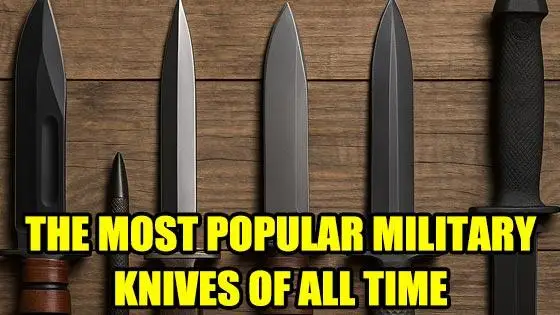
Military knives have been carried by soldiers for centuries, and the designs that stand out today earned their place through real-world grit. Some became famous because they were issued to huge numbers of troops, while others built a reputation in the hands of elite units who relied on them for life-or-death work. When you look at the most popular military knives of all time, you're really looking at tools shaped by battlefield experience, survival needs, and the personalities of the people who carried them. This post takes a closer look at the blades that rose above the rest and explains why they continue to influence modern knife design.
Ka-Bar USMC Fighting Knife
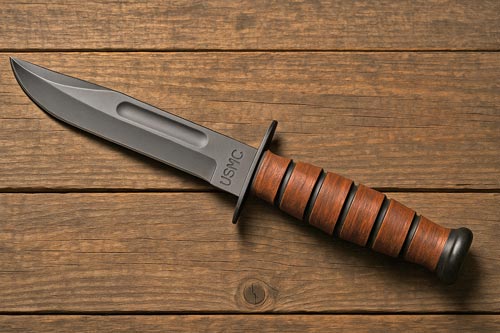
The Ka-Bar USMC Fighting Knife is the blade most people picture when they think of a classic American military knife. It was officially adopted by the Marine Corps in 1942, during a time when troops desperately needed a dependable all-purpose tool. Before the Ka-Bar came along, many Marines were stuck with bayonets or repurposed hunting knives that weren't built for the variety of jobs required in combat zones. The Ka-Bar filled that gap instantly. It had a sturdy full-tang construction, a thick clip-point blade that could handle prying and chopping, and a leather washer handle that gave Marines a secure grip even when conditions turned rough.
What really made the Ka-Bar legendary was its versatility. Marines used it for everything from cutting through jungle vines in the Pacific to opening ration tins, digging shallow foxholes, and hammering down tent stakes. Veterans from World War II often talked about how they trusted their Ka-Bar as much as any other piece of gear they carried. It wasn't just a fighting knife, even though it performed well in that role. It was a reliable day-to-day companion that stayed sharp, held up under stress, and didn't fail when things got chaotic.
Over the decades, the knife's reputation only grew. It continued to see use through the Korean War and Vietnam, earning respect from soldiers, sailors, and Marines alike. Modern versions are still built with the same recognizable profile and rugged feel, which explains why collectors, outdoorsmen, and survival enthusiasts continue to buy them today. Even though countless newer designs have appeared since the 1940s, the Ka-Bar remains the benchmark that other military knives are compared against. Its staying power shows how well it was engineered and how deeply it became part of American military history.
Fairbairn-Sykes Fighting Knife
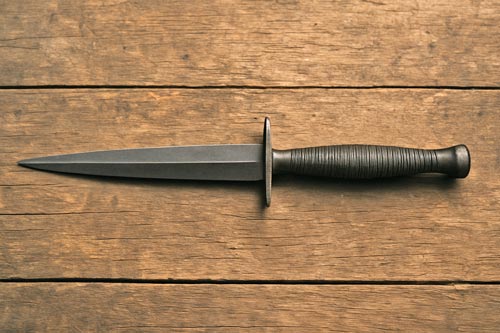
The Fairbairn-Sykes Fighting Knife is one of the most recognizable military daggers ever created, and its history is tied directly to the rise of special operations during World War II. Designed in 1941 by William E. Fairbairn and Eric A. Sykes, two British close-combat instructors with years of real experience in the Shanghai Municipal Police, the knife was built with a single purpose in mind: silent, effective close-quarters combat. Its slim, double-edged blade made it ideal for quick thrusts, and its narrow handle allowed operators to maintain control even in wet or stressful conditions.
This wasn't a general-purpose field knife like the Ka-Bar. It was a specialized tool issued to British Commandos, the SOE, the SAS, and other covert units that needed a blade optimized for stealth missions. The design was refined several times during the war, but the overall silhouette remained the same: long, symmetrical, and deadly in trained hands. Soldiers respected it for how easily it slipped into gear without adding bulk, and for how reliably it performed when other gear failed.
The Fairbairn-Sykes dagger also had a psychological effect. Its appearance alone sent a message, and many units viewed it as a symbol of elite status. Even today, variations of the design continue to be carried by military and law-enforcement units worldwide. Its influence is obvious in countless modern combat knives, proving that a tool built for a specific purpose can leave a lasting mark on military history.
Bowie Knife in Military History
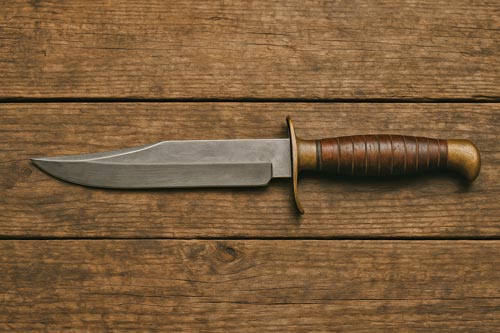
Long before modern combat knives became standard issue, the Bowie knife had already earned its reputation on the battlefield. Originating in the early 1800s and popularized by frontiersman Jim Bowie, this knife was known for its long, sweeping blade and rugged build. By the time the American Civil War began, soldiers on both sides were carrying large Bowie-style knives either as personal purchases or as homemade creations from local blacksmiths. These early fighters valued the Bowie for its cutting power and its ability to function as both a weapon and a camp tool.
What made the Bowie especially appealing to military users was its sheer utility. The blade's length allowed it to chop wood, clear brush, and handle the heavy work that smaller knives struggled with. At the same time, its clip-point tip made it surprisingly nimble for thrusting. Many Civil War accounts mention these knives being used in close combat, where their intimidating size offered both practical and psychological advantages.
As military equipment evolved in the late 19th and early 20th centuries, the Bowie knife didn't disappear. It simply shifted roles. Troops heading west during the Indian Wars carried versions of it, and later, specialized units in World War II used Bowie-influenced designs for fieldcraft and survival. Even modern survival knives owe much of their silhouette to the original Bowie shape. Its influence can be seen in everything from hunting knives to certain military-issued blades designed for heavy-duty use.
Today, the Bowie remains one of the most iconic knife profiles ever created. Its long blade, pronounced clip point, and historical presence keep it popular with collectors, outdoorsmen, and survivalists. When people talk about the most famous military knives of all time, the Bowie earns its spot not because it was standard issue, but because it shaped the direction of military knife design for generations.
M3 Trench Knife
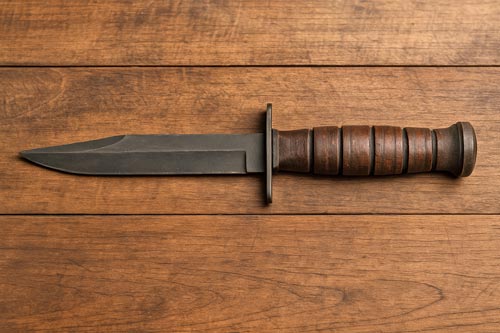
The M3 Trench Knife was introduced in 1943 as a practical solution for American soldiers who needed a dedicated close-combat and utility blade. Unlike earlier trench knives from World War I that featured brass knuckles and elaborate hand guards, the M3 focused on simplicity and function. It had a slender spear-point blade designed primarily for thrusting, along with a stacked leather handle that echoed the feel of the later Ka-Bar. This made it easier for soldiers to grip the knife securely even when wearing gloves or dealing with mud, cold, or rain.
Originally issued to airborne troops, rangers, and certain infantry units, the M3 quickly spread across the military because of how well it handled everyday fieldwork. Soldiers used it to cut rope, sharpen stakes, prepare food, and handle any small chore that came up around camp. It wasn't as multipurpose as some later survival knives, but within its intended role it performed reliably and held up to a surprising amount of abuse. Many servicemen appreciated how lightweight it was compared to other knives of the era, which made it easy to carry on long marches or during night operations.
The M3's influence didn't end with World War II. Its blade shape, handle design, and straightforward construction eventually carried over into the M4, M5, and M6 bayonets issued for later U.S. rifles. Even the famous M7 bayonet used on the M16 rifle drew inspiration from the M3's overall form. Collectors today still seek out original wartime M3s because each manufacturer produced slightly different variations, creating a rich history of small but interesting details.
While it may not have the widespread name recognition of the Ka-Bar, the M3 Trench Knife played a major role in modernizing American combat knife design. It bridged the gap between the complex trench knives of World War I and the more versatile field knives that followed, earning its place among the most important military knives of the 20th century.
Gerber Mark II
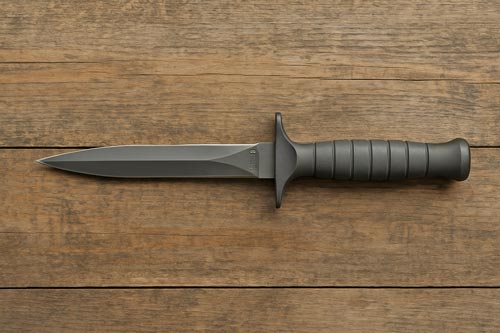
The Gerber Mark II is one of the most recognizable combat knives of the Vietnam War era, and its aggressive design made it a favorite among soldiers and collectors alike. Introduced in 1966, the Mark II took clear inspiration from earlier fighting daggers like the Fairbairn-Sykes, but Gerber refined the concept to create a knife that was both modern and highly functional. Its double-edged blade featured a distinctive wasp-waist contour that improved penetration while still allowing enough strength through the centerline to prevent breakage. Soldiers who carried it appreciated how naturally it handled, thanks in part to its lightweight aluminum handle with a textured finish for secure grip.
During the Vietnam War, the Gerber Mark II found a home with members of the Army, Marines, and Air Force, especially those involved in reconnaissance and special operations. It was not a general-purpose tool like the Ka-Bar. Instead, it was a blade designed for speed and close-quarters efficiency. Despite its specialization, many soldiers carried it simply because it had a reputation for reliability. When you were deployed into dense jungle or moving through hostile terrain, having a dependable knife that could be drawn quickly and used instinctively was a major advantage.
The Gerber Mark II's appearance also helped shape its legacy. Its sleek, almost futuristic silhouette made it stand out, and for years it was the knife people imagined when they thought of Vietnam-era combat blades. Collectors still consider early Mark II models highly desirable, especially those with the original angled blade design that was later modified to calm concerns from military brass about it appearing too aggressive.
Today, the Mark II remains a testament to thoughtful knife engineering. Its balance, precision, and unmistakable profile continue to influence modern fighting knives. Even though many newer designs have emerged since the 1960s, few have matched the Mark II's combination of historical significance and visual impact.
Ontario Mark 3 Navy Knife
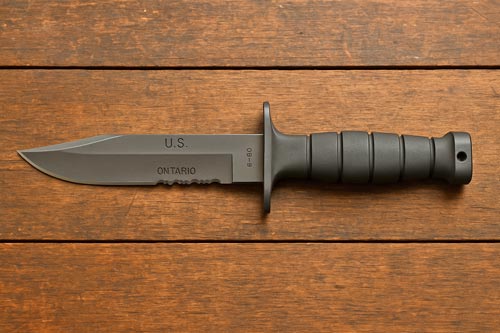
The Ontario Mark 3 is one of the few military knives that has remained in continuous service for decades, largely because it was built with a very specific set of needs in mind. Issued primarily to Navy SEALs and other naval personnel, the Mark 3 had to function both on land and in challenging maritime environments. Its robust construction and corrosion-resistant materials made it a dependable tool whether someone was swimming ashore, diving under hulls, or operating in saltwater-heavy conditions that would quickly destroy lesser blades.
Unlike many fighting knives with slim, pointed blades, the Mark 3 was designed with a thick spine and a sturdy tip that could withstand prying and heavy-use scenarios. Sailors and special operations units routinely used it to open crates, cut lines, and handle emergency repairs where normal tools weren't available. Its partially serrated edge gave it extra versatility, especially for cutting through rope, webbing, or other fibrous materials encountered during naval missions. The molded rubber handle also provided a secure grip, even when wet or covered in oil.
The Mark 3's sheath was another detail that made it practical for military use. Unlike leather sheaths that deteriorate when exposed to moisture, the Mark 3 came with a molded plastic sheath that held up against seawater and allowed for drain holes to keep everything as dry as possible. This made it ideal for amphibious operations, where equipment needed to perform reliably without constant maintenance.
Although countless knives have been introduced since the Mark 3 first entered service, it remains a favorite among collectors and military enthusiasts. Many modern survival and diving knives borrow elements of its design because it proved how effective a purpose-built knife could be. Its blend of durability, versatility, and water resistance secured its place as one of the most respected military knives of the late 20th century.
Glock Feldmesser 78/81
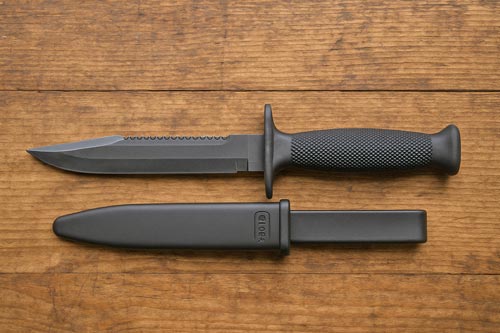
When most people hear the name Glock, they immediately think of pistols, but the company also produces one of the most underrated military knives in the world. The Glock Feldmesser 78 and its sibling, the 81, were originally designed for the Austrian military and quickly earned a reputation for being lightweight, tough, and surprisingly versatile. Unlike many combat knives that rely on heavy steel and traditional grips, the Glock models use durable polymer handles and simple, functional blades that can withstand extreme conditions without adding unnecessary weight.
The Feldmesser 78 is the more straightforward version, built as a general-purpose field knife capable of cutting, prying, and basic utility work. The Feldmesser 81 adds a sawback spine, making it more suited for soldiers who need to cut through wood, brush, or other materials during outdoor operations. Both versions feature a clip-point blade made from spring steel, which gives them the flexibility to absorb stress without breaking. This durability made them popular not only in the Austrian military but also among soldiers and survivalists in other countries who appreciated their no-nonsense design.
Another major advantage of the Glock knife is its scabbard system. Made from the same polymer as the handle, the sheath is lightweight, weather-resistant, and built to lock the knife securely in place. A simple tension system ensures the blade stays put even during vigorous movement, which is crucial for soldiers operating in rugged terrain. The knife's ability to function as both a combat tool and a field utility blade helped it stand out in a crowded market of modern military knives.
While it may not have the historical notoriety of the Ka-Bar or the exotic appeal of the Fairbairn-Sykes dagger, the Glock Feldmesser remains a practical and respected design. Its affordability, reliability, and ease of maintenance have made it a favorite for military personnel, outdoorsmen, and anyone who needs a tough knife that won't weigh them down.
Modern Special Forces Favorites
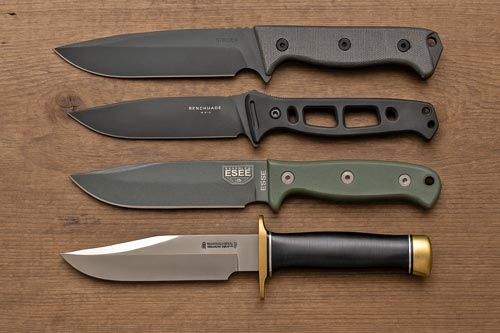
While many of the classic military knives earned their reputation in earlier wars, today's special forces units often rely on modern designs that blend durability, practicality, and cutting-edge materials. These knives aren't always officially issued. In many cases, operators choose them based on personal preference, mission requirements, or hard-earned experience. That freedom has allowed certain models to rise above the rest and earn a place among the most respected blades used by elite soldiers around the world.
One popular choice is the Strider SMF, a knife known for its extreme toughness and near-indestructible build. With its thick spear-point blade and slab-style handle scales, it was designed to survive the kind of harsh treatment that would destroy lighter knives. Many military users appreciate how confidently it handles heavy-duty fieldwork, whether that's prying open ammo crates, cutting through tough webbing, or performing improvised repairs in unforgiving environments.
Another respected option is the Benchmade Nimravus, which offers a more streamlined profile without sacrificing strength. Its lightweight feel and ergonomic handle make it a practical choice for soldiers who already carry a significant amount of gear. The Nimravus is often praised for its balance between speed, edge retention, and real-world utility. It's the kind of knife that disappears on your belt until the moment you need it.
For survival-oriented missions, the ESEE 5 has become a favorite thanks to its thick, full-tang construction and no-nonsense design. Originally developed with input from Air Force survival instructors, it's built to handle emergency situations ranging from shelter building to fire prep to processing game. The sheer amount of abuse it can withstand makes it a trusted companion in situations where failure simply isn't an option.
The Randall Model 1, meanwhile, carries a legacy stretching back to World War II, but modern versions continue to see use among operators who want a high-quality handmade blade. Randall knives are renowned for their craftsmanship and durability, and the Model 1 remains one of the most respected combat knives ever made. Its classic design proves that even with all the technological advancements in knife making, traditional craftsmanship still has a place in today's military.
Across all these examples, one theme stands out: elite units depend on tools they can trust. A dependable fixed blade knife offers strength, simplicity, and reliability in a way that folding knives can't always match. Whether the mission demands quiet precision, brute force, or extended survival capability, these modern blades reflect the lessons learned from decades of real combat experience.
Why These Knives Endure
Across every era of military history, the knives that stand out the most are the ones that proved themselves in real situations. Some earned their reputation in the jungles of the Pacific or the mud of the Western Front. Others gained recognition through decades of use by elite units who needed tools that would not fail during demanding missions. What they all have in common is a balance of durability, practicality, and thoughtful design. These were not knives built to look impressive in a display case. They were created to solve real problems faced by soldiers, sailors, and special operators.
Another reason these knives remain popular is that their designs continue to influence modern blades. The Ka-Bar helped define what a versatile fighting and utility knife should look like. The Fairbairn-Sykes dagger shaped the future of close-quarters combat weaponry. Knives like the M3 and the Mark 3 Navy Knife inspired generations of bayonets and survival blades. Even contemporary favorites such as the ESEE 5 and the Strider SMF borrow heavily from the lessons learned by earlier military designers. When a knife performs well in combat, its core design tends to stick around for decades.
There is also a cultural element to their staying power. Many of these knives became symbols of service, resilience, or specific military communities. Veterans keep them as reminders of their time in uniform, collectors seek them for their historical value, and outdoor enthusiasts appreciate how well these designs translate into civilian life. A good military knife does not just survive the battlefield. It becomes part of a larger story that continues long after the last shot is fired.
Final Thoughts
Looking back at the most popular military knives of all time, it is easy to see why certain designs have lasted for generations. Each knife on this list earned its place through real-world performance, not marketing hype or trends. Whether it was a blade carried by commandos in World War II, a trusted tool for Vietnam-era soldiers, or a modern favorite among special forces, these knives were shaped by the demands of their environment and the people who relied on them. That connection between function and history is what keeps them relevant today.
These blades also remind us that a well-designed tool never truly goes out of style. As materials improve and manufacturing evolves, many modern knives still follow the same principles that guided their predecessors. Strength, reliability, and efficiency remain the top priorities, and the military knives that continue to stand out are the ones that balance all three. Whether someone collects them, carries them for outdoor use, or appreciates their history, these knives represent a blend of craftsmanship and purpose that very few tools can match.
You May Also Be Interested In:
- Why Karambit Knives Became So Popular in Video Games
- The Real History of the Balisong: How Butterfly Knives Evolved Through Time
- Military Trench Cleaver and Other Dangerous Weapons
- 6 Unusual Folding Knives
- Can Butterfly Knives be used for Combat?
- Why Automatic Knives Belong in Your EDC
- How Automatic Knives Actually Work
- 12 Fixed Blade Knives You Should Know About
- OTF vs Folding Knives: What's the Difference and Which Is Better?
- Why Karambit Knives Are So Effective
Leave a Reply