




The Real History of Nunchaku: From Farm Tool to Hollywood Icon
July 11th, 2025
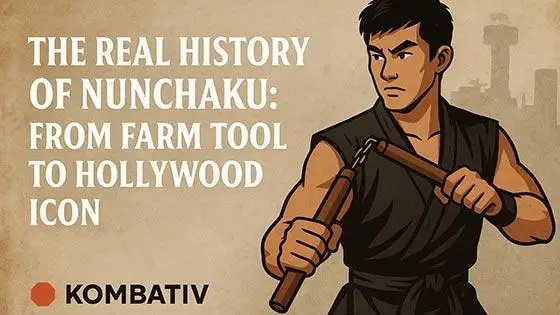
Most people know what nunchucks are: two sticks, a chain, and a whole lot of spinning. But the real story behind these iconic weapons goes way deeper than action movies and martial arts demos. Long before they showed up in the hands of Bruce Lee or the Teenage Mutant Ninja Turtles, nunchaku were everyday tools that slowly evolved into one of the most recognizable weapons in the world. Their journey from farm fields to fight scenes is full of myths, mystery, and some pretty wild twists. And it's a story worth knowing.
Did Farmers Really Invent Nunchaku?
You've probably heard that farmers created nunchaku to fight back after weapons were banned, but the real story is even more interesting. In the 1470s, King Sho Shin of the Ryukyu Kingdom outlawed swords, spears, and other arms to prevent uprisings and centralize control. A century later, when the powerful Satsuma clan from Japan invaded in 1609, the ban was expanded. Even commoners were forbidden from carrying weapons.
This wasn't just some law on paper. The ruling classes, including the local nobility (called the yukatchu or pechin), were stripped of their weapons and positions. Many lost their stipends and became laborers. This dramatic shift turned trained bodyguards and palace warriors into peasants almost overnight.
Those former elites were still versed in fighting techniques passed down through Chinese martial arts and Okinawan traditions. With no swords allowed, they began practicing martial methods using everyday tools: stalk-cutting sickles (kama), mill handles (tonfa), oil-lamp stirrups (tekko), and even horse bits that likely inspired early nunchaku.
So it wasn't your average farmer who invented nunchaku. It was a unique class of impoverished warriors, trained in elite martial arts, who knew how to turn simple wooden flails, threshing tools, or horse tackle into effective self-defense weapons.
Over time, these improvised techniques turned into structured martial arts. The methods were often passed down quietly within families or small training groups, since openly practicing with weapons could still lead to trouble. Eventually, these skills were formalized into what we now recognize as Okinawan kobudo, a weapons-based martial arts system that preserved these traditional fighting methods for generations.
How Nunchaku Became a Martial Arts Weapon
As Okinawan fighters began developing techniques with improvised tools, the nunchaku gradually took on a more formal role in martial arts training. What may have started as a modified flail or horse bridle was refined through years of practice, repetition, and passing knowledge from one generation to the next. Nunchaku techniques became more structured, with specific patterns of strikes, blocks, spins, and transitions designed to build coordination, speed, and control.
These movements were eventually incorporated into kata, the choreographed routines used in traditional martial arts to teach precision and flow. Over time, nunchaku became a staple weapon in Okinawan kobudo schools, practiced alongside other adapted tools like the bo staff and sai. Because they could be built from common materials and hidden easily, nunchaku were especially appealing for both training and real-world self-defense.
As karate and kobudo systems spread beyond Okinawa, the nunchaku followed. Martial artists began exploring the weapon's potential not just for fighting, but also for performance and demonstration. Its speed, fluidity, and visual impact made it stand out compared to other traditional weapons. What began as a necessity eventually became a form of mastery, and nunchaku earned their place as one of the most recognized weapons in the martial arts world.
Why Bruce Lee Changed Everything
Before the 1970s, nunchaku were mostly known within traditional martial arts circles. That all changed the moment Bruce Lee stepped in front of the camera. When he whipped out a pair of nunchucks in The Chinese Connection and later in Enter the Dragon, audiences had never seen anything like it. The speed, control, and intensity he brought to the weapon turned it into a worldwide sensation almost overnight.
What made Bruce Lee's use of nunchaku so powerful wasn't just his skill. It was the way he moved. He was calm one moment, explosive the next. He made the weapon feel like an extension of his body. Suddenly, martial artists and movie fans alike wanted to learn how to use nunchucks. Martial arts schools saw a spike in interest, and weapons manufacturers rushed to meet demand.
The cultural impact went far beyond the dojo. In fact, Bruce Lee's influence helped shape laws in multiple countries. After a surge in popularity, places like the United Kingdom and parts of the United States placed bans or restrictions on nunchaku, largely out of fear that teenagers were trying to imitate what they saw in the movies. Even with the controversy, the popularity stuck. Thanks to Bruce Lee, nunchaku went from a niche martial arts weapon to something instantly recognizable all over the world.
Nunchaku in Pop Culture: TMNT, Movies, and More
After Bruce Lee brought nunchaku into the spotlight, it didn't take long for them to show up everywhere. In the 1980s and 90s, nunchucks became a go-to weapon for action heroes, cartoon characters, and video game icons. One of the most famous examples? Michelangelo from the Teenage Mutant Ninja Turtles. His fun-loving attitude and flashy spinning moves introduced an entire generation of kids to the weapon, even if most of them were just swinging plastic versions around their bedrooms.
From Enter the Dragon to TMNT to video games like Soulcalibur and Tekken, nunchaku have cemented their place in pop culture. They've shown up in everything from kung fu parodies to serious martial arts films. Even people who have never stepped foot in a dojo know what they are and what they're meant to do. That level of recognition is rare for any weapon, especially one with such humble origins.
Today, nunchucks are just as likely to be seen in a performance or competition setting as they are in a movie. Whether it's freestyle nunchaku tournaments, viral tricking videos, or cosplay events, the weapon continues to evolve in how it's used and who's using it.
The Modern Role of Nunchaku
Today, nunchaku are used in a variety of ways depending on the person and purpose. In traditional martial arts, they're still practiced as part of kobudo systems, with structured kata and formal training. For others, they've become a tool for developing coordination, strength, and timing through freestyle practice or fitness routines.
Nunchaku are also popular in demonstration and competition settings. Freestyle performers often use lightweight foam or plastic models to perform fast, acrobatic routines, while others prefer traditional wood or metal for power and control. Some practitioners even rotate between materials during training, using heavier metal nunchucks to build strength before switching to lighter ones for speed and precision.
Conclusion
The history of nunchaku is more than just a tale of spinning sticks. What started as a tool for daily life became a hidden martial art, a symbol of rebellion, and eventually a global icon. From Okinawan training halls to blockbuster movies and competitive demonstrations, the nunchaku has taken on a life far beyond its original form.
Whether you're drawn to nunchaku for their history, their unique movement, or the challenge they offer, there's no denying their place in the martial arts world. They've evolved alongside the people who practiced with them, shifting from tools of necessity to weapons of expression and discipline. That evolution is still happening today.
 🔍︎ QUICK VIEW
 (6)
(6) 🔍︎ QUICK VIEW
 (5)
(5) 🔍︎ QUICK VIEW
 🔍︎ QUICK VIEW
 (2)
(2) 🔍︎ QUICK VIEW
 🔍︎ QUICK VIEW
$16.95
 🔍︎ QUICK VIEW
 🔍︎ QUICK VIEW
 🔍︎ QUICK VIEW
 🔍︎ QUICK VIEW
$114.95
 🔍︎ QUICK VIEW
 🔍︎ QUICK VIEW
 🔍︎ QUICK VIEW
 🔍︎ QUICK VIEW
 🔍︎ QUICK VIEW
$99.95
 🔍︎ QUICK VIEW
You May Also Be Interested In:
- The Real History of the Balisong: How Butterfly Knives Evolved Through Time
- The Real History of Brass Knuckles: From Battlefield to Back Pocket
- The Real History of Escrima Sticks: From Battlefield Weapon to Modern Martial Art
- What's so special about the Machined Aluminum Nunchaku?
- How to Choose the Right Nunchaku for Your Skill Level
- What Is a Kunai? From Japanese Tool to Ninja Weapon
- From Garden Tool to Combat Blade: The Evolution of the Kunai
- 10 Real Ninja Weapons and How They Were Actually Used
- How to Tell a Real Katana from a Decorative Sword
- The History and Evolution of the Karambit Knife
Leave a Reply