




A Practical Guide to Modern Self-Defense Weapons
January 14th, 2026
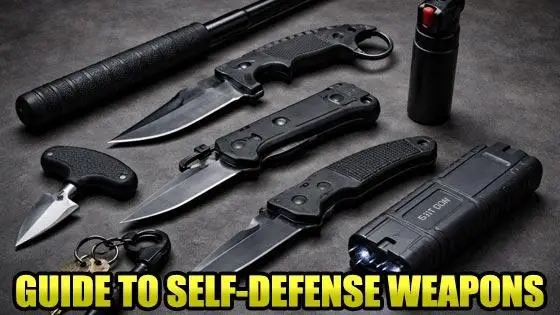
Personal safety today looks very different than it did even a generation ago. People commute alone at night, walk dogs in quiet neighborhoods, travel for work, and live in a world where help is not always a few steps away. Modern self-defense is not about fear or fantasy. It is about preparation, awareness, and having a tool that fits your real life. From compact impact weapons to discreet defensive sprays and purpose-built knives, today's self-defense tools are designed to be carried responsibly and used only when needed. This guide breaks down the most practical modern self-defense weapons, what each one is best suited for, and how to think about choosing something that aligns with your lifestyle, environment, and comfort level.
What Makes a Good Self-Defense Tool?
A self-defense weapon is only useful if it fits your real life. The best tool is not the most aggressive or the most powerful on paper. It is the one you can carry comfortably, deploy quickly, and use under stress. In a real situation, there is no time to fumble through a bag or remember a complicated sequence of steps. Your defensive option should feel natural in your hand and familiar in your mind.
Practicality comes first. A tool that is too large, too heavy, or too conspicuous often gets left behind. A self-defense item that stays at home offers no protection. Modern designs focus on compact profiles, discreet carry, and intuitive use. Whether clipped in a pocket, attached to a keychain, or tucked into a bag, the right tool becomes part of your daily routine rather than a special accessory you only remember occasionally.
Reliability matters just as much as size. A defensive tool should work the same way every time. There should be no guesswork about how it deploys or what it does when activated. Under pressure, fine motor skills disappear. Simple mechanics and consistent operation are critical. The more instinctive the action, the better your chances of using it effectively when it counts.
Legality and responsibility also play a role. Different regions have different rules about what you can carry. Understanding those limits is part of being prepared. A good self-defense tool is one you can legally possess and confidently carry. It should align with your comfort level and personal values. For some people, that means a non-lethal option. For others, it may be a compact blade or impact tool. There is no universal answer, only what fits your situation and mindset.
Above all, a self-defense tool should support awareness, not replace it. These items are not shortcuts or guarantees. They are extensions of preparation. The goal is not confrontation. It is the ability to create space, break contact, and get to safety. When chosen thoughtfully, modern self-defense tools become quiet insurance, carried with purpose and used only when there is no other option.
Impact Tools: Batons and Compact Striking Tools
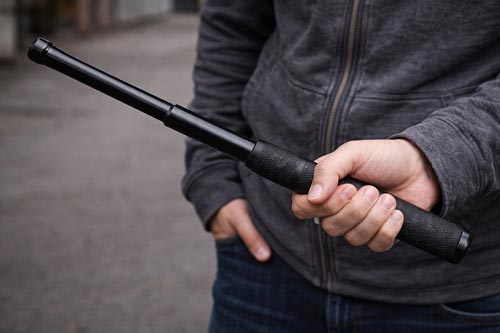
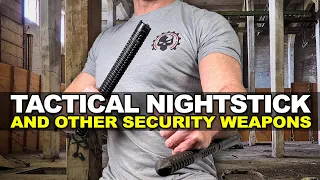
Impact tools are built around one simple idea: creating immediate space. Unlike blades or sprays, these tools rely on leverage and momentum rather than penetration or chemicals. A compact baton extends your reach and turns natural arm movement into controlled force. It gives you a way to disrupt an advance, break contact, and create an opening to escape. In real-world situations, that space can be everything.
Modern batons are designed for discreet carry and fast deployment. Collapsible models disappear into a pocket or bag and expand with a single motion. This makes them practical for everyday life rather than something you only carry in specific environments. When extended, they provide reach that bare hands cannot match. That distance alone can change the dynamic of an encounter, giving you time to react instead of being overwhelmed.
What makes impact tools appealing to many people is their straightforward nature. There is no blade to manage and no spray pattern to aim. You are working with angles, distance, and timing. Even basic training quickly shows how a small tool can amplify simple movements. A short, controlled strike to a forearm or shin can interrupt balance and momentum without requiring complex technique.
These tools also tend to feel less intimidating for new carriers. They are mechanical and predictable. There is no worry about wind, blowback, or accidental discharge. You either extend the tool or you do not. That clarity builds confidence. For those who prefer a physical, hands-on approach to self-defense, impact tools offer a balance between capability and control.
If this style of defense fits your mindset, exploring a purpose-built option is the right place to start. Quality matters. A well-made baton should extend smoothly, lock firmly, and feel solid in your hand. You can browse a range of reliable options in our baton selection, each designed for discreet carry and dependable performance when it matters most.
Bladed Tools: Karambits and Push Daggers
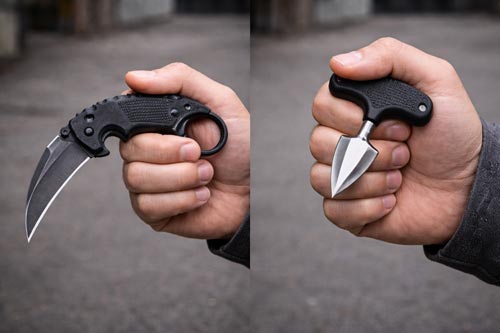
Bladed self-defense tools are built for close-range encounters where speed and control matter most. Unlike large knives meant for utility or outdoor use, modern defensive blades are compact, purpose-driven, and designed to work in tight spaces. Karambits and push daggers fall into this category. They prioritize grip security, rapid deployment, and retention under stress. These are tools meant to stay in your hand when everything else is chaotic.
Karambits are known for their curved blade and finger ring. That ring is not decorative. It locks the knife into your hand, making it difficult to dislodge even if your grip weakens. The curved edge follows natural pulling motions, allowing effective use with minimal arm extension. Many people are drawn to karambits because they feel intuitive once held. The shape encourages control rather than wide, sweeping movements. You can explore a range of purpose-built designs in our karambit knives selection, each engineered for secure handling and compact carry.
Push daggers approach self-defense from a different angle. The handle sits between your fingers, turning a natural punching motion into a focused point of force. This makes them extremely intuitive. There is no need to learn complex grips or angles. You hold it and move as you already would. That simplicity is what attracts many first-time carriers. In stressful moments, the body defaults to familiar movements. Push daggers work with that instinct rather than against it. Our push dagger collection includes models designed specifically for control, concealment, and everyday carry.
What both tools share is an emphasis on retention and close-range effectiveness. They are not about reach. They are about reliability when space is limited. In environments like parking structures, hallways, or crowded areas, there may be no room for wide movements. These tools are built for those realities. They stay close to the body and respond immediately to small motions.
Choosing a bladed tool is a personal decision. It requires comfort, responsibility, and awareness of local laws. For those who decide this path fits their needs, the key is selecting a design that feels secure and natural in the hand. The goal is not intimidation. It is confidence in a tool that works with your body under pressure and supports your ability to break contact and get to safety.
Electronic Defense: Stun Guns
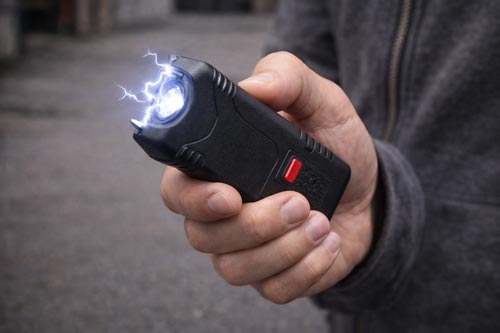
Electronic self-defense tools offer a non-lethal way to interrupt an attack and create an opportunity to escape. Stun guns are designed to overwhelm the body's neuromuscular system for a brief moment, causing disorientation and loss of muscle control. That window is often all you need. The goal is not to incapacitate indefinitely, but to break momentum and get to safety.
Modern stun devices are far removed from the bulky units of the past. Today's designs are compact, discreet, and easy to carry. Many look like everyday objects or include built-in flashlights, making them practical for daily use. Activation is simple. A single button press delivers a powerful electrical arc. There is no need for precision aiming or physical strength. That accessibility is what makes electronic defense appealing to a wide range of people.
One of the key advantages of stun guns is psychological deterrence. The visible arc and unmistakable sound communicate intent immediately. In many situations, that alone is enough to stop an approach before it becomes physical. For those who prefer a defensive option that does not rely on impact or blades, electronic tools provide a clear alternative that still carries real authority.
As with any self-defense tool, familiarity matters. You should know how your device activates, where the safety is, and how it feels in your hand. Confidence comes from repetition. Practicing the draw and activation in a safe environment builds muscle memory so there is no hesitation when stress is high. The simpler the action, the more reliable it becomes under pressure.
If a non-lethal, high-impact option fits your comfort level, exploring purpose-built models is the right next step. Quality units offer dependable output, solid construction, and intuitive controls. You can browse a range of compact, carry-ready options in our stun gun selection, each designed to provide an immediate defensive advantage when it matters most.
Chemical Defense: Pepper Spray
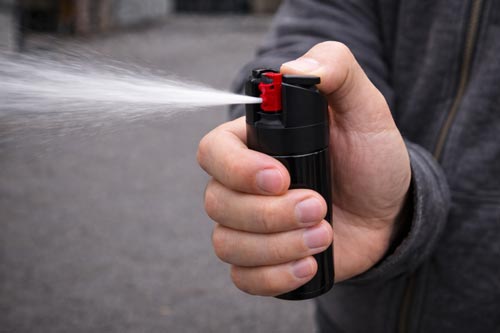
Pepper spray offers a powerful, non-lethal way to stop an advance from a distance. It works by inflaming the eyes, nose, and throat, causing intense discomfort, disorientation, and involuntary eye closure. The effect is immediate and overwhelming, which makes it one of the most accessible self-defense tools available. You do not need strength or close proximity. You only need a clear line of sight and a steady hand.
One of the greatest advantages of pepper spray is range. Unlike impact tools or blades, it allows you to act before someone is within arm's reach. That buffer can be critical. It gives you time to create space and escape without physical contact. For many people, that distance feels safer and more manageable, especially in unpredictable environments like parking lots, sidewalks, or building entrances.
Modern pepper sprays are compact and discreet. Many attach to keychains or fit easily into a pocket or bag. They are designed for fast access and simple activation. A quick press delivers a focused stream or cone of spray. There is no complex mechanism to learn. That simplicity makes chemical defense appealing for everyday carry, especially for those who want a non-contact option that still carries real stopping power.
As with any defensive tool, familiarity matters. You should know the spray pattern, range, and direction. Practicing the draw and aim in a safe environment builds confidence and reduces hesitation. Wind, distance, and positioning all affect performance, so awareness of your surroundings remains essential. Pepper spray works best when paired with movement. The goal is not to stand your ground, but to create an opening and get away.
If a distance-based, non-lethal option fits your comfort level, pepper spray is one of the most practical choices available. Quality units offer reliable pressure, consistent spray patterns, and secure safety mechanisms. You can explore a range of carry-ready options in our pepper spray selection, each designed to provide fast, effective defense when space matters most.
Everyday Carry Knives: Folding and OTF Designs
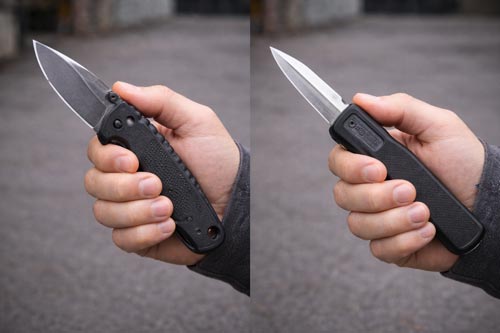
Not every knife carried for self-defense looks tactical or aggressive. Many people already carry a folding knife as part of daily life. In those moments where a defensive option becomes necessary, a familiar tool can feel more natural than something purpose-built. Modern folding and OTF knives bridge that gap. They combine utility, discretion, and rapid deployment in a single form.
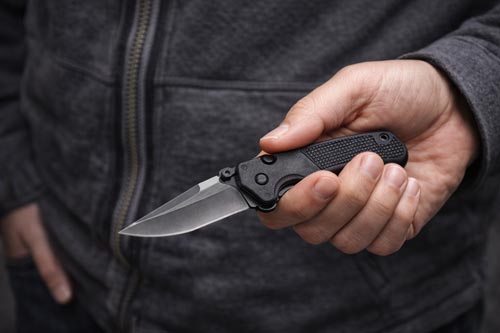
Folding knives are among the most common everyday carry tools. They ride comfortably in a pocket, open with one hand, and serve countless non-defensive purposes throughout the day. That familiarity matters. A tool you handle regularly becomes an extension of your hand. In stressful situations, that comfort can reduce hesitation. Modern designs emphasize secure locks, textured grips, and smooth deployment so the blade is ready when needed. You can explore a wide range of carry-friendly options in our folding knives selection, each built for dependable daily use.
OTF knives offer a different approach. With a simple thumb motion, the blade deploys straight out of the handle. There is no arc and no need to reposition your grip. That direct action is appealing to many carriers. The knife stays aligned with your hand from the first moment it is activated. In confined spaces, that can be a meaningful advantage. Modern OTF designs are compact, reliable, and built for one-handed operation. You can browse purpose-built models in our OTF knife selection, all designed for fast, controlled deployment.
What both styles share is versatility. They fit naturally into everyday routines. They do not require special holsters or separate carry systems. They can be clipped into a pocket and forgotten until needed. That convenience increases the likelihood that the tool is actually with you when it matters.
Choosing between folding and OTF designs often comes down to comfort and local regulations. Some regions place restrictions on automatic knives. Understanding those rules is part of responsible carry. Whichever style you choose, the goal is the same. The tool should deploy cleanly, feel secure in your hand, and integrate seamlessly into your daily life. When a defensive option feels ordinary, it becomes reliable under stress.
Choosing a Tool That Fits Your Life
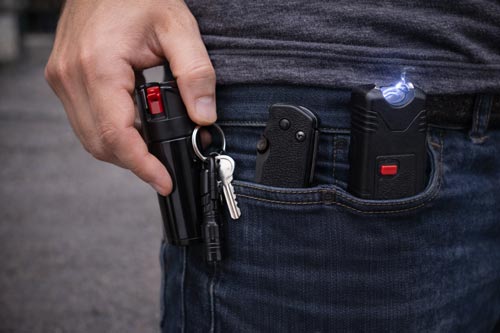
The most effective self-defense tool is the one you will actually carry. That sounds obvious, but it is where many people go wrong. A tool that feels awkward, heavy, or inconvenient tends to stay at home. Real preparedness is about consistency. Your defensive option should integrate seamlessly into your routine, whether that means a pocket clip, a keychain attachment, or a place in your bag you can reach without thinking.
Your environment matters. Someone who walks through parking garages at night may prioritize distance-based tools like pepper spray. Someone who spends time in close quarters may lean toward compact impact tools or a small blade. Comfort level matters just as much. Some people feel confident with a baton in hand. Others prefer a non-contact option. There is no universal answer. The right choice is the one that aligns with your daily habits and personal boundaries.
Legal awareness is part of responsible carry. Laws vary by state and city. Understanding what is permitted in your area protects you from unintended consequences. A good self-defense plan includes knowing what you can carry, where you can carry it, and how it must be transported. This knowledge allows you to move with confidence instead of uncertainty. Preparation is not just physical. It is informed.
Training and familiarity turn a tool into an asset. Whatever you choose, spend time with it. Practice drawing it from where you carry it. Learn how it activates. Understand its limitations. Confidence does not come from ownership. It comes from repetition. The goal is not mastery of violence. It is clarity under stress. A simple, well-practiced action is far more effective than a complex plan you have never rehearsed.
Self-defense is ultimately about awareness and avoidance. Tools are backups. They exist for moments when all other options have failed. When chosen thoughtfully, they provide reassurance rather than anxiety. They allow you to move through the world with quiet confidence, knowing you have a way to create space and get home safely.
Prepared, Not Paranoid
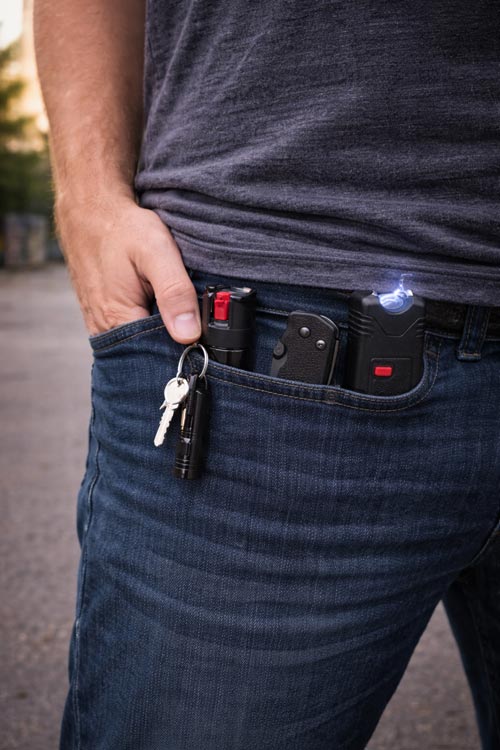
Modern self-defense is not about expecting the worst. It is about acknowledging reality. Most days are ordinary. Most people are decent. But the world is unpredictable, and preparation is a quiet form of respect for yourself and those who depend on you. Carrying a defensive tool is not a declaration of fear. It is an act of responsibility.
The tools in this guide exist for one purpose: to help you create space and get away when there is no other option. They are not symbols of aggression. They are backups for awareness, intuition, and avoidance. The goal is always the same. Go home safely. Whether that means a small spray on your keychain, a compact baton in your pocket, or a familiar knife you already carry, the right choice is the one that fits your life and your mindset.
Preparedness is personal. It evolves with your environment, your routines, and your comfort level. What matters is that the choice is deliberate. You understand the tool. You respect its purpose. You practice enough that it feels ordinary rather than dramatic. That calm familiarity is what makes it reliable under stress.
Self-defense is not about winning a fight. It is about avoiding one whenever possible and ending it quickly when avoidance fails. The modern tools available today are designed to support that goal. They are compact, effective, and built for real life. When chosen thoughtfully, they allow you to move through the world with confidence instead of fear, prepared for the rare moment when preparation matters most.
You May Also Be Interested In:
- Best Self Defense Weapons for Everyday Carry (EDC Guide)
- Are Karambits Actually Practical or Just an Overhyped Knife?
- The Best Self Defense Blades: A Complete Guide to Discreet Protection
- Modern Combat Khopesh and Other Deadly Weapons!
- Should Self-Defense Weapons Be Legal?
- Self-Defense Umbrella and Other New Weapons
- What Is a Push Dagger? History, Design, and Modern Uses
- A Brief History of the Push Dagger: From Trench Warfare to Modern EDC
- The Evolution of the Shuriken: From Samurai to Modern Martial Arts
- Self-Defense Weapons That Could Save Your Life
Leave a Reply