




OTF vs Folding Knives: What's the Difference and Which Is Better?
May 4th, 2026
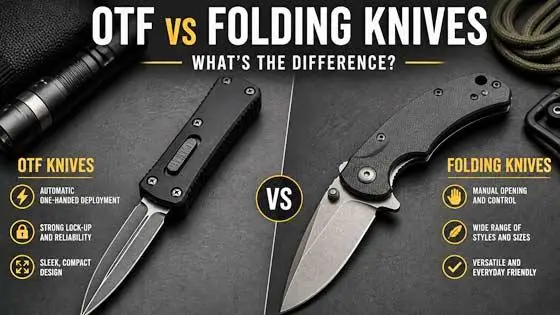
If you're trying to decide between an OTF knife and a folding knife, you're not alone. Both are popular options for everyday carry, and at first glance, they might seem pretty similar. But once you start looking closer, there are some important differences in how they function, how they feel in your hand, and how practical they are for daily use. Understanding those differences can help you avoid buying the wrong knife and make sure you end up with something that actually fits your needs.
In this guide, we'll break down how OTF knives and folding knives work, compare their pros and cons, and help you figure out which one makes the most sense for your everyday carry setup.
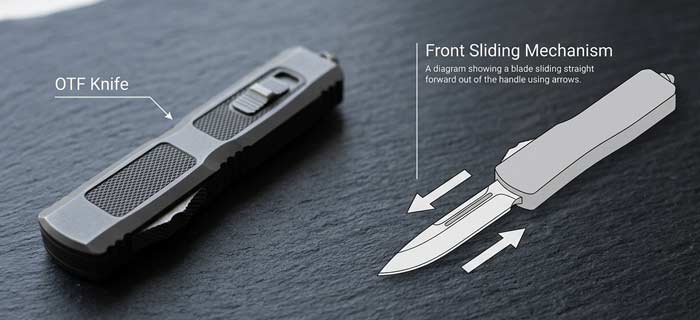
An OTF knife, short for "out-the-front" knife, is a type of automatic knife where the blade slides straight out of the front of the handle instead of folding out from the side. With the push of a button or switch, the blade deploys forward and locks into place, making it one of the fastest and most convenient knife styles to use with one hand.
What makes OTF knives unique is their internal mechanism. Instead of rotating on a hinge like traditional knives, the blade travels along a track inside the handle. Most models are double-action, meaning the same switch is used to extend and retract the blade. This design gives them a clean, compact look and a very smooth deployment once you get used to how they work.
Because of their automatic action, OTF knives are often chosen for situations where speed and ease of use matter. Whether you are opening boxes, cutting materials, or just want a tool that can be operated quickly with one hand, they offer a level of convenience that is hard to match with manual knives.
That said, they are not always the best choice for everyone. OTF knives tend to be more specialized, and depending on where you live, there may be restrictions on owning or carrying them. Understanding how they work is the first step in deciding whether they make sense for your everyday carry setup.
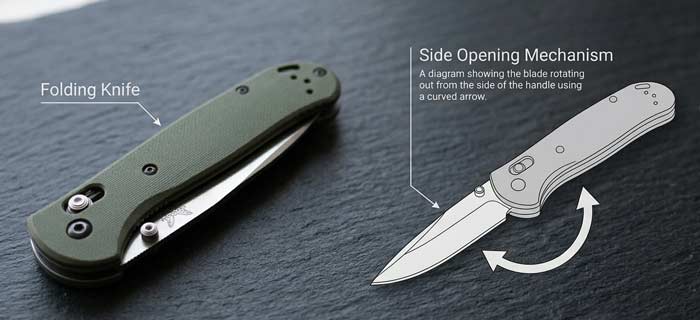
A folding knife is one of the most common and widely used knife types, especially for everyday carry. Unlike an OTF knife, the blade on a folding knife rotates out from the side of the handle using a hinge. When closed, the blade folds neatly into the handle, making it compact, easy to carry, and generally more accessible for everyday use.
Most folding knives are manually opened using features like a thumb stud, thumb hole, or flipper tab. Some models also include assisted opening mechanisms that help the blade deploy more smoothly once you begin opening it. This gives users a balance between control and convenience without relying on a fully automatic system.
One of the biggest advantages of folding knives is their versatility. They are commonly used for everyday tasks like opening packages, cutting rope, or handling small jobs around the house or workplace. Because they come in so many sizes and styles, it is easy to find one that fits your preferences and feels comfortable in your hand.
Folding knives are also generally more widely accepted and easier to carry in many areas compared to automatic knives. For most people building an everyday carry setup, they are often the first and most practical choice thanks to their simplicity, reliability, and ease of use.
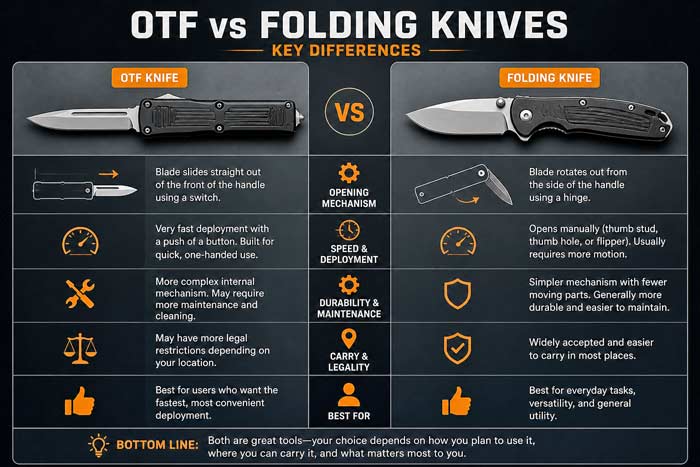
While both OTF knives and folding knives are designed to be compact and easy to carry, the way they function is completely different. The most obvious difference is how the blade opens. OTF knives slide straight out of the front of the handle using a switch, while folding knives rotate out from the side using a hinge. This alone changes how each knife feels and performs in everyday situations.
Another major difference is speed and ease of deployment. OTF knives are built for quick, one-handed use with minimal effort, making them appealing for users who prioritize convenience. Folding knives can also be used with one hand, especially modern designs, but they usually require a bit more motion and control to open and close.
Durability and maintenance are also worth considering. Folding knives tend to have simpler mechanisms, which can make them more durable and easier to maintain over time. OTF knives, on the other hand, rely on internal components that can require more care to keep functioning smoothly, especially if they are exposed to dirt or debris.
Finally, there is the question of where and how you can carry each type. Folding knives are generally more widely accepted and easier to carry in a variety of environments. OTF knives, because of their automatic mechanism, may have more restrictions depending on local laws and workplace rules. Understanding these differences can help you decide which option fits your needs and daily routine better.
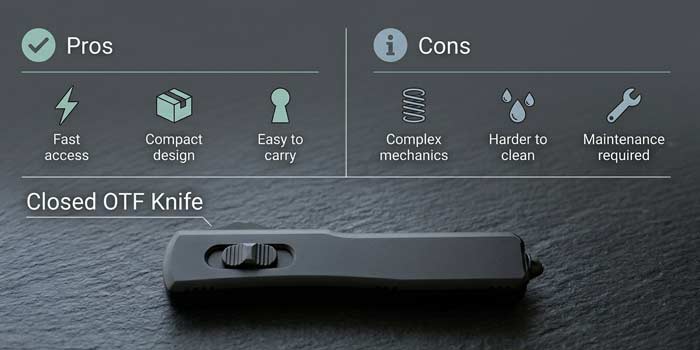
OTF knives have a lot going for them, especially if speed and convenience are important to you. One of their biggest advantages is how quickly they can be deployed. With a simple push of a switch, the blade extends and locks into place almost instantly, making them one of the easiest knife types to use with one hand. This can be especially useful in situations where you need quick access without adjusting your grip.
Another advantage is their compact and streamlined design. Because the blade slides straight out of the handle, OTF knives tend to have a clean, modern look and are easy to carry in a pocket. Many users also appreciate the consistent deployment mechanism, which feels smooth and controlled once you get used to it.
On the downside, OTF knives typically have more complex internal components compared to traditional folding knives. This means they can require a bit more maintenance to keep them working properly, especially if dirt or debris gets inside the mechanism. They are also generally more expensive due to their design and construction.
Another factor to consider is where you can legally carry them. Because OTF knives are automatic, some areas have restrictions on ownership or carry. It is always important to check your local laws before adding one to your everyday carry setup. For those who value speed and convenience, exploring different styles of automatic knives can help you find an option that fits your needs while staying within those guidelines.
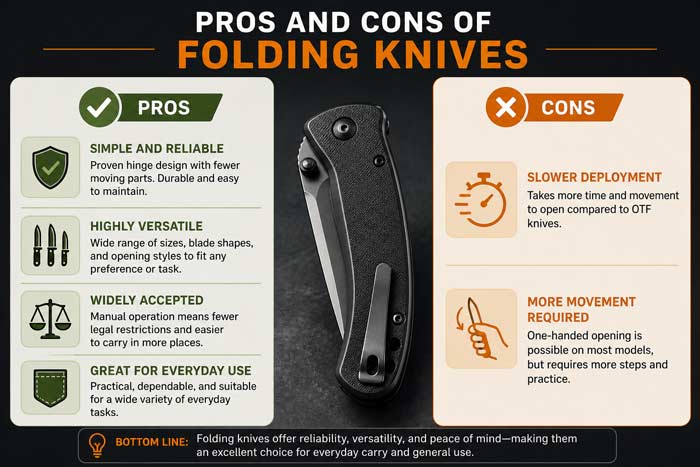
Folding knives are popular for a reason. One of their biggest advantages is their simplicity. The basic hinge design has been around for a long time, and it is known for being reliable, durable, and easy to maintain. Because there are fewer internal components compared to automatic knives, folding knives tend to hold up well with regular use and require less upkeep over time.
Another major benefit is versatility. Folding knives come in a wide range of sizes, blade shapes, and opening styles, making it easy to find one that fits your preferences. Whether you want something small and lightweight for basic tasks or a slightly larger option for tougher jobs, there are plenty of choices available. This flexibility makes them one of the most practical tools for everyday carry.
Folding knives are also generally easier to carry in more places. Since most models are manually operated, they are more widely accepted and often face fewer restrictions compared to automatic designs. This makes them a safer choice for people who want a reliable tool without worrying as much about legal limitations.
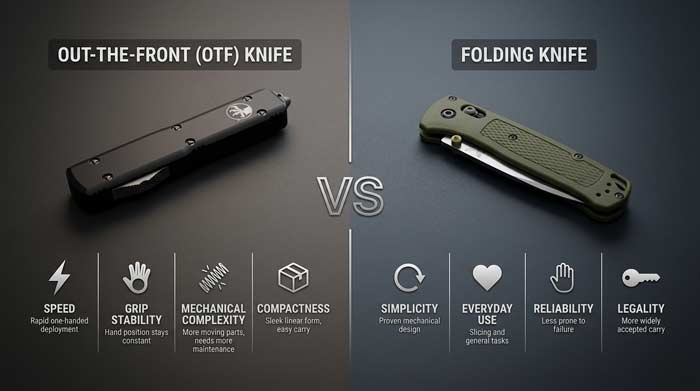
When it comes to choosing between an OTF knife and a folding knife for everyday carry, there is no one-size-fits-all answer. The better option really depends on how you plan to use your knife and what matters most to you in a daily setting. Both have their strengths, and understanding those differences is what helps you make the right choice.
If speed and quick, one-handed access are your top priorities, an OTF knife may be the better fit. The ability to deploy the blade instantly with a simple switch makes it very convenient for certain situations. If that is what you are looking for, browsing different styles of out the front knives can help you find one that matches your preferences.
On the other hand, if you value simplicity, versatility, and ease of carry, a folding knife is usually the more practical choice. They are widely accepted, easy to maintain, and available in a huge range of styles and sizes. For most people, especially beginners, exploring a variety of everyday carry folding knives is the best way to find something that fits naturally into their routine.
In the end, the best everyday carry knife is the one you will actually use and carry consistently. Whether you choose an OTF knife or a folding knife, focusing on comfort, practicality, and your real-world needs will always lead to a better decision.
On the downside, folding knives are usually a bit slower to deploy compared to OTF knives. While many can still be opened with one hand, they require more movement and practice to use efficiently. For those who value simplicity, reliability, and everyday practicality, exploring different styles of folding knives is often the best place to start.
Choosing between an OTF knife and a folding knife really comes down to how you plan to use it and what feels right in your everyday routine. Both options are capable tools, but they are designed with different priorities in mind. Understanding those priorities helps you avoid overthinking the decision and focus on what actually matters for your day-to-day use.
OTF knives stand out for their speed and ease of use, especially when one-handed operation is important. Folding knives, on the other hand, offer simplicity, reliability, and a wider range of styles that make them a practical choice for most people. Neither option is automatically better than the other. It just depends on what you value more in a tool you carry every day.
If you are still unsure, the best approach is to start with something simple and build from there. As you gain experience, you will get a better sense of what features matter most to you and whether you want to stick with a folding knife or explore other options. The goal is not to have the most advanced setup, but to carry something that works well for your needs and feels natural to use.
At the end of the day, the best everyday carry knife is the one you trust, the one you are comfortable using, and the one you will actually carry consistently.
What Is an OTF Knife?
An OTF knife, short for "out-the-front" knife, is a type of automatic knife where the blade slides straight out of the front of the handle instead of folding out from the side. With the push of a button or switch, the blade deploys forward and locks into place, making it one of the fastest and most convenient knife styles to use with one hand.
What makes OTF knives unique is their internal mechanism. Instead of rotating on a hinge like traditional knives, the blade travels along a track inside the handle. Most models are double-action, meaning the same switch is used to extend and retract the blade. This design gives them a clean, compact look and a very smooth deployment once you get used to how they work.
Because of their automatic action, OTF knives are often chosen for situations where speed and ease of use matter. Whether you are opening boxes, cutting materials, or just want a tool that can be operated quickly with one hand, they offer a level of convenience that is hard to match with manual knives.
That said, they are not always the best choice for everyone. OTF knives tend to be more specialized, and depending on where you live, there may be restrictions on owning or carrying them. Understanding how they work is the first step in deciding whether they make sense for your everyday carry setup.
What Is a Folding Knife?
A folding knife is one of the most common and widely used knife types, especially for everyday carry. Unlike an OTF knife, the blade on a folding knife rotates out from the side of the handle using a hinge. When closed, the blade folds neatly into the handle, making it compact, easy to carry, and generally more accessible for everyday use.
Most folding knives are manually opened using features like a thumb stud, thumb hole, or flipper tab. Some models also include assisted opening mechanisms that help the blade deploy more smoothly once you begin opening it. This gives users a balance between control and convenience without relying on a fully automatic system.
One of the biggest advantages of folding knives is their versatility. They are commonly used for everyday tasks like opening packages, cutting rope, or handling small jobs around the house or workplace. Because they come in so many sizes and styles, it is easy to find one that fits your preferences and feels comfortable in your hand.
Folding knives are also generally more widely accepted and easier to carry in many areas compared to automatic knives. For most people building an everyday carry setup, they are often the first and most practical choice thanks to their simplicity, reliability, and ease of use.
OTF vs Folding Knives: Key Differences
While both OTF knives and folding knives are designed to be compact and easy to carry, the way they function is completely different. The most obvious difference is how the blade opens. OTF knives slide straight out of the front of the handle using a switch, while folding knives rotate out from the side using a hinge. This alone changes how each knife feels and performs in everyday situations.
Another major difference is speed and ease of deployment. OTF knives are built for quick, one-handed use with minimal effort, making them appealing for users who prioritize convenience. Folding knives can also be used with one hand, especially modern designs, but they usually require a bit more motion and control to open and close.
Durability and maintenance are also worth considering. Folding knives tend to have simpler mechanisms, which can make them more durable and easier to maintain over time. OTF knives, on the other hand, rely on internal components that can require more care to keep functioning smoothly, especially if they are exposed to dirt or debris.
Finally, there is the question of where and how you can carry each type. Folding knives are generally more widely accepted and easier to carry in a variety of environments. OTF knives, because of their automatic mechanism, may have more restrictions depending on local laws and workplace rules. Understanding these differences can help you decide which option fits your needs and daily routine better.
Pros and Cons of OTF Knives
OTF knives have a lot going for them, especially if speed and convenience are important to you. One of their biggest advantages is how quickly they can be deployed. With a simple push of a switch, the blade extends and locks into place almost instantly, making them one of the easiest knife types to use with one hand. This can be especially useful in situations where you need quick access without adjusting your grip.
Another advantage is their compact and streamlined design. Because the blade slides straight out of the handle, OTF knives tend to have a clean, modern look and are easy to carry in a pocket. Many users also appreciate the consistent deployment mechanism, which feels smooth and controlled once you get used to it.
On the downside, OTF knives typically have more complex internal components compared to traditional folding knives. This means they can require a bit more maintenance to keep them working properly, especially if dirt or debris gets inside the mechanism. They are also generally more expensive due to their design and construction.
Another factor to consider is where you can legally carry them. Because OTF knives are automatic, some areas have restrictions on ownership or carry. It is always important to check your local laws before adding one to your everyday carry setup. For those who value speed and convenience, exploring different styles of automatic knives can help you find an option that fits your needs while staying within those guidelines.
Pros and Cons of Folding Knives
Folding knives are popular for a reason. One of their biggest advantages is their simplicity. The basic hinge design has been around for a long time, and it is known for being reliable, durable, and easy to maintain. Because there are fewer internal components compared to automatic knives, folding knives tend to hold up well with regular use and require less upkeep over time.
Another major benefit is versatility. Folding knives come in a wide range of sizes, blade shapes, and opening styles, making it easy to find one that fits your preferences. Whether you want something small and lightweight for basic tasks or a slightly larger option for tougher jobs, there are plenty of choices available. This flexibility makes them one of the most practical tools for everyday carry.
Folding knives are also generally easier to carry in more places. Since most models are manually operated, they are more widely accepted and often face fewer restrictions compared to automatic designs. This makes them a safer choice for people who want a reliable tool without worrying as much about legal limitations.
Which Knife Is Better for Everyday Carry?
When it comes to choosing between an OTF knife and a folding knife for everyday carry, there is no one-size-fits-all answer. The better option really depends on how you plan to use your knife and what matters most to you in a daily setting. Both have their strengths, and understanding those differences is what helps you make the right choice.
If speed and quick, one-handed access are your top priorities, an OTF knife may be the better fit. The ability to deploy the blade instantly with a simple switch makes it very convenient for certain situations. If that is what you are looking for, browsing different styles of out the front knives can help you find one that matches your preferences.
On the other hand, if you value simplicity, versatility, and ease of carry, a folding knife is usually the more practical choice. They are widely accepted, easy to maintain, and available in a huge range of styles and sizes. For most people, especially beginners, exploring a variety of everyday carry folding knives is the best way to find something that fits naturally into their routine.
In the end, the best everyday carry knife is the one you will actually use and carry consistently. Whether you choose an OTF knife or a folding knife, focusing on comfort, practicality, and your real-world needs will always lead to a better decision.
On the downside, folding knives are usually a bit slower to deploy compared to OTF knives. While many can still be opened with one hand, they require more movement and practice to use efficiently. For those who value simplicity, reliability, and everyday practicality, exploring different styles of folding knives is often the best place to start.
Final Thoughts on OTF vs Folding Knives
Choosing between an OTF knife and a folding knife really comes down to how you plan to use it and what feels right in your everyday routine. Both options are capable tools, but they are designed with different priorities in mind. Understanding those priorities helps you avoid overthinking the decision and focus on what actually matters for your day-to-day use.
OTF knives stand out for their speed and ease of use, especially when one-handed operation is important. Folding knives, on the other hand, offer simplicity, reliability, and a wider range of styles that make them a practical choice for most people. Neither option is automatically better than the other. It just depends on what you value more in a tool you carry every day.
If you are still unsure, the best approach is to start with something simple and build from there. As you gain experience, you will get a better sense of what features matter most to you and whether you want to stick with a folding knife or explore other options. The goal is not to have the most advanced setup, but to carry something that works well for your needs and feels natural to use.
At the end of the day, the best everyday carry knife is the one you trust, the one you are comfortable using, and the one you will actually carry consistently.
You May Also Be Interested In:
- 6 Unusual Folding Knives
- Combat Folding Kama and Other New Weapons!
- 7 Mistakes People Make When Buying Their First Folding Knife
- Switchblade vs Automatic Knife: What's the Difference?
- What's the Difference Between Arnis, Eskrima, and Kali?
- What is the Difference Between Tonfa, Police Batons, and Nightsticks?
- Slapjack vs Blackjack: What's the Difference Between These Classic Impact Weapons?
- Bowie Knife vs Hunting Knife: What's the Difference?
- Why Karambit Knives Are So Effective
- Are OTF Knives Actually Reliable, or Just Cool?
Leave a Reply