




Why Pepper Spray Fails More Often Than People Realize
June 4th, 2026
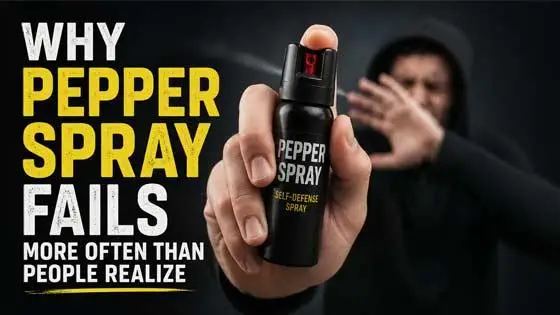
Most people think pepper spray is simple: point, spray, problem solved. But real-world situations are rarely that straightforward. Wind can shift unexpectedly, distance matters more than people realize, and stress has a funny way of making even simple tools harder to use under pressure. That does not mean pepper spray is ineffective. In fact, many people consider it one of the most practical self defense tools available. But there are several reasons pepper spray sometimes fails, and understanding them may matter more than most people think.
The Biggest Reason Pepper Spray Fails: People Assume It Works Like the Movies
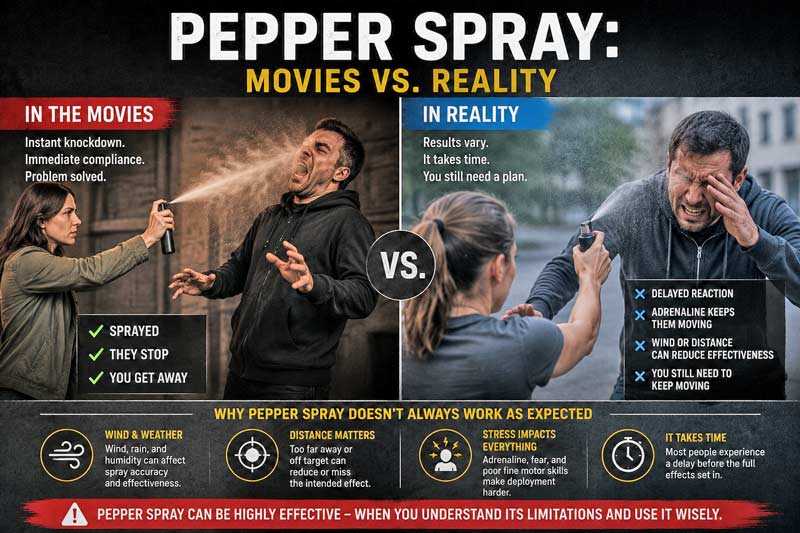
One of the biggest misconceptions about pepper spray comes from movies and television. People often picture a quick spray instantly stopping someone in their tracks, followed by an immediate dramatic reaction. Real life is usually much messier. Pepper spray can be extremely effective, but it does not always work instantly, perfectly, or the way people expect under stress.
Part of the problem is timing. In real-world situations, an aggressive person may still keep moving for several seconds after exposure, especially if adrenaline is high. That delay surprises many people because they expect immediate results. Under stress, even a few seconds can feel much longer than they actually are.
Another issue is unrealistic expectations. Some people mistakenly think pepper spray guarantees the threat stops immediately, but no self defense tool works perfectly every time. Awareness, distance, decision-making, and having a plan still matter. Defensive tools work best when people understand both their strengths and limitations.
Stress also changes everything. Fine motor skills tend to get worse during adrenaline-heavy situations, which can make aiming, deploying, and reacting more difficult than people imagine beforehand. Something that feels simple in theory may feel very different in a high-pressure moment.
That does not mean pepper spray is ineffective. In fact, many people consider it one of the best non-lethal self defense options available. But understanding what it can realistically do, and what it cannot, may be one of the most important parts of carrying it responsibly.
Wind Is One of the Biggest Reasons Pepper Spray Fails
People often picture pepper spray working perfectly no matter the situation, but weather can completely change the outcome. Wind, in particular, is one of the biggest reasons pepper spray does not work the way people expect. A quick gust in the wrong direction can reduce effectiveness, shift the spray off target, or in some situations even send part of it back toward the person using it.
That problem becomes even more important outdoors. Parking lots, sidewalks, hiking trails, apartment complexes, and open spaces all create conditions where wind can behave unpredictably. What feels like a calm day can still include enough airflow to affect where spray actually travels, especially in stressful situations where precise aim becomes harder.
Distance matters too. If someone is too far away, the spray may disperse before reaching the intended target effectively. Too close, and deployment becomes harder to manage under pressure. This is one reason people who carry pepper spray benefit from understanding realistic range expectations instead of assuming it works instantly from any distance.
Another thing many people overlook is movement. Real-world encounters rarely happen with everyone standing still. Stress, adrenaline, movement, poor lighting, and split-second decision-making can make even simple defensive tools harder to use than people imagine ahead of time.
None of this means pepper spray is unreliable. It simply means environment matters. Understanding how wind, weather, and distance affect performance can help people make better decisions and avoid unrealistic expectations about what any self defense tool can guarantee.
Many People Carry Pepper Spray but Never Practice Using It
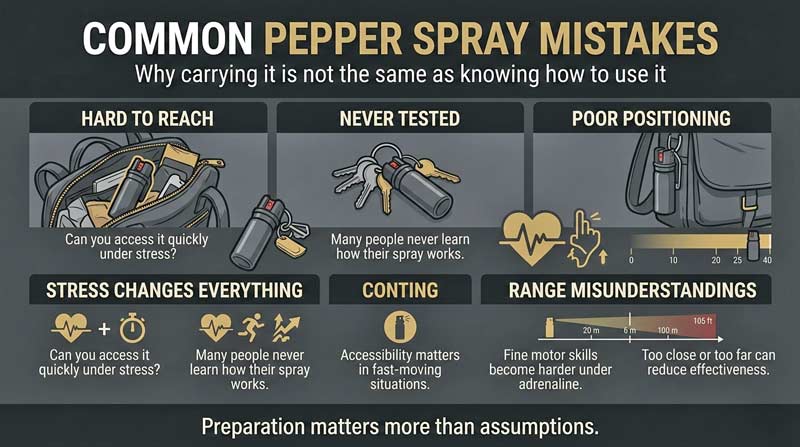
One of the most overlooked reasons pepper spray fails has nothing to do with the spray itself. It comes down to familiarity. Many people buy pepper spray, clip it to a keychain or bag, and never think about it again. Then, in a stressful moment, they suddenly expect themselves to use it perfectly under pressure.
The problem is that adrenaline changes everything. Fine motor skills tend to get worse in high-stress situations, and even simple tasks can suddenly feel harder than expected. Finding the safety, aiming correctly, maintaining distance, and reacting quickly may sound easy in theory, but reality tends to feel much different when emotions spike and time feels compressed.
Another issue is accessibility. Pepper spray that lives at the bottom of a purse, buried in a backpack, or clipped somewhere awkward may not be nearly as useful in a fast-moving situation. Many people assume they will have time to calmly retrieve it, but stressful encounters rarely happen on a convenient timeline.
Even basic familiarity can make a difference. Understanding how your specific spray deploys, what the safety feels like, realistic range expectations, and how quickly it can be accessed may help reduce hesitation if a stressful moment ever happens. Like most defensive tools, confidence often comes from familiarity, not assumptions.
This is also why many people underestimate self defense in general. Carrying a tool is one thing. Understanding how it works under pressure is something completely different.
Choosing the Wrong Type of Pepper Spray Causes More Problems Than People Expect
Another reason pepper spray sometimes fails has nothing to do with the person carrying it. It comes down to choosing the wrong type. Many people assume all pepper spray works the same way, but different formulas and delivery styles can behave very differently depending on the situation.
For example, some sprays prioritize wider coverage while others focus more on precision. That tradeoff matters more than many people realize. A wider spray pattern may feel easier to aim under stress, while a more focused stream can offer better range and potentially reduce environmental spread. The "best" option often depends on where someone plans to carry it and what situations they are most concerned about.
This becomes especially important when people think about everyday carry. Someone walking through windy parking lots, apartment complexes, or outdoor spaces may have different priorities than someone mostly concerned about indoor environments. Environmental factors can change what feels practical very quickly.
Another common mistake is buying the cheapest option without understanding how it deploys. Range, spray pattern, accessibility, and ease of use often matter much more than flashy marketing claims. Carrying pepper spray you understand usually matters more than simply carrying whatever happened to be available.
If you are not sure which style makes the most sense, understanding the difference between stream vs gel pepper spray can help clarify which option may feel more practical depending on your environment and comfort level.
Even the Best Pepper Spray Can Fail If You Wait Too Long to Use It
One thing many people do not think about is timing. In stressful situations, hesitation can quietly become one of the biggest reasons pepper spray fails. People often imagine they will immediately recognize danger and respond confidently, but real-life situations rarely feel that clear in the moment. Confusion, second-guessing, and adrenaline can slow decision-making more than most people expect.
Part of the challenge is that threatening situations often escalate gradually instead of all at once. Someone may act strange, invade personal space, ignore boundaries, or make a situation feel uncomfortable long before it becomes obviously dangerous. During those moments, people sometimes hesitate because they worry about overreacting or misreading the situation.
That hesitation matters because defensive tools tend to work best when there is still space and time to react. Waiting until someone is already too close may reduce options, make deployment harder, or increase stress dramatically. Distance, awareness, and preparation often matter just as much as the tool itself.
This is also why many self defense experts emphasize awareness over equipment. Pepper spray is helpful, but no tool replaces paying attention to surroundings, recognizing warning signs, and avoiding bad situations when possible. In many ways, prevention is still the most effective form of self defense.
For people exploring broader personal safety options, understanding different self defense weapons and tools can also help create a more realistic mindset around preparedness. The goal is rarely one perfect solution. It is understanding what works best for different situations.
People Often Forget Pepper Spray Has an Expiration Date
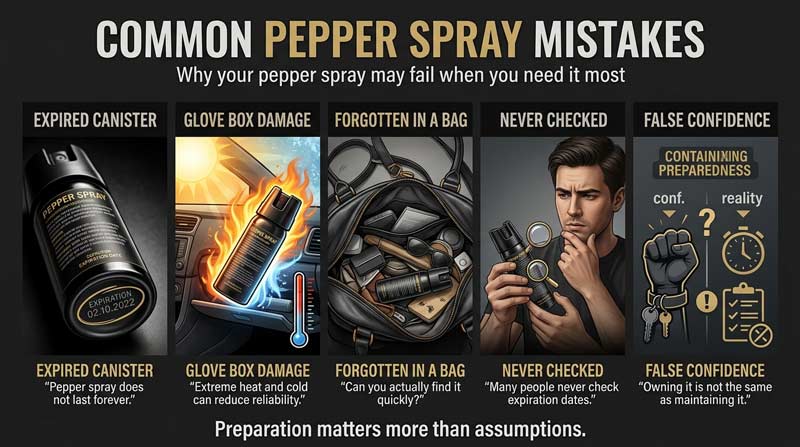
One surprisingly common reason pepper spray fails is simple: people forget it gets old. Many assume that once pepper spray is purchased, it will work forever sitting in a purse, glove box, keychain, or nightstand. But like many safety products, pepper spray has a shelf life, and performance can become less reliable over time.
Part of the issue comes down to pressure. Pepper spray relies on a pressurized canister to deploy properly, and older products may not spray as strongly or consistently as expected. Exposure to heat, freezing temperatures, or long-term storage inside vehicles can also affect reliability. A canister that has been forgotten for years may not perform the way someone assumes during an emergency.
Another overlooked factor is familiarity. Many people never check expiration dates, test accessibility, or even confirm where their pepper spray is located after buying it. Something meant to improve safety can quietly become less dependable without anyone noticing.
This does not mean people should become paranoid about expiration dates, but it does highlight an important reality: self defense tools work best when maintained and periodically checked. A little preparation often matters more than people realize.
If you are carrying pepper spray regularly, learning the basics through a guide like Pepper Spray 101 can help answer common questions about storage, usage, and what to realistically expect from different products.
Pepper Spray Fails More Indoors Than Many People Expect
Most people worry about wind ruining pepper spray outdoors, but indoor environments can create problems too. Hallways, apartments, elevators, cars, stairwells, offices, and small rooms can all change how pepper spray behaves. In confined spaces, the spray has less room to dissipate, which sometimes means the person using it may experience some effects as well.
That surprises many people because pepper spray often gets marketed as a simple point-and-spray solution. But enclosed spaces change the equation. Air circulation, ventilation, distance, and movement all affect what happens after deployment. Even if someone uses pepper spray successfully, lingering particles in tight areas may still make the environment uncomfortable for everyone nearby.
This is also one reason different pepper spray formulas matter. Stream, fogger, foam, and gel styles all behave differently depending on the environment. Some prioritize coverage, while others aim to reduce environmental spread or improve control. Understanding those differences may matter more than people realize, especially for people who spend more time indoors than outdoors.
Choosing the right type becomes especially important for everyday carry. Someone primarily concerned about parking garages and outdoor walking paths may prioritize different features than someone who lives in an apartment complex or works indoors. If you are still deciding what style makes the most sense, this guide on stream vs gel pepper spray explains how different options behave in real-world situations.
The bigger lesson is simple: environment matters. Pepper spray can be highly effective, but understanding where you are, what type you carry, and how surroundings affect performance may be just as important as carrying it in the first place.
Many People Expect Pepper Spray to Solve Every Problem
Another reason pepper spray sometimes fails comes down to expectations. Many people unintentionally treat it like a guaranteed solution instead of what it really is: one tool within a much larger personal safety strategy. That misunderstanding can create a false sense of confidence, especially for people who assume carrying pepper spray automatically makes them prepared for any situation.
The reality is that no self defense tool works perfectly every time. Distance, timing, awareness, environment, adrenaline, and decision-making all affect outcomes. Pepper spray may work extremely well in one situation and feel much harder to use effectively in another. That unpredictability is not unique to pepper spray. It is true for almost every defensive option people carry.
This is one reason experienced self defense instructors often emphasize avoidance, awareness, and preparation before equipment. Paying attention to surroundings, recognizing warning signs, creating distance early, and trusting instincts often matter far more than relying on any single tool to magically solve a dangerous situation.
That also explains why some people compare pepper spray with other defensive options depending on comfort level, environment, and personal preferences. For example, some prefer compact sprays while others explore electronic options depending on where they live or what feels practical for daily carry. If you are weighing the differences, this comparison of pepper spray vs stun gun breaks down some of the pros and tradeoffs people consider.
Pepper spray can absolutely be a smart tool to carry. But understanding both its strengths and limitations may ultimately matter more than assuming any self defense product guarantees a perfect outcome.
Some People Carry Pepper Spray in Places They Cannot Access Quickly
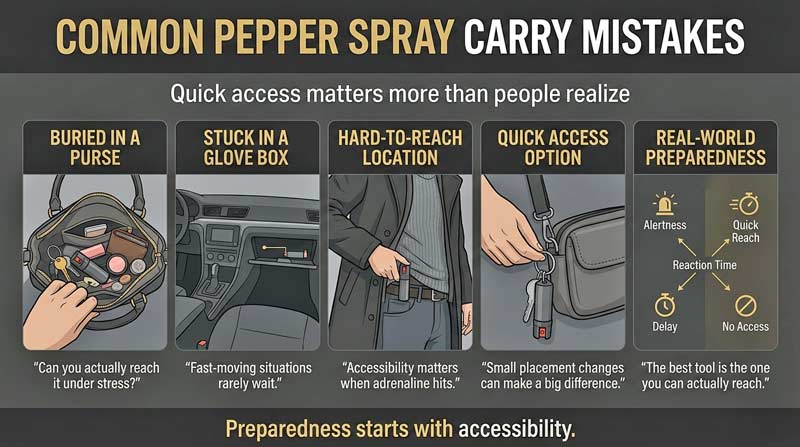
One surprisingly common mistake has nothing to do with the pepper spray itself. It comes down to where people carry it. Pepper spray buried at the bottom of a purse, packed inside a backpack, tossed into a center console, or clipped somewhere awkward may not be nearly as useful as people imagine during a stressful moment.
The problem is that dangerous situations rarely happen on a convenient timeline. People often picture themselves calmly reaching for pepper spray with plenty of warning, but real-life encounters tend to move quickly. Stress changes reaction time, fine motor skills become less reliable, and hesitation becomes much more common when adrenaline kicks in.
Accessibility matters because defensive tools tend to work best when there is still distance and time to react. If someone has to dig through a bag, search pockets, or reposition awkwardly before deploying pepper spray, valuable seconds may disappear quickly. In some situations, simply having easier access may matter more than carrying the most expensive spray available.
This is one reason everyday carry matters so much. Small differences in placement can completely change how practical a defensive tool feels during real-world situations. Some people prefer keychain options, while others want something easier to grip or quicker to retrieve depending on daily routines. If you are thinking about what makes sense for everyday carry, this guide on choosing the best pepper spray for everyday carry breaks down some important considerations.
At the end of the day, preparedness is often less about buying the "best" tool and more about carrying something you can realistically access, understand, and feel comfortable using under pressure.
Why Pepper Spray Sometimes Fails Against Highly Determined People
One uncomfortable reality many people do not realize is that pepper spray does not affect everyone exactly the same way. While many individuals experience immediate pain, disorientation, coughing, and difficulty keeping their eyes open, determined or highly adrenalized people may still continue moving or acting aggressively for a short period of time after exposure. That delay surprises people who expect an instant stop the moment spray is deployed.
Adrenaline plays a major role here. During high-stress situations, people sometimes push through pain or discomfort far longer than expected. Intoxication, emotional distress, panic, or mental state can also affect how someone reacts. That does not mean pepper spray is ineffective. It simply means real-world outcomes can look messier than the dramatic instant reactions people often imagine.
This is one reason awareness and distance matter so much. Defensive tools tend to work best when they create time and space rather than being treated like a guaranteed instant solution. Pepper spray can be extremely useful, but many people misunderstand its purpose. The goal is often creating an opportunity to escape, create distance, or improve safety, not standing still and assuming the situation is completely over.
Understanding realistic expectations may actually make pepper spray more effective, not less. People who know what to expect are often better prepared mentally and less likely to freeze if someone continues moving for several seconds after exposure. That kind of preparedness often matters more than people realize.
For people learning the basics, guides like Pepper Spray 101 can help build a more realistic understanding of how pepper spray works and what to expect in real-world situations.
Pepper Spray Works Best When Expectations Match Reality
Pepper spray remains one of the most popular self defense tools for a reason. It is compact, widely available, easy to carry, and often practical for everyday situations. But one of the biggest misunderstandings people have is assuming it works like a magic solution. Real life tends to be more complicated. Wind matters. Distance matters. Accessibility matters. Timing matters. And stress changes far more than people expect.
That does not mean pepper spray is unreliable or ineffective. In many situations, it can be an incredibly useful tool for creating distance and buying time. The problem usually is not the pepper spray itself. More often, problems happen because people misunderstand what it can realistically do, choose the wrong type, fail to maintain it, or assume simply carrying it automatically means they are prepared.
The good news is that most of these problems are preventable. Understanding realistic range expectations, thinking about accessibility, choosing the right style, and learning the basics can dramatically improve confidence and preparedness. Sometimes small details matter far more than people realize.
Most importantly, pepper spray works best as part of a bigger safety mindset. Awareness, preparation, distance, and good judgment still matter more than any single tool. Pepper spray can absolutely be a smart everyday carry option, but understanding both its strengths and limitations may ultimately be what makes it most effective.
If you are still comparing options or trying to understand what makes the most sense for your situation, exploring different pepper spray products and learning the basics through Pepper Spray 101 can help build more realistic expectations.
Does Pepper Spray Work Better Than a Stun Gun?
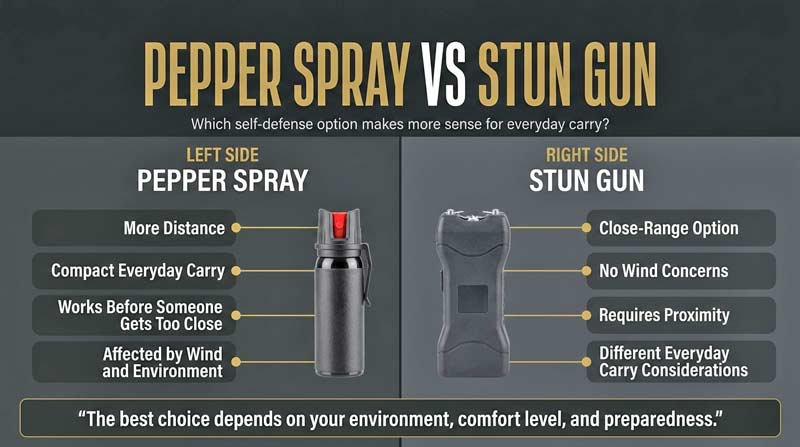
This is one of the most common questions people ask, and the honest answer is that it depends on the situation. Pepper spray and stun guns solve different problems. Pepper spray is designed to help create distance, while stun devices generally require much closer proximity to work effectively. That difference alone changes how many people think about personal safety and everyday carry.
One advantage of pepper spray is range. In many situations, people feel more comfortable having an option that can potentially help before someone gets too close. That extra space may create more time to react, move away, or avoid physical contact altogether. For everyday carry, portability and ease of access are also major reasons many people choose pepper spray.
That said, stun devices have advantages too. Some people prefer them because they do not rely on wind conditions or spray patterns. Others simply feel more confident carrying one depending on where they live, what feels practical, or what they are comfortable using under pressure.
The bigger takeaway is that no self defense tool works perfectly for every person or every situation. Environment, comfort level, accessibility, and realistic expectations matter much more than internet debates about which option is "best." If you are comparing both, this guide on pepper spray vs stun gun breaks down some of the biggest differences people consider.
What Type of Pepper Spray Is Best for Everyday Carry?
The "best" pepper spray for everyday carry depends a lot more on lifestyle and environment than most people expect. Many people assume there is one perfect option, but someone walking through windy parking lots may prioritize different features than someone mostly concerned about indoor spaces, apartment hallways, or daily commuting.
One of the biggest decisions comes down to spray type. Stream, gel, fogger, and foam formulas all behave differently. Some prioritize wider coverage while others focus more on precision, reduced environmental spread, or longer range. That is one reason people sometimes end up disappointed with pepper spray. They choose something without fully understanding how it behaves in real-world conditions.
Accessibility matters too. A pepper spray canister buried in a purse or tucked somewhere difficult to reach may not feel nearly as practical during a stressful moment. For many people, comfort, portability, and quick access matter just as much as strength or marketing claims.
The good news is that there is no single "right" answer. The best option is usually the one that feels practical for your daily routine and environment. If you are trying to compare different styles, this guide on choosing the best pepper spray for everyday carry breaks down some important things to consider.
Can Pepper Spray Expire or Stop Working Over Time?
Yes, and many people are surprised to learn that pepper spray does not last forever. Like many safety products, most pepper spray canisters have expiration dates because pressure, propellants, and performance can gradually change over time. A canister that has been sitting untouched for years may not deploy as strongly or consistently as someone expects during an emergency.
Storage conditions matter too. Leaving pepper spray in a hot car, exposing it to freezing temperatures, or forgetting it at the bottom of a bag for years can all affect reliability. Even if the canister looks fine on the outside, age and environmental conditions may still reduce performance.
The good news is that staying prepared is usually simple. Periodically checking expiration dates, confirming where your spray is stored, and replacing older canisters when needed can go a long way toward improving confidence and reliability.
This is one reason people who carry pepper spray regularly often treat it like any other preparedness item. A quick check every now and then matters much more than assuming it will automatically work forever.
Can Pepper Spray Accidentally Affect the Person Using It?
Unfortunately, yes, and this surprises a lot of people. One of the biggest misconceptions about pepper spray is assuming it only affects the intended target. In reality, wind, confined spaces, movement, poor aim, or environmental conditions can sometimes cause at least some exposure to the person using it as well.
This tends to happen more often in places like cars, elevators, hallways, stairwells, or small rooms where airflow is limited. Outdoors, wind can create similar problems if conditions shift unexpectedly. That does not mean pepper spray is unsafe or ineffective. It simply means environment matters more than many people realize.
The good news is that understanding realistic expectations usually helps people make better decisions. Choosing the right type of spray, understanding range, and thinking about surroundings ahead of time can reduce surprises considerably. Small details often matter much more than people expect when stress enters the equation.
For people still learning the basics, resources like Pepper Spray 101 can help answer common questions about how pepper spray behaves in real-world situations.
Does Stronger Pepper Spray Always Work Better?
Not necessarily. One of the biggest misconceptions people have is assuming the strongest pepper spray automatically means the best pepper spray. In reality, effectiveness often depends much more on things like accessibility, spray pattern, range, confidence, and understanding how the product actually behaves under stress.
For example, someone carrying an extremely powerful spray that is difficult to access or uncomfortable to carry every day may be less prepared than someone carrying a practical option they understand well. Environmental conditions matter too. Wind, indoor spaces, and distance can all affect how useful pepper spray feels in real-world situations.
Another thing many people overlook is that different formulas and delivery methods exist for a reason. Stream, gel, fogger, and foam options all come with tradeoffs depending on lifestyle and surroundings. Sometimes choosing the right type matters far more than chasing the highest numbers or strongest marketing claims.
In many ways, the best pepper spray is usually the one you feel comfortable carrying, can access quickly, and understand how to use realistically. Preparation and familiarity tend to matter more than assumptions about "strongest equals best."
What Happens If Pepper Spray Does Not Stop Someone Immediately?
This is one of the biggest misunderstandings people have about pepper spray. Many expect instant results the second someone is sprayed, mostly because movies make it look immediate. In reality, people do not always react the same way. Some feel effects almost instantly, while others may still move, yell, or continue acting aggressively for several seconds before the effects fully kick in.
That delay surprises people, but it is one reason many self defense conversations focus on creating distance rather than expecting a perfect instant stop. Pepper spray is often most useful for buying time, creating space, and improving opportunities to leave a situation safely. Thinking of it as a tool that creates options tends to be more realistic than assuming the problem immediately disappears.
This is also why awareness and preparation matter so much. Knowing ahead of time that someone may still be moving or reacting for a short period can help reduce panic if a situation does not play out exactly the way someone imagined.
Can You Legally Carry Pepper Spray Everywhere?
Many people assume pepper spray is legal everywhere, but rules can vary depending on location. Some places restrict canister size, strength, shipping rules, age requirements, or where pepper spray can be carried. Even when ownership is legal, specific environments such as schools, airports, or government buildings may have separate restrictions.
Part of the confusion comes from how common pepper spray feels compared to other self defense tools. Because it is widely available, many people assume laws are universal when they are not. That misunderstanding sometimes leads people to carry something without fully understanding local rules.
The good news is that pepper spray remains one of the more widely accepted self defense tools in many places. Still, checking local laws before carrying anything for personal safety is always smart because rules can change depending on where someone lives or travels.
You May Also Be Interested In:
- Pepper Spray vs Stun Gun: Which Is Better for Self Defense?
- Pepper Spray 101: What It Is, How It Works, and Why It's So Effective
- Choosing the Best Pepper Spray for Everyday Carry
- Stream vs. Gel: Choosing the Right Pepper Spray for Personal Safety
- What Is a Boot Knife and Why Do People Carry Them?
- What Is a Neck Knife and Why Do People Carry Them?
- Stiletto vs. Switchblade: Why Most People Get Them Confused
- The Police Weapon Most People Forgot Ever Existed
- The Bizarre Weapons People Once Carried for Self Defense
- 7 Mistakes People Make When Buying Their First Folding Knife
Leave a Reply