




The Complete Guide to Martial Arts Staffs: A Beginner-Friendly Breakdown
November 19th, 2025
Learning to use a martial arts staff is one of the fastest ways to build coordination, strength, and confidence in your training, no matter what style you come from. The bo, jo, and other traditional staffs may look simple at first, but each one has its own history, techniques, and advantages that can completely reshape how you move and think as a practitioner. This guide is designed to walk beginners through the essential concepts behind staff training, from understanding the different types to choosing the right size and material for your needs. Whether you are picking up a staff for the first time or looking to expand your martial arts knowledge, this breakdown will give you a clear, practical starting point that actually makes sense.
Understanding the Different Types of Martial Arts Staffs
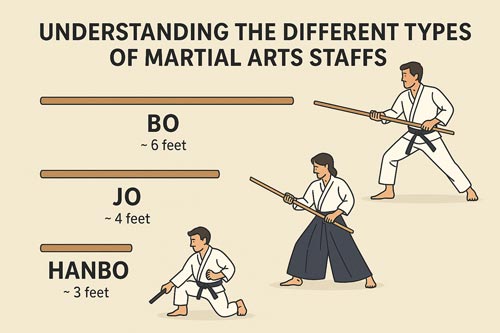
Before you can choose the right staff or dive into training, it helps to understand the main types you will see in martial arts. Each one has a different length, purpose, and training style, which is why beginners often feel confused when they first start researching. The most common staff is the bo, a long weapon that typically measures around six feet. Its length gives it a wide range of striking and blocking possibilities, and it is the staff most often used in karate and traditional kobudo training.
The jo staff is shorter, usually around four feet, and is known for its quick, precise movements. Practitioners use it for thrusts, small circular motions, and close-range techniques that focus more on timing than reach. It is especially popular in Aikido and certain styles of jujutsu where the emphasis is on redirecting force and controlling an opponent rather than relying on distance.
Another option beginners may encounter is the hanbo, a compact staff around three feet in length. The hanbo bridges the gap between empty-hand techniques and longer weapons, making it a favorite in self defense systems that use joint manipulation and leverage. It moves quickly, travels easily, and teaches a different kind of control than the longer bo or jo. Understanding how these staffs differ will help you get more out of your training and choose a weapon that supports the skills you want to develop.
How Staff Training Builds Coordination and Body Awareness
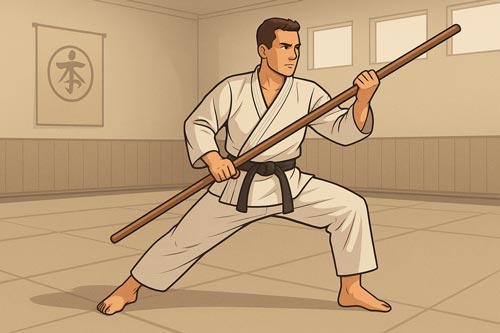
Training with a martial arts staff is one of the most effective ways to develop full-body coordination, even if you have never used a weapon before. The long shape of the staff forces you to use your entire body instead of relying only on your arms or shoulders. Every strike, block, and rotation depends on proper stance, hip movement, and balance, which teaches you how to generate power through your core rather than through isolated muscles. This kind of whole-body engagement carries over into empty-hand techniques and improves the way you move in general.
As beginners start practicing basic spins, transitions, and directional changes, they quickly learn how important timing and rhythm are. The staff exaggerates every mistake, which makes it easier to recognize where your form needs improvement. If your hips are out of line, if your grip shifts too much, or if your stance is uneven, the staff will immediately feel off balance. Instead of guessing what went wrong, you can feel the problem and correct it on the spot, which speeds up the learning process and helps you develop cleaner, more controlled technique.
Another major benefit is increased spatial awareness. Because the staff extends far beyond your hands, you become more conscious of the space around you and how to manage distance. This awareness is helpful in every martial art, especially when learning how to avoid strikes, redirect an opponent, or maintain a safe training distance. Over time, staff practice builds stronger reflexes and sharper movement patterns, which is one of the reasons many instructors encourage beginners to add staff training to their routine.
Choosing the Right Staff Length for Your Training
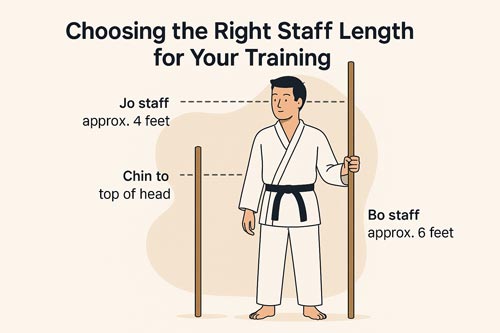
Picking the right staff length is one of the most important decisions a beginner can make. A staff that is too long can feel heavy and awkward, while a staff that is too short may limit your reach and make certain movements harder to learn. A traditional bo staff is usually around six feet in length, which works well for adults who want to practice long-range techniques, wide sweeping motions, and strong defensive blocks. This size allows for balanced movement and helps you develop the body mechanics that make staff training feel smooth and natural.
For many beginners, especially younger students or people who are still developing coordination, a shorter staff can be a smart place to start. A jo staff, which is around four feet long, offers more control and allows new practitioners to focus on technique without struggling to manage a full-length weapon. It is easier to maneuver, easier to spin, and less likely to hit the ground during transitions. This makes it a great stepping stone for anyone who wants to build confidence before moving on to a longer staff.
Your height also plays a role in determining the right size. A simple guideline is to choose a staff that reaches somewhere between your chin and the top of your head when standing upright. This usually provides the best balance of comfort and utility. As you gain experience, you can explore different lengths to match specific training goals. Some martial arts styles prefer shorter staffs for close-range work, while others use longer staffs for extended reach. Starting with a length that feels manageable will help you develop proper form and get the most out of your training sessions.
Choosing the Right Material for Your First Staff
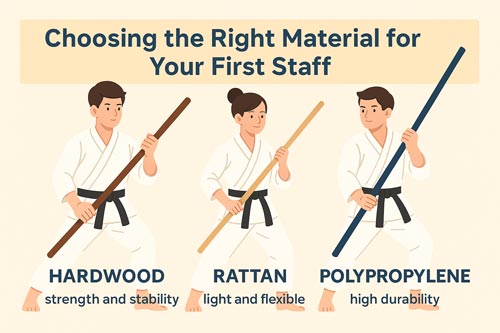
Once you have an idea of the length you want, the next step is choosing the right material. Each option has its own benefits, and the best choice depends on what you want to get out of your training. Traditional hardwood staffs are great for building strength and stability. They offer a solid, grounded feel that helps you develop strong stances and crisp techniques. Many practitioners enjoy the connection to classic martial arts training that comes with using real wood.
If you prefer something lighter and easier to handle, rattan is an excellent alternative. It has a natural flex that makes it comfortable for longer training sessions, and it is much more forgiving when practicing fast spins or transitions. Beginners often find that rattan staffs help them learn clean movement without feeling weighed down. They are also safer for younger students because they do not splinter the same way hardwood can.
Modern materials like polypropylene offer the best durability. These staffs are nearly indestructible, making them a good choice for outdoor practice or heavy contact training. They do not require any maintenance and hold up well to all kinds of weather and surfaces. If you want something that will last for years with minimal care, polypropylene is a practical and cost-effective option.
If you want to compare different materials, sizes, and styles in one place, you can browse our full selection of martial arts staffs. Seeing all the options together often makes it easier to understand how each type feels and which one fits your training goals.
Basic Techniques Every Beginner Should Learn
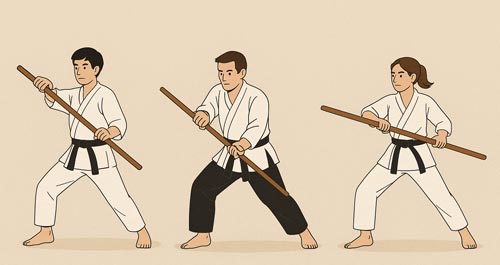
When you first pick up a martial arts staff, it can be tempting to jump straight into complicated spins or fast combinations. The most effective approach, however, is to start with the fundamental movements that give you control and confidence. One of the first skills beginners learn is the forward strike. This simple motion teaches proper hand placement, hip rotation, and follow-through, which are all essential for more advanced techniques. You do not need speed or power at the beginning. The goal is to develop smooth and consistent movement.
Another important technique is the downward block. This basic defensive motion helps you understand how to align your body behind the staff and redirect force in a safe and controlled way. It also introduces the idea of using your entire stance rather than relying on your arms alone. With enough practice, the downward block becomes a foundation for many other defensive patterns you will encounter as your training progresses.
Beginners should also spend time learning simple horizontal spins. These controlled rotations improve wrist mobility, relaxation, and timing. They also help you get comfortable with the length of the staff so you can move without hesitation. Once you understand how the staff moves around your body, you can transition into more advanced spins, thrusts, and circular motions. Starting with these basic techniques will help you build strong fundamentals and create a solid base for everything else you learn.
How Staff Training Improves Strength and Conditioning
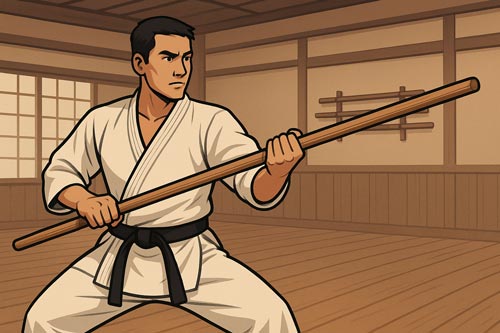
Training with a martial arts staff is not just a technical skill. It also provides a surprisingly effective workout that builds strength in a natural and functional way. Because the staff extends far beyond your hands, every movement requires you to stabilize your core and maintain proper posture. Over time, this strengthens your lower back, hips, and abdominal muscles without the need for complicated conditioning drills. Even simple strikes and basic rotations activate muscles you may not normally use in everyday training.
The staff also helps improve grip strength and forearm endurance. Holding the weapon firmly while keeping your hands relaxed enough for smooth transitions is a skill that takes time to develop. As you practice more complex techniques, you will notice that your shoulders, wrists, and upper arms become stronger. Unlike traditional weight training, staff practice builds strength through controlled movement and repetition, which reduces the risk of overloading your joints and encourages better mechanics.
Footwork is another conditioning benefit that many people overlook. Because the staff has such a long reach, you have to coordinate your steps with your upper body to maintain balance and timing. This naturally improves leg strength, stability, and overall cardiovascular endurance. Frequent practice leads to better agility and more efficient movement, which can improve performance in any martial art you study.
Developing Footwork and Distance Control
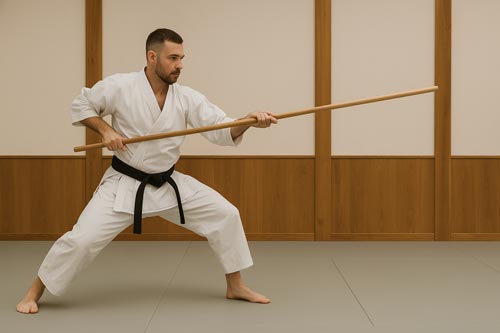
Footwork is one of the most important parts of staff training, and it is also one of the first skills that beginners tend to overlook. Because the staff has such a long reach, your movement has to match the direction and timing of the weapon. Even simple techniques become difficult when your feet are not in the right place. Practicing with a staff teaches you how to shift your weight smoothly, maintain balance during transitions, and coordinate your steps with your upper body. These habits carry over into all forms of martial arts and help you become more efficient in your movements.
Understanding distance control is another essential skill that develops naturally through staff training. The extended length of the weapon forces you to recognize how far you are from your target and how much space you need to execute techniques safely. This awareness is valuable for beginners because it improves reaction time and teaches you how to keep a safe training distance. Even if you eventually move on to other weapons or empty-hand practice, the sense of timing and range you learn with a staff will continue to help you.
As you progress, you will find that good footwork allows you to move with confidence rather than hesitating or feeling offbalance. Smooth steps make your techniques cleaner, your transitions faster, and your overall control much stronger. Spending time on footwork early in your training gives you a solid base that will support everything else you learn with the staff.
Common Mistakes Beginners Should Avoid
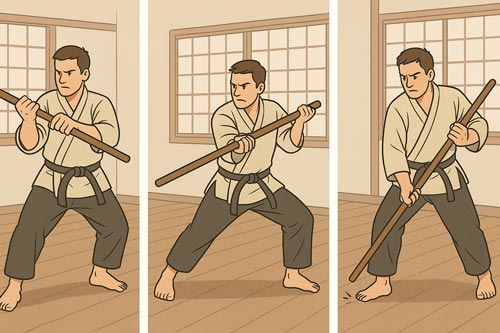
Every martial artist makes mistakes when learning a new weapon, and the staff is no exception. One of the most common issues beginners run into is gripping the staff too tightly. A stiff grip makes the weapon feel heavier, slows down transitions, and causes unnecessary strain in the forearms. The goal is to hold the staff firmly enough to maintain control while still allowing it to rotate smoothly through the hands. Relaxing your grip helps you move with fluidity and reduces fatigue during longer training sessions.
Another frequent mistake is relying on arm strength instead of using the entire body. The staff works best when your stance, hips, and shoulders support each movement. Beginners often swing the weapon with their arms alone, which leads to sloppy technique and reduced power. Learning to generate force through the legs and core creates stronger strikes and more stable defensive positions. This habit also protects your joints from overuse and makes your movements feel more natural.
A third issue beginners face is losing awareness of the staff's length. The extended reach of the weapon can lead to accidental contact with the ground, furniture, training partners, or even the user's own body. This usually happens when practitioners rush through movements without considering the space around them. Taking time to practice slowly and deliberately helps build spatial awareness and prevents injuries. As your control improves, you will naturally gain the confidence to move faster and more freely while keeping the staff under control.
How to Practice Safely With a Martial Arts Staff
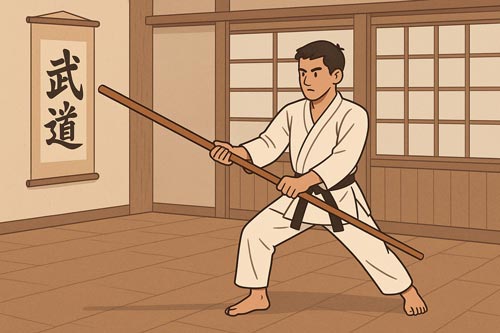
Safety is one of the most important parts of staff training, especially for beginners who are still learning how to control the length of the weapon. The first rule is to give yourself plenty of room to move. A staff extends far past your hands, so even a small miscalculation can lead to accidental contact with walls, furniture, or nearby people. Training in an open space helps you stay relaxed and reduces the chance of injuring yourself or someone else while you learn new movements.
Another key part of safe practice is starting slowly. Many beginners try to swing the staff with full power before they have learned proper technique, which increases the risk of losing control. Practicing at a moderate pace helps you focus on form and alignment, and it gives you time to adjust your grip and stance as needed. Building speed gradually will make your techniques cleaner and more accurate, and it will help you avoid mistakes that come from rushing.
It is also important to choose the right material for your skill level. Lighter staffs made from rattan or polypropylene are often safer for beginners because they are easier to control and less likely to cause injury if you accidentally strike yourself. As your technique improves, you can move on to heavier or more traditional materials. Wearing wrist guards or light forearm protection can also be helpful during early training while you get used to the feel of the weapon.
Building a Solid Practice Routine
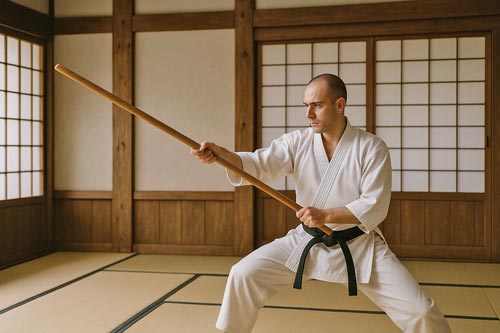
A good practice routine makes a huge difference in how quickly you improve with a martial arts staff. Many beginners focus only on learning new techniques, but the real progress comes from combining repetition, structure, and steady skill development. A simple routine often begins with a warmup that loosens the wrists, shoulders, and hips. Light rotations, gentle stretches, and a few slow strikes help you get comfortable with the staff before you move into more focused drills.
Once you are warmed up, it helps to choose two or three techniques to practice each session. Focusing on a small set of movements prevents you from feeling overwhelmed and allows you to build cleaner, more consistent habits. For example, you might spend one day working on forward strikes and downward blocks, then dedicate your next session to transitions and simple spins. Repeating techniques in smaller groups speeds up your progress because your body learns to move with purpose rather than guessing its way through the motions.
Finishing your routine with slow, controlled movements is also beneficial. When you end your training with calm, deliberate technique, you reinforce good form and help your body retain what you practiced. This cool-down phase builds muscle memory and makes the next session feel more natural. Over time, a consistent routine will make you more confident with the staff, more coordinated in your footwork, and much more aware of how to move with balanced control.
How to Progress From Beginner to Intermediate Training
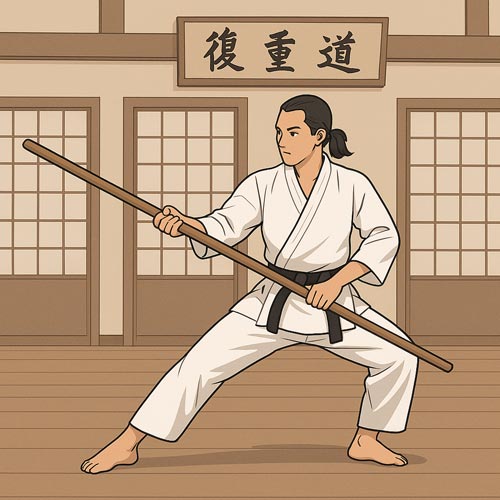
Once you have a solid grasp of the basics, the next step is learning how to expand your skills in a structured and realistic way. Progressing with a martial arts staff is not about jumping into complex tricks right away. It is about adding new layers to the fundamentals you already understand. One of the first signs that you are ready for intermediate training is the ability to perform basic strikes and transitions without hesitation. When your hands can move along the staff smoothly and your footwork stays consistent, you have built the foundation needed for more advanced techniques.
Intermediate training often introduces angled strikes, circular combinations, and more dynamic footwork patterns. These movements help you blend techniques together and teach you how to change direction with confidence. You may also begin practicing more challenging spins or incorporating defensive motions that require quick timing. At this stage, the staff becomes an extension of your body instead of something you have to think about constantly. This shift in comfort and awareness allows you to explore new possibilities without losing control.
Another important part of reaching the intermediate level is learning how to adjust your training to your specific goals. Some practitioners want to focus on traditional kata, while others prefer performance-oriented routines or practical self defense techniques. Each path encourages different kinds of growth, but all of them rely on the fundamentals you developed as a beginner. No matter which direction you choose, staying consistent and practicing with intention will keep your progress steady and enjoyable.
Why Staff Training Benefits Every Martial Artist
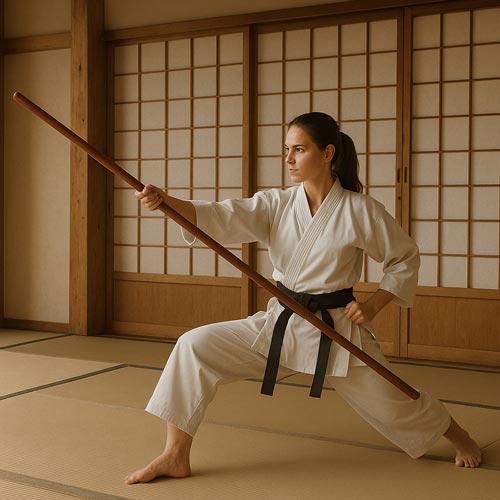
Even if the staff is not your main weapon, learning its fundamentals can improve almost every part of your martial arts practice. One of the biggest advantages is how quickly the staff teaches body alignment. Because the weapon is long and balanced, it magnifies even small errors in posture or stance. This instant feedback helps you correct bad habits and develop stronger, more efficient mechanics that transfer to empty-hand techniques, partner drills, and other weapons.
Staff training is also excellent for building timing and distance control. These skills are essential no matter what style you practice, and the staff forces you to understand them in a clear and practical way. You learn how far your body needs to move to stay safe, how quickly you must react when the weapon changes direction, and how to maintain rhythm during combinations. These improvements carry over into sparring, kata, self-defense training, and any situation where controlled movement matters.
Another reason every martial artist can benefit from staff work is the overall physical development it provides. The staff builds coordination, strengthens stabilizer muscles, and encourages full-body engagement without requiring heavy impact or advanced athleticism. It is a low-risk, high-reward training tool that helps beginners gain confidence and gives experienced practitioners a new way to sharpen their skills. Whether you are looking to improve conditioning, refine technique, or simply add variety to your training sessions, the staff is a versatile and effective choice.
Bringing Staff Training Into Your Regular Practice
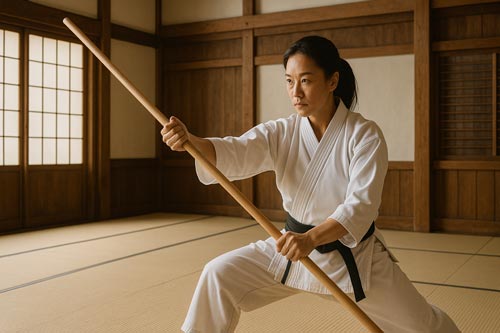
Adding the staff to your regular training routine does not mean replacing your current techniques or changing your style. It simply gives you another tool to develop better fundamentals. Even a few minutes of staff work at the beginning or end of your normal practice can sharpen coordination, improve posture, and strengthen the muscles you use for striking and blocking. The staff highlights your movement patterns more clearly than many other training methods, which is why practitioners from all backgrounds benefit from including it in their weekly schedule.
If you train in a school that teaches multiple weapons, the staff often acts as a bridge between different styles. The same concepts you learn with a bo or jo, such as rotation, timing, and alignment, will make it easier to pick up other traditional weapons later. Even if you never move beyond the staff itself, practicing consistently will help you understand how your whole body should work together during martial arts training. This makes each session more productive and helps you develop long-lasting habits that support your growth as a martial artist.
You do not need long or complicated workouts to see progress. Short, focused practice sessions build skill quickly, especially when you reinforce what you have already learned. As your comfort level improves, you can add new techniques or explore different staff lengths and materials to expand your experience. Over time, this creates a well-rounded training routine that strengthens both your body and your confidence.
Tips for Staying Motivated as You Continue Training
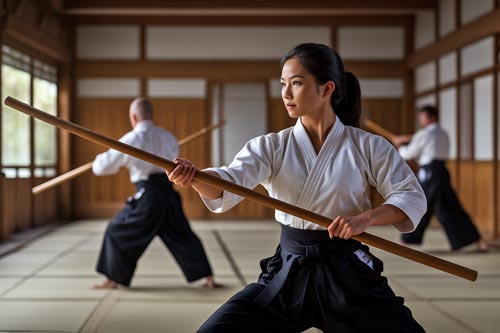
Staying motivated with staff training is much easier when you approach it with realistic goals and a sense of curiosity. Many beginners lose momentum because they expect fast results or try to learn too many techniques at once. A better approach is to focus on steady, manageable progress. Pick one or two skills to improve each week, such as cleaner transitions, smoother spins, or more stable footwork. These small goals add up quickly and help you see meaningful improvement without feeling overwhelmed.
Another helpful tip is to mix structured practice with exploration. Once you have warmed up and completed your main drills, spend a few minutes experimenting with motions that feel natural. This kind of creative practice keeps training enjoyable and helps you discover techniques or variations you may not have tried otherwise. It also builds comfort with the staff and encourages you to view it as a versatile tool rather than a rigid set of rules to follow.
Training with partners or in a class can also make a big difference. Practicing alongside others motivates you to stay consistent, and watching different skill levels helps you learn faster. Even if you train at home, checking in with your instructor or following along with online lessons can give you guidance and structure. The key is to keep training fun and meaningful so you stay excited to pick up the staff each time you practice.
How to Choose Your First Staff for Long-Term Progress
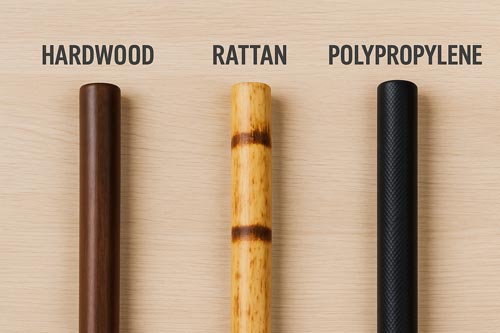
When you are ready to buy your first staff, choosing the right one can make a huge difference in how quickly you improve. The best option is usually the staff that matches your size, strength, and training goals rather than the one that simply looks the most impressive. If you prefer a lighter feel and want to practice smooth spins or extended sessions without fatigue, rattan is often the best choice. It absorbs impact well and is easier to control for beginners who are still learning how to guide the weapon through transitions.
If you want something more traditional with a solid feel, hardwood staffs offer excellent stability and power. They are ideal for strong strikes, grounding exercises, and traditional kata that emphasize structure and control. Beginners who train in systems that rely on powerful blocking techniques often prefer hardwood because it teaches how to align the body behind each movement. The added weight also helps develop strength, although it requires more caution during early practice.
Practitioners who want long-term durability may find polypropylene staffs appealing. These modern materials resist cracking, bending, and weather damage, which makes them a great option for outdoor practice or more intense striking drills. They do not require maintenance and hold their shape well, which is useful if you train frequently or want a staff that can handle years of use. Whichever material you choose, the key is selecting a staff that feels comfortable in your hands and encourages steady improvement.
Bringing Everything Together as You Begin Your Staff Journey
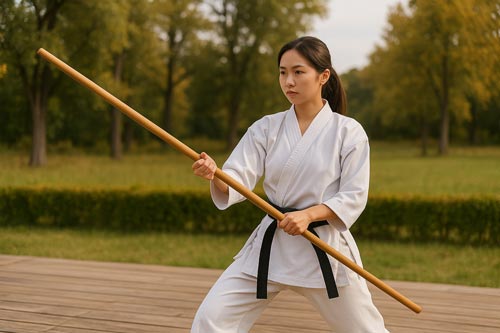
Learning to use a martial arts staff is one of the most enjoyable and rewarding ways to develop balance, strength, and coordination. The bo, jo, and other traditional staffs each offer their own challenges, but they all teach movement in a way that feels natural once you understand the basics. When you start to recognize how your stance, timing, and posture affect each technique, the staff becomes a powerful tool for shaping your overall martial arts ability. It supports beginners with clear feedback and gives experienced practitioners a fresh way to refine familiar skills.
The most important part of your journey is consistency. Short, focused practice sessions have a bigger impact than occasional long workouts, and even a few minutes of staff training can help you improve your mechanics. As you explore different materials, lengths, and styles, you may find it helpful to look through various staff options to see which type feels most natural in your hands. Every small step builds confidence, and each new technique helps you understand your body a little better.
Whether you are practicing for fitness, self expression, or traditional martial arts development, the staff is a dependable and versatile training partner. With patience, curiosity, and steady practice, you will continue to grow your skills and discover new reasons to enjoy working with this timeless weapon.
You May Also Be Interested In:
- The Evolution of the Shuriken: From Samurai to Modern Martial Arts
- What Is EDC? A Complete Guide to Everyday Carry Gear
- What Is a Balisong? Beginner Guide to Butterfly Knives
- What Is a Karambit Knife? Beginner Guide to Karambits
- A Complete Guide to Nunchuck Types, Materials, and Styles
- The Best Self Defense Blades: A Complete Guide to Discreet Protection
- What Is a Bo Staff? Beginner Guide to History, Sizes, and Training
- New Expandable Bo Staffs
- New Lightweight Aluminum Competition Bo Staffs
- The Real History of Escrima Sticks: From Battlefield Weapon to Modern Martial Art
Leave a Reply