





What Is the Ring on a Karambit Knife For?
May 28th, 2026

Karambit knives are easy to recognize because of their curved blade, but one of the first things most people notice is the ring at the end of the handle. If you have ever seen a karambit for the first time, there is a good chance you wondered the same thing many people do: what is that ring actually for? At first glance, it might seem decorative or purely for style, but the ring serves several practical purposes that help make the karambit one of the most distinctive knife designs in the world.
Originally inspired by traditional Southeast Asian farming tools, the karambit evolved over time into a curved utility and martial arts knife used in countries like Indonesia, Malaysia, and the Philippines. As the design developed, the finger ring became an important feature that helped with grip, control, and handling. While modern karambits come in many shapes and sizes, the ring remains one of the knife's defining characteristics.
Today, people are interested in karambits for all kinds of reasons. Some appreciate their martial arts history, others like their unique shape, and many are simply curious about how the design works. Whether someone is looking at a traditional fixed blade or a modern folding karambit, understanding the purpose of the ring helps explain why this knife looks so different from almost everything else.
In this guide, we will break down what the ring on a karambit knife is for, how it is traditionally used, and why it remains one of the most recognizable features of the design today.
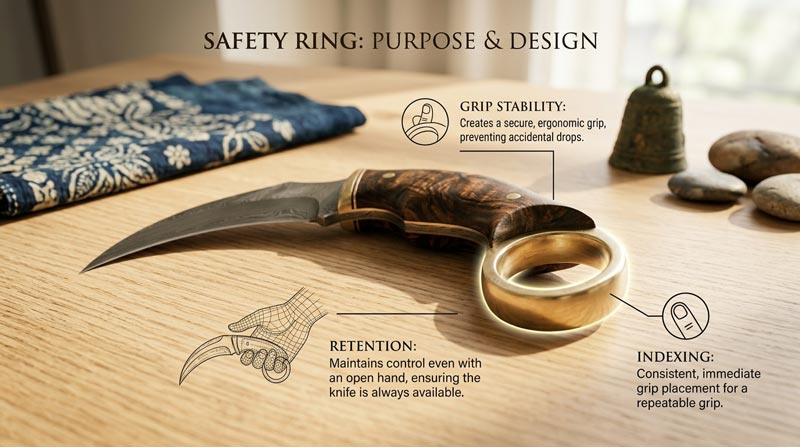
The ring on a karambit knife is primarily designed to improve grip, control, and retention. Unlike many traditional knife handles, a karambit includes a circular opening at the end of the handle where a finger can rest while holding the knife. This feature helps keep the knife more securely positioned in the hand and is one of the biggest reasons the karambit feels so different from straight-bladed knife designs.
One of the main benefits of the ring is stability. Because a finger can remain connected to the handle through the ring, the knife is less likely to shift unexpectedly during movement or slip if the user loses grip. This added control became especially important in traditional martial arts systems where curved blades and specialized handling techniques evolved over time.
Another reason the ring became popular is versatility. The design can make transitions between different grip positions feel more natural, which helped influence how karambits were used in Southeast Asian martial arts traditions. While not every modern karambit is designed exactly the same way, the ring remains one of the most recognizable features because it continues to separate the karambit from more conventional knife styles.
Today, many people are drawn to karambits simply because the ring makes the knife feel unique in the hand. Whether someone is interested in martial arts history, knife design, or simply curious about why karambits look the way they do, the finger ring is usually the feature that sparks the most questions.
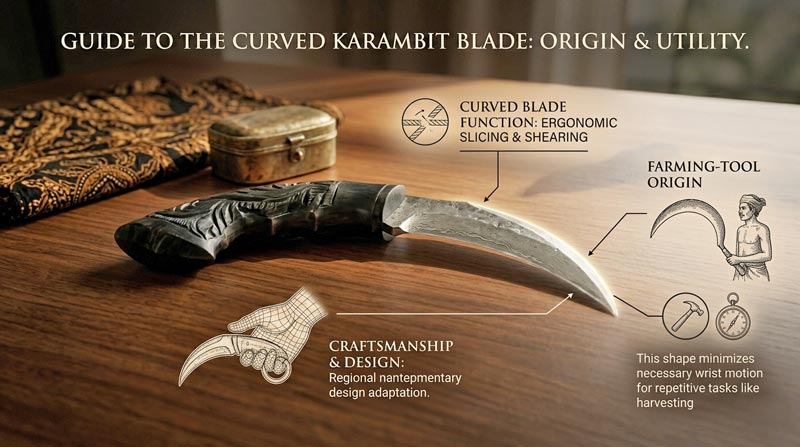
The curved shape of a karambit is not just for appearance. The design has roots in traditional Southeast Asian farming tools, where curved blades were useful for cutting and pulling through plant material more naturally than straight blades. Over time, the shape carried into martial arts traditions, where the curved blade became one of the defining features of the karambit design.
One reason the curve stands out is because it changes how the knife feels and moves compared to more conventional blade shapes. A straight knife and a curved knife naturally create very different handling experiences, which is one reason karambits feel so unique in the hand. The curve also contributes to the knife's distinctive appearance, making it immediately recognizable even to people who know very little about knives or martial arts history.
The curved blade also works closely with the finger ring to create the overall identity of the karambit. While the ring helps with grip and control, the curved profile gives the knife its signature shape and traditional look. Together, these features are part of what helped the karambit evolve into one of the most recognizable knife designs in the world.
Today, modern karambits come in many variations, including folding models, fixed blades, and training versions, but the curved blade remains one of the key characteristics that continues to connect the design back to its historical origins.
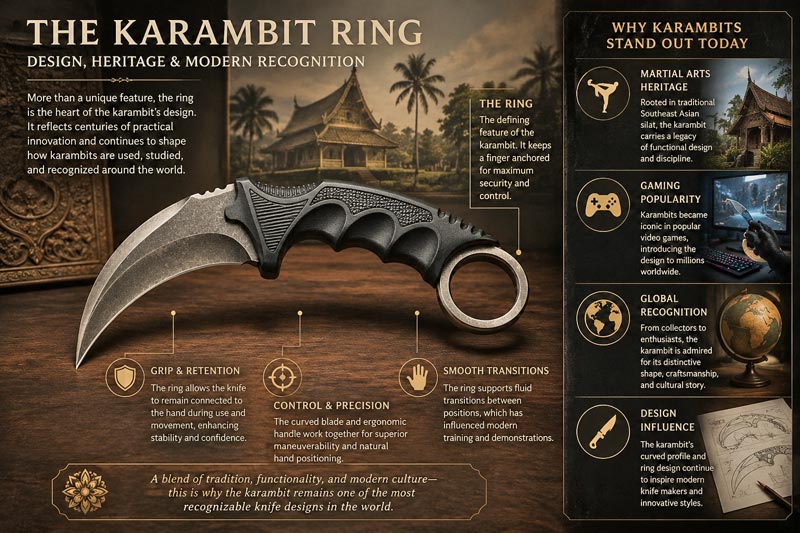
One of the most recognizable things people notice about karambits is the spinning motion often shown in videos, demonstrations, and martial arts clips. Because the ring allows a finger to stay connected to the handle, some practitioners developed ways to rotate or transition the knife between positions while maintaining grip. This movement helped make the karambit visually distinctive and contributed to its popularity in martial arts communities and modern media.
That said, spinning is not the primary reason the ring exists. Historically, the ring was valued more for grip retention and control than flashy movements. The ability to keep a finger anchored to the handle helped the knife feel more secure in the hand and made transitions between different positions feel smoother. Spinning techniques became more associated with demonstrations, skill practice, and modern interest in karambit handling rather than the original historical purpose of the design.
Today, spinning demonstrations are one reason karambits stand out online and in pop culture. Many people first become curious about karambits after seeing unique ring-based movements in martial arts videos or games. Their unusual shape and recognizable handling style helped turn them into one of the most visually distinctive knife designs in the world.
Karambits also gained a lot of visibility through entertainment and gaming culture. If you are curious about how they became so recognizable outside martial arts circles, our article on why gamers recognize karambits takes a closer look at how they exploded in popularity.
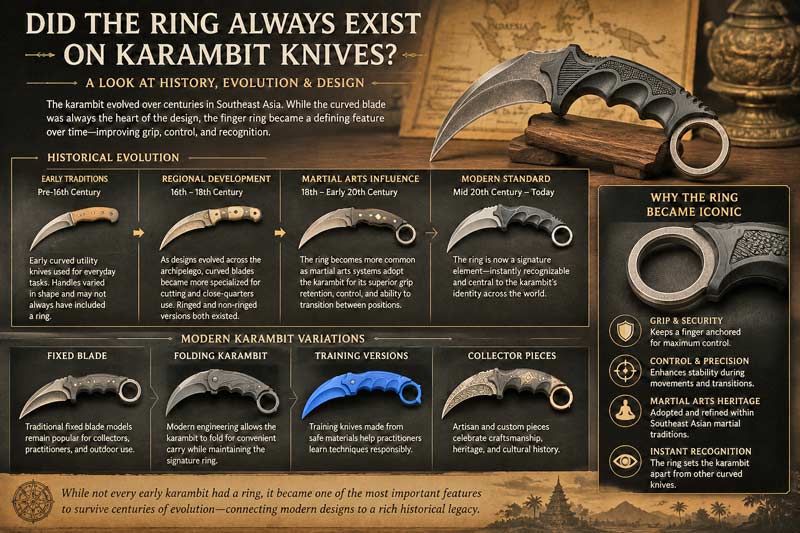
The finger ring is one of the most recognizable features of modern karambits, but historians believe not every early version looked exactly the same. The karambit evolved over centuries across parts of Southeast Asia, particularly in regions like Indonesia and Malaysia, where designs changed depending on local traditions, practical needs, and martial arts influences. While the curved blade remained an important part of the design, details like handle shape and ring size likely varied over time.
As the karambit became more closely associated with martial arts traditions, the ring grew into a defining feature because of the added grip and control it offered. Over time, it helped separate the karambit from other curved knives and became part of what made the design instantly recognizable. Today, many people see the ring as essential to the karambit identity, even though historical versions may not have been completely standardized.
Modern karambits come in many different forms, including folding models, fixed blades, training versions, and collector pieces. Even with all those variations, the ring has remained one of the few consistent features that continues connecting modern designs to the knife's historical roots. If you want a deeper look at how the knife changed over time, our article on the history and evolution of the karambit knife takes a closer look at how the design developed.
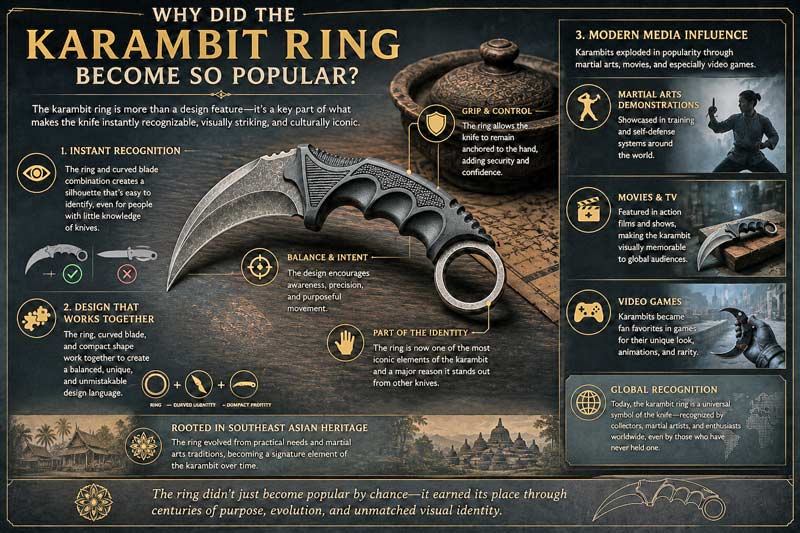
The ring became one of the defining features of the karambit because it helped make the knife instantly recognizable while also contributing to the overall feel of the design. Over time, people began associating the ring with what makes a karambit different from more traditional straight-handled knives. Even someone with very little knowledge of knives can usually spot a karambit right away because of the curved blade and circular ring combination.
Part of the ring's popularity also comes from how it complements the overall shape of the knife. The ring, curved blade, and compact profile work together to create a design that feels visually unique and different from most other knife styles. As karambits spread beyond Southeast Asia and became more widely recognized, these distinctive features helped them stand out among collectors, martial artists, and knife enthusiasts alike.
Modern media played a major role too. Karambits gained popularity through martial arts demonstrations, movies, and especially video games, where their unusual appearance made them instantly memorable. The ring became part of the knife's visual identity, helping it stand out in ways that more conventional designs often did not. Today, many people recognize a karambit even if they have never handled one in person.
The ring also helped karambits develop a reputation for being different from standard knife designs. If you are curious about the broader appeal of the design, our article on why karambits became so popular takes a closer look at what helped make them so recognizable around the world.
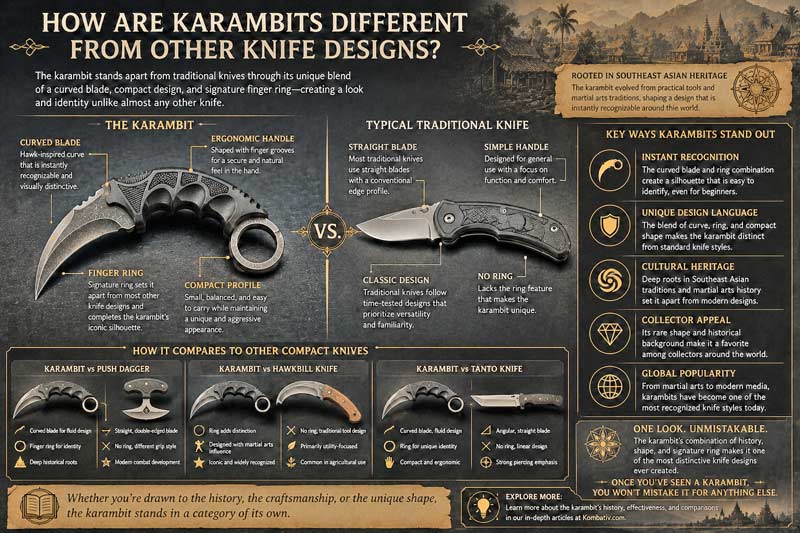
One of the biggest things that separates a karambit from most other knives is how instantly recognizable it looks. While many knife designs rely on straight blades and traditional handles, the karambit combines a curved blade with a finger ring to create something that feels completely different in both appearance and design. Even people who know very little about knives can usually identify a karambit right away because of its distinctive silhouette.
The ring also helps set the karambit apart visually from more conventional knife styles. While many knives focus on simplicity, the karambit developed around a combination of features that work together to create a unique identity. The curved blade, compact size, and ring all contribute to why karambits stand out among collectors, martial arts enthusiasts, and people interested in unusual blade designs.
Karambits are also often compared to other compact specialty knives because of their distinctive shape and purpose. For example, people curious about how different designs compare may enjoy learning about the differences between a karambit vs push dagger, since both have developed strong followings for very different reasons.
Today, the karambit remains one of the most recognizable knife styles in the world because it looks so different from almost everything else. Whether someone is drawn to the history, the craftsmanship, or the unusual shape, it is hard to mistake a karambit for anything else once you have seen one.
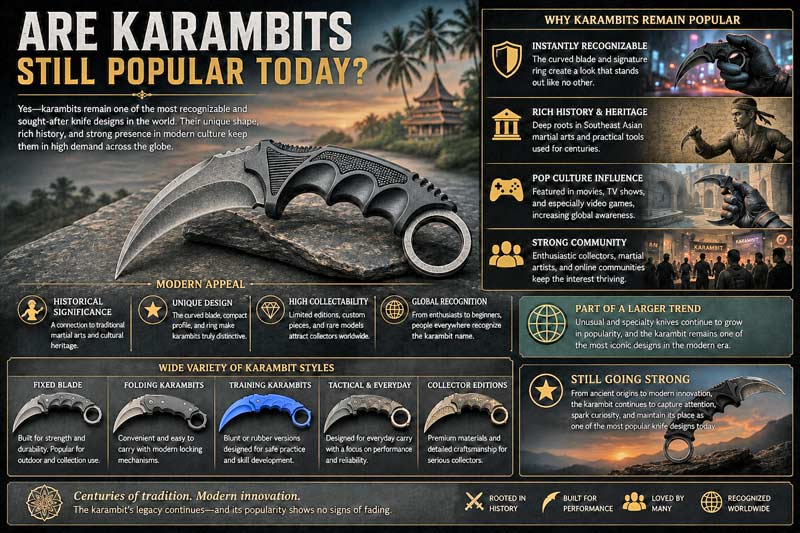
Even though the karambit has roots that go back centuries, it remains surprisingly popular today. Part of that popularity comes from how instantly recognizable the design is. Between the curved blade, compact shape, and signature ring, karambits stand out in a way that many other knife styles simply do not. Whether someone first sees one online, in a collection, or through pop culture, it tends to leave an impression.
Modern interest in karambits comes from several different places. Some people appreciate the historical and martial arts connection, while others are drawn to the unusual design or collectability. Karambits also became much more recognizable through movies, gaming culture, and online knife communities, where their distinctive shape helped them stand out from more conventional designs.
Today, there are countless styles available, including folding models, fixed blades, training versions, and collector-focused designs. For people interested in exploring different modern karambit designs, there are now far more options than ever before, ranging from traditional-inspired styles to sleek modern interpretations.
The karambit has also become part of a larger fascination with unusual and specialty knife designs. Even people who do not normally pay attention to knives often recognize a karambit because its shape is so distinctive. Few knife styles have managed to stay both historically rooted and culturally recognizable in quite the same way.
The ring on a karambit might look unusual at first, but it is one of the biggest reasons the knife stands out from almost every other blade design in the world. What began as a practical feature tied to control and handling eventually became one of the most recognizable design elements in modern knife culture. Even people who know very little about knives can usually spot a karambit right away because of its curved blade and signature ring.
Part of what makes the karambit so interesting is how many different worlds it connects. It has roots in Southeast Asian history, ties to martial arts traditions, modern collector appeal, and even recognition through gaming and pop culture. Very few knife styles have managed to remain historically important while also staying relevant in modern culture the way the karambit has.
For people interested in learning more, exploring different karambit knife styles can be a great way to see how the design has evolved over time. From traditional-inspired curved blades to sleek modern interpretations, the ring remains one of the few details that still connects nearly every version back to the knife's historical roots.
If there is one takeaway, it is this: the ring is not just there for appearance. It helped shape the identity of the karambit and played a major role in turning it into one of the most recognizable knife designs ever created. Once you understand the purpose behind the ring, the entire design starts to make a lot more sense.
Today, people are interested in karambits for all kinds of reasons. Some appreciate their martial arts history, others like their unique shape, and many are simply curious about how the design works. Whether someone is looking at a traditional fixed blade or a modern folding karambit, understanding the purpose of the ring helps explain why this knife looks so different from almost everything else.
In this guide, we will break down what the ring on a karambit knife is for, how it is traditionally used, and why it remains one of the most recognizable features of the design today.
What Is the Ring on a Karambit Knife For?
The ring on a karambit knife is primarily designed to improve grip, control, and retention. Unlike many traditional knife handles, a karambit includes a circular opening at the end of the handle where a finger can rest while holding the knife. This feature helps keep the knife more securely positioned in the hand and is one of the biggest reasons the karambit feels so different from straight-bladed knife designs.
One of the main benefits of the ring is stability. Because a finger can remain connected to the handle through the ring, the knife is less likely to shift unexpectedly during movement or slip if the user loses grip. This added control became especially important in traditional martial arts systems where curved blades and specialized handling techniques evolved over time.
Another reason the ring became popular is versatility. The design can make transitions between different grip positions feel more natural, which helped influence how karambits were used in Southeast Asian martial arts traditions. While not every modern karambit is designed exactly the same way, the ring remains one of the most recognizable features because it continues to separate the karambit from more conventional knife styles.
Today, many people are drawn to karambits simply because the ring makes the knife feel unique in the hand. Whether someone is interested in martial arts history, knife design, or simply curious about why karambits look the way they do, the finger ring is usually the feature that sparks the most questions.
Why Do Karambits Have Curved Blades?
The curved shape of a karambit is not just for appearance. The design has roots in traditional Southeast Asian farming tools, where curved blades were useful for cutting and pulling through plant material more naturally than straight blades. Over time, the shape carried into martial arts traditions, where the curved blade became one of the defining features of the karambit design.
One reason the curve stands out is because it changes how the knife feels and moves compared to more conventional blade shapes. A straight knife and a curved knife naturally create very different handling experiences, which is one reason karambits feel so unique in the hand. The curve also contributes to the knife's distinctive appearance, making it immediately recognizable even to people who know very little about knives or martial arts history.
The curved blade also works closely with the finger ring to create the overall identity of the karambit. While the ring helps with grip and control, the curved profile gives the knife its signature shape and traditional look. Together, these features are part of what helped the karambit evolve into one of the most recognizable knife designs in the world.
Today, modern karambits come in many variations, including folding models, fixed blades, and training versions, but the curved blade remains one of the key characteristics that continues to connect the design back to its historical origins.
Can You Spin a Karambit Using the Ring?
One of the most recognizable things people notice about karambits is the spinning motion often shown in videos, demonstrations, and martial arts clips. Because the ring allows a finger to stay connected to the handle, some practitioners developed ways to rotate or transition the knife between positions while maintaining grip. This movement helped make the karambit visually distinctive and contributed to its popularity in martial arts communities and modern media.
That said, spinning is not the primary reason the ring exists. Historically, the ring was valued more for grip retention and control than flashy movements. The ability to keep a finger anchored to the handle helped the knife feel more secure in the hand and made transitions between different positions feel smoother. Spinning techniques became more associated with demonstrations, skill practice, and modern interest in karambit handling rather than the original historical purpose of the design.
Today, spinning demonstrations are one reason karambits stand out online and in pop culture. Many people first become curious about karambits after seeing unique ring-based movements in martial arts videos or games. Their unusual shape and recognizable handling style helped turn them into one of the most visually distinctive knife designs in the world.
Karambits also gained a lot of visibility through entertainment and gaming culture. If you are curious about how they became so recognizable outside martial arts circles, our article on why gamers recognize karambits takes a closer look at how they exploded in popularity.
Did the Ring Always Exist on Karambit Knives?
The finger ring is one of the most recognizable features of modern karambits, but historians believe not every early version looked exactly the same. The karambit evolved over centuries across parts of Southeast Asia, particularly in regions like Indonesia and Malaysia, where designs changed depending on local traditions, practical needs, and martial arts influences. While the curved blade remained an important part of the design, details like handle shape and ring size likely varied over time.
As the karambit became more closely associated with martial arts traditions, the ring grew into a defining feature because of the added grip and control it offered. Over time, it helped separate the karambit from other curved knives and became part of what made the design instantly recognizable. Today, many people see the ring as essential to the karambit identity, even though historical versions may not have been completely standardized.
Modern karambits come in many different forms, including folding models, fixed blades, training versions, and collector pieces. Even with all those variations, the ring has remained one of the few consistent features that continues connecting modern designs to the knife's historical roots. If you want a deeper look at how the knife changed over time, our article on the history and evolution of the karambit knife takes a closer look at how the design developed.
Why Did the Karambit Ring Become So Popular?
The ring became one of the defining features of the karambit because it helped make the knife instantly recognizable while also contributing to the overall feel of the design. Over time, people began associating the ring with what makes a karambit different from more traditional straight-handled knives. Even someone with very little knowledge of knives can usually spot a karambit right away because of the curved blade and circular ring combination.
Part of the ring's popularity also comes from how it complements the overall shape of the knife. The ring, curved blade, and compact profile work together to create a design that feels visually unique and different from most other knife styles. As karambits spread beyond Southeast Asia and became more widely recognized, these distinctive features helped them stand out among collectors, martial artists, and knife enthusiasts alike.
Modern media played a major role too. Karambits gained popularity through martial arts demonstrations, movies, and especially video games, where their unusual appearance made them instantly memorable. The ring became part of the knife's visual identity, helping it stand out in ways that more conventional designs often did not. Today, many people recognize a karambit even if they have never handled one in person.
The ring also helped karambits develop a reputation for being different from standard knife designs. If you are curious about the broader appeal of the design, our article on why karambits became so popular takes a closer look at what helped make them so recognizable around the world.
How Are Karambits Different From Other Knife Designs?
One of the biggest things that separates a karambit from most other knives is how instantly recognizable it looks. While many knife designs rely on straight blades and traditional handles, the karambit combines a curved blade with a finger ring to create something that feels completely different in both appearance and design. Even people who know very little about knives can usually identify a karambit right away because of its distinctive silhouette.
The ring also helps set the karambit apart visually from more conventional knife styles. While many knives focus on simplicity, the karambit developed around a combination of features that work together to create a unique identity. The curved blade, compact size, and ring all contribute to why karambits stand out among collectors, martial arts enthusiasts, and people interested in unusual blade designs.
Karambits are also often compared to other compact specialty knives because of their distinctive shape and purpose. For example, people curious about how different designs compare may enjoy learning about the differences between a karambit vs push dagger, since both have developed strong followings for very different reasons.
Today, the karambit remains one of the most recognizable knife styles in the world because it looks so different from almost everything else. Whether someone is drawn to the history, the craftsmanship, or the unusual shape, it is hard to mistake a karambit for anything else once you have seen one.
Are Karambits Still Popular Today?
Even though the karambit has roots that go back centuries, it remains surprisingly popular today. Part of that popularity comes from how instantly recognizable the design is. Between the curved blade, compact shape, and signature ring, karambits stand out in a way that many other knife styles simply do not. Whether someone first sees one online, in a collection, or through pop culture, it tends to leave an impression.
Modern interest in karambits comes from several different places. Some people appreciate the historical and martial arts connection, while others are drawn to the unusual design or collectability. Karambits also became much more recognizable through movies, gaming culture, and online knife communities, where their distinctive shape helped them stand out from more conventional designs.
Today, there are countless styles available, including folding models, fixed blades, training versions, and collector-focused designs. For people interested in exploring different modern karambit designs, there are now far more options than ever before, ranging from traditional-inspired styles to sleek modern interpretations.
The karambit has also become part of a larger fascination with unusual and specialty knife designs. Even people who do not normally pay attention to knives often recognize a karambit because its shape is so distinctive. Few knife styles have managed to stay both historically rooted and culturally recognizable in quite the same way.
Why the Karambit Ring Still Matters Today
The ring on a karambit might look unusual at first, but it is one of the biggest reasons the knife stands out from almost every other blade design in the world. What began as a practical feature tied to control and handling eventually became one of the most recognizable design elements in modern knife culture. Even people who know very little about knives can usually spot a karambit right away because of its curved blade and signature ring.
Part of what makes the karambit so interesting is how many different worlds it connects. It has roots in Southeast Asian history, ties to martial arts traditions, modern collector appeal, and even recognition through gaming and pop culture. Very few knife styles have managed to remain historically important while also staying relevant in modern culture the way the karambit has.
For people interested in learning more, exploring different karambit knife styles can be a great way to see how the design has evolved over time. From traditional-inspired curved blades to sleek modern interpretations, the ring remains one of the few details that still connects nearly every version back to the knife's historical roots.
If there is one takeaway, it is this: the ring is not just there for appearance. It helped shape the identity of the karambit and played a major role in turning it into one of the most recognizable knife designs ever created. Once you understand the purpose behind the ring, the entire design starts to make a lot more sense.
You May Also Be Interested In:
- Why Is the Karambit Knife Curved?
- 10 Things You Didn't Know About the Karambit Knife
- The History and Evolution of the Karambit Knife
- What Is a Karambit Knife? Beginner Guide to Karambits
- Why Karambit Knives Are So Effective
- Karambit vs Push Dagger: Which Blade Would You Bet Your Life On?
- Why Karambit Knives Became So Popular in Video Games
- Why Every Day Should Be an EDC Knife Day: How a Simple Knife Can Make Your Life Easier and Safer
- Best EDC Knife: How to Choose the Right Everyday Carry Knife
- Bowie Knife vs Hunting Knife: What's the Difference?
Leave a Reply