





Why Karambit Knives Became So Popular in Video Games
May 8th, 2026
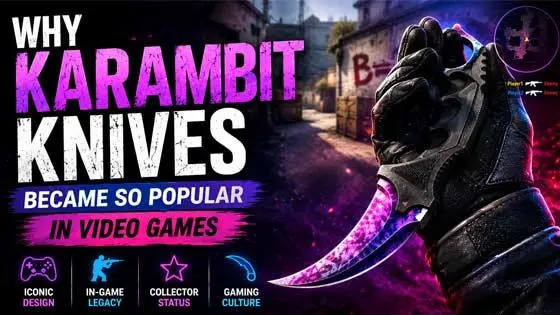
Karambit knives have one of the most recognizable designs in the knife world. The curved blade, finger ring, and aggressive shape instantly stand out compared to traditional pocket knives, which is probably one reason they became so popular in video games over the past two decades. Even people who know very little about knives can usually recognize a karambit the moment they see one. Once game developers started adding them to first-person shooters and competitive multiplayer games, their popularity exploded even further.
For many gamers, the karambit became more than just another virtual weapon. It turned into a status symbol, a collectible, and part of gaming culture itself. Games like Counter-Strike helped introduce millions of players to the design, while flashy animations, rare cosmetic skins, and fast movement mechanics made karambits feel unique compared to standard combat knives. Over time, that exposure pushed interest far beyond gaming and helped turn real-world karambit knives into one of the most recognizable knife styles on the market today.
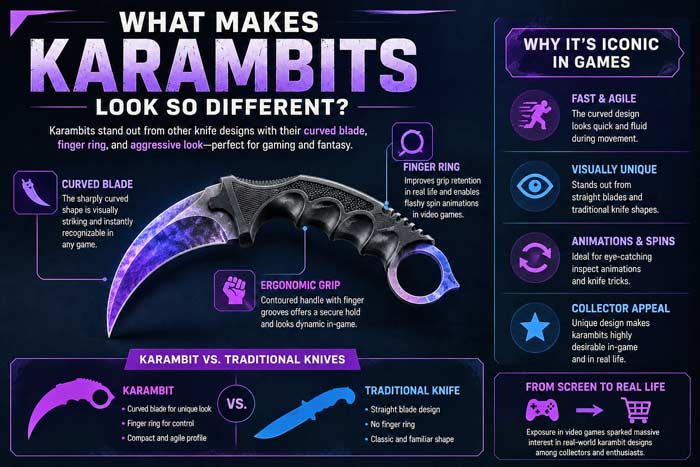
One reason karambits became so recognizable in video games is their unusual shape. Unlike a traditional straight blade, karambits use a deeply curved blade design paired with a finger ring at the end of the handle. That instantly gives them a more aggressive and futuristic appearance compared to standard pocket knives, especially when viewed in fast-paced first-person games where silhouettes and visual recognition matter a lot.
The curved design of many curved blade knives also creates a very distinct animation style in games. Developers quickly realized that karambits looked visually interesting during spins, inspections, movement animations, and fast directional changes. That made them stand out far more than standard straight-edged combat knives that often looked generic on screen.
Another reason karambits became visually iconic is the finger ring built into the handle. In real-world knife design, the ring can improve grip retention and control, but in video games it also created flashy spinning animations that became extremely popular with players. Some games turned those animations into part of the overall appeal, giving rare karambit skins even more attention within gaming communities.
Many gamers were also drawn to the compact shape and curved profile because it looked fast and agile compared to larger knife designs. Even though most video games simplify how knives actually function, the karambit's shape naturally gave it a sleek and highly stylized appearance that fit perfectly into competitive shooters and modern gaming aesthetics.
Over time, the visual popularity of karambits in games helped spark interest in real-world designs as well. Many collectors and enthusiasts who first saw karambits in gaming eventually became interested in owning real folding pocket knives or fixed versions inspired by the same curved style they had seen online for years.
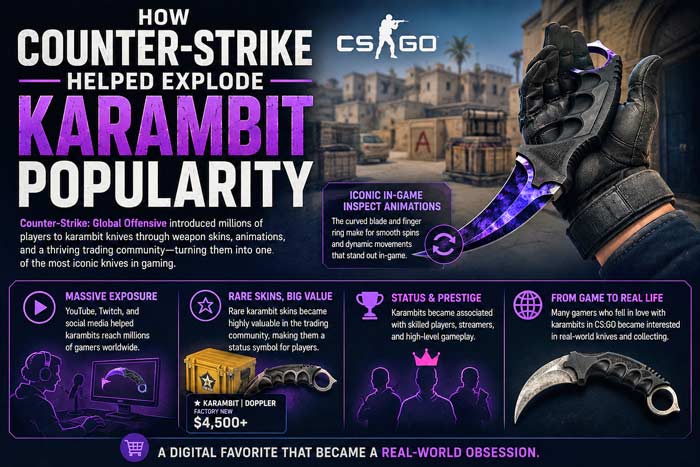
While karambits appeared in games before Counter-Strike, the design truly exploded in popularity after the release of weapon skins and custom knife animations in Counter-Strike: Global Offensive. The game introduced millions of players to highly stylized knife cosmetics, and the karambit quickly became one of the most recognizable and desirable designs in the entire game.
Part of the appeal came from the inspect animations and movement mechanics. The curved blade and finger ring allowed for flashy spins and fluid hand movements that looked far more dynamic than standard knife models. Players spent countless hours watching gameplay clips, skin showcases, and highlight videos where karambits became heavily associated with skilled or high-level players.
The rarity of certain cosmetic skins also helped fuel the obsession. Some digital karambit skins became extremely valuable within the trading community, with rare patterns and finishes selling for massive amounts of money. That collectible aspect turned karambits into status symbols within gaming culture, especially among competitive players and streamers.
As gaming content exploded on YouTube, Twitch, and social media, karambits gained even more visibility. Popular creators constantly featured them in gameplay clips, montages, and skin showcase videos, which helped reinforce the design as one of the most iconic knives in modern gaming. Even people who had never handled a real knife became familiar with the shape purely through gaming exposure.
That popularity eventually spilled into the real-world knife market as well. Many people who first encountered the design in games later became interested in owning real curved fixed blade designs or collectible versions inspired by the same visual style they had seen online for years.
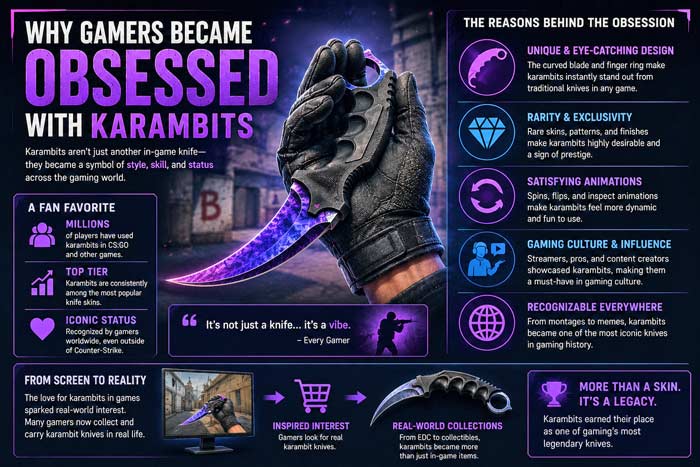
Part of the reason gamers became so attached to karambits is that they simply looked different from everything else on screen. In many first-person shooters, standard combat knives often had simple straight blade designs that blended together visually. Karambits immediately stood out because of their curved shape, spinning animations, and futuristic appearance.
Another major factor was rarity and exclusivity. In games that featured cosmetic skins and weapon customization, karambits were often some of the rarest and most expensive knife items available. That created a sense of prestige around owning one, especially when certain finishes or rare patterns became highly sought after within trading communities.
The movement animations also played a huge role in their popularity. Game developers often gave karambits unique inspect animations, quick spins, and flashy transitions that made them feel more interactive than standard knife designs. Players constantly showcased these animations in clips, montages, and livestreams, which helped reinforce the idea that karambits were the "cool" knives to own in-game.
Social media and streaming culture amplified that popularity even further. Once streamers, professional players, and content creators started regularly using karambits during gameplay, the design became associated with high-level play and gaming culture itself. Even players who never planned on collecting skins still recognized the karambit as one of the most iconic gaming knife designs ever created.
Over time, that digital popularity created real-world demand for similar designs. Many gaming fans eventually became interested in owning real everyday carry knife styles inspired by the same curved blades they had spent years seeing in competitive shooters and online gaming videos.
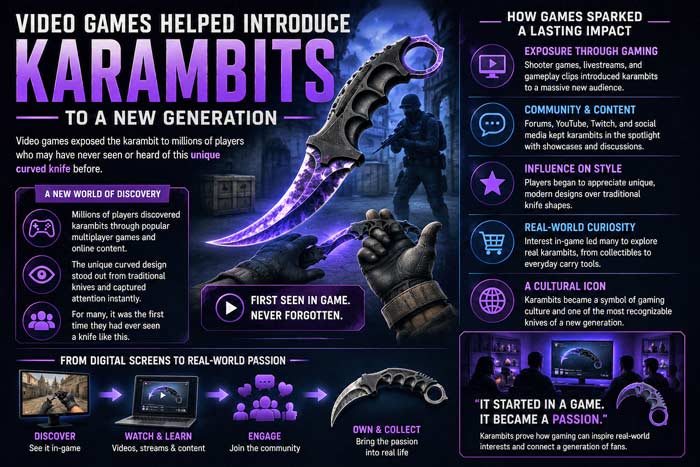
Before video games pushed karambits into mainstream gaming culture, many people outside of martial arts or knife collecting circles had never even heard of them. The unique curved design existed for decades, but games exposed the shape to millions of younger players who may have otherwise never encountered it. For a lot of people, their very first introduction to a karambit came through a multiplayer shooter, livestream, or online gameplay clip.
That exposure changed how many younger collectors viewed knives in general. Instead of only seeing traditional hunting knives or simple pocket folders, players started becoming interested in more visually unique designs with distinctive shapes and mechanics. Karambits stood out immediately because they looked fast, modern, and completely different from the standard knife silhouettes most people were used to seeing.
The internet helped accelerate that trend even further. Gaming forums, YouTube videos, Twitch streams, and social media clips constantly showcased spinning animations, cosmetic skins, and custom knife designs that kept karambits in front of players for years. Eventually, the knife became part of gaming culture itself rather than just another piece of equipment inside a game.
As interest grew, many players eventually became curious about the real-world versions behind the digital designs. Some people started collecting display pieces, while others became interested in everyday carry tools with similar styling and ergonomics. That crossover between gaming culture and real-world collecting helped expand interest in everything from modern blade designs to unique pocket carry options inspired by gaming aesthetics.
Even today, many people still associate karambits primarily with gaming because that is where they first encountered the design. Few knife styles have crossed over into pop culture as successfully as the karambit, especially among younger audiences who grew up watching competitive gaming and online content creators.
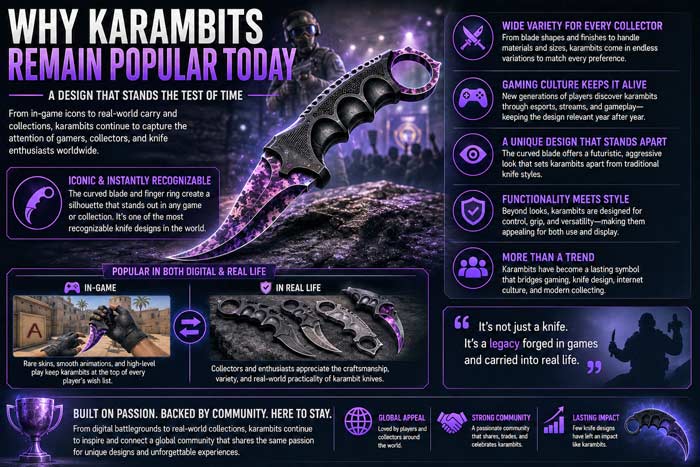
Even after years of gaming trends, streaming culture, and changing cosmetic systems, karambits have managed to stay popular in both gaming and real-world knife communities. Part of that comes from how visually recognizable they are. Very few knife designs have a silhouette that stands out as instantly as a karambit, especially when paired with the curved blade and finger ring combination that made the style famous online.
Collectors still enjoy karambits because there are so many variations available. Different blade finishes, handle materials, opening mechanisms, and overall sizes give enthusiasts a wide range of designs to explore. Some people prefer compact everyday carry versions, while others enjoy larger fixed styles designed more for collecting or display purposes.
Gaming culture also continues introducing new audiences to the design every year. New players constantly discover competitive shooters, livestreams, and gameplay clips where karambits remain heavily associated with rare skins, skilled players, and iconic animations. Even people who are not deeply involved in knife collecting often recognize the shape immediately because of how common it became within gaming culture.
Another reason karambits continue to hold attention is that the design feels different from traditional knife styles. Many modern finger ring blade designs still carry the same futuristic appearance that originally attracted gamers years ago. That unique visual identity helped karambits avoid fading away like many other gaming trends that disappeared over time.
At this point, karambits have become more than just gaming items or collector pieces. They represent a crossover between gaming culture, knife design, internet culture, and modern collecting. Very few knife styles have managed to leave that kind of lasting impact across multiple communities at the same time.
Very few knife designs have become as closely connected to gaming culture as the karambit. What started as a unique curved blade style eventually grew into one of the most recognizable digital knife designs in the world. Through competitive shooters, livestreams, highlight videos, and online trading communities, karambits evolved from niche knife designs into symbols of gaming culture itself.
Part of that success comes from how visually distinctive the design is. The curved blade, finger ring, and spinning animations immediately stand out on screen in a way that traditional knife designs often do not. That strong visual identity helped karambits remain memorable even as gaming trends and cosmetic systems continued changing over the years.
At the same time, gaming also introduced an entirely new audience to the broader world of knife collecting and everyday carry culture. Many players who first saw karambits in games eventually became interested in real-world pocket knife designs, collecting, and modern blade craftsmanship. Few gaming items have managed to create that kind of crossover between digital entertainment and real-world collecting communities.
Even today, karambits continue appearing in new games, social media clips, livestreams, and online content because the design still feels unique and recognizable. Whether someone views them as collectibles, gaming icons, or simply interesting knife designs, karambits have clearly earned a lasting place within both gaming history and modern knife culture.
What Makes Karambits Look So Different?
One reason karambits became so recognizable in video games is their unusual shape. Unlike a traditional straight blade, karambits use a deeply curved blade design paired with a finger ring at the end of the handle. That instantly gives them a more aggressive and futuristic appearance compared to standard pocket knives, especially when viewed in fast-paced first-person games where silhouettes and visual recognition matter a lot.
The curved design of many curved blade knives also creates a very distinct animation style in games. Developers quickly realized that karambits looked visually interesting during spins, inspections, movement animations, and fast directional changes. That made them stand out far more than standard straight-edged combat knives that often looked generic on screen.
Another reason karambits became visually iconic is the finger ring built into the handle. In real-world knife design, the ring can improve grip retention and control, but in video games it also created flashy spinning animations that became extremely popular with players. Some games turned those animations into part of the overall appeal, giving rare karambit skins even more attention within gaming communities.
Many gamers were also drawn to the compact shape and curved profile because it looked fast and agile compared to larger knife designs. Even though most video games simplify how knives actually function, the karambit's shape naturally gave it a sleek and highly stylized appearance that fit perfectly into competitive shooters and modern gaming aesthetics.
Over time, the visual popularity of karambits in games helped spark interest in real-world designs as well. Many collectors and enthusiasts who first saw karambits in gaming eventually became interested in owning real folding pocket knives or fixed versions inspired by the same curved style they had seen online for years.
How Counter-Strike Helped Explode Karambit Popularity
While karambits appeared in games before Counter-Strike, the design truly exploded in popularity after the release of weapon skins and custom knife animations in Counter-Strike: Global Offensive. The game introduced millions of players to highly stylized knife cosmetics, and the karambit quickly became one of the most recognizable and desirable designs in the entire game.
Part of the appeal came from the inspect animations and movement mechanics. The curved blade and finger ring allowed for flashy spins and fluid hand movements that looked far more dynamic than standard knife models. Players spent countless hours watching gameplay clips, skin showcases, and highlight videos where karambits became heavily associated with skilled or high-level players.
The rarity of certain cosmetic skins also helped fuel the obsession. Some digital karambit skins became extremely valuable within the trading community, with rare patterns and finishes selling for massive amounts of money. That collectible aspect turned karambits into status symbols within gaming culture, especially among competitive players and streamers.
As gaming content exploded on YouTube, Twitch, and social media, karambits gained even more visibility. Popular creators constantly featured them in gameplay clips, montages, and skin showcase videos, which helped reinforce the design as one of the most iconic knives in modern gaming. Even people who had never handled a real knife became familiar with the shape purely through gaming exposure.
That popularity eventually spilled into the real-world knife market as well. Many people who first encountered the design in games later became interested in owning real curved fixed blade designs or collectible versions inspired by the same visual style they had seen online for years.
Why Gamers Became Obsessed With Karambits
Part of the reason gamers became so attached to karambits is that they simply looked different from everything else on screen. In many first-person shooters, standard combat knives often had simple straight blade designs that blended together visually. Karambits immediately stood out because of their curved shape, spinning animations, and futuristic appearance.
Another major factor was rarity and exclusivity. In games that featured cosmetic skins and weapon customization, karambits were often some of the rarest and most expensive knife items available. That created a sense of prestige around owning one, especially when certain finishes or rare patterns became highly sought after within trading communities.
The movement animations also played a huge role in their popularity. Game developers often gave karambits unique inspect animations, quick spins, and flashy transitions that made them feel more interactive than standard knife designs. Players constantly showcased these animations in clips, montages, and livestreams, which helped reinforce the idea that karambits were the "cool" knives to own in-game.
Social media and streaming culture amplified that popularity even further. Once streamers, professional players, and content creators started regularly using karambits during gameplay, the design became associated with high-level play and gaming culture itself. Even players who never planned on collecting skins still recognized the karambit as one of the most iconic gaming knife designs ever created.
Over time, that digital popularity created real-world demand for similar designs. Many gaming fans eventually became interested in owning real everyday carry knife styles inspired by the same curved blades they had spent years seeing in competitive shooters and online gaming videos.
Video Games Helped Introduce Karambits to a New Generation
Before video games pushed karambits into mainstream gaming culture, many people outside of martial arts or knife collecting circles had never even heard of them. The unique curved design existed for decades, but games exposed the shape to millions of younger players who may have otherwise never encountered it. For a lot of people, their very first introduction to a karambit came through a multiplayer shooter, livestream, or online gameplay clip.
That exposure changed how many younger collectors viewed knives in general. Instead of only seeing traditional hunting knives or simple pocket folders, players started becoming interested in more visually unique designs with distinctive shapes and mechanics. Karambits stood out immediately because they looked fast, modern, and completely different from the standard knife silhouettes most people were used to seeing.
The internet helped accelerate that trend even further. Gaming forums, YouTube videos, Twitch streams, and social media clips constantly showcased spinning animations, cosmetic skins, and custom knife designs that kept karambits in front of players for years. Eventually, the knife became part of gaming culture itself rather than just another piece of equipment inside a game.
As interest grew, many players eventually became curious about the real-world versions behind the digital designs. Some people started collecting display pieces, while others became interested in everyday carry tools with similar styling and ergonomics. That crossover between gaming culture and real-world collecting helped expand interest in everything from modern blade designs to unique pocket carry options inspired by gaming aesthetics.
Even today, many people still associate karambits primarily with gaming because that is where they first encountered the design. Few knife styles have crossed over into pop culture as successfully as the karambit, especially among younger audiences who grew up watching competitive gaming and online content creators.
Why Karambits Remain Popular Today
Even after years of gaming trends, streaming culture, and changing cosmetic systems, karambits have managed to stay popular in both gaming and real-world knife communities. Part of that comes from how visually recognizable they are. Very few knife designs have a silhouette that stands out as instantly as a karambit, especially when paired with the curved blade and finger ring combination that made the style famous online.
Collectors still enjoy karambits because there are so many variations available. Different blade finishes, handle materials, opening mechanisms, and overall sizes give enthusiasts a wide range of designs to explore. Some people prefer compact everyday carry versions, while others enjoy larger fixed styles designed more for collecting or display purposes.
Gaming culture also continues introducing new audiences to the design every year. New players constantly discover competitive shooters, livestreams, and gameplay clips where karambits remain heavily associated with rare skins, skilled players, and iconic animations. Even people who are not deeply involved in knife collecting often recognize the shape immediately because of how common it became within gaming culture.
Another reason karambits continue to hold attention is that the design feels different from traditional knife styles. Many modern finger ring blade designs still carry the same futuristic appearance that originally attracted gamers years ago. That unique visual identity helped karambits avoid fading away like many other gaming trends that disappeared over time.
At this point, karambits have become more than just gaming items or collector pieces. They represent a crossover between gaming culture, knife design, internet culture, and modern collecting. Very few knife styles have managed to leave that kind of lasting impact across multiple communities at the same time.
Final Thoughts on Karambits and Gaming Culture
Very few knife designs have become as closely connected to gaming culture as the karambit. What started as a unique curved blade style eventually grew into one of the most recognizable digital knife designs in the world. Through competitive shooters, livestreams, highlight videos, and online trading communities, karambits evolved from niche knife designs into symbols of gaming culture itself.
Part of that success comes from how visually distinctive the design is. The curved blade, finger ring, and spinning animations immediately stand out on screen in a way that traditional knife designs often do not. That strong visual identity helped karambits remain memorable even as gaming trends and cosmetic systems continued changing over the years.
At the same time, gaming also introduced an entirely new audience to the broader world of knife collecting and everyday carry culture. Many players who first saw karambits in games eventually became interested in real-world pocket knife designs, collecting, and modern blade craftsmanship. Few gaming items have managed to create that kind of crossover between digital entertainment and real-world collecting communities.
Even today, karambits continue appearing in new games, social media clips, livestreams, and online content because the design still feels unique and recognizable. Whether someone views them as collectibles, gaming icons, or simply interesting knife designs, karambits have clearly earned a lasting place within both gaming history and modern knife culture.
You May Also Be Interested In:
- The Most Popular Military Knives of All Time
- Why Karambit Knives Are So Effective
- What Is a Stiletto Knife and Why Is It So Popular?
- Why Is the Karambit Knife Curved?
- 10 Things You Didn't Know About the Karambit Knife
- The History and Evolution of the Karambit Knife
- Karambit vs Push Dagger: Which Blade Would You Bet Your Life On?
- What Is a Karambit Knife? Beginner Guide to Karambits
- Why Automatic Knives Belong in Your EDC
- How Automatic Knives Actually Work
Leave a Reply