




How to Choose the Right Nunchaku for Your Skill Level
April 21st, 2026
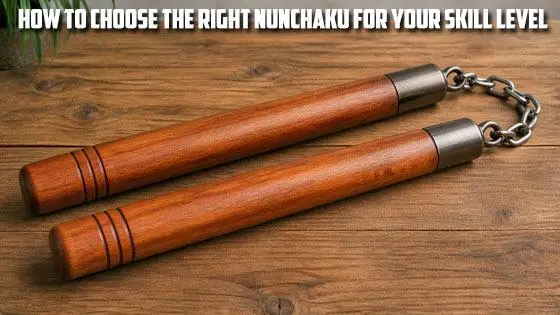
If you've ever tried shopping for nunchaku, you've probably noticed how many different options there are. Wood, foam, metal, chain, cord, long handles, short handles. It can get confusing fast, especially if you're not sure what actually matters. The truth is, the "best" nunchaku depends a lot on your experience level and how you plan to use them. A beginner practicing basic spins needs something very different from someone training for speed, control, or demonstrations. In this guide, we'll break down exactly what to look for so you can choose the right nunchucks without wasting time or money on the wrong pair.
Start With Your Experience Level
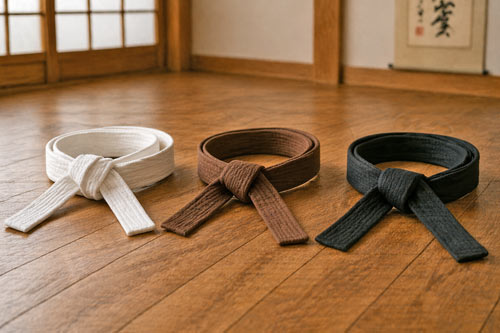
The biggest mistake people make when buying nunchaku is choosing a style that doesn't match their experience level. What works well for an advanced user can be frustrating or even unsafe for a beginner. Before you worry about materials, chain vs cord, or handle length, you need to be honest about where you're starting from.
If you're completely new to nunchucks, your focus should be on control and safety. Lightweight foam or padded nunchaku are usually the best place to start because they let you practice basic movements without worrying about painful mistakes. Even simple spins can take time to learn, and starting with something forgiving makes a huge difference in how quickly you improve.
For beginners who want something more traditional, a lighter wood set with a cord connection can also work well. Cord tends to move more smoothly and predictably than chain, which helps when you're learning timing and coordination. The goal at this stage isn't speed or power, it's building muscle memory and confidence with every movement.
Once you move into the intermediate level, you can start experimenting with different materials and connection types. This is where many people transition to chain nunchaku for faster spins and sharper control. Handle weight, balance, and grip start to matter more, especially if you're practicing combinations or working on precision techniques.
Advanced users usually know exactly what they prefer, whether that's heavier hardwood nunchaku for strength training or lighter, faster sets for demonstrations and freestyle movement. At this level, small differences in length, weight, and connection type can completely change how the nunchaku feel in your hands.
If you're not sure where you fall, it's usually smarter to start simpler and work your way up. You can always upgrade later, but starting with the wrong type can slow your progress and make training more frustrating than it needs to be.
Choose the Right Material for Your Training Style
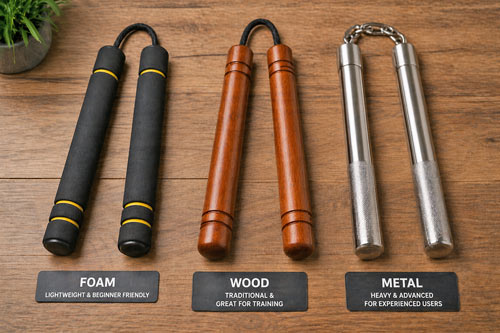
Once you've matched your nunchaku to your experience level, the next thing to look at is material. This is where a lot of people get tripped up, because different materials don't just change how nunchucks look, they completely change how they feel and perform during training.
Foam nunchaku are usually the best starting point for beginners, especially if you're practicing at home. They're lightweight, forgiving, and much less painful when you make mistakes, which you will. Foam sets are ideal for building coordination, learning basic spins, and getting comfortable with movement before moving on to something more solid.
Wooden nunchaku are the most traditional and widely used option. They offer a solid feel in your hands and provide better feedback when you're practicing control and technique. Hardwood options tend to be more durable and slightly heavier, which can help improve strength and precision over time. If you're serious about training, wood is usually the next step after foam.
Metal nunchaku are less common for training but are sometimes used for advanced practice or demonstrations. They are heavier and less forgiving, which means they require more control and experience to use safely. For most people, metal isn't necessary unless you specifically want that added weight or a different aesthetic.
There are also modern variations made from composite materials or plastic, which can offer a balance between durability and weight. These are often used in training environments where consistency and longevity matter, especially in schools or group settings.
If you're still unsure which direction to go, it's usually a safe bet to start simple and build from there. A basic foam or wood set will cover most training needs, and once you develop your preferences, you can always explore more specialized options. If you want to see a range of different styles and materials in one place, you can check out this selection of nunchaku to get a better idea of what's available.
Chain vs Cord: What Is the Difference?
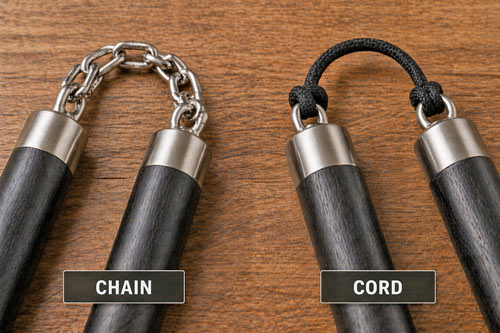
One of the most important decisions when choosing nunchaku is whether you want a chain or a cord connection. At first glance, it might seem like a small detail, but it has a big impact on how the nunchucks move, feel, and respond during training.
Cord nunchaku are often the better choice for beginners because they offer smoother, more controlled movement. The cord creates a slightly slower, more predictable swing, which makes it easier to learn timing and coordination. Many traditional martial artists also prefer cord for its classic feel and quieter operation during practice.
Chain nunchaku, on the other hand, are typically favored by intermediate and advanced users. The chain allows for faster rotation and sharper transitions between movements, which can improve speed and precision once you have good control. Bearings in the chain connection can also create a very fluid spinning motion, which is ideal for more advanced techniques and demonstrations.
Another difference is durability. Chain connections tend to last longer over time, especially with heavy use, since they are less likely to wear out or fray compared to cord. However, cord can be replaced if needed, and many practitioners appreciate the slightly softer feel it provides during training.
There is no universal "better" option here. It really comes down to your experience level and personal preference. If you're just starting out, cord will usually feel more forgiving. If you're looking for speed and responsiveness, chain is often the better fit. Many experienced users end up owning both so they can switch depending on how they're training.
Handle Length and Weight Matter More Than You Think
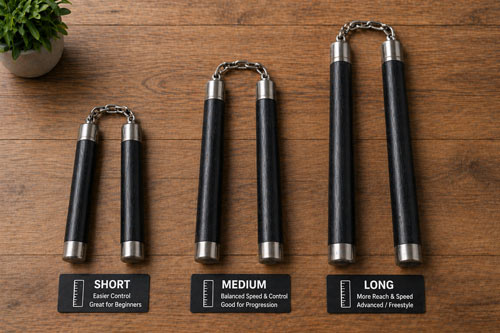
After choosing your material and connection type, the next thing to pay attention to is handle length and overall weight. These two factors have a huge impact on how your nunchaku feel during training, and they can either make your movements smoother or much harder than they need to be.
Shorter handles are generally easier to control, especially for beginners. They move a little slower and stay closer to your body, which makes it easier to learn basic techniques without feeling overwhelmed. If you're just starting out or focusing on control and accuracy, a slightly shorter set can make training more manageable.
Longer handles, on the other hand, create more reach and speed. As they swing, they generate more momentum, which can make spins look faster and more dynamic. This is one reason why more experienced users often prefer longer nunchucks, especially for demonstrations or freestyle practice. The tradeoff is that longer handles require better timing and coordination to control safely.
Weight also plays a big role. Lighter nunchaku are easier to handle and less tiring during longer practice sessions, which makes them a good choice for beginners or anyone focused on technique. Heavier sets can help build strength and control over time, but they require more precision and can be less forgiving if your timing is off.
Balance is just as important as size and weight. A well-balanced set of nunchaku will feel smooth and consistent as it moves, while a poorly balanced one can feel awkward or unpredictable. This is something you usually notice right away once you start practicing.
If you're unsure what size to choose, a common starting point is to look for handles that fit comfortably in your hand and match your forearm length. From there, you can adjust based on your training style and personal preference as you gain more experience.
What Nunchaku Should Beginners Start With?
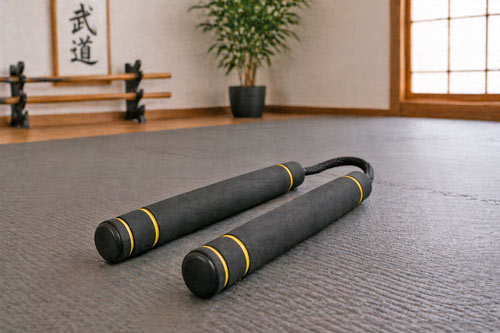
If you're just getting started, choosing the right nunchaku can make a huge difference in how quickly you improve and how much you actually enjoy training. The goal for beginners isn't speed or power, it's control, coordination, and building confidence with basic movements.
For most beginners, foam nunchaku are the safest and easiest option to start with. They're lightweight, padded, and much more forgiving when you make mistakes, which is part of the learning process. Practicing with foam lets you focus on technique without worrying about constant impact, especially when you're learning spins, passes, and transitions for the first time.
If you prefer something more traditional, a light wooden set with a cord connection is usually the next best choice. This gives you a more authentic feel while still being manageable for beginners. Cord helps slow things down slightly and makes the movement more predictable, which is ideal when you're still developing timing and control.
It's usually a good idea to avoid heavy or metal nunchaku when you're first starting out. While they may look appealing, they require a higher level of control and can make training more frustrating if you're still learning the basics. Starting with something too advanced often leads to slower progress and less confidence.
Another thing to consider is handle size. A moderate length that fits comfortably in your hand and matches your forearm is a good starting point. You don't need anything specialized right away, just something that feels balanced and easy to handle.
If you want a simple starting point, look for a foam or light wood set that's designed for training and practice. That will give you everything you need to build a solid foundation before moving on to more advanced options later.
Common Mistakes to Avoid When Buying Nunchaku
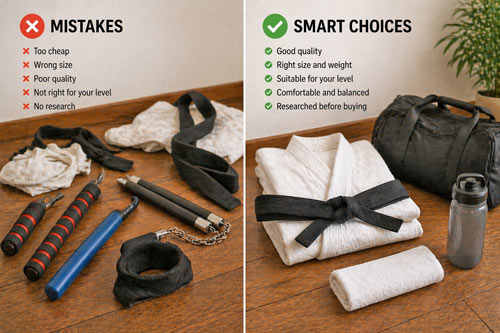
It's easy to assume that all nunchaku are basically the same, but small differences can have a big impact on how they feel and perform. A lot of beginners end up buying the wrong type simply because they don't know what to look for yet. Avoiding a few common mistakes can save you time, money, and frustration.
One of the most common mistakes is choosing nunchaku that are too advanced too soon. Heavy materials, long handles, or fast-spinning chain connections might seem appealing, but they can make learning much harder if you're still working on basic coordination. Starting with something simpler will help you progress faster and build confidence along the way.
Another mistake is focusing too much on appearance instead of functionality. Some nunchucks look impressive but aren't designed for actual training. Grip, balance, and control matter far more than how they look, especially when you're practicing regularly.
Ignoring handle size and weight is another issue that comes up often. If the handles are too long or too heavy for your current skill level, they can feel awkward and difficult to control. This can slow your progress and make training less enjoyable than it should be.
Many people also overlook the importance of the connection type. Choosing chain when you're not ready for faster movement, or cord when you want quicker response, can affect how comfortable the nunchaku feel in your hands. Matching the connection type to your skill level makes a noticeable difference.
Finally, some buyers skip over quality entirely and go for the cheapest option available. While it might save money upfront, poorly made nunchaku can feel unbalanced, wear out quickly, or just not perform well. A solid, well-made set will always be easier to train with and will last much longer.
Taking a few extra minutes to choose the right nunchaku from the start can make your training smoother and a lot more enjoyable. Avoid these common mistakes, and you'll set yourself up for much better progress.
Final Thoughts on Choosing the Right Nunchaku
Choosing the right nunchaku doesn't have to be complicated once you understand the key factors. Your experience level, material, connection type, handle length, and weight all work together to shape how the nunchucks feel and perform during training. When those elements are aligned with your skill level and goals, everything becomes easier and more enjoyable.
If you're just starting out, keep things simple. Focus on control, comfort, and consistency rather than speed or advanced features. As your skills improve, you can start experimenting with different styles and setups to find what feels best in your hands. Most experienced users go through a few different types before settling on their preferences.
The most important thing is to choose nunchaku that you'll actually want to train with. A well-matched set makes practice smoother, helps you build confidence, and keeps you motivated to keep improving. On the other hand, the wrong choice can slow your progress and make training feel frustrating.
If you're ready to find a set that fits your needs, take a look at this selection of nunchucks to compare different styles, materials, and designs in one place. Seeing your options side by side can make it much easier to choose something that matches your skill level and training goals.
With the right nunchaku in your hands, you'll be able to focus on what really matters; building skill, improving control, and enjoying the process of learning something new.
You May Also Be Interested In:
- What's so special about the Machined Aluminum Nunchaku?
- The Real History of Nunchaku: From Farm Tool to Hollywood Icon
- How to Choose the Best Self Defense Keychain for EDC
- Best EDC Flashlight: How to Choose the Right One for Daily Use
- How Stun Guns Work and How to Choose One
- Why Choose a Ribbed Grip Aluminum Escrima?
- Throwing Axes for Beginners: How to Choose, Throw & Improve
- Best EDC Knife: How to Choose the Right Everyday Carry Knife
Leave a Reply