




What Is a Slap Jack? A Guide to Blackjacks, Saps & Slappers
May 27th, 2026
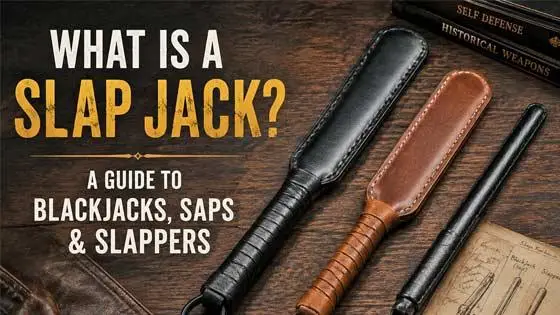
Slap jacks have been around for a long time, but most people today only know them from old crime movies, police stories, or the occasional history documentary. Depending on who you ask, you might also hear them called blackjacks, saps, or slappers, which can make the whole topic surprisingly confusing. While the names are sometimes used interchangeably, these tools have different designs, histories, and purposes that are worth understanding if you are curious about how they were traditionally used.
At first glance, a slap jack looks simple. Most are compact impact tools made from leather with a weighted end, designed to concentrate force in a relatively small area. Over time, different variations developed, from flexible slap jacks to heavier blackjacks and flat leather sap designs. The differences may seem minor, but they often changed how the tool handled and what situations it was originally intended for.
Today, interest in slap jacks comes from several different places. Some people enjoy the historical side of classic self defense gear, while others are collectors interested in traditional designs. Martial arts enthusiasts and self defense hobbyists also sometimes explore these tools as part of a broader interest in historical personal protection equipment.
In this guide, we will break down what a slap jack is, how it compares to blackjacks, saps, and slappers, where these tools came from, and why people are still interested in them today.
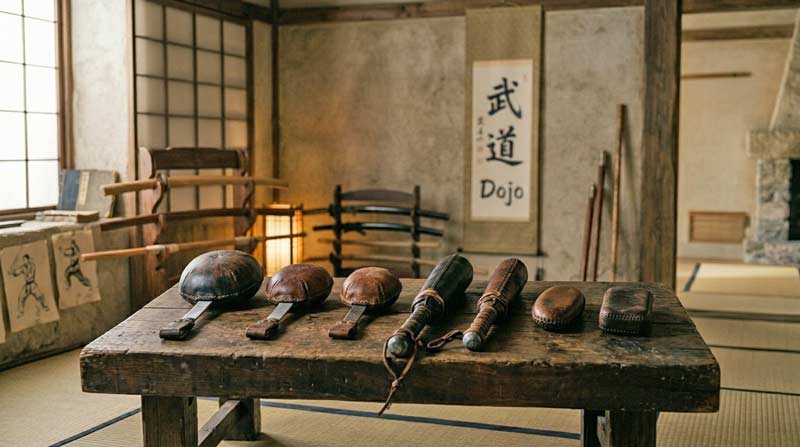
A slap jack is a compact impact tool that is traditionally made from leather and weighted at one end, usually with lead or another dense material hidden inside. Its design allows it to generate force through momentum rather than size, which is one reason these tools became well known throughout the late 1800s and early 1900s. While modern designs vary, most slap jacks still follow the same basic concept: a flexible handle connected to a weighted striking portion.
One thing that makes the topic confusing is that the term "slap jack" is often used interchangeably with blackjack, sap, and slapper, even though the designs are not always identical. In general, slap jacks tend to be more flexible, blackjacks are often stiffer and cylindrical, and saps are typically flatter with a broader striking surface. The differences may sound small, but they can change how each tool handles and why it was originally designed.
Historically, slap jacks became popular because they were compact, easy to carry, and simple to conceal compared to larger defensive tools. Versions of them were used by civilians, security personnel, and law enforcement in different eras, though popularity changed over time as training methods, equipment, and laws evolved.
If you are curious about the specific differences between these designs, our guide on slapjack vs blackjack differences takes a closer look at how blackjacks, saps, and slap jacks compare in shape, flexibility, and traditional use.
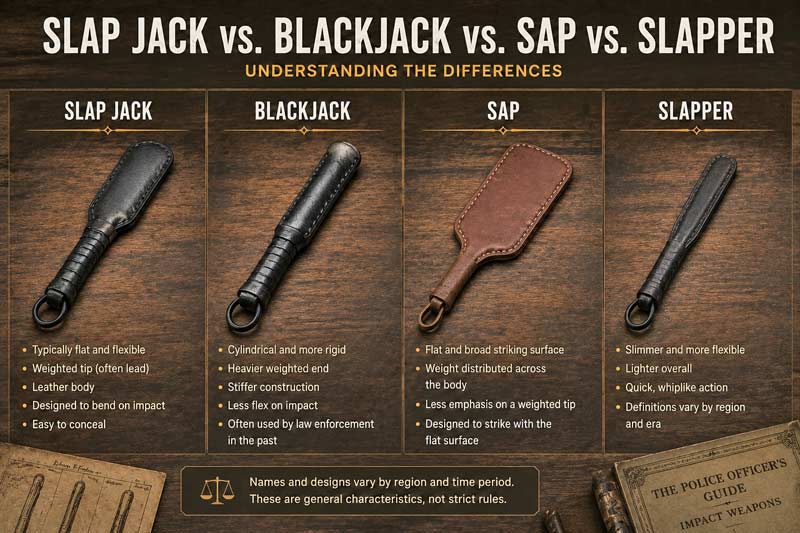
One reason people get confused about slap jacks is because the terminology overlaps quite a bit. Depending on the region, time period, or manufacturer, terms like slap jack, blackjack, sap, and slapper are sometimes used interchangeably, even though the tools often have noticeable differences in shape and flexibility. In casual conversation, someone might call almost any small weighted impact tool a "blackjack," while collectors and enthusiasts tend to be more specific.
A slap jack is usually more flexible and often has a flat leather body with a weighted striking end. A blackjack, on the other hand, is commonly stiffer and more cylindrical in shape, sometimes featuring a springy handle with a heavier weighted head. Saps tend to be flatter and broader, with a design that spreads weight differently across the striking surface. A slapper is often lighter and more flexible, though the exact definition can vary depending on who is using the term.
These differences may seem minor at first, but they changed how the tools handled and what situations they were traditionally associated with. Some designs focused more on portability, while others emphasized durability or control. Over time, manufacturers introduced countless variations, which only added to the naming confusion.
If you want a more detailed breakdown, our guide on the difference between a slap jack and blackjack takes a closer look at how these traditional designs compare side by side.
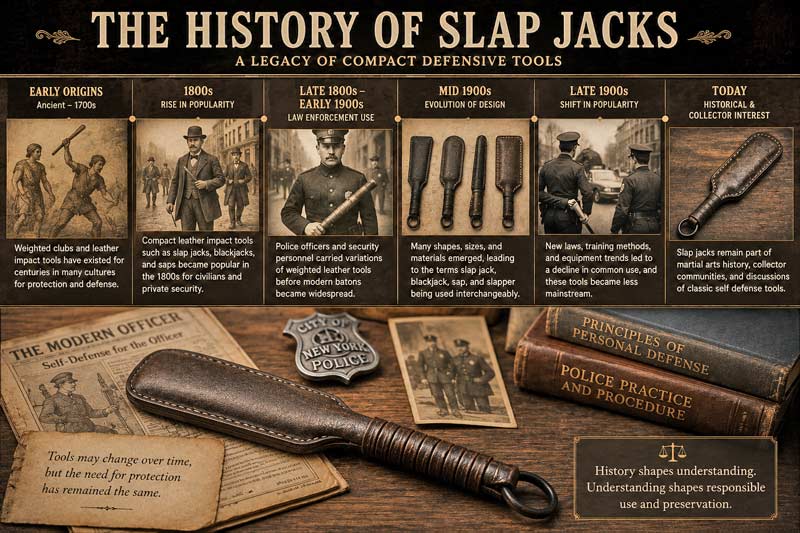
Slap jacks have a surprisingly long history and are part of a broader family of weighted impact tools that have existed in different forms for centuries. Early versions of weighted clubs, leather saps, and compact striking tools appeared in various cultures, but the slap jack and blackjack designs most people recognize today became especially common during the late 1800s and early 1900s. During that time, compact defensive tools became more popular because they were portable, easy to carry, and practical for close-range situations.
Historically, blackjacks and saps were sometimes carried by law enforcement, security personnel, and civilians who wanted a compact defensive option. In certain eras, police officers even carried variations of weighted leather impact tools before modern batons became more common. Over time, different shapes and materials developed, which helped create the naming confusion people still debate today between slap jacks, blackjacks, saps, and slappers.
As self defense tools evolved, popularity shifted toward newer options, and many traditional designs became more niche. Even so, slap jacks remained part of martial arts history, collector communities, and discussions around classic personal protection gear. Today, some people are still interested in traditional blackjack and sap tools because of their historical appeal, unique design, or connection to older self defense methods.
While the designs may look simple, slap jacks represent an interesting piece of self defense history. Their compact size, flexibility, and weighted construction helped them stand apart from many other defensive tools of their time, which is one reason people are still curious about them today.
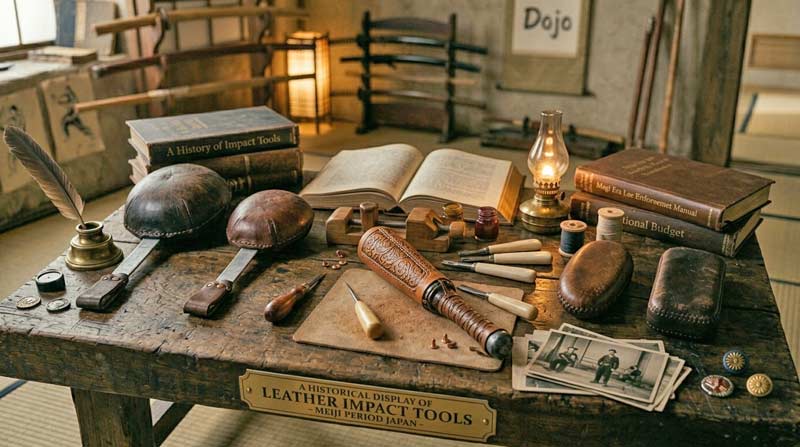
Historically, slap jacks, blackjacks, and saps were valued because they were compact, portable, and easy to carry compared to larger defensive tools. In earlier time periods, they were sometimes associated with private security, law enforcement, and civilians looking for a discreet personal protection option. Their small size made them easy to keep close at hand, which helped contribute to their popularity during certain eras.
Unlike larger impact tools, slap jacks were designed around flexibility and concentrated weight. Different designs emphasized different handling characteristics, which is part of why blackjacks, saps, and slappers evolved into slightly different shapes over time. Some styles focused on durability and rigidity, while others emphasized flexibility and portability.
Today, most interest in slap jacks tends to be historical, collectible, or educational. Some martial arts enthusiasts enjoy learning about traditional defensive tools as part of a broader interest in historical weapons and self defense history. Others simply appreciate the craftsmanship and old-school design of leather weighted tools that are not as commonly discussed anymore.
For people interested in exploring traditional designs, there are still modern versions and reproductions available, including different styles of leather saps and slap jacks inspired by historical models.
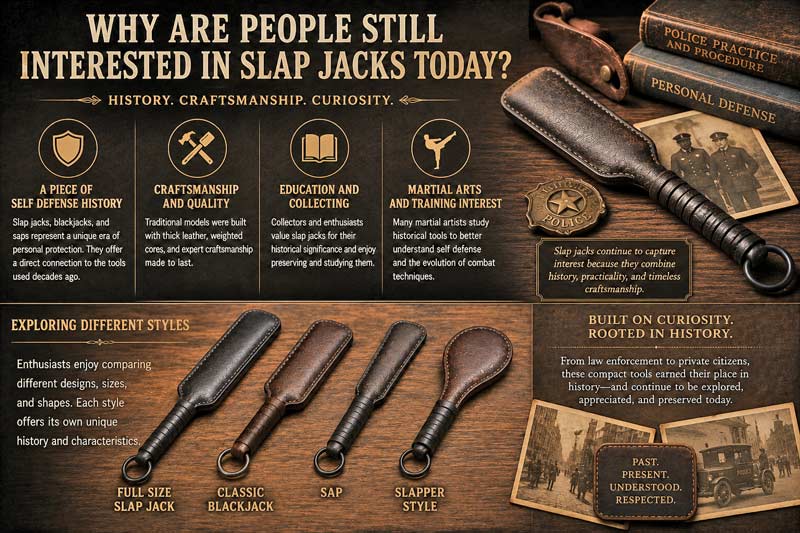
Even though slap jacks are often associated with earlier time periods, they still attract interest from collectors, martial arts enthusiasts, and people who enjoy learning about historical self defense tools. For some, the appeal comes from the craftsmanship. Traditional slap jacks, blackjacks, and saps often featured thick leather construction, weighted cores, and compact designs that feel very different from modern personal protection products.
Others are interested because slap jacks represent a unique piece of self defense history. Compared to flashlights, pepper spray, or other modern compact self defense options, slap jacks have a much more traditional feel and are often viewed through a historical or collectible lens. Their old-school reputation and distinctive look continue to make them a topic of curiosity for people exploring classic personal protection equipment.
Some enthusiasts also enjoy comparing the different styles and sizes available. Larger models, such as full-size slap jacks or traditional blackjack designs, often appeal to collectors who appreciate historical reproductions and craftsmanship. People exploring different styles may come across larger slap jack designs or classic weighted leather tools inspired by older patterns and materials.
At the same time, modern interest often overlaps with broader curiosity about historical defensive gear and martial arts tools. For many people, learning about slap jacks is simply another way to better understand the evolution of personal protection equipment and how different designs developed over time.
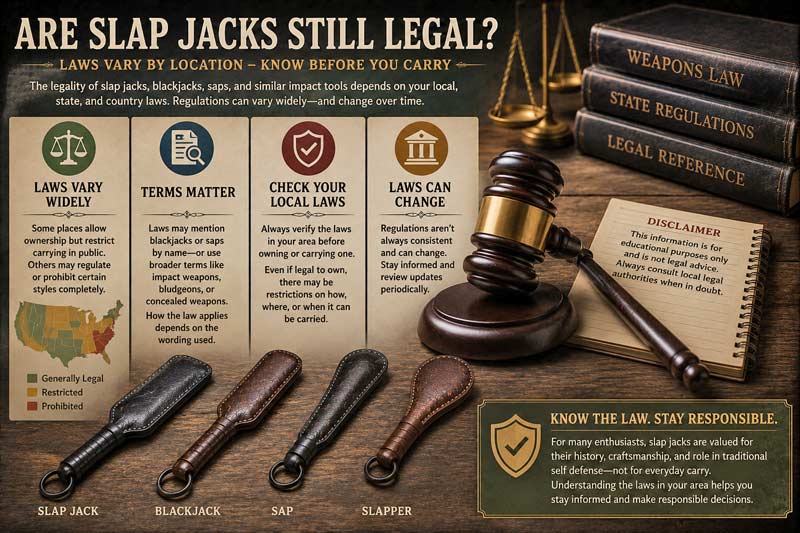
The legality of slap jacks, blackjacks, saps, and similar weighted impact tools depends heavily on where you live. In some states or countries, they may be legal to own but restricted when it comes to carrying them in public. In other places, certain styles may be regulated or prohibited altogether. Laws can also change over time, which makes this one of those topics that is not always straightforward.
Part of the confusion comes from terminology. Some laws specifically mention blackjacks or saps by name, while others use broader terms such as impact weapons, bludgeons, or concealed weapons. Because slap jacks, blackjacks, and slappers are closely related, how a law applies may depend on the wording used in your local regulations.
If you are interested in owning or carrying one, it is always a good idea to check your local and state laws before making assumptions. Even if a tool is legal to own, there may be restrictions on how or where it can be carried. Laws surrounding traditional defensive tools are not always consistent, which is one reason people researching historical gear often spend time learning about the legal side as well.
For many enthusiasts, interest in slap jacks is more about history, collecting, craftsmanship, or understanding traditional personal protection gear rather than everyday carry. Taking time to understand the laws in your area can help you make informed decisions and avoid unnecessary surprises.
Slap jacks, blackjacks, saps, and slappers are not as commonly discussed today as many modern personal protection tools, but they still hold a unique place in self defense history. For some people, the appeal comes from the craftsmanship and old-school design. Others are simply curious about how these compact weighted tools evolved and why they were used for so many years.
If your interest is mainly historical, slap jacks can be an interesting way to learn more about the evolution of compact defensive gear and how different designs developed over time. Comparing the shapes, flexibility, and construction of different models can give you a better appreciation for why terms like slap jack, blackjack, and sap are still debated today.
For collectors and enthusiasts interested in traditional designs, there are still modern reproductions and classic-inspired models available, including different styles of traditional leather impact tools. People exploring historical designs may also want to compare larger slap jack or blackjack styles to better understand how these tools changed over time.
At the end of the day, slap jacks remain interesting because they tell a story about the history of personal protection, craftsmanship, and changing self defense trends. Whether your interest comes from collecting, historical curiosity, or martial arts history, they continue to stand out as one of the more recognizable traditional defensive tools.
Not exactly, although the terms are often used interchangeably. A slap jack is usually more flexible and often has a flatter leather design with a weighted striking end. A blackjack is typically stiffer and more cylindrical, sometimes featuring a springy handle with a heavier weighted head. Over time, manufacturers created many variations, which is one reason the terminology became confusing.
In casual conversation, people often use "slap jack" and "blackjack" to describe the same type of compact weighted impact tool. Collectors, enthusiasts, and historians, however, are more likely to point out the subtle differences in construction, flexibility, and shape. If you want a deeper breakdown, it helps to compare the designs side by side since small details can make a big difference in how each tool is classified.
Most traditional slap jacks contain a dense weighted material hidden inside a leather outer shell. Historically, many were made with lead or another heavy metal placed near the striking end to add momentum and concentrated weight without making the tool overly large or bulky. The outside was often wrapped in thick leather, stitched together to hold its shape and improve durability.
Different designs used different construction methods. Some slap jacks had flexible leather bodies with a weighted tip, while others featured reinforced handles, springs, or flatter sap-style shapes that changed how the tool moved and handled. These design differences are part of why people sometimes debate the difference between slap jacks, blackjacks, saps, and slappers.
Modern reproductions and collector pieces may use different materials depending on the manufacturer, intended purpose, or local regulations. Some focus on recreating historical designs as closely as possible, while others are built more for display, collecting, or historical interest than traditional function.
Yes, certain types of blackjacks, saps, and similar weighted impact tools were historically used by some law enforcement agencies, particularly during the late 1800s and early to mid-1900s. Before expandable batons and modern defensive equipment became more common, compact leather impact tools were sometimes carried because they were portable and easy to keep on hand. Different departments used different equipment, so what an officer carried often depended on the location and time period.
That said, not every tool was identical, and terminology varied quite a bit. Some historical references mention blackjacks, while others refer to saps, slap jacks, or weighted leather impact tools more generally. Over time, equipment preferences shifted, and many agencies moved toward batons and other modern defensive tools instead.
Today, slap jacks are mostly associated with history, collectors, and discussions about classic personal protection equipment rather than modern law enforcement. Their connection to early policing is one reason many people still find them interesting from a historical perspective.
The exact origin of the term "blackjack" is debated, but most historians believe the name developed over time as different weighted impact tools became more common. In many cases, "blackjack" was used as a general term for a compact weighted striking tool, especially versions with a stiffer handle and heavier weighted head. As designs changed and regional language evolved, the terms slap jack, blackjack, sap, and slapper often started overlapping.
Some theories suggest the name may have come from early leather-covered designs that appeared dark or black in color, while others believe it evolved from slang used by law enforcement or security personnel during earlier eras. Since historical records were not always consistent, there is no single universally accepted explanation for where the term first appeared.
Part of the confusion today comes from the fact that many people still use "blackjack" as a catch-all term for several related tools, even when the designs are technically different. That is one reason collectors and enthusiasts often spend time comparing shapes, flexibility, and construction when discussing slap jacks, blackjacks, and saps.
In many cases, yes. Slap jacks are often grouped into the broader category of sap weapons because they share similar features, such as a weighted design, leather construction, and compact size. That said, not every sap weapon is technically a slap jack, and the terminology can vary depending on the design, manufacturer, or historical reference being used.
Generally speaking, saps tend to have a flatter, broader shape, while slap jacks are often more flexible with a distinct weighted striking end. Blackjacks are sometimes stiffer and more cylindrical. Even though there are technical differences, many people still use these names interchangeably, which is one reason the topic can get confusing for beginners.
Today, collectors and enthusiasts often use "sap weapons" as an umbrella term for several related styles, including slap jacks, blackjacks, and leather sap designs. Looking at the shape, flexibility, and construction of a tool is usually the easiest way to understand where it fits within the broader category.
The biggest difference between a sap and a blackjack usually comes down to shape, flexibility, and how the weight is distributed. A sap is generally flatter and broader, with a wider leather body that spreads weight across more surface area. A blackjack is often more compact and cylindrical, sometimes featuring a stiffer or springier handle with a concentrated weighted head.
Because of these design differences, the tools can feel noticeably different in the hand. Saps are often associated with flatter leather construction, while blackjacks tend to have a more rounded shape and slightly firmer structure. Slap jacks often fall somewhere in between, which is one reason people sometimes debate where one design ends and another begins.
Part of the confusion comes from history and changing terminology. Different manufacturers, regions, and time periods often used the names interchangeably, so what one person calls a blackjack, another might call a slap jack or sap. Looking at the shape and construction of the tool is usually the easiest way to understand the differences between them.
Yes, slap jacks, blackjacks, and sap-style tools have historically come in a variety of sizes and shapes. Some designs were made to be more compact and easier to carry, while others were larger with more length or weight. Differences in size often changed how flexible the tool felt and how the weight was distributed across the design.
Larger models often featured longer handles or heavier weighted ends, while smaller versions focused more on portability and compact storage. Traditional leather construction also varied quite a bit depending on the maker, which means two tools labeled as slap jacks could feel noticeably different in the hand even if they looked similar at first glance.
Today, collectors and enthusiasts interested in historical designs can still find different styles, from compact reproductions to larger traditional patterns inspired by older models. Comparing size, shape, and flexibility is often one of the easiest ways to understand how slap jacks, blackjacks, and saps evolved over time.
The term "slapper" is generally used to describe a lighter, more flexible version of a weighted leather impact tool, though definitions can vary depending on the time period and region. In some cases, people use "slapper" interchangeably with slap jack or sap, while others consider it a slightly different style with a softer, flatter design and more flexibility.
Part of the confusion comes from the fact that there was never one universal naming system for these tools. Different manufacturers, collectors, and historical sources often used different terms for designs that looked very similar. Over time, names like slap jack, blackjack, sap, and slapper started overlapping, which is why people still debate the differences today.
For many enthusiasts, the easiest way to tell them apart is by looking at the shape, stiffness, and weight distribution rather than focusing only on the name. A tool labeled as a slapper by one maker might look nearly identical to what someone else would call a slap jack or sap.
One thing that makes slap jacks stand out from many other traditional defensive tools is their flexibility. Unlike rigid batons or sticks, many slap jacks were designed with a soft leather body and a weighted striking end that allowed the tool to move differently during handling. This flexibility became one of the defining features that separated many slap jack styles from stiffer blackjacks or flatter sap designs.
Historically, different makers experimented with flexibility, weight placement, and shape to create tools with different handling characteristics. Some designs were softer and more flexible, while others were firmer with reinforced handles or thicker leather construction. These differences are one reason collectors and enthusiasts still spend time comparing slap jacks, blackjacks, saps, and slappers today.
For people learning about traditional weighted leather tools, flexibility is often one of the easiest characteristics to notice when comparing styles side by side. Looking at how the weight is distributed and how rigid or flexible the body feels can help explain why certain tools ended up with different names and classifications over time.
Today, interest in slap jacks comes from several different places. Some people enjoy the historical side of classic self defense gear, while others are collectors interested in traditional designs. Martial arts enthusiasts and self defense hobbyists also sometimes explore these tools as part of a broader interest in historical personal protection equipment.
In this guide, we will break down what a slap jack is, how it compares to blackjacks, saps, and slappers, where these tools came from, and why people are still interested in them today.
What Is a Slap Jack?
A slap jack is a compact impact tool that is traditionally made from leather and weighted at one end, usually with lead or another dense material hidden inside. Its design allows it to generate force through momentum rather than size, which is one reason these tools became well known throughout the late 1800s and early 1900s. While modern designs vary, most slap jacks still follow the same basic concept: a flexible handle connected to a weighted striking portion.
One thing that makes the topic confusing is that the term "slap jack" is often used interchangeably with blackjack, sap, and slapper, even though the designs are not always identical. In general, slap jacks tend to be more flexible, blackjacks are often stiffer and cylindrical, and saps are typically flatter with a broader striking surface. The differences may sound small, but they can change how each tool handles and why it was originally designed.
Historically, slap jacks became popular because they were compact, easy to carry, and simple to conceal compared to larger defensive tools. Versions of them were used by civilians, security personnel, and law enforcement in different eras, though popularity changed over time as training methods, equipment, and laws evolved.
If you are curious about the specific differences between these designs, our guide on slapjack vs blackjack differences takes a closer look at how blackjacks, saps, and slap jacks compare in shape, flexibility, and traditional use.
What's the Difference Between a Slap Jack, Blackjack, Sap & Slapper?
One reason people get confused about slap jacks is because the terminology overlaps quite a bit. Depending on the region, time period, or manufacturer, terms like slap jack, blackjack, sap, and slapper are sometimes used interchangeably, even though the tools often have noticeable differences in shape and flexibility. In casual conversation, someone might call almost any small weighted impact tool a "blackjack," while collectors and enthusiasts tend to be more specific.
A slap jack is usually more flexible and often has a flat leather body with a weighted striking end. A blackjack, on the other hand, is commonly stiffer and more cylindrical in shape, sometimes featuring a springy handle with a heavier weighted head. Saps tend to be flatter and broader, with a design that spreads weight differently across the striking surface. A slapper is often lighter and more flexible, though the exact definition can vary depending on who is using the term.
These differences may seem minor at first, but they changed how the tools handled and what situations they were traditionally associated with. Some designs focused more on portability, while others emphasized durability or control. Over time, manufacturers introduced countless variations, which only added to the naming confusion.
If you want a more detailed breakdown, our guide on the difference between a slap jack and blackjack takes a closer look at how these traditional designs compare side by side.
The History of Slap Jacks
Slap jacks have a surprisingly long history and are part of a broader family of weighted impact tools that have existed in different forms for centuries. Early versions of weighted clubs, leather saps, and compact striking tools appeared in various cultures, but the slap jack and blackjack designs most people recognize today became especially common during the late 1800s and early 1900s. During that time, compact defensive tools became more popular because they were portable, easy to carry, and practical for close-range situations.
Historically, blackjacks and saps were sometimes carried by law enforcement, security personnel, and civilians who wanted a compact defensive option. In certain eras, police officers even carried variations of weighted leather impact tools before modern batons became more common. Over time, different shapes and materials developed, which helped create the naming confusion people still debate today between slap jacks, blackjacks, saps, and slappers.
As self defense tools evolved, popularity shifted toward newer options, and many traditional designs became more niche. Even so, slap jacks remained part of martial arts history, collector communities, and discussions around classic personal protection gear. Today, some people are still interested in traditional blackjack and sap tools because of their historical appeal, unique design, or connection to older self defense methods.
While the designs may look simple, slap jacks represent an interesting piece of self defense history. Their compact size, flexibility, and weighted construction helped them stand apart from many other defensive tools of their time, which is one reason people are still curious about them today.
How Were Slap Jacks Traditionally Used?
Historically, slap jacks, blackjacks, and saps were valued because they were compact, portable, and easy to carry compared to larger defensive tools. In earlier time periods, they were sometimes associated with private security, law enforcement, and civilians looking for a discreet personal protection option. Their small size made them easy to keep close at hand, which helped contribute to their popularity during certain eras.
Unlike larger impact tools, slap jacks were designed around flexibility and concentrated weight. Different designs emphasized different handling characteristics, which is part of why blackjacks, saps, and slappers evolved into slightly different shapes over time. Some styles focused on durability and rigidity, while others emphasized flexibility and portability.
Today, most interest in slap jacks tends to be historical, collectible, or educational. Some martial arts enthusiasts enjoy learning about traditional defensive tools as part of a broader interest in historical weapons and self defense history. Others simply appreciate the craftsmanship and old-school design of leather weighted tools that are not as commonly discussed anymore.
For people interested in exploring traditional designs, there are still modern versions and reproductions available, including different styles of leather saps and slap jacks inspired by historical models.
Why Are People Still Interested in Slap Jacks Today?
Even though slap jacks are often associated with earlier time periods, they still attract interest from collectors, martial arts enthusiasts, and people who enjoy learning about historical self defense tools. For some, the appeal comes from the craftsmanship. Traditional slap jacks, blackjacks, and saps often featured thick leather construction, weighted cores, and compact designs that feel very different from modern personal protection products.
Others are interested because slap jacks represent a unique piece of self defense history. Compared to flashlights, pepper spray, or other modern compact self defense options, slap jacks have a much more traditional feel and are often viewed through a historical or collectible lens. Their old-school reputation and distinctive look continue to make them a topic of curiosity for people exploring classic personal protection equipment.
Some enthusiasts also enjoy comparing the different styles and sizes available. Larger models, such as full-size slap jacks or traditional blackjack designs, often appeal to collectors who appreciate historical reproductions and craftsmanship. People exploring different styles may come across larger slap jack designs or classic weighted leather tools inspired by older patterns and materials.
At the same time, modern interest often overlaps with broader curiosity about historical defensive gear and martial arts tools. For many people, learning about slap jacks is simply another way to better understand the evolution of personal protection equipment and how different designs developed over time.
Are Slap Jacks Still Legal?
The legality of slap jacks, blackjacks, saps, and similar weighted impact tools depends heavily on where you live. In some states or countries, they may be legal to own but restricted when it comes to carrying them in public. In other places, certain styles may be regulated or prohibited altogether. Laws can also change over time, which makes this one of those topics that is not always straightforward.
Part of the confusion comes from terminology. Some laws specifically mention blackjacks or saps by name, while others use broader terms such as impact weapons, bludgeons, or concealed weapons. Because slap jacks, blackjacks, and slappers are closely related, how a law applies may depend on the wording used in your local regulations.
If you are interested in owning or carrying one, it is always a good idea to check your local and state laws before making assumptions. Even if a tool is legal to own, there may be restrictions on how or where it can be carried. Laws surrounding traditional defensive tools are not always consistent, which is one reason people researching historical gear often spend time learning about the legal side as well.
For many enthusiasts, interest in slap jacks is more about history, collecting, craftsmanship, or understanding traditional personal protection gear rather than everyday carry. Taking time to understand the laws in your area can help you make informed decisions and avoid unnecessary surprises.
Is a Slap Jack Right for You?
Slap jacks, blackjacks, saps, and slappers are not as commonly discussed today as many modern personal protection tools, but they still hold a unique place in self defense history. For some people, the appeal comes from the craftsmanship and old-school design. Others are simply curious about how these compact weighted tools evolved and why they were used for so many years.
If your interest is mainly historical, slap jacks can be an interesting way to learn more about the evolution of compact defensive gear and how different designs developed over time. Comparing the shapes, flexibility, and construction of different models can give you a better appreciation for why terms like slap jack, blackjack, and sap are still debated today.
For collectors and enthusiasts interested in traditional designs, there are still modern reproductions and classic-inspired models available, including different styles of traditional leather impact tools. People exploring historical designs may also want to compare larger slap jack or blackjack styles to better understand how these tools changed over time.
At the end of the day, slap jacks remain interesting because they tell a story about the history of personal protection, craftsmanship, and changing self defense trends. Whether your interest comes from collecting, historical curiosity, or martial arts history, they continue to stand out as one of the more recognizable traditional defensive tools.
Are Slap Jacks and Blackjacks the Same Thing?
Not exactly, although the terms are often used interchangeably. A slap jack is usually more flexible and often has a flatter leather design with a weighted striking end. A blackjack is typically stiffer and more cylindrical, sometimes featuring a springy handle with a heavier weighted head. Over time, manufacturers created many variations, which is one reason the terminology became confusing.
In casual conversation, people often use "slap jack" and "blackjack" to describe the same type of compact weighted impact tool. Collectors, enthusiasts, and historians, however, are more likely to point out the subtle differences in construction, flexibility, and shape. If you want a deeper breakdown, it helps to compare the designs side by side since small details can make a big difference in how each tool is classified.
What Is Inside a Slap Jack?
Most traditional slap jacks contain a dense weighted material hidden inside a leather outer shell. Historically, many were made with lead or another heavy metal placed near the striking end to add momentum and concentrated weight without making the tool overly large or bulky. The outside was often wrapped in thick leather, stitched together to hold its shape and improve durability.
Different designs used different construction methods. Some slap jacks had flexible leather bodies with a weighted tip, while others featured reinforced handles, springs, or flatter sap-style shapes that changed how the tool moved and handled. These design differences are part of why people sometimes debate the difference between slap jacks, blackjacks, saps, and slappers.
Modern reproductions and collector pieces may use different materials depending on the manufacturer, intended purpose, or local regulations. Some focus on recreating historical designs as closely as possible, while others are built more for display, collecting, or historical interest than traditional function.
Were Slap Jacks Used by Police?
Yes, certain types of blackjacks, saps, and similar weighted impact tools were historically used by some law enforcement agencies, particularly during the late 1800s and early to mid-1900s. Before expandable batons and modern defensive equipment became more common, compact leather impact tools were sometimes carried because they were portable and easy to keep on hand. Different departments used different equipment, so what an officer carried often depended on the location and time period.
That said, not every tool was identical, and terminology varied quite a bit. Some historical references mention blackjacks, while others refer to saps, slap jacks, or weighted leather impact tools more generally. Over time, equipment preferences shifted, and many agencies moved toward batons and other modern defensive tools instead.
Today, slap jacks are mostly associated with history, collectors, and discussions about classic personal protection equipment rather than modern law enforcement. Their connection to early policing is one reason many people still find them interesting from a historical perspective.
Why Are Slap Jacks Called Blackjacks?
The exact origin of the term "blackjack" is debated, but most historians believe the name developed over time as different weighted impact tools became more common. In many cases, "blackjack" was used as a general term for a compact weighted striking tool, especially versions with a stiffer handle and heavier weighted head. As designs changed and regional language evolved, the terms slap jack, blackjack, sap, and slapper often started overlapping.
Some theories suggest the name may have come from early leather-covered designs that appeared dark or black in color, while others believe it evolved from slang used by law enforcement or security personnel during earlier eras. Since historical records were not always consistent, there is no single universally accepted explanation for where the term first appeared.
Part of the confusion today comes from the fact that many people still use "blackjack" as a catch-all term for several related tools, even when the designs are technically different. That is one reason collectors and enthusiasts often spend time comparing shapes, flexibility, and construction when discussing slap jacks, blackjacks, and saps.
Are Slap Jacks Considered Sap Weapons?
In many cases, yes. Slap jacks are often grouped into the broader category of sap weapons because they share similar features, such as a weighted design, leather construction, and compact size. That said, not every sap weapon is technically a slap jack, and the terminology can vary depending on the design, manufacturer, or historical reference being used.
Generally speaking, saps tend to have a flatter, broader shape, while slap jacks are often more flexible with a distinct weighted striking end. Blackjacks are sometimes stiffer and more cylindrical. Even though there are technical differences, many people still use these names interchangeably, which is one reason the topic can get confusing for beginners.
Today, collectors and enthusiasts often use "sap weapons" as an umbrella term for several related styles, including slap jacks, blackjacks, and leather sap designs. Looking at the shape, flexibility, and construction of a tool is usually the easiest way to understand where it fits within the broader category.
What Is the Difference Between a Sap and a Blackjack?
The biggest difference between a sap and a blackjack usually comes down to shape, flexibility, and how the weight is distributed. A sap is generally flatter and broader, with a wider leather body that spreads weight across more surface area. A blackjack is often more compact and cylindrical, sometimes featuring a stiffer or springier handle with a concentrated weighted head.
Because of these design differences, the tools can feel noticeably different in the hand. Saps are often associated with flatter leather construction, while blackjacks tend to have a more rounded shape and slightly firmer structure. Slap jacks often fall somewhere in between, which is one reason people sometimes debate where one design ends and another begins.
Part of the confusion comes from history and changing terminology. Different manufacturers, regions, and time periods often used the names interchangeably, so what one person calls a blackjack, another might call a slap jack or sap. Looking at the shape and construction of the tool is usually the easiest way to understand the differences between them.
Do Slap Jacks Come in Different Sizes?
Yes, slap jacks, blackjacks, and sap-style tools have historically come in a variety of sizes and shapes. Some designs were made to be more compact and easier to carry, while others were larger with more length or weight. Differences in size often changed how flexible the tool felt and how the weight was distributed across the design.
Larger models often featured longer handles or heavier weighted ends, while smaller versions focused more on portability and compact storage. Traditional leather construction also varied quite a bit depending on the maker, which means two tools labeled as slap jacks could feel noticeably different in the hand even if they looked similar at first glance.
Today, collectors and enthusiasts interested in historical designs can still find different styles, from compact reproductions to larger traditional patterns inspired by older models. Comparing size, shape, and flexibility is often one of the easiest ways to understand how slap jacks, blackjacks, and saps evolved over time.
Why Are Slap Jacks Sometimes Called Slappers?
The term "slapper" is generally used to describe a lighter, more flexible version of a weighted leather impact tool, though definitions can vary depending on the time period and region. In some cases, people use "slapper" interchangeably with slap jack or sap, while others consider it a slightly different style with a softer, flatter design and more flexibility.
Part of the confusion comes from the fact that there was never one universal naming system for these tools. Different manufacturers, collectors, and historical sources often used different terms for designs that looked very similar. Over time, names like slap jack, blackjack, sap, and slapper started overlapping, which is why people still debate the differences today.
For many enthusiasts, the easiest way to tell them apart is by looking at the shape, stiffness, and weight distribution rather than focusing only on the name. A tool labeled as a slapper by one maker might look nearly identical to what someone else would call a slap jack or sap.
Why Do Slap Jacks Have a Flexible Design?
One thing that makes slap jacks stand out from many other traditional defensive tools is their flexibility. Unlike rigid batons or sticks, many slap jacks were designed with a soft leather body and a weighted striking end that allowed the tool to move differently during handling. This flexibility became one of the defining features that separated many slap jack styles from stiffer blackjacks or flatter sap designs.
Historically, different makers experimented with flexibility, weight placement, and shape to create tools with different handling characteristics. Some designs were softer and more flexible, while others were firmer with reinforced handles or thicker leather construction. These differences are one reason collectors and enthusiasts still spend time comparing slap jacks, blackjacks, saps, and slappers today.
For people learning about traditional weighted leather tools, flexibility is often one of the easiest characteristics to notice when comparing styles side by side. Looking at how the weight is distributed and how rigid or flexible the body feels can help explain why certain tools ended up with different names and classifications over time.
You May Also Be Interested In:
- What Size Bo Staff Should You Use? A Beginner's Guide
- A Practical Guide to Modern Self-Defense Weapons
- Best Self Defense Weapons for Everyday Carry (EDC Guide)
- What Is EDC? A Complete Guide to Everyday Carry Gear
- What Is a Balisong? Beginner Guide to Butterfly Knives
- What Is a Karambit Knife? Beginner Guide to Karambits
- A Complete Guide to Nunchuck Types, Materials, and Styles
- A Visual Guide to Knife Blade Shapes and What They Were Designed For
- The Best Self Defense Blades: A Complete Guide to Discreet Protection
- What Is a Bo Staff? Beginner Guide to History, Sizes, and Training
Leave a Reply