




A Brief History of the Push Dagger: From Trench Warfare to Modern EDC
November 10th, 2025
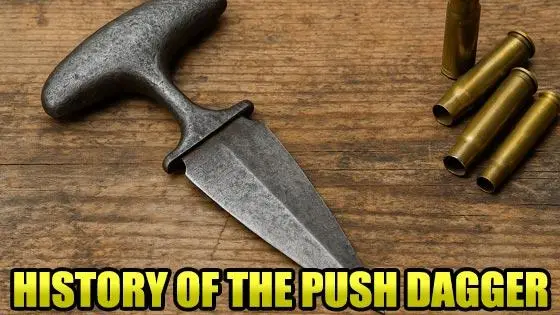
Few blades have a story as gritty and fascinating as the push dagger. Once a weapon of last resort in the muddy trenches of World War I, it has evolved into a compact, practical tool carried by modern self-defense enthusiasts and tactical gear users alike. With its distinctive T-shaped handle and short, double-edged blade, the push dagger has remained true to its roots while adapting to the changing needs of soldiers, civilians, and collectors over the decades. Today, this small but formidable knife stands as a reminder that the simplest designs often survive the longest, and for good reason.
Origins and Early Use of the Push Dagger
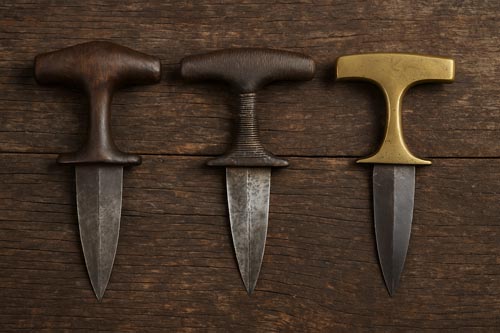
While the push dagger is most closely associated with trench warfare, its origins stretch back centuries before the 20th century. Early versions appeared in regions such as India and Southeast Asia, where compact, palm-held blades were used for self-defense and quick, concealed strikes. Some of these early designs shared traits with the modern push dagger, featuring short blades and handles that allowed the user to drive the weapon forward with the strength of a punch. These early prototypes were prized for their simplicity, effectiveness, and ease of concealment, setting the stage for the push dagger's eventual evolution into a purpose-built combat weapon.
In Europe and the United States during the 18th and 19th centuries, knife makers began experimenting with "T-handled" and "grip" daggers that could be easily carried in a pocket or sleeve. Sailors, gamblers, and frontiersmen favored them for their compact size and close-range effectiveness. Because the push dagger's handle sat flush in the palm, it allowed the user to strike without exposing their grip or losing control of the weapon. By the time the industrial era brought mass production of knives, the push dagger had become a recognizable style among craftsmen and fighters alike.
These early push daggers were not standardized, which led to a variety of creative designs. Some featured double-edged spear points, while others had single-edged blades that resembled miniature bayonets. Handles were often made of wood, bone, or brass, with sheaths that clipped to belts or boots for fast access. Even before the wars that made them famous, push daggers had already earned a reputation for being deceptively small yet deadly effective in skilled hands.
The Push Dagger in World War I and II
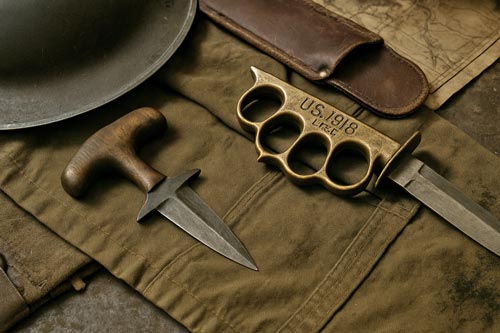
The push dagger reached the height of its notoriety during World War I, when trench warfare created brutal, close-quarters combat conditions. Soldiers needed compact weapons they could draw quickly in tight spaces, where rifles and bayonets were often too cumbersome. The push dagger's T-shaped handle and short, double-edged blade made it ideal for this environment. It could be concealed easily inside a sleeve or boot and drawn in an instant when enemies breached the trench line. These weapons were simple, durable, and deadly at arm's length, perfect for the chaos of nighttime raids or close defensive encounters.
Many trench knives of the era borrowed directly from the push dagger's design. Some models featured brass knuckle guards combined with short, thick blades, giving soldiers both a striking tool and a stabbing weapon in one. The famous U.S. M1918 trench knife, for example, carried clear influence from the push dagger concept, with its emphasis on control, force, and close combat efficiency. French and British soldiers also used locally made versions, often crafted by blacksmiths or modified from bayonets and utility blades.
By World War II, the design had evolved even further. Commandos, paratroopers, and special operations units carried compact knives that shared the same core geometry as the traditional push dagger. Though not all were labeled as such, their purpose was identical: quick, controlled thrusts in confined spaces where every inch of movement mattered. These wartime adaptations solidified the push dagger's place in modern combat history, ensuring its legacy as one of the most effective close-quarters blades ever created.
Postwar Adaptation and Civilian Use
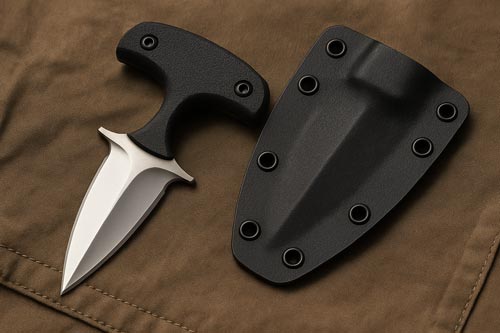
After the First and Second World Wars, the push dagger's reputation shifted from battlefield weapon to practical defensive tool. Returning soldiers often brought home trench knives and push daggers as souvenirs, and some began carrying them for personal protection. Knife makers recognized this demand and started producing civilian versions, often marketed as compact self-defense blades or utility knives for law enforcement and outdoorsmen. These postwar models retained the classic T-handle design but introduced modern manufacturing materials like Bakelite, micarta, and early polymers to improve comfort and durability.
During the mid-20th century, push daggers also gained traction in martial arts circles, especially as combat-focused systems began incorporating knife training into their curriculum. Practitioners of close-quarters combat, or CQC, valued the push dagger's ability to deliver powerful thrusts without requiring advanced knife-handling techniques. Law enforcement officers and undercover agents occasionally carried them as backup weapons due to their small profile and quick deployment from a boot or belt sheath.
By the 1980s and 1990s, the push dagger had fully re-emerged as part of the tactical knife market. Manufacturers like Cold Steel, Gerber, and SOG released new interpretations that blended military function with modern styling. Stainless steels replaced carbon steels, synthetic grips replaced wood, and molded sheaths allowed for secure belt or neck carry. While laws in some states limited how these knives could be carried, the design's compact efficiency continued to appeal to collectors, martial artists, and EDC enthusiasts alike. The push dagger's journey from wartime trenches to civilian markets demonstrated not just survival, but evolution, proof that a simple idea, executed well, can outlast generations of innovation.
The Push Dagger in Modern Tactical and EDC Culture
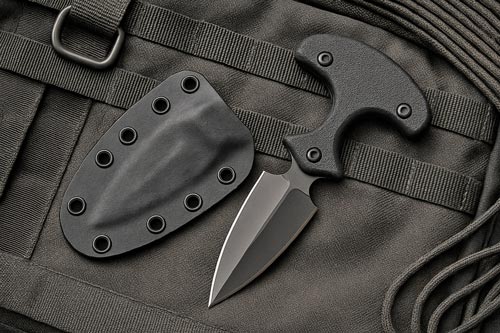
In today's tactical and everyday carry world, the push dagger has carved out a niche as both a defensive and utilitarian tool. Modern designs build on the same principles that made the weapon effective in the trenches: compactness, speed, and reliability in confined spaces. However, the materials and craftsmanship have advanced far beyond their wartime predecessors. High-performance stainless steels like AUS-8, 440C, and CPM-S35VN give today's push daggers superior edge retention and corrosion resistance, while ergonomic handles made from G10, micarta, and reinforced polymers ensure a secure grip even under stress. These innovations have transformed the classic push dagger into a modern self-defense and tactical accessory that fits neatly into the broader EDC movement.
Manufacturers now produce specialized models for specific needs. Some are designed for military or law enforcement personnel who require discreet backup blades, while others cater to civilians seeking compact tools for personal security or training. Many modern sheaths feature horizontal belt clips, MOLLE compatibility, or neck-carry options that allow the user to choose the ideal position for accessibility and concealment. Despite its aggressive look, the push dagger has become more refined over time, merging functionality with thoughtful design that emphasizes safety and control.
Within the EDC community, push daggers are often appreciated not only for their practicality but also for their history and aesthetic appeal. Enthusiasts admire how the design balances minimalism with effectiveness, representing over a century of refinement in defensive blade technology. Whether kept in a survival kit, worn as a discreet backup tool, or collected as a piece of history, the modern push dagger remains a symbol of precision, adaptability, and enduring craftsmanship.
Legal and Cultural Impact
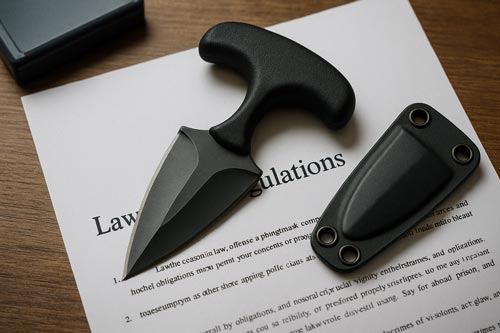
The push dagger's compact power has made it useful, but it has also made it controversial. Because of their ease of concealment and penetrating geometry, many jurisdictions treat push daggers more restrictively than standard folding knives. Some places ban double-edged blades outright, others limit overall blade length, and a few classify push-style grips as prohibited concealed weapons. That legal patchwork has influenced how manufacturers design and market these knives, with single-edged variants, trainer models, and non-sharpened replicas created to work within local rules.
Beyond regulations, the push dagger occupies an interesting cultural space. Collectors prize authentic trench knives and early push dagger designs for their history and craftsmanship. Martial artists appreciate the role these knives play in close-quarters training, often using blunted trainers to practice draw and retention techniques safely. Within the broader EDC community, opinions vary. Some users value the push dagger for its minimalism and decisive function. Others favor more versatile blade shapes for everyday tasks. That diversity of use has helped the design persist while also shaping how it is discussed in forums, blogs, and training circles.
Responsible ownership matters. If you carry or collect push daggers, learn the laws where you live and where you travel, and store or transport blades in a way that complies with local rules. If you plan to train with them, use certified trainers and work with experienced instructors to reduce risk. When approached with respect for safety and legality, the push dagger can be understood as both a piece of history and a practical tool that reflects the needs and values of its users.
From Trenches to Your Pocket: Why the Push Dagger Still Matters
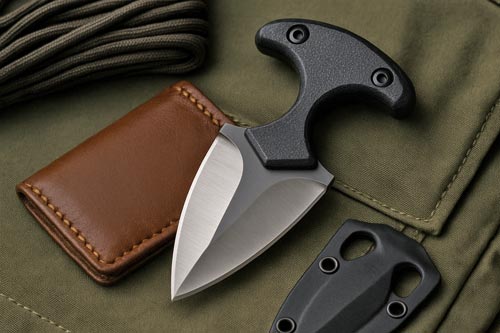
The push dagger's journey from battlefield utility to modern EDC item shows how simple, effective ideas endure. Its core strengths remain the same: compactness, immediate striking alignment with the hand, and easy concealment. Whether you appreciate the design for its history, collect vintage trench knives, or carry a modern model for personal security, the push dagger represents a long line of practical problem solving in edged tools.
If you are curious to learn more or to see current models, check the full selection of push daggers at Kombativ.com. For those considering ownership, prioritize training, safe storage, and legal familiarity before carrying. Trainers and blunted practice knives are useful for building confidence with draws and retention drills, and a qualified instructor can show you safe, realistic drills that build muscle memory without unnecessary risk.
You May Also Be Interested In:
- What Is a Push Dagger? History, Design, and Modern Uses
- Karambit vs Push Dagger: Which Blade Would You Bet Your Life On?
- The Real History of Escrima Sticks: From Battlefield Weapon to Modern Martial Art
- Military Trench Cleaver and Other Dangerous Weapons
- A Practical Guide to Modern Self-Defense Weapons
- Modern Combat Khopesh and Other Deadly Weapons!
- The Evolution of the Shuriken: From Samurai to Modern Martial Arts
- The Deadliest Throwing Knives for Modern Combat! Knife Testing and Review
- The History and Evolution of the Karambit Knife
- History and Evolution of Self-Defense Keychains
Leave a Reply