




Concealed and Hidden Knives for Self-Defense
-
 🔍︎ QUICK VIEW
$28.95
🔍︎ QUICK VIEW
$28.95 -
 🔍︎ QUICK VIEW
$12.95
🔍︎ QUICK VIEW
$12.95 -
 🔍︎ QUICK VIEW
-
 🔍︎ QUICK VIEW
$39.95
🔍︎ QUICK VIEW
$39.95 -
 🔍︎ QUICK VIEW
-
 🔍︎ QUICK VIEW
$84.95
🔍︎ QUICK VIEW
$84.95 -
 🔍︎ QUICK VIEW
$39.95
🔍︎ QUICK VIEW
$39.95 -
 🔍︎ QUICK VIEW
$13.95
🔍︎ QUICK VIEW
$13.95 -
 🔍︎ QUICK VIEW
$11.95
🔍︎ QUICK VIEW
$11.95 -
 🔍︎ QUICK VIEW
$9.95
🔍︎ QUICK VIEW
$9.95 -
 🔍︎ QUICK VIEW
$32.95
🔍︎ QUICK VIEW
$32.95 -
 🔍︎ QUICK VIEW
$12.95
🔍︎ QUICK VIEW
$12.95 -
 🔍︎ QUICK VIEW
$52.95
🔍︎ QUICK VIEW
$52.95 -
 🔍︎ QUICK VIEW
$12.95
🔍︎ QUICK VIEW
$12.95 -
 🔍︎ QUICK VIEW
-
 🔍︎ QUICK VIEW
$32.95
🔍︎ QUICK VIEW
$32.95 -
 🔍︎ QUICK VIEW
$34.95
🔍︎ QUICK VIEW
$34.95 -
 🔍︎ QUICK VIEW
$12.95
🔍︎ QUICK VIEW
$12.95 -
 🔍︎ QUICK VIEW
$74.95
🔍︎ QUICK VIEW
$74.95 -
 🔍︎ QUICK VIEW
$34.95
🔍︎ QUICK VIEW
$34.95 -
 🔍︎ QUICK VIEW
$18.95
🔍︎ QUICK VIEW
$18.95 -
 🔍︎ QUICK VIEW
$13.95
🔍︎ QUICK VIEW
$13.95 -
 🔍︎ QUICK VIEW
$14.95
🔍︎ QUICK VIEW
$14.95 -
 🔍︎ QUICK VIEW
$14.95
🔍︎ QUICK VIEW
$14.95 -
 🔍︎ QUICK VIEW
$22.95
🔍︎ QUICK VIEW
$22.95 -
 🔍︎ QUICK VIEW
$14.95
🔍︎ QUICK VIEW
$14.95 -
 🔍︎ QUICK VIEW
$13.95
🔍︎ QUICK VIEW
$13.95 -
 🔍︎ QUICK VIEW
$21.95
🔍︎ QUICK VIEW
$21.95 -
 🔍︎ QUICK VIEW
$14.95
🔍︎ QUICK VIEW
$14.95 -
 🔍︎ QUICK VIEW
$19.95
🔍︎ QUICK VIEW
$19.95 -
 🔍︎ QUICK VIEW
$18.95
🔍︎ QUICK VIEW
$18.95 -
 🔍︎ QUICK VIEW
-
 🔍︎ QUICK VIEW
$20.95
🔍︎ QUICK VIEW
$20.95 -
 🔍︎ QUICK VIEW
$32.95
🔍︎ QUICK VIEW
$32.95 -
 🔍︎ QUICK VIEW
$17.95
🔍︎ QUICK VIEW
$17.95 -
 🔍︎ QUICK VIEW
-
 🔍︎ QUICK VIEW
$14.95
🔍︎ QUICK VIEW
$14.95 -
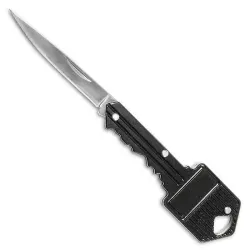 🔍︎ QUICK VIEW
$9.95
🔍︎ QUICK VIEW
$9.95
 (2)
(2)Concealed and Hidden Knives for Self-Defense
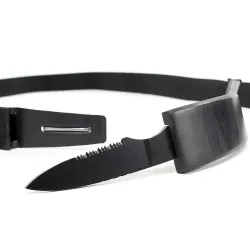
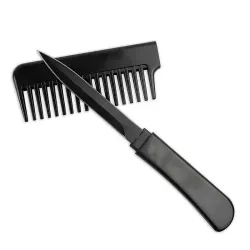
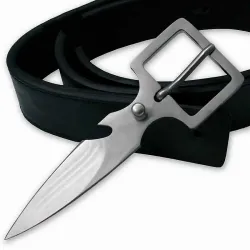
A concealed knife is one of the most discreet and effective tools for personal protection, providing a sense of security in uncertain situations. These knives are designed with stealth in mind, hidden within everyday objects like pens, combs, or belt buckles, making them nearly undetectable to the untrained eye. Whether you're looking for a hidden blade for self-defense or simply want the peace of mind that comes with having a discreet tool on hand, concealable knives offer a perfect balance of practicality and security.
Concealed knives are particularly valued for their compact size and ability to blend seamlessly into your daily carry. Unlike larger, more obvious weapons like fixed-blade knives or stun guns, hidden knives are small, lightweight, and easy to carry without attracting attention. Their covert nature ensures that you can be prepared for emergencies without feeling burdened by an oversized weapon. This makes them a popular choice for those who prioritize subtlety and convenience in their self-defense gear.
Hidden knives are designed for quick and efficient deployment when the need arises. Their unique disguises allow you to carry them with confidence, knowing you can access them in a moment's notice, yet without broadcasting your intentions. Whether you need a hidden knife to protect yourself on the go or to add an extra layer of security to your EDC (Everyday Carry) setup, these tools provide you with an edge in high-stakes situations. The element of surprise is a powerful defense, and concealed knives deliver that in a package that won't arouse suspicion.
What makes hidden knives even more appealing is their versatility. They come in many different forms to suit various needs, from sleek combs to functional pens, ensuring that you can find one that fits your lifestyle. Additionally, many of these disguised knives are crafted with high-quality materials, ensuring durability and sharpness when you need them most. With a hidden knife, you can rest assured that you are prepared for any scenario, without compromising on comfort or convenience.
Whether you're a first-time buyer or an experienced collector of self-defense tools, a hidden knife is a valuable addition to your everyday carry kit. Offering both practicality and stealth, these knives are perfect for those who want to be prepared but don't want to advertise their defensive measures. At Kombativ.com, we offer an excellent selection of concealed knives that combine design, function, and effectiveness, giving you a range of options to choose from for your self-defense needs.
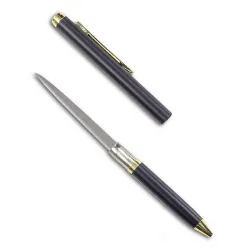
A hidden knife is designed to disguise its true function by taking the form of an everyday object. Instead of looking like a traditional blade, it may appear to be a pen, comb, belt buckle, credit card, keychain, or small tool. To anyone else, it looks ordinary. Only the person carrying it knows that it contains a cutting edge inside.
A regular knife is honest in its design. Whether it is a folding pocket knife or a fixed blade, its purpose is obvious the moment you see it. Hidden knives work on the opposite principle. Their value comes from discretion. They allow someone to carry a blade without signaling that they are armed, which can be important in environments where overt knives feel impractical or draw unwanted attention.
Another key difference is deployment. A standard knife is already in its usable form or opens with a familiar motion. A hidden knife often requires a specific action such as pulling apart, sliding, or twisting to reveal the blade. That extra step is part of the tradeoff. In exchange for concealment, the user accepts a slightly slower or more deliberate draw. For many people, that balance between subtlety and capability is exactly what makes hidden knives appealing.
Hidden knives are often regulated more strictly than standard pocket knives because their defining feature is disguise. Many laws treat a blade hidden inside an everyday object differently than a knife that is clearly a knife. Items such as pen knives, belt buckle knives, or comb knives may fall under statutes that address concealed or disguised weapons rather than ordinary cutlery.
In some areas, these knives are legal to own but restricted from public carry. In others, certain designs may be prohibited outright. A small folding knife clipped in a pocket is commonly allowed, while a blade hidden inside a pen or credit card may not be. The reasoning behind these rules is that disguised weapons can bypass normal visibility and screening, which raises legal concerns in public spaces.
Because knife laws vary widely by state, city, and country, it is always the buyer's responsibility to understand what is permitted in their location. Hidden knives should be approached with an informed mindset. They can be useful tools, but only when owned and carried in a way that complies with local regulations. Taking the time to check your laws ensures that discretion does not come at the cost of legality.
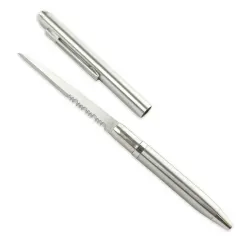
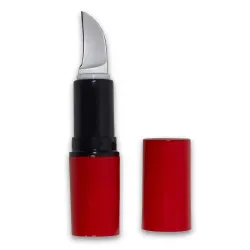
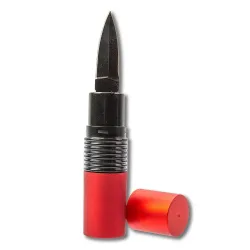
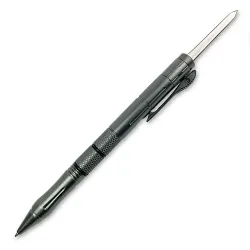
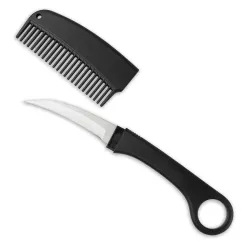
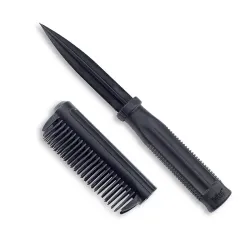
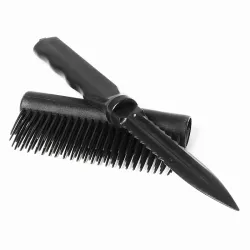
Hidden knives come in many forms, but they all share the same core idea: a functional blade concealed inside something that looks ordinary. Some of the most popular styles include pen knives that appear to be writing instruments, comb knives that separate into a hidden blade, and belt buckle knives that hide a slim edge behind a familiar accessory. These designs are favored because they blend seamlessly into everyday carry items.
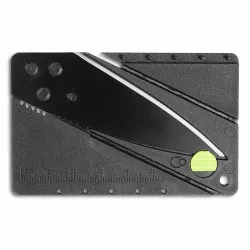
Other common styles include credit card knives that fold out from a wallet-sized profile, keychain knives that disguise themselves as small tools, and neck-worn designs that look like simple pendants or tags. Each style offers a different balance of concealment, accessibility, and blade length. Smaller designs prioritize subtlety, while larger concealed tools provide more usable cutting surface once deployed.
The variety exists because people carry differently. Some prefer something that lives in a pocket. Others want an option that stays on a belt or around the neck. Hidden knives are built to fit into those routines without standing out. Understanding the common styles helps users choose a design that matches how and where they actually carry their gear.
A hidden knife can serve a defensive role, but it is best understood as a last-resort tool rather than a primary means of protection. Because these knives are disguised, they require an extra step to deploy, and that can matter in a high-stress situation. They are not designed for fast, repeated use in the same way as a dedicated defensive blade or baton. Their strength lies in discretion, not speed.
In a true self-defense scenario, any object used must meet the standard of necessity and proportional response. A concealed blade does not change that legal or ethical reality. It is only justified when there is an immediate and unlawful threat. The fact that the knife is hidden can actually draw more scrutiny after an incident, making it especially important that its use be clearly defensive in nature.
For many people, hidden knives are carried as backup tools. They offer peace of mind in situations where open carry is impractical or uncomfortable. When approached responsibly, they can provide a layer of personal security. The key is understanding their limitations and treating them as emergency options rather than everyday problem-solvers.
Even in places where hidden knives are legal to own, there are many environments where carrying them is restricted or outright prohibited. Airports, courthouses, government buildings, schools, and event venues with security screening almost always ban concealed blades of any kind. Because hidden knives are designed to disguise their true purpose, they are typically treated more strictly than ordinary tools when discovered in these spaces.
Air travel is one of the clearest examples. Hidden knives are not allowed in carry-on luggage, and many designs are restricted even in checked bags depending on local and international regulations. What may be lawful to keep at home can quickly become a serious problem when brought into a secured area. The same applies to workplaces or buildings that post "no weapons" policies, regardless of whether the item looks harmless on the outside.
The safest assumption is that a hidden knife is not welcome anywhere with active security or posted restrictions. Responsible ownership means knowing when and where these tools can be carried and when they must be left behind. Understanding those boundaries helps prevent accidental violations and ensures concealed tools remain a matter of personal preparedness rather than legal risk.
An everyday carry folding knife is designed to look like a knife. Even when it is closed, its shape, clip, and construction make its purpose obvious. It may be carried discreetly in a pocket, but there is no attempt to disguise what it is. That visibility is part of why most knife laws are written around blade length, locking mechanisms, and carry style rather than concealment of purpose.
A hidden knife is different because it is meant to appear as something else entirely. A pen, comb, card, or accessory becomes the housing for a blade. To anyone observing, it looks harmless and ordinary. Only the person carrying it knows that it contains a knife. That intentional disguise is what defines the category and is also what often brings additional legal scrutiny.
In practical terms, an EDC folding knife is about convenience and utility. It is easy to deploy, easy to recognize, and commonly used for everyday tasks. A hidden knife is about discretion and backup. It trades some speed and openness for subtlety. Understanding that distinction helps users decide whether they want a visible, task-oriented tool or a concealed option designed primarily for emergency use.
Why People Choose Concealed Knives
Concealed knives are particularly valued for their compact size and ability to blend seamlessly into your daily carry. Unlike larger, more obvious weapons like fixed-blade knives or stun guns, hidden knives are small, lightweight, and easy to carry without attracting attention. Their covert nature ensures that you can be prepared for emergencies without feeling burdened by an oversized weapon. This makes them a popular choice for those who prioritize subtlety and convenience in their self-defense gear.
Quick Access When It Matters
Hidden knives are designed for quick and efficient deployment when the need arises. Their unique disguises allow you to carry them with confidence, knowing you can access them in a moment's notice, yet without broadcasting your intentions. Whether you need a hidden knife to protect yourself on the go or to add an extra layer of security to your EDC (Everyday Carry) setup, these tools provide you with an edge in high-stakes situations. The element of surprise is a powerful defense, and concealed knives deliver that in a package that won't arouse suspicion.
Versatility in Everyday Carry
What makes hidden knives even more appealing is their versatility. They come in many different forms to suit various needs, from sleek combs to functional pens, ensuring that you can find one that fits your lifestyle. Additionally, many of these disguised knives are crafted with high-quality materials, ensuring durability and sharpness when you need them most. With a hidden knife, you can rest assured that you are prepared for any scenario, without compromising on comfort or convenience.
A Smart Addition to Your EDC
Whether you're a first-time buyer or an experienced collector of self-defense tools, a hidden knife is a valuable addition to your everyday carry kit. Offering both practicality and stealth, these knives are perfect for those who want to be prepared but don't want to advertise their defensive measures. At Kombativ.com, we offer an excellent selection of concealed knives that combine design, function, and effectiveness, giving you a range of options to choose from for your self-defense needs.
What Is a Hidden Knife and How Is It Different from a Regular Knife?
A hidden knife is designed to disguise its true function by taking the form of an everyday object. Instead of looking like a traditional blade, it may appear to be a pen, comb, belt buckle, credit card, keychain, or small tool. To anyone else, it looks ordinary. Only the person carrying it knows that it contains a cutting edge inside.
A regular knife is honest in its design. Whether it is a folding pocket knife or a fixed blade, its purpose is obvious the moment you see it. Hidden knives work on the opposite principle. Their value comes from discretion. They allow someone to carry a blade without signaling that they are armed, which can be important in environments where overt knives feel impractical or draw unwanted attention.
Another key difference is deployment. A standard knife is already in its usable form or opens with a familiar motion. A hidden knife often requires a specific action such as pulling apart, sliding, or twisting to reveal the blade. That extra step is part of the tradeoff. In exchange for concealment, the user accepts a slightly slower or more deliberate draw. For many people, that balance between subtlety and capability is exactly what makes hidden knives appealing.
Are Hidden Knives Legal to Own and Carry?
Hidden knives are often regulated more strictly than standard pocket knives because their defining feature is disguise. Many laws treat a blade hidden inside an everyday object differently than a knife that is clearly a knife. Items such as pen knives, belt buckle knives, or comb knives may fall under statutes that address concealed or disguised weapons rather than ordinary cutlery.
In some areas, these knives are legal to own but restricted from public carry. In others, certain designs may be prohibited outright. A small folding knife clipped in a pocket is commonly allowed, while a blade hidden inside a pen or credit card may not be. The reasoning behind these rules is that disguised weapons can bypass normal visibility and screening, which raises legal concerns in public spaces.
Because knife laws vary widely by state, city, and country, it is always the buyer's responsibility to understand what is permitted in their location. Hidden knives should be approached with an informed mindset. They can be useful tools, but only when owned and carried in a way that complies with local regulations. Taking the time to check your laws ensures that discretion does not come at the cost of legality.
What Types of Hidden Knives Are Most Common?
Hidden knives come in many forms, but they all share the same core idea: a functional blade concealed inside something that looks ordinary. Some of the most popular styles include pen knives that appear to be writing instruments, comb knives that separate into a hidden blade, and belt buckle knives that hide a slim edge behind a familiar accessory. These designs are favored because they blend seamlessly into everyday carry items.
Other common styles include credit card knives that fold out from a wallet-sized profile, keychain knives that disguise themselves as small tools, and neck-worn designs that look like simple pendants or tags. Each style offers a different balance of concealment, accessibility, and blade length. Smaller designs prioritize subtlety, while larger concealed tools provide more usable cutting surface once deployed.
The variety exists because people carry differently. Some prefer something that lives in a pocket. Others want an option that stays on a belt or around the neck. Hidden knives are built to fit into those routines without standing out. Understanding the common styles helps users choose a design that matches how and where they actually carry their gear.
Can a Hidden Knife Be Used for Self-Defense?
A hidden knife can serve a defensive role, but it is best understood as a last-resort tool rather than a primary means of protection. Because these knives are disguised, they require an extra step to deploy, and that can matter in a high-stress situation. They are not designed for fast, repeated use in the same way as a dedicated defensive blade or baton. Their strength lies in discretion, not speed.
In a true self-defense scenario, any object used must meet the standard of necessity and proportional response. A concealed blade does not change that legal or ethical reality. It is only justified when there is an immediate and unlawful threat. The fact that the knife is hidden can actually draw more scrutiny after an incident, making it especially important that its use be clearly defensive in nature.
For many people, hidden knives are carried as backup tools. They offer peace of mind in situations where open carry is impractical or uncomfortable. When approached responsibly, they can provide a layer of personal security. The key is understanding their limitations and treating them as emergency options rather than everyday problem-solvers.
Where Is It Legal to Carry a Hidden Knife, and Where Is It Not?
Even in places where hidden knives are legal to own, there are many environments where carrying them is restricted or outright prohibited. Airports, courthouses, government buildings, schools, and event venues with security screening almost always ban concealed blades of any kind. Because hidden knives are designed to disguise their true purpose, they are typically treated more strictly than ordinary tools when discovered in these spaces.
Air travel is one of the clearest examples. Hidden knives are not allowed in carry-on luggage, and many designs are restricted even in checked bags depending on local and international regulations. What may be lawful to keep at home can quickly become a serious problem when brought into a secured area. The same applies to workplaces or buildings that post "no weapons" policies, regardless of whether the item looks harmless on the outside.
The safest assumption is that a hidden knife is not welcome anywhere with active security or posted restrictions. Responsible ownership means knowing when and where these tools can be carried and when they must be left behind. Understanding those boundaries helps prevent accidental violations and ensures concealed tools remain a matter of personal preparedness rather than legal risk.
What's the Difference Between a Hidden Knife and an EDC Folding Knife?
An everyday carry folding knife is designed to look like a knife. Even when it is closed, its shape, clip, and construction make its purpose obvious. It may be carried discreetly in a pocket, but there is no attempt to disguise what it is. That visibility is part of why most knife laws are written around blade length, locking mechanisms, and carry style rather than concealment of purpose.
A hidden knife is different because it is meant to appear as something else entirely. A pen, comb, card, or accessory becomes the housing for a blade. To anyone observing, it looks harmless and ordinary. Only the person carrying it knows that it contains a knife. That intentional disguise is what defines the category and is also what often brings additional legal scrutiny.
In practical terms, an EDC folding knife is about convenience and utility. It is easy to deploy, easy to recognize, and commonly used for everyday tasks. A hidden knife is about discretion and backup. It trades some speed and openness for subtlety. Understanding that distinction helps users decide whether they want a visible, task-oriented tool or a concealed option designed primarily for emergency use.
RECENTLY VIEWED