




What Makes a Good Self Defense Weapon? Key Things to Consider
May 29th, 2026
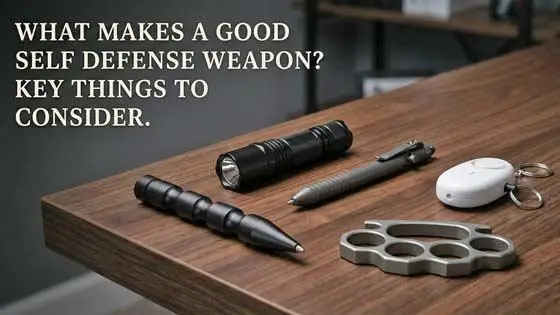
Choosing a self defense weapon is not always as simple as picking the biggest or most intimidating option. What works well for one person may feel completely impractical for someone else, especially when factors like comfort, portability, confidence, and everyday use come into play. Some people prefer compact tools they can easily carry, while others prioritize reach, simplicity, or ease of access during stressful situations. The truth is, a "good" self defense weapon usually comes down to how realistic it is for someone to carry consistently and feel comfortable using responsibly.
In this guide, we'll break down the key things that make a self defense tool practical, what features people often overlook, and why personal preference matters more than trends when deciding what type of protection makes the most sense for everyday life.
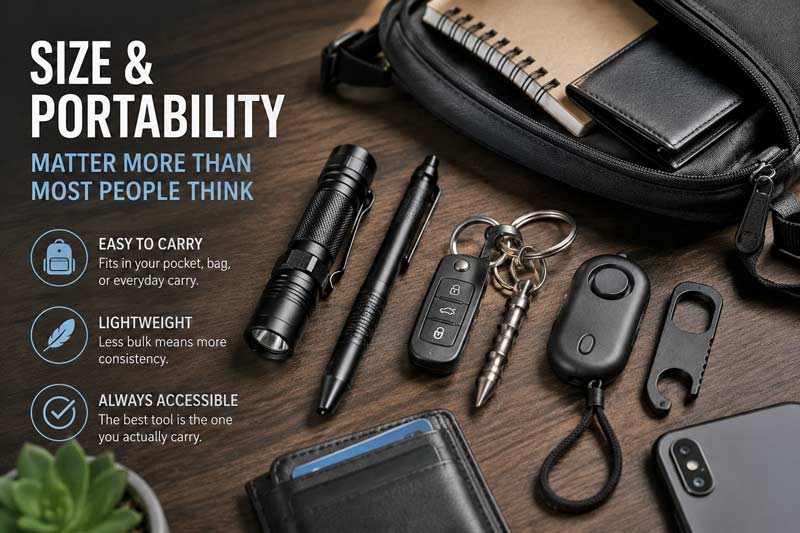
One of the biggest things people overlook when choosing a self defense tool is how realistic it is to carry every day. A product may seem impressive in theory, but if it feels bulky, uncomfortable, or inconvenient, there is a good chance it ends up sitting at home instead of actually being carried. For many people, consistency matters more than size alone.
That is why compact options tend to be popular. Smaller tools are easier to keep in a pocket, purse, backpack, or vehicle without becoming a hassle. Some people prefer simple everyday carry items that blend naturally into their routine, while others are comfortable carrying something slightly larger if they feel it offers advantages in accessibility or confidence.
Portability also comes down to personal comfort. A tool that feels practical for one person may feel awkward for someone else depending on lifestyle, clothing, storage space, or daily habits. Many people spend time comparing different personal protection options before deciding what feels realistic enough to carry consistently rather than leave behind.
At the end of the day, a good self defense tool is not just about what looks effective. It should feel practical enough to become part of everyday life, because something left at home is not much help when it is actually needed.
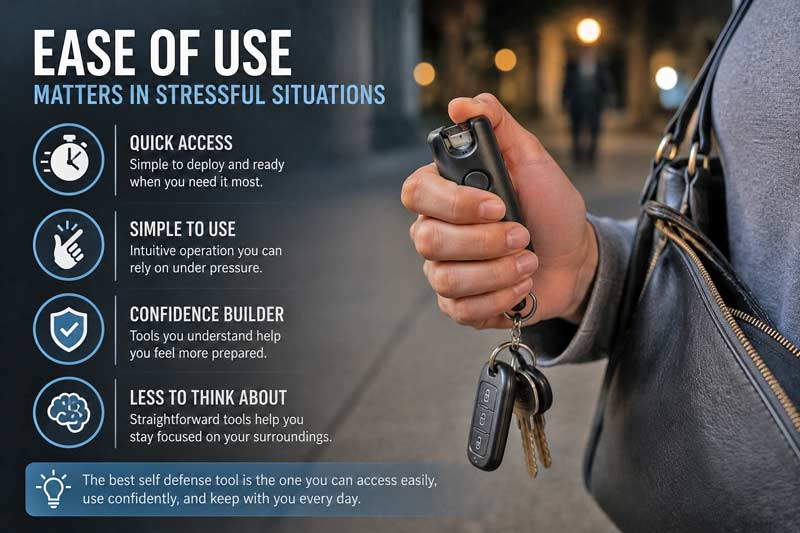
When people think about self defense tools, they often focus on power or appearance first. What gets overlooked is how simple something feels to use when stress levels are high. In a difficult moment, complicated gear or tools that require multiple steps may not feel as practical as something straightforward and familiar.
That is one reason many people prefer simple, compact tools they can access quickly and understand easily. Some prefer products with minimal moving parts, while others value something that feels intuitive enough to carry with confidence. The easier something feels to access and understand, the more likely someone may feel comfortable carrying it regularly.
Personal preference matters here too. A tool that feels easy and natural for one person may feel awkward or inconvenient to someone else depending on experience, confidence, or daily habits. Many people compare different compact carry tools before deciding what feels realistic enough to become part of an everyday routine.
At the end of the day, a good self defense option should not feel overly complicated or intimidating. The best tool is often the one someone understands well, feels comfortable carrying, and can realistically see themselves keeping close when it matters most.
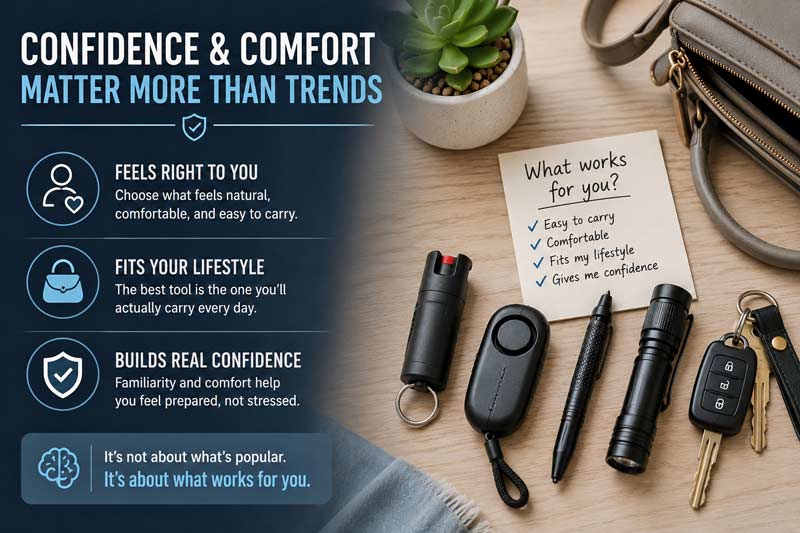
It is easy to get caught up in what is popular or what someone online says is the "best" self defense tool, but confidence and comfort usually matter much more in the real world. A product might look impressive in a video or review, but if it feels awkward, uncomfortable, or unrealistic to carry every day, there is a good chance it will end up forgotten at home.
That is why many people gravitate toward tools that simply feel natural to them. Some prefer something compact and discreet that fits easily into a pocket or bag, while others feel more comfortable carrying something slightly larger if it gives them added peace of mind. There is no universal answer, because comfort levels, daily routines, and personal preferences vary from person to person.
Confidence also comes from familiarity. Many people feel better carrying something they understand well and can easily access without overthinking. For that reason, some people spend time comparing different personal safety products or browsing compact daily carry tools to see what feels like the best fit for their lifestyle.
At the end of the day, the "best" option is often the one someone feels comfortable carrying consistently and believes realistically fits into everyday life. Personal confidence matters far more than chasing trends or what works for somebody else.
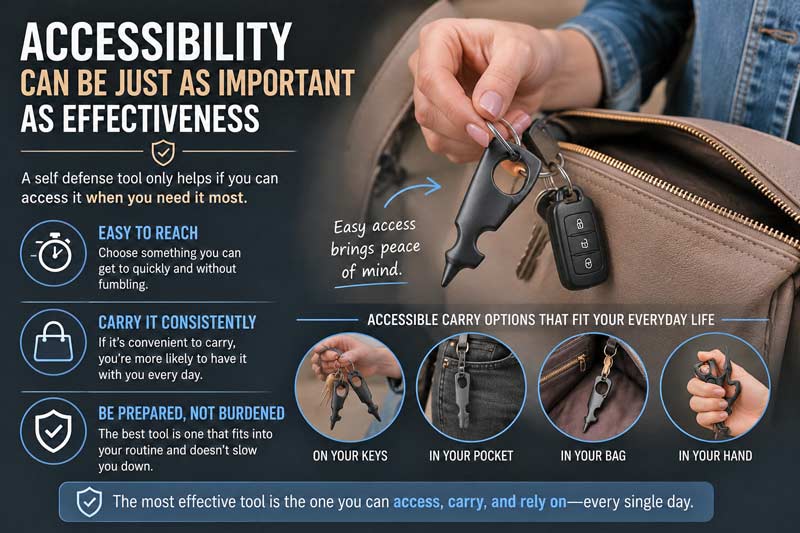
A self defense tool only helps if someone can realistically access it when needed. That sounds obvious, but it is something many people overlook when choosing what to carry. A product may seem effective in theory, but if it is buried at the bottom of a bag, difficult to reach quickly, or inconvenient to carry regularly, it may not feel practical in everyday life.
That is one reason people often think carefully about where and how something fits into a routine. Some prefer compact items that stay clipped to a pocket or keychain, while others are comfortable carrying something slightly larger if it feels easier to access. Convenience matters more than people sometimes realize, especially when consistency is the goal.
For people who prefer smaller, easier-to-access carry options, compact keychain safety tools can feel like a practical choice because they stay attached to items people already carry every day. Others may prefer different styles of compact protection depending on comfort level and routine.
At the end of the day, accessibility matters just as much as effectiveness. A product that feels realistic to carry consistently and easy to reach when needed is often more practical than something that feels inconvenient or gets left behind.
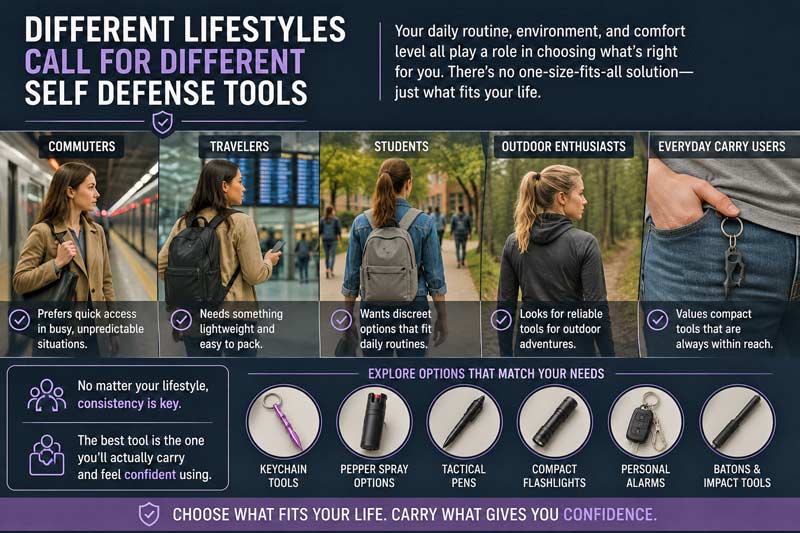
What feels like a good self defense option for one person may feel completely impractical for someone else. Lifestyle plays a much bigger role than people sometimes realize. Someone who spends a lot of time commuting, walking through parking garages, traveling, or carrying a bag every day may prioritize different features than someone who wants something compact enough to fit comfortably in a pocket.
That is one reason there is no universal "best" self defense tool. Some people prefer compact keychain-style options because they are lightweight and easy to carry, while others may feel more comfortable with something slightly larger that offers a different feel or level of confidence. Personal routine, comfort level, and consistency all matter when deciding what feels realistic to keep nearby every day.
Many people also compare different categories before making a decision. For example, someone looking for simple everyday carry solutions may spend time researching how to choose a self defense keychain for EDC, while others prefer exploring broader categories of compact protection gear depending on what best fits their habits and comfort level.
At the end of the day, a good self defense tool should feel like something that naturally fits into everyday life rather than something that constantly feels inconvenient, bulky, or unrealistic to carry consistently.
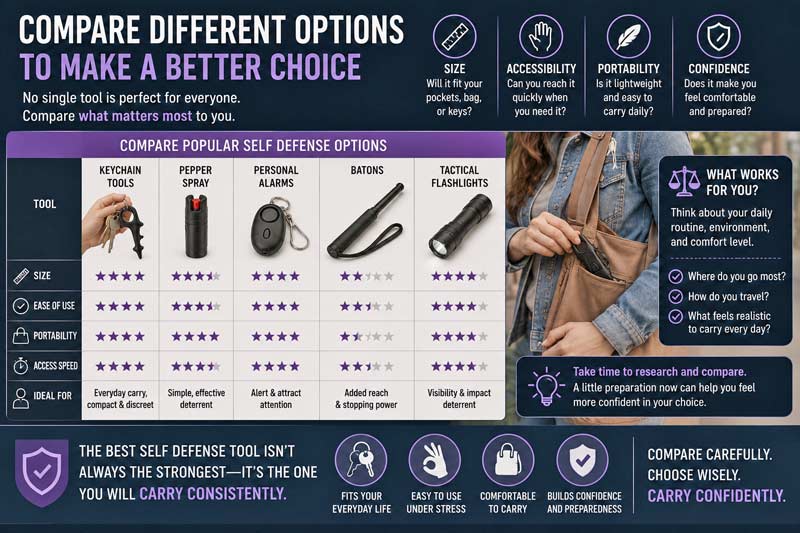
With so many different types of self defense tools available, many people find it helpful to compare options before deciding what feels right for their routine. Size, accessibility, portability, and confidence all matter, but different tools appeal to different people for different reasons. What feels like the perfect fit for one person may feel completely impractical for someone else.
Some people prefer compact items that fit naturally into a pocket or attach to keys, while others are more comfortable carrying something slightly larger that feels easier to grip or access. For example, someone focused on portability may spend time researching the best self defense weapons for everyday carry to compare what works best for smaller, more convenient carry setups.
Others may prioritize simplicity and ease of use, especially if they want something straightforward with minimal setup or learning curve. Some people also compare categories like compact keychain tools, batons, alarms, or other practical carry options to see what realistically fits their comfort level and daily routine. For people exploring slightly larger carry tools, categories like expandable batons may be worth comparing alongside smaller alternatives.
At the end of the day, choosing a good self defense tool is often less about finding the "perfect" answer and more about finding something that feels practical, comfortable, and realistic enough to actually keep with you every day.
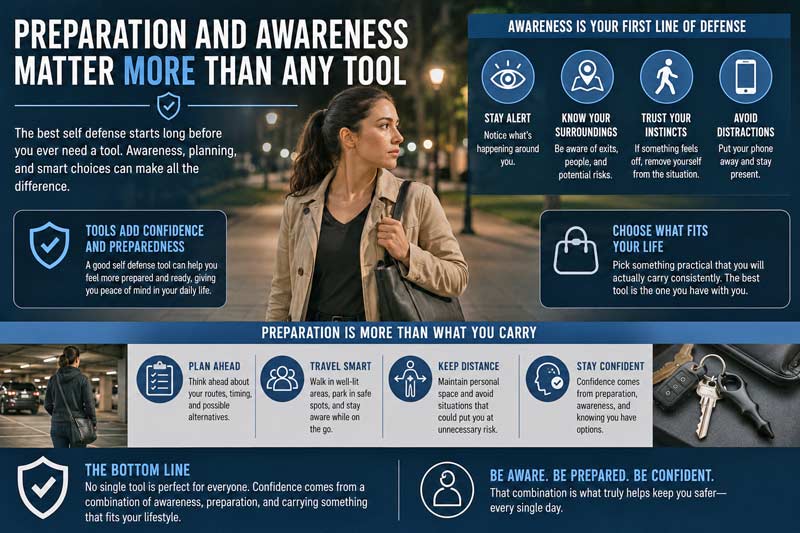
While people often focus on choosing the "best" self defense weapon, many would argue that awareness and preparation matter even more. A tool may provide confidence or peace of mind, but paying attention to surroundings, avoiding risky situations when possible, and staying alert can play an equally important role in personal safety.
That does not mean self defense tools are not useful. For many people, carrying something practical simply helps them feel more prepared and confident going about everyday life. The key is choosing something that feels realistic to carry consistently and understanding how it fits into a routine instead of relying on gear alone.
Some people feel more comfortable carrying compact everyday options, while others prefer slightly larger tools that match their lifestyle and comfort level. What matters most is finding something that feels practical enough to actually keep nearby rather than leave behind. For people still comparing ideas, it can help to explore different categories and see what naturally fits into everyday habits.
At the end of the day, confidence often comes from a combination of preparation, awareness, and carrying something that feels realistic for everyday life. No single option is perfect for everyone, which is why finding what works best personally tends to matter more than following trends or opinions online.
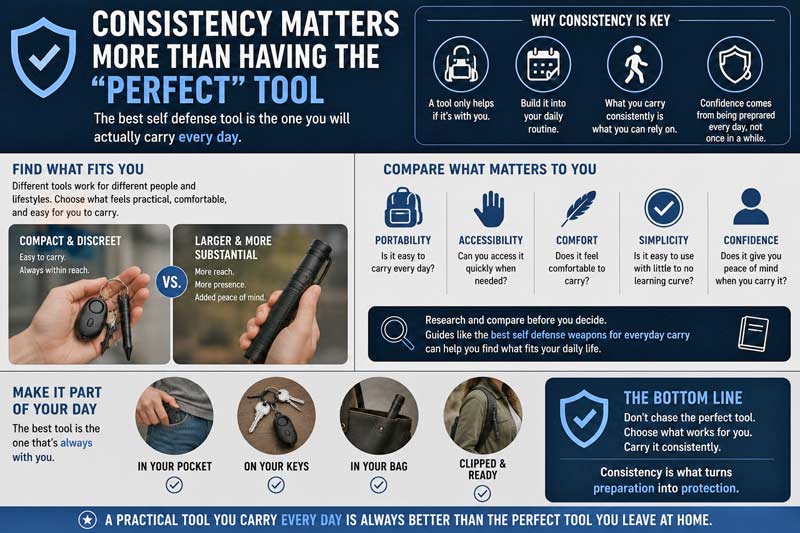
It is easy to spend a lot of time searching for the "best" self defense weapon, but many people eventually realize there may not be one perfect answer. What matters more is whether something realistically fits into daily life. A tool only helps if someone actually carries it consistently rather than leaving it behind because it feels inconvenient, bulky, or uncomfortable.
That is one reason personal preference plays such a big role. Some people prefer compact options that fit naturally into a pocket or keychain, while others feel more comfortable carrying something slightly larger that gives them added peace of mind. The goal is not necessarily to find what looks the most impressive, but to find something that feels practical enough to become part of a daily routine.
Many people also spend time researching and comparing options before making a decision. For example, someone focused on portability may compare different everyday carry solutions, while others may prioritize accessibility, comfort, or simplicity. Reading guides like the best self defense weapons for everyday carry can sometimes help narrow down what feels like a realistic fit for daily life.
At the end of the day, consistency matters more than chasing trends or trying to find the "perfect" answer. A practical tool someone feels comfortable carrying every day is usually more useful than something impressive that rarely leaves the house.
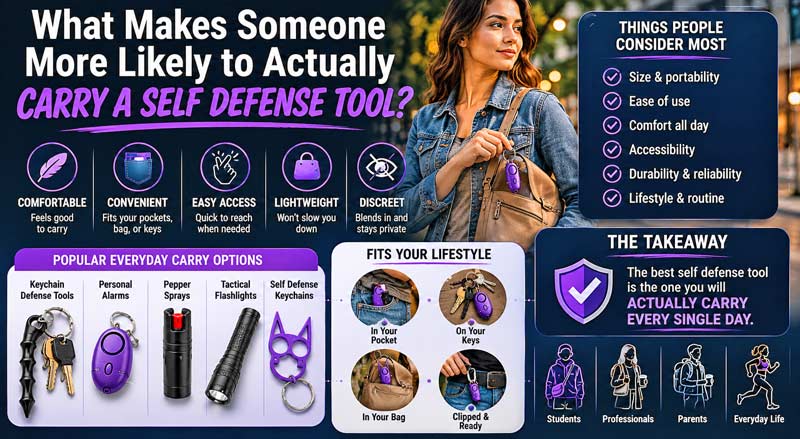
One of the biggest factors people overlook when choosing a self defense tool is whether they will realistically carry it every day. A product may seem like a great option in theory, but if it feels uncomfortable, bulky, difficult to access, or inconvenient, there is a good chance it gets left behind more often than not. Consistency usually matters more than picking the most impressive-looking option.
For many people, simplicity plays a big role. Tools that fit naturally into a pocket, bag, keychain, or everyday routine often feel easier to carry without much thought. That is one reason compact options continue to appeal to people who want something practical rather than something that constantly feels like a hassle to bring along.
Some people also find it helpful to compare different styles before deciding what feels most realistic for their lifestyle. For example, someone looking for smaller carry options may explore compact self defense keychains, while others may feel more comfortable with slightly larger gear depending on confidence level, accessibility, and routine.
At the end of the day, the best self defense tool is often the one someone will actually carry consistently. Something simple, comfortable, and easy to keep nearby usually ends up being more practical than something that feels inconvenient and rarely leaves the house.
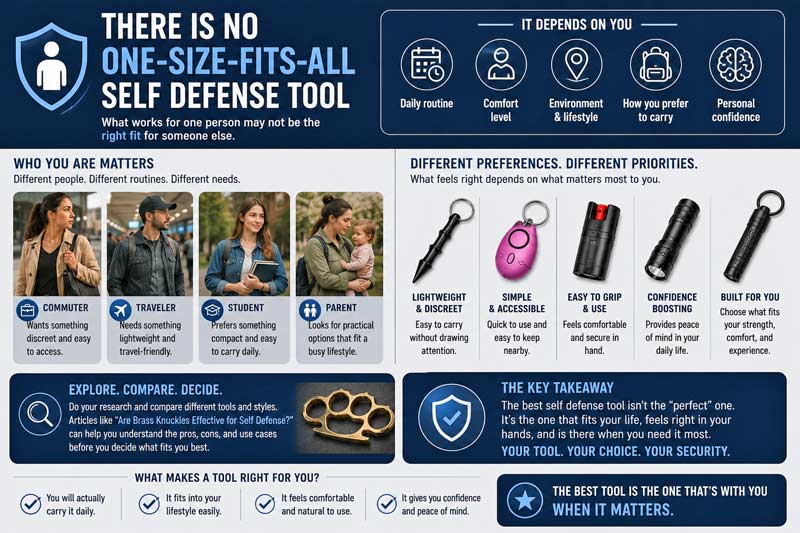
One of the biggest misconceptions people have when shopping for self defense tools is thinking there is one option that works perfectly for everyone. The reality is much more personal than that. What feels practical, comfortable, and realistic for one person may feel completely wrong for someone else depending on daily habits, comfort level, environment, and how someone prefers to carry everyday items.
For example, someone who wants something lightweight and discreet may gravitate toward smaller everyday carry tools, while another person may prefer something that feels easier to grip or slightly more substantial. A commuter, traveler, student, or parent may all prioritize different things based on routine and lifestyle. That is one reason so many people spend time comparing options before deciding what feels like the best fit.
Some people focus heavily on portability and simplicity, while others care more about accessibility or confidence. For people still weighing their options, reading comparisons like whether brass knuckles are effective for self defense can help provide additional perspective when comparing different types of compact carry tools and personal preferences.
At the end of the day, choosing a good self defense tool is rarely about finding the "perfect" product. It is usually about finding something that realistically fits into everyday life, feels comfortable to carry consistently, and matches personal preferences well enough to actually keep nearby when it matters.
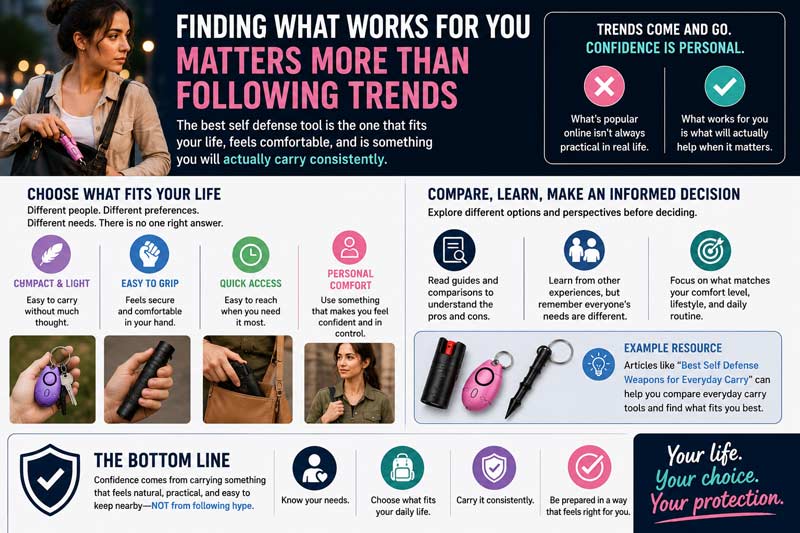
It is easy to get influenced by what is popular online or what someone claims is the "best" self defense tool, but trends do not always translate well into real life. What works well for one person may feel awkward, inconvenient, or unrealistic for someone else. Personal comfort, routine, and confidence usually matter much more than popularity.
Some people prefer compact items they can carry without much thought, while others feel more comfortable with something slightly larger that feels easier to grip or access. There is no wrong answer as long as something feels practical enough to fit naturally into daily life. A tool that feels comfortable and realistic to carry consistently is often more useful than something trendy that rarely leaves the house.
Many people also find it helpful to compare different categories and learn from other perspectives before making a decision. For example, someone still weighing options may explore guides about everyday carry self defense tools or compare compact items that better match their comfort level and lifestyle. The goal is not necessarily to copy someone else's setup, but to figure out what genuinely feels right personally.
At the end of the day, confidence often comes from carrying something that feels natural, practical, and easy to keep nearby rather than simply following whatever happens to be trending at the moment. Personal preference matters more than hype when it comes to something someone may rely on consistently.
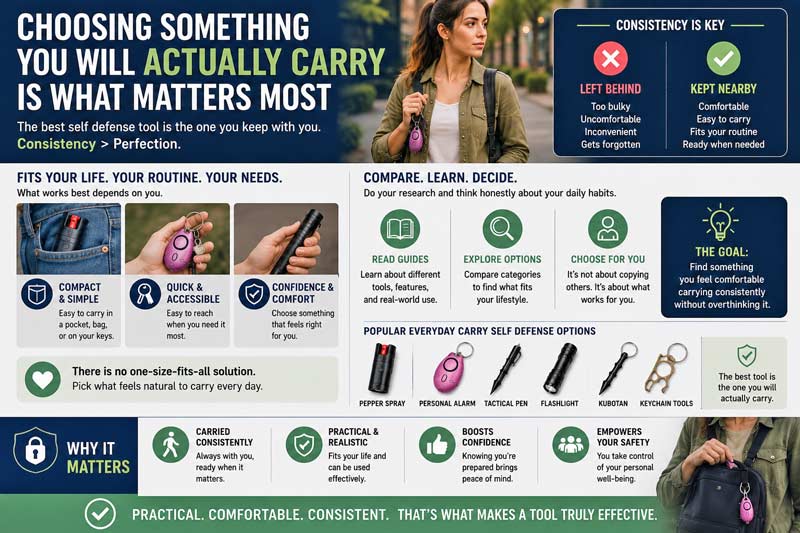
After comparing portability, comfort, accessibility, ease of use, and lifestyle fit, one idea tends to matter more than anything else: consistency. A self defense tool only helps if someone realistically keeps it nearby. Something that feels awkward, inconvenient, or uncomfortable to carry often gets left behind, no matter how impressive it may seem in theory.
That is why many people focus less on finding the "perfect" product and more on finding something that naturally fits into everyday life. For some, that means a compact item attached to keys or slipped into a pocket. Others may feel more comfortable with something slightly larger that better matches their routine and confidence level. There is no universal right answer, because personal preference plays a major role in what feels realistic to carry regularly.
Many people also feel more confident after spending time comparing different options before deciding. Reading guides, exploring categories, and thinking honestly about daily habits can help narrow down what feels practical. The goal is not to copy someone else's setup, but to choose something that feels comfortable enough to keep nearby without much effort or second guessing.
The best self defense tool is often the one that feels practical, comfortable, and realistic enough to become part of daily life. Something carried consistently usually provides more peace of mind than something that stays home because it feels inconvenient or difficult to bring along.
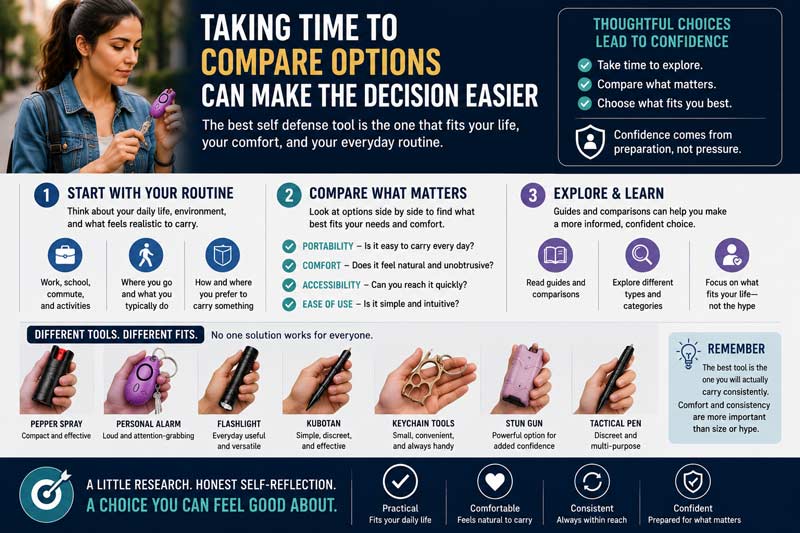
With so many different self defense tools available, it is normal to feel unsure about what makes the most sense. Some people know exactly what they want right away, while others prefer taking time to compare portability, comfort, accessibility, and everyday practicality before deciding what feels like the best fit. There is nothing wrong with taking a little extra time to think through what realistically works for your lifestyle.
Many people start by narrowing things down based on routine. Someone who prefers something lightweight and discreet may gravitate toward compact carry tools, while others may feel more comfortable with something slightly larger that feels easier to access or hold. Comparing features side by side can often make the decision feel much less overwhelming.
For people still exploring ideas, reading comparisons and guides can sometimes make things clearer. Looking through categories, seeing what fits naturally into daily life, and thinking honestly about what someone would realistically carry every day often matters more than trying to follow trends or buy whatever feels most impressive in the moment.
A little research and honest self-reflection can go a long way. The best choice is usually something that feels practical, comfortable, and realistic enough to become part of everyday life without feeling like a burden to carry.
After looking at portability, comfort, accessibility, ease of use, and lifestyle fit, one thing becomes pretty clear: a good self defense tool is usually one that feels realistic to carry and easy to keep nearby. Different people prioritize different things, which is why there is no universal answer that works perfectly for everyone.
Some people prefer something lightweight and discreet that fits naturally into a pocket or keychain, while others feel more comfortable with something slightly larger that gives them added confidence. What matters most is choosing something that feels practical enough to become part of daily life rather than something that constantly feels inconvenient or gets left behind.
It also helps to spend a little time comparing options before making a decision. Thinking honestly about daily routines, comfort level, and what feels realistic to carry often leads to a much better fit than simply following trends or buying whatever looks the most impressive online.
A good self defense tool is not necessarily the biggest, most expensive, or most popular option. In many cases, it is simply the one someone feels comfortable carrying consistently and confident keeping nearby when it matters most.
The "best" self defense weapon for everyday carry really depends on the person carrying it. Something that feels practical and comfortable for one person may feel completely unrealistic for someone else. Many people prioritize portability, accessibility, comfort, and ease of use when deciding what fits naturally into everyday life.
Some people prefer compact tools that fit easily into a pocket, bag, or keychain without adding much bulk, while others feel more comfortable carrying something slightly larger that feels easier to grip or access quickly. Lifestyle also plays a role. Someone who commutes, travels often, or prefers lightweight carry may prioritize different features than someone who wants something more substantial.
A good starting point is thinking honestly about what someone will realistically carry every day. Something simple and convenient often ends up being more useful than something larger that gets left at home. For people comparing options, guides about self defense weapons for everyday carry can sometimes make it easier to narrow down what feels like the best fit.
In many cases, the best everyday carry option is simply the one that feels practical enough to keep nearby consistently and comfortable enough to become part of a normal routine.
For many people, ease of carry is one of the most important factors when choosing a self defense tool. A product may seem like a great option in theory, but if it feels bulky, uncomfortable, or inconvenient to bring along, there is a good chance it ends up staying at home more often than not. Practicality matters much more when something is meant to fit into everyday life.
That is one reason compact options continue to be popular. Smaller tools are often easier to keep in a pocket, purse, backpack, or attached to keys without becoming a hassle. Some people prefer lightweight items they barely notice during the day, while others feel more comfortable carrying something slightly larger if it feels easier to access or gives them more confidence.
Ease of carry also comes down to lifestyle. Someone constantly on the move may prioritize portability and convenience, while another person may care more about grip, accessibility, or overall feel. There is no single right answer, because daily habits and comfort levels vary from person to person.
In many cases, something easy to carry consistently ends up being more practical than a product that feels impressive but rarely leaves the house. Choosing something that realistically fits into a daily routine is often one of the biggest factors in long-term confidence and consistency.
Not necessarily. Whether a smaller or larger self defense tool feels "better" often depends on personal preference, comfort level, and daily routine. Some people prefer compact tools because they are easier to carry consistently and fit naturally into everyday life, while others feel more confident with something slightly larger that feels easier to grip or access quickly.
Smaller options tend to appeal to people who prioritize portability and convenience. Something lightweight that fits comfortably into a pocket, bag, or keychain may feel easier to keep nearby without becoming inconvenient. For many people, consistency matters more than size alone, especially if a compact option feels realistic to carry every day.
On the other hand, some people simply prefer something that feels more substantial in the hand or easier to locate quickly. Confidence and comfort can matter just as much as portability when deciding what feels practical. What feels too bulky for one person may feel perfectly reasonable for someone else depending on routine and lifestyle.
Rather than focusing only on size, many people find it more helpful to think about what feels comfortable, realistic to carry, and easy to keep nearby consistently. A tool that fits naturally into daily life often ends up feeling like the better choice regardless of whether it is large or small.
Choosing the right self defense tool often starts with thinking realistically about daily habits and routine. Someone who spends a lot of time commuting, walking to and from parking lots, traveling, or carrying a bag every day may prioritize different features than someone who wants something lightweight enough to fit comfortably in a pocket. Lifestyle matters much more than people sometimes expect.
Comfort and consistency also play a big role. A product only helps if someone actually feels comfortable carrying it regularly. Some people prefer compact tools that fit naturally into everyday carry setups, while others feel more confident with something slightly larger that feels easier to access or hold. What feels practical for one person may not feel realistic for someone else.
It can also help to think about convenience. Some people want something simple and discreet that blends into a routine without much effort, while others spend time comparing different styles and categories to see what feels like the best match. Reading guides, comparing features, and thinking honestly about everyday habits can make the decision feel much less overwhelming.
In many cases, the right choice comes down to something that feels practical, comfortable, and realistic enough to keep nearby consistently. Personal confidence and everyday convenience often matter much more than simply choosing whatever happens to be the most popular option.
Yes, and that is one reason choosing a self defense tool tends to be a very personal decision. What feels practical, comfortable, and realistic for one person may feel completely wrong for someone else. Lifestyle, confidence level, daily routine, and personal preference can all influence what someone feels most comfortable carrying regularly.
For example, someone who prefers lightweight, compact items may gravitate toward smaller everyday carry options that fit naturally into a pocket or keychain. Others may feel more comfortable with something slightly larger that feels easier to grip or access quickly. Neither approach is necessarily right or wrong, because different people prioritize different things.
Comfort level also matters. Some people value simplicity and portability above everything else, while others care more about accessibility or how naturally something fits into their daily routine. That is one reason many people spend time comparing different categories and styles before deciding what feels like the best fit personally.
The most practical choice is usually the one someone feels comfortable carrying consistently and confident enough to keep nearby without much thought. What works best often comes down to personal preference rather than trying to follow what works for somebody else.
Size and Portability Matter More Than Most People Think
One of the biggest things people overlook when choosing a self defense tool is how realistic it is to carry every day. A product may seem impressive in theory, but if it feels bulky, uncomfortable, or inconvenient, there is a good chance it ends up sitting at home instead of actually being carried. For many people, consistency matters more than size alone.
That is why compact options tend to be popular. Smaller tools are easier to keep in a pocket, purse, backpack, or vehicle without becoming a hassle. Some people prefer simple everyday carry items that blend naturally into their routine, while others are comfortable carrying something slightly larger if they feel it offers advantages in accessibility or confidence.
Portability also comes down to personal comfort. A tool that feels practical for one person may feel awkward for someone else depending on lifestyle, clothing, storage space, or daily habits. Many people spend time comparing different personal protection options before deciding what feels realistic enough to carry consistently rather than leave behind.
At the end of the day, a good self defense tool is not just about what looks effective. It should feel practical enough to become part of everyday life, because something left at home is not much help when it is actually needed.
Ease of Use Matters in Stressful Situations
When people think about self defense tools, they often focus on power or appearance first. What gets overlooked is how simple something feels to use when stress levels are high. In a difficult moment, complicated gear or tools that require multiple steps may not feel as practical as something straightforward and familiar.
That is one reason many people prefer simple, compact tools they can access quickly and understand easily. Some prefer products with minimal moving parts, while others value something that feels intuitive enough to carry with confidence. The easier something feels to access and understand, the more likely someone may feel comfortable carrying it regularly.
Personal preference matters here too. A tool that feels easy and natural for one person may feel awkward or inconvenient to someone else depending on experience, confidence, or daily habits. Many people compare different compact carry tools before deciding what feels realistic enough to become part of an everyday routine.
At the end of the day, a good self defense option should not feel overly complicated or intimidating. The best tool is often the one someone understands well, feels comfortable carrying, and can realistically see themselves keeping close when it matters most.
Confidence and Comfort Matter More Than Trends
It is easy to get caught up in what is popular or what someone online says is the "best" self defense tool, but confidence and comfort usually matter much more in the real world. A product might look impressive in a video or review, but if it feels awkward, uncomfortable, or unrealistic to carry every day, there is a good chance it will end up forgotten at home.
That is why many people gravitate toward tools that simply feel natural to them. Some prefer something compact and discreet that fits easily into a pocket or bag, while others feel more comfortable carrying something slightly larger if it gives them added peace of mind. There is no universal answer, because comfort levels, daily routines, and personal preferences vary from person to person.
Confidence also comes from familiarity. Many people feel better carrying something they understand well and can easily access without overthinking. For that reason, some people spend time comparing different personal safety products or browsing compact daily carry tools to see what feels like the best fit for their lifestyle.
At the end of the day, the "best" option is often the one someone feels comfortable carrying consistently and believes realistically fits into everyday life. Personal confidence matters far more than chasing trends or what works for somebody else.
Accessibility Can Be Just as Important as Effectiveness
A self defense tool only helps if someone can realistically access it when needed. That sounds obvious, but it is something many people overlook when choosing what to carry. A product may seem effective in theory, but if it is buried at the bottom of a bag, difficult to reach quickly, or inconvenient to carry regularly, it may not feel practical in everyday life.
That is one reason people often think carefully about where and how something fits into a routine. Some prefer compact items that stay clipped to a pocket or keychain, while others are comfortable carrying something slightly larger if it feels easier to access. Convenience matters more than people sometimes realize, especially when consistency is the goal.
For people who prefer smaller, easier-to-access carry options, compact keychain safety tools can feel like a practical choice because they stay attached to items people already carry every day. Others may prefer different styles of compact protection depending on comfort level and routine.
At the end of the day, accessibility matters just as much as effectiveness. A product that feels realistic to carry consistently and easy to reach when needed is often more practical than something that feels inconvenient or gets left behind.
Different Lifestyles Call for Different Self Defense Tools
What feels like a good self defense option for one person may feel completely impractical for someone else. Lifestyle plays a much bigger role than people sometimes realize. Someone who spends a lot of time commuting, walking through parking garages, traveling, or carrying a bag every day may prioritize different features than someone who wants something compact enough to fit comfortably in a pocket.
That is one reason there is no universal "best" self defense tool. Some people prefer compact keychain-style options because they are lightweight and easy to carry, while others may feel more comfortable with something slightly larger that offers a different feel or level of confidence. Personal routine, comfort level, and consistency all matter when deciding what feels realistic to keep nearby every day.
Many people also compare different categories before making a decision. For example, someone looking for simple everyday carry solutions may spend time researching how to choose a self defense keychain for EDC, while others prefer exploring broader categories of compact protection gear depending on what best fits their habits and comfort level.
At the end of the day, a good self defense tool should feel like something that naturally fits into everyday life rather than something that constantly feels inconvenient, bulky, or unrealistic to carry consistently.
Comparing Different Options Can Help You Make a Better Choice
With so many different types of self defense tools available, many people find it helpful to compare options before deciding what feels right for their routine. Size, accessibility, portability, and confidence all matter, but different tools appeal to different people for different reasons. What feels like the perfect fit for one person may feel completely impractical for someone else.
Some people prefer compact items that fit naturally into a pocket or attach to keys, while others are more comfortable carrying something slightly larger that feels easier to grip or access. For example, someone focused on portability may spend time researching the best self defense weapons for everyday carry to compare what works best for smaller, more convenient carry setups.
Others may prioritize simplicity and ease of use, especially if they want something straightforward with minimal setup or learning curve. Some people also compare categories like compact keychain tools, batons, alarms, or other practical carry options to see what realistically fits their comfort level and daily routine. For people exploring slightly larger carry tools, categories like expandable batons may be worth comparing alongside smaller alternatives.
At the end of the day, choosing a good self defense tool is often less about finding the "perfect" answer and more about finding something that feels practical, comfortable, and realistic enough to actually keep with you every day.
Preparation and Awareness Matter More Than Any Tool
While people often focus on choosing the "best" self defense weapon, many would argue that awareness and preparation matter even more. A tool may provide confidence or peace of mind, but paying attention to surroundings, avoiding risky situations when possible, and staying alert can play an equally important role in personal safety.
That does not mean self defense tools are not useful. For many people, carrying something practical simply helps them feel more prepared and confident going about everyday life. The key is choosing something that feels realistic to carry consistently and understanding how it fits into a routine instead of relying on gear alone.
Some people feel more comfortable carrying compact everyday options, while others prefer slightly larger tools that match their lifestyle and comfort level. What matters most is finding something that feels practical enough to actually keep nearby rather than leave behind. For people still comparing ideas, it can help to explore different categories and see what naturally fits into everyday habits.
At the end of the day, confidence often comes from a combination of preparation, awareness, and carrying something that feels realistic for everyday life. No single option is perfect for everyone, which is why finding what works best personally tends to matter more than following trends or opinions online.
Consistency Matters More Than Having the "Perfect" Tool
It is easy to spend a lot of time searching for the "best" self defense weapon, but many people eventually realize there may not be one perfect answer. What matters more is whether something realistically fits into daily life. A tool only helps if someone actually carries it consistently rather than leaving it behind because it feels inconvenient, bulky, or uncomfortable.
That is one reason personal preference plays such a big role. Some people prefer compact options that fit naturally into a pocket or keychain, while others feel more comfortable carrying something slightly larger that gives them added peace of mind. The goal is not necessarily to find what looks the most impressive, but to find something that feels practical enough to become part of a daily routine.
Many people also spend time researching and comparing options before making a decision. For example, someone focused on portability may compare different everyday carry solutions, while others may prioritize accessibility, comfort, or simplicity. Reading guides like the best self defense weapons for everyday carry can sometimes help narrow down what feels like a realistic fit for daily life.
At the end of the day, consistency matters more than chasing trends or trying to find the "perfect" answer. A practical tool someone feels comfortable carrying every day is usually more useful than something impressive that rarely leaves the house.
What Makes Someone More Likely to Actually Carry a Self Defense Tool?
One of the biggest factors people overlook when choosing a self defense tool is whether they will realistically carry it every day. A product may seem like a great option in theory, but if it feels uncomfortable, bulky, difficult to access, or inconvenient, there is a good chance it gets left behind more often than not. Consistency usually matters more than picking the most impressive-looking option.
For many people, simplicity plays a big role. Tools that fit naturally into a pocket, bag, keychain, or everyday routine often feel easier to carry without much thought. That is one reason compact options continue to appeal to people who want something practical rather than something that constantly feels like a hassle to bring along.
Some people also find it helpful to compare different styles before deciding what feels most realistic for their lifestyle. For example, someone looking for smaller carry options may explore compact self defense keychains, while others may feel more comfortable with slightly larger gear depending on confidence level, accessibility, and routine.
At the end of the day, the best self defense tool is often the one someone will actually carry consistently. Something simple, comfortable, and easy to keep nearby usually ends up being more practical than something that feels inconvenient and rarely leaves the house.
There Is No One-Size-Fits-All Self Defense Tool
One of the biggest misconceptions people have when shopping for self defense tools is thinking there is one option that works perfectly for everyone. The reality is much more personal than that. What feels practical, comfortable, and realistic for one person may feel completely wrong for someone else depending on daily habits, comfort level, environment, and how someone prefers to carry everyday items.
For example, someone who wants something lightweight and discreet may gravitate toward smaller everyday carry tools, while another person may prefer something that feels easier to grip or slightly more substantial. A commuter, traveler, student, or parent may all prioritize different things based on routine and lifestyle. That is one reason so many people spend time comparing options before deciding what feels like the best fit.
Some people focus heavily on portability and simplicity, while others care more about accessibility or confidence. For people still weighing their options, reading comparisons like whether brass knuckles are effective for self defense can help provide additional perspective when comparing different types of compact carry tools and personal preferences.
At the end of the day, choosing a good self defense tool is rarely about finding the "perfect" product. It is usually about finding something that realistically fits into everyday life, feels comfortable to carry consistently, and matches personal preferences well enough to actually keep nearby when it matters.
Finding What Works for You Matters More Than Following Trends
It is easy to get influenced by what is popular online or what someone claims is the "best" self defense tool, but trends do not always translate well into real life. What works well for one person may feel awkward, inconvenient, or unrealistic for someone else. Personal comfort, routine, and confidence usually matter much more than popularity.
Some people prefer compact items they can carry without much thought, while others feel more comfortable with something slightly larger that feels easier to grip or access. There is no wrong answer as long as something feels practical enough to fit naturally into daily life. A tool that feels comfortable and realistic to carry consistently is often more useful than something trendy that rarely leaves the house.
Many people also find it helpful to compare different categories and learn from other perspectives before making a decision. For example, someone still weighing options may explore guides about everyday carry self defense tools or compare compact items that better match their comfort level and lifestyle. The goal is not necessarily to copy someone else's setup, but to figure out what genuinely feels right personally.
At the end of the day, confidence often comes from carrying something that feels natural, practical, and easy to keep nearby rather than simply following whatever happens to be trending at the moment. Personal preference matters more than hype when it comes to something someone may rely on consistently.
Choosing Something You Will Actually Carry Is What Matters Most
After comparing portability, comfort, accessibility, ease of use, and lifestyle fit, one idea tends to matter more than anything else: consistency. A self defense tool only helps if someone realistically keeps it nearby. Something that feels awkward, inconvenient, or uncomfortable to carry often gets left behind, no matter how impressive it may seem in theory.
That is why many people focus less on finding the "perfect" product and more on finding something that naturally fits into everyday life. For some, that means a compact item attached to keys or slipped into a pocket. Others may feel more comfortable with something slightly larger that better matches their routine and confidence level. There is no universal right answer, because personal preference plays a major role in what feels realistic to carry regularly.
Many people also feel more confident after spending time comparing different options before deciding. Reading guides, exploring categories, and thinking honestly about daily habits can help narrow down what feels practical. The goal is not to copy someone else's setup, but to choose something that feels comfortable enough to keep nearby without much effort or second guessing.
The best self defense tool is often the one that feels practical, comfortable, and realistic enough to become part of daily life. Something carried consistently usually provides more peace of mind than something that stays home because it feels inconvenient or difficult to bring along.
Taking Time to Compare Options Can Make the Decision Easier
With so many different self defense tools available, it is normal to feel unsure about what makes the most sense. Some people know exactly what they want right away, while others prefer taking time to compare portability, comfort, accessibility, and everyday practicality before deciding what feels like the best fit. There is nothing wrong with taking a little extra time to think through what realistically works for your lifestyle.
Many people start by narrowing things down based on routine. Someone who prefers something lightweight and discreet may gravitate toward compact carry tools, while others may feel more comfortable with something slightly larger that feels easier to access or hold. Comparing features side by side can often make the decision feel much less overwhelming.
For people still exploring ideas, reading comparisons and guides can sometimes make things clearer. Looking through categories, seeing what fits naturally into daily life, and thinking honestly about what someone would realistically carry every day often matters more than trying to follow trends or buy whatever feels most impressive in the moment.
A little research and honest self-reflection can go a long way. The best choice is usually something that feels practical, comfortable, and realistic enough to become part of everyday life without feeling like a burden to carry.
So What Actually Makes a Good Self Defense Weapon?
After looking at portability, comfort, accessibility, ease of use, and lifestyle fit, one thing becomes pretty clear: a good self defense tool is usually one that feels realistic to carry and easy to keep nearby. Different people prioritize different things, which is why there is no universal answer that works perfectly for everyone.
Some people prefer something lightweight and discreet that fits naturally into a pocket or keychain, while others feel more comfortable with something slightly larger that gives them added confidence. What matters most is choosing something that feels practical enough to become part of daily life rather than something that constantly feels inconvenient or gets left behind.
It also helps to spend a little time comparing options before making a decision. Thinking honestly about daily routines, comfort level, and what feels realistic to carry often leads to a much better fit than simply following trends or buying whatever looks the most impressive online.
A good self defense tool is not necessarily the biggest, most expensive, or most popular option. In many cases, it is simply the one someone feels comfortable carrying consistently and confident keeping nearby when it matters most.
What Is the Best Self Defense Weapon for Everyday Carry?
The "best" self defense weapon for everyday carry really depends on the person carrying it. Something that feels practical and comfortable for one person may feel completely unrealistic for someone else. Many people prioritize portability, accessibility, comfort, and ease of use when deciding what fits naturally into everyday life.
Some people prefer compact tools that fit easily into a pocket, bag, or keychain without adding much bulk, while others feel more comfortable carrying something slightly larger that feels easier to grip or access quickly. Lifestyle also plays a role. Someone who commutes, travels often, or prefers lightweight carry may prioritize different features than someone who wants something more substantial.
A good starting point is thinking honestly about what someone will realistically carry every day. Something simple and convenient often ends up being more useful than something larger that gets left at home. For people comparing options, guides about self defense weapons for everyday carry can sometimes make it easier to narrow down what feels like the best fit.
In many cases, the best everyday carry option is simply the one that feels practical enough to keep nearby consistently and comfortable enough to become part of a normal routine.
Should a Self Defense Tool Be Easy to Carry?
For many people, ease of carry is one of the most important factors when choosing a self defense tool. A product may seem like a great option in theory, but if it feels bulky, uncomfortable, or inconvenient to bring along, there is a good chance it ends up staying at home more often than not. Practicality matters much more when something is meant to fit into everyday life.
That is one reason compact options continue to be popular. Smaller tools are often easier to keep in a pocket, purse, backpack, or attached to keys without becoming a hassle. Some people prefer lightweight items they barely notice during the day, while others feel more comfortable carrying something slightly larger if it feels easier to access or gives them more confidence.
Ease of carry also comes down to lifestyle. Someone constantly on the move may prioritize portability and convenience, while another person may care more about grip, accessibility, or overall feel. There is no single right answer, because daily habits and comfort levels vary from person to person.
In many cases, something easy to carry consistently ends up being more practical than a product that feels impressive but rarely leaves the house. Choosing something that realistically fits into a daily routine is often one of the biggest factors in long-term confidence and consistency.
Is a Smaller Self Defense Tool Better Than a Larger One?
Not necessarily. Whether a smaller or larger self defense tool feels "better" often depends on personal preference, comfort level, and daily routine. Some people prefer compact tools because they are easier to carry consistently and fit naturally into everyday life, while others feel more confident with something slightly larger that feels easier to grip or access quickly.
Smaller options tend to appeal to people who prioritize portability and convenience. Something lightweight that fits comfortably into a pocket, bag, or keychain may feel easier to keep nearby without becoming inconvenient. For many people, consistency matters more than size alone, especially if a compact option feels realistic to carry every day.
On the other hand, some people simply prefer something that feels more substantial in the hand or easier to locate quickly. Confidence and comfort can matter just as much as portability when deciding what feels practical. What feels too bulky for one person may feel perfectly reasonable for someone else depending on routine and lifestyle.
Rather than focusing only on size, many people find it more helpful to think about what feels comfortable, realistic to carry, and easy to keep nearby consistently. A tool that fits naturally into daily life often ends up feeling like the better choice regardless of whether it is large or small.
How Do I Choose the Right Self Defense Tool for My Lifestyle?
Choosing the right self defense tool often starts with thinking realistically about daily habits and routine. Someone who spends a lot of time commuting, walking to and from parking lots, traveling, or carrying a bag every day may prioritize different features than someone who wants something lightweight enough to fit comfortably in a pocket. Lifestyle matters much more than people sometimes expect.
Comfort and consistency also play a big role. A product only helps if someone actually feels comfortable carrying it regularly. Some people prefer compact tools that fit naturally into everyday carry setups, while others feel more confident with something slightly larger that feels easier to access or hold. What feels practical for one person may not feel realistic for someone else.
It can also help to think about convenience. Some people want something simple and discreet that blends into a routine without much effort, while others spend time comparing different styles and categories to see what feels like the best match. Reading guides, comparing features, and thinking honestly about everyday habits can make the decision feel much less overwhelming.
In many cases, the right choice comes down to something that feels practical, comfortable, and realistic enough to keep nearby consistently. Personal confidence and everyday convenience often matter much more than simply choosing whatever happens to be the most popular option.
Do Different Self Defense Tools Work Better for Different People?
Yes, and that is one reason choosing a self defense tool tends to be a very personal decision. What feels practical, comfortable, and realistic for one person may feel completely wrong for someone else. Lifestyle, confidence level, daily routine, and personal preference can all influence what someone feels most comfortable carrying regularly.
For example, someone who prefers lightweight, compact items may gravitate toward smaller everyday carry options that fit naturally into a pocket or keychain. Others may feel more comfortable with something slightly larger that feels easier to grip or access quickly. Neither approach is necessarily right or wrong, because different people prioritize different things.
Comfort level also matters. Some people value simplicity and portability above everything else, while others care more about accessibility or how naturally something fits into their daily routine. That is one reason many people spend time comparing different categories and styles before deciding what feels like the best fit personally.
The most practical choice is usually the one someone feels comfortable carrying consistently and confident enough to keep nearby without much thought. What works best often comes down to personal preference rather than trying to follow what works for somebody else.
You May Also Be Interested In:
- Are Batons Good for Self Defense? What You Need to Know
- Kubaton Weapon: What It Is and How It Works for Self Defense
- What Is the Best Self Defense Weapon for Everyday Carry?
- 10 Things You Didn't Know About the Karambit Knife
- The Weapons People Fear Most (And Whether the Fear Makes Sense)
- What Is a Tonfa Weapon and How Was It Originally Used?
- What Is the Most Difficult Weapon to Defend Against?
- What Is the Best Weapon for Fighting in Tight Spaces?
- What Is a Billy Club Weapon and Is It Still Used Today
- The Police Weapon Most People Forgot Ever Existed
Leave a Reply