





The Most Ingenious Hidden Weapons Ever Invented
August 5th, 2026
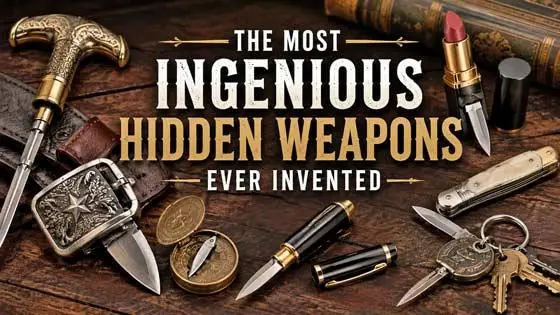
Some of history's most fascinating weapons were never meant to look like weapons at all. Hidden inside walking canes, belt buckles, rings, pens, and other ordinary objects, these ingenious designs allowed their owners to carry a means of protection without attracting attention. Some were practical tools created for travelers, soldiers, and everyday citizens, while others were elaborate novelties that showcased remarkable craftsmanship and mechanical creativity. Together, they reveal a long history of inventors pushing the limits of disguise, proving that the most unexpected weapons were often the ones hiding in plain sight. In this article, we'll explore some of the most ingenious hidden weapons ever invented, uncover the true stories behind their creation, and separate historical fact from the myths that continue to surround them.
Why Ordinary Objects Became Secret Weapons
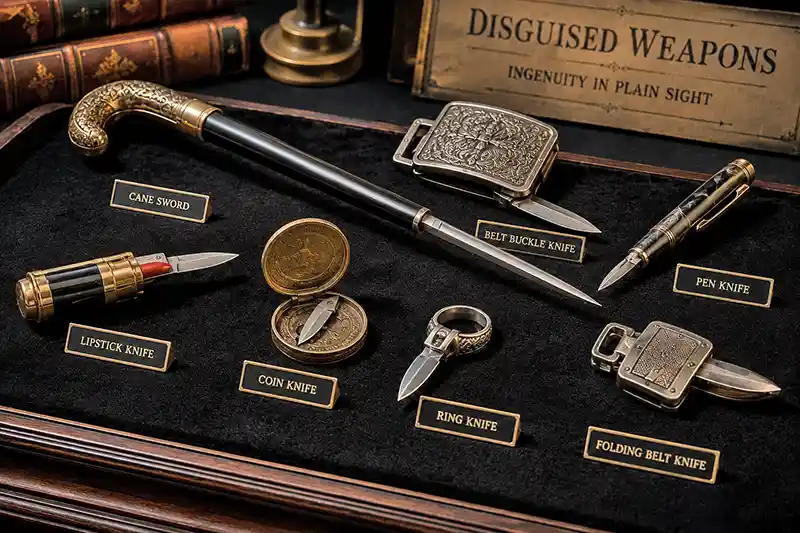
The idea of disguising a weapon is far older than most people realize. Long before modern concealed carry methods existed, people searched for ways to protect themselves without openly displaying a blade or club. In crowded cities, along dangerous roads, or in places where carrying visible weapons was frowned upon, a hidden weapon offered both security and discretion.
Concealment also provided an element of surprise. A walking cane, a decorative belt buckle, or an ordinary pen rarely attracted a second glance, making these everyday objects ideal places to hide a blade. Some designs were created for genuine self-defense, while others were intended for espionage, military operations, or simply to demonstrate remarkable mechanical ingenuity. Regardless of their purpose, they all relied on the same principle: the less a weapon looked like a weapon, the more effective the disguise became.
Throughout history, craftsmen embraced this challenge with incredible creativity. They transformed common accessories into cleverly engineered defensive tools, often requiring precision metalworking and intricate locking mechanisms. Some inventions proved practical enough to see everyday use, while others became collector's pieces admired more for their innovation than their usefulness.
Many of these designs continue to inspire modern concealed tools. Today's hidden weapons and compact everyday carry weapons may use newer materials and manufacturing techniques, but they reflect the same timeless goal: combining practicality with discreet design in ways that continue to capture people's imagination.
Cane Swords: The Gentleman's Secret Blade
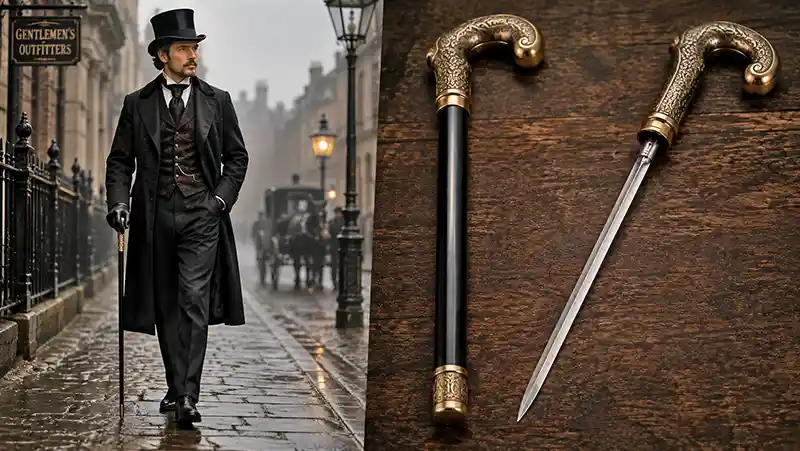
Among all the hidden weapons ever created, few are as elegant as the cane sword. From the outside, it appeared to be nothing more than a finely crafted walking cane carried by a respectable gentleman. Hidden inside, however, was a slender steel blade that could be drawn in seconds, transforming an everyday accessory into a surprisingly effective means of personal defense.
Cane swords became especially popular during the 18th and 19th centuries as openly wearing swords fell out of fashion in many European cities. Wealthy gentlemen, travelers, merchants, and retired military officers still wanted a way to protect themselves, but preferred something that blended naturally into everyday life. A walking cane accomplished exactly that, concealing a weapon in plain sight while maintaining an appearance of refinement.
The craftsmanship behind these weapons was remarkable. Skilled artisans combined hardwoods, ivory, silver, brass, and hardened steel into beautifully balanced pieces that functioned as both elegant canes and practical concealed weapons. Many surviving examples are considered works of art as much as historical weapons, making them highly sought after by museums and collectors today.
If you'd like to learn more about these remarkable creations, our article on the strange history of cane swords explores their origins, craftsmanship, and lasting influence in much greater detail. They remain one of the finest examples of how ordinary objects could be transformed into ingenious concealed weapons.
Belt Buckle Knives: Hidden in Plain Sight
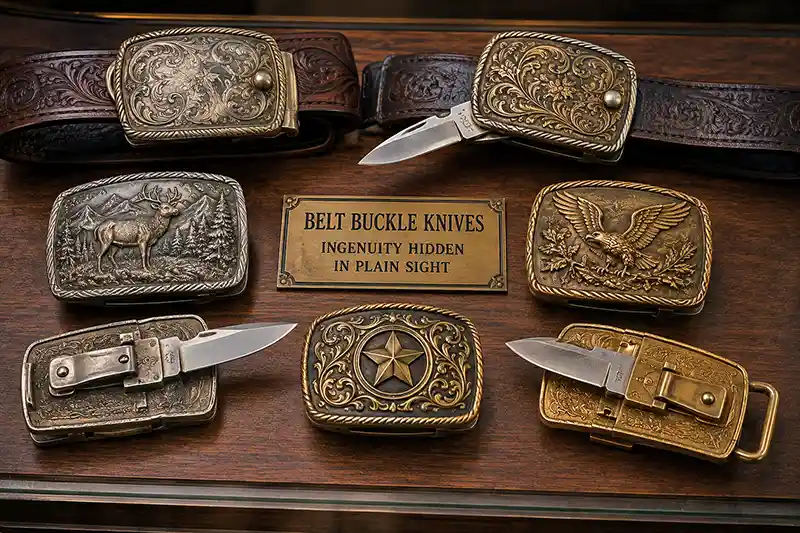
Few concealed weapons capture the imagination quite like the belt buckle knife. At first glance, it looks like nothing more than a decorative belt buckle, often featuring Western scrollwork, wildlife scenes, or engraved metal. Hidden behind that ordinary appearance, however, is a compact knife that can be folded out or detached from the buckle, transforming an everyday accessory into a cleverly disguised blade.
Unlike many people believe, belt buckle knives were not common equipment on the American frontier. Their popularity emerged much later, particularly during the 1970s and 1980s, when manufacturers embraced Western styling and innovative concealed designs. Collectors were drawn to their unusual combination of craftsmanship, mechanical ingenuity, and nostalgic appeal, making them one of the most recognizable novelty knives of the late 20th century.
Designing a functional knife into a wearable belt buckle required impressive engineering. The buckle still had to support a belt comfortably while securely holding the blade in place and preventing accidental opening. These practical limitations kept most belt buckle knives relatively compact, but they also made each design an impressive example of creative problem-solving.
For a deeper look at how these remarkable concealed knives evolved, including the myths surrounding their connection to the Old West, check out our article on the strange history of belt buckle knives. Their blend of disguise, craftsmanship, and mechanical innovation has earned them a lasting place among history's most ingenious hidden weapons.
Sleeve Daggers: The Weapon Hollywood Made Even More Dramatic
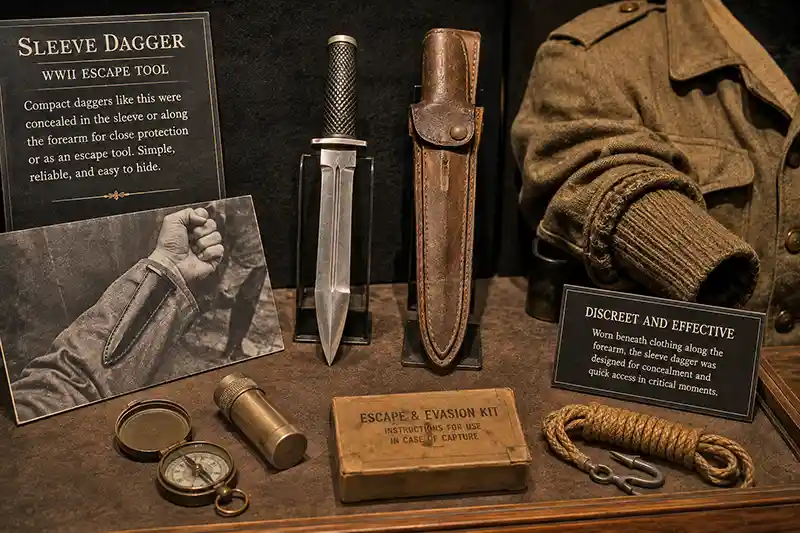
Few hidden weapons have been exaggerated more by movies than the sleeve dagger. Fiction often shows a blade shooting into the user's hand through an elaborate spring-loaded mechanism. Real historical sleeve daggers were usually much simpler: compact fixed blades worn beneath clothing in slim sheaths, where they could remain concealed without the complicated machinery seen on screen.
The design relied on placement rather than disguise. A narrow dagger could be secured along the forearm, inside a jacket sleeve, or against another hidden area of the body. This kept the blade close while preserving a natural outward appearance. Some historically inspired examples trace their design to discreet escape tools associated with British special operations during World War II.
Simplicity was essential. Springs, sliding tracks, and automatic deployment systems added weight and created more opportunities for failure. A securely sheathed fixed blade was quieter, more dependable, and useful for practical tasks such as cutting bindings or working with survival equipment. The real ingenuity came from creating an extremely compact tool that could be concealed comfortably beneath ordinary clothing.
Modern entertainment transformed that practical concept into something far more spectacular, turning the sleeve dagger into a mechanical weapon that snaps into the hand at exactly the right moment. Those fictional versions may be more exciting, but the genuine historical design reveals a different kind of cleverness: instead of relying on a dramatic mechanism, it achieved concealment through compact size, careful placement, and purposeful simplicity.
Neck Knives: Small Blades Within Easy Reach
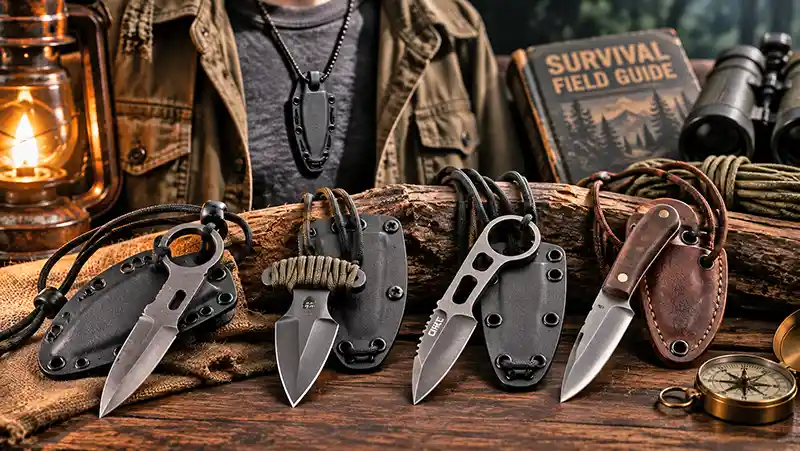
Not every hidden weapon relied on elaborate disguises. Some were simply designed to remain out of sight while staying instantly accessible, and few examples illustrate that better than the neck knife. Suspended from a cord or chain beneath a shirt or jacket, these compact fixed blades offered a practical way to carry a cutting tool without occupying a pocket or belt sheath.
Although small concealed blades have existed for centuries, the modern neck knife became especially popular with military personnel, survival instructors, outdoorsmen, and everyday carry enthusiasts during the late 20th century. Their lightweight construction and minimalist sheaths allowed them to remain comfortably hidden beneath clothing while still being easy to retrieve when needed for routine cutting tasks.
Unlike many disguised weapons, a neck knife does not pretend to be something else. Its concealment comes from where it is worn rather than how it looks. That simple approach makes it one of the most practical hidden blade designs ever developed, combining accessibility with a low-profile carry method that avoids bulky equipment.
If you'd like to learn more about how these compact blades evolved and why so many people continue to carry them today, take a look at our article on what is a neck knife and why do people carry them. While they may not have the theatrical appearance of cane swords or belt buckle knives, neck knives demonstrate that some of history's most ingenious hidden weapons succeeded through simplicity rather than disguise.
Disguised Everyday Objects: When Almost Anything Could Hide a Blade
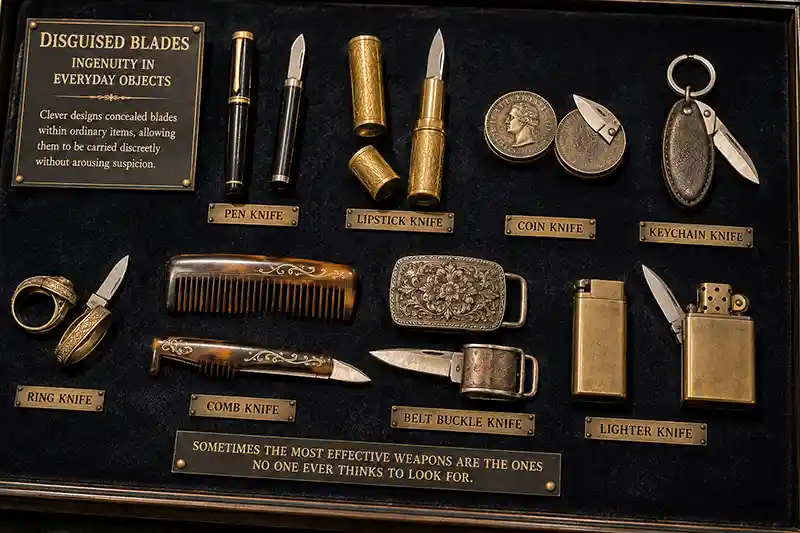
Not every hidden weapon was large or elaborate. Some of the most ingenious designs concealed blades inside ordinary objects that people carried every day. Walking through a city with a pen, a coin purse, a lipstick tube, or a keychain rarely attracted attention, making these items ideal places to hide compact cutting tools without raising suspicion.
Inventors embraced this idea with remarkable creativity. Small knives appeared inside fountain pens, decorative coins, combs, belt buckles, and even rings. Most of these blades were far too small to replace a conventional knife, but that was never their purpose. Instead, they were designed as discreet backup tools, emergency cutters, or simply fascinating examples of mechanical craftsmanship that challenged expectations about what everyday objects could become.
Some disguised weapons were genuinely practical, while others leaned heavily toward novelty. During the 20th century, manufacturers competed to produce increasingly inventive concealed designs that appealed to collectors as much as users. Many became conversation pieces because of the cleverness of the mechanism rather than the usefulness of the blade itself, helping create a thriving market for unusual hidden knives and gadgets.
Even today, disguised tools continue to capture people's imagination because they demonstrate how creativity can transform the familiar into something completely unexpected. Whether hidden inside a pen, concealed within a keychain, or disguised as another ordinary object, these ingenious designs remind us that the most memorable hidden weapons were often the ones no one thought to look for.
Modern Hidden Weapons: Innovation Meets Everyday Carry
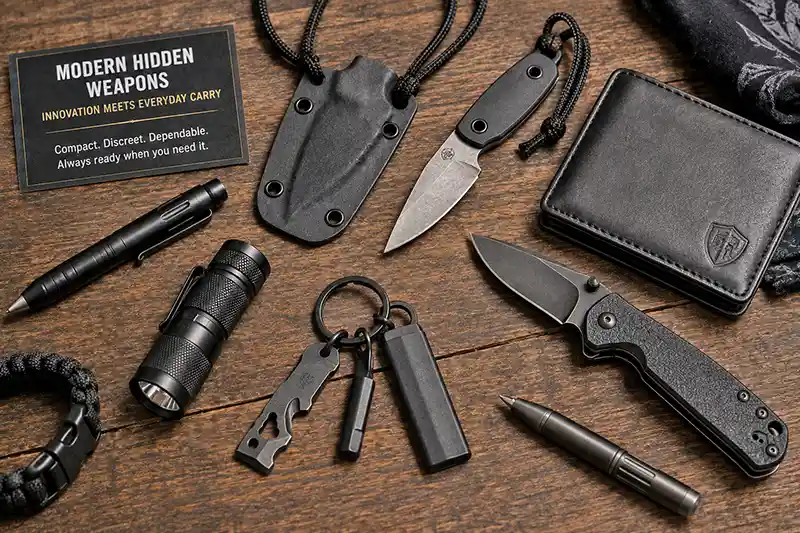
While many historical concealed weapons have become museum pieces, the idea behind them has never disappeared. Modern designers continue to develop compact tools that prioritize discreet carry, lightweight construction, and practical utility. Instead of relying on elaborate disguises, today's hidden weapons often focus on blending naturally into everyday life while remaining accessible when needed.
Advances in materials have played a major role in this evolution. Lightweight polymers, high-strength stainless steels, and durable composites have allowed manufacturers to create smaller, stronger, and more corrosion-resistant designs than ever before. Compact fixed blades, discreet neck knives, minimalist keychain tools, and other modern options demonstrate that concealment no longer requires hiding a blade inside another object. Sometimes the smartest design is simply one that remains unobtrusive until it's needed.
Many people who carry these tools today value preparedness over novelty. Outdoor enthusiasts, first responders, tradespeople, and everyday carry enthusiasts often choose compact equipment because it occupies very little space while remaining useful for routine cutting tasks. As a result, modern concealed tools tend to emphasize reliability and practicality rather than the elaborate mechanical surprises that defined many historical designs.
If you're interested in modern concealed tools designed with everyday practicality in mind, our guides to the best self-defense weapons for everyday carry and the history and evolution of self-defense keychains explore how discreet defensive tools have continued to evolve. Although today's designs look very different from cane swords and belt buckle knives, they carry forward the same spirit of innovation that has inspired hidden weapons for centuries.
Why Hidden Weapons Continue to Fascinate Us
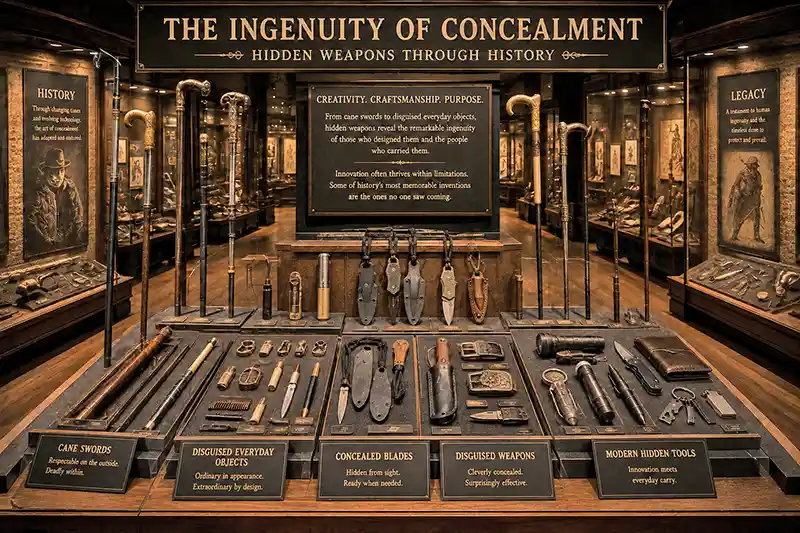
Technology has changed dramatically over the centuries, yet hidden weapons continue to capture people's imagination in a way few other historical objects can. Part of their appeal comes from their cleverness. Instead of relying on size or brute force, they represent creative problem-solving, transforming ordinary items into tools with an unexpected second purpose. That ingenuity is often just as impressive as the weapon itself.
Popular culture has only strengthened that fascination. Spy novels, adventure films, and television dramas have introduced generations of viewers to disguised gadgets, secret compartments, and concealed blades. While many fictional creations stretch reality, they draw inspiration from genuine historical inventions that proved concealment could be every bit as inventive as the weapon it concealed.
For collectors and historians, hidden weapons offer a unique window into the craftsmanship of the past. Every cane sword, belt buckle knife, sleeve dagger, or disguised pen reflects the technology, fashion, and social attitudes of its era. Examining these unusual creations reveals not only how people defended themselves, but also how inventors continually adapted to changing laws, customs, and everyday life.
Whether admired as historical artifacts, mechanical curiosities, or examples of remarkable engineering, hidden weapons remind us that innovation often thrives within limitations. Their enduring popularity proves that some of history's most memorable inventions were not the largest or most powerful, but the ones ingenious enough to remain hidden in plain sight.
What is the difference between a hidden weapon and a disguised weapon?
A hidden weapon is concealed from view, such as a neck knife worn beneath clothing or a compact blade carried inside a boot. A disguised weapon goes one step further by appearing to be an ordinary object, such as a cane, belt buckle, pen, or piece of jewelry. Every disguised weapon is hidden, but not every hidden weapon is designed to look like something else.
What was the most ingenious hidden weapon ever invented?
There is no single answer, as it depends on whether you value practicality, craftsmanship, or mechanical ingenuity. Cane swords are often considered among the most elegant concealed weapons because they combined a functional walking cane with a full-length blade. Belt buckle knives showcased clever engineering in a wearable accessory, while disguised items like pen knives and ring knives demonstrated how even the smallest everyday objects could secretly conceal a blade. Each represents a different approach to the art of hiding a weapon in plain sight.
Are hidden weapons still manufactured today?
Yes, although modern designs are generally much more practical than the elaborate concealed weapons of the past. Today's hidden weapons often focus on compact fixed blades, discreet everyday carry tools, and innovative self-defense designs rather than disguising blades inside everyday objects. While collectors continue to seek historical pieces like cane swords and belt buckle knives, modern concealed tools emphasize reliability, simplicity, and portability over mechanical novelty.
Were hidden weapons created only for self-defense?
No. While many hidden weapons were designed for personal protection, others served very different purposes. Some were carried as emergency survival tools, escape aids, or compact utility knives, while others were created primarily as demonstrations of craftsmanship and mechanical ingenuity. Decorative concealed weapons also became popular among collectors, who valued their unusual designs as much as their practical function, making many hidden weapons prized curiosities rather than everyday defensive tools.
Why were disguised weapons so popular with inventors?
Disguised weapons challenged inventors to solve a unique engineering puzzle: how to hide a functional blade inside an everyday object without making it bulky or obvious. Whether concealed in a walking cane, belt buckle, pen, or ring, these designs required careful craftsmanship and creative thinking. For many makers, the ingenuity of the mechanism was just as important as the weapon itself, which is why disguised weapons remain so fascinating to collectors today.
What everyday objects have been turned into hidden weapons?
Throughout history, inventors have concealed blades inside an astonishing variety of everyday items, including walking canes, belt buckles, pens, rings, combs, lipstick tubes, coins, and keychains. While some were practical defensive tools, many were created as demonstrations of mechanical ingenuity or collectible curiosities. Their variety shows that almost any ordinary object could become the foundation for a cleverly disguised weapon.
Which hidden weapon has the longest history?
Among the many disguised weapons ever created, the cane sword has one of the longest and best-documented histories. Versions appeared centuries ago and remained popular throughout the 18th and 19th centuries, particularly after openly carrying swords became less fashionable. Its combination of elegance, practicality, and concealment helped make it one of history's most enduring hidden weapon designs.
Were hidden weapons ever more effective than ordinary weapons?
Usually not. Most hidden weapons sacrificed size, strength, or ease of use in exchange for concealment. Their greatest advantage was surprise rather than raw effectiveness, which is why they were typically carried as backup tools or emergency defensive options instead of replacing full-sized weapons. Their lasting appeal comes from their clever design as much as their practical use.
You May Also Be Interested In:
- The Most Clever Hidden Knives Ever Invented
- Hidden Weapons That Could Save Your Life!
- Hidden Sword Battle Stick and Other Combat Weapons
- Why Were Nunchucks Actually Invented? (The Real History Might Surprise You)
- Hidden Blades and Discreet Tools for Subtle Self Defense
- Nine Weapons in One with the Army of One
- Crazy Weapons You Need To See!
- Unusual Weapons You've Never Seen Before
- New Weapons That Could Save Your Life!
- Assassin Arm Blade and Other New Weapons
Leave a Reply