





The Strange History of Cane Swords
August 5th, 2026

For centuries, an elegant walking cane was a symbol of wealth, refinement, and respectability. Few people would suspect that beneath its polished handle and finely crafted shaft could be a razor-sharp sword ready to be drawn in an instant. Cane swords occupied a unique place in history, blurring the line between fashion accessory and concealed weapon. Carried by gentlemen, travelers, military officers, and adventurers alike, they offered protection in an age when openly wearing a sword was becoming increasingly impractical. In this article, we'll explore the fascinating history of cane swords, uncover how they became one of the world's most ingenious disguised weapons, and discover why they continue to captivate historians and collectors centuries later.
Why the Cane Sword Was the Perfect Disguise

Few concealed weapons blended into everyday life as naturally as the cane sword. Unlike a dagger hidden beneath clothing or a knife disguised as another object, a cane sword was carried openly for everyone to see. Its secret lay not in invisibility, but in the fact that almost no one questioned why someone was carrying a walking cane.
During the 18th and 19th centuries, canes were an essential part of a well-dressed gentleman's wardrobe. They served as symbols of status, fashion, and authority, especially among wealthy Europeans. Older men relied on them for support, while younger men often carried them simply because they were considered stylish accessories. Because canes were so commonplace, they provided the perfect cover for a concealed blade.
The design itself was remarkably simple. The outer cane acted as a sheath, while the handle doubled as the sword's grip. A quick pull or twist separated the two pieces, revealing a narrow blade hidden inside the shaft. To anyone watching, what had appeared to be an ordinary walking stick could transform into a functional weapon in a matter of seconds.
This combination of elegance and practicality made cane swords one of history's most ingenious hidden weapons. They allowed respectable citizens to carry a means of protection without displaying an obvious sword on their belt, reflecting a period when personal defense was becoming more discreet but no less important.
When Cane Swords Became a Symbol of Status
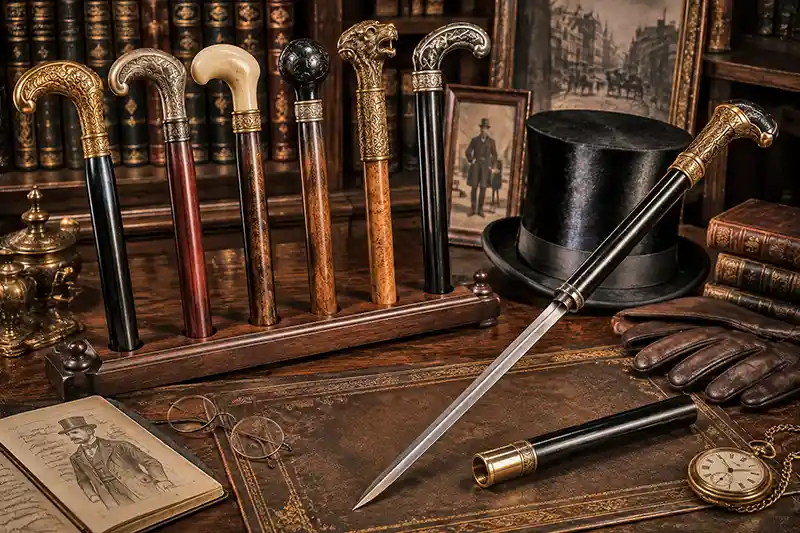
Cane swords did not become popular simply because they concealed a weapon. They became fashionable because they fit perfectly into a changing society. By the late 1700s and throughout the 1800s, openly wearing a sword was falling out of favor in many European cities. What had once been a common accessory for noblemen and military officers was increasingly viewed as unnecessary or even inappropriate in everyday public life.
Walking canes quickly filled that void. They were elegant, practical, and socially acceptable. Wealthy gentlemen often owned several canes to match different outfits, occasions, or seasons. Exotic woods, polished ebony, ivory, silver, and finely engraved brass transformed a simple walking stick into a statement of refinement. Hidden inside some of these luxurious canes, however, was a slender steel blade waiting to be drawn if circumstances demanded it.
This dual purpose made the cane sword especially attractive to travelers, merchants, and gentlemen who frequently walked through unfamiliar streets. Rather than advertising that they were armed, they carried what appeared to be an ordinary fashion accessory. It offered peace of mind while preserving the appearance of civility, something that was highly valued during the Victorian era.
The popularity of cane swords also reflected a broader shift toward discreet personal protection. Instead of displaying a weapon openly, people increasingly favored concealed designs that blended into everyday life. Other ingenious hidden knives followed the same philosophy, disguising useful blades inside ordinary objects while allowing their owners to remain prepared without drawing attention.
How Cane Swords Were Crafted
Creating a cane sword required far more skill than making an ordinary walking cane or a simple sword. Each piece had to function flawlessly as both. The blade needed to slide smoothly inside the shaft without rattling, while the cane itself had to remain strong enough to withstand everyday use. Achieving that balance demanded careful engineering and the work of highly skilled craftsmen.
Most cane swords featured slender, double-edged or triangular blades made from hardened steel. These narrow profiles were chosen because they fit neatly inside the cane while remaining effective for thrusting. Unlike broad military swords designed for powerful cuts, cane swords emphasized speed, precision, and concealment. Many were fitted with locking mechanisms or threaded handles that kept the blade securely hidden until it was intentionally drawn.
The canes themselves were often works of art. Craftsmen used ebony, rosewood, malacca, hickory, and other durable woods for the shaft, while the handles might be carved from ivory, horn, silver, brass, or even gold. Some featured intricate engravings, animal-head pommels, or decorative inlays that reflected the owner's wealth and personal taste. To a casual observer, they appeared to be elegant walking sticks rather than carefully disguised weapons.
This level of craftsmanship is one reason authentic antique cane swords remain highly collectible today. Each one represents a remarkable blend of woodworking, metalworking, and mechanical design. Modern fighting canes rely on strength and durability instead of concealed blades, but they continue the tradition of transforming an ordinary-looking cane into a practical tool for personal protection.
Were Cane Swords Actually Used in Combat?
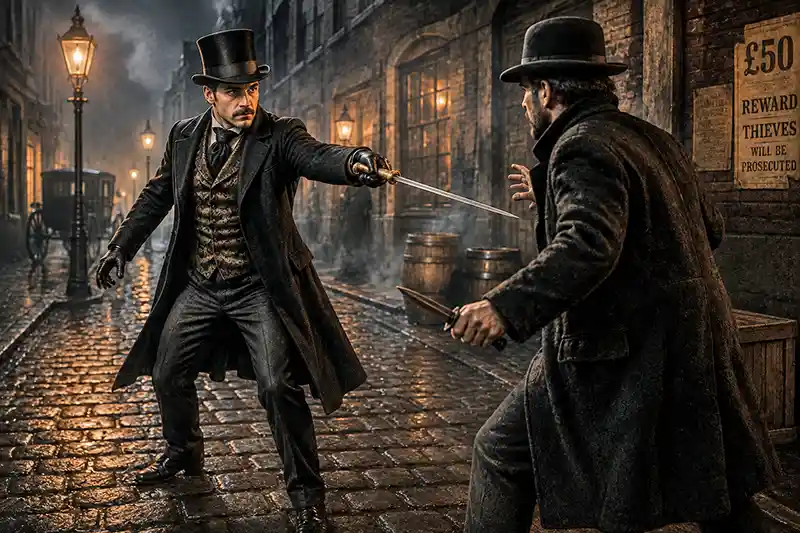
Despite their fearsome reputation, cane swords were rarely intended for battlefield combat. They were personal defense weapons, designed for sudden encounters rather than organized warfare. Their slim blades excelled at thrusting, allowing the user to keep an attacker at a distance while taking advantage of the sword's concealed nature.
Historical accounts suggest that cane swords were occasionally carried by travelers, merchants, military officers, and gentlemen who walked through cities where crime was a genuine concern. In an era before modern policing, it was not uncommon for respectable citizens to carry some form of protection. A cane sword offered a discreet alternative to openly wearing a saber or rapier, especially in places where visible weapons were discouraged.
That said, cane swords were not without compromises. Because the blade had to fit inside the cane, it was generally narrower and lighter than a conventional sword. Most lacked a hand guard, making them less suitable for prolonged fencing or dueling. Their greatest advantage came from surprise rather than superior fighting ability, giving the owner precious seconds to react if threatened.
This balance between concealment and practicality continues to influence modern defensive tools. Today's self-defense canes are built to function as durable impact tools instead of concealed swords, while many people also choose compact self-defense weapons for everyday carry that emphasize accessibility, legality, and reliability over hidden blades.
The Laws That Brought the Cane Sword's Golden Age to an End
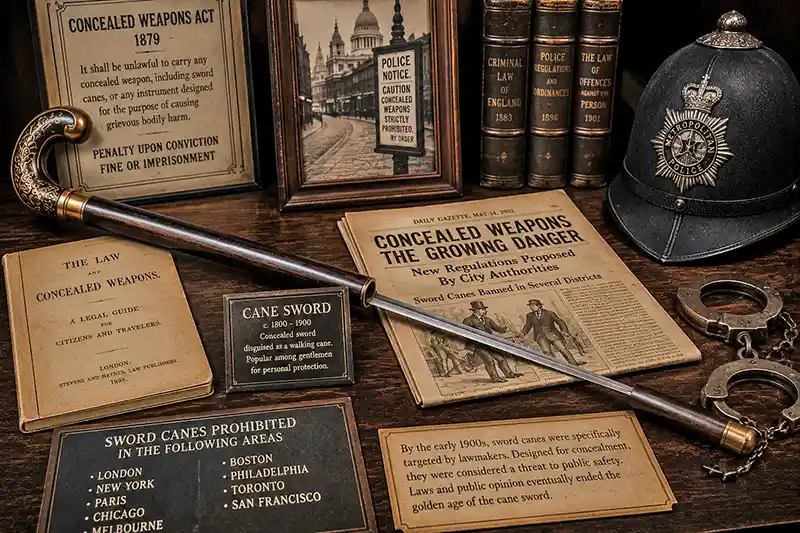
For much of their history, cane swords occupied a legal gray area. They looked like ordinary walking canes, yet concealed a blade capable of inflicting serious injury. As cities grew larger during the late 19th and early 20th centuries, governments became increasingly concerned about weapons that could be carried without attracting attention. Cane swords soon found themselves at the center of that debate.
Many countries and local governments began passing laws that specifically targeted concealed weapons. While the details varied from place to place, cane swords were frequently mentioned alongside sword canes, belt buckle knives, and other disguised weapons. Lawmakers argued that a weapon hidden inside an everyday object gave its owner an unfair advantage while making it difficult for authorities to distinguish armed individuals from ordinary citizens.
As these restrictions spread, public attitudes also began to change. Walking canes gradually became associated with age and mobility rather than fashion, reducing the demand for decorative sword canes. By the middle of the 20th century, the once-common gentleman's accessory had largely disappeared from everyday life, surviving mostly as an antique, collector's piece, or museum exhibit.
Although traditional cane swords are prohibited or heavily restricted in many jurisdictions today, the idea behind them has never completely disappeared. Modern guides covering hidden weapons that could save your life and other discreet defensive tools reflect the same desire for preparedness, even though today's focus is generally on practical, lawful options rather than concealed blades.
From Sword Canes to Modern Fighting Canes
Although the concealed blade has largely disappeared, the walking cane itself has never lost its value as a defensive tool. Instead of hiding a sword inside the shaft, modern fighting canes rely on solid construction, proper technique, and durable materials to provide both everyday utility and personal protection. The philosophy has shifted from concealment to capability.
Unlike antique cane swords, today's defensive canes are designed to function exactly as they appear. Many are crafted from high-strength hardwoods, fiberglass, or advanced polymers capable of withstanding significant impact. Their hooked handles provide excellent leverage for controlling distance, redirecting an attacker's movement, or maintaining balance, making them practical tools even when no confrontation ever occurs.
This evolution reflects changing attitudes toward self-defense. Rather than disguising a weapon inside an ordinary object, many people now prefer equipment that is straightforward, reliable, and appropriate for everyday use. If you're curious about how these modern designs work, our guide explaining what is a fighting cane explores their techniques, advantages, and intended purpose in greater detail.
Today's self-defense canes may look very different from the ornate sword canes carried by Victorian gentlemen, but they preserve the same core idea. A simple walking stick can offer confidence, support, and protection without sacrificing elegance. In that sense, the spirit of the cane sword lives on, even if the hidden blade has become a thing of the past.
Why Collectors Still Seek Out Cane Swords Today
Long after they disappeared from everyday life, cane swords continue to command attention from museums, historians, and collectors around the world. Their appeal extends far beyond the hidden blade itself. Each piece tells a story about craftsmanship, changing fashions, and a period when personal protection could be concealed inside an object associated with elegance rather than violence.
Authentic antique cane swords are especially prized because no two are exactly alike. Some feature finely engraved silver handles, while others are carved from ivory, horn, or exotic hardwoods. Blades may be triangular, double-edged, or even etched with decorative patterns. These details reveal the remarkable skill of the artisans who created them and make surviving examples highly desirable historical artifacts.
Collectors also appreciate how cane swords represent an important chapter in the evolution of concealed defensive tools. They bridge the gap between traditional swords and the more discreet designs that followed, influencing everything from hidden knives to other ingenious hidden blades and discreet tools. Studying these antiques offers a fascinating glimpse into how people adapted to changing laws, fashions, and concerns about personal safety.
Today, most cane swords spend their lives in private collections or museum displays rather than on city streets. Their practical role may have faded, but their historical significance continues to grow. As both mechanical curiosities and works of art, they remain some of the most fascinating concealed weapons ever created.
Were cane swords ever commonly carried?
Yes. During the 18th and 19th centuries, cane swords were carried by some gentlemen, travelers, merchants, and military officers, particularly in Europe. Because walking canes were fashionable accessories, a sword concealed inside one allowed the owner to carry a means of personal protection without openly wearing a weapon. While they were never as common as ordinary walking canes, cane swords were popular enough to become well-known throughout the Victorian era.
Why do cane swords have such thin blades?
Cane swords were designed for concealment first and combat second. To fit inside the narrow shaft of a walking cane, the blade had to be slim enough to slide smoothly while leaving enough strength in the cane itself for everyday use. Most featured narrow, rigid blades intended for thrusting rather than slashing, making them effective for personal defense while remaining compact enough to stay hidden inside an ordinary-looking cane.
Are cane swords legal to own?
It depends on where you live. Laws governing cane swords vary widely between countries, states, and even local jurisdictions. Because they conceal a blade inside an ordinary walking cane, many places classify them as concealed or disguised weapons, making them subject to stricter regulations than conventional knives or walking canes. Anyone interested in owning or collecting a cane sword should always check the laws that apply in their area before purchasing or carrying one.
Did people really duel with cane swords?
Although it certainly happened on occasion, cane swords were not designed for formal duels. Traditional dueling was typically conducted with purpose-built weapons such as rapiers, smallswords, or pistols under established rules. Cane swords lacked the balance, hand protection, and blade length preferred by experienced fencers. Instead, they were intended for unexpected encounters where having a concealed weapon was more important than excelling in a prolonged sword fight.
What is the difference between a cane sword and a fighting cane?
A cane sword conceals a slender blade inside the shaft, allowing it to function as both a walking cane and a disguised weapon. A fighting cane, on the other hand, contains no hidden blade. It is designed as a sturdy impact tool that relies on its strength, balance, and hooked handle for defensive techniques. While cane swords emphasize concealment, modern fighting canes focus on durability, practicality, and lawful everyday use in many jurisdictions.
Why did walking canes go out of fashion?
Walking canes gradually declined in popularity during the early 20th century as men's fashion became less formal and cities became easier to navigate. Improvements in transportation, changing clothing styles, and shifting social norms meant fewer people carried canes as everyday accessories. As walking canes disappeared from fashionable wardrobes, cane swords naturally faded with them, becoming historical curiosities rather than practical personal defense tools.
Why were cane swords considered controversial?
Unlike an ordinary sword, a cane sword concealed its blade inside an object that appeared completely harmless. Critics argued that this made it difficult for others to recognize when someone was armed, leading many governments to classify cane swords as disguised or concealed weapons. Their controversial reputation ultimately contributed to the laws that restricted or banned them in many parts of the world.
Who made the finest cane swords?
Many of the finest cane swords were produced by skilled European swordsmiths and luxury craftsmen during the 18th and 19th centuries. French, English, German, and Italian makers became especially well known for combining beautifully crafted walking canes with high-quality steel blades. Today, signed examples from respected makers are among the most desirable pieces in antique weapons collections.
Were cane swords ever carried by military officers?
Yes. Although cane swords were not standard military equipment, some officers and veterans carried them while traveling or after retiring from active service. Since many officers were already trained in swordsmanship, a cane sword offered a discreet way to retain a familiar means of personal protection without openly wearing a military saber.
You May Also Be Interested In:
- The Strange History of the Tomahawk
- The Strange History of the Blackjack
- The Strange History of the Push Dagger
- The Strange History of Belt Buckle Knives
- Why Did Some Swords Have Wavy Blades?
- What Is a Fighting Cane? A Beginner's Guide to Martial Arts Canes
- The History and Evolution of the Karambit Knife
- History and Evolution of Self-Defense Keychains
- Why Were Nunchucks Actually Invented? (The Real History Might Surprise You)
- What Is a Push Dagger? History, Design, and Modern Uses
Leave a Reply