August 12th, 2026
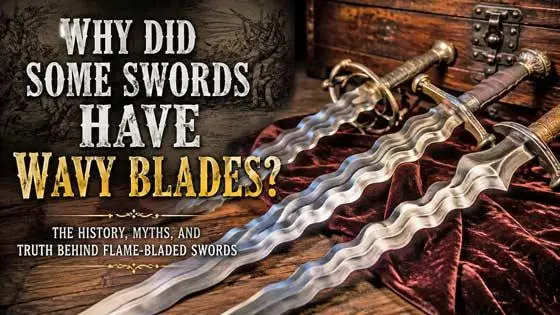
At first glance, a sword with a wavy blade looks like something invented by a fantasy artist. Yet these strange weapons were real, and some of the most dramatic surviving examples were carried in Europe centuries ago. Often described today as flamberges or flame-bladed swords, their rippling edges have inspired claims that they could saw through armor, shatter an opponent's sword, or create violent vibrations when blades collided. The reality is more complicated. Wavy blades appeared on everything from enormous two-handed swords to slender rapiers, and historians still have to separate practical advantages from craftsmanship, intimidation, fashion, and centuries of exaggeration. So why would a swordsmith go through the considerable trouble of forging a blade that looked like fire?
August 11th, 2026
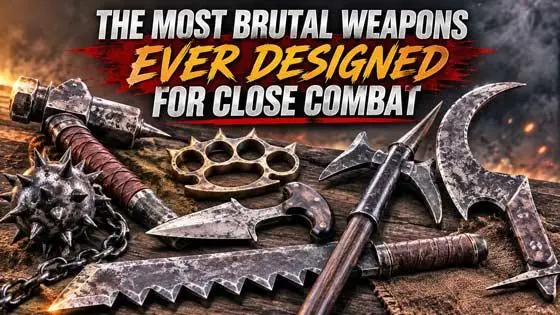
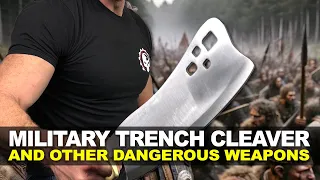
Most weapons give you at least a little distance from the person trying to kill you. The weapons in this article were built for the moment when that distance disappeared. They were made for cramped trenches, crowded ship decks, narrow castle corridors, chaotic streets, and brutal hand-to-hand fighting where hesitation could be fatal. Some crushed armor. Others punched through it. A few were deliberately designed to trap, tear, or overwhelm an opponent before they could react. From vicious trench weapons to medieval designs that look almost too brutal to be real, these are the close combat weapons created for fighting at the most terrifying distance of all: arm's reach.
August 11th, 2026
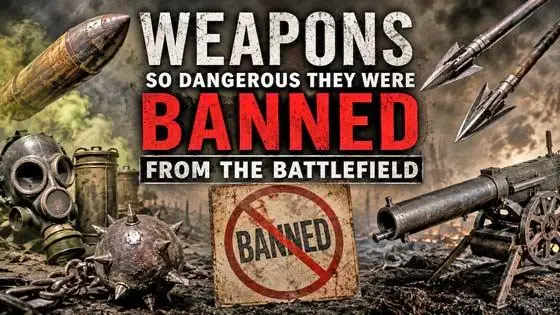
For centuries, armies searched for weapons that could give them even the slightest advantage on the battlefield. But occasionally, a weapon earned a reputation for being so cruel, indiscriminate, or terrifying that governments and military leaders tried to restrict it altogether. Some were targeted by international treaties. Others were condemned by religious authorities or banned by individual nations. And a few supposedly "banned" weapons were never actually prohibited at all, despite legends that persist to this day. From brutal medieval projectiles to weapons that changed the rules of modern warfare, the stories behind these forbidden weapons reveal something fascinating: even in war, humanity has repeatedly tried to decide whether certain ways of killing simply go too far.
August 10th, 2026
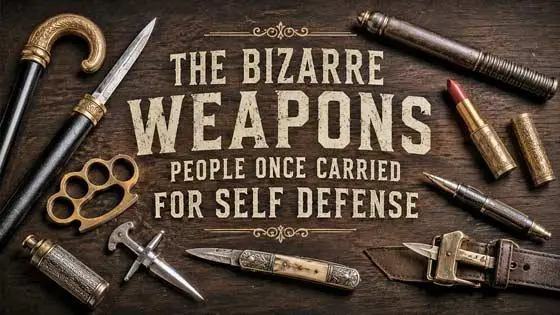
Throughout history, people have carried some surprisingly bizarre objects for protection. Long before modern personal safety devices existed, a walk through a crowded city could mean sharing the street with people carrying sword canes, weighted saps, knuckle dusters, push daggers, disguised knives, and weapons hidden inside seemingly ordinary objects. Some were elegant enough to pass as fashion accessories, while others looked like inventions dreamed up by someone expecting trouble around every corner. What makes these weapons especially fascinating is that many were not created for soldiers or battlefields. They were designed for ordinary people who wanted protection while going about their daily lives. Here are some of the strangest self-defense weapons people actually carried.
August 10th, 2026
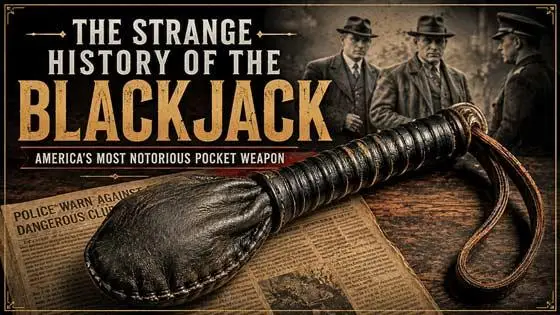
Small enough to disappear into a pocket and heavy enough to end a fight with a single swing, the blackjack became one of the most notorious weapons carried on American streets. For decades, these compact impact weapons were associated with everyone from police officers and private detectives to criminals and hired muscle. Yet the blackjack was not simply a crude club. Its flexible construction gave it a very different feel from a traditional baton, and its ability to deliver tremendous force from such a small package helped keep it in use long after more primitive clubs had disappeared. The story of how this unassuming leather weapon became both a law-enforcement tool and an icon of the criminal underworld is far stranger than its simple appearance suggests.