



Real Ninja Weapons and Ninjutsu Gear for Ninja Warriors
Products
-
 🔍︎ QUICK VIEW
$24.95
🔍︎ QUICK VIEW
$24.95 -
 🔍︎ QUICK VIEW
-
 🔍︎ QUICK VIEW
-
 🔍︎ QUICK VIEW
-
 🔍︎ QUICK VIEW
$18.95
🔍︎ QUICK VIEW
$18.95 -
 🔍︎ QUICK VIEW
-
 🔍︎ QUICK VIEW
$24.95
🔍︎ QUICK VIEW
$24.95 -
 🔍︎ QUICK VIEW
$84.95
🔍︎ QUICK VIEW
$84.95 -
 🔍︎ QUICK VIEW
$24.95
🔍︎ QUICK VIEW
$24.95 -
 🔍︎ QUICK VIEW
$12.95
🔍︎ QUICK VIEW
$12.95 -
 🔍︎ QUICK VIEW
$12.95
🔍︎ QUICK VIEW
$12.95 -
 🔍︎ QUICK VIEW
$69.95
🔍︎ QUICK VIEW
$69.95 -
 🔍︎ QUICK VIEW
-
 🔍︎ QUICK VIEW
$39.95
🔍︎ QUICK VIEW
$39.95 -
 🔍︎ QUICK VIEW
-
 🔍︎ QUICK VIEW
-
 🔍︎ QUICK VIEW
$69.95
🔍︎ QUICK VIEW
$69.95 -
 🔍︎ QUICK VIEW
$14.95
🔍︎ QUICK VIEW
$14.95 -
 🔍︎ QUICK VIEW
$17.95
🔍︎ QUICK VIEW
$17.95 -
 🔍︎ QUICK VIEW
-
 🔍︎ QUICK VIEW
-
 🔍︎ QUICK VIEW
$54.95
🔍︎ QUICK VIEW
$54.95 -
 🔍︎ QUICK VIEW
$22.95
🔍︎ QUICK VIEW
$22.95 -
 🔍︎ QUICK VIEW
$20.95
🔍︎ QUICK VIEW
$20.95 -
 🔍︎ QUICK VIEW
$17.95
🔍︎ QUICK VIEW
$17.95 -
 🔍︎ QUICK VIEW
$149.95
🔍︎ QUICK VIEW
$149.95 -
 🔍︎ QUICK VIEW
-
 🔍︎ QUICK VIEW
$14.95
🔍︎ QUICK VIEW
$14.95 -
 🔍︎ QUICK VIEW
$24.95
🔍︎ QUICK VIEW
$24.95 -
 🔍︎ QUICK VIEW
$34.95
🔍︎ QUICK VIEW
$34.95 -
 🔍︎ QUICK VIEW
-
 🔍︎ QUICK VIEW
$32.95
🔍︎ QUICK VIEW
$32.95 -
 🔍︎ QUICK VIEW
$32.95
🔍︎ QUICK VIEW
$32.95 -
 🔍︎ QUICK VIEW
$14.95
🔍︎ QUICK VIEW
$14.95 -
 🔍︎ QUICK VIEW
$32.95
🔍︎ QUICK VIEW
$32.95 -
 🔍︎ QUICK VIEW
$17.95
🔍︎ QUICK VIEW
$17.95 -
 🔍︎ QUICK VIEW
$34.95
🔍︎ QUICK VIEW
$34.95 -
 🔍︎ QUICK VIEW
-
 🔍︎ QUICK VIEW
-
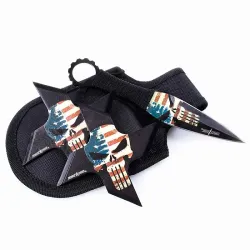 🔍︎ QUICK VIEW
$24.95
🔍︎ QUICK VIEW
$24.95 -
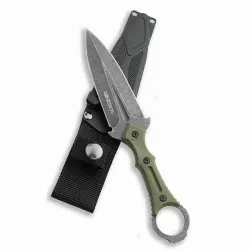 🔍︎ QUICK VIEW
$21.95
🔍︎ QUICK VIEW
$21.95 -
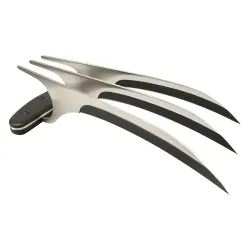 🔍︎ QUICK VIEW
$32.95
🔍︎ QUICK VIEW
$32.95 -
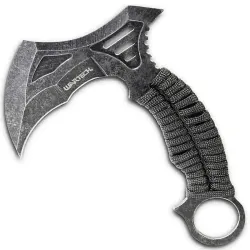 🔍︎ QUICK VIEW
$24.95
🔍︎ QUICK VIEW
$24.95 -
 🔍︎ QUICK VIEW
$129.95
🔍︎ QUICK VIEW
$129.95 -
 🔍︎ QUICK VIEW
$22.95
🔍︎ QUICK VIEW
$22.95 -
 🔍︎ QUICK VIEW
$139.95
🔍︎ QUICK VIEW
$139.95 -
 🔍︎ QUICK VIEW
$32.95
🔍︎ QUICK VIEW
$32.95 -
 🔍︎ QUICK VIEW
$44.95
🔍︎ QUICK VIEW
$44.95 -
 🔍︎ QUICK VIEW
$104.95
🔍︎ QUICK VIEW
$104.95 -
 🔍︎ QUICK VIEW
$69.95
🔍︎ QUICK VIEW
$69.95 -
 🔍︎ QUICK VIEW
$59.95
🔍︎ QUICK VIEW
$59.95 -
 🔍︎ QUICK VIEW
$49.95
🔍︎ QUICK VIEW
$49.95 -
 🔍︎ QUICK VIEW
-
 🔍︎ QUICK VIEW
$44.95
🔍︎ QUICK VIEW
$44.95 -
 🔍︎ QUICK VIEW
-
 🔍︎ QUICK VIEW
$29.95
🔍︎ QUICK VIEW
$29.95 -
 🔍︎ QUICK VIEW
$24.95
🔍︎ QUICK VIEW
$24.95 -
 🔍︎ QUICK VIEW
$21.95
🔍︎ QUICK VIEW
$21.95 -
 🔍︎ QUICK VIEW
$22.95
🔍︎ QUICK VIEW
$22.95 -
 🔍︎ QUICK VIEW
$29.95
🔍︎ QUICK VIEW
$29.95 -
 🔍︎ QUICK VIEW
-
 🔍︎ QUICK VIEW
-
 🔍︎ QUICK VIEW
$13.95
🔍︎ QUICK VIEW
$13.95 -
 🔍︎ QUICK VIEW
$12.95
🔍︎ QUICK VIEW
$12.95 -
 🔍︎ QUICK VIEW
-
 🔍︎ QUICK VIEW
-
 🔍︎ QUICK VIEW
$69.95
🔍︎ QUICK VIEW
$69.95 -
 🔍︎ QUICK VIEW
From $89.95
🔍︎ QUICK VIEW
From $89.95 -
 🔍︎ QUICK VIEW
-
 🔍︎ QUICK VIEW
$89.95
🔍︎ QUICK VIEW
$89.95 -
 🔍︎ QUICK VIEW
-
 🔍︎ QUICK VIEW
-
 🔍︎ QUICK VIEW
$42.95
🔍︎ QUICK VIEW
$42.95 -
 🔍︎ QUICK VIEW
-
 🔍︎ QUICK VIEW
$32.95
🔍︎ QUICK VIEW
$32.95 -
 🔍︎ QUICK VIEW
$17.95
🔍︎ QUICK VIEW
$17.95 -
 🔍︎ QUICK VIEW
$24.95
🔍︎ QUICK VIEW
$24.95 -
 🔍︎ QUICK VIEW
 (2)
(2) (1)
(1)Real Ninja Weapons and Ninjutsu Gear for Ninja Warriors
Throughout Japanese history, the ninja, often referred to as "shinobi", were masters of espionage, sabotage, and covert operations. Their expertise extended beyond mere stealth; they were adept in various combat techniques and utilized an array of specialized weapons tailored for clandestine missions. These tools were not just instruments of war but also reflections of the ninja's resourcefulness and adaptability.
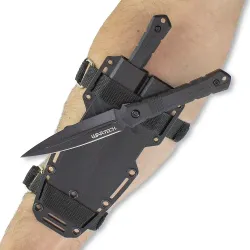
The ninjato, a straight-bladed sword, is frequently associated with ninjas in popular culture. However, historical evidence suggests that ninjas often favored shorter, more practical blades for close-quarters combat and ease of concealment. The katana, with its curved blade, was primarily a samurai weapon, while the ninjato's straight design allowed for swift, decisive strikes in confined spaces.
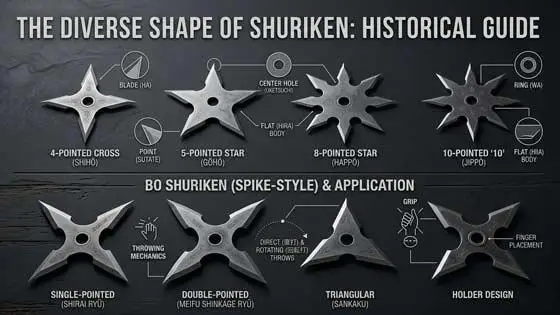
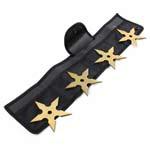
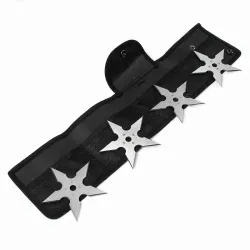
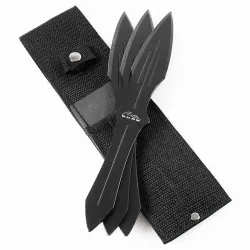
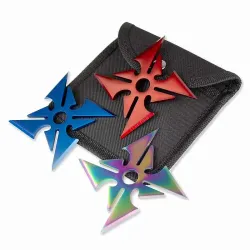
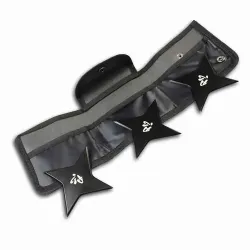
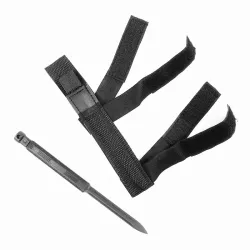
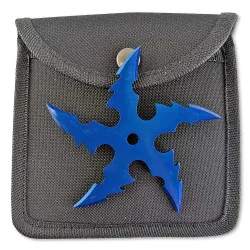
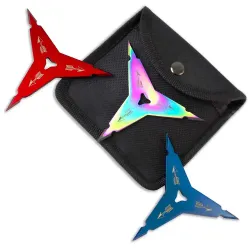
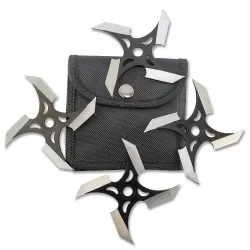
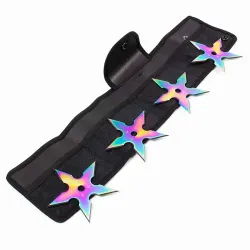
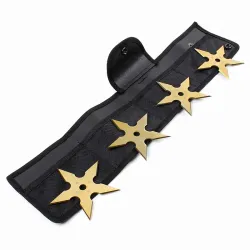
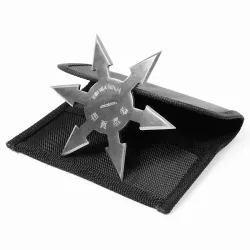
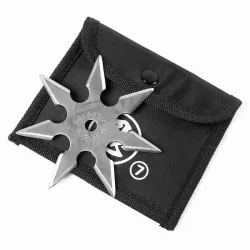
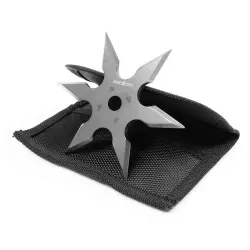
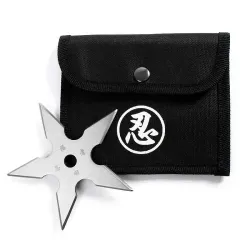
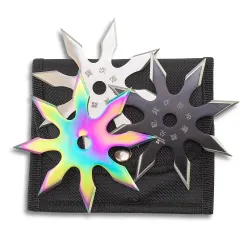
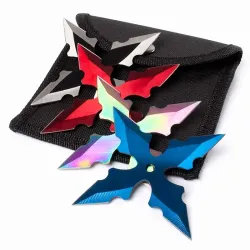
Beyond bladed instruments, ninjas employed a variety of tools designed for versatility and surprise. The shuriken, commonly known as throwing stars, were crafted in various shapes, including the hira-shuriken (flat) and bo-shuriken (stick-like). These concealed weapons served multiple purposes: distracting adversaries, causing minor injuries, or creating openings for escape. Their effectiveness lay in their simplicity and the element of surprise they provided.
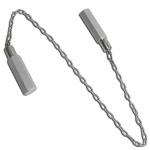
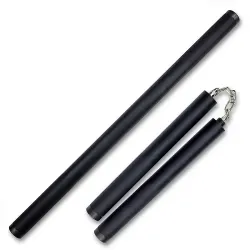
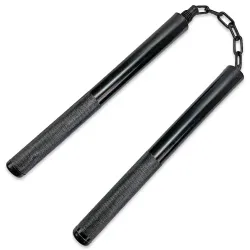
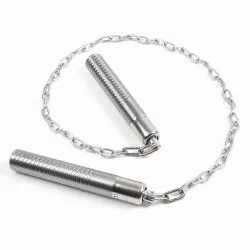
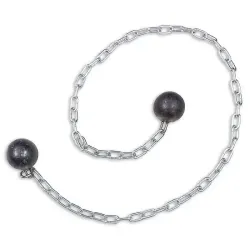
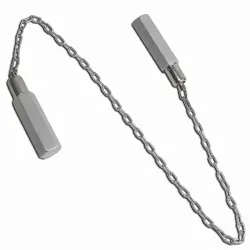
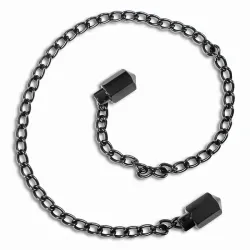
Another distinctive weapon in the ninja's arsenal was the kusari-fundo, a handheld chain with weights attached to each end. This weapon allowed for a range of techniques, from entangling an opponent's weapon to delivering crushing blows. The chain's flexibility enabled ninjas to attack from various angles, making it a formidable tool in skilled hands.
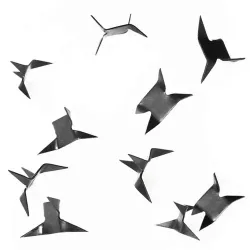
The makibishi, akin to the caltrop, consisted of spiked objects scattered on the ground to impede pursuers. Designed to penetrate the soles of sandals, these devices provided ninjas with a means to slow down enemies during retreats or escapes.
For silent takedowns from a distance, ninjas utilized blowguns (fukiya). These tools fired small, poison-tipped darts, enabling stealthy incapacitation of targets without revealing the ninja's presence. The projectiles' effectiveness was amplified by the use of various poisons, ensuring swift and silent eliminations.
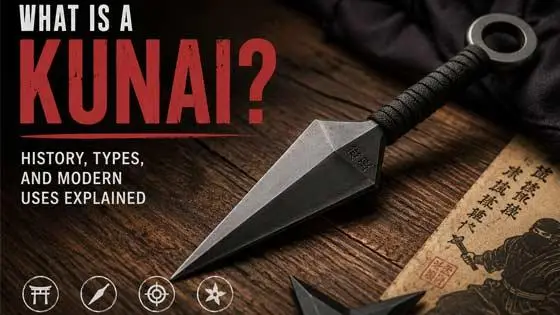
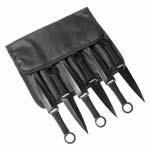
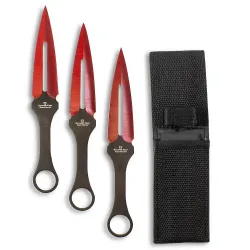
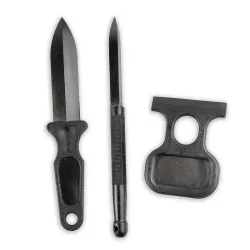
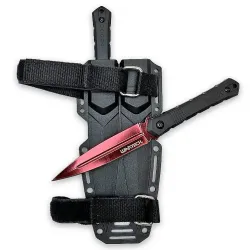
The kunai, a multi-purpose tool, served as both a weapon and a utility instrument. Its design (a pointed, trowel-like blade with a ring at the handle's end) allowed it to be used for digging, climbing, and combat. In the hands of a ninja, the kunai could be thrown or wielded in close-quarters, making it an indispensable part of their toolkit.
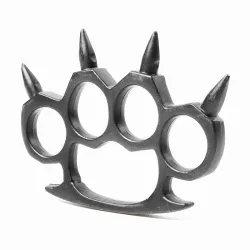
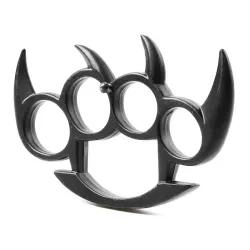
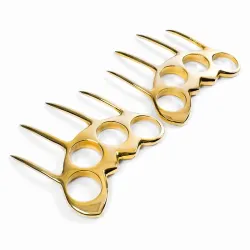
The kakute, a spiked ring worn on the finger, was favored by ninjas, especially the female operatives known as kunoichi. Concealed within the hand, the kakute could be used to surprise opponents with sudden, close-range attacks. The spikes were sometimes coated with poison, enhancing their lethality.
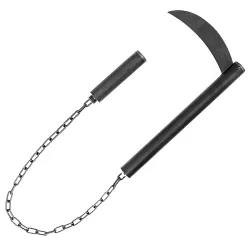
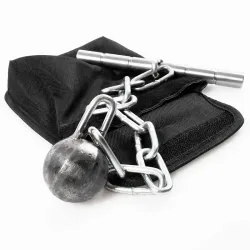
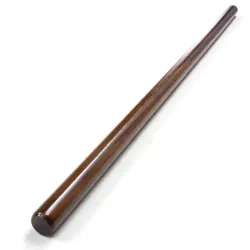
The chigiriki, a flail-like weapon, consisted of a wooden staff attached to a chain with a weighted end. This design allowed for striking, entangling, and disarming opponents. The chigiriki's versatility made it a valuable asset in various combat scenarios.
Understanding the historical context of these weapons offers insight into the ninja's strategic mindset. Originating during Japan's feudal era, ninjas were often peasants or lower-class individuals who underwent rigorous training in ninjutsu, the art of stealth and strategy. Their weapons were chosen not just for their effectiveness in combat but also for their ability to blend into everyday life, allowing ninjas to operate unnoticed.
In modern times, the fascination with ninja weapons has permeated popular culture, leading to their depiction in films, television, and literature. While these portrayals often emphasize the exotic and mysterious aspects of ninjutsu, they also highlight the enduring legacy of these historical tools and the warriors who wielded them.
Ninjas, or shinobi, were covert agents in feudal Japan specializing in espionage, sabotage, and assassination. Their choice of weapons was influenced by practicality, stealth, and the need to blend into everyday society. Beyond the commonly known shuriken and ninjato, ninjas utilized a diverse array of tools, each serving specific purposes:
Yes, throwing stars were real weapons, but they were never the main weapon of the ninja. They were designed for distraction, injury, and strategy rather than lethal attacks.
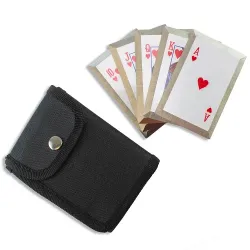
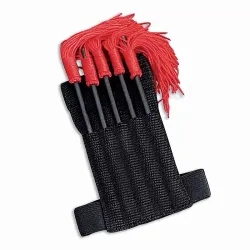
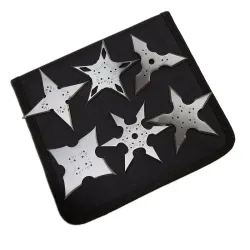
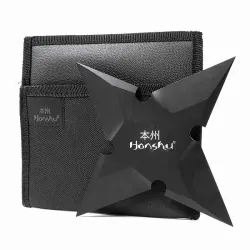
Throwing stars, called shuriken, were crafted from steel or iron and came in many shapes and sizes. Ninjas used two primary types: the flat hira shuriken, which looked like a star with multiple sharp points, and the bo shuriken, which were straight spikes. Both types could be thrown or used in close combat to cut or puncture skin. While these blades could injure or disable an enemy, their true purpose was often psychological. A well-thrown shuriken could cause confusion or hesitation, allowing the ninja to close distance or escape unseen.
Ninjas also coated some shuriken with toxins or rust to increase their effectiveness. In skilled hands, they became precision tools for creating openings in combat or diversion during infiltration. Though movies often exaggerate their power, throwing stars were an important part of the ninja's real-life toolkit of stealth and strategy.
The most common and versatile weapon used by ninjas was the kunai. It served as both a combat weapon and a practical tool for climbing, digging, or prying.
Unlike the ornate throwing knives seen in movies, the real kunai was a simple, forged-iron tool resembling a short trowel with a ring at the end of its handle. Ninjas carried different sizes, often strapping them to belts or hiding them in their clothing. In combat, the kunai could be thrown, used to stab, or wielded defensively to parry an attack. Its durable, utilitarian design made it a favorite for fieldwork, not just fighting.
Beyond its physical use, the kunai symbolized the ninja's resourcefulness. Because it looked like a common farming or masonry tool, it could be carried openly without suspicion. This made it an ideal choice for covert agents who needed to move through towns and villages unnoticed. Whether used for combat, climbing walls, or setting traps, the kunai was a cornerstone of the ninja's real-world arsenal.
Yes, ninjas used poison, but not always in the way people imagine. It was a practical tool for sabotage, distraction, and silent elimination rather than dramatic assassinations.
Historical records show that ninjas learned to make poisons from plants, insects, and minerals. These mixtures were used to coat weapons such as shuriken, kunai, and darts fired from blowguns. A single cut or puncture could deliver a fast-acting toxin, weakening or incapacitating the target. Some poisons were meant to kill, while others caused disorientation, pain, or paralysis to give the ninja an advantage in close quarters.
Ninjas also used poison creatively outside of combat. They could contaminate food or water supplies, coat door handles or weapon hilts, and even use smoke laced with irritants to drive enemies out of hiding. Poisons were part of a broader psychological and tactical approach; tools of control and manipulation rather than brute force. This made them a perfect fit for the ninja's skill set of stealth and strategy.
Ninjas typically used a shorter, straight-bladed sword called a ninjato. It was easier to draw quickly, conceal, and maneuver in tight spaces than the curved samurai katana.
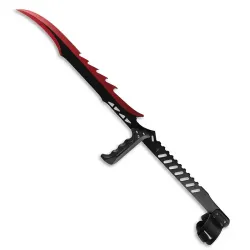
The ninjato was usually around two feet long, with a straight blade and a square guard. Its shorter length made it practical for stealth missions, where fast draws and compact movement mattered more than reach. Unlike the katana, which required more space to unsheath, the ninjato could be drawn in a single quick motion, allowing a ninja to strike or defend in confined areas such as hallways or rooftops.
Many ninjato were crafted from repurposed or broken blades, reflecting the ninja's practicality. The scabbard often had multiple uses too. It could store small tools, conceal powders, or serve as a breathing tube underwater. While not as refined as samurai swords, the ninjato was a tool built for versatility and efficiency, perfectly matching the ninja's need for speed, adaptability, and stealth.
Yes, ninjas were real historical figures, though their true role was far more practical and less mystical than what pop culture suggests.
Ninjas, known as shinobi, were covert agents in feudal Japan who specialized in espionage, sabotage, and guerrilla tactics. They operated primarily during Japan's Sengoku period, a time of civil unrest and constant warfare. While samurai followed strict codes of honor, ninjas were often hired by lords to perform missions that required secrecy, deception, or unconventional warfare. Their skills included infiltration, disguise, silent movement, and intelligence gathering.
Most ninjas came from lower social classes and were trained in villages like Iga and Koga, regions known for producing skilled spies and assassins. They blended martial arts, survival techniques, and practical tools into a system called ninjutsu. Although later legends exaggerated their powers with myths about invisibility and magic, the real ninja relied on patience, strategy, and adaptability to survive and succeed in dangerous missions.
Ninjas did not actually wear the all-black outfits seen in movies. Their real clothing was chosen to blend into their surroundings and pass as ordinary people.
Historically, ninjas dressed for disguise, not intimidation. During the day, they might wear the clothing of farmers, monks, or merchants to move unnoticed through villages or enemy territory. At night, they preferred dark blue or brown garments rather than pure black, which would stand out under moonlight. These colors helped them stay hidden in shadows while remaining practical for travel and movement.
Ninja attire was also functional. Loose-fitting garments allowed quiet movement and could be quickly removed if grabbed. Some clothing had hidden pockets for carrying tools, poisons, or small weapons like shuriken and kunai. The image of the black-clad ninja likely came from Japanese theater, where stagehands dressed in black to appear invisible. Over time, that theatrical costume became the iconic symbol of the ninja we know today.
Ninjas trained in a wide range of physical, mental, and strategic skills designed to make them adaptable in any situation. Their training went far beyond fighting techniques.
The core of ninja training was ninjutsu, a discipline that combined martial arts, stealth, survival, and intelligence gathering. Students practiced hand-to-hand combat, swordsmanship, and weapon mastery with tools like the kunai, shuriken, and kusari-fundo. They also studied stealth movement, camouflage, and escape tactics to move silently and remain undetected in the field.
Beyond combat, ninjas learned disciplines such as climbing, swimming, and night navigation. They studied weather, geography, and psychology to understand how to read people and environments. Some were even trained in herbal medicine and the use of poisons. This combination of physical conditioning, mental discipline, and tactical awareness made them some of the most well-rounded operatives of their time, capable of adapting to nearly any mission or challenge.
Ninjas originated in Japan during the country's feudal era, when warfare and political unrest created demand for covert agents skilled in espionage and unconventional tactics.
Most historians trace the roots of ninjas to the Iga and Koga regions of Japan. These mountainous areas provided natural protection and isolation, allowing clans to develop unique fighting and survival techniques. Over time, these methods evolved into ninjutsu, the art of stealth, disguise, and infiltration. Villagers, farmers, and lower-class samurai trained in these regions to protect their lands and gather intelligence for feudal lords.
Unlike samurai, who fought under strict codes of honor, ninjas specialized in guerrilla tactics, deception, and strategy. Their abilities made them valuable assets during the constant conflicts between rival warlords. The Iga and Koga clans became so skilled that their services were sought across Japan, shaping the image of the ninja as a master of stealth, survival, and intelligence gathering.
The Ninjato and Close-Quarters Blades
The ninjato, a straight-bladed sword, is frequently associated with ninjas in popular culture. However, historical evidence suggests that ninjas often favored shorter, more practical blades for close-quarters combat and ease of concealment. The katana, with its curved blade, was primarily a samurai weapon, while the ninjato's straight design allowed for swift, decisive strikes in confined spaces.
Thrown Weapons and Distraction Tools
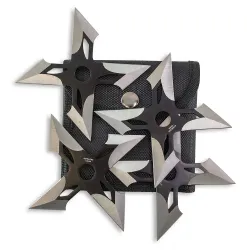
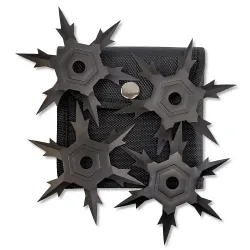
Beyond bladed instruments, ninjas employed a variety of tools designed for versatility and surprise. The shuriken, commonly known as throwing stars, were crafted in various shapes, including the hira-shuriken (flat) and bo-shuriken (stick-like). These concealed weapons served multiple purposes: distracting adversaries, causing minor injuries, or creating openings for escape. Their effectiveness lay in their simplicity and the element of surprise they provided.
Flexible and Entangling Weapons
Another distinctive weapon in the ninja's arsenal was the kusari-fundo, a handheld chain with weights attached to each end. This weapon allowed for a range of techniques, from entangling an opponent's weapon to delivering crushing blows. The chain's flexibility enabled ninjas to attack from various angles, making it a formidable tool in skilled hands.
Area Denial and Escape Devices
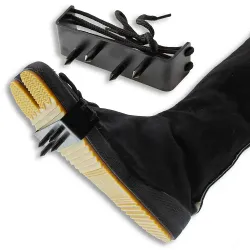
The makibishi, akin to the caltrop, consisted of spiked objects scattered on the ground to impede pursuers. Designed to penetrate the soles of sandals, these devices provided ninjas with a means to slow down enemies during retreats or escapes.
Silent Ranged Weapons
For silent takedowns from a distance, ninjas utilized blowguns (fukiya). These tools fired small, poison-tipped darts, enabling stealthy incapacitation of targets without revealing the ninja's presence. The projectiles' effectiveness was amplified by the use of various poisons, ensuring swift and silent eliminations.
Multi-Purpose Ninja Tools
The kunai, a multi-purpose tool, served as both a weapon and a utility instrument. Its design (a pointed, trowel-like blade with a ring at the handle's end) allowed it to be used for digging, climbing, and combat. In the hands of a ninja, the kunai could be thrown or wielded in close-quarters, making it an indispensable part of their toolkit.
Concealed Close-Range Weapons
The kakute, a spiked ring worn on the finger, was favored by ninjas, especially the female operatives known as kunoichi. Concealed within the hand, the kakute could be used to surprise opponents with sudden, close-range attacks. The spikes were sometimes coated with poison, enhancing their lethality.
Flail-Style Weapons
The chigiriki, a flail-like weapon, consisted of a wooden staff attached to a chain with a weighted end. This design allowed for striking, entangling, and disarming opponents. The chigiriki's versatility made it a valuable asset in various combat scenarios.
The Strategic Mindset Behind Ninja Weapons
Understanding the historical context of these weapons offers insight into the ninja's strategic mindset. Originating during Japan's feudal era, ninjas were often peasants or lower-class individuals who underwent rigorous training in ninjutsu, the art of stealth and strategy. Their weapons were chosen not just for their effectiveness in combat but also for their ability to blend into everyday life, allowing ninjas to operate unnoticed.
Ninja Weapons in Modern Culture
In modern times, the fascination with ninja weapons has permeated popular culture, leading to their depiction in films, television, and literature. While these portrayals often emphasize the exotic and mysterious aspects of ninjutsu, they also highlight the enduring legacy of these historical tools and the warriors who wielded them.
What Weapons Did Ninjas Use in Real Life?
Ninjas, or shinobi, were covert agents in feudal Japan specializing in espionage, sabotage, and assassination. Their choice of weapons was influenced by practicality, stealth, and the need to blend into everyday society. Beyond the commonly known shuriken and ninjato, ninjas utilized a diverse array of tools, each serving specific purposes:
Kusari-fundo (Chain and Weights): This weapon consisted of a length of chain with a weight attached to each end. Ninjas used it to entangle opponents or their weapons, delivering strikes with the weighted ends. Its compact size made it easy to conceal, and its versatility allowed for various combat techniques.
Makibishi (Caltrops): Small, spiked devices scattered on the ground, makibishi were designed to slow down pursuers by causing injury to the feet. Ninjas would plant them in advance during missions to create obstacles for enemies, facilitating a swift escape.
Kakute (Spiked Rings): Worn on the fingers, these rings featured protruding spikes, sometimes poisoned, and were used for close-quarters combat. The kakute allowed ninjas to deliver surprise attacks, especially when concealed within the hand.
Chigiriki (Flail): Comprising a wooden staff connected to a chain with a weighted end, the chigiriki was a versatile weapon. Ninjas used it to strike, entangle, or disarm opponents, benefiting from its reach and flexibility in combat.
Kunai (Throwing Knife): A multi-purpose tool, the kunai served as a throwing weapon and a utility instrument. Its design allowed it to be used for digging, climbing, and combat, making it a staple in a ninja's arsenal.
These weapons exemplify the ninja's emphasis on adaptability, stealth, and efficiency. Each tool was selected for its practicality and effectiveness in various scenarios, reflecting the ninja's strategic approach to their clandestine operations.
Makibishi (Caltrops): Small, spiked devices scattered on the ground, makibishi were designed to slow down pursuers by causing injury to the feet. Ninjas would plant them in advance during missions to create obstacles for enemies, facilitating a swift escape.
Kakute (Spiked Rings): Worn on the fingers, these rings featured protruding spikes, sometimes poisoned, and were used for close-quarters combat. The kakute allowed ninjas to deliver surprise attacks, especially when concealed within the hand.
Chigiriki (Flail): Comprising a wooden staff connected to a chain with a weighted end, the chigiriki was a versatile weapon. Ninjas used it to strike, entangle, or disarm opponents, benefiting from its reach and flexibility in combat.
Kunai (Throwing Knife): A multi-purpose tool, the kunai served as a throwing weapon and a utility instrument. Its design allowed it to be used for digging, climbing, and combat, making it a staple in a ninja's arsenal.
These weapons exemplify the ninja's emphasis on adaptability, stealth, and efficiency. Each tool was selected for its practicality and effectiveness in various scenarios, reflecting the ninja's strategic approach to their clandestine operations.
Did Ninjas Really Use Throwing Stars?
Yes, throwing stars were real weapons, but they were never the main weapon of the ninja. They were designed for distraction, injury, and strategy rather than lethal attacks.
Throwing stars, called shuriken, were crafted from steel or iron and came in many shapes and sizes. Ninjas used two primary types: the flat hira shuriken, which looked like a star with multiple sharp points, and the bo shuriken, which were straight spikes. Both types could be thrown or used in close combat to cut or puncture skin. While these blades could injure or disable an enemy, their true purpose was often psychological. A well-thrown shuriken could cause confusion or hesitation, allowing the ninja to close distance or escape unseen.
Ninjas also coated some shuriken with toxins or rust to increase their effectiveness. In skilled hands, they became precision tools for creating openings in combat or diversion during infiltration. Though movies often exaggerate their power, throwing stars were an important part of the ninja's real-life toolkit of stealth and strategy.
What Was the Most Common Weapon Used by Ninjas?
The most common and versatile weapon used by ninjas was the kunai. It served as both a combat weapon and a practical tool for climbing, digging, or prying.
Unlike the ornate throwing knives seen in movies, the real kunai was a simple, forged-iron tool resembling a short trowel with a ring at the end of its handle. Ninjas carried different sizes, often strapping them to belts or hiding them in their clothing. In combat, the kunai could be thrown, used to stab, or wielded defensively to parry an attack. Its durable, utilitarian design made it a favorite for fieldwork, not just fighting.
Beyond its physical use, the kunai symbolized the ninja's resourcefulness. Because it looked like a common farming or masonry tool, it could be carried openly without suspicion. This made it an ideal choice for covert agents who needed to move through towns and villages unnoticed. Whether used for combat, climbing walls, or setting traps, the kunai was a cornerstone of the ninja's real-world arsenal.
Did Ninjas Really Use Poison?
Yes, ninjas used poison, but not always in the way people imagine. It was a practical tool for sabotage, distraction, and silent elimination rather than dramatic assassinations.
Historical records show that ninjas learned to make poisons from plants, insects, and minerals. These mixtures were used to coat weapons such as shuriken, kunai, and darts fired from blowguns. A single cut or puncture could deliver a fast-acting toxin, weakening or incapacitating the target. Some poisons were meant to kill, while others caused disorientation, pain, or paralysis to give the ninja an advantage in close quarters.
Ninjas also used poison creatively outside of combat. They could contaminate food or water supplies, coat door handles or weapon hilts, and even use smoke laced with irritants to drive enemies out of hiding. Poisons were part of a broader psychological and tactical approach; tools of control and manipulation rather than brute force. This made them a perfect fit for the ninja's skill set of stealth and strategy.
What Kind of Swords Did Ninjas Use?
Ninjas typically used a shorter, straight-bladed sword called a ninjato. It was easier to draw quickly, conceal, and maneuver in tight spaces than the curved samurai katana.
The ninjato was usually around two feet long, with a straight blade and a square guard. Its shorter length made it practical for stealth missions, where fast draws and compact movement mattered more than reach. Unlike the katana, which required more space to unsheath, the ninjato could be drawn in a single quick motion, allowing a ninja to strike or defend in confined areas such as hallways or rooftops.
Many ninjato were crafted from repurposed or broken blades, reflecting the ninja's practicality. The scabbard often had multiple uses too. It could store small tools, conceal powders, or serve as a breathing tube underwater. While not as refined as samurai swords, the ninjato was a tool built for versatility and efficiency, perfectly matching the ninja's need for speed, adaptability, and stealth.
Did Ninjas Really Exist?
Yes, ninjas were real historical figures, though their true role was far more practical and less mystical than what pop culture suggests.
Ninjas, known as shinobi, were covert agents in feudal Japan who specialized in espionage, sabotage, and guerrilla tactics. They operated primarily during Japan's Sengoku period, a time of civil unrest and constant warfare. While samurai followed strict codes of honor, ninjas were often hired by lords to perform missions that required secrecy, deception, or unconventional warfare. Their skills included infiltration, disguise, silent movement, and intelligence gathering.
Most ninjas came from lower social classes and were trained in villages like Iga and Koga, regions known for producing skilled spies and assassins. They blended martial arts, survival techniques, and practical tools into a system called ninjutsu. Although later legends exaggerated their powers with myths about invisibility and magic, the real ninja relied on patience, strategy, and adaptability to survive and succeed in dangerous missions.
What Did Ninjas Wear?
Ninjas did not actually wear the all-black outfits seen in movies. Their real clothing was chosen to blend into their surroundings and pass as ordinary people.
Historically, ninjas dressed for disguise, not intimidation. During the day, they might wear the clothing of farmers, monks, or merchants to move unnoticed through villages or enemy territory. At night, they preferred dark blue or brown garments rather than pure black, which would stand out under moonlight. These colors helped them stay hidden in shadows while remaining practical for travel and movement.
Ninja attire was also functional. Loose-fitting garments allowed quiet movement and could be quickly removed if grabbed. Some clothing had hidden pockets for carrying tools, poisons, or small weapons like shuriken and kunai. The image of the black-clad ninja likely came from Japanese theater, where stagehands dressed in black to appear invisible. Over time, that theatrical costume became the iconic symbol of the ninja we know today.
What Skills Did Ninjas Train In?
Ninjas trained in a wide range of physical, mental, and strategic skills designed to make them adaptable in any situation. Their training went far beyond fighting techniques.
The core of ninja training was ninjutsu, a discipline that combined martial arts, stealth, survival, and intelligence gathering. Students practiced hand-to-hand combat, swordsmanship, and weapon mastery with tools like the kunai, shuriken, and kusari-fundo. They also studied stealth movement, camouflage, and escape tactics to move silently and remain undetected in the field.
Beyond combat, ninjas learned disciplines such as climbing, swimming, and night navigation. They studied weather, geography, and psychology to understand how to read people and environments. Some were even trained in herbal medicine and the use of poisons. This combination of physical conditioning, mental discipline, and tactical awareness made them some of the most well-rounded operatives of their time, capable of adapting to nearly any mission or challenge.
Where Did Ninjas Come From?
Ninjas originated in Japan during the country's feudal era, when warfare and political unrest created demand for covert agents skilled in espionage and unconventional tactics.
Most historians trace the roots of ninjas to the Iga and Koga regions of Japan. These mountainous areas provided natural protection and isolation, allowing clans to develop unique fighting and survival techniques. Over time, these methods evolved into ninjutsu, the art of stealth, disguise, and infiltration. Villagers, farmers, and lower-class samurai trained in these regions to protect their lands and gather intelligence for feudal lords.
Unlike samurai, who fought under strict codes of honor, ninjas specialized in guerrilla tactics, deception, and strategy. Their abilities made them valuable assets during the constant conflicts between rival warlords. The Iga and Koga clans became so skilled that their services were sought across Japan, shaping the image of the ninja as a master of stealth, survival, and intelligence gathering.