



Nunchucks - Real Nunchaku in Foam, Wood and Metal
-
 🔍︎ QUICK VIEW
-
 🔍︎ QUICK VIEW
-
 🔍︎ QUICK VIEW
-
 🔍︎ QUICK VIEW
-
 🔍︎ QUICK VIEW
$16.95
🔍︎ QUICK VIEW
$16.95 -
 🔍︎ QUICK VIEW
-
 🔍︎ QUICK VIEW
-
 🔍︎ QUICK VIEW
-
 🔍︎ QUICK VIEW
$24.95
🔍︎ QUICK VIEW
$24.95 -
 🔍︎ QUICK VIEW
-
 🔍︎ QUICK VIEW
$24.95
🔍︎ QUICK VIEW
$24.95 -
 🔍︎ QUICK VIEW
$28.95
🔍︎ QUICK VIEW
$28.95 -
 🔍︎ QUICK VIEW
-
 🔍︎ QUICK VIEW
-
 🔍︎ QUICK VIEW
$114.95
🔍︎ QUICK VIEW
$114.95 -
 🔍︎ QUICK VIEW
-
 🔍︎ QUICK VIEW
$64.95
🔍︎ QUICK VIEW
$64.95 -
 🔍︎ QUICK VIEW
-
 🔍︎ QUICK VIEW
$99.95
🔍︎ QUICK VIEW
$99.95 -
 🔍︎ QUICK VIEW
-
 🔍︎ QUICK VIEW
-
 🔍︎ QUICK VIEW
-
 🔍︎ QUICK VIEW
-
 🔍︎ QUICK VIEW
$14.95
🔍︎ QUICK VIEW
$14.95 -
 🔍︎ QUICK VIEW
$14.95
🔍︎ QUICK VIEW
$14.95 -
 🔍︎ QUICK VIEW
-
 🔍︎ QUICK VIEW
$32.95
🔍︎ QUICK VIEW
$32.95 -
 🔍︎ QUICK VIEW
$32.95
🔍︎ QUICK VIEW
$32.95 -
 🔍︎ QUICK VIEW
-
 🔍︎ QUICK VIEW
$23.95
🔍︎ QUICK VIEW
$23.95 -
 🔍︎ QUICK VIEW
$15.95
🔍︎ QUICK VIEW
$15.95 -
 🔍︎ QUICK VIEW
$17.95
🔍︎ QUICK VIEW
$17.95 -
 🔍︎ QUICK VIEW
$15.95
🔍︎ QUICK VIEW
$15.95 -
 🔍︎ QUICK VIEW
$15.95
🔍︎ QUICK VIEW
$15.95 -
 🔍︎ QUICK VIEW
$28.95
🔍︎ QUICK VIEW
$28.95 -
 🔍︎ QUICK VIEW
$22.95
🔍︎ QUICK VIEW
$22.95 -
 🔍︎ QUICK VIEW
-
 🔍︎ QUICK VIEW
-
 🔍︎ QUICK VIEW
-
 🔍︎ QUICK VIEW
-
 🔍︎ QUICK VIEW
$109.95
🔍︎ QUICK VIEW
$109.95 -
 🔍︎ QUICK VIEW
-
 🔍︎ QUICK VIEW
-
 🔍︎ QUICK VIEW
-
 🔍︎ QUICK VIEW
-
 🔍︎ QUICK VIEW
$89.95
🔍︎ QUICK VIEW
$89.95 -
 🔍︎ QUICK VIEW
-
 🔍︎ QUICK VIEW
$20.95
🔍︎ QUICK VIEW
$20.95 -
 🔍︎ QUICK VIEW
-
 🔍︎ QUICK VIEW
$64.95
🔍︎ QUICK VIEW
$64.95 -
 🔍︎ QUICK VIEW
-
 🔍︎ QUICK VIEW
-
 🔍︎ QUICK VIEW
-
 🔍︎ QUICK VIEW
-
 🔍︎ QUICK VIEW
-
 🔍︎ QUICK VIEW
-
 🔍︎ QUICK VIEW
-
 🔍︎ QUICK VIEW
$34.95
🔍︎ QUICK VIEW
$34.95 -
 🔍︎ QUICK VIEW
$22.95
🔍︎ QUICK VIEW
$22.95 -
 🔍︎ QUICK VIEW
-
 🔍︎ QUICK VIEW
-
 🔍︎ QUICK VIEW
-
 🔍︎ QUICK VIEW
 (6)
(6) (5)
(5) (2)
(2) (1)
(1)Nunchucks - Real Nunchaku in Foam, Wood and Metal
Nunchucks, also known as nunchaku, are one of the most iconic and versatile martial arts weapons, with a history deeply rooted in Okinawan kobudo and karate traditions. Though they are often associated with flashy demonstrations and Hollywood action sequences, nunchucks are serious training tools that require skill, discipline, and precision. Typically composed of two short wooden rods connected by a cord or chain, nunchucks are known for their speed and agility, making them an excellent choice for martial artists looking to build coordination, strength, and endurance.
Traditionally, nunchaku were used as a striking weapon, allowing martial artists to deliver rapid, powerful blows. However, their functionality extends far beyond just striking. Nunchucks can be used for joint manipulations, disarming opponents, and even deflecting attacks from other weapons. Over the years, nunchucks have evolved to serve as versatile training tools, helping practitioners develop fluid movement, control, and flexibility. Whether used for basic drills, advanced techniques, or demonstrations, nunchucks provide endless possibilities for improvement.
At KOMBATIV, we are passionate about creating high-quality, innovative martial arts equipment. While wooden nunchucks remain a staple in the martial arts community, we are leading the charge by offering a variety of materials, including plastics and metals, to cater to different training needs. Our metal nunchucks are designed to be lightweight yet durable, providing an advanced option for practitioners who want to increase their speed, strength, and endurance. With expert craftsmanship, KOMBATIV ensures that each pair of nunchucks we create meets the highest standards of quality, making them perfect for both novice and expert martial artists alike.
Whether you're training for a martial arts competition, perfecting your skills for an upcoming performance, or simply seeking a fun and challenging way to get fit, our selection of nunchucks for sale can help you take your training to the next level. With nunchaku, you can improve your hand-eye coordination, increase flexibility, and build muscle strength, all while having fun with one of the most dynamic martial arts weapons available.
If you're not sure which pair of nunchucks is right for your training regimen, our team is always here to help. We offer expert advice and guidance, ensuring you choose the best equipment to meet your martial arts goals. Do you have questions about nunchucks or their usage? Don't hesitate to reach out to our knowledgeable customer support team. Whether you're taking nunchuck lessons or preparing for a weapons demonstration, KOMBATIV is your trusted partner for top-quality nunchucks and martial arts gear.
Before making a purchase, it's important to check local laws regarding the possession of nunchucks, as they may be restricted in some areas. Be sure to research your state and local regulations to ensure compliance.
When deciding between nunchucks with cord or chain, the choice ultimately depends on your training style and goals. Nunchucks with a cord are generally easier to control and are better suited for beginners or those focusing on technique and precision. The flexible cord allows for smoother, slower movements, giving practitioners more time to adjust and develop muscle memory. These are often the best option for martial arts schools or casual practitioners.
One key advantage of nunchucks with a cord is their quietness and stealth. The corded design results in a much quieter sound when the nunchucks are in motion, which can be a valuable asset for those training in environments where silence is essential, or for martial artists looking for a more subtle approach. This quieter operation also makes corded nunchucks ideal for practicing at night or in spaces where noise might be a concern. The stealth aspect of corded nunchucks can enhance the element of surprise, especially if you're using them in a self-defense scenario or during low-key training sessions.
On the other hand, nunchucks with a chain offer a faster, more dynamic experience. The chain adds weight and speed, which is ideal for more advanced practitioners who want to develop their reflexes, endurance, and strength. The chain provides a unique challenge as it makes the nunchucks move more quickly and unpredictably, requiring greater control and mastery. For those who are already proficient in basic nunchuck techniques, chain-based nunchucks can take training to the next level, making them an exciting choice for serious martial artists.
For beginners, it's important to start with nunchucks that offer both safety and ease of handling as you learn the foundational techniques. Foam nunchucks are often the best choice for those just starting out. The soft foam padding on these nunchucks minimizes the risk of injury, which is especially important when you're getting accustomed to the movements and flow of the weapon. Additionally, foam nunchucks are lightweight, which allows you to focus on mastering control, timing, and hand-eye coordination without the added challenge of weight. They also provide a good cushion, preventing damage to surroundings or people when you are still refining your skills.
Once you've developed a good sense of timing and control with foam nunchucks, the next step is often to transition to rattan nunchucks. Rattan is a traditional material that is still relatively light but much more durable than foam. It offers a more authentic training experience, with just enough weight to begin building strength and technique. Rattan nunchucks help to develop muscle memory while being forgiving enough for beginners to continue improving without overwhelming them. At this stage, you'll start gaining the confidence to perform more advanced movements.
After rattan, the next logical progression is to move to standard wood or polypropylene nunchucks. These materials provide an even greater level of durability and stability, and they are commonly used for more advanced training. They offer a balanced weight and a solid feel, giving you the opportunity to hone your technique further before advancing to heavier options.
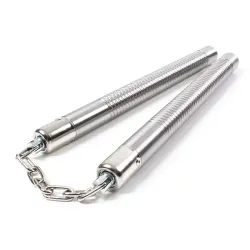
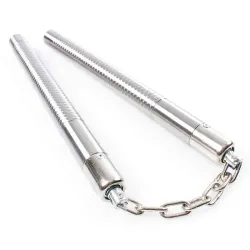
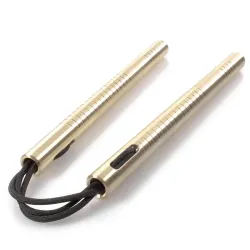
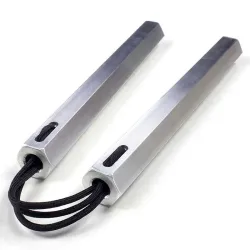
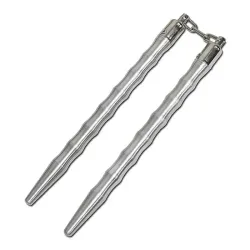
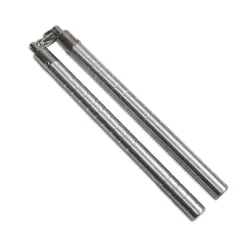
For seasoned practitioners looking to push their limits, metal nunchucks are an excellent option. The additional weight of metal nunchucks forces you to build the muscles required for quick, fluid movements. Training with metal nunchucks will increase your power and endurance, allowing you to move with greater speed and precision. After training with metal nunchucks, you may notice a significant improvement in your ability to handle lighter pairs, like rattan, with increased agility. The added muscle strength and control will make you faster and more confident when switching back to lighter nunchucks.
It depends on where you live. Nunchucks (or nunchaku) are legal in most U.S. states, but a few still have restrictions on owning, carrying, or using them. Some states treat them like other martial arts weapons and allow them for training or collection, while others consider them prohibited under weapons laws. Even in states where nunchucks are legal, there might be local city or county rules that are more strict.
If you're planning to buy a pair, it's a good idea to double-check your local laws before placing an order. You can usually find the most up-to-date info by checking your state's official statutes or contacting local law enforcement. It's always better to be safe than surprised when it comes to weapon laws.
Technically, yes, nunchucks can be used for self-defense, but they're not always the most practical option. They take a lot of training to use effectively, and if you don't have good control, you're more likely to hurt yourself than your attacker. That said, in the hands of someone experienced, nunchaku can deliver fast, unpredictable strikes and even be used to disarm or trap an opponent.
Keep in mind that using nunchucks for self-defense could raise legal issues depending on where you are. In some areas, carrying them in public might be restricted, even if you're just using them for protection. If you're considering them for self-defense, it's smart to know your local laws and make sure you're properly trained to handle them safely.
There's no real difference. "Nunchaku" is the traditional Japanese name, while "nunchucks" is the Americanized version. You'll hear both used interchangeably, especially in martial arts circles and pop culture. They refer to the exact same weapon: two sticks connected by a cord or chain, used for training, demonstrations, and sometimes self-defense.
Some people prefer to use "nunchaku" when talking about the weapon in a more formal or traditional martial arts context, especially when referring to Okinawan or karate-based training. "Nunchucks" tends to pop up more in casual conversation, movies, and general pop culture, like when people talk about Bruce Lee or the Ninja Turtles.
So whether you call them nunchucks or nunchaku, you're still talking about the same iconic weapon.
Definitely. Training with nunchucks is a great way to build arm and shoulder strength, especially when you're using them regularly and practicing with proper control. Even lightweight foam or wood nunchaku will challenge your coordination, grip strength, and endurance over time.
But if you really want to level up your strength training, heavier nunchaku like our steel or metal nunchucks are the way to go. At Kombativ, we manufacture metal nunchaku that are much heavier than standard practice pairs. That added weight forces your muscles to work harder, building strength and power with every spin, strike, and transition.
The cool part is that once you go back to using a standard pair of nunchucks after training with metal ones, you'll feel a noticeable speed boost. Your movements will be faster and more controlled, almost like swinging a bat after warming up with a weighted one. It's a great way to improve both your strength and performance at the same time.
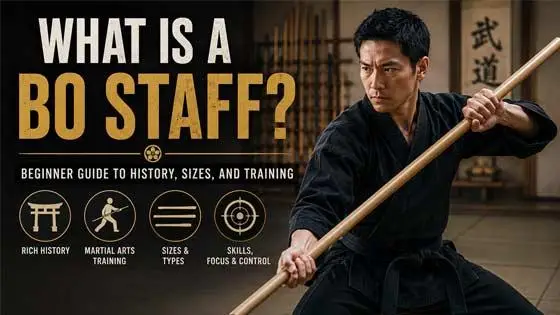
The exact origin of the nunchaku is a bit of a mystery, but most people trace it back to Okinawa, Japan. It's commonly believed that nunchaku started as a farming tool, possibly used for threshing grain or rice. Over time, Okinawan martial artists adapted everyday tools into weapons because they were banned from carrying traditional blades by the ruling class. Nunchaku, along with tools like the bo staff and kama, became part of what we now know as kobudo, which is the weapons-based side of Okinawan martial arts.
There's also a theory that nunchaku may have roots in Chinese martial arts, particularly from the Southern Shaolin styles, and could have made their way to Okinawa through cultural exchange. In either case, the weapon evolved into a formal training tool used to develop speed, coordination, and striking power. By the time karate and kobudo were being systematized in the 17th and 18th centuries, nunchaku were already a core part of many weapons systems.
That said, the person who really put nunchaku on the global map wasn't a martial artist from centuries ago, it was Bruce Lee. In the 1970s, he made nunchaku world-famous by using them in his movies with such incredible speed and skill that people were instantly hooked. His scenes in Enter the Dragon and Way of the Dragon are still legendary and inspired a whole new generation to pick up nunchucks and learn how to use them.
So while no one knows exactly who invented nunchaku, we do know they've come a long way. They started as humble farming tools, became iconic martial arts weapons, and eventually found their way into movies and dojos around the world.
Bruce Lee made nunchucks famous in the 1970s, and the ones he used were pretty unique for their time. Most of his nunchaku were handmade and customized to fit his exact preferences. He typically used wooden nunchucks with a short metal chain connector. They were built for speed and control, which matched his intense training style and incredible precision. The handles were usually around 11 inches long, slightly shorter than traditional ones, and he preferred a round shape for smoother movement.
One of the most iconic appearances of Bruce Lee's nunchucks was in Enter the Dragon. That scene where he takes down a group of attackers with nothing but a pair of nunchucks changed martial arts forever. After that, everyone wanted to learn how to use them. He also used them in Way of the Dragon, Game of Death, and other films, and each time his skill made the weapon look even more impressive.
While Bruce Lee's exact nunchucks were custom-built, you can find similar designs today in both wood and metal. If you're training for speed and power like Bruce did, lightweight wooden nunchucks with a chain connector are a great place to start. At Kombativ, we even offer heavier metal options that help you build strength. Once you switch back to standard nunchucks, you'll notice faster, smoother movements thanks to the extra resistance training.
In traditional Okinawan kobudo and karate training, nunchucks (also called nunchaku) were used to build coordination, timing, and control. Practice focused on fundamentals like clean spins, fluid transitions, accurate strikes, quick retractions, and safe chambering rather than flashy tricks. Students learned to chain basic patterns into short combinations that emphasize distance, angles, and defense, including blocks, redirects, and controlled wraps. Partner drills were structured and slow at first, then progressed as skill improved. The goal was smooth, efficient movement and precise mechanics that carry over to other martial arts skills. Modern classes still follow this approach, often starting with foam nunchaku or padded training nunchucks before moving to wooden nunchucks or metal nunchaku as technique and safety improve.
Foam nunchucks are ideal for beginners and class drills because the padded handles reduce bruising and help you practice spins, catches, and retractions with confidence. Wooden nunchucks feel more traditional and add realistic feedback, which helps with control, rhythm, and power development; they are a common step once fundamentals are consistent. Metal nunchaku are heavier and best for advanced users who want resistance training to increase strength and endurance before returning to lighter sets. You will also see chain nunchucks and cord nunchaku across all three materials. Chains spin smoothly and are durable, while cords are light, quiet, and easy to retie to adjust length. Choose the build that matches your experience level and training goals, and always follow safety rules in class.
The right nunchucks, or nunchaku, length depends on your body size, training style, and whether you plan to compete. For general martial arts training, most practitioners use handles between 10 and 12 inches long with a chain or cord of about 4 to 5 inches. This size offers a balanced feel for spins, catches, and control drills. Shorter handles are often better for kids or smaller practitioners, while slightly longer handles can add reach for adults.
In competition, especially in speed and freestyle divisions, you will often see "speedchucks," which use shorter chains (sometimes just 2 to 3 links) to allow lightning-fast rebounds, quicker directional changes, and tighter spins without wasted motion. These are typically paired with lightweight foam or graphite handles for speed and precision. By contrast, some traditional kobudo practitioners use short-handled nunchaku with extra-long chains so they can still holster the weapon under the armpit in a more concealed fashion. Longer chains provide more reach and a wider arc but require advanced timing to control.
Cord connectors are easier to adjust for length, making them great for customizing to your arm span or specific kata requirements. Chains, while fixed in size, offer a smooth rotation and are more durable under heavy impact. If possible, test different setups such as foam for safe experimentation, wooden nunchucks for realistic feedback, or metal nunchaku for strength training until you find the combination of handle length and chain size that works for your skill level, safety needs, and performance goals.
How Nunchucks Are Used in Martial Arts Training
Traditionally, nunchaku were used as a striking weapon, allowing martial artists to deliver rapid, powerful blows. However, their functionality extends far beyond just striking. Nunchucks can be used for joint manipulations, disarming opponents, and even deflecting attacks from other weapons. Over the years, nunchucks have evolved to serve as versatile training tools, helping practitioners develop fluid movement, control, and flexibility. Whether used for basic drills, advanced techniques, or demonstrations, nunchucks provide endless possibilities for improvement.
Modern Nunchuck Materials and Design
At KOMBATIV, we are passionate about creating high-quality, innovative martial arts equipment. While wooden nunchucks remain a staple in the martial arts community, we are leading the charge by offering a variety of materials, including plastics and metals, to cater to different training needs. Our metal nunchucks are designed to be lightweight yet durable, providing an advanced option for practitioners who want to increase their speed, strength, and endurance. With expert craftsmanship, KOMBATIV ensures that each pair of nunchucks we create meets the highest standards of quality, making them perfect for both novice and expert martial artists alike.
Choosing the Right Nunchucks for Your Training
Whether you're training for a martial arts competition, perfecting your skills for an upcoming performance, or simply seeking a fun and challenging way to get fit, our selection of nunchucks for sale can help you take your training to the next level. With nunchaku, you can improve your hand-eye coordination, increase flexibility, and build muscle strength, all while having fun with one of the most dynamic martial arts weapons available.
If you're not sure which pair of nunchucks is right for your training regimen, our team is always here to help. We offer expert advice and guidance, ensuring you choose the best equipment to meet your martial arts goals. Do you have questions about nunchucks or their usage? Don't hesitate to reach out to our knowledgeable customer support team. Whether you're taking nunchuck lessons or preparing for a weapons demonstration, KOMBATIV is your trusted partner for top-quality nunchucks and martial arts gear.
Legal Considerations for Nunchucks
Before making a purchase, it's important to check local laws regarding the possession of nunchucks, as they may be restricted in some areas. Be sure to research your state and local regulations to ensure compliance.
Should I Get Nunchucks with Cord or Chain?
When deciding between nunchucks with cord or chain, the choice ultimately depends on your training style and goals. Nunchucks with a cord are generally easier to control and are better suited for beginners or those focusing on technique and precision. The flexible cord allows for smoother, slower movements, giving practitioners more time to adjust and develop muscle memory. These are often the best option for martial arts schools or casual practitioners.
One key advantage of nunchucks with a cord is their quietness and stealth. The corded design results in a much quieter sound when the nunchucks are in motion, which can be a valuable asset for those training in environments where silence is essential, or for martial artists looking for a more subtle approach. This quieter operation also makes corded nunchucks ideal for practicing at night or in spaces where noise might be a concern. The stealth aspect of corded nunchucks can enhance the element of surprise, especially if you're using them in a self-defense scenario or during low-key training sessions.
On the other hand, nunchucks with a chain offer a faster, more dynamic experience. The chain adds weight and speed, which is ideal for more advanced practitioners who want to develop their reflexes, endurance, and strength. The chain provides a unique challenge as it makes the nunchucks move more quickly and unpredictably, requiring greater control and mastery. For those who are already proficient in basic nunchuck techniques, chain-based nunchucks can take training to the next level, making them an exciting choice for serious martial artists.
What are the Best Nunchucks for Beginners?
For beginners, it's important to start with nunchucks that offer both safety and ease of handling as you learn the foundational techniques. Foam nunchucks are often the best choice for those just starting out. The soft foam padding on these nunchucks minimizes the risk of injury, which is especially important when you're getting accustomed to the movements and flow of the weapon. Additionally, foam nunchucks are lightweight, which allows you to focus on mastering control, timing, and hand-eye coordination without the added challenge of weight. They also provide a good cushion, preventing damage to surroundings or people when you are still refining your skills.
Once you've developed a good sense of timing and control with foam nunchucks, the next step is often to transition to rattan nunchucks. Rattan is a traditional material that is still relatively light but much more durable than foam. It offers a more authentic training experience, with just enough weight to begin building strength and technique. Rattan nunchucks help to develop muscle memory while being forgiving enough for beginners to continue improving without overwhelming them. At this stage, you'll start gaining the confidence to perform more advanced movements.
After rattan, the next logical progression is to move to standard wood or polypropylene nunchucks. These materials provide an even greater level of durability and stability, and they are commonly used for more advanced training. They offer a balanced weight and a solid feel, giving you the opportunity to hone your technique further before advancing to heavier options.
For seasoned practitioners looking to push their limits, metal nunchucks are an excellent option. The additional weight of metal nunchucks forces you to build the muscles required for quick, fluid movements. Training with metal nunchucks will increase your power and endurance, allowing you to move with greater speed and precision. After training with metal nunchucks, you may notice a significant improvement in your ability to handle lighter pairs, like rattan, with increased agility. The added muscle strength and control will make you faster and more confident when switching back to lighter nunchucks.
Are Nunchucks Illegal in My State?
It depends on where you live. Nunchucks (or nunchaku) are legal in most U.S. states, but a few still have restrictions on owning, carrying, or using them. Some states treat them like other martial arts weapons and allow them for training or collection, while others consider them prohibited under weapons laws. Even in states where nunchucks are legal, there might be local city or county rules that are more strict.
If you're planning to buy a pair, it's a good idea to double-check your local laws before placing an order. You can usually find the most up-to-date info by checking your state's official statutes or contacting local law enforcement. It's always better to be safe than surprised when it comes to weapon laws.
Can I Use Nunchucks for Self-Defense?
Technically, yes, nunchucks can be used for self-defense, but they're not always the most practical option. They take a lot of training to use effectively, and if you don't have good control, you're more likely to hurt yourself than your attacker. That said, in the hands of someone experienced, nunchaku can deliver fast, unpredictable strikes and even be used to disarm or trap an opponent.
Keep in mind that using nunchucks for self-defense could raise legal issues depending on where you are. In some areas, carrying them in public might be restricted, even if you're just using them for protection. If you're considering them for self-defense, it's smart to know your local laws and make sure you're properly trained to handle them safely.
What's the Difference Between Nunchaku and Nunchucks?
There's no real difference. "Nunchaku" is the traditional Japanese name, while "nunchucks" is the Americanized version. You'll hear both used interchangeably, especially in martial arts circles and pop culture. They refer to the exact same weapon: two sticks connected by a cord or chain, used for training, demonstrations, and sometimes self-defense.
Some people prefer to use "nunchaku" when talking about the weapon in a more formal or traditional martial arts context, especially when referring to Okinawan or karate-based training. "Nunchucks" tends to pop up more in casual conversation, movies, and general pop culture, like when people talk about Bruce Lee or the Ninja Turtles.
So whether you call them nunchucks or nunchaku, you're still talking about the same iconic weapon.
Are Nunchucks Good for Building Arm Strength?
Definitely. Training with nunchucks is a great way to build arm and shoulder strength, especially when you're using them regularly and practicing with proper control. Even lightweight foam or wood nunchaku will challenge your coordination, grip strength, and endurance over time.
But if you really want to level up your strength training, heavier nunchaku like our steel or metal nunchucks are the way to go. At Kombativ, we manufacture metal nunchaku that are much heavier than standard practice pairs. That added weight forces your muscles to work harder, building strength and power with every spin, strike, and transition.
The cool part is that once you go back to using a standard pair of nunchucks after training with metal ones, you'll feel a noticeable speed boost. Your movements will be faster and more controlled, almost like swinging a bat after warming up with a weighted one. It's a great way to improve both your strength and performance at the same time.
Who Invented Nunchaku?
The exact origin of the nunchaku is a bit of a mystery, but most people trace it back to Okinawa, Japan. It's commonly believed that nunchaku started as a farming tool, possibly used for threshing grain or rice. Over time, Okinawan martial artists adapted everyday tools into weapons because they were banned from carrying traditional blades by the ruling class. Nunchaku, along with tools like the bo staff and kama, became part of what we now know as kobudo, which is the weapons-based side of Okinawan martial arts.
There's also a theory that nunchaku may have roots in Chinese martial arts, particularly from the Southern Shaolin styles, and could have made their way to Okinawa through cultural exchange. In either case, the weapon evolved into a formal training tool used to develop speed, coordination, and striking power. By the time karate and kobudo were being systematized in the 17th and 18th centuries, nunchaku were already a core part of many weapons systems.
That said, the person who really put nunchaku on the global map wasn't a martial artist from centuries ago, it was Bruce Lee. In the 1970s, he made nunchaku world-famous by using them in his movies with such incredible speed and skill that people were instantly hooked. His scenes in Enter the Dragon and Way of the Dragon are still legendary and inspired a whole new generation to pick up nunchucks and learn how to use them.
So while no one knows exactly who invented nunchaku, we do know they've come a long way. They started as humble farming tools, became iconic martial arts weapons, and eventually found their way into movies and dojos around the world.
What Nunchucks Did Bruce Lee Use?
Bruce Lee made nunchucks famous in the 1970s, and the ones he used were pretty unique for their time. Most of his nunchaku were handmade and customized to fit his exact preferences. He typically used wooden nunchucks with a short metal chain connector. They were built for speed and control, which matched his intense training style and incredible precision. The handles were usually around 11 inches long, slightly shorter than traditional ones, and he preferred a round shape for smoother movement.
One of the most iconic appearances of Bruce Lee's nunchucks was in Enter the Dragon. That scene where he takes down a group of attackers with nothing but a pair of nunchucks changed martial arts forever. After that, everyone wanted to learn how to use them. He also used them in Way of the Dragon, Game of Death, and other films, and each time his skill made the weapon look even more impressive.
While Bruce Lee's exact nunchucks were custom-built, you can find similar designs today in both wood and metal. If you're training for speed and power like Bruce did, lightweight wooden nunchucks with a chain connector are a great place to start. At Kombativ, we even offer heavier metal options that help you build strength. Once you switch back to standard nunchucks, you'll notice faster, smoother movements thanks to the extra resistance training.
How Were Nunchucks Used in Traditional Martial Arts?
In traditional Okinawan kobudo and karate training, nunchucks (also called nunchaku) were used to build coordination, timing, and control. Practice focused on fundamentals like clean spins, fluid transitions, accurate strikes, quick retractions, and safe chambering rather than flashy tricks. Students learned to chain basic patterns into short combinations that emphasize distance, angles, and defense, including blocks, redirects, and controlled wraps. Partner drills were structured and slow at first, then progressed as skill improved. The goal was smooth, efficient movement and precise mechanics that carry over to other martial arts skills. Modern classes still follow this approach, often starting with foam nunchaku or padded training nunchucks before moving to wooden nunchucks or metal nunchaku as technique and safety improve.
What's the Difference Between Foam, Wood, and Metal Nunchucks?
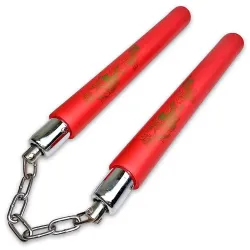
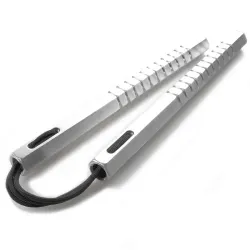
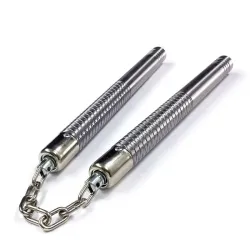
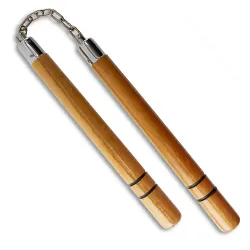
Foam nunchucks are ideal for beginners and class drills because the padded handles reduce bruising and help you practice spins, catches, and retractions with confidence. Wooden nunchucks feel more traditional and add realistic feedback, which helps with control, rhythm, and power development; they are a common step once fundamentals are consistent. Metal nunchaku are heavier and best for advanced users who want resistance training to increase strength and endurance before returning to lighter sets. You will also see chain nunchucks and cord nunchaku across all three materials. Chains spin smoothly and are durable, while cords are light, quiet, and easy to retie to adjust length. Choose the build that matches your experience level and training goals, and always follow safety rules in class.
How Do I Choose the Right Length and Chain Size for Nunchaku?
The right nunchucks, or nunchaku, length depends on your body size, training style, and whether you plan to compete. For general martial arts training, most practitioners use handles between 10 and 12 inches long with a chain or cord of about 4 to 5 inches. This size offers a balanced feel for spins, catches, and control drills. Shorter handles are often better for kids or smaller practitioners, while slightly longer handles can add reach for adults.
In competition, especially in speed and freestyle divisions, you will often see "speedchucks," which use shorter chains (sometimes just 2 to 3 links) to allow lightning-fast rebounds, quicker directional changes, and tighter spins without wasted motion. These are typically paired with lightweight foam or graphite handles for speed and precision. By contrast, some traditional kobudo practitioners use short-handled nunchaku with extra-long chains so they can still holster the weapon under the armpit in a more concealed fashion. Longer chains provide more reach and a wider arc but require advanced timing to control.
Cord connectors are easier to adjust for length, making them great for customizing to your arm span or specific kata requirements. Chains, while fixed in size, offer a smooth rotation and are more durable under heavy impact. If possible, test different setups such as foam for safe experimentation, wooden nunchucks for realistic feedback, or metal nunchaku for strength training until you find the combination of handle length and chain size that works for your skill level, safety needs, and performance goals.
RECENTLY VIEWED