




Hidden and Concealed Weapons for Self-Defense
Products
-
 🔍︎ QUICK VIEW
$28.95
🔍︎ QUICK VIEW
$28.95 -
 🔍︎ QUICK VIEW
$12.95
🔍︎ QUICK VIEW
$12.95 -
 🔍︎ QUICK VIEW
-
 🔍︎ QUICK VIEW
$39.95
🔍︎ QUICK VIEW
$39.95 -
 🔍︎ QUICK VIEW
$34.95
🔍︎ QUICK VIEW
$34.95 -
 🔍︎ QUICK VIEW
$24.95
🔍︎ QUICK VIEW
$24.95 -
 🔍︎ QUICK VIEW
$29.95
🔍︎ QUICK VIEW
$29.95 -
 🔍︎ QUICK VIEW
$34.95
🔍︎ QUICK VIEW
$34.95 -
 🔍︎ QUICK VIEW
$84.95
🔍︎ QUICK VIEW
$84.95 -
 🔍︎ QUICK VIEW
$34.95
🔍︎ QUICK VIEW
$34.95 -
 🔍︎ QUICK VIEW
$13.95
🔍︎ QUICK VIEW
$13.95 -
 🔍︎ QUICK VIEW
$11.95
🔍︎ QUICK VIEW
$11.95 -
 🔍︎ QUICK VIEW
$9.95
🔍︎ QUICK VIEW
$9.95 -
 🔍︎ QUICK VIEW
-
 🔍︎ QUICK VIEW
$32.95
🔍︎ QUICK VIEW
$32.95 -
 🔍︎ QUICK VIEW
$12.95
🔍︎ QUICK VIEW
$12.95 -
 🔍︎ QUICK VIEW
-
 🔍︎ QUICK VIEW
$154.95
🔍︎ QUICK VIEW
$154.95 -
 🔍︎ QUICK VIEW
$74.95
🔍︎ QUICK VIEW
$74.95 -
 🔍︎ QUICK VIEW
$22.95
🔍︎ QUICK VIEW
$22.95 -
 🔍︎ QUICK VIEW
$39.95
🔍︎ QUICK VIEW
$39.95 -
 🔍︎ QUICK VIEW
$15.95
🔍︎ QUICK VIEW
$15.95 -
 🔍︎ QUICK VIEW
$84.95
🔍︎ QUICK VIEW
$84.95 -
 🔍︎ QUICK VIEW
$22.95
🔍︎ QUICK VIEW
$22.95 -
 🔍︎ QUICK VIEW
$18.95
🔍︎ QUICK VIEW
$18.95 -
 🔍︎ QUICK VIEW
$42.95
🔍︎ QUICK VIEW
$42.95 -
 🔍︎ QUICK VIEW
$54.95
🔍︎ QUICK VIEW
$54.95 -
 🔍︎ QUICK VIEW
-
 🔍︎ QUICK VIEW
$17.95
🔍︎ QUICK VIEW
$17.95 -
 🔍︎ QUICK VIEW
$23.95
🔍︎ QUICK VIEW
$23.95 -
 🔍︎ QUICK VIEW
$12.95
🔍︎ QUICK VIEW
$12.95 -
 🔍︎ QUICK VIEW
$29.95
🔍︎ QUICK VIEW
$29.95 -
 🔍︎ QUICK VIEW
$29.95
🔍︎ QUICK VIEW
$29.95 -
 🔍︎ QUICK VIEW
-
 🔍︎ QUICK VIEW
$32.95
🔍︎ QUICK VIEW
$32.95 -
 🔍︎ QUICK VIEW
$18.95
🔍︎ QUICK VIEW
$18.95 -
 🔍︎ QUICK VIEW
$109.95
🔍︎ QUICK VIEW
$109.95 -
 🔍︎ QUICK VIEW
$32.95
🔍︎ QUICK VIEW
$32.95 -
 🔍︎ QUICK VIEW
$144.95
🔍︎ QUICK VIEW
$144.95 -
 🔍︎ QUICK VIEW
-
 🔍︎ QUICK VIEW
$12.95
🔍︎ QUICK VIEW
$12.95 -
 🔍︎ QUICK VIEW
$74.95
🔍︎ QUICK VIEW
$74.95 -
 🔍︎ QUICK VIEW
$119.95
🔍︎ QUICK VIEW
$119.95 -
 🔍︎ QUICK VIEW
$169.95
🔍︎ QUICK VIEW
$169.95 -
 🔍︎ QUICK VIEW
-
 🔍︎ QUICK VIEW
$149.95
🔍︎ QUICK VIEW
$149.95 -
 🔍︎ QUICK VIEW
$29.95
🔍︎ QUICK VIEW
$29.95 -
 🔍︎ QUICK VIEW
$94.95
🔍︎ QUICK VIEW
$94.95 -
 🔍︎ QUICK VIEW
$149.95
🔍︎ QUICK VIEW
$149.95 -
 🔍︎ QUICK VIEW
$32.95
🔍︎ QUICK VIEW
$32.95 -
 🔍︎ QUICK VIEW
-
 🔍︎ QUICK VIEW
$24.95
🔍︎ QUICK VIEW
$24.95 -
 🔍︎ QUICK VIEW
$34.95
🔍︎ QUICK VIEW
$34.95 -
 🔍︎ QUICK VIEW
$19.95
🔍︎ QUICK VIEW
$19.95 -
 🔍︎ QUICK VIEW
$13.95
🔍︎ QUICK VIEW
$13.95 -
 🔍︎ QUICK VIEW
$14.95
🔍︎ QUICK VIEW
$14.95 -
 🔍︎ QUICK VIEW
$14.95
🔍︎ QUICK VIEW
$14.95 -
 🔍︎ QUICK VIEW
$22.95
🔍︎ QUICK VIEW
$22.95 -
 🔍︎ QUICK VIEW
$14.95
🔍︎ QUICK VIEW
$14.95 -
 🔍︎ QUICK VIEW
$13.95
🔍︎ QUICK VIEW
$13.95 -
 🔍︎ QUICK VIEW
$21.95
🔍︎ QUICK VIEW
$21.95 -
 🔍︎ QUICK VIEW
$14.95
🔍︎ QUICK VIEW
$14.95 -
 🔍︎ QUICK VIEW
$19.95
🔍︎ QUICK VIEW
$19.95 -
 🔍︎ QUICK VIEW
$18.95
🔍︎ QUICK VIEW
$18.95 -
 🔍︎ QUICK VIEW
-
 🔍︎ QUICK VIEW
$299.95
🔍︎ QUICK VIEW
$299.95 -
 🔍︎ QUICK VIEW
-
 🔍︎ QUICK VIEW
-
 🔍︎ QUICK VIEW
-
 🔍︎ QUICK VIEW
$52.95
🔍︎ QUICK VIEW
$52.95 -
 🔍︎ QUICK VIEW
$119.95
🔍︎ QUICK VIEW
$119.95 -
 🔍︎ QUICK VIEW
$22.95
🔍︎ QUICK VIEW
$22.95 -
 🔍︎ QUICK VIEW
-
 🔍︎ QUICK VIEW
$32.95
🔍︎ QUICK VIEW
$32.95 -
 🔍︎ QUICK VIEW
$21.95
🔍︎ QUICK VIEW
$21.95 -
 🔍︎ QUICK VIEW
$32.95
🔍︎ QUICK VIEW
$32.95 -
 🔍︎ QUICK VIEW
$44.95
🔍︎ QUICK VIEW
$44.95 -
 🔍︎ QUICK VIEW
$17.95
🔍︎ QUICK VIEW
$17.95 -
 🔍︎ QUICK VIEW
$34.95
🔍︎ QUICK VIEW
$34.95 -
 🔍︎ QUICK VIEW
$34.95
🔍︎ QUICK VIEW
$34.95 -
 🔍︎ QUICK VIEW
$14.95
🔍︎ QUICK VIEW
$14.95 -
 🔍︎ QUICK VIEW
$22.95
🔍︎ QUICK VIEW
$22.95 -
 🔍︎ QUICK VIEW
$9.95
🔍︎ QUICK VIEW
$9.95
 (2)
(2) (1)
(1)Hidden and Concealed Weapons for Self-Defense
At Kombativ.com, we specialize in offering a diverse range of hidden and concealed weapons designed for those who prioritize discreet self-defense solutions. Whether you're seeking a concealable weapon for personal protection or simply value the ingenuity of disguised weapons, our collection has something to meet your needs. These cleverly crafted tools blend seamlessly into everyday life, providing peace of mind without drawing unwanted attention. From subtle designs to innovative mechanisms, our hidden weapons are engineered to be both practical and effective, ensuring you're prepared for any situation.
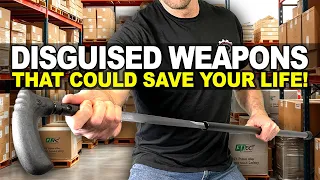
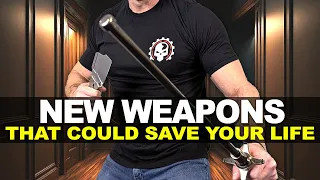
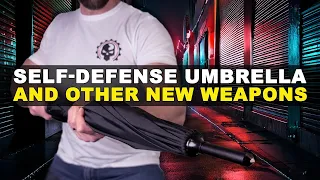
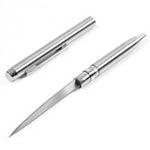
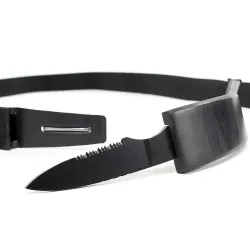
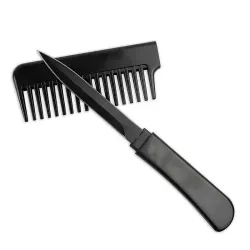
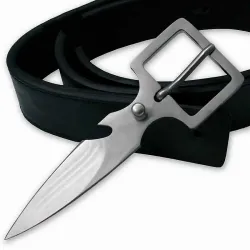
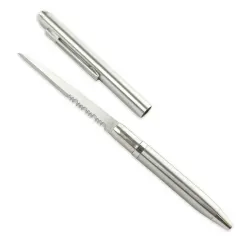
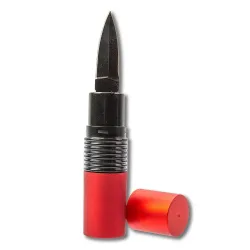
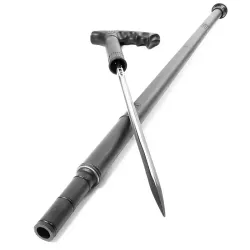
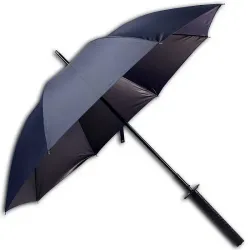
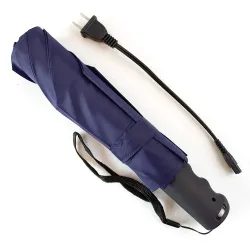
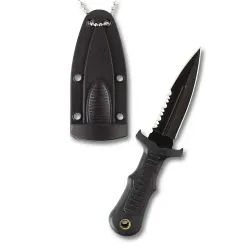
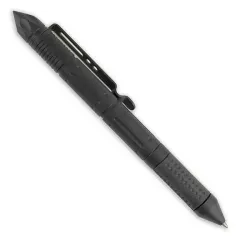
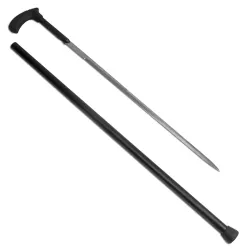
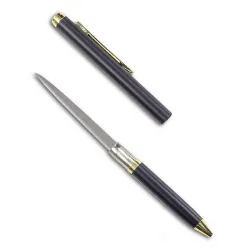
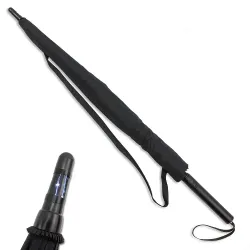
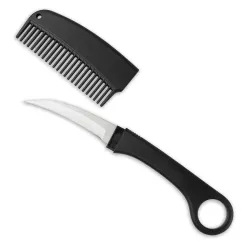
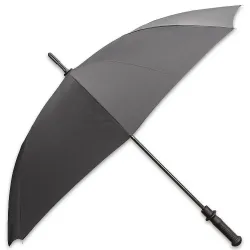
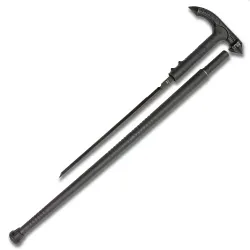
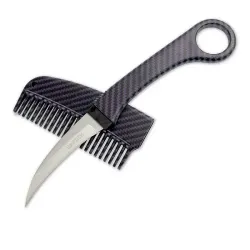
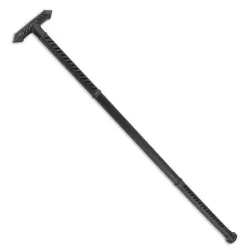
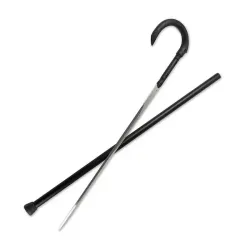
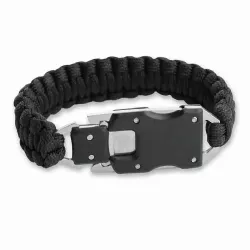
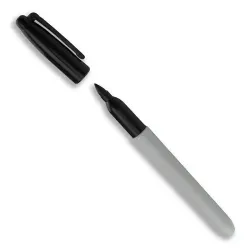
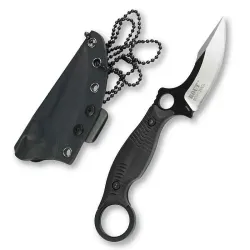
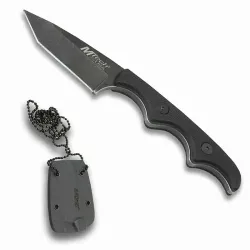
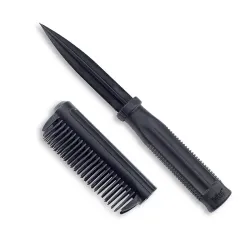
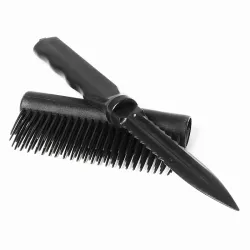
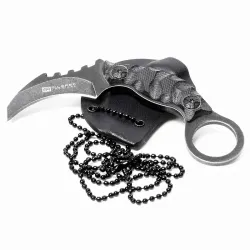
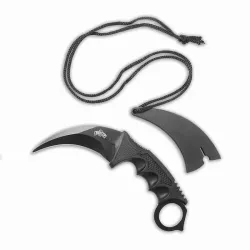
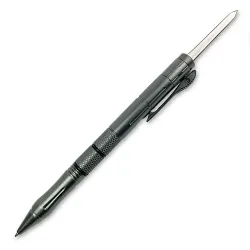
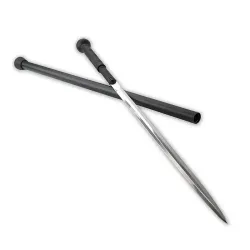
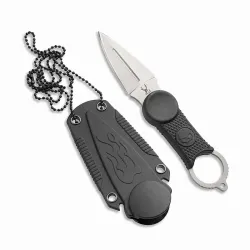
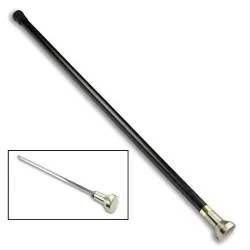
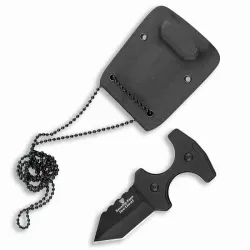
One of the standout features of our concealed weapons is their ability to remain unnoticed until needed. Take, for instance, our hidden belt knife - a stylish accessory with a buckle that conceals a sharp blade, ready to deploy at a moment's notice. Similarly, our hidden pen knives and comb knives masquerade as ordinary items, while packing the potential for serious defense. For those who prefer a more robust option, our self-defense umbrella and hidden sword canes offer both utility and surprise, doubling as disguised weapons with hidden power. We also carry neck knives, which hang discreetly on a chain or lanyard, keeping a concealable weapon close at hand without compromising your style or comfort.
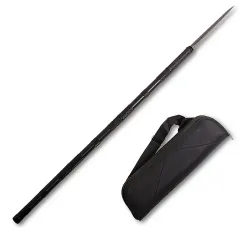
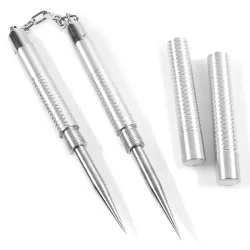
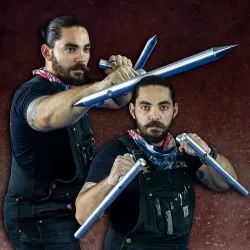
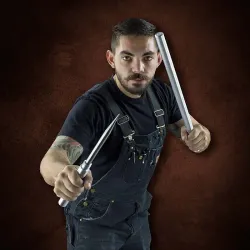
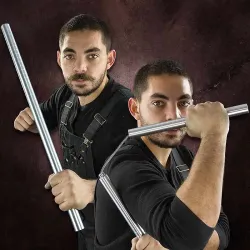
Our selection doesn't stop at simple concealed designs - we offer advanced options like the Hidden Icepick Escrima, a favorite among enthusiasts of hidden weapons. This escrima stick appears unassuming at first glance, but with a quick twist, it reveals a seven-inch spike, transforming it into a formidable tool. Another popular choice is the Army of One, a metal bo staff that conceals multiple weapon forms, including nunchucks and a spear tipped with a hidden spike. These multi-functional disguised weapons showcase the creativity and craftsmanship that Kombativ.com brings to the world of concealable weapons, making them ideal for those who value versatility alongside discretion.
When exploring our selection of hidden and concealed weapons, it's important to use them responsibly. We encourage all customers to exercise common sense and familiarize themselves with local laws regarding concealed weapons, as regulations can vary widely. Most concealable weapons are restricted in places like courtrooms or airport carry-on luggage, so plan accordingly. If you're unsure about which hidden weapon suits your needs or how to use it, our team at Kombativ.com is here to help. Reach out with any questions, and we'll guide you through our collection of disguised and concealable weapons to find the perfect fit for your self-defense strategy.
Hidden and concealed weapons are designed to blend into everyday objects, allowing them to remain unnoticed until needed. Instead of looking like traditional self-defense tools, these items are disguised as things people carry every day, such as pens, belt buckles, combs, flashlights, or keychains. At a glance, they appear ordinary. Only the person carrying them knows their true purpose.
Regular self-defense tools are typically obvious in both form and function. A baton looks like a baton. A knife looks like a knife. Hidden weapons work on a different principle. Their value comes from discretion. They allow someone to carry a protective tool without drawing attention or signaling that they are armed. This can be especially appealing in environments where overt self-defense gear feels impractical or socially uncomfortable.
The other key difference is deployment. A standard defensive tool is already in its usable form. A concealed weapon often requires a small action, such as pulling, twisting, or pressing a release, to reveal its function. That extra step is part of the design tradeoff. In exchange for subtlety, the user accepts that the tool is hidden until activated. For many people, that balance of discretion and capability is exactly what makes concealed weapons so appealing.
Legality is one of the most important considerations when it comes to hidden weapons. Unlike standard tools such as flashlights or walking canes, concealed weapons are often regulated based on the fact that they disguise their true function. Many states and countries have specific laws that address items like disguised knives, belt buckle blades, pen weapons, or other tools that conceal a weapon inside an everyday object.
In some areas, these items are perfectly legal to own but restricted from being carried in public. In others, certain designs may be prohibited altogether. For example, a hidden knife inside a pen or comb may be treated very differently under the law than a standard folding knife. The intent behind these rules is usually to prevent weapons from being carried in a way that bypasses normal visibility or screening.
Because laws vary widely by location and can change over time, it is always the responsibility of the buyer to understand what is permitted in their area. Hidden weapons are best approached with an informed mindset. They can be useful tools, but only when owned and carried in a way that complies with local regulations. Checking state and municipal laws before purchase or carry ensures that discretion does not come at the cost of legality.
When it comes to everyday carry, safety is just as important as concealment. The best hidden weapons for regular use are those that remain secure in their disguised form and only deploy when the user intends them to. Items with solid locking mechanisms, protective housings, or covered edges reduce the risk of accidental activation while being carried in a pocket, bag, or on a keyring.
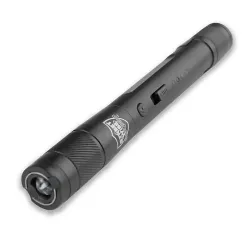
Many people gravitate toward concealed tools that resemble common accessories, such as pen-style implements, compact keychain devices, or small flashlight designs. These tend to be lightweight, unobtrusive, and easy to manage throughout the day. Because they are handled like ordinary objects, they fit naturally into daily routines without constantly reminding the user that they are carrying something defensive.
The safest choice is always one that matches the user's comfort level and environment. A concealed item that feels awkward, heavy, or complicated is more likely to be mishandled or left behind. Everyday carry should be simple and predictable. The goal is to have a discreet tool that stays secure, behaves like the object it mimics, and only reveals its function when deliberately activated.
Hidden weapons are almost always restricted in controlled spaces such as airports, courthouses, government buildings, schools, and many event venues. Because these items are designed to disguise their true function, they are typically treated more strictly than ordinary tools when security screening is involved. A pen that conceals a blade or a belt buckle with a hidden knife will be flagged the same way any other weapon would be during inspection.
Airports in particular operate under federal security rules, and concealed weapons of any type are prohibited in carry-on luggage. Even in checked baggage, certain disguised items may be restricted depending on local and international regulations. What might be legal to own at home can become a serious problem when taken into a secured area without proper awareness.
The safest approach is to assume that hidden weapons are not permitted anywhere with active security screening or posted restrictions. If you plan to travel or enter a government or commercial building with security staff, these items should be left at home. Understanding where concealed tools are not allowed helps prevent accidental violations and ensures they are used responsibly and within the boundaries of the law.
An everyday carry tool, often called EDC, is designed to be useful in plain sight. Items like pocket knives, multitools, flashlights, and keychain tools are meant to look exactly like what they are. Their function is obvious, and that transparency is part of their appeal. You know what you are holding, and so does everyone else.
A hidden weapon works on a different principle. It is built to disguise its true purpose by taking the form of an ordinary object. A pen may contain a spike. A belt buckle may hide a blade. A comb may separate into a defensive tool. To anyone else, it appears harmless. Only the person carrying it knows what it really is. That element of concealment is what defines the category.
In practice, EDC tools are about convenience and preparedness for everyday tasks. Hidden weapons are about discretion and last-resort defense. One is openly functional. The other is intentionally subtle. Both can serve protective roles, but they do so in very different ways. Understanding that distinction helps users choose the option that best fits their comfort level, environment, and personal approach to self-protection.
Hidden weapons exist in a gray area because their defining feature is disguise. In many legal systems, that concealment changes how the item is viewed. A standard knife or baton is obvious in form. A disguised blade inside a pen or belt buckle is not. That distinction can affect how the tool is interpreted by law enforcement and courts, especially after an incident.
In most places, self-defense is judged based on necessity and proportional response. Using any object, concealed or not, is only justified when there is an immediate and unlawful threat. A hidden weapon does not grant special protection under the law simply because it is discreet. If anything, its disguised nature can invite closer scrutiny about intent, carry method, and context.
For that reason, concealed tools should be viewed as last-resort options rather than primary defensive gear. They are best suited for situations where discretion is essential and legal boundaries are clearly understood. Responsible ownership means recognizing that these items are defensive in purpose only when used appropriately. Misuse or careless carry can quickly shift them from protective tools into legal liabilities.
One of the standout features of our concealed weapons is their ability to remain unnoticed until needed. Take, for instance, our hidden belt knife - a stylish accessory with a buckle that conceals a sharp blade, ready to deploy at a moment's notice. Similarly, our hidden pen knives and comb knives masquerade as ordinary items, while packing the potential for serious defense. For those who prefer a more robust option, our self-defense umbrella and hidden sword canes offer both utility and surprise, doubling as disguised weapons with hidden power. We also carry neck knives, which hang discreetly on a chain or lanyard, keeping a concealable weapon close at hand without compromising your style or comfort.
Our selection doesn't stop at simple concealed designs - we offer advanced options like the Hidden Icepick Escrima, a favorite among enthusiasts of hidden weapons. This escrima stick appears unassuming at first glance, but with a quick twist, it reveals a seven-inch spike, transforming it into a formidable tool. Another popular choice is the Army of One, a metal bo staff that conceals multiple weapon forms, including nunchucks and a spear tipped with a hidden spike. These multi-functional disguised weapons showcase the creativity and craftsmanship that Kombativ.com brings to the world of concealable weapons, making them ideal for those who value versatility alongside discretion.
When exploring our selection of hidden and concealed weapons, it's important to use them responsibly. We encourage all customers to exercise common sense and familiarize themselves with local laws regarding concealed weapons, as regulations can vary widely. Most concealable weapons are restricted in places like courtrooms or airport carry-on luggage, so plan accordingly. If you're unsure about which hidden weapon suits your needs or how to use it, our team at Kombativ.com is here to help. Reach out with any questions, and we'll guide you through our collection of disguised and concealable weapons to find the perfect fit for your self-defense strategy.
What Are Hidden and Concealed Weapons, and How Are They Different from Regular Self-Defense Tools?
Hidden and concealed weapons are designed to blend into everyday objects, allowing them to remain unnoticed until needed. Instead of looking like traditional self-defense tools, these items are disguised as things people carry every day, such as pens, belt buckles, combs, flashlights, or keychains. At a glance, they appear ordinary. Only the person carrying them knows their true purpose.
Regular self-defense tools are typically obvious in both form and function. A baton looks like a baton. A knife looks like a knife. Hidden weapons work on a different principle. Their value comes from discretion. They allow someone to carry a protective tool without drawing attention or signaling that they are armed. This can be especially appealing in environments where overt self-defense gear feels impractical or socially uncomfortable.
The other key difference is deployment. A standard defensive tool is already in its usable form. A concealed weapon often requires a small action, such as pulling, twisting, or pressing a release, to reveal its function. That extra step is part of the design tradeoff. In exchange for subtlety, the user accepts that the tool is hidden until activated. For many people, that balance of discretion and capability is exactly what makes concealed weapons so appealing.
Are Hidden and Concealed Weapons Legal to Own and Carry?
Legality is one of the most important considerations when it comes to hidden weapons. Unlike standard tools such as flashlights or walking canes, concealed weapons are often regulated based on the fact that they disguise their true function. Many states and countries have specific laws that address items like disguised knives, belt buckle blades, pen weapons, or other tools that conceal a weapon inside an everyday object.
In some areas, these items are perfectly legal to own but restricted from being carried in public. In others, certain designs may be prohibited altogether. For example, a hidden knife inside a pen or comb may be treated very differently under the law than a standard folding knife. The intent behind these rules is usually to prevent weapons from being carried in a way that bypasses normal visibility or screening.
Because laws vary widely by location and can change over time, it is always the responsibility of the buyer to understand what is permitted in their area. Hidden weapons are best approached with an informed mindset. They can be useful tools, but only when owned and carried in a way that complies with local regulations. Checking state and municipal laws before purchase or carry ensures that discretion does not come at the cost of legality.
What Types of Concealed Weapons Are Safest for Everyday Carry?
When it comes to everyday carry, safety is just as important as concealment. The best hidden weapons for regular use are those that remain secure in their disguised form and only deploy when the user intends them to. Items with solid locking mechanisms, protective housings, or covered edges reduce the risk of accidental activation while being carried in a pocket, bag, or on a keyring.
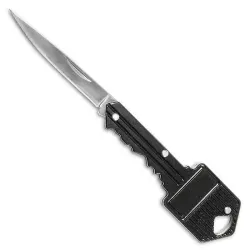
Many people gravitate toward concealed tools that resemble common accessories, such as pen-style implements, compact keychain devices, or small flashlight designs. These tend to be lightweight, unobtrusive, and easy to manage throughout the day. Because they are handled like ordinary objects, they fit naturally into daily routines without constantly reminding the user that they are carrying something defensive.
The safest choice is always one that matches the user's comfort level and environment. A concealed item that feels awkward, heavy, or complicated is more likely to be mishandled or left behind. Everyday carry should be simple and predictable. The goal is to have a discreet tool that stays secure, behaves like the object it mimics, and only reveals its function when deliberately activated.
Are Hidden Weapons Allowed in Airports or Public Buildings?
Hidden weapons are almost always restricted in controlled spaces such as airports, courthouses, government buildings, schools, and many event venues. Because these items are designed to disguise their true function, they are typically treated more strictly than ordinary tools when security screening is involved. A pen that conceals a blade or a belt buckle with a hidden knife will be flagged the same way any other weapon would be during inspection.
Airports in particular operate under federal security rules, and concealed weapons of any type are prohibited in carry-on luggage. Even in checked baggage, certain disguised items may be restricted depending on local and international regulations. What might be legal to own at home can become a serious problem when taken into a secured area without proper awareness.
The safest approach is to assume that hidden weapons are not permitted anywhere with active security screening or posted restrictions. If you plan to travel or enter a government or commercial building with security staff, these items should be left at home. Understanding where concealed tools are not allowed helps prevent accidental violations and ensures they are used responsibly and within the boundaries of the law.
What's the Difference Between a Hidden Weapon and an EDC Tool?
An everyday carry tool, often called EDC, is designed to be useful in plain sight. Items like pocket knives, multitools, flashlights, and keychain tools are meant to look exactly like what they are. Their function is obvious, and that transparency is part of their appeal. You know what you are holding, and so does everyone else.
A hidden weapon works on a different principle. It is built to disguise its true purpose by taking the form of an ordinary object. A pen may contain a spike. A belt buckle may hide a blade. A comb may separate into a defensive tool. To anyone else, it appears harmless. Only the person carrying it knows what it really is. That element of concealment is what defines the category.
In practice, EDC tools are about convenience and preparedness for everyday tasks. Hidden weapons are about discretion and last-resort defense. One is openly functional. The other is intentionally subtle. Both can serve protective roles, but they do so in very different ways. Understanding that distinction helps users choose the option that best fits their comfort level, environment, and personal approach to self-protection.
Can Hidden Weapons Be Used for Legal Self-Defense, or Are They Considered Offensive?
Hidden weapons exist in a gray area because their defining feature is disguise. In many legal systems, that concealment changes how the item is viewed. A standard knife or baton is obvious in form. A disguised blade inside a pen or belt buckle is not. That distinction can affect how the tool is interpreted by law enforcement and courts, especially after an incident.
In most places, self-defense is judged based on necessity and proportional response. Using any object, concealed or not, is only justified when there is an immediate and unlawful threat. A hidden weapon does not grant special protection under the law simply because it is discreet. If anything, its disguised nature can invite closer scrutiny about intent, carry method, and context.
For that reason, concealed tools should be viewed as last-resort options rather than primary defensive gear. They are best suited for situations where discretion is essential and legal boundaries are clearly understood. Responsible ownership means recognizing that these items are defensive in purpose only when used appropriately. Misuse or careless carry can quickly shift them from protective tools into legal liabilities.