



Swords including Katana and Samurai Swords
-
 🔍︎ QUICK VIEW
$154.95
🔍︎ QUICK VIEW
$154.95 -
 🔍︎ QUICK VIEW
$74.95
🔍︎ QUICK VIEW
$74.95 -
 🔍︎ QUICK VIEW
$84.95
🔍︎ QUICK VIEW
$84.95 -
 🔍︎ QUICK VIEW
-
 🔍︎ QUICK VIEW
-
 🔍︎ QUICK VIEW
$144.95
🔍︎ QUICK VIEW
$144.95 -
 🔍︎ QUICK VIEW
$129.95
🔍︎ QUICK VIEW
$129.95 -
 🔍︎ QUICK VIEW
$104.95
🔍︎ QUICK VIEW
$104.95 -
 🔍︎ QUICK VIEW
$189.95
🔍︎ QUICK VIEW
$189.95 -
 🔍︎ QUICK VIEW
$59.95
🔍︎ QUICK VIEW
$59.95 -
 🔍︎ QUICK VIEW
$149.95
🔍︎ QUICK VIEW
$149.95 -
 🔍︎ QUICK VIEW
$179.95
🔍︎ QUICK VIEW
$179.95 -
 🔍︎ QUICK VIEW
$114.95
🔍︎ QUICK VIEW
$114.95 -
 🔍︎ QUICK VIEW
$39.95
🔍︎ QUICK VIEW
$39.95 -
 🔍︎ QUICK VIEW
-
 🔍︎ QUICK VIEW
$44.95
🔍︎ QUICK VIEW
$44.95 -
 🔍︎ QUICK VIEW
$49.95
🔍︎ QUICK VIEW
$49.95 -
 🔍︎ QUICK VIEW
-
 🔍︎ QUICK VIEW
$46.95
🔍︎ QUICK VIEW
$46.95 -
 🔍︎ QUICK VIEW
-
 🔍︎ QUICK VIEW
$11.95
🔍︎ QUICK VIEW
$11.95 -
 🔍︎ QUICK VIEW
$17.95
🔍︎ QUICK VIEW
$17.95 -
 🔍︎ QUICK VIEW
$199.95
🔍︎ QUICK VIEW
$199.95 -
 🔍︎ QUICK VIEW
-
 🔍︎ QUICK VIEW
$199.95
🔍︎ QUICK VIEW
$199.95 -
 🔍︎ QUICK VIEW
$219.95
🔍︎ QUICK VIEW
$219.95 -
 🔍︎ QUICK VIEW
$199.95
🔍︎ QUICK VIEW
$199.95 -
 🔍︎ QUICK VIEW
$199.95
🔍︎ QUICK VIEW
$199.95 -
 🔍︎ QUICK VIEW
$89.95
🔍︎ QUICK VIEW
$89.95 -
 🔍︎ QUICK VIEW
$119.95
🔍︎ QUICK VIEW
$119.95 -
 🔍︎ QUICK VIEW
$34.95
🔍︎ QUICK VIEW
$34.95 -
 🔍︎ QUICK VIEW
$199.95
🔍︎ QUICK VIEW
$199.95
 (1)
(1) (1)
(1)Swords including Katana and Samurai Swords
The sword, one of the most iconic and revered martial arts weapons in history, is both a symbol of discipline and power. Whether crafted for battle or displayed as a work of art, the sword's elegance and precision are unmatched. Throughout history, the sword has evolved into various forms, each with its own unique characteristics, cultural significance, and style of combat. At Kombativ.com, we offer a diverse selection of swords that cater to martial artists of all levels, from the beginner seeking a reliable training sword to the advanced practitioner looking for a true masterpiece.
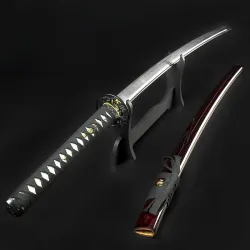
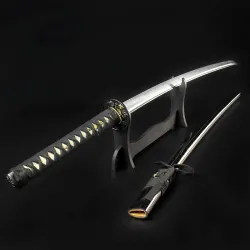
Among the most famous swords in martial arts history are the katana and samurai swords. Originating in Japan, the katana is known for its curved, single-edged blade and its distinctive ability to cut through the air with incredible speed. The samurai, Japan's elite warrior class, revered the katana as not only a weapon but as a representation of their honor and skill. Hand-forged katana swords have been crafted for centuries using traditional techniques, making each sword a unique piece of craftsmanship. The making of an authentic katana is a meticulous process, with blades being folded many times to create layers of steel that provide strength and resilience.
In addition to the katana, we carry a variety of other swords with rich histories. The Chinese Dadao, for example, is a large, single-edged sword used primarily in Chinese martial arts. With a broad, heavy blade, the Dadao was designed for slashing and cutting, and it became particularly famous during the early 20th century when it was used by Chinese peasants in rebellion against foreign invaders. The naginata, a pole weapon with a curved blade, is another traditional weapon that has been a cornerstone of Japanese martial arts. The naginata was often used by samurai women in feudal Japan and remains a highly respected weapon in martial arts today.
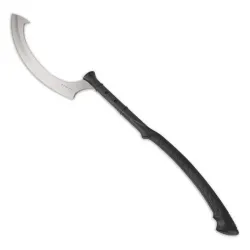
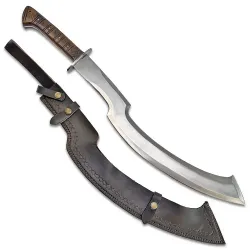
Another fascinating sword in our collection is the khopesh, an ancient Egyptian weapon with a distinct, sickle-like blade. Used by Egyptian soldiers and warriors for centuries, the khopesh was designed for both slashing and thrusting, making it a versatile tool on the battlefield. Whether for historical reenactment or martial arts practice, the khopesh offers a unique experience for collectors and fighters alike.
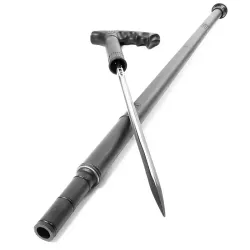
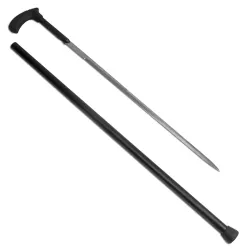
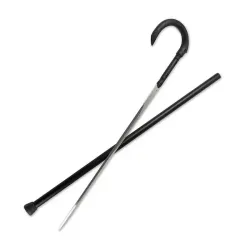
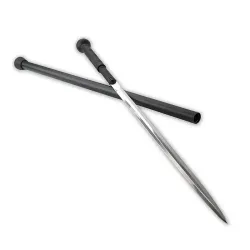
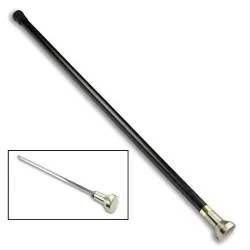
Beyond the traditional battle swords, we also carry sword canes - a practical yet stylish weapon often associated with Victorian-era gentlemen. These covert weapons combine elegance with utility, offering a hidden blade within a walking cane. Perfect for self-defense or as a collector's item, the sword cane allows you to carry the power of a sword without drawing attention.
At Kombativ.com, we are committed to providing the finest selection of swords for martial artists and collectors alike. From real samurai swords and hand-forged Japanese swords to historical replicas and modern designs, our collection offers something for everyone. Whether you're looking for a sword to display in your collection or a functional weapon to enhance your training, you'll find exactly what you need. If you have any questions about our katanas or other swords, please feel free to contact us. Our knowledgeable customer service team is here to assist you in finding the perfect sword for your needs. With our passion for martial arts and dedication to quality, Kombativ.com is your trusted source for authentic swords.
A katana is a specific type of samurai sword known for its curved, single-edged blade and exceptional sharpness.
While the terms "katana" and "samurai sword" are often used interchangeably, they don't mean exactly the same thing. The word "katana" refers to one particular style of sword used by samurai in feudal Japan. It has a distinct curve, a circular or squared guard, and a long grip that allows two-handed use. The broader term "samurai sword" can include other Japanese blades such as the wakizashi (short sword) and tanto (dagger). Together, the katana and wakizashi formed the daisho, the traditional pair of swords carried by samurai to represent their rank and honor.
Yes, real swords are legal to own in most parts of the United States, though local laws can vary by state and city.
In general, owning a sword for display, collection, or martial arts practice is completely legal. However, certain states or municipalities may have restrictions on carrying swords in public or possessing concealed blades, such as sword canes. Transporting a sword in your vehicle is typically allowed as long as it's stored safely and not intended for use as a weapon. Collectors and martial artists should always check local regulations before purchasing or carrying a sword to avoid violations. For most enthusiasts, displaying or training with a sword at home or in a dojo poses no legal issues at all.
Every culture has developed its own distinct sword styles, shaped by geography, armor, and fighting philosophy.
In Japan, the katana stands out as one of the most recognizable swords ever made. With its curved, single-edged blade and two-handed grip, it was the weapon of choice for samurai warriors. Alongside the katana were the wakizashi, a shorter companion sword, and the tanto, a small dagger used for close defense. Together, these formed the samurai's daisho, a symbol of status and honor.
In China, two main types dominate martial arts and history: the jian and the dao. The jian, a straight double-edged sword, is known as the "Gentleman of Weapons," representing precision and grace. The dao, on the other hand, has a curved, single edge built for powerful, sweeping cuts, making it favored by soldiers and generals alike.
European swords evolved through centuries of warfare. The longsword, with its double edge and crossguard, was a knight's mainstay during the Middle Ages, designed for both slashing and thrusting. The rapier, a slender dueling sword, became popular during the Renaissance for its agility and reach. Heavy broadswords and claymores were used by soldiers who needed raw striking power against armored foes.
From the Middle East and North Africa, curved blades such as the scimitar, shamshir, and saif emphasized speed and slicing ability in open combat. Their elegant curvature allowed devastating cuts from horseback, reflecting the fast, mobile warfare of desert cultures.
In ancient Egypt, the khopesh featured a distinct sickle-shaped design used for hooking and slashing. In India, the talwar and urumi, the latter being a flexible whip sword, showcased the region's mastery of metallurgy and creativity in battle. African warriors also wielded short, wide blades like the iklwa, blending sword and spear techniques.
Each of these swords tells a story of its time and place. Whether forged for dueling, ceremony, or war, they all reflect the same human drive for artistry, skill, and survival, making the sword one of history's most enduring and universal weapons.
Real katanas are made through a traditional Japanese forging process that folds and layers steel to create both strength and flexibility.
A master swordsmith begins by heating and hammering high-carbon and low-carbon steel together. The blade is then folded repeatedly, often several dozen times, to remove impurities and distribute carbon evenly throughout the metal. This creates the katana's signature grain pattern and incredible durability. Once shaped, the blade undergoes a differential hardening process using a clay mixture. The edge is coated thinly while the spine receives a thicker layer, allowing the cutting edge to harden while the back remains softer and more flexible. This technique gives the blade its famous curve after quenching. The final steps include polishing, sharpening, and mounting the blade with traditional fittings such as the tsuba (guard) and tsuka (handle). Every stage of this process requires extreme precision, turning each katana into a functional work of art.
Regular cleaning, oiling, and safe storage will keep your sword looking sharp and prevent rust or corrosion.
After each use or handling, wipe the blade with a soft, dry cloth to remove fingerprints, moisture, or dust. Natural oils from your hands can cause corrosion over time, especially on carbon steel blades. Apply a thin coat of light oil, such as choji oil or mineral oil, to protect the metal from oxidation. Avoid using abrasive pads or harsh chemicals that can damage the finish. For decorative swords, light dusting and periodic oiling are usually enough. For functional blades, inspect regularly for nicks or rust spots and address them right away. Always store your sword in a dry environment, ideally in a sheath or scabbard designed for that model, and keep it away from humidity or direct sunlight. Proper care ensures your sword remains both beautiful and battle-ready for years to come.
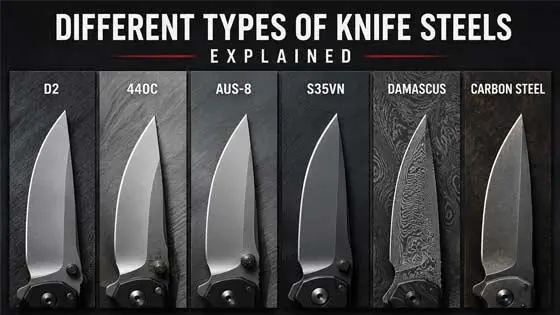
Carbon steel swords are stronger and hold a sharper edge, while stainless steel swords resist rust and are better for display.
Carbon steel is the traditional choice for functional, battle-ready swords. It can be hardened and tempered, allowing the blade to stay sharp through repeated use. However, carbon steel requires regular maintenance to prevent rust and corrosion. It's the preferred material for martial artists and collectors who value authenticity and performance.
Stainless steel, on the other hand, contains chromium, which protects against oxidation. This makes it ideal for decorative swords or replicas that don't need to withstand heavy use. While stainless steel blades are shiny and low-maintenance, they are generally more brittle and not designed for cutting or sparring. In short, choose carbon steel for function and stainless steel for appearance and convenience.
While swords can technically be used for self-defense, they are not practical or legal for everyday carry in most places.
Historically, swords were designed for combat and personal defense, but modern laws and environments make them unsuitable for that role today. Carrying a sword in public is often restricted or illegal, and the size makes it difficult to use safely or discreetly. For home defense, a sword could serve as a deterrent, but it requires skill and space to use effectively. Most experts recommend smaller, legal defensive tools such as tactical flashlights, pepper spray, or keychain weapons for realistic self-protection. Today, swords are best appreciated as collector's items, training tools, or symbols of martial tradition rather than modern defensive weapons.
The sharpest swords in history are Japanese katanas and Damascus steel blades, both known for their extraordinary edge retention and cutting ability.
Traditional katanas were made using a meticulous folding and heat-treating process that produced an incredibly fine, razor-sharp edge. Their differential hardening created a hard cutting edge supported by a flexible spine, allowing them to slice through targets with precision and strength. Meanwhile, Damascus steel blades from the Middle East earned a legendary reputation for sharpness and durability. Made from layered steel and iron, these swords had a distinctive wavy pattern and could reportedly cut through other metals without dulling easily. Modern metallurgists have recreated both techniques with advanced materials, but authentic hand-forged katanas and ancient Damascus swords remain the gold standard for sharpness in sword-making history.
The Katana and the Samurai Tradition
Among the most famous swords in martial arts history are the katana and samurai swords. Originating in Japan, the katana is known for its curved, single-edged blade and its distinctive ability to cut through the air with incredible speed. The samurai, Japan's elite warrior class, revered the katana as not only a weapon but as a representation of their honor and skill. Hand-forged katana swords have been crafted for centuries using traditional techniques, making each sword a unique piece of craftsmanship. The making of an authentic katana is a meticulous process, with blades being folded many times to create layers of steel that provide strength and resilience.
Historic Swords From Around the World
In addition to the katana, we carry a variety of other swords with rich histories. The Chinese Dadao, for example, is a large, single-edged sword used primarily in Chinese martial arts. With a broad, heavy blade, the Dadao was designed for slashing and cutting, and it became particularly famous during the early 20th century when it was used by Chinese peasants in rebellion against foreign invaders. The naginata, a pole weapon with a curved blade, is another traditional weapon that has been a cornerstone of Japanese martial arts. The naginata was often used by samurai women in feudal Japan and remains a highly respected weapon in martial arts today.
Another fascinating sword in our collection is the khopesh, an ancient Egyptian weapon with a distinct, sickle-like blade. Used by Egyptian soldiers and warriors for centuries, the khopesh was designed for both slashing and thrusting, making it a versatile tool on the battlefield. Whether for historical reenactment or martial arts practice, the khopesh offers a unique experience for collectors and fighters alike.
Modern and Concealed Sword Designs
Beyond the traditional battle swords, we also carry sword canes - a practical yet stylish weapon often associated with Victorian-era gentlemen. These covert weapons combine elegance with utility, offering a hidden blade within a walking cane. Perfect for self-defense or as a collector's item, the sword cane allows you to carry the power of a sword without drawing attention.
Your Source for Authentic Swords
At Kombativ.com, we are committed to providing the finest selection of swords for martial artists and collectors alike. From real samurai swords and hand-forged Japanese swords to historical replicas and modern designs, our collection offers something for everyone. Whether you're looking for a sword to display in your collection or a functional weapon to enhance your training, you'll find exactly what you need. If you have any questions about our katanas or other swords, please feel free to contact us. Our knowledgeable customer service team is here to assist you in finding the perfect sword for your needs. With our passion for martial arts and dedication to quality, Kombativ.com is your trusted source for authentic swords.
What's the Difference Between a Katana and a Samurai Sword?
A katana is a specific type of samurai sword known for its curved, single-edged blade and exceptional sharpness.
While the terms "katana" and "samurai sword" are often used interchangeably, they don't mean exactly the same thing. The word "katana" refers to one particular style of sword used by samurai in feudal Japan. It has a distinct curve, a circular or squared guard, and a long grip that allows two-handed use. The broader term "samurai sword" can include other Japanese blades such as the wakizashi (short sword) and tanto (dagger). Together, the katana and wakizashi formed the daisho, the traditional pair of swords carried by samurai to represent their rank and honor.
Are Real Swords Legal to Own in the United States?
Yes, real swords are legal to own in most parts of the United States, though local laws can vary by state and city.
In general, owning a sword for display, collection, or martial arts practice is completely legal. However, certain states or municipalities may have restrictions on carrying swords in public or possessing concealed blades, such as sword canes. Transporting a sword in your vehicle is typically allowed as long as it's stored safely and not intended for use as a weapon. Collectors and martial artists should always check local regulations before purchasing or carrying a sword to avoid violations. For most enthusiasts, displaying or training with a sword at home or in a dojo poses no legal issues at all.
What Are the Different Types of Swords from Around the World?
Every culture has developed its own distinct sword styles, shaped by geography, armor, and fighting philosophy.
Japanese Swords
In Japan, the katana stands out as one of the most recognizable swords ever made. With its curved, single-edged blade and two-handed grip, it was the weapon of choice for samurai warriors. Alongside the katana were the wakizashi, a shorter companion sword, and the tanto, a small dagger used for close defense. Together, these formed the samurai's daisho, a symbol of status and honor.
Chinese Swords
In China, two main types dominate martial arts and history: the jian and the dao. The jian, a straight double-edged sword, is known as the "Gentleman of Weapons," representing precision and grace. The dao, on the other hand, has a curved, single edge built for powerful, sweeping cuts, making it favored by soldiers and generals alike.
European Swords
European swords evolved through centuries of warfare. The longsword, with its double edge and crossguard, was a knight's mainstay during the Middle Ages, designed for both slashing and thrusting. The rapier, a slender dueling sword, became popular during the Renaissance for its agility and reach. Heavy broadswords and claymores were used by soldiers who needed raw striking power against armored foes.
Middle Eastern and North African Swords
From the Middle East and North Africa, curved blades such as the scimitar, shamshir, and saif emphasized speed and slicing ability in open combat. Their elegant curvature allowed devastating cuts from horseback, reflecting the fast, mobile warfare of desert cultures.
Ancient and Regional Sword Designs
In ancient Egypt, the khopesh featured a distinct sickle-shaped design used for hooking and slashing. In India, the talwar and urumi, the latter being a flexible whip sword, showcased the region's mastery of metallurgy and creativity in battle. African warriors also wielded short, wide blades like the iklwa, blending sword and spear techniques.
The Cultural Legacy of Swords
Each of these swords tells a story of its time and place. Whether forged for dueling, ceremony, or war, they all reflect the same human drive for artistry, skill, and survival, making the sword one of history's most enduring and universal weapons.
How Are Real Katanas Made?
Real katanas are made through a traditional Japanese forging process that folds and layers steel to create both strength and flexibility.
A master swordsmith begins by heating and hammering high-carbon and low-carbon steel together. The blade is then folded repeatedly, often several dozen times, to remove impurities and distribute carbon evenly throughout the metal. This creates the katana's signature grain pattern and incredible durability. Once shaped, the blade undergoes a differential hardening process using a clay mixture. The edge is coated thinly while the spine receives a thicker layer, allowing the cutting edge to harden while the back remains softer and more flexible. This technique gives the blade its famous curve after quenching. The final steps include polishing, sharpening, and mounting the blade with traditional fittings such as the tsuba (guard) and tsuka (handle). Every stage of this process requires extreme precision, turning each katana into a functional work of art.
How Should I Maintain and Clean My Sword?
Regular cleaning, oiling, and safe storage will keep your sword looking sharp and prevent rust or corrosion.
After each use or handling, wipe the blade with a soft, dry cloth to remove fingerprints, moisture, or dust. Natural oils from your hands can cause corrosion over time, especially on carbon steel blades. Apply a thin coat of light oil, such as choji oil or mineral oil, to protect the metal from oxidation. Avoid using abrasive pads or harsh chemicals that can damage the finish. For decorative swords, light dusting and periodic oiling are usually enough. For functional blades, inspect regularly for nicks or rust spots and address them right away. Always store your sword in a dry environment, ideally in a sheath or scabbard designed for that model, and keep it away from humidity or direct sunlight. Proper care ensures your sword remains both beautiful and battle-ready for years to come.
What's the Difference Between Carbon Steel and Stainless Steel Swords?
Carbon steel swords are stronger and hold a sharper edge, while stainless steel swords resist rust and are better for display.
Carbon steel is the traditional choice for functional, battle-ready swords. It can be hardened and tempered, allowing the blade to stay sharp through repeated use. However, carbon steel requires regular maintenance to prevent rust and corrosion. It's the preferred material for martial artists and collectors who value authenticity and performance.
Stainless steel, on the other hand, contains chromium, which protects against oxidation. This makes it ideal for decorative swords or replicas that don't need to withstand heavy use. While stainless steel blades are shiny and low-maintenance, they are generally more brittle and not designed for cutting or sparring. In short, choose carbon steel for function and stainless steel for appearance and convenience.
Can Swords Still Be Used for Self-Defense Today?
While swords can technically be used for self-defense, they are not practical or legal for everyday carry in most places.
Historically, swords were designed for combat and personal defense, but modern laws and environments make them unsuitable for that role today. Carrying a sword in public is often restricted or illegal, and the size makes it difficult to use safely or discreetly. For home defense, a sword could serve as a deterrent, but it requires skill and space to use effectively. Most experts recommend smaller, legal defensive tools such as tactical flashlights, pepper spray, or keychain weapons for realistic self-protection. Today, swords are best appreciated as collector's items, training tools, or symbols of martial tradition rather than modern defensive weapons.
What's the Sharpest Sword Ever Made?
The sharpest swords in history are Japanese katanas and Damascus steel blades, both known for their extraordinary edge retention and cutting ability.
Traditional katanas were made using a meticulous folding and heat-treating process that produced an incredibly fine, razor-sharp edge. Their differential hardening created a hard cutting edge supported by a flexible spine, allowing them to slice through targets with precision and strength. Meanwhile, Damascus steel blades from the Middle East earned a legendary reputation for sharpness and durability. Made from layered steel and iron, these swords had a distinctive wavy pattern and could reportedly cut through other metals without dulling easily. Modern metallurgists have recreated both techniques with advanced materials, but authentic hand-forged katanas and ancient Damascus swords remain the gold standard for sharpness in sword-making history.