




What Is the Hardest Martial Arts Weapon to Master? We Ranked Them
June 8th, 2026
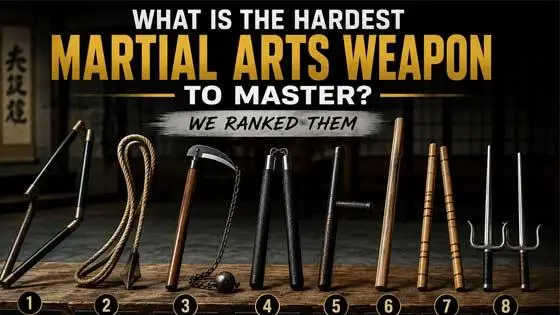
Some martial arts weapons look intimidating the moment you pick them up. Others seem deceptively simple until you actually try to use them. A pair of nunchaku might seem straightforward until they smack your elbow for the fifth time. A bo staff looks manageable right up until you realize how much precision, timing, and body control it actually demands.
Then there are the weapons that feel almost impossible in the hands of a beginner.
Not all martial arts weapons are equally difficult to learn, and mastering one is about far more than memorizing flashy movements. Coordination, timing, footwork, range control, injury risk, and even mental focus all play a role. Some weapons reward practice quickly. Others seem determined to humble you for months before anything finally clicks.
So which martial arts weapon is actually the hardest to master?
We ranked some of the most iconic martial arts weapons based on learning curve, coordination, difficulty of control, and just how unforgiving they can be when things go wrong. Some of the answers may surprise you.
People often assume the hardest martial arts weapon is simply the one that looks the most intimidating. That is usually not how it works.
In reality, difficulty comes down to several factors that are easy to overlook when you are watching an expert demonstrate a weapon. Coordination matters. Timing matters. Range control matters. Some weapons are physically demanding, while others are mentally exhausting because one small mistake can throw off your rhythm entirely.
There is also a major difference between learning a few basic movements and actually becoming proficient. Almost anyone can spin a bo staff after a few sessions. That does not mean they can spar effectively with one, transition smoothly between techniques, or recover when something goes wrong in motion.
Some weapons are forgiving. Miss your timing slightly, and you can recover without much trouble. Others punish mistakes immediately, sometimes painfully. If you have ever accidentally clipped yourself with nunchaku, tangled a flexible weapon, or lost control of a spinning staff, you already know what that feels like.
For this ranking, we looked at several factors: coordination, injury risk, learning curve, control, speed, and how difficult it is to use the weapon effectively under pressure. Flashy tricks alone did not earn a weapon a higher spot. We focused on what it actually takes to become legitimately skilled with one.
At first glance, sai often look intimidating. Sharp metal prongs, dramatic movie appearances, and a reputation for speed can make them seem like an advanced weapon reserved for experts. In reality, sai are usually more approachable than many flexible or momentum-based weapons.
That does not mean they are easy to master.
The reason sai land lower on this list has less to do with complexity and more to do with forgiveness. Unlike a weapon that swings unpredictably or rebounds into your face when your timing is off, sai are relatively stable in the hands. They are rigid, compact, and generally easier to control once you learn proper grip transitions and defensive positioning.
Where beginners often struggle is fluidity. Spinning sai looks effortless when an experienced practitioner does it, but clean transitions between grips take repetition. The weapon is also deceptively technical because much of its effectiveness comes from trapping, redirecting, and controlling an opponent's weapon rather than simply striking with force.
In other words, sai reward precision more than athleticism. You are less likely to hurt yourself learning them than you are with nunchaku or a three-section staff, but true mastery still takes time.
That is why sai start our ranking. Difficult? Absolutely. Brutal for beginners? Not compared to what is coming next.
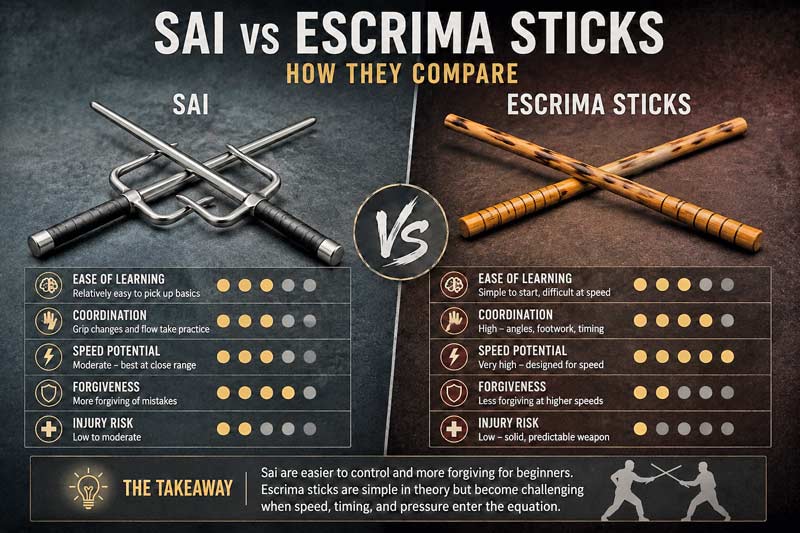
A lot of martial arts weapons look difficult the moment you pick them up. Escrima sticks are the opposite.
At first glance, they seem straightforward. They are just sticks, right? No chains to tangle, no spinning sections, no complicated moving parts. Compared to weapons like nunchaku or a rope dart, many beginners assume escrima is one of the easier systems to learn.
That assumption lasts until training speeds up.
The challenge with escrima is not the weapon itself. It is the speed, timing, and precision required to use it effectively. Once combinations begin flowing, many beginners discover they are struggling to coordinate angles, footwork, blocks, counters, and transitions all at once. The movements can look simple from the outside, but there is a lot happening under the surface.
Unlike some traditional weapons that rely on dramatic spins or large motions, escrima often emphasizes efficiency. Small mistakes matter. A slight timing error can leave openings. Poor positioning becomes obvious quickly. Because training frequently focuses on rhythm and reaction time, practitioners often find themselves mentally overwhelmed before they are physically tired.
Another thing that makes escrima deceptively difficult is how quickly the pace escalates. At slow speed, techniques can feel manageable. Under pressure, everything changes. Reaction time suddenly matters more than memory, and clean technique becomes much harder to maintain.
That said, escrima sticks are still more forgiving than many weapons higher on this list. They are relatively intuitive to hold, easier to control than flexible weapons, and less likely to punish mistakes with immediate self-inflicted pain.
If you are curious about the roots of Filipino stick fighting, our guide on the difference between Arnis, Eskrima, and Kali explains how these arts evolved and why they are often grouped together. You can also dive deeper into the real history of escrima sticks and how they developed from battlefield tools into modern martial arts training weapons.
Escrima sticks are harder than they look, especially at speed, but they are still far more approachable than the weapons waiting higher on this list.
The bo staff has a reputation for being one of the most beginner-friendly martial arts weapons, and to be fair, there is some truth to that. Compared to chain weapons or flexible weapons, it feels more intuitive right away. It is balanced, predictable, and easier to control than something that swings unpredictably.
That early confidence can be misleading.
A lot of beginners discover they can learn a few spins within days and suddenly assume they are making fast progress. Then reality sets in. Clean transitions become harder. Footwork starts mattering. Range control becomes important. And once speed enters the equation, everything becomes less forgiving.
One reason the bo staff ranks higher than sai or escrima sticks is because of the amount of full-body coordination involved. Unlike smaller weapons that rely heavily on wrist movement, a staff demands engagement from almost everything: shoulders, hips, stance, timing, grip changes, positioning, and spatial awareness.
There is also a huge gap between looking good and being effective.
Spinning a staff can be visually impressive, but actually controlling distance, generating power, and maintaining accuracy takes far longer than many people expect. A skilled practitioner makes it look effortless because they understand leverage, momentum, and timing at a level most beginners simply have not developed yet.
That is also why staff length matters more than people realize. Choosing the wrong size can make training unnecessarily frustrating, especially for beginners. If you are unsure where to start, our guide on what size bo staff you should use breaks down how to choose one based on height and experience level. For a deeper overview, we also put together a complete guide to martial arts staffs and a beginner-friendly explanation of what a bo staff actually is.
Bo staffs are still approachable compared to the weapons higher on this list. They are forgiving enough to build confidence early, but difficult enough that genuine mastery can take years.
The bo staff is easier to start learning than most martial arts weapons, but true proficiency is much harder than beginners expect.
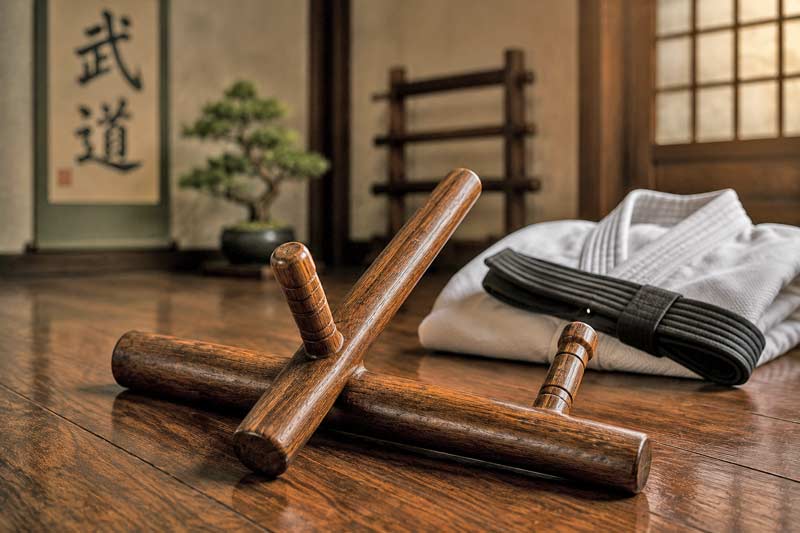
Tonfa are one of those weapons that look deceptively manageable until you actually try to use them.
At first glance, they seem simple enough. They are rigid, compact, and do not swing unpredictably like flexible weapons. Compared to nunchaku or a rope dart, many beginners assume tonfa should be relatively easy to learn.
Then they try moving with them.
The biggest challenge with tonfa is that they feel unnatural at first. Most people instinctively want to hold them like short clubs, but traditional tonfa movement relies heavily on rotation, positioning, wrist control, and defensive mechanics that can feel awkward in the beginning. Even basic strikes often require relearning body mechanics.
What makes tonfa difficult is not chaos. It is precision.
Unlike weapons that rely on spinning momentum, tonfa demand clean technique. Small positioning mistakes become obvious quickly. Defensive blocks need proper angles. Rotational strikes require timing. Transitions between grips can feel clumsy for months before they finally become fluid.
There is also a mental challenge to tonfa training that many people underestimate. Because the movements are more compact, progress can feel slower. You may not get the instant visual payoff that comes with spinning a staff or landing flashy nunchaku combinations. Instead, improvement often shows up quietly through better control, cleaner mechanics, and smoother timing.
Interestingly, tonfa also have one of the more fascinating origin stories in martial arts. If you want to dive deeper, our breakdown of what a tonfa weapon is and how it was originally used explores how this traditional weapon evolved over time. You can also browse different styles of tonfa to see how training versions vary in design and handling.
Tonfa land in the middle of this list because they are less punishing than the weapons ahead, but significantly more technical than they first appear.
Tonfa are physically manageable for beginners, but mastering control, precision, and fluid movement takes far longer than most people expect.
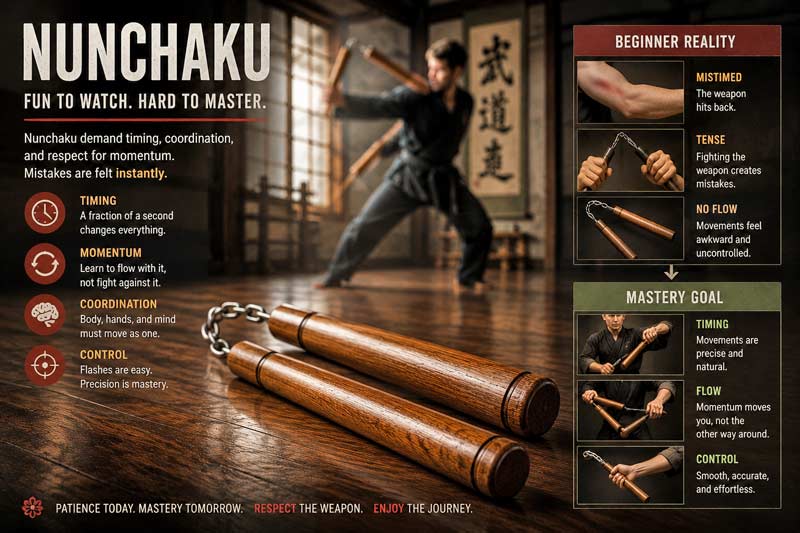
If this list were based purely on bruises, nunchaku might rank even higher.
Few martial arts weapons have a bigger gap between how fun they look and how frustrating they can feel at first. Movies made nunchaku famous for fast spins, flashy strikes, and impossible-looking speed, which is probably why so many beginners underestimate them.
Then reality shows up, usually in the form of a smack to the forearm, shoulder, or head.
The difficulty of nunchaku comes from momentum and timing. Unlike rigid weapons, nunchaku are constantly moving. Stop paying attention for even a second and the weapon immediately reminds you that physics is in charge. Timing mistakes are not subtle. You feel them instantly.
What makes nunchaku especially challenging is that beginners often fight the weapon instead of learning to work with it. Trying to muscle through movements usually backfires. Good nunchaku control comes from rhythm, flow, and understanding how momentum naturally carries the weapon through transitions.
There is also an uncomfortable truth many people discover early: learning flashy spins is not the same thing as becoming skilled. Plenty of beginners can imitate cool movements after watching videos online, but smooth transitions, clean recovery, accuracy, and actual control take much longer to develop.
Ironically, nunchaku became famous partly because they look chaotic, but experienced practitioners know the opposite is true. At a high level, the weapon is all about control.
That steep learning curve is exactly why nunchaku rank this high. They are incredibly rewarding once things start clicking, but getting there usually involves a lot of mistakes, a few bruises, and more patience than most beginners expect.
If you are just getting started, choosing the right nunchaku can make a surprisingly big difference in how frustrating the learning process feels. Our guide to choosing the right nunchaku for your skill level explains what beginners should look for. You can also dive into the real history of nunchaku and learn why nunchucks were originally invented if you want to understand how this famous weapon actually evolved.
Nunchaku punish bad timing immediately, require strong coordination, and have one of the steepest beginner learning curves in martial arts weapons training.
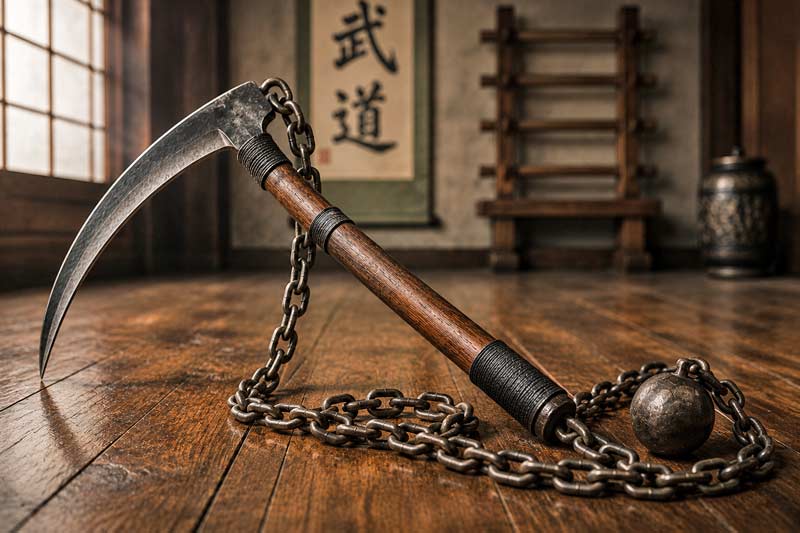
There is difficult, and then there is trying to manage two completely different weapons at the same time.
The kusarigama is one of the strangest and most intimidating traditional martial arts weapons ever created. Part sickle, part weighted chain, it demands something many other weapons do not: divided attention. One hand controls a rigid blade while the other manages a swinging weighted chain that is constantly moving through space.
That combination is exactly what makes it so hard.
Most martial arts weapons ask you to focus on timing, positioning, and control. The kusarigama asks you to do all of that while also keeping track of momentum, distance, angles, and where a weighted object is flying at any given moment. Beginners often discover very quickly that their brain feels overloaded before their body catches up.
Flexible weapons are already difficult because momentum has a mind of its own. Add a blade into the mix and mistakes suddenly feel much less forgiving. Even experienced martial artists often find kusarigama training humbling because success depends heavily on rhythm and coordination rather than raw athletic ability.
The strange thing is that when someone truly understands the weapon, it starts looking effortless. The chain flows naturally, transitions appear smooth, and the sickle suddenly feels like an extension of the body. Getting to that point, however, is where most people struggle.
Kusarigama also happens to be one of the most fascinating weapons in martial arts history. If you want to see how traditional versions evolved, take a look at different kusarigama designs and how the weapon blends striking, trapping, and timing in a way few others do.
This is where our ranking shifts from "challenging" to genuinely difficult. From here on out, every weapon demands an unusually high level of coordination and patience.
The kusarigama combines two difficult weapon systems into one, forcing practitioners to manage timing, distance, momentum, and coordination simultaneously.
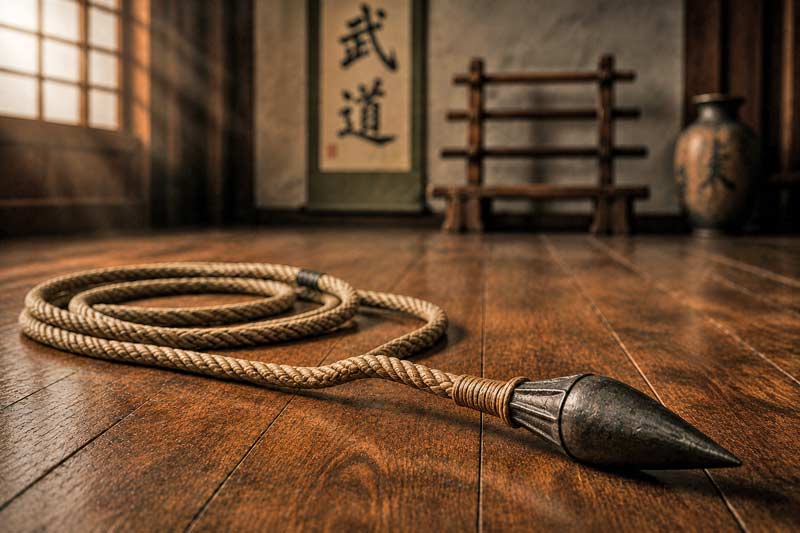
Watching someone skilled with a rope dart almost does not look real.
The weapon moves at strange angles. It disappears behind the body and suddenly reappears somewhere else. Momentum shifts constantly. Timing looks impossibly precise. To beginners, it can feel less like learning a martial arts weapon and more like trying to control chaos.
That feeling is not entirely wrong.
The rope dart is notoriously difficult because nearly everything about it works against beginner instincts. Most people naturally want to stop momentum or force movements into predictable patterns. A rope dart does not cooperate with that approach. The moment tension changes or timing slips, the weapon can tangle, lose energy, or swing somewhere completely unexpected.
Unlike rigid weapons, where mistakes are often easier to recover from, rope dart errors tend to compound quickly. A poorly timed movement can throw off the next transition, which affects the next movement after that. Before long, what was supposed to feel smooth suddenly feels impossible.
What makes the rope dart especially brutal to learn is the amount of body coordination involved. Arms, shoulders, hips, footwork, timing, rhythm, and spatial awareness all have to work together. There is very little room for hesitation. You are not just controlling a weapon. You are constantly reacting to momentum in real time.
Ironically, this is also why experienced rope dart practitioners make it look so mesmerizing. When the weapon finally starts flowing correctly, movements feel almost effortless. That smoothness hides how much technical skill is happening underneath.
If you read our breakdown of the fastest weapon in martial arts, you have probably already seen why flexible, momentum-based weapons tend to dominate discussions around speed and reaction time. Rope dart sits firmly in that category.
Rope dart ranks near the top because it combines nearly everything that makes a martial arts weapon difficult: timing, momentum, coordination, unpredictability, and an unusually unforgiving learning curve.
Few martial arts weapons demand more coordination, timing, and spatial awareness than the rope dart, making it one of the hardest weapons in the world to learn well.
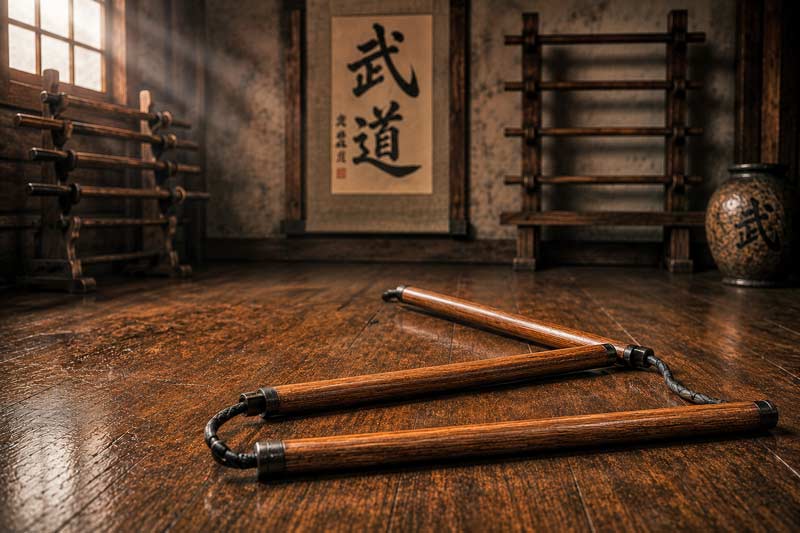
If you guessed the three-section staff would land near the top of this list, congratulations. You have probably either trained with one or watched somebody else struggle through the experience.
For most beginners, the first few sessions are not graceful. They are confusing, frustrating, and occasionally painful.
The reason the three-section staff ranks at number one is simple: it combines many of the hardest elements of multiple weapons into one brutally unforgiving system.
Part staff weapon, part flexible weapon, and part coordination test, the three-section staff demands timing, rhythm, body awareness, spatial control, and confidence all at once. It swings, folds, rebounds, and changes direction constantly. Beginners are not just learning movements. They are learning how to predict momentum before it punishes mistakes.
And mistakes happen a lot.
Unlike a traditional bo staff, which is relatively stable, the three-section staff introduces movement between segments that can quickly spiral out of control if your timing slips. What feels smooth in theory often turns chaotic in practice. A transition that looks simple during a demonstration suddenly becomes much harder when momentum enters the equation.
There is also a psychological side to why this weapon feels so difficult. Many beginners tense up. That hesitation creates stiffness, stiffness disrupts rhythm, and disrupted rhythm makes the weapon harder to control. It becomes a frustrating cycle that causes a lot of people to give up too early.
Yet that same difficulty is also why experienced practitioners love it.
Few martial arts weapons look more impressive when mastered. When someone truly understands a three-section staff, movements feel fluid, transitions seem effortless, and the weapon almost appears alive in motion. The problem is getting to that point requires a level of patience most people underestimate.
If this weapon caught your attention, our guide to martial arts staffs dives deeper into different staff weapons and training styles. You can also explore traditional three-section staffs to see how different lengths and materials affect handling and control.
The three-section staff combines momentum, flexibility, timing, coordination, and unpredictability into one weapon system, making it arguably the hardest martial arts weapon to truly master.
There is no perfect answer because difficulty depends partly on the person training. Someone with exceptional coordination may struggle less with flexible weapons. Someone with strong timing might adapt to momentum-based systems faster than expected.
Still, if you ask experienced practitioners which weapon humbles beginners the fastest, the three-section staff appears near the top of the conversation again and again.
That does not mean other weapons are easy. Nunchaku punish mistakes instantly. Rope dart feels almost impossible at first. Kusarigama demands divided attention in a way few weapons do. Even seemingly approachable weapons like tonfa or escrima sticks become surprisingly technical once speed and pressure enter the equation.
The interesting part is that difficulty is often what makes these weapons rewarding. Nobody remembers the weapon they mastered immediately. They remember the one that frustrated them, forced them to improve, and finally clicked after months of practice.
In other words, the hardest martial arts weapon to master might also be the most satisfying one to stick with.
There is an interesting pattern in martial arts: the weapons people struggle with the most are often the ones they end up loving.
That sounds backwards at first.
You would think frustration would make people quit. Sometimes it does. But difficult weapons also create a strange kind of satisfaction because progress feels earned. The first time you stop hitting yourself with nunchaku, land a smooth transition with a three-section staff, or finally control the rhythm of a rope dart, it feels memorable in a way easier weapons rarely do.
Part of that comes down to challenge. Weapons that demand timing, coordination, and patience force people to improve in ways they did not expect. You are not just learning movements. You are learning control, body awareness, rhythm, and how to stay calm while things feel chaotic.
It is also why experienced practitioners tend to respect difficult weapons so much. They know how much frustration hides behind movements that now look effortless.
That said, harder is not always better. Some people naturally connect with weapons that others find frustrating. A weapon that feels impossible at first may suddenly click after a few months of practice. Others may never feel intuitive, no matter how much time you spend with them.
If there is one takeaway from this list, it is this: the hardest martial arts weapon to master is often the one that teaches you the most in the process.
For most beginners, yes. A bo staff is usually easier to control because it is rigid and predictable. Nunchaku rely heavily on timing and momentum, which means mistakes tend to show up immediately, often painfully. That said, some people naturally pick up rhythm-based weapons faster than others.
The three-section staff combines several challenges into one weapon. It has the reach of a staff but the unpredictability of a flexible weapon. Because the sections move independently, timing mistakes can quickly spiral into lost control. Many practitioners consider it one of the hardest martial arts weapons to truly master because it demands rhythm, coordination, and constant awareness.
Nunchaku probably win this category. Many beginners accidentally hit themselves while learning timing and control. The three-section staff also has a reputation for humbling newcomers quickly. In most cases, the bruises are less about danger and more about learning how momentum actually works.
For most people, yes. Nunchaku are difficult, but the rope dart adds even more complexity because of its length, momentum, and constantly changing angles. Small timing mistakes are harder to recover from, which is why rope dart usually ranks near the top of difficulty discussions.
That depends on what you mean by "learn." Many beginners find the bo staff approachable because it feels intuitive and stable. Escrima sticks are also often beginner-friendly because the movements are straightforward at slower speeds. Mastery, however, is a completely different conversation.
For many practitioners, absolutely. Harder weapons often feel more rewarding because progress feels earned. The learning process builds coordination, patience, timing, and body awareness in ways easier weapons sometimes do not. Many martial artists end up appreciating the weapons that challenged them the most.
Not all martial arts weapons are equally difficult to learn, and mastering one is about far more than memorizing flashy movements. Coordination, timing, footwork, range control, injury risk, and even mental focus all play a role. Some weapons reward practice quickly. Others seem determined to humble you for months before anything finally clicks.
So which martial arts weapon is actually the hardest to master?
We ranked some of the most iconic martial arts weapons based on learning curve, coordination, difficulty of control, and just how unforgiving they can be when things go wrong. Some of the answers may surprise you.
Before We Rank Them: What Actually Makes a Martial Arts Weapon Hard to Master?
People often assume the hardest martial arts weapon is simply the one that looks the most intimidating. That is usually not how it works.
In reality, difficulty comes down to several factors that are easy to overlook when you are watching an expert demonstrate a weapon. Coordination matters. Timing matters. Range control matters. Some weapons are physically demanding, while others are mentally exhausting because one small mistake can throw off your rhythm entirely.
There is also a major difference between learning a few basic movements and actually becoming proficient. Almost anyone can spin a bo staff after a few sessions. That does not mean they can spar effectively with one, transition smoothly between techniques, or recover when something goes wrong in motion.
Some weapons are forgiving. Miss your timing slightly, and you can recover without much trouble. Others punish mistakes immediately, sometimes painfully. If you have ever accidentally clipped yourself with nunchaku, tangled a flexible weapon, or lost control of a spinning staff, you already know what that feels like.
For this ranking, we looked at several factors: coordination, injury risk, learning curve, control, speed, and how difficult it is to use the weapon effectively under pressure. Flashy tricks alone did not earn a weapon a higher spot. We focused on what it actually takes to become legitimately skilled with one.
#8: Sai (Easier Than They Look, Harder Than You Think)
At first glance, sai often look intimidating. Sharp metal prongs, dramatic movie appearances, and a reputation for speed can make them seem like an advanced weapon reserved for experts. In reality, sai are usually more approachable than many flexible or momentum-based weapons.
That does not mean they are easy to master.
The reason sai land lower on this list has less to do with complexity and more to do with forgiveness. Unlike a weapon that swings unpredictably or rebounds into your face when your timing is off, sai are relatively stable in the hands. They are rigid, compact, and generally easier to control once you learn proper grip transitions and defensive positioning.
Where beginners often struggle is fluidity. Spinning sai looks effortless when an experienced practitioner does it, but clean transitions between grips take repetition. The weapon is also deceptively technical because much of its effectiveness comes from trapping, redirecting, and controlling an opponent's weapon rather than simply striking with force.
In other words, sai reward precision more than athleticism. You are less likely to hurt yourself learning them than you are with nunchaku or a three-section staff, but true mastery still takes time.
That is why sai start our ranking. Difficult? Absolutely. Brutal for beginners? Not compared to what is coming next.
#7: Escrima Sticks (Simple in Theory, Fast in Practice)
A lot of martial arts weapons look difficult the moment you pick them up. Escrima sticks are the opposite.
At first glance, they seem straightforward. They are just sticks, right? No chains to tangle, no spinning sections, no complicated moving parts. Compared to weapons like nunchaku or a rope dart, many beginners assume escrima is one of the easier systems to learn.
That assumption lasts until training speeds up.
The challenge with escrima is not the weapon itself. It is the speed, timing, and precision required to use it effectively. Once combinations begin flowing, many beginners discover they are struggling to coordinate angles, footwork, blocks, counters, and transitions all at once. The movements can look simple from the outside, but there is a lot happening under the surface.
Unlike some traditional weapons that rely on dramatic spins or large motions, escrima often emphasizes efficiency. Small mistakes matter. A slight timing error can leave openings. Poor positioning becomes obvious quickly. Because training frequently focuses on rhythm and reaction time, practitioners often find themselves mentally overwhelmed before they are physically tired.
Another thing that makes escrima deceptively difficult is how quickly the pace escalates. At slow speed, techniques can feel manageable. Under pressure, everything changes. Reaction time suddenly matters more than memory, and clean technique becomes much harder to maintain.
That said, escrima sticks are still more forgiving than many weapons higher on this list. They are relatively intuitive to hold, easier to control than flexible weapons, and less likely to punish mistakes with immediate self-inflicted pain.
If you are curious about the roots of Filipino stick fighting, our guide on the difference between Arnis, Eskrima, and Kali explains how these arts evolved and why they are often grouped together. You can also dive deeper into the real history of escrima sticks and how they developed from battlefield tools into modern martial arts training weapons.
Why It Ranked Here
Escrima sticks are harder than they look, especially at speed, but they are still far more approachable than the weapons waiting higher on this list.
#6: Bo Staff (Simple to Start, Surprisingly Hard to Master)
The bo staff has a reputation for being one of the most beginner-friendly martial arts weapons, and to be fair, there is some truth to that. Compared to chain weapons or flexible weapons, it feels more intuitive right away. It is balanced, predictable, and easier to control than something that swings unpredictably.
That early confidence can be misleading.
A lot of beginners discover they can learn a few spins within days and suddenly assume they are making fast progress. Then reality sets in. Clean transitions become harder. Footwork starts mattering. Range control becomes important. And once speed enters the equation, everything becomes less forgiving.
One reason the bo staff ranks higher than sai or escrima sticks is because of the amount of full-body coordination involved. Unlike smaller weapons that rely heavily on wrist movement, a staff demands engagement from almost everything: shoulders, hips, stance, timing, grip changes, positioning, and spatial awareness.
There is also a huge gap between looking good and being effective.
Spinning a staff can be visually impressive, but actually controlling distance, generating power, and maintaining accuracy takes far longer than many people expect. A skilled practitioner makes it look effortless because they understand leverage, momentum, and timing at a level most beginners simply have not developed yet.
That is also why staff length matters more than people realize. Choosing the wrong size can make training unnecessarily frustrating, especially for beginners. If you are unsure where to start, our guide on what size bo staff you should use breaks down how to choose one based on height and experience level. For a deeper overview, we also put together a complete guide to martial arts staffs and a beginner-friendly explanation of what a bo staff actually is.
Bo staffs are still approachable compared to the weapons higher on this list. They are forgiving enough to build confidence early, but difficult enough that genuine mastery can take years.
Why It Ranked Here
The bo staff is easier to start learning than most martial arts weapons, but true proficiency is much harder than beginners expect.
#5: Tonfa (Awkward at First, Technical for Life)
Tonfa are one of those weapons that look deceptively manageable until you actually try to use them.
At first glance, they seem simple enough. They are rigid, compact, and do not swing unpredictably like flexible weapons. Compared to nunchaku or a rope dart, many beginners assume tonfa should be relatively easy to learn.
Then they try moving with them.
The biggest challenge with tonfa is that they feel unnatural at first. Most people instinctively want to hold them like short clubs, but traditional tonfa movement relies heavily on rotation, positioning, wrist control, and defensive mechanics that can feel awkward in the beginning. Even basic strikes often require relearning body mechanics.
What makes tonfa difficult is not chaos. It is precision.
Unlike weapons that rely on spinning momentum, tonfa demand clean technique. Small positioning mistakes become obvious quickly. Defensive blocks need proper angles. Rotational strikes require timing. Transitions between grips can feel clumsy for months before they finally become fluid.
There is also a mental challenge to tonfa training that many people underestimate. Because the movements are more compact, progress can feel slower. You may not get the instant visual payoff that comes with spinning a staff or landing flashy nunchaku combinations. Instead, improvement often shows up quietly through better control, cleaner mechanics, and smoother timing.
Interestingly, tonfa also have one of the more fascinating origin stories in martial arts. If you want to dive deeper, our breakdown of what a tonfa weapon is and how it was originally used explores how this traditional weapon evolved over time. You can also browse different styles of tonfa to see how training versions vary in design and handling.
Tonfa land in the middle of this list because they are less punishing than the weapons ahead, but significantly more technical than they first appear.
Why It Ranked Here
Tonfa are physically manageable for beginners, but mastering control, precision, and fluid movement takes far longer than most people expect.
#4: Nunchaku (The Weapon That Punishes Bad Timing Instantly)
If this list were based purely on bruises, nunchaku might rank even higher.
Few martial arts weapons have a bigger gap between how fun they look and how frustrating they can feel at first. Movies made nunchaku famous for fast spins, flashy strikes, and impossible-looking speed, which is probably why so many beginners underestimate them.
Then reality shows up, usually in the form of a smack to the forearm, shoulder, or head.
The difficulty of nunchaku comes from momentum and timing. Unlike rigid weapons, nunchaku are constantly moving. Stop paying attention for even a second and the weapon immediately reminds you that physics is in charge. Timing mistakes are not subtle. You feel them instantly.
What makes nunchaku especially challenging is that beginners often fight the weapon instead of learning to work with it. Trying to muscle through movements usually backfires. Good nunchaku control comes from rhythm, flow, and understanding how momentum naturally carries the weapon through transitions.
There is also an uncomfortable truth many people discover early: learning flashy spins is not the same thing as becoming skilled. Plenty of beginners can imitate cool movements after watching videos online, but smooth transitions, clean recovery, accuracy, and actual control take much longer to develop.
Ironically, nunchaku became famous partly because they look chaotic, but experienced practitioners know the opposite is true. At a high level, the weapon is all about control.
That steep learning curve is exactly why nunchaku rank this high. They are incredibly rewarding once things start clicking, but getting there usually involves a lot of mistakes, a few bruises, and more patience than most beginners expect.
If you are just getting started, choosing the right nunchaku can make a surprisingly big difference in how frustrating the learning process feels. Our guide to choosing the right nunchaku for your skill level explains what beginners should look for. You can also dive into the real history of nunchaku and learn why nunchucks were originally invented if you want to understand how this famous weapon actually evolved.
Why It Ranked Here
Nunchaku punish bad timing immediately, require strong coordination, and have one of the steepest beginner learning curves in martial arts weapons training.
#3: Kusarigama (Where Coordination Starts Getting Brutal)
There is difficult, and then there is trying to manage two completely different weapons at the same time.
The kusarigama is one of the strangest and most intimidating traditional martial arts weapons ever created. Part sickle, part weighted chain, it demands something many other weapons do not: divided attention. One hand controls a rigid blade while the other manages a swinging weighted chain that is constantly moving through space.
That combination is exactly what makes it so hard.
Most martial arts weapons ask you to focus on timing, positioning, and control. The kusarigama asks you to do all of that while also keeping track of momentum, distance, angles, and where a weighted object is flying at any given moment. Beginners often discover very quickly that their brain feels overloaded before their body catches up.
Flexible weapons are already difficult because momentum has a mind of its own. Add a blade into the mix and mistakes suddenly feel much less forgiving. Even experienced martial artists often find kusarigama training humbling because success depends heavily on rhythm and coordination rather than raw athletic ability.
The strange thing is that when someone truly understands the weapon, it starts looking effortless. The chain flows naturally, transitions appear smooth, and the sickle suddenly feels like an extension of the body. Getting to that point, however, is where most people struggle.
Kusarigama also happens to be one of the most fascinating weapons in martial arts history. If you want to see how traditional versions evolved, take a look at different kusarigama designs and how the weapon blends striking, trapping, and timing in a way few others do.
This is where our ranking shifts from "challenging" to genuinely difficult. From here on out, every weapon demands an unusually high level of coordination and patience.
Why It Ranked Here
The kusarigama combines two difficult weapon systems into one, forcing practitioners to manage timing, distance, momentum, and coordination simultaneously.
#2: Rope Dart (The Weapon That Seems to Ignore Physics)
Watching someone skilled with a rope dart almost does not look real.
The weapon moves at strange angles. It disappears behind the body and suddenly reappears somewhere else. Momentum shifts constantly. Timing looks impossibly precise. To beginners, it can feel less like learning a martial arts weapon and more like trying to control chaos.
That feeling is not entirely wrong.
The rope dart is notoriously difficult because nearly everything about it works against beginner instincts. Most people naturally want to stop momentum or force movements into predictable patterns. A rope dart does not cooperate with that approach. The moment tension changes or timing slips, the weapon can tangle, lose energy, or swing somewhere completely unexpected.
Unlike rigid weapons, where mistakes are often easier to recover from, rope dart errors tend to compound quickly. A poorly timed movement can throw off the next transition, which affects the next movement after that. Before long, what was supposed to feel smooth suddenly feels impossible.
What makes the rope dart especially brutal to learn is the amount of body coordination involved. Arms, shoulders, hips, footwork, timing, rhythm, and spatial awareness all have to work together. There is very little room for hesitation. You are not just controlling a weapon. You are constantly reacting to momentum in real time.
Ironically, this is also why experienced rope dart practitioners make it look so mesmerizing. When the weapon finally starts flowing correctly, movements feel almost effortless. That smoothness hides how much technical skill is happening underneath.
If you read our breakdown of the fastest weapon in martial arts, you have probably already seen why flexible, momentum-based weapons tend to dominate discussions around speed and reaction time. Rope dart sits firmly in that category.
Rope dart ranks near the top because it combines nearly everything that makes a martial arts weapon difficult: timing, momentum, coordination, unpredictability, and an unusually unforgiving learning curve.
Why It Ranked Here
Few martial arts weapons demand more coordination, timing, and spatial awareness than the rope dart, making it one of the hardest weapons in the world to learn well.
#1: Three-Section Staff (The Weapon That Humiliates Almost Everyone)
If you guessed the three-section staff would land near the top of this list, congratulations. You have probably either trained with one or watched somebody else struggle through the experience.
For most beginners, the first few sessions are not graceful. They are confusing, frustrating, and occasionally painful.
The reason the three-section staff ranks at number one is simple: it combines many of the hardest elements of multiple weapons into one brutally unforgiving system.
Part staff weapon, part flexible weapon, and part coordination test, the three-section staff demands timing, rhythm, body awareness, spatial control, and confidence all at once. It swings, folds, rebounds, and changes direction constantly. Beginners are not just learning movements. They are learning how to predict momentum before it punishes mistakes.
And mistakes happen a lot.
Unlike a traditional bo staff, which is relatively stable, the three-section staff introduces movement between segments that can quickly spiral out of control if your timing slips. What feels smooth in theory often turns chaotic in practice. A transition that looks simple during a demonstration suddenly becomes much harder when momentum enters the equation.
There is also a psychological side to why this weapon feels so difficult. Many beginners tense up. That hesitation creates stiffness, stiffness disrupts rhythm, and disrupted rhythm makes the weapon harder to control. It becomes a frustrating cycle that causes a lot of people to give up too early.
Yet that same difficulty is also why experienced practitioners love it.
Few martial arts weapons look more impressive when mastered. When someone truly understands a three-section staff, movements feel fluid, transitions seem effortless, and the weapon almost appears alive in motion. The problem is getting to that point requires a level of patience most people underestimate.
If this weapon caught your attention, our guide to martial arts staffs dives deeper into different staff weapons and training styles. You can also explore traditional three-section staffs to see how different lengths and materials affect handling and control.
Why It Ranked Here
The three-section staff combines momentum, flexibility, timing, coordination, and unpredictability into one weapon system, making it arguably the hardest martial arts weapon to truly master.
So, What Is the Hardest Martial Arts Weapon to Master?
There is no perfect answer because difficulty depends partly on the person training. Someone with exceptional coordination may struggle less with flexible weapons. Someone with strong timing might adapt to momentum-based systems faster than expected.
Still, if you ask experienced practitioners which weapon humbles beginners the fastest, the three-section staff appears near the top of the conversation again and again.
That does not mean other weapons are easy. Nunchaku punish mistakes instantly. Rope dart feels almost impossible at first. Kusarigama demands divided attention in a way few weapons do. Even seemingly approachable weapons like tonfa or escrima sticks become surprisingly technical once speed and pressure enter the equation.
The interesting part is that difficulty is often what makes these weapons rewarding. Nobody remembers the weapon they mastered immediately. They remember the one that frustrated them, forced them to improve, and finally clicked after months of practice.
In other words, the hardest martial arts weapon to master might also be the most satisfying one to stick with.
Why the Hardest Weapons Are Often the Most Rewarding
There is an interesting pattern in martial arts: the weapons people struggle with the most are often the ones they end up loving.
That sounds backwards at first.
You would think frustration would make people quit. Sometimes it does. But difficult weapons also create a strange kind of satisfaction because progress feels earned. The first time you stop hitting yourself with nunchaku, land a smooth transition with a three-section staff, or finally control the rhythm of a rope dart, it feels memorable in a way easier weapons rarely do.
Part of that comes down to challenge. Weapons that demand timing, coordination, and patience force people to improve in ways they did not expect. You are not just learning movements. You are learning control, body awareness, rhythm, and how to stay calm while things feel chaotic.
It is also why experienced practitioners tend to respect difficult weapons so much. They know how much frustration hides behind movements that now look effortless.
That said, harder is not always better. Some people naturally connect with weapons that others find frustrating. A weapon that feels impossible at first may suddenly click after a few months of practice. Others may never feel intuitive, no matter how much time you spend with them.
If there is one takeaway from this list, it is this: the hardest martial arts weapon to master is often the one that teaches you the most in the process.
Frequently Asked Questions
Are nunchaku harder to learn than a bo staff?
For most beginners, yes. A bo staff is usually easier to control because it is rigid and predictable. Nunchaku rely heavily on timing and momentum, which means mistakes tend to show up immediately, often painfully. That said, some people naturally pick up rhythm-based weapons faster than others.
Why is the three-section staff considered so difficult?
The three-section staff combines several challenges into one weapon. It has the reach of a staff but the unpredictability of a flexible weapon. Because the sections move independently, timing mistakes can quickly spiral into lost control. Many practitioners consider it one of the hardest martial arts weapons to truly master because it demands rhythm, coordination, and constant awareness.
What martial arts weapon hurts beginners the most?
Nunchaku probably win this category. Many beginners accidentally hit themselves while learning timing and control. The three-section staff also has a reputation for humbling newcomers quickly. In most cases, the bruises are less about danger and more about learning how momentum actually works.
Is the rope dart harder than nunchaku?
For most people, yes. Nunchaku are difficult, but the rope dart adds even more complexity because of its length, momentum, and constantly changing angles. Small timing mistakes are harder to recover from, which is why rope dart usually ranks near the top of difficulty discussions.
What is the easiest martial arts weapon to learn?
That depends on what you mean by "learn." Many beginners find the bo staff approachable because it feels intuitive and stable. Escrima sticks are also often beginner-friendly because the movements are straightforward at slower speeds. Mastery, however, is a completely different conversation.
Are difficult martial arts weapons worth learning?
For many practitioners, absolutely. Harder weapons often feel more rewarding because progress feels earned. The learning process builds coordination, patience, timing, and body awareness in ways easier weapons sometimes do not. Many martial artists end up appreciating the weapons that challenged them the most.
You May Also Be Interested In:
- The Fastest Weapon in Martial Arts? Why Kali Practitioners Move So Differently
- The 7 Most Misunderstood Martial Arts Weapons
- 7 Weird Martial Arts Weapons That Actually Existed
- Were Martial Arts Weapons Really Farm Tools?
- Why Some Martial Arts Weapons Are Illegal in Certain Places
- The Evolution of the Shuriken: From Samurai to Modern Martial Arts
- What Is a Fighting Cane? A Beginner's Guide to Martial Arts Canes
- The Biggest Lies Movies Told You About Martial Arts Weapons
- The Complete Guide to Martial Arts Staffs: A Beginner-Friendly Breakdown
- The Real History of Escrima Sticks: From Battlefield Weapon to Modern Martial Art
Leave a Reply